

Garden insects are small creatures commonly found on plants, flowers, leaves, stems, soil, and garden beds. Some garden insects help plants grow by pollinating flowers or eating pests. However, others can damage leaves, roots, flowers, and fruits.
In this guide, you will learn the names of common garden insects, including helpful insects, harmful garden pests, flying insects, crawling insects, plant-damage signs, and easy examples for kids.
In This Page
What Are Garden Insects?
Garden insects are insects that live, feed, fly, crawl, or lay eggs in gardens. They may be found on flowers, vegetables, fruits, leaves, stems, soil, or around garden lights.
Some garden insects are helpful because they pollinate plants or control harmful pests. For example, bees help flowers make seeds and fruits, while ladybugs eat aphids. On the other hand, insects like aphids, whiteflies, caterpillars, and cutworms can harm plants by sucking sap, chewing leaves, or damaging roots.
Common garden insects include:
- Ladybug
- Bee
- Butterfly
- Moth
- Dragonfly
- Lacewing
- Aphid
- Whitefly
- Caterpillar
- Grasshopper
- Ant
- Beetle
- Praying mantis
- Earwig
- Cricket
Common Garden Insects Names List
Here is a useful list of common garden insects names in English:
- Ladybug
- Honeybee
- Bumblebee
- Butterfly
- Moth
- Hoverfly
- Dragonfly
- Lacewing
- Praying Mantis
- Ground Beetle
- Soldier Beetle
- Aphid
- Whitefly
- Mealybug
- Thrips
- Leafhopper
- Japanese Beetle
- Flea Beetle
- Cucumber Beetle
- Squash Bug
- Stink Bug
- Caterpillar
- Cutworm
- Earwig
- Ant
- Grasshopper
- Cricket
- Spider Mite
- Scale Insect
- Leaf Miner
- Root Maggot
- Grub
- Weevil
- Vine Weevil
- Leaf Beetle
- Sawfly
- Gall Wasp
- Parasitic Wasp
- Firefly
- June Beetle
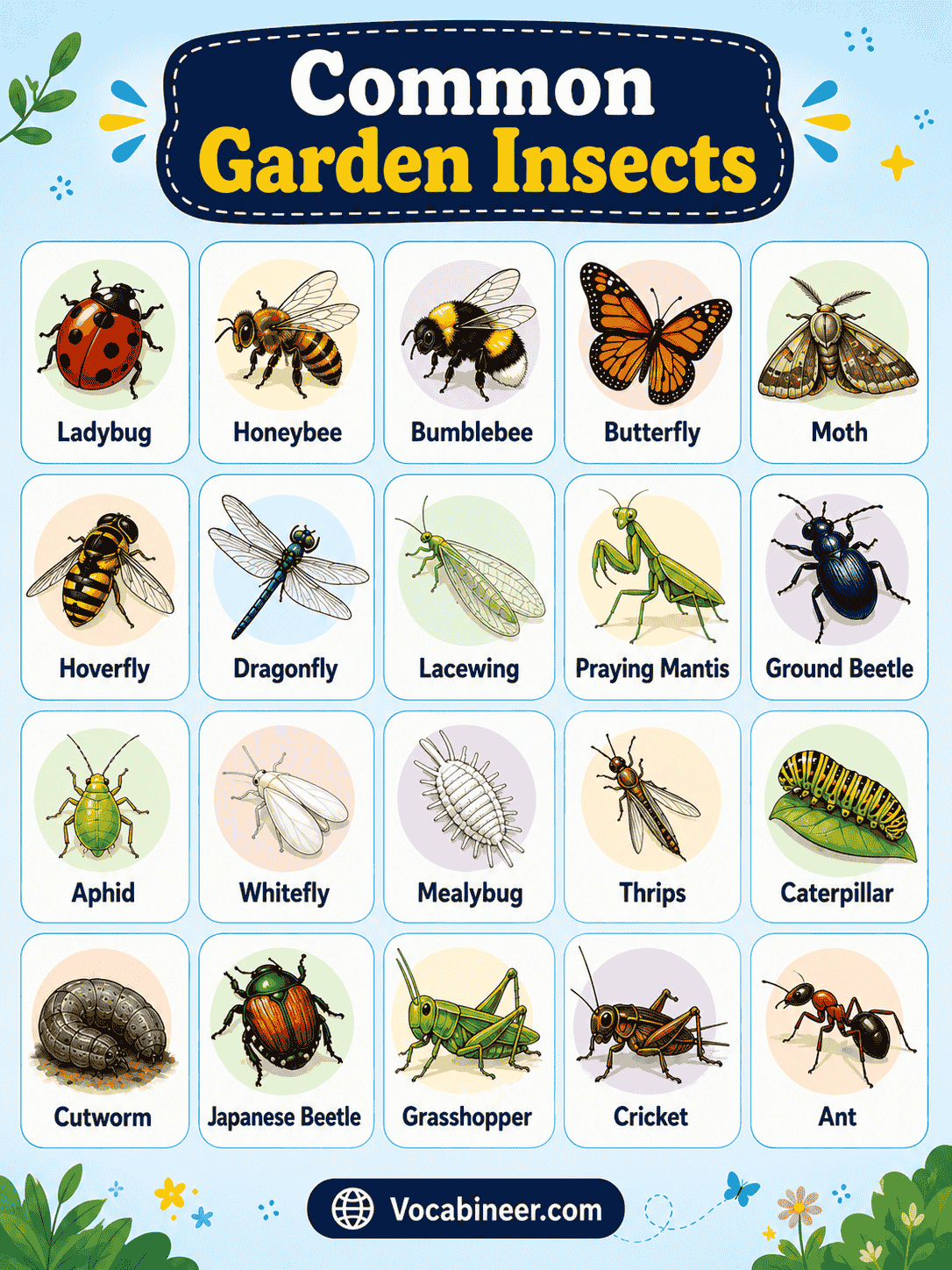
Learning Garden Insects with Pictures
Pictures make garden insects easier to recognize because each insect has a different color, body shape, wing style, size, and movement. For example, ladybugs are small and round, butterflies have colorful wings, and aphids often gather on soft green stems.
Pictures help learners notice:
- Body color.
- Wing shape.
- Number of legs.
- Antennae.
- Plant damage signs.
- Insects on leaves.
- Insects on flowers.
- Flying or crawling movement.
- Helpful or harmful behavior.
This is why garden insects with pictures are useful for kids, students, gardeners, teachers, and English learners.
Garden Insect Identification Guide
You can identify many garden insects by looking at where they appear and what they do to plants.
| What You See | Possible Garden Insect |
|---|---|
| Small green insects on soft stems | Aphids |
| Tiny white insects flying from leaves | Whiteflies |
| Red or orange beetle with black spots | Ladybug |
| Fine webbing under leaves | Spider mites |
| Chewed leaf edges | Caterpillars, beetles, grasshoppers |
| Silvery streaks on leaves | Thrips |
| Yellow-black insects on flowers | Bees, hoverflies |
| Large insect with folded front legs | Praying mantis |
| Small hard insects stuck to stems | Scale insects |
| Winding tunnels inside leaves | Leaf miners |
| Young stems cut near the soil | Cutworms |
| Holes in roots or weak seedlings | Root maggots, grubs |
This guide helps readers connect insect names with real garden signs.
Helpful Garden Insects
Helpful garden insects support plants by pollinating flowers, eating pests, or improving the garden’s natural balance.
- Ladybug — A small round beetle that eats aphids and other soft-bodied pests.
- Lacewing — A delicate insect whose larvae eat aphids, mites, and small garden pests.
- Hoverfly — A fly that looks like a small bee; adults visit flowers, and larvae may eat aphids.
- Honeybee — A pollinator that helps flowers, fruits, and vegetables grow.
- Bumblebee — A large fuzzy bee that pollinates many garden plants.
- Dragonfly — A fast-flying insect that hunts mosquitoes and small flying insects.
- Praying Mantis — A garden hunter that catches many small insects.
- Ground Beetle — A beetle that may eat soil-dwelling pests.
- Parasitic Wasp — A tiny wasp that helps control caterpillars and other pests.
- Soldier Beetle — A helpful beetle often seen on flowers.
Harmful Garden Insects and Pests
Some garden insects damage plants by sucking sap, chewing leaves, cutting stems, or attacking roots.
- Aphid — A small sap-sucking insect that can curl leaves and weaken plants.
- Whitefly — A tiny white flying insect that sucks plant sap and leaves sticky residue.
- Mealybug — A soft insect with a cotton-like covering that weakens plants.
- Thrips — Tiny insects that cause silvery marks on leaves and flowers.
- Spider Mite — A tiny pest that creates fine webbing and yellow spots on leaves.
- Caterpillar — A worm-like larva that chews leaves, flowers, and soft stems.
- Cutworm — A caterpillar-like pest that cuts young plants near the soil.
- Japanese Beetle — A shiny beetle that chews leaves, flowers, and fruits.
- Flea Beetle — A small jumping beetle that makes tiny holes in leaves.
- Leaf Miner — A larva that creates winding tunnels inside leaves.
- Root Maggot — A pest that damages plant roots underground.
- Squash Bug — A pest that damages squash, pumpkin, and related plants.
Not every garden insect is harmful, but these insects can cause plant problems when their numbers increase.
Pollinator Insects in the Garden
Pollinator insects move pollen from one flower to another. This helps plants make seeds, fruits, and vegetables.
Common garden pollinators include:
- Honeybee — Pollinates fruits, vegetables, and flowers.
- Bumblebee — A strong pollinator for many garden plants.
- Butterfly — Visits flowers for nectar and helps move pollen.
- Moth — Some moths pollinate flowers, especially at night.
- Hoverfly — Visits flowers and may look like a small bee.
- Sweat Bee — A small bee that often visits flowers.
- Carpenter Bee — A large bee that pollinates many flowering plants.
- Leafcutter Bee — A bee that cuts leaves and pollinates flowers.
- Some Beetles — Some beetles visit flowers and help with pollination.
- Some Wasps — Some wasps visit flowers and may carry pollen.
Pollinators are very important in gardens because many fruits and vegetables need pollination to grow well.
Flying Garden Insects
Flying garden insects move through the air using wings. Some are pollinators, while others are pests or predators.
Common flying garden insects include:
- Bee
- Butterfly
- Moth
- Hoverfly
- Dragonfly
- Ladybug
- Firefly
- Whitefly
- Japanese Beetle
- June Beetle
- Wasp
- Leafhopper
- Lacewing
- Flying Ant
- Parasitic Wasp
Flying insects are easy to notice around flowers, lights, leaves, and wet garden areas.
Crawling Garden Insects
Crawling garden insects move on leaves, stems, soil, roots, or under plant debris. Some crawl slowly, while others jump or hide in the soil.
Common crawling garden insects include:
- Ant
- Earwig
- Ground Beetle
- Caterpillar
- Cutworm
- Grub
- Weevil
- Cricket
- Spider Mite
- Scale Insect
- Mealybug
- Aphid
- Leaf Miner
- Root Maggot
- Squash Bug
Crawling insects are often found under leaves, near roots, inside soil, or around damaged plants.
Garden Insects by Plant Damage
Garden insects can often be identified by the damage they leave on plants.
| Plant Damage | Possible Insects |
|---|---|
| Curled leaves | Aphids, thrips |
| Sticky leaves | Aphids, whiteflies, scale insects |
| Tiny holes in leaves | Flea beetles |
| Large holes in leaves | Caterpillars, beetles, grasshoppers |
| Fine webbing | Spider mites |
| Yellowing leaves | Whiteflies, mites, scale insects |
| Winding tunnels inside leaves | Leaf miners |
| Cut stems near soil | Cutworms |
| Damaged roots | Root maggots, grubs, weevils |
| Chewed flowers | Japanese beetles, caterpillars, thrips |
| Weak young seedlings | Cutworms, root maggots, grubs |
This section is useful because many gardeners notice plant damage before they see the insect.
Garden Insects by Plant Area
Different insects appear on different parts of a plant. This table helps identify where they are commonly found.
| Plant Area | Common Insects Found There |
|---|---|
| Leaves | Aphids, caterpillars, beetles, whiteflies |
| Stems | Scale insects, mealybugs, aphids |
| Flowers | Bees, butterflies, thrips, beetles |
| Roots | Root maggots, grubs, weevils |
| Soil surface | Ants, ground beetles, earwigs, crickets |
| Fruit | Fruit flies, stink bugs, beetles |
| Under leaves | Spider mites, whiteflies, aphids |
| New shoots | Aphids, thrips, leafhoppers |
Looking at the plant area can help you find the insect faster.
Garden Insects by Season
Some garden insects are more active in certain seasons. Their appearance depends on weather, plants, moisture, and temperature.
Spring Garden Insects
- Aphid
- Bee
- Butterfly
- Caterpillar
- Flea Beetle
- Leaf Miner
Summer Garden Insects
- Japanese Beetle
- Whitefly
- Grasshopper
- Dragonfly
- Ladybug
- Thrips
- Mosquito
Autumn Garden Insects
- Stink Bug
- Cricket
- Earwig
- Leafhopper
- Beetle
- Wasp
Seasonal timing can change by climate and local garden conditions.
Common Garden Bugs vs Insects
In everyday English, people often use the word bug for many small creatures in the garden. However, not every garden bug is a true bug in science.
| Word | Simple Meaning | Examples |
|---|---|---|
| Garden insect | A small six-legged creature found in gardens | Bee, ladybug, aphid |
| Garden bug | Everyday word for small garden creatures | Beetle, caterpillar, ant |
| True bug | A specific insect group with special mouthparts | Stink bug, squash bug, aphid |
| Garden pest | An insect or small creature that damages plants | Whitefly, cutworm, leaf miner |
This article uses simple English, so “garden insects” and “garden bugs” may both refer to common small creatures found in gardens.
Helpful vs Harmful Garden Insects
Some insects help gardens, while others damage plants. A few insects may be both helpful and harmful depending on the situation.
| Type | What They Do | Examples |
|---|---|---|
| Helpful insects | Pollinate plants or eat pests | Bees, butterflies, ladybugs, lacewings |
| Harmful insects | Damage leaves, stems, roots, flowers, or fruit | Aphids, whiteflies, cutworms, beetles |
| Mixed-role insects | May help sometimes but can also cause problems | Ants, wasps, earwigs |
For example, wasps may control some pests, but they can also sting. Ants may help aerate soil, but they can protect aphids in some gardens.
Easy Garden Insect Names for Kids
Kids can learn garden insect names more easily with simple examples and pictures.
Easy garden insect names for kids include:
- Bee
- Butterfly
- Ladybug
- Ant
- Caterpillar
- Grasshopper
- Cricket
- Dragonfly
- Moth
- Firefly
- Beetle
- Wasp
Simple examples for kids:
- A bee visits flowers.
- A ladybug eats small pests.
- A butterfly has colorful wings.
- A caterpillar chews leaves.
- A grasshopper jumps on plants.
- A dragonfly flies near water.
- A firefly glows at night.
Interesting Facts About Garden Insects
Garden insects are small, but they play important roles in nature.
- Ladybugs eat many aphids. This makes them helpful in many gardens.
- Bees help pollinate fruits and vegetables. Without pollinators, many plants would not produce well.
- Dragonflies hunt mosquitoes. They help control some flying insects.
- Caterpillars turn into butterflies or moths. However, they may chew leaves while growing.
- Some beetles help gardens, while others damage plants. Ground beetles can help, but Japanese beetles can harm plants.
- Not every insect in a garden is harmful. Many insects support the garden ecosystem.
- Hoverflies look like bees. However, they are flies and often visit flowers.
- Lacewing larvae are useful pest hunters. They can eat aphids and other small pests.
FAQs
Common garden insects include ladybugs, bees, butterflies, ants, aphids, whiteflies, caterpillars, grasshoppers, beetles, moths, dragonflies, and crickets. Some help plants, while others may damage leaves, roots, flowers, or fruit.
Helpful garden insects include ladybugs, bees, butterflies, lacewings, hoverflies, dragonflies, ground beetles, and parasitic wasps. They may pollinate flowers, eat pests, or support the garden ecosystem.
Garden insects that often damage plants include aphids, whiteflies, mealybugs, thrips, caterpillars, cutworms, spider mites, Japanese beetles, flea beetles, leaf miners, and root maggots. They may suck sap, chew leaves, or damage roots.
You can identify garden insects by looking at their color, body shape, wings, legs, antennae, plant location, and damage signs. For example, fine webbing may suggest spider mites, while curled leaves may suggest aphids or thrips.
No, not all garden insects are harmful. Many insects are helpful because they pollinate flowers or eat pests. Bees, butterflies, ladybugs, lacewings, and dragonflies are common examples of helpful garden insects.
Summary
Garden insects include both helpful insects and harmful pests. Helpful insects, such as bees, butterflies, ladybugs, lacewings, and hoverflies, support pollination and pest control. Harmful insects, such as aphids, whiteflies, caterpillars, cutworms, and Japanese beetles, can damage leaves, flowers, stems, fruits, or roots.
Learning common garden insect names helps kids, students, gardeners, and English learners recognize insects more easily in pictures, plants, and outdoor spaces.
Read More
- Animals Name in English
- Wild Animals Name in English
- Domestic Animals Names
- Flying Insects Names
- Farm Animals Name
- Crawling Animals Name