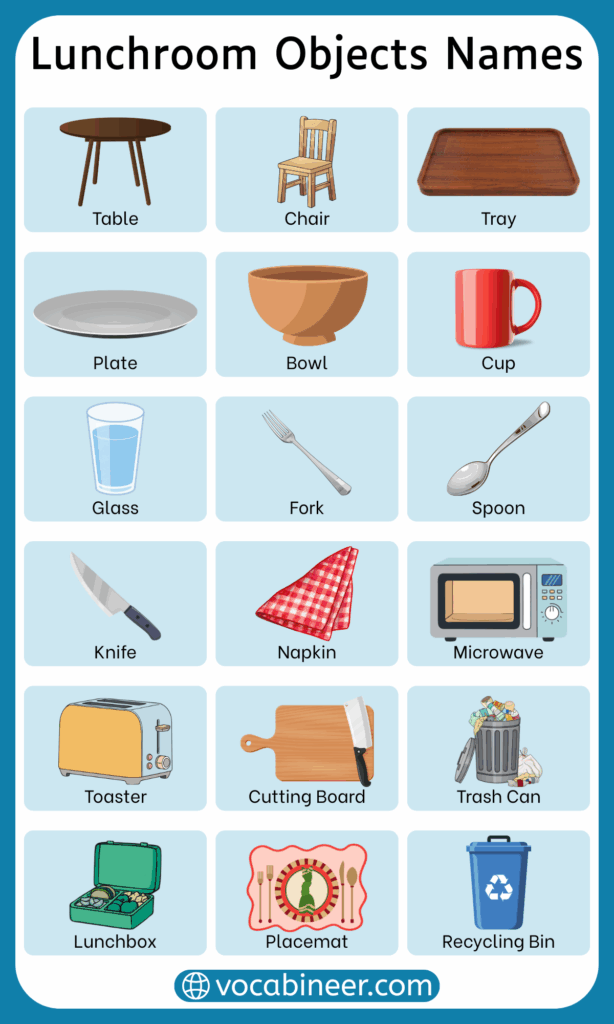
Lunchroom objects are the things you see and use in a school cafeteria. Students use them to eat, drink, carry food, and clean up. Staff also use special lunchroom objects to serve meals and keep the area safe. Learning lunchroom objects names helps you talk about school life clearly and understand common classroom and cafeteria English.
In This Page
Lunchroom Objects for Eating
These objects hold food while you eat. You will see them on tables or in serving lines. Below is a list of lunchroom objects for eating with meanings
- Plate: A flat dish used to hold meals like rice, pasta, or sandwiches.
- Bowl: A deep dish used for soup, cereal, or noodles.
- Cup: A small container for water or juice.
- Glass: A clear drinking container, often used for water.
- Mug: A cup with a handle, mostly for hot drinks.
- Tray: A flat object that carries plates, cups, and food together.
- Lunchbox: A box that students bring from home to carry lunch.
- Lunch bag: A soft bag used to carry food, often with a zip.
Lunchroom Utensils Names
Utensils are tools used to eat food. Most lunchrooms give these with meals. Below is a list of lunchroom utensils with meanings
- Spoon: A utensil with a round end used for soup or soft foods.
- Fork: A utensil with prongs used for solid foods like pasta or salad.
- Knife: A utensil with a sharp edge used for cutting food.
- Spork: A mix of spoon and fork, used for school meals.
- Chopsticks: Two sticks used to pick up food, common for noodles or rice.
Lunchroom Objects for Serving Food
These objects help staff place food on plates and trays. Below is a list of lunchroom serving objects with meanings
- Serving spoon: A large spoon used to serve rice, vegetables, or curry.
- Ladle: A deep spoon used to pour soup or sauce.
- Tongs: A tool that grabs food like salad, bread, or fruit.
- Pitcher: A container used to pour drinks like water or milk.
- Food pan: A metal container that holds food in the serving line.
- Serving counter: The long table where food is placed for students.
- Food warmer: A machine that keeps food hot before serving.
Lunchroom Objects for Holding Food
These objects store food before or after eating. Below is a list of lunchroom food holders with meanings
- Food container: A box with a lid used to store leftovers or packed lunch.
- Sandwich box: A small container made for sandwiches.
- Snack box: A small container for chips, biscuits, or fruit.
- Thermos: A bottle that keeps food or drinks hot or cold.
- Plastic wrap: Thin plastic sheet used to cover food.
- Foil: Shiny metal paper used to wrap food and keep it warm.
Lunchroom Objects for Drinks
These objects help students carry and drink liquids. Below is a list of lunchroom drink objects with meanings
- Water bottle: A reusable bottle for drinking water.
- Juice box: A small sealed box with juice and a straw hole.
- Milk carton: A small paper container holding milk.
- Straw: A thin tube used to sip drinks.
- Bottle cap: The lid that closes a bottle.
Lunchroom Cleaning Objects
After eating, students clean their hands and tables using these items. Below is a list of lunchroom cleaning objects with meanings
- Napkin: A paper or cloth used to wipe mouth and hands.
- Tissue: Soft paper used to clean small spills or face.
- Wet wipe: A moist cloth used to clean hands quickly.
- Sponge: A soft cleaning pad used to wash surfaces.
- Dish soap: Liquid soap used for washing trays and dishes.
- Hand sanitizer: Gel used to clean hands without water.
Lunchroom Trash and Recycling Objects
Lunchrooms have special containers for waste. Students use them after finishing food. Below is a list of lunchroom trash objects with meanings
- Trash can: A bin for throwing away food waste and paper.
- Recycling bin: A bin for plastic bottles, cans, and clean paper.
- Compost bin: A bin for food scraps that can break down naturally.
- Trash bag: A bag placed inside bins to collect waste.
Lunchroom Furniture Names
Furniture is the big objects students sit on or eat at. Below is a list of lunchroom furniture with meanings
- Lunch table: A long table where students sit and eat.
- Bench: A long seat without a back, often fixed to tables.
- Chair: A single seat with a backrest.
- Stool: A simple seat without arms, sometimes used near counters.
Lunchroom Staff Objects
These objects are mostly used by cafeteria workers. Below is a list of lunchroom staff objects with meanings
- Cash register: A machine used to take payments for food.
- Menu board: A board that shows what food is served today.
- Serving gloves: Gloves used to handle food safely.
- Hairnet: A net that covers hair to keep food clean.
FAQs about Lunchroom Objects
Students usually use a tray, plate or bowl, cup, spoon, fork, and napkin. If they bring food from home, they also use a lunchbox, lunch bag, and water bottle.
A tray is a flat holder used in the cafeteria to carry food from the serving counter to the table. A lunchbox is a container students bring from home to carry their own lunch.
Trash cans are for food waste and dirty paper. Recycling bins are for clean plastic bottles, cans, and paper. This keeps waste organized and helps protect the environment.
A spork is a utensil that combines a spoon and fork in one tool. Lunchrooms use it because it works for many foods and is easy to give with school meals.
A thermos is a strong bottle that keeps food or drinks hot or cold for several hours. Students use it for soups, tea, or cold juices they bring from home.
Conclusion
Lunchroom objects names include eating items like plates and trays, utensils like spoons and forks, serving tools like ladles and tongs, food holders like containers and thermos bottles, drink items like milk cartons and straws, cleaning items like napkins and wipes, waste bins, and cafeteria furniture. When you know these lunchroom objects names and meanings, you can describe cafeteria scenes and daily school meals with ease.
Read More