

Pink flowers are loved for their soft shades that range from pale blush to bright fuchsia. They appear across many plant families, from small wildflowers to layered garden favorites. Learning pink flower names in English helps you describe them in gardens, weddings, or traditions. This article lists common, rare, and seasonal blossoms you will often come across.
In This Page
Common Pink Flower Names in English
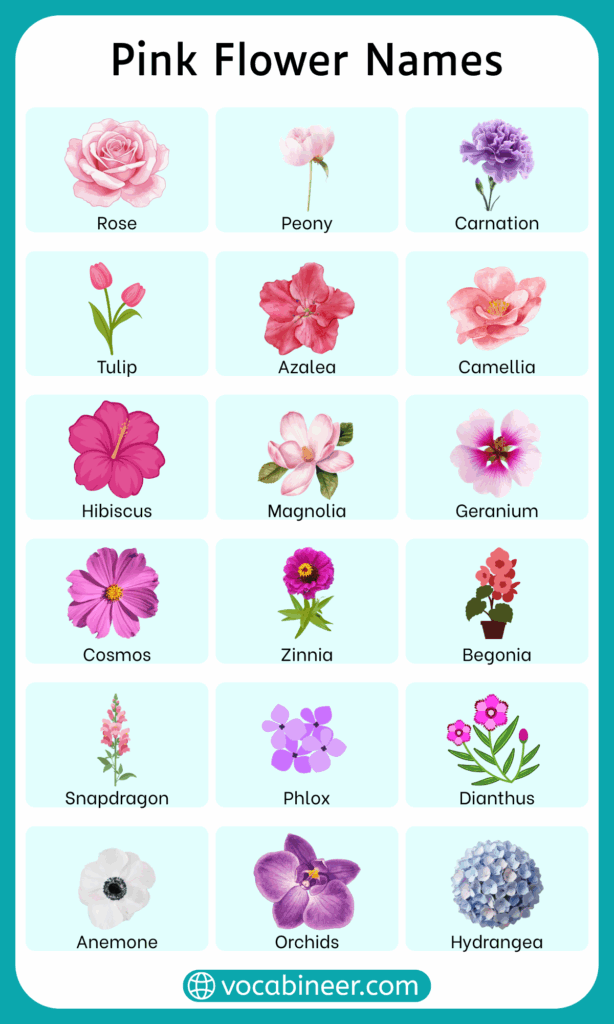
Pink flowers are widely recognized and have names you’ll often hear in daily life. Each carries a unique charm and history in culture and nature.
- Pink Rose: A symbol of affection, appearing in soft pastels and deeper tones for many occasions.
- Pink Lily: Tall stems with trumpet blooms, often linked with admiration and celebration.
- Pink Orchid: Exotic blossoms with delicate petals, grown indoors and admired for their long-lasting beauty.
- Pink Tulip: Cup-shaped flowers that bloom in spring, often arranged in colorful garden beds.
- Pink Peony: Large layered blossoms with soft texture, known for elegance in summer gardens.
- Pink Carnation: Ruffled petals used often in bouquets, symbolizing gratitude and admiration.
- Pink Camellia: Round blossoms with neat petals, often seen on evergreen shrubs.
- Pink Azalea: Shrubby blooms with funnel-shaped flowers, brightening spring landscapes.
- Pink Hydrangea: Ball-shaped clusters that shift tones depending on soil acidity.
- Pink Dahlia: Large blossoms with pointed petals, often seen in late summer gardens.
- Pink Chrysanthemum: Autumn blooms with layered petals, widely used in decorations.
- Pink Hibiscus: Large tropical blossoms with a striking central stamen.
- Pink Geranium: Compact flowering plants often used in pots and borders.
- Pink Bougainvillea: Bright bracts that cover climbing vines with striking pink shades.
List of Seasonal Pink Flowers
Pink flowers bloom at different times of the year. Some thrive in spring, others in summer, while a few can brighten winter landscapes.
Spring Pink Flowers
Spring brings soft blooms that signal growth and renewal.
- Tulip
- Azalea
- Peony
- Dogwood
- Camellia
Summer Pink Flowers
Summer blossoms shine in warm sun and fill gardens with lasting color.
- Hibiscus
- Dahlia
- Rose
- Phlox
- Coneflower
Winter Pink Flowers
Winter still has blooms that resist the cold and stay vibrant.
- Camellia
- Cyclamen
- Hellebore
- Winter Jasmine
- Begonia
Names of Rare Pink Flowers in Nature
Some pink flowers are rare and admired for their unusual look. They bloom in special climates and add uniqueness to collections.
- Pink Lady’s Slipper Orchid: A rare orchid with a slipper-like pouch blossom.
- Pink Lotus: Sacred aquatic flower linked with peace and reflection.
- Pink Egret Orchid: Shaped like a bird in flight with pale pink shades.
- Pink Protea: Exotic blooms with cone-like centers surrounded by bracts.
- Kadupul Flower: Rare, night-blooming blossom from Sri Lanka with short life span.
Pink Flowers for Gardens and Landscaping
Gardeners often choose pink flowers for borders, pathways, and bright corners. They bring cheer and mix well with other shades.
- Pink Petunia: Low-spreading blooms often planted in baskets or containers.
- Pink Marigold: Compact blossoms with rich petals used in borders.
- Pink Zinnia: Tall, colorful flowers that thrive in warm gardens.
- Pink Begonia: Shiny leaves and delicate blossoms for shaded areas.
- Pink Impatiens: Shade-loving plants with nonstop pink blooms.
- Pink Veronica: Tall spikes covered in small blossoms attractive to butterflies.
- Pink Delphinium: Tall stems topped with elegant pink flowers.
Types of Pink Flowers for Weddings
Pink flowers are popular in weddings, symbolizing love and romance. They are used in bouquets, centerpieces, and decorations.
- Pink Rose
- Pink Lily
- Pink Orchid
- Pink Peony
- Pink Carnation
- Pink Calla Lily
- Pink Ranunculus
- Pink Gardenia
- Pink Sweet Pea
Symbolism of Pink Flowers Across Cultures
Pink flowers often symbolize admiration, joy, and love. Across cultures, they are used in ceremonies and gifts with special meanings.
- Affection: Given to show gentle emotions.
- Gratitude: Linked with thankfulness and respect.
- Romance: Connected with love and attraction.
- Joy: Represent cheer and positive energy.
- Friendship: Often gifted to strengthen bonds.
- Compassion: Used to express care and kindness.
Conclusion
Learning pink flower names gives you the words to describe their charm in gardens, weddings, and traditions. They symbolize many emotions and brighten every season.
FAQs on Pink Flower Names
The most popular pink flowers include roses, tulips, lilies, peonies, carnations, and orchids. These flowers are widely used in gardens, weddings, and floral arrangements.
Weddings often feature pink roses, ranunculus, peonies, calla lilies, carnations, and orchids. These flowers symbolize romance, admiration, and gentle love.
Yes. Winter pink flowers include camellia, cyclamen, hellebores, winter jasmine, and some types of begonia. They brighten gardens even during colder months.
Pink flowers usually symbolize affection, gratitude, and friendship. In some traditions, they also represent romance, joy, and compassion, making them meaningful in many occasions.
Rare pink flowers include the lady’s slipper orchid, pink lotus, pink protea, pink egret orchid, and kadupul flower. These blooms are admired for their unique beauty.
Read More