
Types of belts are the common belt styles used for clothing, work, safety, sports, medical support, and machines, and they differ by use, material, and buckle style. These belt types include dress belts, casual belts, tool belts, seat belts, weightlifting belts, and machine belts like timing belts and V-belts.
In this post, you will learn types of belts in a clear order with names, short uses, and pictures where relevant. It covers belts by use, material, buckle type, and outfit match, plus a simple dress belt vs casual belt comparison, so the topic is easier to recognize, compare, and remember.
In This Page
Main Types of Belts
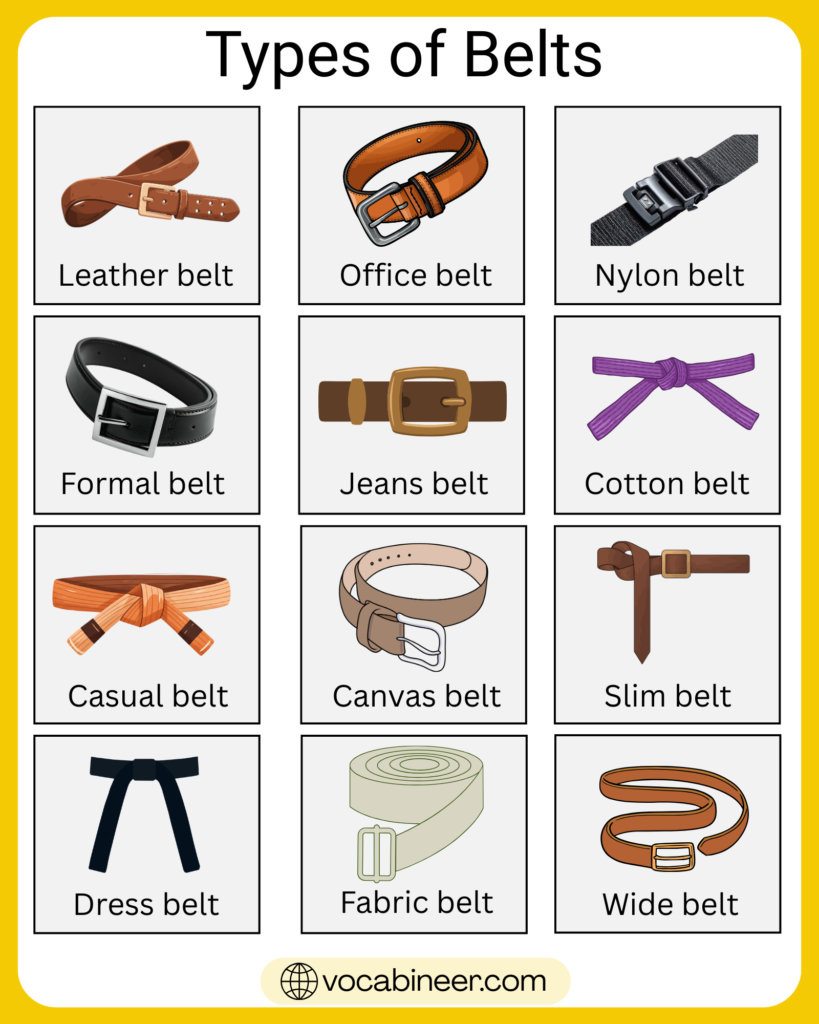
Belts come in different types based on what they are used for and how they are made. For example, some belts are worn with clothes, while others support lifting, carry tools, protect the body, or run machines. Because of that, learning the main belt types makes belt names easier to recognize and compare.
- Fashion belt: A waist belt used to hold clothes and add style to outfits.
- Dress belt: A clean, simple belt used with formal trousers and office wear.
- Casual belt: A daily-use belt made for jeans and relaxed clothing styles.
- Work belt: A strong belt used for jobs, often made to handle daily wear.
- Tool belt: A belt with pockets and loops used to carry tools while working.
- Safety belt: A belt used for protection, such as fall safety or seat safety.
- Weightlifting belt: A wide support belt used to brace the core during heavy lifting.
- Back support belt: A support belt used to reduce strain during work or recovery.
- Machine belt: A belt used in machines to transfer motion between parts.
Types of Belts by Use
Belts are often easiest to learn when you group them by use. So, this section lists belt types based on where people use them, such as clothing, work, safety, fitness, medical support, and machines.
Clothing and Fashion Belts
- Leather fashion belt: A common waist belt used for both style and daily wear.
- Waist belt: A general belt worn around the waist to hold trousers or add shape to outfits.
- Cinch belt: A wide belt used to tighten the waist area and shape clothing.
- Braided belt: A woven belt that adds texture and fits casual outfits well.
- Reversible belt: A belt with two usable sides, so it matches more than one outfit.
- Skinny belt: A narrow belt used mainly for style on dresses and high-waist outfits.
- Wide belt: A broader belt used to highlight the waist and add a bold look.
Work and Tool Belts
- Work belt: A strong belt made for daily job use and rough handling.
- Tool belt: A belt with pouches and loops used to carry tools while working.
- Carpenter belt: A tool belt style made for nails, hammer loops, and hand tools.
- Utility belt: A belt used to carry small equipment, keys, and job essentials.
- Duty belt: A heavy belt used to carry gear, often used in security and uniform work.
- Tactical belt: A tough belt used to hold gear securely, often used for outdoor and duty use.
Safety Belts
- Seat belt: A safety belt used in vehicles to protect passengers during movement and stops.
- Harness belt: A safety belt system that supports the body for secure holding.
- Fall protection belt: A belt used for height safety, often used with a harness system.
- Climbing belt: A belt used in climbing setups to support safety attachment and balance.
- Lifeline belt: A belt used to stay connected to a safety line during risky work.
Sports and Fitness Belts
- Weightlifting belt: A firm belt used to support the core during heavy lifts.
- Gym belt: A general fitness belt used for extra support during workouts.
- Running belt: A slim belt used to carry phone, keys, or water during running.
- Martial arts belt: A belt used to tie uniforms and show rank in martial arts.
- Boxing belt: A belt used as a protective or award belt in boxing contexts.
Medical Support Belts
- Back support belt: A belt used to support the lower back during work or recovery.
- Lumbar support belt: A medical support belt focused on the lower spine area.
- Abdominal binder belt: A support belt used after surgery or childbirth for gentle support.
- Hernia belt: A support belt used to support hernia areas and reduce discomfort.
- Maternity support belt: A belt used to support the belly and lower back during pregnancy.
Industrial and Machine Belts
- V-belt: A machine belt used to transfer motion between pulleys in many machines.
- Timing belt: A toothed belt used for timed motion, commonly in engines and machines.
- Serpentine belt: A long belt used in vehicles to drive several engine parts.
- Conveyor belt: A moving belt used to carry materials in factories and warehouses.
- Drive belt: A general machine belt used to transfer power from one part to another.
- Flat belt: A smooth machine belt used in some older and specific machine systems.
Types of Belts by Material
Belt material affects strength, flexibility, look, and comfort. For example, leather belts look formal and last long, while fabric belts feel lighter for casual wear. In addition, some materials handle water, stretch, and heavy use better, so this section groups common belts by material.
Leather Belts
- Genuine leather belt: A common leather belt used for daily wear with a classic look.
- Full-grain leather belt: A premium leather belt known for strong durability and long life.
- Suede belt: A soft leather belt with a matte look, often used for smart casual outfits.
- Patent leather belt: A shiny leather belt often used for formal events and dress wear.
Fabric and Canvas Belts
- Canvas belt: A strong fabric belt used for casual outfits and outdoor use.
- Webbing belt: A woven fabric belt that feels light and works well for daily wear.
- Cotton belt: A softer fabric belt used for simple casual styles.
- Belt with fabric strap: A belt made with a cloth strap, often used for comfort and easy fit.
Synthetic Belts
- PU leather belt: A belt made to look like leather but uses synthetic material instead.
- Nylon belt: A tough synthetic belt used for casual, outdoor, and tactical styles.
- Polyester belt: A synthetic belt that resists water and works well for daily casual use.
- Rubber belt: A belt material used in some special work and utility belt designs.
Metal Belts
- Chain belt: A metal belt made from linked chains, mainly used for fashion.
- Metal mesh belt: A belt made from fine metal mesh for a shiny, stylish look.
- Buckled metal belt: A metal belt style used as a statement accessory in outfits.
Elastic Belts
- Elastic belt: A stretchy belt that feels comfortable and adjusts easily.
- Stretch belt: A belt with elastic sections that fits different waist sizes more smoothly.
- Braided stretch belt: A stretchy woven belt that offers flexible fit without fixed holes.
Types of Belts by Buckle Style
Buckle style changes how the belt closes and how easy it feels to adjust. For example, pin buckles are classic and simple, while ratchet belts allow smaller size adjustments. In addition, some buckle styles suit casual wear better, while others fit formal outfits more neatly.
Pin Buckle Belts
- Pin buckle belt: A classic belt that uses a pin and holes for sizing.
- Single-prong belt: A pin buckle belt with one prong for simple fastening.
- Double-prong belt: A belt with two prongs, often used on wider casual belts.
Ratchet Belts
- Ratchet belt: A belt with a track system that clicks into place for easy sizing.
- Automatic buckle belt: Another common name for a ratchet belt because it locks without holes.
- No-hole belt: A belt style that adjusts without punched holes, so it looks cleaner.
Slide Buckle Belts
- Slide buckle belt: A belt that tightens by sliding the strap through the buckle.
- Clamp buckle belt: A slide buckle belt that clamps the strap to hold it in place.
- Military style slide belt: A slide buckle belt often used with webbing straps for a firm hold.
D-Ring Belts
- D-ring belt: A belt that uses two metal rings instead of a traditional buckle.
- Double D-ring belt: A common D-ring style that tightens by threading through two rings.
- Canvas D-ring belt: A D-ring belt often made from fabric for casual and sporty wear.
Hook Buckle Belts
- Hook buckle belt: A belt that closes using a hook that attaches to a loop or bar.
- Hook-and-loop belt: A belt style that combines hook fastening with strap adjustment.
- Clip belt: A quick-close belt that uses a clip-style buckle for fast use.
Types of Belts for Common Outfits
Belts can also be grouped by the outfits they match best. For example, formal outfits usually need smoother, cleaner belts, while casual outfits allow wider and textured belts. In addition, jeans belts often need stronger straps, so they handle heavy denim and daily wear better.
Formal Belts
- Formal belt: A simple belt with a clean finish, made to match suits and dress trousers.
- Black dress belt: A formal belt used for office wear and events with dark shoes.
- Slim formal belt: A narrower belt used for a neat look with formal outfits.
Casual Belts
- Casual belt: A daily belt used with relaxed outfits, often with textured or wider straps.
- Braided casual belt: A casual belt with a woven look that matches jeans and shirts.
- Canvas casual belt: A fabric belt used for comfort and simple everyday style.
Jeans Belts
- Jeans belt: A stronger belt made for denim loops and heavier daily wear.
- Wide jeans belt: A wider belt that fits better with jeans and casual shoes.
- Leather jeans belt: A durable leather belt commonly used with jeans for a classic look.
Dress Belts
- Dress belt: A smooth belt used with formal trousers and smart outfits.
- Reversible dress belt: A dress belt with two color sides, so it matches more outfits.
- Gloss finish dress belt: A dress belt with a slightly shiny look for formal events.
Belt Names List
Belt names are easier to review in one clean list. This list helps you scan common belt types and remember the main names.
- Fashion belt
- Dress belt
- Casual belt
- Waist belt
- Cinch belt
- Skinny belt
- Wide belt
- Braided belt
- Reversible belt
- Work belt
- Tool belt
- Carpenter belt
- Utility belt
- Duty belt
- Tactical belt
- Seat belt
- Harness belt
- Fall protection belt
- Climbing belt
- Weightlifting belt
- Running belt
- Martial arts belt
- Back support belt
- Lumbar support belt
- Abdominal binder belt
- Hernia belt
- Maternity support belt
- V-belt
- Timing belt
- Serpentine belt
- Conveyor belt
- Drive belt
- Flat belt
- Leather belt
- Canvas belt
- Nylon belt
- Elastic belt
- Pin buckle belt
- Ratchet belt
- Slide buckle belt
- D-ring belt
Difference Between Dress Belt and Casual Belt
Dress belts and casual belts both hold trousers, yet they differ in look and build. A dress belt looks smoother and more formal, while a casual belt often looks thicker, wider, and more textured.
| Feature | Dress Belt | Casual Belt |
|---|---|---|
| Look | Smooth and clean | Textured or rugged |
| Width | Usually slimmer | Often wider |
| Buckle | Simple and polished | Larger or more casual |
| Best with | Suits, formal trousers | Jeans and casual outfits |
FAQs
Common belt types include dress belts, casual belts, jeans belts, leather belts, tool belts, seat belts, and fitness belts like weightlifting belts.
A dress belt is smoother and slimmer for formal wear, while a casual belt is often wider and more textured for jeans and daily outfits.
A weightlifting belt is used for heavy lifting because it supports the core and helps brace during big lifts.
A ratchet belt uses a track system that clicks into place, so it adjusts easily without belt holes.
Many machine belts are drive belts because they transfer power between parts, although types like timing belts and V-belts have specific roles.
Conclusion
Types of belts are easier to understand when you group them by use, material, buckle style, and outfit type. Because belts serve both fashion and function, the right belt can improve comfort, style, support, and safety.
At the same time, learning belt names helps you recognize common belt types in daily life, whether you wear a dress belt, use a tool belt at work, or see machine belts in vehicles and equipment.
Read More
- Different Types of Windows
- Different Types of Doors
- Different Types of Tape
- Different Types of Tools