Types of cheese are the many cheese varieties people recognize by texture, milk source, and overall character. This list of 100 types of cheese with names and pictures makes the topic easier to learn because the cheeses are grouped into clear categories.
In this article, you’ll explore common cheese groups, discover well-known cheese names, and build better recognition through organized sections. You’ll also get a complete cheese names list, a quick comparison, and simple answers to common questions.
In This Page
Common Cheese Types at a Glance
Cheese comes in many forms, yet most varieties can be grouped into a few familiar categories. So, before moving into the full list, it helps to see the main cheese groups in one quick overview.
- Fresh cheeses: Soft, moist cheeses that are usually not aged.
- Soft cheeses: Creamy cheeses with a delicate body and often a soft rind.
- Semi-soft cheeses: Smooth and sliceable cheeses with a softer texture than firmer aged cheeses.
- Semi-hard cheeses: Firmer cheeses with a denser body and balanced texture.
- Hard cheeses: Dry, firm cheeses that are often aged longer.
- Blue cheeses: Cheeses with blue or green mold veins inside.
- Goat cheese varieties: Cheeses made from goat’s milk, often with a tangy character.
- Sheep milk cheese varieties: Cheeses made from sheep’s milk, often rich and full-bodied.
- Processed cheese and cheese spreads: Cheese products made for smooth texture and easy use.
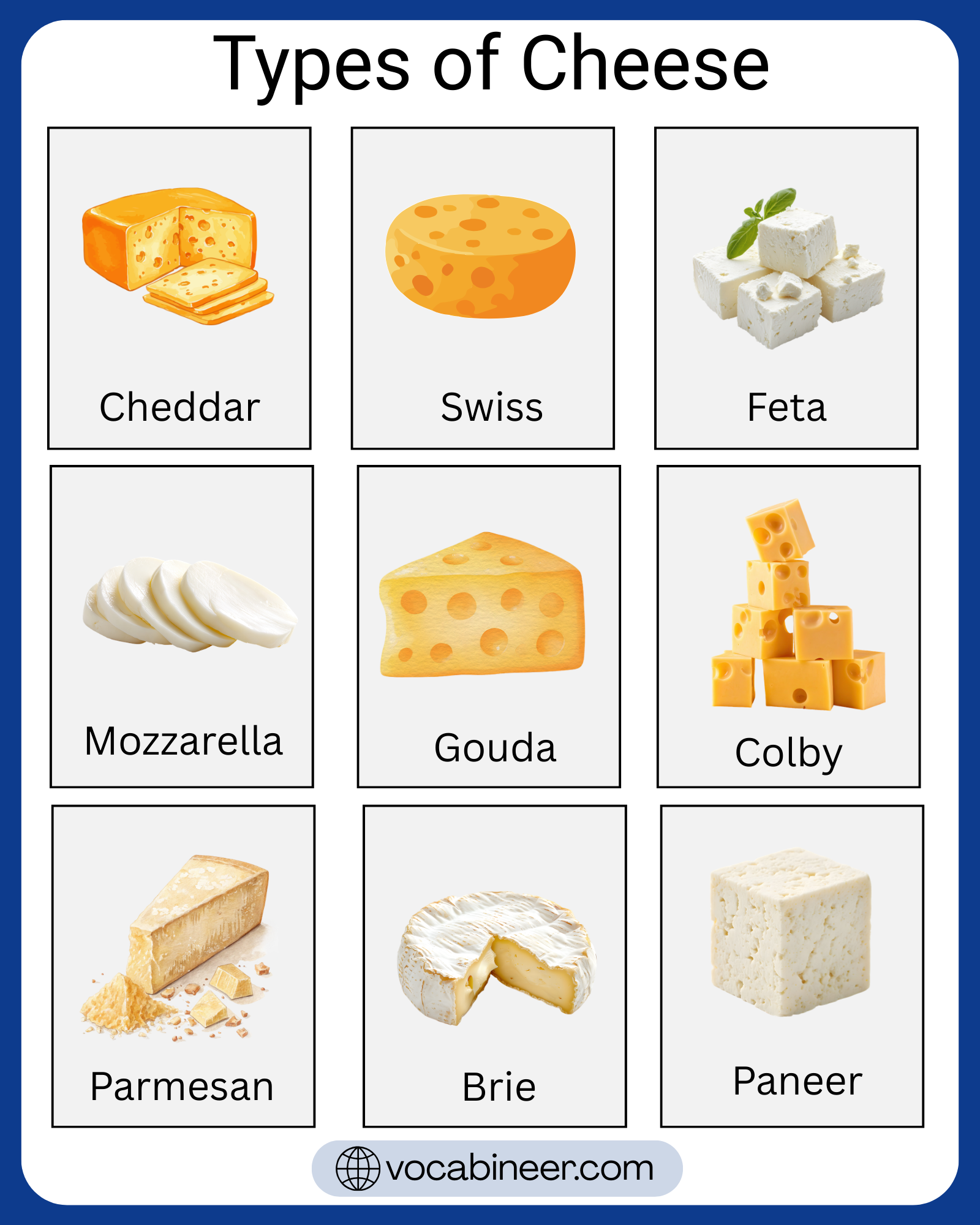
Cheese Types by Texture
Texture is one of the easiest ways to understand cheese because it helps readers notice real differences quickly. As a result, this section makes the main cheese groups easier to recognize and remember.
Fresh Cheeses
Fresh cheeses are usually soft, mild, and moist because they are not aged for long. So, they are often some of the easiest cheeses to recognize.
- Mozzarella: A soft fresh cheese known for its smooth texture and white appearance.
- Ricotta: A light fresh cheese with a soft and slightly grainy texture.
- Cottage Cheese: A fresh cheese made of small soft curds.
- Mascarpone: A rich and creamy fresh cheese often used in desserts.
- Burrata: A fresh cheese with a soft outer shell and creamy inside.
- Cream Cheese: A smooth fresh cheese often used as a spread.
- Paneer: A firm fresh cheese commonly used in South Asian dishes.
- Queso Fresco: A soft fresh cheese with a mild and crumbly character.
- Farmer Cheese: A simple fresh cheese with a soft yet slightly firm body.
- Fromage Blanc: A creamy fresh cheese with a light and smooth texture.
Soft Cheeses
Soft cheeses are known for their creamy body and delicate texture. In many cases, they also have a soft rind, so they look and feel quite different from firmer cheeses.
- Brie: A soft cheese with a creamy inside and a pale outer rind.
- Camembert: A soft-ripened cheese with a rich and smooth texture.
- Reblochon: A soft cheese with a creamy center and washed rind.
- Taleggio: A soft cheese with a smooth body and a strong aroma.
- Chaource: A soft French cheese with a white rind and creamy texture.
- Neufchâtel: A soft cheese often recognized by its smooth body and heart-shaped form.
- Coulommiers: A soft cheese similar to brie, yet usually smaller and rich.
- Limburger: A soft cheese known for its strong smell and creamy inside.
- Robiola: A soft Italian cheese with a delicate texture.
- Pont-l’Évêque: A soft cheese with a washed rind and creamy center.
Semi-Soft Cheeses
Semi-soft cheeses are firmer than soft cheeses, yet they still feel smooth and easy to slice. Because of that, they are often some of the most familiar cheeses in everyday use.
- Havarti: A smooth semi-soft cheese with a mild and creamy texture.
- Monterey Jack: A semi-soft cheese known for its soft body and gentle taste.
- Muenster: A pale semi-soft cheese with a smooth inside and mild flavor.
- Fontina: A semi-soft cheese with a rich texture and good melting quality.
- Butterkäse: A mild semi-soft cheese with a buttery and smooth body.
- Edam: A semi-soft cheese with a round shape and a firm yet smooth texture.
- Raclette: A semi-soft cheese known for melting well and having a rich body.
- Tilsit: A semi-soft cheese with a smooth texture and small holes.
- Port Salut: A semi-soft cheese with a creamy body and orange rind.
- Bel Paese: A mild semi-soft cheese with a smooth and easy-to-slice texture.
Semi-Hard Cheeses
Semi-hard cheeses have a denser body than softer cheeses, so they hold their shape well and are easy to cut. At the same time, they are not as dry or firm as hard cheeses.
- Cheddar: A well-known semi-hard cheese that becomes firmer as it ages.
- Gouda: A semi-hard cheese with a smooth body and a slightly rich texture.
- Colby: A semi-hard cheese with a softer body than aged cheddar.
- Cantal: A firm semi-hard cheese with a dense texture.
- Gruyère: A semi-hard cheese known for its smooth body and rich character.
- Emmental: A semi-hard cheese with large holes and a firm texture.
- Jarlsberg: A semi-hard cheese with a mild taste and round holes.
- Maasdam: A semi-hard cheese with a smooth body and large eyes.
- Leicester: A semi-hard cheese with a firm texture and orange color.
- Provolone: A semi-hard cheese with a smooth body that can vary with age.
Hard Cheeses
Hard cheeses are dry, dense, and usually aged longer than softer cheeses. As a result, they often grate easily and have a firmer bite.
- Parmesan: A hard cheese with a dry texture that is often grated.
- Pecorino Romano: A hard sheep milk cheese with a firm and salty character.
- Grana Padano: A hard Italian cheese with a grainy texture.
- Asiago: A cheese that becomes firmer and harder as it ages.
- Manchego: A firm Spanish cheese with a dense body.
- Comté: An aged cheese with a firm texture and smooth interior.
- Kasseri: A firm cheese with a dense and sliceable body.
- Kefalotyri: A hard Greek cheese with a dry and aged texture.
- Cotija: A crumbly hard cheese often used in grated form.
- Sbrinz: A very hard cheese with a dense and long-aged body.
Blue Cheeses
Blue cheeses are easy to recognize because they have blue or green veins running through the inside. In addition, they usually have a stronger smell and a bolder taste than many other cheese types.
- Gorgonzola: A famous blue cheese with a soft body and visible blue-green veins.
- Roquefort: A well-known blue cheese with a crumbly texture and strong character.
- Stilton: A rich blue cheese with a firm yet creamy body.
- Danish Blue: A blue cheese with a creamy texture and clear marbled veins.
- Cabrales: A bold blue cheese known for its strong aroma and intense taste.
- Fourme d’Ambert: A blue cheese with a smoother body and milder feel than some stronger blue cheeses.
- Bleu d’Auvergne: A creamy blue cheese with clear blue marbling.
- Bavaria Blue: A soft blue cheese with a creamy texture and gentle rind.
- Cambozola: A blue cheese that combines creamy softness with blue veining.
- Shropshire Blue: A blue cheese with orange color and strong blue veins.
Cheese Types by Milk Source
Milk source is another useful way to group cheese. Because different milk types affect texture and character, this section helps readers see another clear layer of cheese classification.
Goat Cheese Varieties
Goat cheeses are made from goat’s milk, and they are often known for a tangy and fresh character. Because of that, they stand apart from many cow’s milk cheeses in both taste and texture.
- Chèvre: A common name for soft goat cheese with a fresh and tangy profile.
- Crottin de Chavignol: A small goat cheese that becomes firmer as it ages.
- Valençay: A goat cheese known for its distinct shape and soft texture.
- Garrotxa: A semi-firm goat cheese with a natural rind and smooth body.
- Bucheron: A goat cheese with a soft inner texture and a firmer outer edge.
- Humboldt Fog: A goat cheese recognized by its soft body and dark center line.
- Banon: A goat cheese often wrapped in leaves, with a soft texture.
- Pélardon: A small goat cheese with a delicate body and mild rind.
- Selles-sur-Cher: A soft goat cheese with a natural ash-coated surface.
- Majorero: A goat milk cheese with a firmer body and a more aged style.
Sheep Milk Cheese Varieties
Sheep milk cheeses are often rich, firm, and full of character. So, they are useful to know because many famous traditional cheeses belong to this group.
- Feta: A white sheep milk cheese with a crumbly and brined texture.
- Pecorino Sardo: A firm sheep milk cheese from Sardinia with an aged body.
- Ossau-Iraty: A smooth sheep milk cheese with a dense and balanced texture.
- Idiazabal: A firm Spanish sheep milk cheese with a slightly smoky character.
- Roncal: A hard sheep milk cheese with a dense texture.
- Zamorano: A Spanish sheep milk cheese known for its firm aged body.
- Serra da Estrela: A soft sheep milk cheese with a creamy interior.
- Brebis: A general name often used for sheep milk cheese styles.
- Fiore Sardo: A hard sheep milk cheese with an aged and dense texture.
- Halloumi: A firm cheese often linked with sheep and goat milk, known for its springy texture.
Processed Cheese and Cheese Spreads
Processed cheese and cheese spreads are made for smooth texture, easy melting, or spreadable use. Because of that, they are often grouped separately from traditional natural cheese varieties.
- American Cheese: A smooth processed cheese often used in slices.
- Cheese Spread: A soft processed cheese product made for spreading.
- Laughing Cow: A mild spreadable cheese product sold in small wedges.
- Velveeta: A smooth processed cheese product known for easy melting.
- Pimento Cheese: A spread made with cheese and pimentos, often used as a dip or spread.
- Easy Cheese: A processed cheese spread sold in an aerosol can.
- Pub Cheese: A creamy spreadable cheese often flavored for snacking.
- Spreadable Cheddar: A soft cheese spread with cheddar flavor.
- Processed Cheese Slice: A thin cheese slice made for sandwiches and burgers.
- Processed Cheese Block: A block-style processed cheese product for slicing or melting.
Complete Cheese Names List
This full list brings all 100 cheese names together in one place. So, it makes quick scanning and easy revision much simpler.
- Mozzarella
- Ricotta
- Cottage Cheese
- Mascarpone
- Burrata
- Cream Cheese
- Paneer
- Queso Fresco
- Farmer Cheese
- Fromage Blanc
- Brie
- Camembert
- Reblochon
- Taleggio
- Chaource
- Neufchâtel
- Coulommiers
- Limburger
- Robiola
- Pont-l’Évêque
- Havarti
- Monterey Jack
- Muenster
- Fontina
- Butterkäse
- Edam
- Raclette
- Tilsit
- Port Salut
- Bel Paese
- Cheddar
- Gouda
- Colby
- Cantal
- Gruyère
- Emmental
- Jarlsberg
- Maasdam
- Leicester
- Provolone
- Parmesan
- Pecorino Romano
- Grana Padano
- Asiago
- Manchego
- Comté
- Kasseri
- Kefalotyri
- Cotija
- Sbrinz
- Gorgonzola
- Roquefort
- Stilton
- Danish Blue
- Cabrales
- Fourme d’Ambert
- Bleu d’Auvergne
- Bavaria Blue
- Cambozola
- Shropshire Blue
- Chèvre
- Crottin de Chavignol
- Valençay
- Garrotxa
- Bucheron
- Humboldt Fog
- Banon
- Pélardon
- Selles-sur-Cher
- Majorero
- Feta
- Pecorino Sardo
- Ossau-Iraty
- Idiazabal
- Roncal
- Zamorano
- Serra da Estrela
- Brebis
- Fiore Sardo
- Halloumi
- American Cheese
- Cheese Spread
- Laughing Cow
- Velveeta
- Pimento Cheese
- Easy Cheese
- Pub Cheese
- Spreadable Cheddar
- Processed Cheese Slice
- Processed Cheese Block
Quick Comparison of Cheese Types
This comparison table makes the main cheese groups easier to review. As a result, readers can compare texture, milk source, and common examples more quickly.
| Cheese type | Main feature | Common examples |
|---|---|---|
| Fresh cheeses | Soft, moist, and unaged | Mozzarella, Ricotta, Burrata |
| Soft cheeses | Creamy body, often with a soft rind | Brie, Camembert, Taleggio |
| Semi-soft cheeses | Smooth and sliceable | Havarti, Monterey Jack, Fontina |
| Semi-hard cheeses | Firm and dense, yet not too dry | Cheddar, Gouda, Gruyère |
| Hard cheeses | Dry, firm, and often aged longer | Parmesan, Pecorino Romano, Grana Padano |
| Blue cheeses | Blue or green veins inside | Gorgonzola, Roquefort, Stilton |
| Goat cheese varieties | Made from goat’s milk, often tangy | Chèvre, Valençay, Humboldt Fog |
| Sheep milk cheese varieties | Made from sheep’s milk, often rich | Feta, Ossau-Iraty, Zamorano |
| Processed cheese and cheese spreads | Smooth, easy to melt or spread | American Cheese, Velveeta, Cheese Spread |
FAQs
The main types of cheese include fresh, soft, semi-soft, semi-hard, hard, blue, goat milk, sheep milk, and processed cheese groups.
There are far more than 100 cheese varieties worldwide. However, they are usually grouped into a smaller number of main cheese categories.
A cheese type is a group, such as hard cheese or blue cheese. A cheese name is a specific example, such as parmesan or gorgonzola.
Yes, mozzarella is usually grouped as a fresh cheese because it is soft, moist, and not aged for long.
Blue cheese is different because it has visible blue or green veins inside, and it usually has a stronger smell and bolder character.
Summary
Types of cheese become easier to understand when they are grouped into clear categories. In this article, the 100 cheese names were organized by texture, milk source, and processed style, so the list stays easier to scan and remember.
Because the cheeses are grouped in a simple way, readers can recognize both the main cheese types and the individual cheese names more clearly. So, whether you are learning cheese vocabulary or exploring famous varieties, this list gives a useful and organized starting point.
Read More