
Jewelry items are common pieces people wear for style, tradition, and special occasions, including necklaces, earrings, rings, bracelets, bangles, anklets, and body jewelry. You can group these jewelry types by where you wear them, what material they use, and what look or event they match.
In this post, you will learn types of jewelry in a clear order with names, short uses, and pictures where relevant. It covers jewelry by body area, materials and finishes, occasion-based styles, and matching sets, while also adding simple comparisons like gold vs silver and real vs costume jewelry, so the topic is easier to recognize, compare, and remember.
In This Page
Main Types of Jewelry
Jewelry types are easiest to learn when you group them by where people wear them. Because each group has its own common names, this makes jewelry identification clearer and faster.
- Neck jewelry: Necklaces, chains, chokers, pendants, and lockets worn around the neck.
- Ear jewelry: Earrings such as studs, hoops, drops, and ear cuffs worn on the ears.
- Hand and finger jewelry: Rings and hand chains worn on fingers and across the hand.
- Wrist jewelry: Bracelets, bangles, cuffs, and charm bracelets worn on the wrist.
- Arm jewelry: Armlets worn on the upper arm for traditional or party looks.
- Foot and ankle jewelry: Anklets, payal, and toe rings worn on the feet and ankles.
- Hair and head jewelry: Maang tikka, decorative hair pins, and hair comb jewelry worn in hair or on the head.
- Body jewelry: Nose studs, nose rings, navel rings, waist chains, and body chains worn on other body areas.
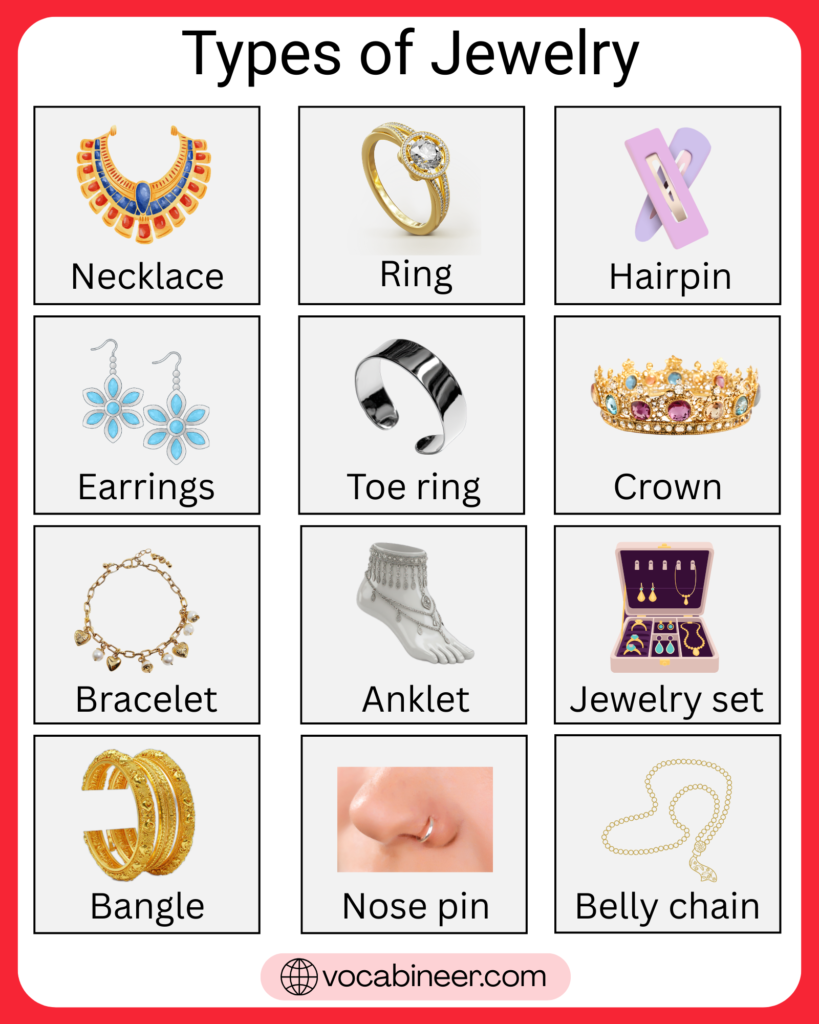
Jewelry Types by Where You Wear It
One of the simplest ways to learn jewelry is by body area. For example, neck jewelry includes necklaces and chains, while ear jewelry includes studs and hoops. In addition, this grouping helps you spot the right jewelry name quickly when you see pictures.
Neck Jewelry
- Necklace: A general neck piece worn as a chain, strand, or design around the neck.
- Chain necklace: A simple chain worn alone or with a pendant for daily style.
- Pendant necklace: A necklace with a hanging charm or design piece in the center.
- Locket: A pendant that opens and can hold a small photo or keepsake.
- Choker: A short necklace that sits close to the neck for a bold look.
- Mangalsutra: A traditional necklace worn in South Asian culture, often linked with marriage.
Ear Jewelry
- Stud earrings: Small earrings that sit on the earlobe and suit everyday wear.
- Hoop earrings: Round earrings in a loop shape, ranging from small to large sizes.
- Drop earrings: Earrings that hang below the earlobe for a longer, elegant look.
- Dangle earrings: Hanging earrings that move freely and often look more dramatic.
- Huggie earrings: Small hoops that “hug” the earlobe closely for a neat style.
- Ear cuff: An earring that clips around the ear without needing a full piercing.
- Jhumka: A traditional bell-shaped earring common in South Asian jewelry styles.
Hand and Finger Jewelry
- Ring: A circular jewelry piece worn on the finger for style or meaning.
- Engagement ring: A ring given to mark engagement, often with a central stone.
- Wedding band: A ring worn after marriage, usually simple and daily-wear friendly.
- Cocktail ring: A large decorative ring worn for parties and bold fashion looks.
- Signet ring: A ring with a flat top, often showing initials or a symbol.
- Thumb ring: A ring worn on the thumb for style and a modern look.
- Hand chain: A chain that connects a bracelet to a ring for a decorative hand style.
Wrist and Arm Jewelry
- Bracelet: A jewelry piece worn around the wrist in many styles and materials.
- Bangle: A stiff bracelet, often round, worn alone or in sets.
- Cuff bracelet: A bracelet with an open gap that slips on and looks bold.
- Charm bracelet: A bracelet with small hanging charms that show personal style.
- Tennis bracelet: A bracelet with a line of stones, often worn for a neat, elegant look.
- Wristwatch bracelet: A jewelry-style bracelet that looks like a watch strap for fashion.
- Armlet: An upper-arm bracelet worn above the elbow for traditional or party looks.
Foot and Ankle Jewelry
- Anklet: A jewelry piece worn around the ankle for a light, stylish look.
- Payal: A traditional South Asian anklet, often worn in pairs and sometimes with small bells.
- Toe ring: A ring worn on the toe, common in traditional and bridal looks.
- Ankle chain: A thin chain anklet worn for simple daily style.
Hair and Head Jewelry
- Hair pin jewelry: Decorative pins used to style hair while adding shine and detail.
- Hair comb jewelry: A decorative comb worn in the hair for formal or bridal looks.
- Headband jewelry: A headband with stones or design work used for party and wedding styles.
- Maang tikka: A traditional forehead jewelry piece worn with bridal or festive outfits.
Body Jewelry
- Nose stud: A small nose jewelry piece worn for a simple look.
- Nose ring: A hoop-style nose jewelry piece worn for traditional or modern style.
- Navel ring: A belly button jewelry piece worn as body fashion.
- Body chain: A chain worn across the body for a stylish layered look.
- Waist chain (belly chain): A chain worn around the waist for traditional and fashion outfits.
- Belly chain: A waist chain style used for beachwear, parties, and bridal looks.
Jewelry Materials and Finishes
Material and finish change how jewelry looks, feels, and lasts. For example, gold and silver are common for fine jewelry, while plated and costume jewelry are common for fashion use. In addition, stones like diamonds and pearls create their own jewelry types, so this section keeps the material names clear.
Gold, Silver, and Platinum
- Gold jewelry: Jewelry made from gold, often chosen for weddings and long-term wear.
- Silver jewelry: Jewelry made from silver, popular for daily wear and simple styles.
- Sterling silver (925) jewelry: Silver jewelry marked 925, often used for better quality silver pieces.
- Platinum jewelry: A premium metal jewelry type known for strength and long wear.
Plated Jewelry
- Gold-plated jewelry: Jewelry with a thin gold layer over another metal for a gold look.
- Silver-plated jewelry: Jewelry with a silver layer over another metal for a silver finish.
- Rose gold-plated jewelry: Plated jewelry with a warm pink-gold color finish.
Stainless Steel and Titanium
- Stainless steel jewelry: Strong jewelry that resists rust and suits daily use.
- Titanium jewelry: Lightweight, strong jewelry often used for rings and modern styles.
Brass and Copper
- Brass jewelry: Affordable jewelry with a warm gold-like color, common in traditional designs.
- Copper jewelry: Jewelry made from copper, often used in handmade and traditional styles.
Diamonds, Gemstones, and Pearls
- Diamond jewelry: Jewelry made with diamonds, often used in rings, earrings, and bridal sets.
- Gemstone jewelry: Jewelry made with stones such as ruby, emerald, sapphire, or zircon.
- Birthstone jewelry: Jewelry made with a birthstone linked with a birth month.
- Pearl jewelry: Jewelry made with pearls, often used for classic and formal looks.
Costume and Artificial Jewelry
- Costume jewelry: Fashion jewelry made from lower-cost materials for style and trend looks.
- Artificial jewelry: A common term for non-precious jewelry used for everyday fashion.
- Fashion jewelry: Jewelry made mainly for style, often matching outfits and trends.
Jewelry for Occasions and Looks
People also choose jewelry based on when they wear it and how they want it to look. For example, office jewelry stays simple, while party jewelry looks bolder. In addition, bridal and traditional jewelry often include heavier pieces and matching sets, so this section groups jewelry by common occasions.
Everyday and Office Jewelry
- Everyday jewelry: Simple pieces worn daily, such as small studs, thin chains, and basic rings.
- Office jewelry: Neat jewelry made for work settings, usually minimal and easy to match.
- Minimalist jewelry: Small, clean jewelry designs that keep the look simple and modern.
Party and Statement Jewelry
- Party jewelry: Bold jewelry worn for events, often with shine, stones, and heavier designs.
- Statement jewelry: Jewelry made to stand out, such as large earrings or chunky necklaces.
- Cocktail jewelry: Party-style jewelry often focused on big rings and dressy looks.
Bridal and Wedding Jewelry
- Bridal jewelry: Jewelry worn by brides, often matching the dress and event style.
- Wedding jewelry: Jewelry worn at wedding events, including rings and matching sets.
- Bridal set: A matching jewelry set often including necklace, earrings, and sometimes bangles.
Traditional Jewelry
- Traditional jewelry: Cultural jewelry styles worn for festivals, weddings, and special events.
- Ethnic jewelry: Jewelry linked with cultural designs, patterns, and common traditional materials.
- Temple jewelry: A traditional style often used in South Asian bridal and festive looks.
Modern and Minimalist Jewelry
- Modern jewelry: Simple and trend-based jewelry styles used in current fashion.
- Stackable rings: Rings made to wear in layers for a modern look.
- Layered necklaces: Two or more necklaces worn together for a styled look.
Handmade and Personalized Jewelry
- Handmade jewelry: Jewelry made by hand, often with unique design and craft detail.
- Personalized jewelry: Jewelry customized with initials, names, or dates.
- Name necklace: A necklace that shows a name or word as the main design.
- Initial pendant: A pendant made with a single letter for simple personalization.
Jewelry Sets and Matching Pieces
Jewelry sets are groups of pieces made to match in design and color. Because sets save time and create a complete look, they are common for bridal wear, parties, and traditional outfits.
- Necklace set: A set that includes a necklace with matching earrings.
- Earrings set: A matching pair or group of earrings made in the same design.
- Pearl set: A set made with pearls, often including necklace and earrings.
- Matching jewelry set: A complete set with several matching pieces for one look.
- Bridal set: A heavier matching set made for wedding wear and bridal outfits.
Jewelry Names List
Here is a quick scan list of common jewelry names. Use it to recognize jewelry types and remember the main names.
- Necklace
- Chain necklace
- Pendant necklace
- Locket
- Choker
- Mangalsutra
- Stud earrings
- Hoop earrings
- Drop earrings
- Dangle earrings
- Huggie earrings
- Ear cuff
- Jhumka
- Ring
- Engagement ring
- Wedding band
- Cocktail ring
- Signet ring
- Thumb ring
- Hand chain
- Bracelet
- Bangle
- Cuff bracelet
- Charm bracelet
- Tennis bracelet
- Armlet
- Anklet
- Payal
- Toe ring
- Hair pin jewelry
- Hair comb jewelry
- Headband jewelry
- Maang tikka
- Nose stud
- Nose ring
- Navel ring
- Body chain
- Waist chain
- Gold jewelry
- Silver jewelry
- Platinum jewelry
- Gold-plated jewelry
- Stainless steel jewelry
- Diamond jewelry
- Gemstone jewelry
- Pearl jewelry
- Costume jewelry
- Bridal set
- Necklace set
Gold vs Silver vs Platinum Jewelry
Gold, silver, and platinum are all used in fine jewelry, yet they differ in look, strength, and price. With its warm tone, gold often feels traditional, while silver looks brighter and suits everyday styles. Platinum stands out as the more premium option because it stays highly durable, so the best choice depends on your budget, your style, and how often you wear it.
| Metal | Look | Durability | Common Use |
|---|---|---|---|
| Gold | Warm yellow tone | Strong for daily wear | Rings, necklaces, bridal jewelry |
| Silver | Bright white tone | Softer than gold | Earrings, chains, daily jewelry |
| Platinum | Cool white tone | Very durable | Premium rings and fine jewelry |
Real Jewelry vs Costume Jewelry
Real jewelry uses precious metals and stones, while costume jewelry uses lower-cost materials made mainly for fashion. Because of that, real jewelry often lasts longer, while costume jewelry is easier to buy for trends and variety.
| Type | Material | Price | Best For |
|---|---|---|---|
| Real jewelry | Gold, silver, platinum, real stones | Higher | Long-term wear and gifting |
| Costume jewelry | Plated metals, artificial stones | Lower | Fashion looks and daily variety |
FAQs
Main types include necklaces, earrings, rings, bracelets, bangles, anklets, and body jewelry like nose rings and waist chains.
Real jewelry uses precious metals and stones, while costume jewelry uses lower-cost materials mainly for fashion and short-term style.
Simple pieces like stud earrings, thin chains, small rings, and basic bracelets work well for daily wear because they feel light and easy.
A jewelry set is a group of matching pieces, such as a necklace with earrings, made to wear together for one complete look.
Plated jewelry has a thin layer of gold or silver over another metal, so it gives a similar look at a lower price.
Conclusion
Types of jewelry become easier to understand when you group them by where you wear them, what they are made from, and when you use them. Because each category has its own common names, this approach helps you recognize jewelry pieces faster and match them to outfits and occasions.
At the same time, learning jewelry names builds stronger everyday vocabulary, whether you wear a simple chain necklace, choose a bridal set, or pick a gemstone ring for a special event.
Read More