Types of mirrors are the common mirror categories people recognize by placement, purpose, shape, and design. These mirror types help readers understand how mirrors are grouped and how one kind differs from another in everyday use.
In this article, you’ll learn the main types of mirrors, how each category is named, and how to tell them apart more easily. You’ll also see a mirror names list, a quick comparison, and simple answers to common questions.
In This Page
Common Types of Mirrors
Mirrors come in several types, and each one is known by how it is used or how it looks. Some are named by where they go, while others are named by their shape or design.
- Wall mirror: A mirror designed to hang or mount on a wall.
- Floor mirror: A mirror that stands on the floor, often with a support frame.
- Leaning mirror: A large mirror that rests against a wall instead of hanging.
- Over-the-door mirror: A mirror that hangs over the top of a door.
- Full-length mirror: A tall mirror made to show most or all of the body.
- Vanity mirror: A mirror used for makeup, shaving, and other close-up tasks.
- Accent mirror: A mirror used mainly to add style and visual interest.
- Round mirror: A circular mirror often used for a softer look.
- Oval mirror: An elongated round mirror with a smooth curved shape.
- Square mirror: A mirror with four equal sides for a balanced look.
- Rectangular mirror: A long or wide mirror with straight sides and corners.
- Arched mirror: A mirror with a curved top that adds a softer design detail.
- Framed mirror: A mirror surrounded by a visible frame.
- Frameless mirror: A mirror with no outer frame for a cleaner look.
- Beveled mirror: A mirror with angled edges that create a decorative finish.
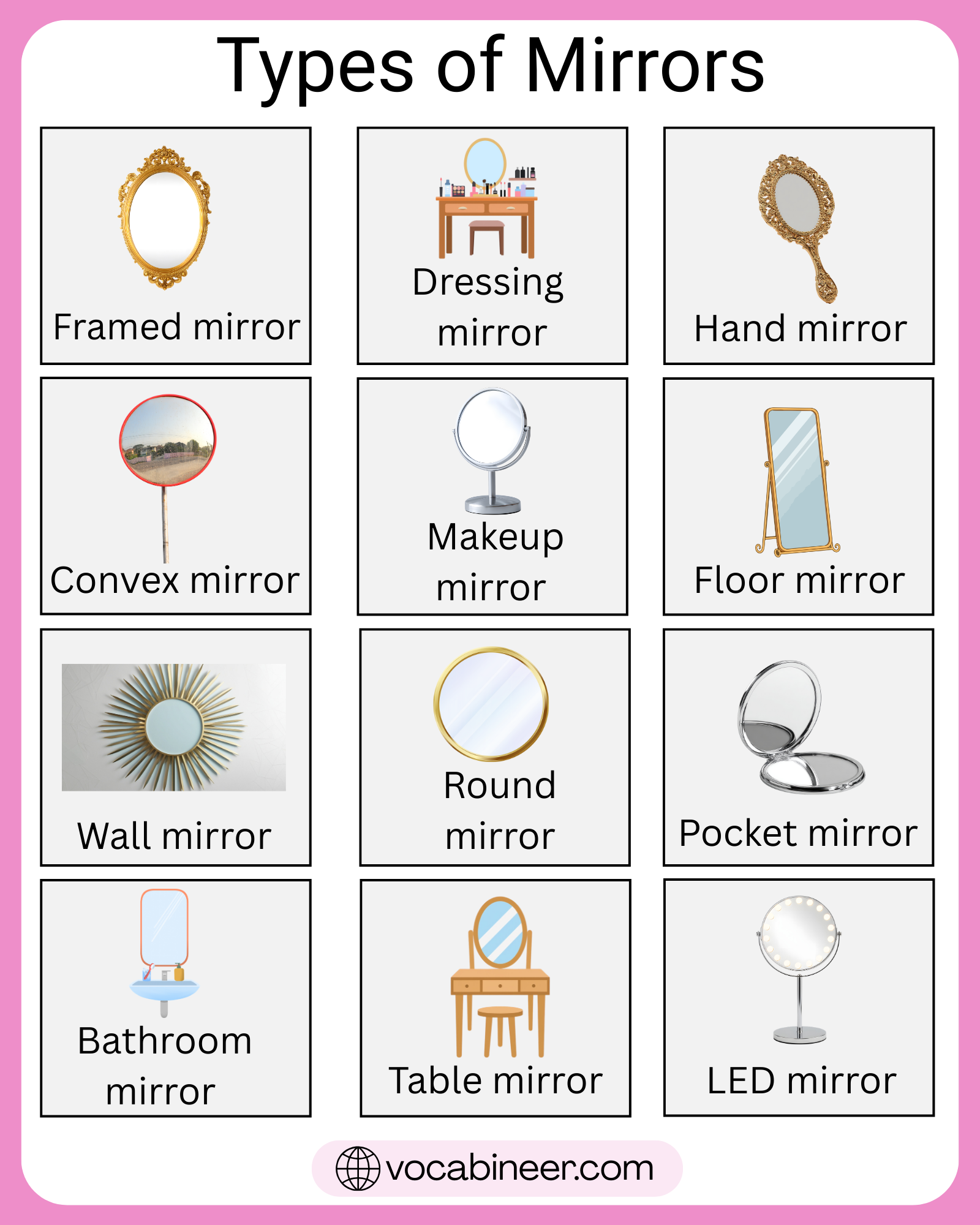
Mirrors by Placement
Some mirror types are named by where they are placed. This makes them easier to recognize because the name often tells you how the mirror is used in a room.
- Wall mirror: Mounted on a wall and commonly used in bathrooms, bedrooms, entryways, and living rooms.
- Floor mirror: Stands on the floor and works well in bedrooms and dressing areas.
- Leaning mirror: Rests against a wall and is often chosen for both function and style.
- Over-the-door mirror: Hangs over a door and saves space in smaller rooms.
Mirrors by Purpose
Some mirrors are grouped by what they help you do. These names are practical, so they are usually easy to understand.
- Full-length mirror: Used to see most or all of the body when getting dressed.
- Vanity mirror: Used for close-up grooming tasks like makeup, shaving, or skincare.
- Accent mirror: Used to decorate a room while still offering a reflective surface.
Mirrors by Shape
Mirror shapes help people recognize different types quickly. In many cases, the shape also changes the overall look of the mirror.
- Round mirror: A circular mirror often used to create a softer and more balanced look.
- Oval mirror: A mirror with a rounded, stretched shape that works well in bathrooms, bedrooms, and decorative spaces.
- Square mirror: A mirror with four equal sides that gives a neat and structured appearance.
- Rectangular mirror: A mirror with straight sides and a longer shape, often used for practical everyday viewing.
- Arched mirror: A mirror with a curved top that adds a softer and more stylish design detail.
Mirrors by Design
Some mirror types are grouped by how they are finished or built. This helps readers tell the difference between simpler mirror styles and more decorative ones.
- Framed mirror: A mirror with a visible outer frame made from wood, metal, plastic, or another material.
- Frameless mirror: A mirror without an outer frame, often chosen for a clean and simple look.
- Beveled mirror: A mirror with angled edges that create a polished and decorative finish.
Mirror Names List
This quick list makes the common mirror names easier to scan and remember.
- Wall mirror
- Floor mirror
- Leaning mirror
- Over-the-door mirror
- Full-length mirror
- Vanity mirror
- Accent mirror
- Round mirror
- Oval mirror
- Square mirror
- Rectangular mirror
- Arched mirror
- Framed mirror
- Frameless mirror
- Beveled mirror
Quick Comparison of Mirror Types
This comparison helps you see how mirror types differ by category and common use.
| Mirror type | Main category | Common use |
|---|---|---|
| Wall mirror | Placement | Everyday wall-mounted use |
| Floor mirror | Placement | Dressing and full view |
| Leaning mirror | Placement | Outfit checking and decor |
| Over-the-door mirror | Placement | Space-saving viewing |
| Full-length mirror | Purpose | Full-body viewing |
| Vanity mirror | Purpose | Makeup and grooming |
| Accent mirror | Purpose | Decoration and visual interest |
| Round mirror | Shape | Soft decorative look |
| Oval mirror | Shape | Balanced decorative use |
| Square mirror | Shape | Clean, structured look |
| Rectangular mirror | Shape | Practical everyday use |
| Arched mirror | Shape | Decorative styling |
| Framed mirror | Design | Traditional or styled finish |
| Frameless mirror | Design | Clean, simple finish |
| Beveled mirror | Design | Decorative edge detail |
FAQs
The main types of mirrors include wall mirrors, floor mirrors, leaning mirrors, over-the-door mirrors, full-length mirrors, vanity mirrors, and shape-based styles.
A full-length mirror is best for full-body viewing because it is tall enough to show most or all of the body.
A framed mirror has a visible border around it, while a frameless mirror has no outer frame and looks simpler.
Identify them by placement, purpose, shape, and design. Most mirror names describe one of these features clearly.
The most common mirror shapes are round, oval, square, rectangular, and arched.
Summary
Types of mirrors are usually grouped by placement, purpose, shape, and design. Common examples include wall mirrors, floor mirrors, full-length mirrors, vanity mirrors, round mirrors, and framed mirrors.
Once you understand these groups, mirror names become much easier to recognize. That also helps you tell one type from another without confusion.
Read More