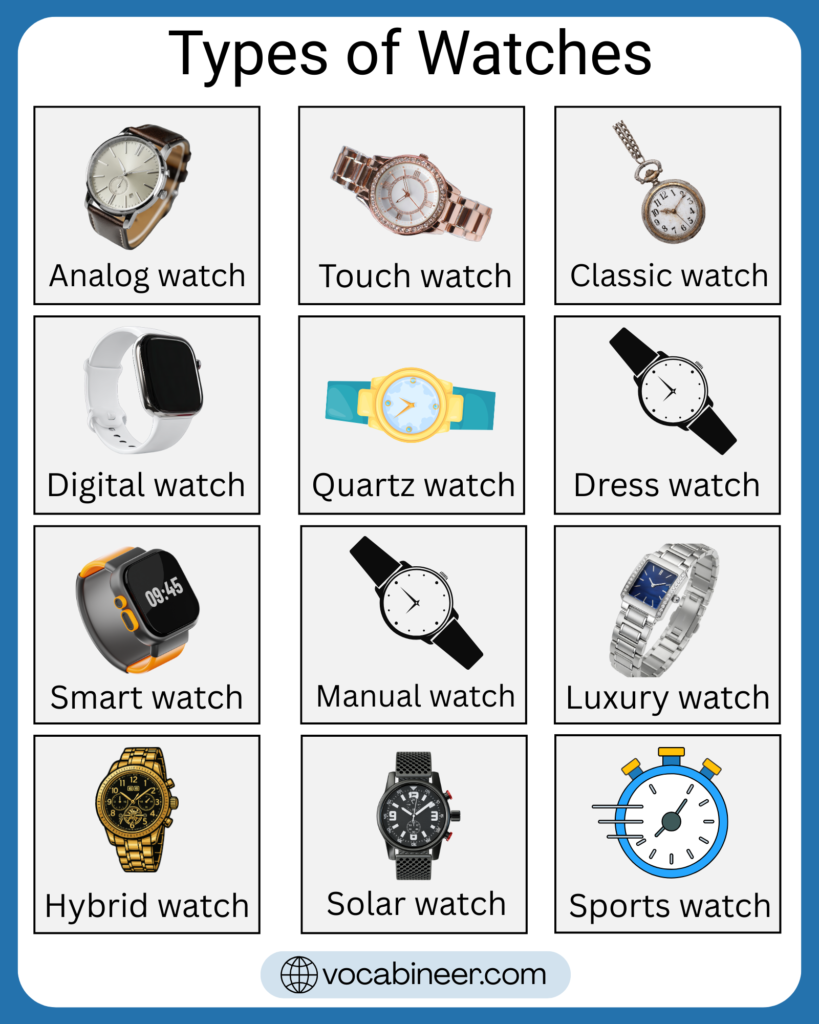
Types of watches are the common watch styles grouped by display, movement, features, and use, and they include analog, digital, quartz, automatic, smartwatch, and many other popular names. These watch types help you recognize how a watch shows time, how it runs inside, and what it is made to do.
In this post, you will learn types of watches in a clear order with names, short uses, and pictures where relevant. It covers watch display types, movement types, feature-based watches like chronograph and GMT, and style types like dress and sports watches, so the topic is easier to recognize, compare, and remember.
In This Page
Main Types of Watches
Watches can be grouped by how they show time, how they work inside, and what they are used for. Because of that, this quick overview helps you understand the main watch categories before the detailed types.
- Analog watch: Shows time with hands on a dial.
- Digital watch: Shows time with numbers on a screen.
- Hybrid watch: Mixes analog hands with smart or digital features.
- Quartz watch: Uses a battery and quartz movement for accurate time.
- Mechanical watch: Works with gears and a mainspring, without a battery.
- Automatic watch: A mechanical watch that winds itself through wrist movement.
- Smartwatch: A watch that connects to a phone and runs apps and notifications.
- Sports watch: A watch made for active use, often stronger and more water-resistant.
- Dress watch: A simple, slim watch made for formal outfits.
Types of Watches by Display
How a watch displays time is the easiest way to identify it. For example, some watches use hands, while others use numbers. In addition, hybrid styles combine both for a mixed look.
Analog Watches
- Analog watch: Uses hour and minute hands on a dial for classic time display.
- Three-hand watch: An analog watch with hour, minute, and second hands for simple time reading.
- Two-hand watch: An analog watch with only hour and minute hands for a clean, minimal look.
Digital Watches
- Digital watch: Shows time in numbers on a digital screen.
- LED watch: A digital watch that uses LED lights to show time clearly.
- LCD watch: A digital watch that uses an LCD screen and is common in everyday watches.
Hybrid Watches
- Hybrid watch: Looks like an analog watch but adds basic smart features.
- Hybrid smartwatch: A hybrid watch that connects to a phone for notifications and tracking.
- Analog-digital watch: A watch that shows time with both hands and a small digital screen.
Types of Watches by Movement
Movement means the system inside the watch that keeps time. While the display shows the time, the movement controls how the watch runs. Because movement types affect maintenance and feel, this section helps you understand the most common names.
Quartz Watches
- Quartz watch: Uses a battery and quartz system for steady, accurate timekeeping.
- Analog quartz watch: A quartz watch that uses hands on a dial for a classic look.
- Digital quartz watch: A quartz watch that shows time on a screen for easy reading.
Mechanical Watches
- Mechanical watch: Runs on gears and a wound spring, so it does not need a battery.
- Hand-wind watch: A mechanical watch you wind by hand using the crown.
- Skeleton mechanical watch: A mechanical watch with a see-through design that shows the gears.
Automatic Watches
- Automatic watch: A mechanical watch that winds itself through wrist movement.
- Self-winding watch: Another common name for an automatic watch because it winds as you wear it.
- Automatic skeleton watch: An automatic watch with a see-through look that shows the moving parts.
Watches by Key Features
Watch features describe what a watch can do besides showing time. For example, some watches track fitness, while others help with travel, diving, or timing events. In addition, many people search these feature names directly, so learning them improves watch vocabulary.
Smartwatches
- Smartwatch: Connects to a phone and shows calls, messages, and app alerts.
- Wear OS smartwatch: A smartwatch that uses a common smart system for apps and phone use.
- Standalone smartwatch: A smartwatch that can work more independently for calls or data in some models.
Fitness Watches
- Fitness watch: Tracks steps, workouts, and basic health data.
- Heart rate watch: A fitness watch that measures heart rate during daily activity or exercise.
- GPS fitness watch: A fitness watch that tracks route and distance for running or cycling.
Chronograph Watches
- Chronograph watch: A watch with a stopwatch feature for timing events.
- Racing chronograph: A chronograph often used for speed and timing, commonly linked with motorsports style.
- Pilot chronograph: A chronograph style used for timing and quick reading, often linked with aviation looks.
GMT Watches
- GMT watch: Shows two time zones, so it helps with travel and global time tracking.
- Dual time watch: A watch that shows a second time zone, often through an extra hand or dial.
- World time watch: A watch that helps track time across multiple cities and time zones.
Diving Watches
- Diving watch: A watch made for water use, with strong sealing and clear visibility.
- Water-resistant sports watch: A strong watch made to handle water splashes and active use.
- Dive bezel watch: A diving watch with a rotating bezel used for timing underwater.
Solar Watches
- Solar watch: Uses light to charge the battery, so it can run longer without battery changes.
- Solar digital watch: A solar watch with a screen display for easy reading and long use.
- Solar analog watch: A solar watch with hands and a dial for a classic look.
Alarm Watches
- Alarm watch: A watch that can ring or beep to alert you at a set time.
- Digital alarm watch: A digital watch that includes alarm, timer, and often a stopwatch.
- Multi-alarm watch: A watch that lets you set more than one alarm time.
Skeleton Watches
- Skeleton watch: A watch with a see-through design that shows the movement inside.
- Skeleton dial watch: A watch with an open dial area that reveals gears and parts.
- Full skeleton watch: A watch where most of the front shows the inner mechanism clearly.
Watches by Use and Style
Use and style explain where people wear a watch and what look it matches best. For example, dress watches suit formal outfits, while sports and field watches suit active daily wear. In addition, some styles focus on toughness, while others focus on luxury design.
Dress Watches
- Dress watch: A slim, simple watch made for formal outfits and office wear.
- Minimalist dress watch: A clean dress watch style with a simple dial and fewer markings.
- Leather strap dress watch: A dress watch often paired with a leather strap for a formal look.
Casual Watches
- Casual watch: A daily wear watch that matches relaxed outfits and basic routines.
- Everyday watch: A simple casual watch made for regular use without heavy features.
- Casual digital watch: A basic digital watch used for comfort and easy time reading.
Sports Watches
- Sports watch: A strong watch made for active use, often with better durability.
- Shock-resistant watch: A sports watch built to handle bumps and rough use.
- Water-resistant sports watch: A sports watch made to handle water exposure during activity.
Field Watches
- Field watch: A simple, easy-to-read watch made for outdoor and daily tough use.
- Outdoor watch: A field-style watch used for hiking, travel, and regular active wear.
- Canvas strap field watch: A field watch often paired with a fabric strap for comfort and grip.
Pilot Watches
- Pilot watch: A watch with clear, readable numbers and a style linked with aviation use.
- Aviator watch: Another name for a pilot watch, often with a bold dial and clear markers.
- Pilot watch with chronograph: A pilot style that adds stopwatch timing for tracking tasks.
Military Watches
- Military watch: A tough, readable watch made for rugged daily use and simple tracking.
- Tactical watch: A military-style watch made for stronger straps, rough use, and outdoor wear.
- Military field watch: A field watch style that matches military design and durability needs.
Luxury Watches
- Luxury watch: A premium watch known for fine finish, brand value, and quality materials.
- Designer watch: A fashion-forward premium watch linked with well-known designer labels.
- High-end mechanical watch: A luxury watch that uses a mechanical movement for classic value.
Fashion Watches
- Fashion watch: A style-first watch made mainly to match outfits and trends.
- Statement watch: A bold fashion watch designed to stand out.
- Bracelet watch: A fashion watch that looks like jewelry while still telling time.
Pocket Watches
- Pocket watch: A watch carried in a pocket, often attached to a chain.
- Open-face pocket watch: A pocket watch without a front cover for quick viewing.
- Hunter pocket watch: A pocket watch with a front cover that protects the dial.
Watch Names List
Watch names are easier to review in one clean list. Use this list to scan common watch types and remember the main names.
- Analog watch
- Digital watch
- Hybrid watch
- Quartz watch
- Mechanical watch
- Automatic watch
- Smartwatch
- Fitness watch
- Chronograph watch
- GMT watch
- World time watch
- Diving watch
- Solar watch
- Alarm watch
- Skeleton watch
- Dress watch
- Casual watch
- Sports watch
- Field watch
- Pilot watch
- Military watch
- Luxury watch
- Fashion watch
- Pocket watch
Quartz vs Automatic vs Mechanical Watches
These three movements are common, yet they work differently. Quartz uses a battery, mechanical uses a wound spring, and automatic winds itself as you wear it. Because of that, the best choice depends on maintenance, feel, and personal preference.
| Watch Type | How It Works | Power Source | Key Point |
|---|---|---|---|
| Quartz | Electronic timekeeping | Battery | Very accurate and low upkeep |
| Mechanical | Gears and mainspring | Hand winding | Classic feel, needs winding |
| Automatic | Self-winding mechanical | Wrist movement | Winds while worn, still mechanical |
Analog vs Digital Watches
Analog and digital watches both show time, but they display it in different ways. An analog uses hands and a dial, while digital shows numbers on a screen. So, the choice depends on reading style, look, and feature needs.
| Watch Type | Display | Best For | Key Point |
|---|---|---|---|
| Analog | Hands on a dial | Classic style and formal wear | Simple and traditional |
| Digital | Numbers on a screen | Fast reading and sports use | Often includes extra features |
FAQs
Common types include analog watches, digital watches, quartz watches, automatic watches, smartwatches, sports watches, and dress watches.
Quartz watches use a battery, while automatic watches are mechanical and wind themselves through wrist movement.
Quartz watches and casual watches work well for daily use because they are reliable, easy to maintain, and simple to wear.
A chronograph watch includes a stopwatch feature, so it can time events using extra buttons and small timing dials.
A GMT watch helps track two time zones, so it is useful for travel, remote work, and international time checking.
Conclusion
Types of watches are easier to understand when you group them by display, movement, key features, and use style. Because each watch type fits a different need, the right choice can improve comfort, function, and everyday time reading.
At the same time, learning watch names helps you recognize common watch types, whether you prefer a quartz daily watch, an automatic classic watch, or a smartwatch with modern features.
Read More