
Locks are mechanical or electronic devices used to secure doors, gates, cabinets, vehicles, and storage spaces. They control access by allowing only authorized users to open or close an entry point. Locks protect homes, offices, shops, and personal belongings by preventing unwanted entry and reducing the risk of theft.
Learning about different types of locks helps readers understand security systems, recognize lock designs, and choose the right lock for specific needs. This article explains lock names, categories, mechanisms, and uses in a clear and organized way, making it easier to understand how modern and traditional locks work in everyday life.
In This Page
What Are Locks and How Do They Work
A lock is a device that fastens or secures an object using a mechanical or electronic mechanism. Traditional locks work with keys, while modern locks may use digital codes, fingerprint scanning, or wireless access. Inside every lock, small moving parts interact to allow or block movement when the correct input is applied.
When the correct key or access method is used, the internal components align and release the locking bolt. This allows the door or object to open. Without the correct input, the mechanism remains blocked, keeping the door or container securely closed.
Different Types of Locks
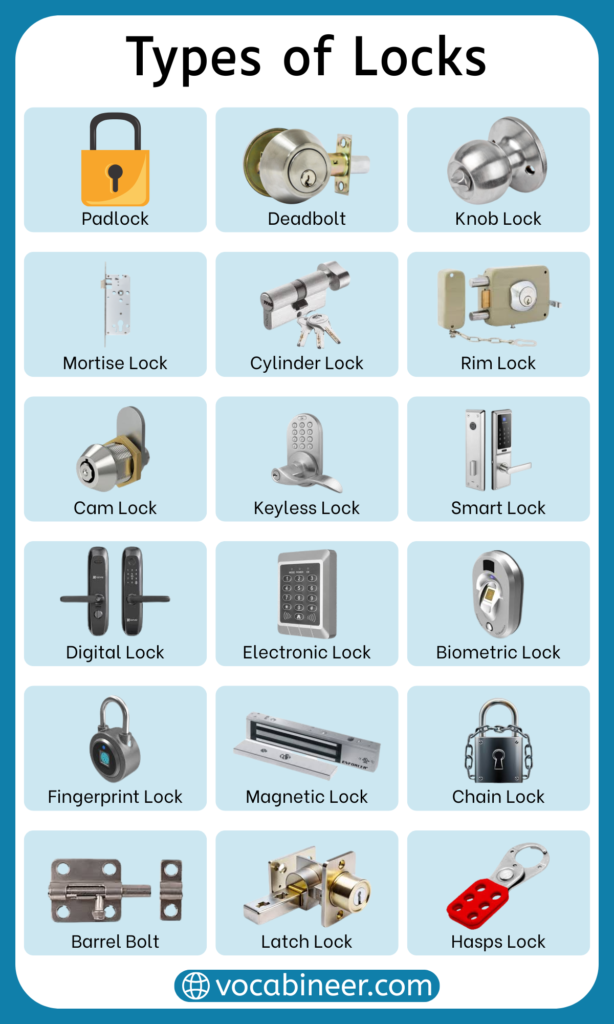
Different types of locks control access and protect homes, offices, vehicles, and storage areas. Each lock uses a unique mechanism, making it suitable for specific security needs and door types.
Below is a concise list of different types of locks with meanings.
- Deadbolt lock: Strong door lock using a solid metal bolt for high security.
- Knob lock: Door knob with built-in locking system for interior doors.
- Lever handle lock: Lock operated by pressing a lever handle downward.
- Cylinder lock: Lock using a removable cylinder and key mechanism.
- Mortice lock: Lock fitted inside the door body for firm security.
- Rim lock: Surface-mounted lock fixed on the inside of doors.
- Padlock: Portable lock used for gates, lockers, and chains.
- Cam lock: Small rotating lock for cabinets and drawers.
- Disc detainer lock: High-security lock using rotating metal discs.
- Tubular lock: Round-shaped lock often used in machines and bikes.
- Latch lock: Spring-based lock that holds doors in place.
- Hasp lock: Fastening lock system used with padlocks.
- Combination lock: Keyless lock operated by number codes.
- Digital lock: Electronic lock using keypad or card access.
- Smart lock: App-controlled lock for modern security systems.
- Biometric lock: Lock using fingerprints or facial recognition.
- Magnetic lock: Electromagnetic lock for commercial doors.
- Bolt lock: Sliding bolt system for doors and windows.
- Slide lock: Horizontal bar lock for basic security.
- Chain lock: Safety lock allowing partial door opening.
The 7 Main Types of Locks
Locks can be grouped into seven main types based on their design, installation method, and security purpose. These core types represent the most commonly used locks in homes, offices, buildings, and daily security systems. Learning these categories helps readers quickly recognize different lock styles and understand their functions.
- Deadbolt locks: Strong security locks that extend a thick metal bolt into the door frame
- Knob locks: Locks built into door handles, commonly used for interior doors
- Lever handle locks: Easy-to-operate locks used in homes, offices, and public buildings
- Mortice locks: Heavy-duty locks installed inside door panels for strong security
- Cylinder locks: Modular locks with removable cylinders used in modern doors
- Rim locks: Surface-mounted locks fixed on the inside of doors
- Padlocks: Portable locks used with chains, hasps, and gates
Types of Locks by Locking Mechanism
Locks are also classified based on how their internal systems operate. The locking mechanism controls how the lock opens and closes, how secure it is, and how resistant it is to tampering. Different mechanisms provide different levels of protection and durability.
The main types of locks by locking mechanism include:
Pin Tumbler Locks
Pin tumbler locks use small pins that must align perfectly when the correct key is inserted. This alignment allows the cylinder to rotate and unlock the door. These are the most widely used locks worldwide.
Wafer Tumbler Locks
Wafer tumbler locks work with flat wafers instead of pins. They are commonly found in cabinets, office furniture, lockers, and light-duty door locks.
Disc Detainer Locks
Disc detainer locks use rotating metal discs for high resistance against lock picking and drilling. They are often used in high-security environments.
Lever Tumbler Locks
Lever tumbler locks use metal levers that must be lifted to precise heights by the key. These locks are commonly used in traditional and commercial security systems.
Magnetic Locks
Magnetic locks operate using magnetic forces to align internal components. They are mainly used in electronic access systems and modern security setups.
Types of Door Locks
Door locks are the most common and important type of security locks used in homes, offices, and buildings. They control entry access and protect people and property. Door locks vary in strength, design, and installation style depending on where they are used. Common types of door locks include:
- Deadbolt locks: Provide strong security by extending a solid bolt into the door frame
- Knob locks: Built into door handles and mainly used for interior doors
- Lever handle locks: Easy to operate and widely used in public and residential buildings
- Mortice locks: Heavy-duty locks fitted inside the door body
- Cylinder locks: Modern locks with replaceable cylindrical units
- Rim locks: Surface-mounted locks commonly used on wooden doors
- Nightlatch locks: Automatic locking systems used on front doors
Types of Sliding Door Locks
Sliding door locks are designed specifically for doors that move horizontally instead of opening inward or outward. These locks prevent sliding movement and keep the door securely closed. They are commonly used in homes, balconies, offices, and glass door systems.
- Hook locks: Use a hook-shaped bolt that locks into the frame
- Clamp locks: Attach directly to the door frame to block movement
- Mortice sliding locks: Built inside the sliding door panel
- Keyed sliding locks: Use keys for added security
- Pin locks: Use metal pins to block door movement
- Foot bolt locks: Floor-mounted locks for sliding doors
Types of Glass Door Locks
Glass door locks are specially designed to secure frameless or framed glass doors without damaging the glass. These locks are commonly used in offices, shops, showrooms, and modern homes.
- Patch locks: Fixed onto glass panels without drilling
- Clamp locks: Grip the glass surface securely
- Sliding glass door locks: Designed for glass sliding systems
- Magnetic glass locks: Use electromagnetic force for locking
- Cylinder glass locks: Use keyed cylinders for access control
- Floor spring locks: Integrated with glass door mechanisms
Types of Window Locks
Window locks are used to secure windows and prevent unauthorized entry while allowing proper ventilation when needed. These locks are important for home security, especially on ground floors, balconies, and easily accessible windows. Window locks come in different designs based on window type and opening style. Common types of window locks include:
- Latch locks: Simple locks that secure window frames together
- Sliding window locks: Designed to stop horizontal window movement
- Casement window locks: Used on outward-opening hinged windows
- Keyed window locks: Provide additional security using a key system
- Pin locks: Use metal pins to block window movement
- Sash window locks: Designed for vertically sliding windows
Types of Smart and Digital Locks
Smart and digital locks use electronic systems instead of traditional keys to control access. These locks offer convenience, remote access, and advanced security features. They are commonly used in modern homes, offices, hotels, and commercial buildings. Common types of smart and digital locks include:
Smart Locks
Smart locks connect with mobile apps, WiFi, or Bluetooth to allow keyless entry, remote locking, and activity monitoring.
Digital Locks
Digital locks operate using keypads, PIN codes, or touch panels for controlled access without physical keys.
Biometric Locks
Biometric locks use fingerprint, face recognition, or iris scanning to allow access only to authorized users.
Types of High Security Locks
High security locks are designed to resist forced entry, drilling, picking, and tampering. These locks use advanced materials, complex mechanisms, and reinforced components to provide maximum protection for homes, offices, and valuable assets. Common types of high security locks include:
- Anti-drill locks: Built with hardened steel to resist drilling attacks
- Anti-pick locks: Designed to prevent lock picking techniques
- Multi-point locking systems: Lock doors at multiple points simultaneously
- Deadbolt security locks: Provide deep bolt extension for strong resistance
- Disc detainer locks: Offer high protection against manipulation
- Electronic security locks: Use advanced access systems and alarms
Locks for Apartments and Flats
Locks used in apartments and flats focus on balancing security, convenience, and space efficiency. These locks protect personal living areas while allowing easy daily access. Many modern apartments also prefer digital locking systems for added convenience and control.
- Deadbolt locks: Provide strong protection for main entrance doors
- Cylinder locks: Allow easy rekeying and flexible installation
- Mortice locks: Offer solid internal locking strength
- Smart locks: Enable keyless entry, remote control, and access monitoring
- Nightlatch locks: Automatically lock when the door closes
- Digital keypad locks: Use PIN codes instead of physical keys
Locks for Shops and Commercial Buildings
Shops and commercial buildings require strong, durable, and reliable locking systems to protect goods, equipment, and business property. These locks are designed for frequent use, higher security demands, and controlled access. Common types of locks used in shops and commercial buildings include:
- High security deadbolt locks: Provide strong resistance against forced entry
- Mortice locks: Used for heavy-duty commercial doors
- Electronic access locks: Allow controlled access through cards, codes, or biometrics
- Roller shutter locks: Secure shop shutters and metal doors
- Padlocks with hardened shackles: Used for storage areas and gates
- Multi-point locking systems: Lock doors at multiple positions for maximum security
Types of Locks for Gates
Gate locks secure outdoor entrances such as garden gates, driveway gates, farm gates, and industrial gates. These locks must withstand weather conditions, heavy use, and physical force while providing reliable security. Common types of locks used for gates include:
- Padlocks: Portable locks used with chains and hasps
- Rim gate locks: Surface-mounted locks suitable for metal and wooden gates
- Deadbolt gate locks: Provide strong security for main gates
- Latch bolt locks: Simple locking systems for garden and yard gates
- Sliding gate locks: Designed for horizontally moving gates
- Electromagnetic gate locks: Used in automated and controlled access gates
Types of Locks for Vehicles
Vehicle locks protect cars, motorcycles, bicycles, and other vehicles from theft and unauthorized access. These locks are designed to secure doors, wheels, steering systems, and storage compartments. Modern vehicle locks also use electronic and smart technology for added security. Common types of locks for vehicles include:
Car Door Lock
- Central locking systems: Lock or unlock all doors simultaneously
- Key-operated door locks: Traditional mechanical locking systems
- Remote locking systems: Operate through remote controls
- Smart key locks: Use wireless access and proximity sensors
- Child safety locks: Prevent rear doors from opening inside
Bike and Motorcycle Lock
- Disc brake locks: Secure motorcycle wheels
- Chain locks: Heavy-duty chains for parking security
- U-locks: Strong metal locks for motorcycle frames
- Handlebar locks: Prevent steering movement
Bicycle Lock
- U-locks: Rigid locks offering high security
- Cable locks: Flexible steel cable locks
- Chain locks: Thick chain locks for outdoor parking
- Folding locks: Compact locks with folding metal bars
Types of Cabinet and Drawer Locks
Cabinet and drawer locks are used to secure storage spaces in homes, offices, schools, and commercial environments. These locks protect documents, tools, valuables, and restricted items while maintaining easy access for authorized users. Common types of cabinet and drawer locks include:
- Cam locks: Simple rotating locks commonly used in cabinets
- Drawer locks: Designed specifically for drawers
- Push locks: Lock automatically when pressed
- Magnetic cabinet locks: Use magnetic keys for child safety
- Electronic cabinet locks: Provide keypad or card-based access
- Keyed furniture locks: Traditional locks for cupboards and desks
Types of Padlocks
Padlocks are portable locks that can be attached to chains, gates, doors, lockers, and storage units. They provide flexible security and are widely used in homes, schools, industries, and outdoor areas. Common types of padlocks include:
- Keyed padlocks: Open with traditional keys
- Combination padlocks: Use number codes instead of keys
- Shrouded shackle padlocks: Protect the shackle from cutting
- Weather-resistant padlocks: Designed for outdoor use
- High-security padlocks: Built with hardened steel for maximum strength
- Smart padlocks: Use Bluetooth or digital unlocking systems
Types of Locks and Keys
Locks and keys work together to control access and provide security. Different lock types use specific key designs that match their internal mechanisms. Understanding lock and key combinations helps readers recognize how access systems operate and how security levels differ. Common types of locks and keys include:
Different Types of Key Locks
- Single cylinder locks: Use a key on one side and a thumb turn on the other
- Double cylinder locks: Require a key on both sides for added security
- Dead key locks: Operate without spring pressure for stronger locking action
- Tubular key locks: Use round keys with circular grooves
- Bit key locks: Use large flat keys common in traditional locks
- Cam locks: Use short flat keys for cabinets and drawers
Types of Keyholes
- Pin tumbler keyholes: Common keyholes used in household door locks
- Lever tumbler keyholes: Found in traditional and commercial locks
- Tubular keyholes: Used for round-key locking systems
- Disc detainer keyholes: Used in high-security locking systems
- Cam lock keyholes: Used in furniture and cabinet locks
Parts of a Lock and Their Functions
A lock contains several internal and external parts that work together to secure doors and objects. Each component plays a specific role in locking, unlocking, and maintaining smooth operation. Knowing these parts helps readers understand how locks function mechanically. Main parts of a lock and their functions include:
- Cylinder: Holds the internal mechanism and controls lock rotation
- Keyway: Slot where the key is inserted
- Pins: Align when the correct key is used
- Plug: Rotates inside the cylinder
- Bolt: Extends into the door frame to secure the door
- Latch: Keeps the door closed when shut
- Strike plate: Metal plate on the door frame receiving the bolt
- Thumb turn: Allows locking and unlocking from inside
- Spindle: Connects door handles to the latch mechanism
- Housing: Outer casing that holds all internal parts
Advantages and Disadvantages of Locks
Each type of lock has its own strengths and limitations. Understanding both advantages and disadvantages helps readers choose locks that best fit their security needs, environment, and budget.
Advantages of Different Types of Locks
- Deadbolt locks: Provide strong protection against forced entry
- Smart locks: Offer keyless access and remote control
- Padlocks: Provide portable and flexible security
- Cylinder locks: Allow easy replacement and maintenance
- Biometric locks: Provide high security through unique identification
Disadvantages of Different Types of Locks
- Knob locks: Provide limited security for external doors
- Mechanical locks: Require physical keys that can be lost
- Smart locks: Depend on power and internet connectivity
- Combination locks: Codes can be forgotten or guessed
- Low-quality locks: Wear out quickly and reduce security
Difference Between Mechanical and Electronic Locks
Mechanical and electronic locks differ mainly in how they control access. Mechanical locks use physical keys and metal parts, while electronic locks rely on digital systems such as PIN codes, cards, or biometric input. Knowing these differences helps in choosing the right lock for security and convenience.
Below is a simple comparison of mechanical locks and electronic locks.
| Feature | Mechanical Locks | Electronic Locks |
|---|---|---|
| Operation | Work using physical keys | Work using codes, cards, or biometrics |
| Power need | Do not require electricity | Require battery or electric power |
| Mechanism | Pins, levers, and cylinders | Sensors, circuits, and motors |
| Ease of use | Simple manual operation | Quick keyless entry |
| Security | Basic to high | Advanced and smart |
| Maintenance | Low | Moderate |
| Common uses | Homes, gates, cupboards | Smart homes, offices, hotels |
How to Choose the Right Lock
Choosing the right lock depends on security needs, door type, location, and daily use. A suitable lock should provide protection, smooth operation, and long-term reliability. Factors such as access method, installation ease, maintenance, and budget also help in selecting a lock that fits both safety requirements and practical comfort.
FAQs About Types of Locks
The main types of locks include deadbolt locks, knob locks, lever handle locks, mortice locks, cylinder locks, rim locks, and padlocks.
The seven types are deadbolt locks, knob locks, lever handle locks, mortice locks, cylinder locks, rim locks, and padlocks.
Deadbolt locks combined with smart or high-security locks provide strong protection for homes.
High-security deadbolt and disc detainer locks are among the strongest locking systems.
Locks work by aligning internal parts using keys, codes, or biometric input to allow controlled access.
Conclusion
Locks play an essential role in protecting homes, offices, vehicles, and personal belongings by controlling access and preventing unauthorized entry. Learning about different types of locks, their mechanisms, uses, and features helps readers understand security systems more clearly. With organized explanations and structured categories, readers can confidently identify lock types and choose suitable locks for everyday safety and protection.
Read More