

Basic English words are the simple everyday words children learn first when they begin learning English. These words help kids name people, places, animals, colors, food, numbers, and common things they see and use every day.
Learning basic English words gives children a strong start in the language. When kids know easy words like book, apple, cat, school, and mother, they can understand simple sentences, speak more confidently, and begin reading and writing with less difficulty. These words are useful at home, in the classroom, and in daily conversation.
In this article, you will learn basic English words for kids through clear vocabulary groups and easy examples. This will help young learners understand, remember, and use common English words with confidence.
In This Page
Simple English Words for Daily Use
These are the words kids hear and use every day — at home, in school, or while playing. Learning these words helps children understand and speak English naturally.
- Eat
- Drink
- Run
- Jump
- Sit
- Stand
- Read
- Write
- Sleep
- Smile
- Cry
- Laugh
- Play
- Walk
- Talk
- Listen
- Look
- See
- Open
- Close
- Wash
- Cook
- Clean
- Draw
- Paint
- Sing
- Dance
- Help
- Give
- Take
- Hold
- Carry
- Bring
- Go
- Come
- Stop
- Start
- End
- Love
- Like
- Hate
- Want
- Need
- Buy
- Sell
- Make
- Build
- Break
- Fix
- Cut
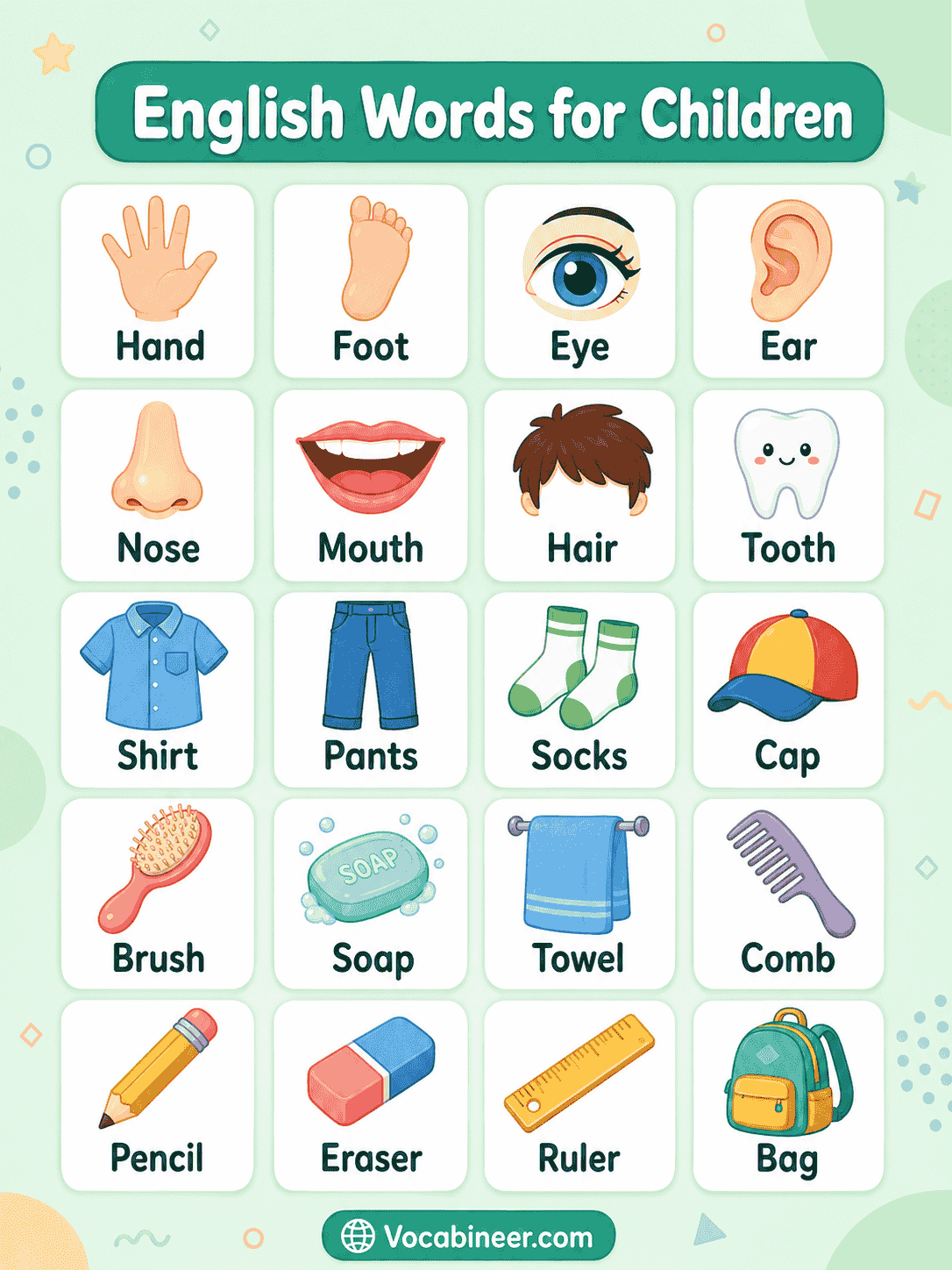
- Brush
- Comb
- Bath
- Wear
- Take off
- Wake
- Think
- Know
- Learn
- Teach
- Ask
- Answer
- Tell
- Say
- Hear
- Smell
- Taste
- Touch
- Swim
- Fly
- Drive
- Ride
- Watch
- Push
- Pull
- Catch
- Throw
- Kick
- Clap
- Jump
- Cook
- Wash
- Dry
- Read
- Sleep
- Smile
- Laugh
- Talk
- Walk
- Run
- Sit
- Stand
- Look
- See
- Smile
- Cry
- Help
- Love
- Play
- Read

100 Basic English Words for Kids with Meaning
At the beginning level, children learn simple words they hear and use every day — at home, in school, or while playing. These basic English words help kids speak, read, and understand English naturally. Each word below comes with a short meaning to make learning clear and simple.
- Eat – To take food into the mouth.
- Drink – To swallow liquid.
- Run – To move quickly.
- Jump – To push yourself off the ground.
- Sit – To rest on a chair.
- Stand – To be on your feet.
- Walk – To move on foot.
- Talk – To say words.
- Read – To look at and understand words.
- Write – To make letters or words.
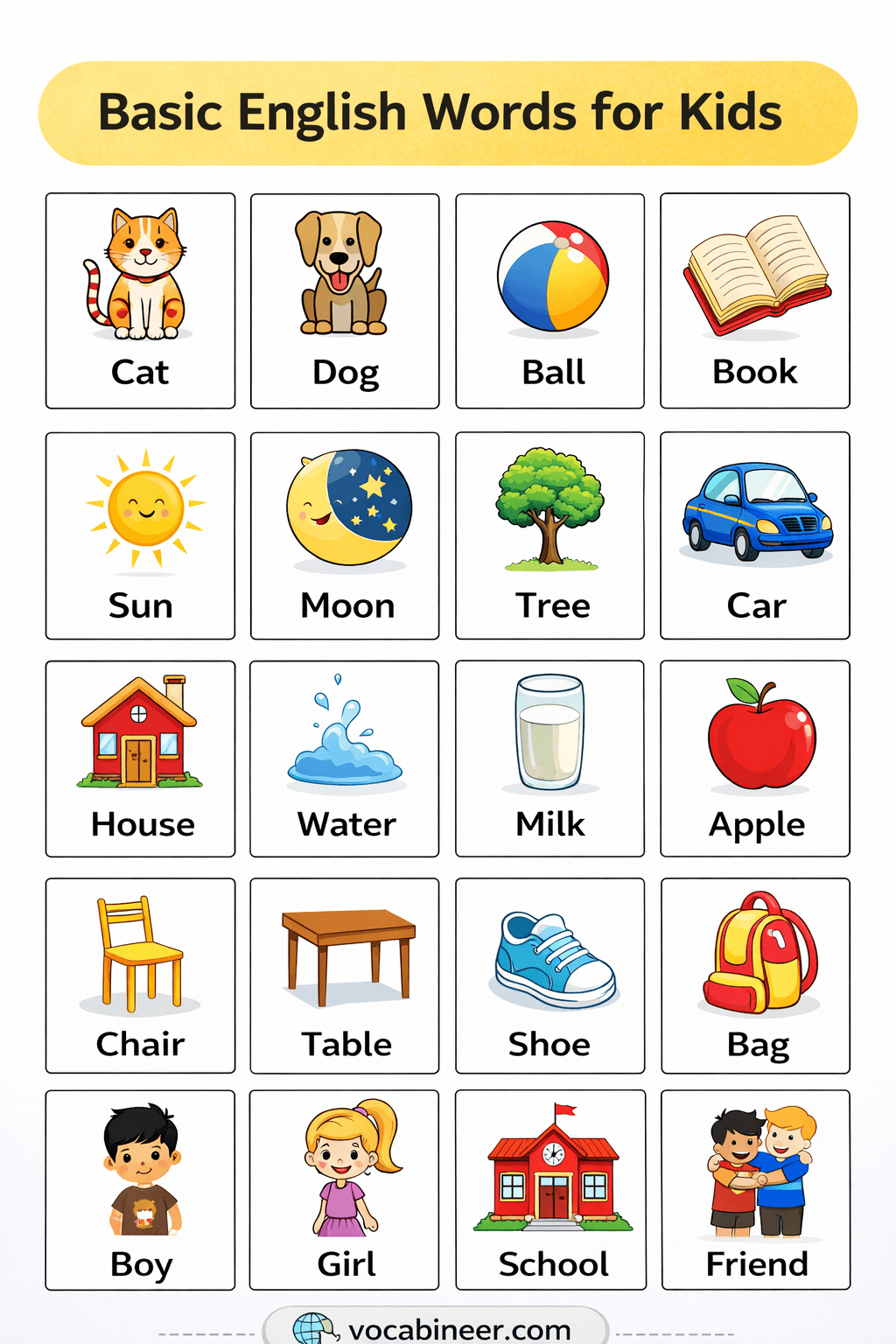
- Boy – A young male child.
- Girl – A young female child.
- Father – A man who cares for you.
- Mother – A woman who cares for you.
- Friend – Someone you like and trust.
- Baby – A very young child.
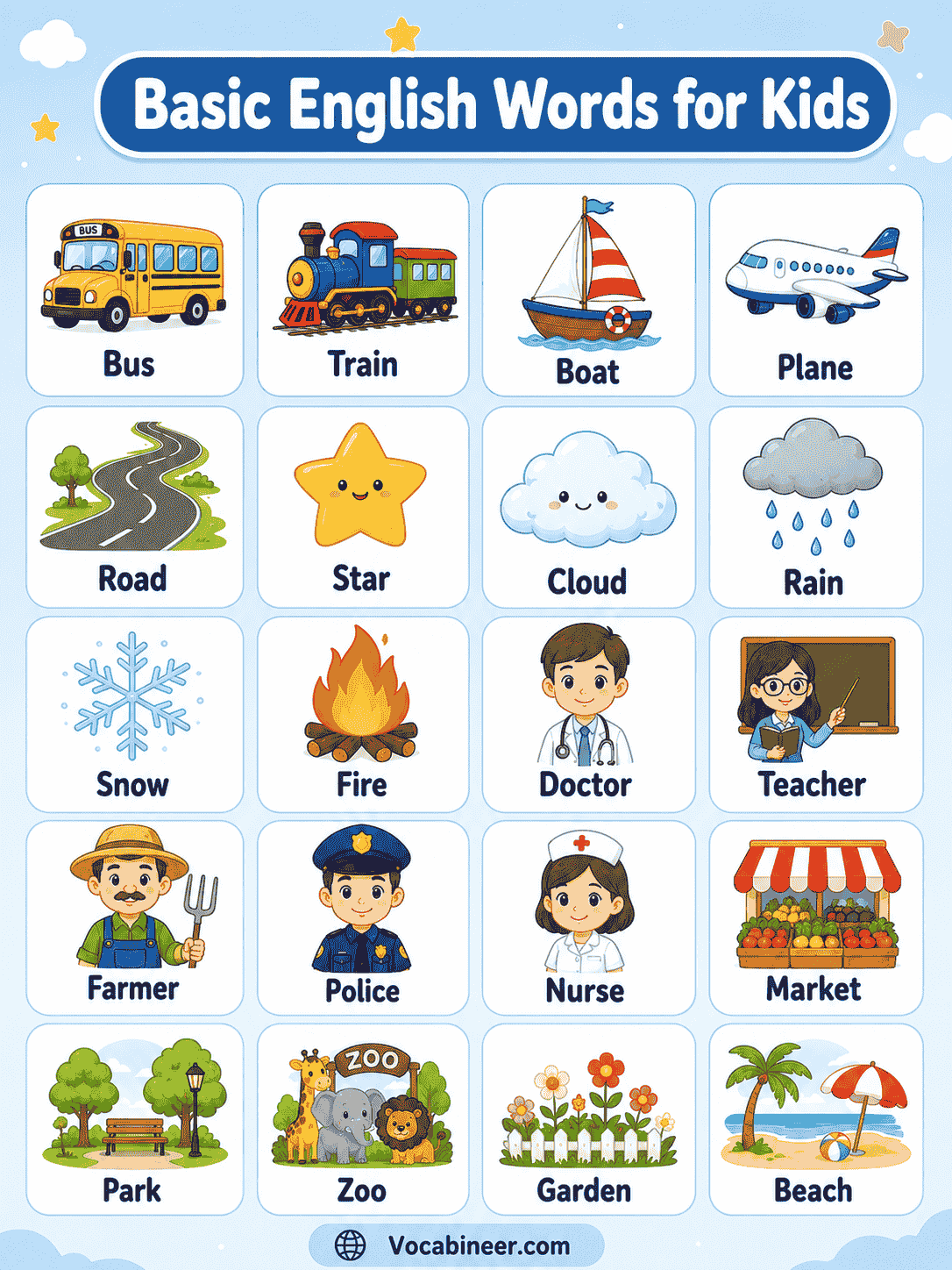
- Teacher – A person who teaches.
- Student – A person who learns.
- Man – An adult male.
- Woman – An adult female.
- Cat – A small pet animal.
- Dog – A pet that barks.
- Cow – A farm animal that gives milk.
- Fish – An animal that lives in water.
- Bird – An animal that can fly.
- Horse – A strong animal for riding.
- Lion – A big wild animal called the king of the jungle.
- Elephant – A large animal with a trunk.
- Rabbit – A small animal that hops.
- Duck – A bird that swims.
- Apple – A round red or green fruit.
- Banana – A long yellow fruit.
- Milk – A white drink from cows.
- Bread – Food made from flour and baked.
- Rice – Small white grains we eat.
- Cake – A sweet baked food.
- Egg – Food that comes from a hen.
- Cheese – Food made from milk.
- Juice – A drink made from fruits.
- Water – A clear liquid we drink.
- Book – Pages to read and learn.
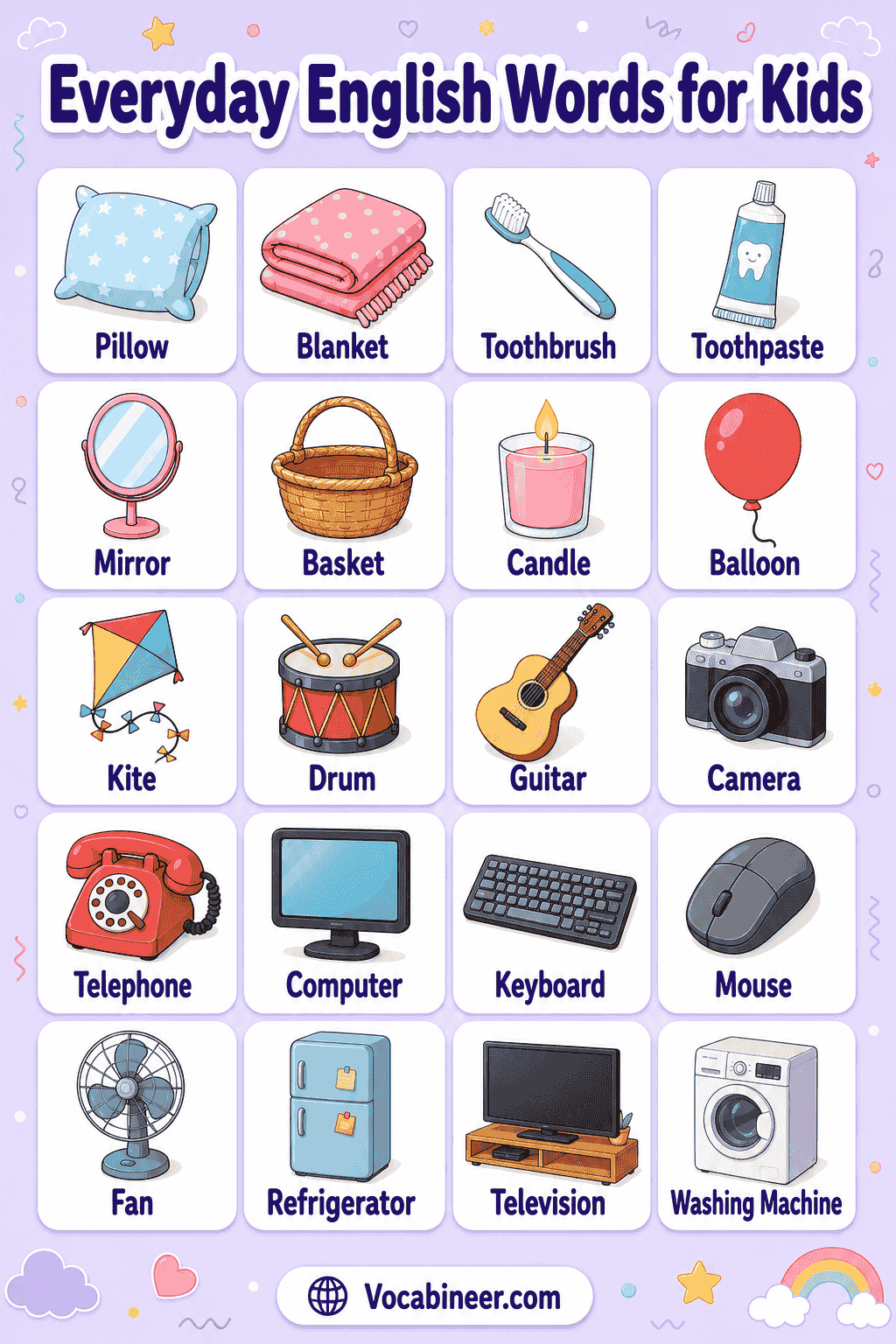
- Pen – Used for writing.
- Pencil – Used to write or draw.
- Eraser – Used to remove writing.
- Bag – Used to carry school items.
- Ruler – Used to measure.
- Desk – A table for study.
- Chair – Something to sit on.
- Chalk – Used to write on a board.
- Board – A flat surface to write on.
- Bed – Used for sleeping.
- Door – Used to enter or exit a room.
- Window – An opening that lets in air and light.
- Table – A flat surface for meals or study.
- Light – Makes the room bright.
- Fan – Moves air to keep us cool.
- Clock – Shows time.
- Cup – Used for drinking.
- Spoon – Used for eating food.
- Plate – Used to serve food.
- Sun – The bright star that gives light.
- Moon – The round white shape seen at night.
- Star – A shining dot in the sky.
- Tree – A tall plant with branches and leaves.
- Flower – A colorful part of a plant.
- Leaf – A green part of a plant.
- Rain – Water falling from clouds.
- Cloud – White shapes in the sky.
- Wind – Air that moves.
- Grass – Small green plants on the ground.
- Red – The color of an apple.
- Blue – The color of the sky.
- Green – The color of grass.
- Yellow – The color of the sun.
- Black – The color of night.
- White – The color of milk.
- Circle – A round shape.
- Square – A shape with four equal sides.
- Triangle – A shape with three sides.
- Star – A shape with five points.
- Car – A vehicle with four wheels.
- Bus – A big vehicle for many people.
- Train – A long vehicle that runs on tracks.
- Plane – A vehicle that flies in the sky.
- Boat – A vehicle that floats on water.
- Bike – A two-wheeled vehicle.
- Ship – A large boat.
- Truck – A big vehicle that carries goods.
- Taxi – A car that carries passengers.
- Helicopter – A flying machine with spinning blades.
- Head – The top part of your body.
- Eyes – Used for seeing.
- Nose – Used for smelling.
- Mouth – Used for eating and talking.
- Ears – Used for hearing.
- Hands – Used for holding things.
- Legs – Used for walking and running.
- Feet – The lower part of your legs.
- Hair – Grows on your head.
- Face – The front part of your head.
Basic English Words for Kindergarten
At kindergarten, we start learning English words that we hear and use every day. These words help us talk, read, and understand the world around us — at home, in school, during playtime, and in nature. Each word has a simple meaning and an easy example sentence to help you remember it better. Let’s explore new words together and have fun learning English!
Food Words for Kindergarten
| Word | Meaning | Example |
|---|---|---|
| Apple | A round red or green fruit. | I eat an apple every day. |
| Bread | Food made from flour and baked. | We eat bread for breakfast. |
| Milk | A white drink from cows. | Milk is good for health. |
| Rice | Small white grains we eat. | I like rice and curry. |
| Cake | A sweet baked food. | It’s my birthday cake! |
| Egg | A food from a hen. | I eat one egg daily. |
| Banana | A long yellow fruit. | The banana is sweet. |
| Orange | A round orange fruit. | I drink orange juice. |
| Cheese | A dairy food made from milk. | I like cheese sandwiches. |
| Juice | A drink made from fruits. | She drinks juice every morning. |
Animal Words for Kindergarten
| Word | Meaning | Example |
|---|---|---|
| Cat | A small pet animal. | The cat is sleeping. |
| Dog | A pet that barks. | The dog runs fast. |
| Cow | A farm animal that gives milk. | The cow eats grass. |
| Fish | An animal that lives in water. | The fish swims fast. |
| Bird | An animal that can fly. | The bird sings beautifully. |
| Horse | A strong animal for riding. | The horse runs quickly. |
| Duck | A bird that swims. | The duck swims in the pond. |
| Lion | The king of the jungle. | The lion roars loudly. |
| Elephant | A big animal with a trunk. | The elephant has big ears. |
| Rabbit | A small animal that hops. | The rabbit eats carrots. |
Home Words for Kindergarten
| Word | Meaning | Example |
|---|---|---|
| Bed | Used for sleeping. | I sleep on my bed. |
| Table | A flat surface for meals. | We eat at the table. |
| Door | An entry to a room. | Please close the door. |
| Chair | Something you sit on. | The chair is soft. |
| Light | Makes the room bright. | Turn on the light. |
| Window | A glass opening for air. | Open the window, please. |
| Fan | Moves air to keep us cool. | The fan is spinning. |
| Clock | Shows time. | The clock is on the wall. |
| Cup | Used for drinking. | I drink tea from a cup. |
| Spoon | Used for eating food. | Use a spoon to eat rice. |
School Words for Kindergarten
| Word | Meaning | Example |
|---|---|---|
| Book | Pages to read and learn. | I read a book. |
| Pen | Used for writing. | I write with a pen. |
| Bag | Used to carry school items. | My bag is heavy. |
| Teacher | A person who teaches. | The teacher is kind. |
| Student | A person who learns. | I am a student. |
| Pencil | Used for writing or drawing. | I sharpen my pencil. |
| Eraser | Used to remove writing. | Use an eraser to clean it. |
| Ruler | Used to measure. | The ruler is on the desk. |
| Desk | A table for study. | The desk is tidy. |
| Chalk | Used to write on the board. | The teacher writes with chalk. |
Nature Words for Kindergarten
| Word | Meaning | Example |
|---|---|---|
| Sun | The star that gives light. | The sun is bright. |
| Moon | The white light at night. | The moon is full tonight. |
| Star | Small shining dots in the sky. | I see stars at night. |
| Tree | A tall plant with branches. | The tree gives shade. |
| Flower | A colorful plant part. | The flower smells nice. |
| Rain | Water falling from clouds. | The rain is falling. |
| Cloud | White shapes in the sky. | The clouds look pretty. |
| Wind | Moving air. | The wind is cool. |
| Leaf | Green part of a plant. | A leaf fell from the tree. |
| Grass | Green plants on the ground. | We play on the grass. |
People and Action Words for Kindergarten
| Word | Meaning | Example |
|---|---|---|
| Boy | A young male child. | The boy runs fast. |
| Girl | A young female child. | The girl is smiling. |
| Father | A man who cares for you. | My father drives me to school. |
| Mother | A woman who cares for you. | My mother cooks food. |
| Friend | Someone you like and trust. | My friend is kind. |
| Baby | A very young child. | The baby is sleeping. |
| Man | An adult male. | The man is reading. |
| Woman | An adult female. | The woman is cooking. |
| Family | Parents and children together. | My family is big. |
| People | Many persons together. | The people are clapping. |
Colors and Shapes Words for Kindergarten
| Word | Meaning | Example |
|---|---|---|
| Red | The color of an apple. | The ball is red. |
| Blue | The color of the sky. | The sea is blue. |
| Green | The color of grass. | The leaf is green. |
| Yellow | The color of a banana. | The sun is yellow. |
| Black | The color of night. | The cat is black. |
| White | The color of milk. | The snow is white. |
| Circle | A round shape. | The moon is a circle. |
| Square | A shape with four equal sides. | The box is a square. |
| Triangle | A shape with three sides. | The roof is a triangle. |
| Star | A shiny shape with points. | I draw a star. |
Transport Words for Kindergarten
| Word | Meaning | Example |
|---|---|---|
| Car | A vehicle with four wheels. | My father drives a car. |
| Bus | A large vehicle for many people. | We go to school by bus. |
| Train | Moves on tracks. | The train is long. |
| Plane | Flies in the sky. | The plane is flying high. |
| Boat | Moves on water. | We ride a boat. |
| Bike | Has two wheels. | I ride my bike. |
| Truck | A large vehicle for goods. | The truck carries boxes. |
| Taxi | A car for hire. | We took a taxi. |
| Ship | A large boat. | The ship sails far away. |
| Helicopter | Flies with blades. | The helicopter is loud. |
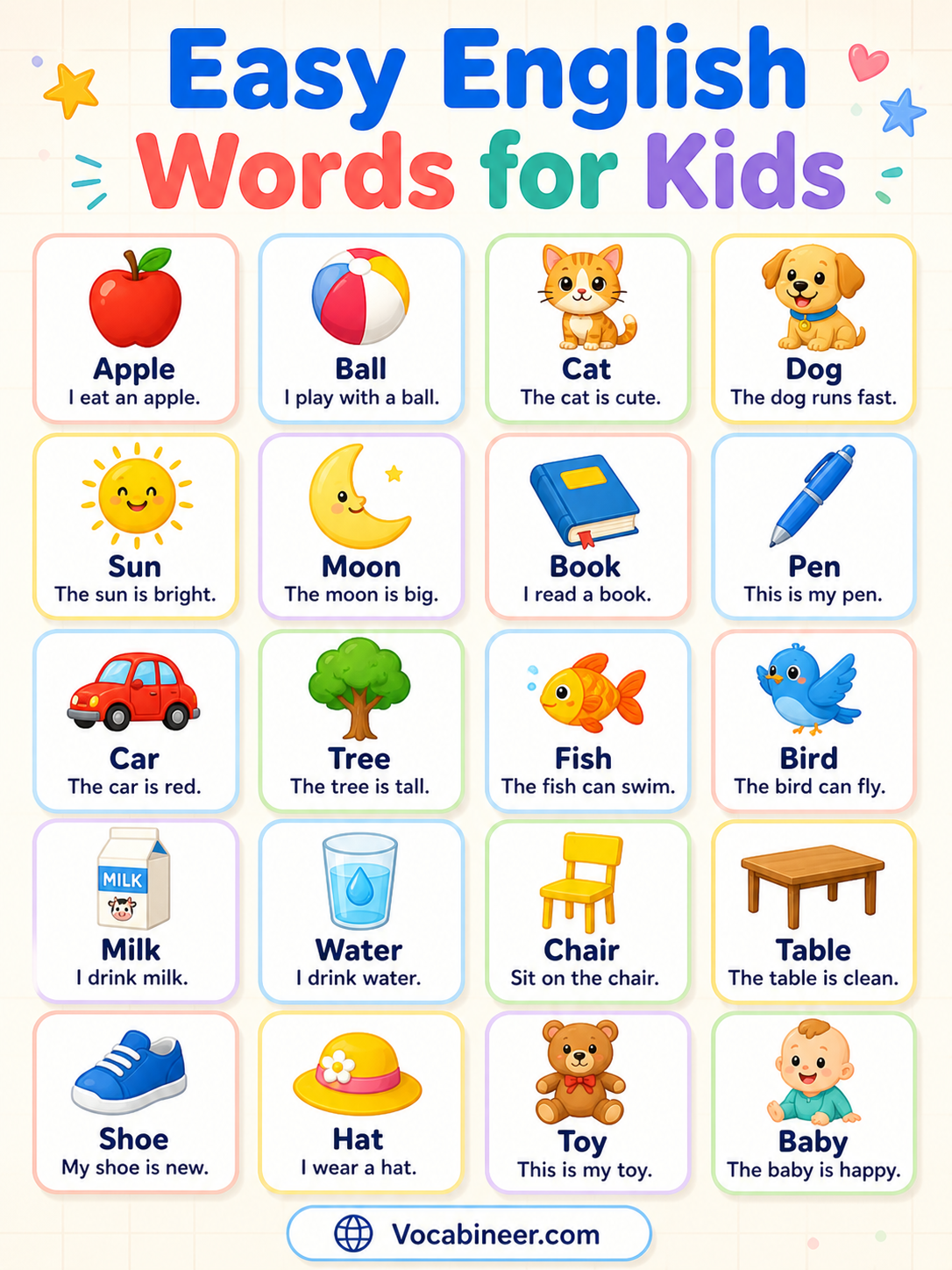
Play and Sports Words for Kindergarten
| Word | Meaning | Example |
|---|---|---|
| Ball | Round object for games. | Kick the ball! |
| Bat | Used to hit a ball. | Hold the bat firmly. |
| Game | Something fun to play. | Let’s play a game. |
| Toy | Something children play with. | The toy car is red. |
| Swing | A seat that moves back and forth. | I like the swing. |
| Slide | A slope to play on. | The kids slide down. |
| Jump | To move off the ground. | Jump high! |
| Run | To move fast. | Run to the finish line! |
| Catch | To hold a moving thing. | Catch the ball! |
| Kick | To hit with your foot. | Kick the ball hard! |
Body Words for Kindergarten
| Word | Meaning | Example |
|---|---|---|
| Head | The top part of your body. | Touch your head. |
| Eyes | Used for seeing. | Close your eyes. |
| Nose | Used for smelling. | I smell with my nose. |
| Mouth | Used for eating and talking. | Open your mouth wide. |
| Ears | Used for hearing. | I listen with my ears. |
| Hands | Used for holding things. | Wash your hands. |
| Legs | Used for walking. | Stretch your legs. |
| Feet | The ends of your legs. | Clean your feet. |
| Hair | Grows on your head. | Brush your hair. |
| Face | Front part of your head. | She washes her face. |
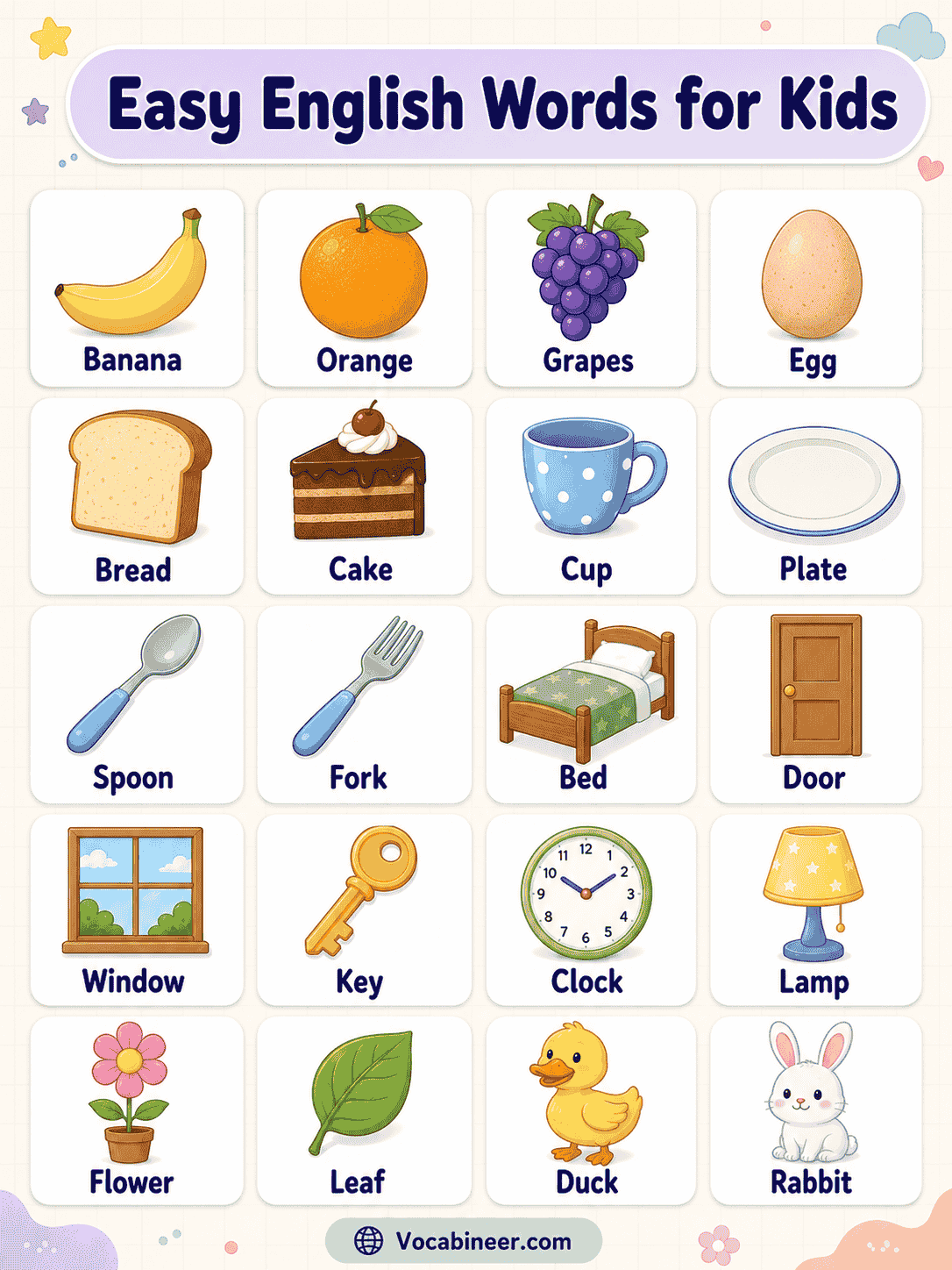
Tips to Help Kids Learn English Words
Learning English can be fun and easy for young children! At the kindergarten level, kids pick up words quickly when learning is playful, visual, and part of daily life. Here are five simple tips to help children learn and remember English words better:
- Use English Every Day – Speak simple English words while doing daily activities.
Example: “Let’s open the door.” or “Time to eat lunch.” - Read and Sing – Use picture books, rhymes, and songs to make learning fun and musical.
- Play and Practice – Play games like I Spy, flashcards, or matching pictures with words.
- See, Say, and Write – Show real objects, say their names, and let kids write or draw them.
- Encourage and Praise – Celebrate every effort! Kind words make children confident and happy to learn.
FAQ
The first 100 words include easy daily use words like apple, ball, cat, sun, eat, run, and book — simple, common, and meaningful.
Basic words build the foundation for reading, speaking, and understanding English. Once a child knows these, they can form short sentences easily.
Use games, stories, cartoons, and songs. Children remember words better when learning is enjoyable.
Most children can learn these words within a few weeks if they practice daily through songs, games, and short stories. Consistent exposure and repetition make learning faster and easier.
Yes, parents can teach at home by using pictures, labeling objects, and repeating words during daily routines. It helps children use English naturally without pressure.
Conclusion
Learning 100 basic English words is the perfect way for kids to begin their English journey. These words are easy to say, hear, and remember — making communication natural and fun. Encourage children to use these words daily through stories, play, and conversation. With regular practice, your child will soon speak English confidently and happily!
Read More
- 1000 Daily Use English Words
- Rhyming Words in English
- Positive Words List in English
- 5 Letter Words in English
- Antonyms for Kids