

Eye colors are the natural shades seen in the iris, the colored part of the eye. Common shades include brown, blue, green, hazel, and gray. Rare colors include amber, violet, and red, though some rare shades depend on genetics.
This guide gives you 50 eye color names in English with simple shade groups, rare tones, mixed patterns, and sentence examples. It is useful for English learners, writers, students, and anyone who wants clear words for describing different eyes.
In This Page
What Are Eye Colors?
Eye color means the natural color of a person’s iris. It depends mainly on pigmentation, light reflection, and genetics. Some eyes have one clear shade, while others show a blend of two or more colors.
Complete Eye Color Names List
- Brown
- Dark Brown
- Light Brown
- Golden Brown
- Honey Brown
- Chestnut Brown
- Chocolate Brown
- Caramel Brown
- Black Brown
- Warm Brown
- Blue
- Light Blue
- Sky Blue
- Ice Blue
- Steel Blue
- Ocean Blue
- Deep Blue
- Blue Gray
- Green
- Light Green
- Olive Green
- Emerald Green
- Forest Green
- Sea Green
- Gray Green
- Blue Green
- Hazel
- Light Hazel
- Dark Hazel
- Brown Hazel
- Green Hazel
- Golden Hazel
- Amber Hazel
- Gray
- Light Gray
- Dark Gray
- Silver Gray
- Steel Gray
- Amber
- Golden Amber
- Copper
- Gold
- Violet
- Red
- Pinkish Red
- Brown Green
- Multicolored Eyes
- Central Heterochromia
- Complete Heterochromia
- Sectoral Heterochromia
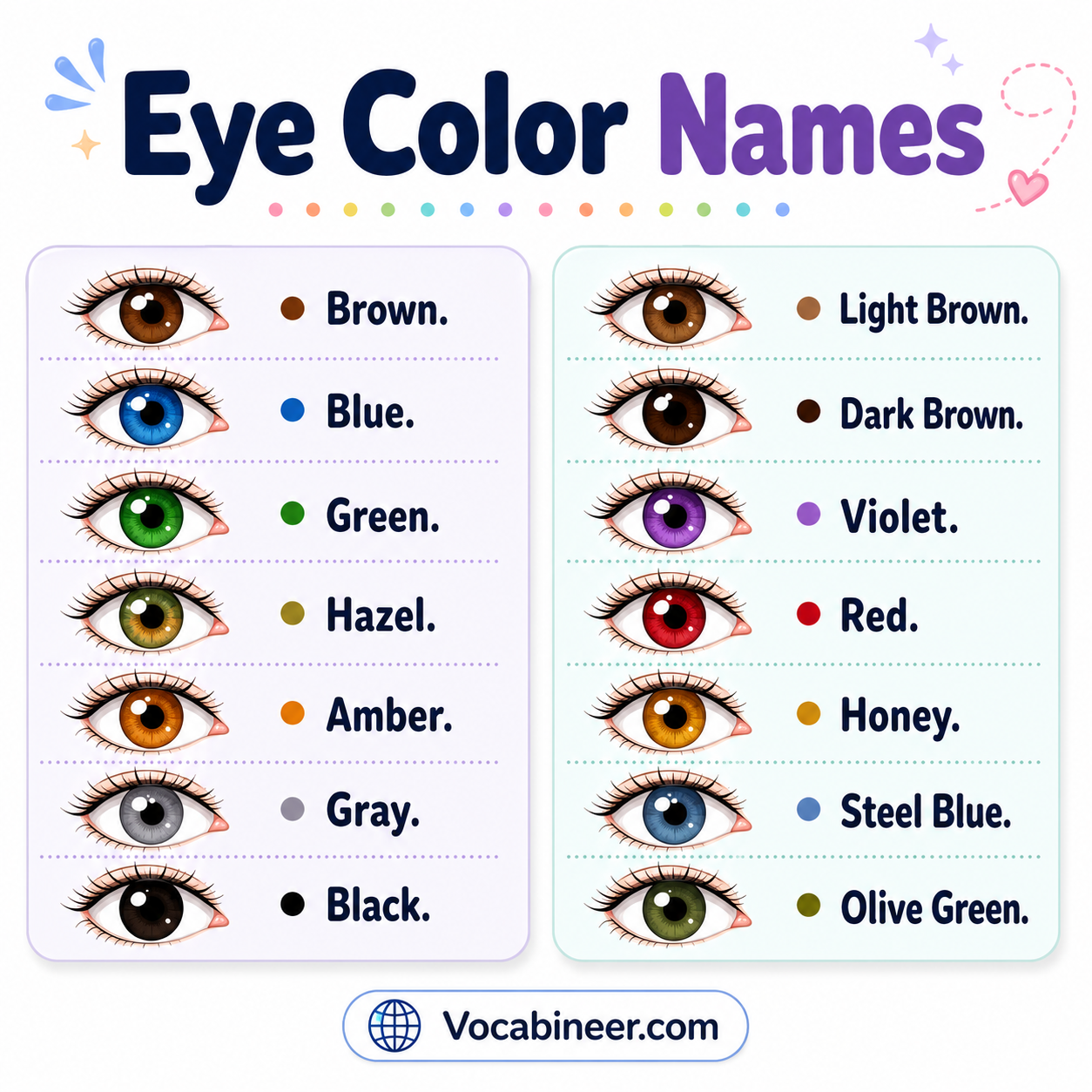
Eye Color Chart and Visual Guide
Use this chart to organize pictures of different eye colors in a clear way.
| Color Group | Picture Examples |
|---|---|
| Brown Eyes | Dark Brown, Honey Brown, Chocolate Brown |
| Blue Eyes | Sky Blue, Ice Blue, Ocean Blue |
| Green Eyes | Olive Green, Emerald Green, Sea Green |
| Hazel Eyes | Brown Hazel, Green Hazel, Golden Hazel |
| Gray Eyes | Silver Gray, Steel Gray, Blue Gray |
| Rare Eyes | Amber, Copper, Violet, Red |
| Mixed Eyes | Blue Green, Brown Green, Heterochromia |
Common Eye Colors
Common eye colors are the shades seen most often in people around the world. Brown is the most common, while blue, hazel, green, and gray are also widely seen natural shades.
- Brown: A warm and common eye color that can range from light brown to very dark brown.
- Dark Brown: A deep shade that may appear almost black in low light.
- Light Brown: A softer brown shade with a lighter, warmer tone.
- Honey Brown: A golden brown shade that looks warm and bright.
- Blue: A light or bright eye color that may look sky blue, icy blue, or deep blue.
- Light Blue: A pale blue shade that appears soft and clear.
- Sky Blue: A bright blue shade similar to the daytime sky.
- Hazel: A mixed eye color that blends brown, green, gold, or amber tones.
- Light Hazel: A softer hazel shade with more green or gold tones.
- Green: A less common eye color that can appear olive, emerald, or sea green.
- Olive Green: A muted green shade with a slightly earthy tone.
- Emerald Green: A bright and rich green shade that stands out.
- Gray: A cool eye color that may look silver, steel, or smoky gray.
- Light Gray: A pale gray shade with a soft, cool appearance.
- Blue Gray: A mix of blue and gray tones that changes with light.
Brown Eye Shades
Brown eyes come in many warm tones, from soft caramel shades to deep, almost black variations.
- Dark Brown
- Light Brown
- Golden Brown
- Honey Brown
- Chestnut Brown
- Chocolate Brown
- Caramel Brown
- Warm Brown
- Black Brown
Blue Eye Shades
Blue eyes can look pale, bright, icy, deep, or slightly gray depending on light and natural undertones.
- Light Blue
- Sky Blue
- Ice Blue
- Steel Blue
- Ocean Blue
- Deep Blue
- Blue Gray
Green Eye Shades
Green eyes are less common than brown or blue eyes. They may look soft, earthy, bright, or mixed with gray and blue tones.
- Light Green
- Olive Green
- Emerald Green
- Forest Green
- Sea Green
- Gray Green
- Blue Green
Hazel Eye Shades
Hazel eyes often blend brown, green, gold, and amber. Their color may appear different in sunlight or indoor light.
- Hazel
- Light Hazel
- Dark Hazel
- Brown Hazel
- Green Hazel
- Golden Hazel
- Amber Hazel
Gray and Amber Shades
Gray and amber eyes are less common and often look striking. Gray shades look cool or silver, while amber shades look warm and golden.
- Light Gray
- Dark Gray
- Silver Gray
- Steel Gray
- Amber
- Golden Amber
- Copper
- Gold
Rare Eye Colors
Rare eye colors are not seen as often as brown, blue, or hazel. Some rare shades may appear because of low pigmentation, light reflection, or genetic conditions.
- Green
- Gray
- Amber
- Violet
- Red
- Pinkish Red
- Copper
- Silver Gray
Mixed Eye Patterns
Some eyes have more than one color, ring, patch, or visible blend in the iris.
- Central Heterochromia: One color appears near the pupil, while another color appears around the outer iris.
- Complete Heterochromia: Each eye has a different color.
- Sectoral Heterochromia: One section of the iris has a different color.
- Blue Green Eyes: A mix of blue and green tones.
- Brown Green Eyes: A mix of brown and green shades.
- Multicolored Eyes: Eyes that show several visible shades in the iris.
Eye Color Names for Describing People
These eye shade names are useful for character descriptions, portraits, stories, and creative writing.
- Warm Brown Eyes
- Honey Brown Eyes
- Chocolate Brown Eyes
- Icy Blue Eyes
- Ocean Blue Eyes
- Emerald Green Eyes
- Olive Green Eyes
- Golden Hazel Eyes
- Stormy Gray Eyes
- Copper Eyes
Eye Color Examples in Sentences
- She had warm brown eyes.
- His eyes were a bright sky blue.
- The child had soft hazel eyes.
- Her green eyes looked almost emerald in the sunlight.
- He had steel gray eyes with a cool tone.
- Her amber eyes had a golden shine.
- One eye was blue and the other was brown.
- His eyes showed central heterochromia, with gold near the pupil.
Common vs Rare Eye Colors
| Common Eye Colors | Rare Eye Colors |
|---|---|
| Brown | Green |
| Blue | Gray |
| Hazel | Amber |
| Dark Brown | Violet |
| Light Brown | Red |
FAQs
The main eye color names are brown, blue, green, hazel, gray, amber, violet, and red. Brown, blue, hazel, green, and gray are the most familiar natural eye colors, while amber, violet, and red are much rarer.
Brown is the most common eye color in the world. It appears in many different shades, including dark brown, light brown, honey brown, and almost black-brown.
Green, gray, amber, violet, and red are often considered rare eye colors. However, rarity can vary by region, genetics, and how each shade is classified.
True black eyes are extremely rare. In most cases, eyes that look black are actually very dark brown because the iris has a high amount of pigment.
Mixed eye colors may be called hazel, blue-green, brown-green, gray-green, multicolored eyes, or heterochromia. The name depends on whether the color is blended, ringed, patched, or different in each eye.
Heterochromia is a condition where a person has different eye colors. It may mean two different-colored eyes, one eye with a colored patch, or a ring of another color near the pupil.
Summary
Eye color names include common shades like brown, blue, green, hazel, and gray, along with rare tones like amber, violet, red, and copper. Mixed patterns such as central heterochromia and complete heterochromia also help describe unique eyes more clearly. This guide is useful for English learners, writers, students, and anyone who wants simple eye color names with pictures.
Read More
- Human Parts of Body Names
- List of 200 Three Letter Words
- Types of Vehicles Names
- Animals Name in English