Mass nouns are nouns we usually treat as a whole rather than count one by one. Words like water, rice, milk, and information are common examples. Instead of saying three waters or many informations, we usually use expressions like some water, a little rice, much milk, or useful information.
These nouns are very important in everyday English because they appear in food, materials, feelings, weather, school language, and daily conversation. We use mass nouns when we talk about things we eat, substances we touch, ideas we think about, and natural things we experience around us. In this article, you will learn 120 mass nouns with examples, grouped sections, and simple sentences. This guide is useful for students, teachers, writers, and English learners who want to understand uncountable nouns more clearly and use them more naturally in real sentences.
In This Page
What Are Mass Nouns?
Mass nouns are nouns used for things we usually see as an amount, substance, idea, or general whole instead of separate items.
For example, we say some water, a little sugar, much information, and enough time. We do not usually say one water or three informations in standard English.
Mass nouns are also commonly called uncountable nouns. They are useful because they help us talk naturally about food, materials, emotions, knowledge, weather, and many other everyday topics.
| Type | Example | Simple Use |
|---|---|---|
| Count noun | apple | can be counted directly |
| Mass noun | water | usually treated as a whole amount |
This difference is important because mass nouns often use words like some, much, little, and a lot of instead of numbers.
List of 120 Common Mass Nouns in English
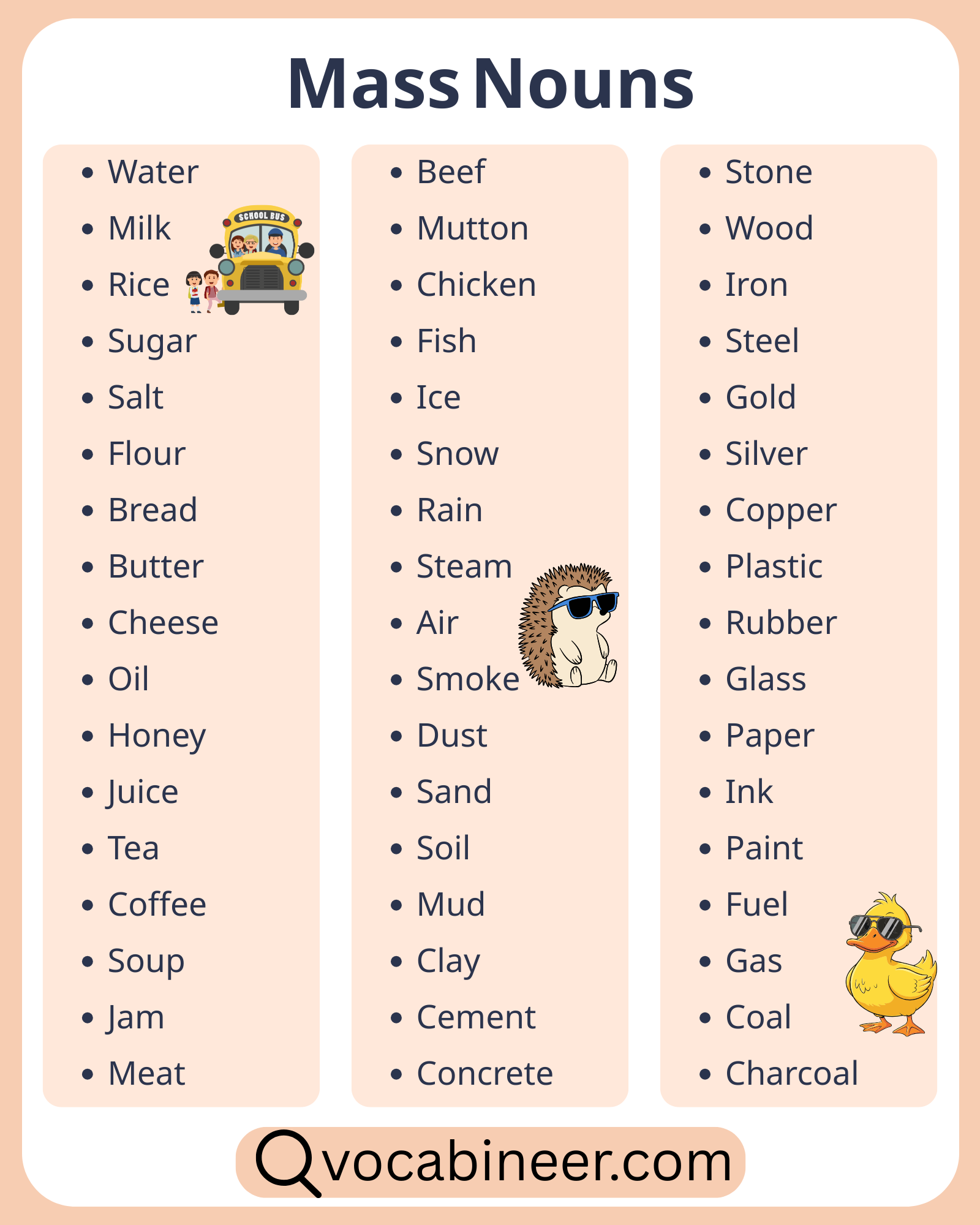
Here is a useful list of 120 mass nouns in English. The list includes food, drink, materials, abstract ideas, natural elements, and everyday uncountable nouns.
- Water
- Milk
- Tea
- Coffee
- Juice
- Soup
- Oil
- Rice
- Bread
- Butter
- Cheese
- Sugar
- Salt
- Flour
- Honey
- Jam
- Cream
- Yogurt
- Food
- Meat
- Beef
- Chicken
- Fish
- Pasta
- Spaghetti
- Chocolate
- Ice
- Coffee powder
- Luggage
- Baggage
- Furniture
- Equipment
- Machinery
- Jewelry
- Clothing
- Money
- Cash
- Change
- Paper
- Cardboard
- Wood
- Plastic
- Glass
- Metal
- Steel
- Iron
- Gold
- Silver
- Cotton
- Silk
- Leather
- Wool
- Sand
- Soil
- Dust
- Mud
- Smoke
- Steam
- Fire
- Heat
- Energy
- Electricity
- Gas
- Air
- Oxygen
- Rain
- Snow
- Sunshine
- Weather
- Thunder
- Lightning
- Darkness
- Light
- Music
- Art
- Poetry
- Literature
- Information
- Advice
- Knowledge
- Education
- Research
- News
- Progress
- Traffic
- Work
- Homework
- Help
- Permission
- Patience
- Courage
- Wisdom
- Happiness
- Sadness
- Anger
- Love
- Peace
- Freedom
- Justice
- Honesty
- Beauty
- Health
- Fitness
- Sleep
- Sleepiness
- Luck
- Behavior
- Travel
- Transportation
- English
- Vocabulary
- Grammar
- Pronunciation
- Hospitality
- Leisure
- Wealth
- Poverty
- Violence
- Safety
- Evidence
Food and Drink Mass Nouns Examples
Food and drink mass nouns are some of the most common uncountable words in English. We use them often in kitchens, restaurants, shopping, and daily conversations. These nouns usually take words like some, much, a little, or a lot of instead of direct numbers.
Water
Please give me some water.
Milk
The child drinks milk every morning.
Rice
We had rice with dinner.
Bread
There is fresh bread on the table.
Sugar
She added a little sugar to the tea.
Butter
Spread some butter on the toast.
Cheese
They bought cheese from the market.
Flour
Flour is used to make bread.
Honey
I like honey in warm tea.
Tea
My father drinks tea every evening.
Materials and Substance Mass Nouns Examples
Materials and substance mass nouns name things we usually see as matter, material, or physical substance instead of separate countable pieces. These nouns are common in science, home vocabulary, shopping, manufacturing, and descriptive writing about objects and the natural world.
Wood
This table is made of wood.
Plastic
The bottle is made of plastic.
Glass
The window is made of glass.
Metal
That box is made of metal.
Gold
The ring is made of gold.
Silver
Her necklace is made of silver.
Cotton
This shirt is made of cotton.
Leather
He bought a leather bag.
Sand
The children played in the sand.
Dust
There was dust on the shelf.
Abstract Mass Nouns Examples
Abstract mass nouns name ideas, feelings, qualities, and general concepts that we cannot usually touch or count as separate items. These nouns are very useful in school writing, conversations, moral lessons, essays, and everyday English that talks about thoughts and emotions.
Information
The teacher gave us useful information.
Advice
My mother gave me good advice.
Knowledge
Reading increases knowledge.
News
The news was surprising.
Happiness
Money does not always bring happiness.
Love
Children need love and care.
Peace
We all want peace in the world.
Honesty
Honesty is an important quality.
Beauty
We admired the beauty of the garden.
Patience
Learning a language takes patience.
Natural Mass Nouns Examples
Natural mass nouns are used for weather, natural forces, and environmental things that we usually experience as a whole rather than count. These nouns are common in daily conversation, seasonal descriptions, science lessons, and writing about nature and the world around us.
Rain
We stayed inside because of the rain.
Snow
The children played in the snow.
Sunshine
The room was full of sunshine.
Weather
The weather is pleasant today.
Thunder
We heard thunder in the distance.
Lightning
Lightning lit up the sky.
Darkness
The room was covered in darkness.
Light
The light came through the window.
Air
Fresh air is good for health.
Oxygen
Plants help produce oxygen.
Mass Nouns in Sentences
These examples show how mass nouns are used in everyday English and help learners notice the natural patterns that uncountable nouns usually follow.
- Please pour some water into the glass.
- We bought rice and flour from the store.
- She gave me useful advice.
- The news is on television now.
- Fresh air entered through the window.
- There was too much traffic on the road.
- The table is made of wood.
- He has little patience today.
- We need more information about the course.
- The children enjoyed the sunshine in the park.
- Add a little salt to the soup.
- Her luggage was very heavy.
- Knowledge grows through reading.
- Peace is important in every society.
- The room was filled with darkness.
FAQs
Mass nouns are nouns that name things we usually treat as a whole, not as separate countable items. Examples include water, rice, advice, and furniture.
Yes. In most grammar use, mass nouns and uncountable nouns mean the same thing.
Some common examples are water, milk, rice, sugar, information, advice, furniture, money, and air.
Mass nouns are usually not used in regular plural forms. We normally say some water or much information, not waters or informations.
Mass nouns are important because they help us talk correctly about food, materials, ideas, feelings, weather, and many everyday things.
Summary
Mass nouns are nouns we usually treat as a whole rather than count one by one. They are common in food, materials, abstract ideas, and natural elements.
In this article, you learned 120 mass nouns with examples, grouped sections, a short comparison table, and sentence use. The best way to remember them is to learn them by category and notice how they work in everyday English.
Read More
- List of Nouns in English
- Common Place Nouns in English
- Common Person Nouns in English
- Compound Nouns Examples in English