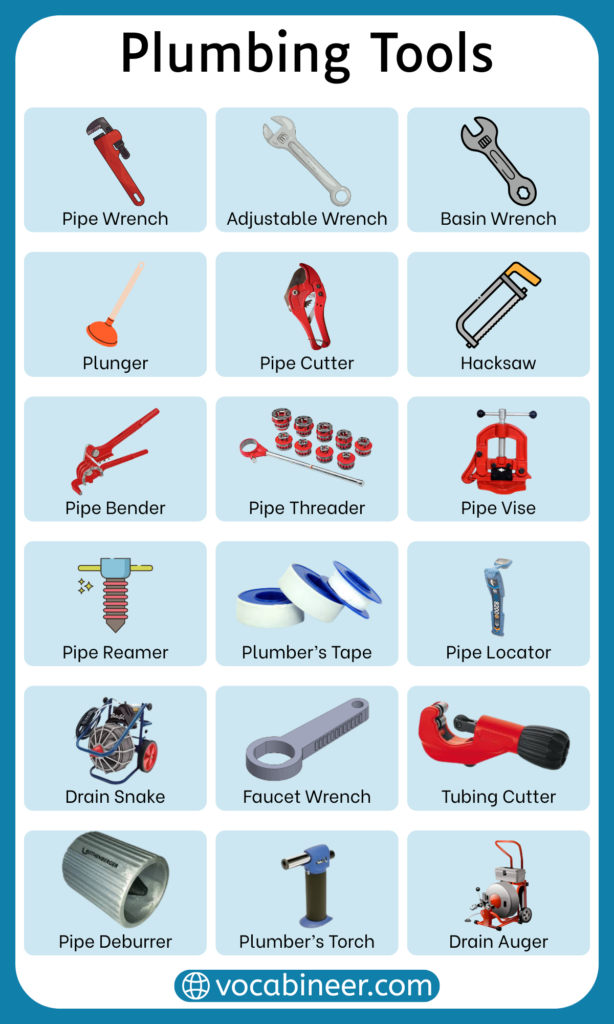
Plumbing tools are the hand tools and equipment used to work on water supply and drainage systems in homes and buildings. These tools are commonly used to cut pipes, tighten fittings, clear blockages, and inspect connections in sinks, toilets, and pipelines. Because each tool is made for a specific task, plumbing work stays accurate and controlled instead of uncertain.
Learning plumbing tools is important because it helps people recognize the correct tool for each task and follow repair instructions with confidence. When tool names and purposes are familiar, it becomes easier to avoid mistakes, prevent pipe damage, and handle small plumbing problems safely during home maintenance or basic repair work.
In This Page
Basic Plumbing Tools You Should Know
Basic plumbing tools are the first tools people usually encounter when handling small leaks, loose fittings, or simple pipe work. In general, these tools support everyday tasks like tightening, cutting, measuring, and holding parts steady, so basic plumbing jobs can be done with better control and fewer mistakes.
- Pipe wrench: A pipe wrench grips round pipes firmly, so they can be tightened or loosened without slipping.
- Adjustable wrench: An adjustable wrench changes jaw width, which allows it to fit different nuts and fittings.
- Plunger: A plunger uses suction and pressure, therefore helping clear simple clogs in sinks and toilets.
- Plumber’s tape: Plumber’s tape wraps around threaded joints, so that water leaks are reduced.
- Basin wrench: A basin wrench reaches tight spaces under sinks, which makes faucet nuts easier to turn.
- Hacksaw: A hacksaw cuts metal or plastic pipes, especially when a clean length is needed.
- Tongue and groove pliers: These pliers adjust to different sizes, so pipes and fittings can be held securely.
- Pipe cutter: A pipe cutter slices pipes evenly, which helps create smooth edges for fitting.
- Putty knife: A putty knife spreads or removes plumber’s putty, thereby sealing fixtures neatly.
- Sealant gun: A sealant gun applies waterproof sealant, so joints stay protected from leaks.
- Measuring tape: A measuring tape checks pipe length and spacing, which ensures accurate installation.
- Level: A level checks alignment, so that pipes and fixtures sit straight.
- Bucket: A bucket catches dripping water, therefore keeping the work area dry and manageable.
Common Plumbing Tool Names Used Every Day
Common plumbing tool names are the ones people hear and use most often during routine plumbing tasks. These tools appear in homes, shops, and repair conversations, so knowing their names helps readers follow instructions and understand basic plumbing work more easily.
- Pipe cutter: A pipe cutter rotates around pipes, so it makes clean and even cuts without crushing them.
- Plunger: A plunger creates pressure and suction, therefore clearing simple clogs in sinks and toilets.
- Drain snake: A drain snake reaches inside pipes, which helps pull out hair, grease, and debris.
- Hand auger: A hand auger twists through pipes, so tougher blockages can be broken or retrieved.
- Tongue and groove pliers: These pliers adjust their grip, so that different pipe sizes can be held firmly.
- Pipe wrench: A pipe wrench grips round pipes tightly, therefore making turning easier.
- Adjustable wrench: An adjustable wrench fits various nut sizes, which allows quick adjustments.
- Plumber’s tape: Plumber’s tape seals threaded joints, so leaks are reduced.
- Basin wrench: A basin wrench reaches tight spaces, which makes faucet nuts easier to loosen or tighten.
- Bucket: A bucket collects dripping water, so the work area stays manageable.
- Flashlight: A flashlight lights dark spaces, therefore helping inspection under sinks or behind fixtures.
Plumbing Tools by Function
Plumbing tools can be grouped by the job they perform. This makes it easier to understand why a tool is used and what task it supports during plumbing work.
Tools for Cutting Plumbing Pipes
Cutting tools are used to shorten or remove pipes cleanly before installation or repair.
- Pipe cutter: A pipe cutter rotates around a pipe to make a smooth cut.
- Hacksaw: A hacksaw cuts metal or plastic pipes when space allows.
- PVC cutter: A PVC cutter snaps through plastic pipes with hand pressure.
- Tubing cutter: A tubing cutter trims small diameter pipes neatly.
Tools for Tightening and Loosening Pipes
These tools help turn pipes, nuts, and fittings during installation or removal.
- Pipe wrench: A pipe wrench grips round pipes tightly.
- Adjustable wrench: An adjustable wrench turns nuts and bolts of different sizes.
- Basin wrench: A basin wrench reaches faucet nuts in narrow spaces.
- Spanner: A spanner fits fixed-size plumbing nuts and fittings.
Tools for Holding and Gripping Plumbing Parts
Holding tools keep pipes and fittings steady while work is being done.
- Tongue and groove pliers: These pliers grip pipes of different diameters.
- Locking pliers: Locking pliers clamp onto parts and stay in place.
- Bench vise: A bench vise holds pipes securely on a workbench.
- Pipe clamp: A pipe clamp holds pipes during cutting or joining.
Plumbing Tools for Clearing Clogged Drains
Clogged drains are a common plumbing problem, so specific tools are designed to remove blockages from sinks, toilets, and pipes. In general, these tools work by using pressure, rotation, or reach, which helps clear debris more effectively and restore proper flow.
- Plunger: A plunger creates suction and pressure to loosen soft clogs in sinks and toilets.
- Drain snake: A drain snake reaches deep into pipes to pull out hair, grease, or debris.
- Hand auger: A hand auger rotates inside pipes to break or retrieve stubborn blockages.
- Closet auger: A closet auger is designed for toilets and has a curved end to protect the bowl.
- Drain rod: A drain rod pushes through long pipe sections to clear heavy clogs.
Plumbing Tools Used for Pipe Installation
Pipe installation tools help place new pipes, fittings, and fixtures correctly. These tools support accurate fitting and secure connections during setup.
- Pipe cutter: A pipe cutter trims pipes to the correct length with clean edges.
- Reamer: A reamer smooths rough pipe edges after cutting.
- Pipe bender: A pipe bender shapes metal pipes without flattening them.
- Plumber’s tape: Plumber’s tape seals threaded joints to prevent leaks.
- Compression tool: A compression tool tightens fittings to secure pipe connections.
- Measuring tape: A measuring tape checks length and spacing before installation.
Plumbing Tools Used for Plumbing Repairs
Repair tools help fix leaks, replace damaged parts, and adjust existing plumbing systems. These tools are commonly used during maintenance work.
- Adjustable wrench: An adjustable wrench loosens or tightens plumbing nuts and fittings.
- Pipe wrench: A pipe wrench grips round pipes during removal or adjustment.
- Basin wrench: A basin wrench removes or installs faucet nuts under sinks.
- Putty knife: A putty knife applies or removes plumber’s putty around fixtures.
- Sealant gun: A sealant gun applies waterproof sealant to joints and edges.
Plumbing Tools for Testing and Inspection
Testing and inspection tools help plumbers check water flow, pressure, and leaks before or after work. These tools make sure the plumbing system is working properly and safely.
- Pressure gauge: A pressure gauge measures water pressure inside pipes.
- Leak detector: A leak detector helps find hidden water leaks in pipes or joints.
- Inspection mirror: An inspection mirror allows viewing hard to reach areas under sinks or behind fixtures.
- Flashlight: A flashlight provides light for inspecting dark spaces.
- Moisture meter: A moisture meter checks damp areas to detect hidden leaks.
Plumbing Tools by Pipe Material
Different pipe materials need different tools, so grouping tools by pipe material helps readers choose the correct tool for each type of pipe. As a result, this approach reduces confusion and supports more accurate plumbing work.
Tools for Metal Plumbing Pipes
Metal pipes require strong tools that can handle hard surfaces.
- Pipe wrench: A pipe wrench grips metal pipes securely during turning.
- Tubing cutter: A tubing cutter cuts copper and metal pipes cleanly.
- Pipe bender: A pipe bender shapes metal pipes without cracking them.
- Deburring tool: A deburring tool smooths sharp pipe edges after cutting.
Tools for Plastic Plumbing Pipes
Plastic pipes need tools that cut cleanly without crushing the material.
- PVC cutter: A PVC cutter slices plastic pipes smoothly.
- Hacksaw: A hacksaw cuts plastic pipes when needed.
- Reamer: A reamer cleans pipe edges for proper fitting.
- Measuring tape: A measuring tape ensures accurate pipe length.
Plumbing Tools for Different Plumbing Systems
Plumbing tools are also chosen based on the type of system being worked on. Water supply and drainage systems need different handling methods.
Tools for Water Supply Lines
Water supply tools focus on controlling flow and preventing leaks.
- Valve key: A valve key turns water supply valves on or off.
- Adjustable wrench: An adjustable wrench tightens supply line fittings.
- Pressure gauge: A pressure gauge checks water pressure levels.
- Plumber’s tape: Plumber’s tape seals threaded joints in supply lines.
Tools for Drainage and Sewer Lines
Drainage tools handle waste water and blockages.
- Drain snake: A drain snake clears debris from drain pipes.
- Hand auger: A hand auger breaks through tough clogs.
- Drain rod: A drain rod pushes through long drainage lines.
- Plunger: A plunger clears simple drain blockages.
Manual Plumbing Tools
Manual plumbing tools work without electricity or batteries, so they rely on hand strength and control. Because of this, they are useful for simple tasks, tight spaces, and basic plumbing work, especially when careful handling is needed.
- Pipe wrench: A pipe wrench grips round pipes firmly for turning and adjusting.
- Adjustable wrench: An adjustable wrench fits different nut sizes on plumbing fittings.
- Plunger: A plunger clears light blockages using suction and pressure.
- Basin wrench: A basin wrench reaches faucet nuts in narrow spaces under sinks.
- Hacksaw: A hacksaw cuts metal or plastic pipes by hand.
- Tongue and groove pliers: These pliers adjust to grip pipes of various sizes.
Power Tools Used in Plumbing
Power tools help plumbers complete tasks faster and with less physical effort. These tools are commonly used for cutting, drilling, or shaping materials during plumbing work.
- Electric drill: An electric drill creates holes for pipe fittings or fasteners.
- Cordless drill: A cordless drill drills holes without a power cord, using battery power.
- Reciprocating saw: A reciprocating saw cuts through pipes and walls during removal work.
- Power pipe cutter: A power pipe cutter cuts pipes quickly and evenly.
- Drain cleaning machine: A drain cleaning machine clears heavy clogs using rotating cables.
Plumbing Tools for Home Use
Home plumbing tools are designed for small repairs and simple maintenance tasks. These tools are easy to handle and commonly kept in households.
- Plunger: A plunger clears minor sink or toilet blockages.
- Adjustable wrench: An adjustable wrench tightens or loosens household plumbing fittings.
- Pipe wrench: A pipe wrench handles basic pipe turning tasks at home.
- Plumber’s tape: Plumber’s tape helps seal threaded joints to prevent leaks.
- Bucket: A bucket collects dripping water during repairs.
- Flashlight: A flashlight helps see under sinks and behind fixtures.
Plumbing Tools Used by Professional Plumbers
Professional plumbers use advanced tools designed for frequent, heavy, and precise work. These tools handle complex installations, deep inspections, and large scale repairs.
- Pipe threading machine: A pipe threading machine cuts threads on metal pipes for secure connections.
- Power drain auger: A power drain auger clears tough clogs deep inside drainage lines.
- Inspection camera: An inspection camera shows live video inside pipes to locate damage or blockages.
- Hydro jetting machine: A hydro jetting machine uses high pressure water to clean pipes thoroughly.
- Press fitting tool: A press fitting tool joins pipes quickly without soldering or glue.
Plumbing Tools That Look Similar but Have Different Uses
Some plumbing tools appear similar in shape but serve different purposes. Knowing these differences helps avoid damage and ensures correct tool use.
- Pipe wrench: A pipe wrench grips round pipes using sharp jaws.
- Adjustable wrench: An adjustable wrench turns flat nuts and fittings, not round pipes.
- Plunger: A plunger clears soft clogs using suction.
- Drain snake: A drain snake reaches inside pipes to remove solid debris.
- Tubing cutter: A tubing cutter makes smooth circular cuts on pipes.
- Hacksaw: A hacksaw cuts pipes with a straight blade motion.
| Tool | Similar tool | Main difference |
|---|---|---|
| Pipe wrench | Adjustable wrench | Pipe grip vs flat nut turning |
| Plunger | Drain snake | Suction vs debris removal |
| Tubing cutter | Hacksaw | Smooth rotation vs sawing |
Plumbing Tool Names People Often Confuse
Certain plumbing tools are often mixed up because they are used together or kept in the same toolbox. This section clears up common confusion.
- Basin wrench: A basin wrench reaches faucet nuts under sinks.
- Pipe wrench: A pipe wrench turns exposed pipes and fittings.
- Hand auger: A hand auger clears short drain blockages.
- Drain rod: A drain rod clears long drainage lines.
- Sealant gun: A sealant gun applies waterproof sealant.
- Putty knife: A putty knife spreads plumber’s putty evenly.
| Tool | Often confused with | Purpose |
|---|---|---|
| Basin wrench | Pipe wrench | Tight spaces vs open pipes |
| Hand auger | Drain rod | Short drains vs long lines |
| Sealant gun | Putty knife | Dispensing vs spreading |
Conclusion
Plumbing tools are designed to handle tasks such as cutting pipes, clearing clogs, tightening fittings, and inspecting systems. Learning the names and purposes of these tools helps readers understand plumbing work more clearly and choose the right tool for each job, whether for home repairs or professional use.
Read More