Red flowers are easy to recognize because their bold colors draw attention naturally. Their shades range from deep crimson to softer scarlet, helping these blooms stand out in gardens, open fields, and floral displays. This range of red tones helps distinguish one red flower from another more clearly.
Knowing red flower names in English helps describe these blooms clearly in everyday conversation and basic writing. This article brings together popular red flowers, lesser-known varieties, and seasonal blooms that appear throughout the year.
In This Page
Common Red Flower Names with their Pictures
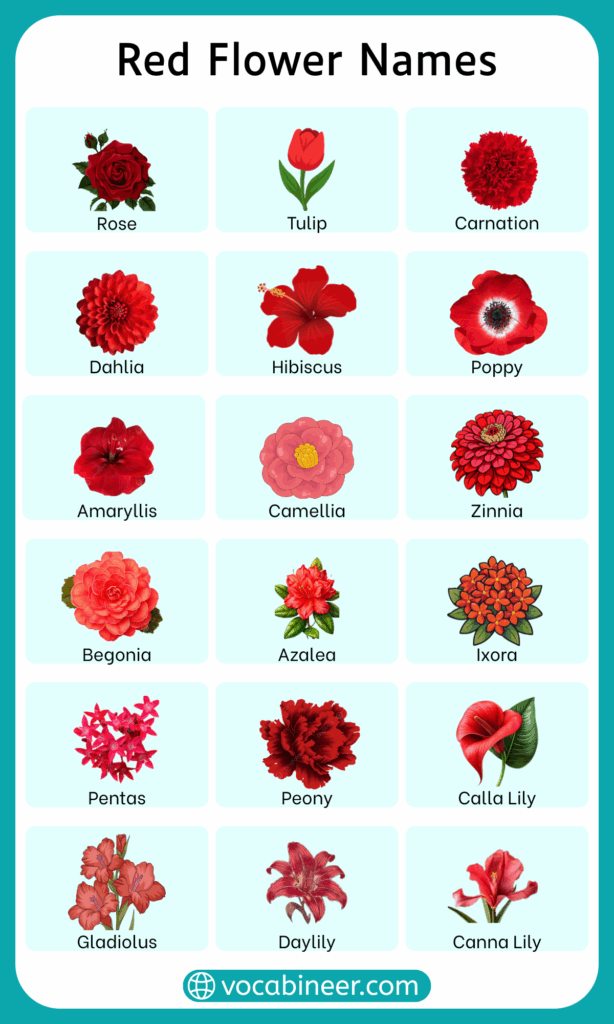
Common red flowers are easy to recognize and widely seen in gardens, parks, and floral arrangements. These flowers are known for their strong red shades and familiar shapes, which makes them simple to identify by name. Below are some well-known red flower names that learners often encounter.
- Anemone: A delicate red flower with a dark center that blooms in spring.
- Azalea: A shrub flower with clustered red blooms, common in gardens.
- Begonia: A smooth-petaled red flower that grows indoors and outdoors.
- Celosia: A red flower with flame-like or crested blooms and strong texture.
- Chrysanthemum: A layered red flower that blooms mainly in autumn.
- Canna Lily: A tall plant with broad leaves and bright red flowers.
- Columbine: A pointed-petal red flower often mixed with yellow or white.
- Cosmos: A light red flower with open petals that blooms in summer.
- Freesia: A small red flower with fragrance growing on curved stems.
- Gaillardia: A daisy-like flower with red and yellow tones.
- Gladiolus: A tall spike flower with red blooms arranged vertically.
- Impatiens: A compact red flower plant that blooms continuously in shade.
- Ixora: A tropical shrub with small red star-shaped flower clusters.
- Lantana: A hardy plant with red flower clusters that change shade.
- Nasturtium: A trailing plant with bright red, edible flowers.
- Petunia: A trumpet-shaped red flower used in hanging baskets.
- Ranunculus: A tightly layered red flower similar to a rose.
- Salvia: A spike-shaped red flower that attracts insects.
- Snapdragon: A tall red flower with tube-shaped blooms.
- Verbena: A spreading plant with small red flower clusters.
Seasonal Red Flowers Names
Red flowers bloom at different times of the year, making them present in every season. Each group adds distinct charm to landscapes.
Spring Red Flowers
- Red Tulip
- Red Azalea
- Red Camellia
- Red Poppy
- Red Peony
Summer Red Flowers
- Red Hibiscus
- Red Dahlia
- Red Zinnia
- Red Geranium
- Red Petunia
Autumn Red Flowers
- Red Chrysanthemum
- Red Dahlia
- Red Spider Lily
- Red Camellia
Winter Red Flowers
- Red Amaryllis
- Red Camellia
- Red Cyclamen
- Red Christmas Cactus
Rare Red Flowers in Nature
A few red flowers are rare and admired for their unique features. They often bloom in special regions or conditions.
- Red Torch Ginger
- Coral Tree Flower
- Red Passion Flower
- Red Spider Lily
- Kaffir Lily
Red Flowers for Gardens and Landscaping
Gardeners use red flowers to add brightness and contrast. They are planted in beds, borders, and containers to create eye-catching displays.
- Red Geranium
- Red Begonia
- Red Zinnia
- Red Hibiscus
- Red Azalea
Red Flowers for Weddings and Celebrations
Red flowers are chosen for weddings to symbolize love, passion, and energy. They appear in bouquets, décor, and ceremonial arrangements.
- Red Rose
- Red Tulip
- Red Carnation
- Red Orchid
- Red Peony
- Red Amaryllis
- Red Gerbera Daisy
Symbolism of Red Flowers Across Cultures
Red flowers carry powerful meanings. They are often used in traditions and ceremonies across different cultures.
- Love
- Respect
- Energy
- Remembrance
- Courage
FAQs on Red Flower Names
The most popular red flowers are roses, tulips, lilies, carnations, hibiscus, and dahlias. These blooms are widely used in gardens, weddings, and daily floral arrangements.
Weddings often feature red roses, red peonies, red tulips, red carnations, and red orchids. They symbolize love, joy, and romantic devotion.
Yes. Winter red flowers include red amaryllis, red camellias, red cyclamen, and the red Christmas cactus. These flowers bring color to the colder months.
Red flowers usually stand for love, passion, and energy. In different cultures, they also symbolize courage, respect, and remembrance.
Rare red flowers include the red torch ginger, coral tree flower, red passion flower, red spider lily, and kaffir lily. These blooms are admired for their uniqueness.
Conclusion
Learning red flower names helps describe their beauty in gardens, events, and traditions. They symbolize passion and energy while enriching conversations about plants in English.
Read More