Spring flowers mark the beginning of warmer days, filling gardens with fresh colors and scents. These blooms appear after winter, bringing joy with their soft petals and bright shades. Learning spring flower names in English helps you describe seasonal plants for gardens, weddings, and daily life. This post covers a complete list, common examples, and the symbolism of spring blossoms.
In This Page
Complete List of Spring Flower Names in English
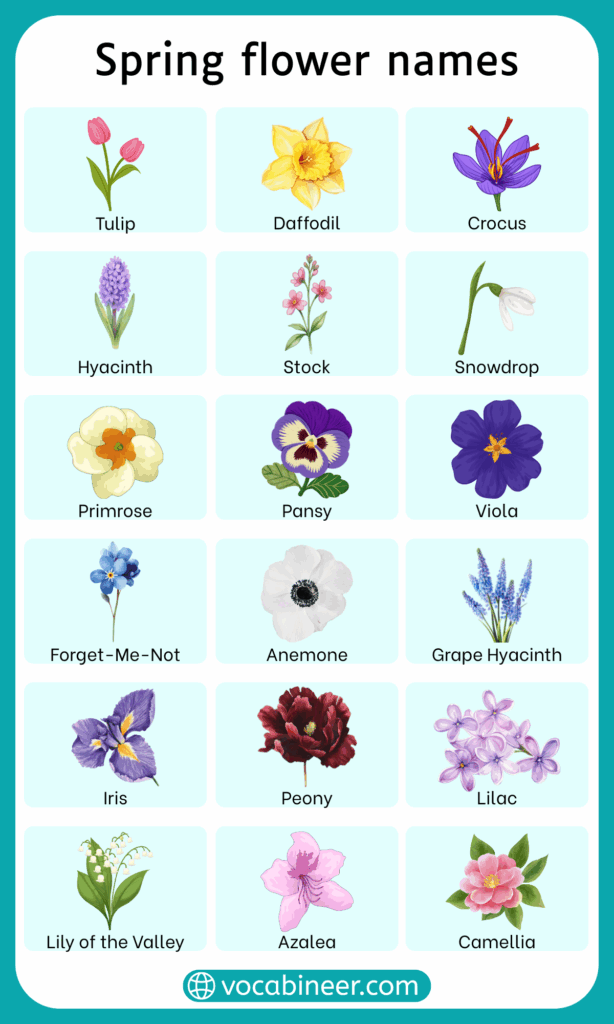
Here is a complete list of spring flower names in English.
- Tulip
- Daffodil
- Hyacinth
- Crocus
- Lilac
- Violet
- Iris
- Peony
- Primrose
- Pansy
- Camellia
- Azalea
- Magnolia
- Cherry Blossom
- Bluebell
- Ranunculus
- Sweet Pea
- Anemone
- Dogwood Flower
- Forget-Me-Not
For more flowers, you may also enjoy our guide on White Flower Names.
Early Spring Flowers Names
Spring starts with the first blossoms that push through cold soil. These flowers are often small but bring strong color to gardens.
- Snowdrop: A small white flower that blooms even in late winter, often before the snow melts.
- Crocus: A bright, low-growing bloom that comes in purple, yellow, or white.
- Winter Aconite: A golden-yellow flower that opens early, adding color to bare soil.
- Primrose: A cheerful flower with many colors, found in woodlands and gardens.
Spring Bulb Flowers Varieties
Bulb flowers are some of the most loved spring bloomers. They return each year and make gardens lively.
- Tulip: One of the most famous spring flowers, grown in many colors and sizes.
- Daffodil: A yellow trumpet-shaped flower that signals spring has arrived.
- Hyacinth: A fragrant flower with dense clusters in purple, pink, or blue.
- Grape Hyacinth: Small purple-blue flowers that grow in tight clusters like tiny grapes.
Spring Flower Names by Color
Spring blossoms come in many shades, and color often makes them memorable.
- Yellow Spring Flowers: Daffodil, Forsythia, Marigold, Yellow Tulip
- Purple Spring Flowers: Lilac, Crocus, Violet, Hyacinth
- Blue Spring Flowers: Bluebell, Grape Hyacinth, Forget-Me-Not, Siberian Squill
- White Spring Flowers: Snowdrop, Lily of the Valley, White Tulip, White Hyacinth
- Pink Spring Flowers: Peony, Ranunculus, Pink Tulip, Cherry Blossom
- Red Spring Flowers: Red Tulip, Anemone, Gerbera Daisy, Poppy
Spring Flower Names by Month
Different flowers bloom in different spring months, adding variety to gardens.
- March Bloomers: Crocus, Snowdrop, Daffodil
- April Bloomers: Tulip, Hyacinth, Primrose
- May Bloomers: Peony, Lily of the Valley, Iris, Sweet Pea
Common Spring Flowers Types with their Pictures
These spring flower names are widely admired and often used in gardens and events.
- Tulip: Classic spring blooms in many colors, symbolizing love and cheer.
- Daffodil: Yellow trumpet-shaped flowers linked with new beginnings.
- Hyacinth: Fragrant clusters of small blooms in purple, pink, or white.
- Crocus: Early bloomers that often appear before snow has melted.
- Lilac: Fragrant clusters symbolizing love and renewal.
- Violet: Small blossoms representing modesty and affection.
- Iris: Tall, elegant flowers tied to faith and wisdom.
- Peony: Large blossoms admired for fullness and beauty.
- Primrose: Early spring flowers symbolizing youth and renewal.
- Pansy: Colorful flowers often linked with thoughtfulness.
- Camellia: Glossy-petaled flowers symbolizing admiration.
- Azalea: Bright blooms often grown as shrubs in spring.
- Magnolia: Large blossoms with sweet fragrance, linked to dignity.
- Cherry Blossom: Delicate pink or white flowers representing fleeting beauty.
- Bluebell: Bell-shaped blooms carpeting woodlands.
Spring Flowers for Weddings
Spring weddings often feature flowers that symbolize love, hope, and renewal.
- Bridal Bouquets: Peonies and ranunculus are favorites for their soft look and rich petals.
- Centerpieces and Décor: Tulips and sweet peas bring freshness to spring wedding tables.
- Budget-Friendly Choices: Daffodils and carnations are simple yet charming for spring arrangements.
Spring Flower Bouquet Ideas
Spring bouquets can be made with soft tones or bright shades depending on mood.
- Pastel Mix: A blend of lilac, peony, and ranunculus for a gentle bouquet.
- Bright Garden Style: Tulips, daffodils, and hyacinths for a colorful, lively look.
- Fragrant Arrangement: Lilacs and hyacinths mixed for beauty and fragrance.
Conclusion
Learning spring flower names in English makes it easier to talk about seasonal blossoms with confidence. These flowers stand for renewal, hope, and joy, adding beauty and meaning to gardens, weddings, and celebrations.
FAQs about Spring Flower Names
The most popular spring flowers are tulips, daffodils, hyacinths, lilacs, pansies, and cherry blossoms.
Early spring flowers include crocuses, daffodils, snowdrops, and primroses, often blooming before the weather turns warm.
Yes. Popular spring wedding flowers include peonies, ranunculus, tulips, magnolias, and sweet peas.
Most spring flowers bloom mainly in spring, but some, like pansies and azaleas, can last into early summer.
Spring flowers often symbolize renewal, hope, youth, and love, reflecting the fresh start of the season.
Read More