Doors are movable panels used to close and open an entrance or doorway. They control access, support privacy, improve safety, and help block wind, dust, and noise. At the same time, doors come in many types, so people choose them based on where the door is used, how it opens, and what material it is made from.
Types of doors are the common door styles used in homes, buildings, and shops, and they differ by location, opening method, design, and material. These door types include hinged, sliding, pocket, folding, French, panel, flush, and many other options used for both interior and exterior spaces.
In this post, you will learn types of doors in a clear order, with names, short uses, and pictures where relevant. It covers door types by how they open, door styles and materials, and common home-area doors, so the topic is easier to recognize, compare, and remember.
In This Page
Main Types of Doors
Doors can be grouped by where they are used, how they open, how they look, and what material they use. Because these groups describe real-world door choices, they make door names easier to understand and remember. At the same time, this simple classification helps you compare similar doors and choose the right type for each space.
Interior doors
Interior doors are used inside homes and buildings to separate rooms. They focus on privacy, sound control, and smooth daily use, so they are usually lighter than exterior doors.
Exterior doors
Exterior doors are used at entrances and outdoor openings. They focus on security, durability, and weather protection, so they often use stronger materials and better sealing.
Hinged doors
Hinged doors swing open on side hinges. They are the most common type because they are simple, strong, and easy to install.
Sliding doors
Sliding doors move side to side on a track. Because they do not swing outward or inward, they save space and work well for patios and closets.
Folding doors
Folding doors open by folding into panels. Therefore, they fit well in closets and small areas where a swinging door would take too much space.
Pocket doors
Pocket doors slide into the wall cavity. As a result, they free floor space and give a cleaner look in tight rooms and hallways.
Panel doors
Panel doors have raised or recessed sections on the surface. They are common in many homes because they match both traditional and modern styles.
Flush doors
Flush doors have a flat, smooth surface. They suit modern interiors and simple designs, and they often work well as lightweight interior doors.
French doors
French doors are usually a pair of doors with glass panels. They open wide and allow more light, so they are common for patios and large room openings.
Garage and shutter doors
Garage and shutter doors are made for larger openings and security. They often roll up or open in sections, which makes them practical for garages and shops.
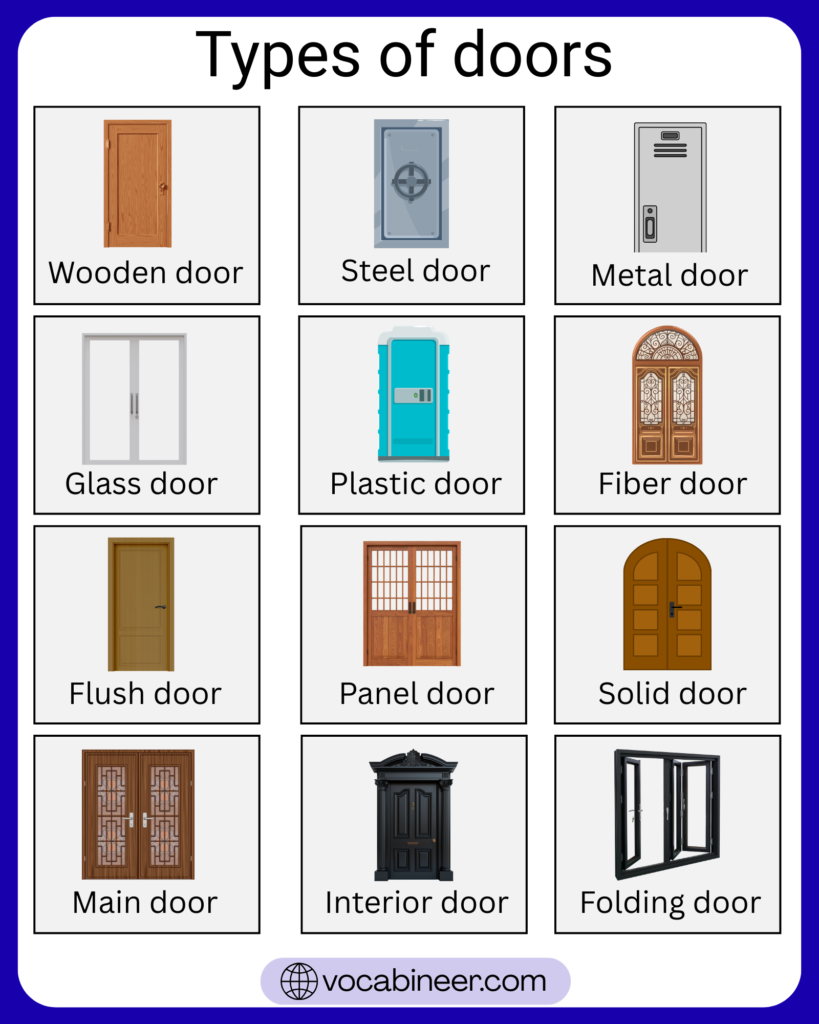
Types of Doors by Location
Location-based types explain where the door is used. So, interior doors focus on privacy and room separation, while exterior doors focus on security, weather protection, and durability.
Interior Doors
Interior doors are used inside the home to separate rooms. They usually feel lighter than exterior doors, and they focus more on privacy, sound control, and smooth daily use.
- Bedroom door: Adds privacy and helps reduce noise between sleeping areas and other rooms.
- Bathroom door: Supports privacy and handles humidity better with suitable finishes.
- Closet door: Covers storage spaces and often uses sliding or folding styles to save space.
- Pocket interior door: Slides into the wall, so it works well for small rooms and hallways.
Exterior Doors
Exterior doors are used at entrances and openings to the outside. They need stronger construction, better sealing, and higher security, especially in busy or weather-exposed areas.
- Front entry door: Main entrance door built for stronger locks, sealing, and daily security.
- Back door: Gives access to service areas and focuses on durability with basic safety.
- Patio door: Connects indoor space to outdoor areas and often uses sliding or French styles.
- Storm door: Adds an outer protective layer and can improve airflow and weather resistance.
- Screen door: Lets fresh air in while keeping insects out, often used at patios and back doors.
Types of Doors by How They Open
Opening style explains how a door moves and how much space it needs. Because each style suits a different layout, learning these types makes it easier to choose a door for small rooms, wide openings, or high-traffic areas.
Hinged Doors
- Single hinged door: A basic swing door that opens in one direction and fits most room entrances.
- Double hinged door: Two hinged panels that meet in the middle and open to create a wider entry.
- Outswing door: Swings outward, so it can save indoor space in tight areas.
- Inswing door: Swings inward, which is common for interior rooms and many main entrances.
Sliding Doors
- Sliding patio door: Slides along a track and works well for patios and wide openings.
- Bypass sliding door: Two sliding panels that pass each other, often used for closets.
- Sliding glass door: A sliding door with large glass panels for light and outdoor views.
- Barn-style sliding door: Slides on an exposed track and adds a bold decorative look.
Folding Doors
- Bi-fold door: Folds into two or more panels and is common for closets and laundry areas.
- Accordion door: Folds into many narrow sections and works as a simple room divider.
- Folding partition door: Folds to open large spaces, often used in halls and meeting areas.
Pocket Doors
- Single pocket door: Slides into one wall pocket and saves space in small rooms.
- Double pocket door: Two pocket doors slide into opposite walls for a wide center opening.
Pivot Doors
- Center pivot door: Rotates around a center point and gives a modern, balanced opening style.
- Offset pivot door: Rotates from a point near the edge and supports wider, heavier door panels.
Revolving Doors
- Manual revolving door: Rotates by pushing and helps manage airflow in busy buildings.
- Automatic revolving door: Uses a motor for smooth turning and supports high-traffic entrances.
Rolling and Shutter Doors
- Roll-up garage door: Rolls upward into a compact space and is common in home garages.
- Roller shutter door: Rolls into a top box and is common in shops and storefronts.
- Industrial rolling door: A heavy rolling door made for warehouses and large storage areas.
Types of Doors by Design and Style
Door design and style describe how a door looks from the front and how it fits the space. For example, some styles look traditional and detailed, while others look simple and modern. In addition, certain styles bring in more light or airflow, so the right design can change both the look and the feel of a room.
Panel Doors
- Panel door: A classic door with raised or recessed panels that suits many home styles.
- Two-panel door: A simple panel style with two large panels for a clean, balanced look.
- Four-panel door: A traditional panel style with four sections that adds more detail.
- Six-panel door: A very common classic style with six panels, often used in older and traditional homes.
Flush Doors
- Flush door: A smooth, flat door that fits modern interiors and clean design themes.
- Solid-core flush door: A heavier flush door that helps reduce noise and feels sturdier.
- Hollow-core flush door: A lighter flush door that works for basic interior use and low cost.
French Doors
- French door: A pair of doors with glass panels that open to create a wide, bright opening.
- Single French door: One French-style door used when you want the look but not a double set.
- French patio door: A French door set used for patios and balconies to bring in light and views.
Dutch Doors
- Dutch door: A split door with a top and bottom half, so you can open one part at a time.
- Exterior Dutch door: A Dutch door used at entrances to allow airflow while keeping pets or kids safer.
- Interior Dutch door: A Dutch door used inside homes for kitchens or laundry areas for partial opening.
Louvered Doors
- Louvered door: A door with angled slats that allow airflow, often used for closets and utility spaces.
- Full-louvered door: A door with slats from top to bottom for stronger ventilation.
- Half-louvered door: A mixed design with slats on part of the door and solid panels on the rest.
Glass and Glass-Insert Doors
- Full glass door: A door made mostly of glass to maximize light, often used for patios and offices.
- Glass-insert door: A solid door with a glass section to bring light while keeping more privacy.
- Frosted glass door: A glass door style that lets light in while reducing clear visibility.
Barn Doors
- Barn door: A sliding door on an exposed track that adds a bold feature look.
- Single barn door: One sliding panel used for closets, pantries, or room openings.
- Double barn door: Two sliding panels that meet in the middle for wider openings and a balanced style.
Types of Doors by Material
Door material affects strength, weight, cost, and how the door handles weather. For example, some materials suit indoor rooms, while others handle outdoor heat, rain, and heavy use better. In addition, the right material can improve insulation and reduce noise, so it helps to match the material to the door’s location.
Wooden Doors
- Solid wood door: A strong, classic door that offers good durability and a premium look.
- Engineered wood door: A stable wood-based door that resists warping better than some solid wood doors.
- Wooden panel door: A wood door with panels that fits traditional interior and exterior styles.
Metal Doors
- Steel door: A strong exterior door that improves security and handles tough weather well.
- Aluminum door: A lighter metal door that resists rust and suits modern designs and glass frames.
- Metal security door: A reinforced door made for extra protection at entrances and outer gates.
Fiberglass Doors
- Fiberglass door: A durable door that resists dents and weather changes better than many wood doors.
- Fiberglass entry door: A fiberglass door made for main entrances with better sealing and insulation.
- Fiberglass door with glass insert: A fiberglass door that adds light while keeping good strength.
uPVC Doors
- uPVC door: A low-maintenance door that resists moisture and suits many modern home openings.
- uPVC sliding door: A uPVC-framed sliding door often used for patios and balconies.
- uPVC bathroom door: A uPVC door used where humidity is high because it handles moisture well.
Composite Doors
- Composite door: A multi-layer door that combines materials for strength, insulation, and security.
- Composite front door: A composite door made for entrances with better durability and sealing.
- Composite door with glass: A composite door that includes a glass section for light and style.
Aluminum Doors
- Aluminum frame door: A door with an aluminum frame, often paired with glass for modern spaces.
- Aluminum sliding door: A strong sliding option used for patios, balconies, and large openings.
- Aluminum glass door: A glass door supported by aluminum framing for strength and clean design.
Types of Doors for Common Home Areas
Home-area door types focus on where the door is used and what it needs to handle. For example, entrance doors need stronger security and sealing, while bathroom doors need privacy and moisture-friendly finishes. In addition, patio and garage doors often need wider openings, so their door styles differ from room doors.
Main Entrance Doors
- Front entry door: A main entrance door built for strong locks, weather sealing, and daily security.
- Security door: A reinforced door that adds extra protection at the main entrance or outer entry.
- Door with sidelights: An entry door with narrow side windows that add light and improve appearance.
Bedroom Doors
- Bedroom panel door: A common bedroom door style that provides privacy and a classic look.
- Bedroom flush door: A smooth bedroom door that suits modern interiors and simple design.
- Solid-core bedroom door: A heavier bedroom door that helps reduce noise between rooms.
Bathroom Doors
- Bathroom door with lock: A bathroom door designed for privacy with a simple locking system.
- Moisture-resistant bathroom door: A door with finishes that handle humidity and daily moisture better.
- Frosted glass bathroom door: A door that lets light in while still keeping privacy.
Kitchen Doors
- Kitchen swing door: A simple hinged door used where a full separation between spaces is needed.
- Kitchen sliding door: A space-saving door used for kitchen openings and pantry access.
- Dutch kitchen door: A split door that allows airflow while keeping the lower half closed.
Patio and Balcony Doors
- Sliding patio door: A wide door that slides on a track and works well for patios and balconies.
- French patio door: A double door style that opens wide and brings in more light.
- Glass patio door: A door with large glass panels that improves views and daylight.
Garage Doors
- Sectional garage door: A garage door made of panels that lift upward and slide along tracks.
- Roll-up garage door: A door that rolls into a compact space, often used for garages and shops.
- Side-hinged garage door: A garage door that opens like a regular swing door for simple access.
Common Door Names List
Door names are easier to remember when you see them in one clean list. This quick list includes common door types people often talk about in homes, buildings, and shops.
- Hinged door
- Sliding door
- Folding door
- Bi-fold door
- Pocket door
- Pivot door
- Revolving door
- Rolling door
- Shutter door
- Panel door
- Flush door
- French door
- Dutch door
- Louvered door
- Glass door
- Glass-insert door
- Barn door
- Interior door
- Exterior door
- Front entry door
- Back door
- Patio door
- Storm door
- Screen door
- Security door
- Bedroom door
- Bathroom door
- Closet door
- Garage door
Difference Between Interior and Exterior Doors
Interior and exterior doors look similar sometimes, yet they serve different purposes. Interior doors focus on privacy, room separation, and smooth daily use, while exterior doors focus on security, weather protection, and stronger sealing.
| Feature | Interior Doors | Exterior Doors |
|---|---|---|
| Main purpose | Privacy and room separation | Security and protection from weather |
| Strength | Lighter for indoor use | Stronger for outdoor exposure |
| Sealing | Minimal sealing needed | Strong sealing to block air and water |
| Materials | Often wood or engineered cores | Often steel, fiberglass, composite, or solid wood |
| Hardware | Simple handles and locks | Strong locks, deadbolts, and tougher hinges |
Difference Between Sliding Door and Pocket Door
Both doors save space because they slide, but they are not the same. A sliding door moves along a visible track and stays outside the wall. In contrast, a pocket door slides into a hidden wall space, so it disappears when opened.
| Feature | Sliding Door | Pocket Door |
|---|---|---|
| Movement | Slides along a track outside the wall | Slides into a wall pocket |
| Wall space | Needs clear wall space beside opening | Needs a wall cavity to hide the door |
| Look | Door remains visible when open | Door disappears when open |
| Best for | Patios, closets, wide openings | Small rooms, bathrooms, tight hallways |
FAQs About Types of Doors
Common types include hinged doors, sliding doors, panel doors, flush doors, French doors, and exterior entry doors used for main entrances.
Pocket doors and sliding doors work well for small rooms because they save floor space and reduce the need for swing clearance.
A panel door has raised or recessed sections, while a flush door has a flat, smooth surface and fits modern, simple interiors.
Yes, uPVC doors handle moisture well, so they are commonly used in bathrooms and other humid areas.
Sliding patio doors and French patio doors are common choices because they offer wider openings and bring in more light.
Conclusion
Types of doors become easier to understand when you group them by location, opening style, design, and material. Because each door type fits a different need, the right choice can improve space use, privacy, security, and comfort.
At the same time, learning door names helps with home vocabulary and better decision-making, especially when you compare styles like hinged, sliding, and pocket doors.
Read More