

Types of fish in English include the many kinds of fish found in rivers, lakes, seas, and oceans around the world. Fish are water animals that live in freshwater or saltwater and breathe through gills. Some fish are small and colorful, while others are large and used for food, fishing, or aquarium keeping. Salmon, tuna, goldfish, trout, shark, and catfish are some common examples of different types of fish.
In this article, you will learn types of fish with pictures and simple examples. It also covers common fish names and basic fish categories, so kids, students, and English learners can improve their animal vocabulary in a clear and easy way. This topic is useful for classroom learning, general knowledge, and everyday English practice.
In This Page
Common Types of Fish
Some fish names are very easy to recognize because people hear them often in daily life. These names appear on menus, in markets, on food packs, and in conversations. Because of this, many people know the name but not how the fish is different from others.
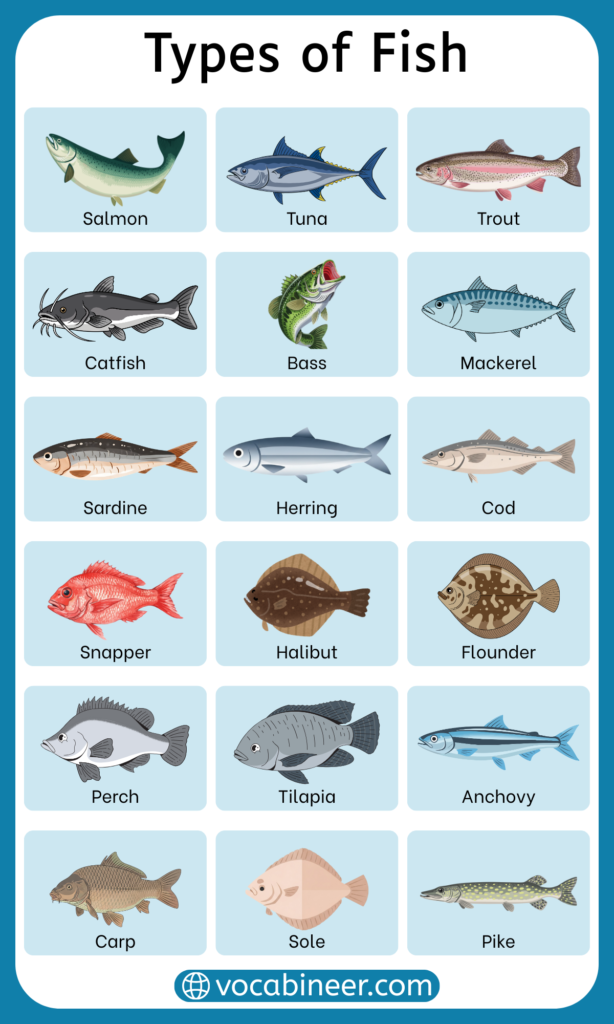
Salmon
Salmon is a very popular fish name. People often see it in restaurants and grocery stores, so the name feels familiar.
Tuna
Tuna is a common fish name used for fresh fish and canned food. Many people use the name for different kinds of tuna fish.
Cod
Cod is a well-known fish name, especially in frozen and packaged seafood. It is often talked about with other white fish.
Tilapia
Tilapia is a common market fish name. People usually recognize it from food packs and home cooking.
Sardine
Sardine is a small fish name. It is often linked with fish sold in tins or jars.
Anchovy
Anchovy is another small fish name. It is often mentioned together with sardines and used in preserved food.
Trout
Trout is a fish name people connect with rivers and lakes. Many people know the name even if they have never seen the fish closely.
Snapper
Snapper is a popular menu name. It is often used for different fish that look similar.
Mackerel
Mackerel is a common fish name often talked about with other oily fish. People usually recognize the name from seafood lists.
Bass
Bass is a fish name used for both freshwater and sea fish. Because of this, people often get confused by the name.
Types of Saltwater Fish
Saltwater fish names are commonly linked to oceans and seas, although many are also used loosely in everyday speech. Because of this, people often recognize the name without knowing whether the fish is strictly marine.
In many cases, these names appear on menus or labels, which makes recognition more important than classification.
- Tuna: A saltwater fish name used for several closely related ocean fish.
- Mackerel: A fast-swimming sea fish name commonly listed in seafood sections.
- Snapper: A saltwater fish name frequently used in markets and restaurants.
- Grouper: A sea fish name often mentioned in fresh fish listings.
- Sole: A flat saltwater fish name commonly seen on menus.
- Flounder: A flat sea fish name often confused with sole due to similar shape.
- Halibut: A large flatfish name commonly used in seafood menus.
- Sea Bass: A saltwater fish name that is often confused with freshwater bass.
- Swordfish: A distinctive sea fish name recognized by its long bill.
- Marlin: A large ocean fish name often mentioned in sport fishing contexts.
- Sardine: A small saltwater fish name frequently grouped with anchovies.
- Anchovy: A sea fish name commonly used in sauces and preserved foods.
- Barracuda: A predatory sea fish name known from coastal regions.
- Redfish: A common sea fish name that varies by region and market use.
Types of Freshwater Fish
Freshwater fish names are commonly linked to rivers, lakes, and ponds, although many are also used loosely in everyday speech. However, because some names overlap with saltwater fish, confusion often appears when these fish are mentioned casually.
In many cases, these names show up in markets, books, or conversations without context. For this reason, recognizing common freshwater fish names helps keep references clear.
- Carp: A widely known freshwater fish name, often used as a general term for large river fish.
- Catfish: A familiar name linked to whisker-like features, commonly used for several freshwater species.
- Tilapia: A freshwater fish name frequently seen in markets and home cooking.
- Trout: A common freshwater name associated with streams and lakes, often used broadly.
- Bass: A shared name applied to multiple freshwater fish, which often causes confusion.
- Perch: A freshwater fish name commonly mentioned in lakes and fishing contexts.
- Pike: A long-bodied freshwater fish name recognized by its pointed snout.
- Zander: A freshwater fish name often confused with perch in some regions.
- Roach: A small freshwater fish name commonly used in European waters.
- Bream: A freshwater fish name that is sometimes mixed up with sea bream.
- Minnow: A general name used for small freshwater fish rather than a single type.
- Gourami: A freshwater fish name often mentioned in aquarium settings.
- Goldfish: A well-known freshwater name commonly associated with домаш aquariums.
- Koi: A carp-related freshwater fish name recognized for ornamental use.
Brackish Water Fish Types
Brackish water fish names are often mentioned less frequently, which is why many people are unsure where these fish belong. However, these names usually come up when rivers meet the sea, or when people talk about estuaries and coastal waters.
In many cases, brackish fish are confused with either freshwater or saltwater fish. For this reason, recognizing their names helps clarify references in books, labels, and everyday conversation.
- Mullet: A brackish water fish name commonly used for fish found near river mouths and coastal areas.
- Milkfish: A well-known brackish fish name often mentioned in Asian markets and food lists.
- Barramundi: A fish name used for a species that moves between freshwater and brackish water.
- Scat: A brackish water fish name often seen in estuaries and sometimes in aquariums.
- Archerfish: A brackish fish name recognized for its unique feeding behavior, often mentioned in aquariums.
- Gobies: A group name used for small fish commonly found in brackish and coastal waters.
- Monodactylus: A brackish water fish name frequently used in aquarium and reference lists.
- Four-Eyed Fish: A brackish fish name known from coastal lagoons and estuaries.
Types of Fish People Eat
Fish names are often learned through food rather than habitat, which is why many people recognize edible fish names first. However, these names are sometimes used broadly, even when they refer to different fish types.
In many cases, the same name appears across markets, menus, and packaging, which makes recognition more important than exact classification.
- Salmon: A commonly eaten fish name widely used in fresh, frozen, and smoked forms.
- Tuna: A popular food fish name applied to several ocean fish sold in different cuts.
- Cod: A well-known edible fish name frequently listed in restaurants and frozen foods.
- Haddock: A food fish name often mentioned alongside cod in seafood menus.
- Tilapia: A widely eaten fish name commonly seen in home cooking and markets.
- Catfish: A food fish name used broadly for freshwater species with similar features.
- Mackerel: A commonly eaten fish name often grouped with oily fish.
- Sardine: A small food fish name frequently associated with tins and preserved fish.
- Anchovy: A food fish name often mentioned in sauces and preserved forms.
- Herring: A commonly eaten fish name used for fresh, pickled, and smoked products.
- Snapper: A food fish name used loosely for several similar-looking fish.
- Grouper: A fish name commonly used in seafood menus and fresh counters.
Types of Fish Used in Cooking
Fish names used in cooking often come from menus, recipes, or spoken instructions. However, these names may differ from scientific or regional labels, which can cause confusion.
Because of this, recognizing cooking-related fish names helps people understand what is being referenced without focusing on preparation details.
- Sea Bass: A cooking fish name commonly used on menus, often applied to different species.
- Halibut: A flatfish name frequently used in cooking and restaurant listings.
- Flounder: A cooking fish name often grouped with other flatfish.
- Sole: A flatfish name commonly used in formal menu descriptions.
- Swordfish: A cooking fish name recognized by its firm texture and large cuts.
- Marlin: A large fish name sometimes mentioned in cooked or grilled dishes.
- Red Snapper: A menu name often used broadly, regardless of exact species.
- Pollock: A cooking fish name commonly used in processed seafood products.
- Whiting: A fish name often mentioned in fried fish dishes.
- Basa: A cooking fish name frequently seen in markets and packaged foods.
- Swai: Another name used for the same fish sold under basa in some regions.
Types of Aquarium Fish
Aquarium fish names are usually learned visually, which is why people recognize them by appearance before name. However, many aquarium fish have similar shapes or colors, which leads to name confusion.
In many cases, these names are shared across stores, books, and casual conversation, making clear grouping useful.
- Goldfish: A very familiar aquarium fish name commonly kept in home tanks.
- Guppy: A small aquarium fish name often mentioned for beginner tanks.
- Betta: An aquarium fish name known for bright colors and flowing fins.
- Angelfish: A popular aquarium fish name recognized by its flat body shape.
- Neon Tetra: A small aquarium fish name commonly grouped with other tetras.
- Molly: An aquarium fish name often mentioned alongside guppies and platies.
- Platy: A small aquarium fish name frequently used in community tanks.
- Cichlid: A group name used for many aquarium fish with varied colors.
- Oscar: A large aquarium fish name often recognized by size and pattern.
- Discus: A round-bodied aquarium fish name known from display tanks.
- Pleco: A common aquarium fish name used for algae-eating catfish.
Fish Known by Different Names
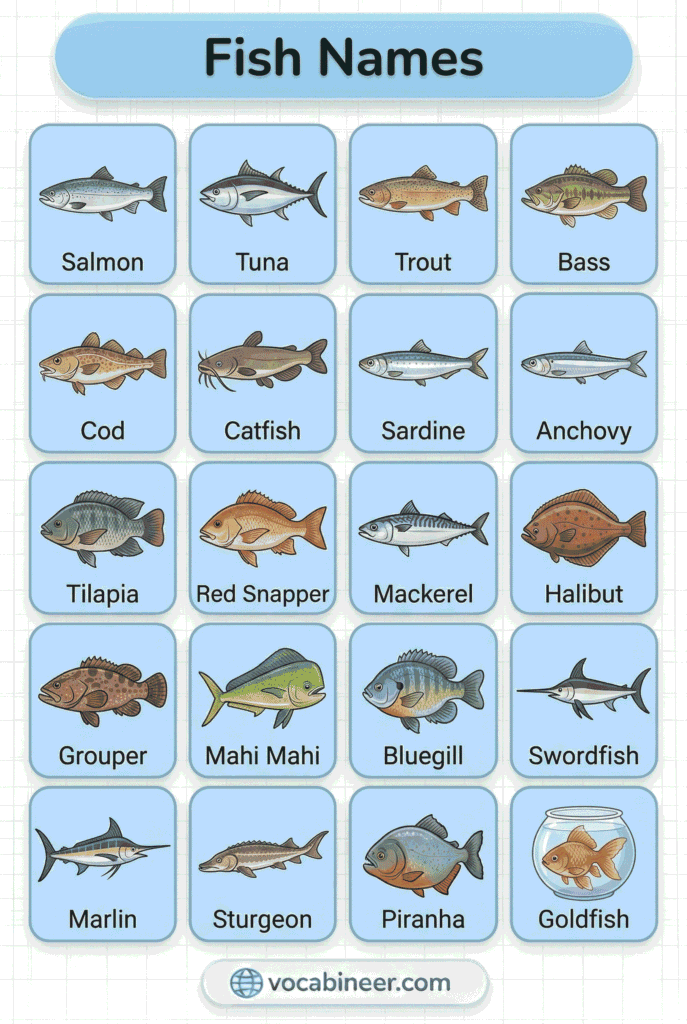
Many fish are known by more than one name depending on region, market use, or everyday speech. Because of this variation, the same fish may be called something different in stores, menus, or conversation.
In many cases, these name changes happen without explanation, which is why grouping them clearly helps with recognition.
- Basa / Swai / Pangasius: Different market names used for the same freshwater fish.
- Sea Bass / Barramundi: Names that may refer to the same fish depending on region.
- Rockfish / Pacific Snapper: Market names often used for similar-looking species.
- Mahi-Mahi / Dolphinfish: Two common names used for the same ocean fish.
- Pollock / Alaska Pollock: Names used interchangeably on packaging and menus.
- Kingfish / Amberjack: Names that vary by country and local usage.
- Tilapia / Saint Peter’s Fish: Different names used in cultural and market contexts.
- Redfish / Red Drum: Names that change depending on region and label use.
Fish Names People Often Confuse
Fish names are often mixed up because they sound similar, appear together on menus, or are used loosely in everyday speech. As a result, people may think two names refer to the same fish when they actually point to different ones.
The table below highlights common fish name confusions, focusing only on recognition and naming, not detailed differences.
| Commonly Confused Names | Why People Mix Them Up |
|---|---|
| Bass / Sea Bass | Similar wording, even though they often refer to different fish types. |
| Bream / Sea Bream | Shared name despite freshwater and saltwater usage differences. |
| Cod / Haddock | Frequently listed together on menus and in markets. |
| Sole / Flounder | Both are flat fish and often mentioned interchangeably. |
| Sardine / Anchovy | Small size and similar food use cause confusion. |
| Tuna / Bonito | Related names often used casually as the same fish. |
| Snapper / Red Snapper | General name used instead of the more specific label. |
| Mackerel / Kingfish | Market and regional naming overlap leads to mix-ups. |
Fish vs Shellfish Names
Fish and shellfish are both water animals, but they are not the same. Unlike fish, shellfish include animals such as crustaceans and mollusks, and many have a shell or hard outer covering. Fish are vertebrates with fins, gills, and a backbone.
The table below shows the difference between fish and shellfish names.
| Feature | Fish | Shellfish |
|---|---|---|
| Basic difference | Fish are water animals with a backbone | Shellfish are water animals like crustaceans and mollusks |
| Body structure | Have fins, gills, and a backbone | Usually have a shell, hard outer body, or soft body without a backbone |
| Main groups | Finfish | Crustaceans and mollusks |
| Examples of body type | Salmon, tuna, trout | Crab, shrimp, oyster |
| Common habitat | Rivers, lakes, seas, and oceans | Seas, oceans, coasts, and some freshwater areas |
Types of Fish A–Z
Types of fish A–Z include many common fish names arranged in alphabetical order for easy learning. This kind of list helps readers recognize different fish names quickly and build stronger vocabulary.
- A – Anchovy, Angelfish, Arapaima
- B – Bass, Betta, Bluefish
- C – Carp, Catfish, Clownfish
- D – Drum, Dogfish
- E – Eel, Emperor Fish
- F – Flounder, Flying Fish
- G – Goldfish, Grouper, Guppy
- H – Haddock, Halibut, Herring
- I – Icefish
- J – Jackfish, Jellynose Fish
- K – Kingfish, Koi
- L – Lionfish, Loach
- M – Mackerel, Mahi-Mahi, Minnow
- N – Needlefish
- O – Oscar, Ocean Sunfish
- P – Perch, Pike, Pufferfish
- Q – Queen Angelfish
- R – Ray, Red Snapper, Rohu
- S – Salmon, Sardine, Swordfish
- T – Tilapia, Trout, Tuna
- U – Unicornfish
- V – Velvetfish
- W – Whale Shark, Whitefish
- X – X-Ray Tetra
- Y – Yellowtail
- Z – Zebrafish
Fish Names Used in Markets
Fish names used in markets are often simplified or adjusted for everyday buying and selling. Because of this, the same fish may appear under slightly different names depending on location or labeling style.
In many cases, these names are chosen for familiarity rather than precision, which is why recognition matters more than classification.
- Red Snapper: A market name often used broadly for similar-looking fish.
- Sea Bass: A common label applied to different fish across regions.
- Whitefish: A general market term used for several pale-fleshed fish.
- Rockfish: A market name covering multiple related species.
- Panga: A shortened market name used for pangasius in many regions.
- Basa: A market name often seen alongside swai for the same fish.
FAQs About Fish Types
Names like salmon, tuna, cod, tilapia, sardine, and trout are among the most commonly recognized fish types.
Fish names often change by region, language, or market use, which leads to multiple common names for the same fish.
Sometimes, but often they are different. Food fish names usually come from markets and menus, while aquarium fish names come from hobby use.
Similar names, similar appearance, or shared menu use cause people to mix up fish types in everyday speech.
No. In everyday use, it usually means common fish names rather than scientific species.
Conclusion
This article covered types of fish by focusing on names people commonly see, hear, and use. By grouping fish names across habitats, food use, markets, and common confusion points, recognition becomes clearer. As a result, readers can better understand fish names as they appear in everyday settings, menus, labels, and conversation.
Read More


