

Seafood includes edible fish, shellfish, squid, octopus, and similar aquatic foods used in cooking around the world. People search for seafood names in English when they want to recognize menu items, learn food vocabulary, shop at markets, or match seafood names with pictures.
However, seafood is not just one food group. It includes fish, crustaceans, mollusks, cephalopods, fish eggs, and many prepared seafood dishes. Learning these names clearly helps students, kids, travelers, cooks, and English learners understand restaurant menus, recipes, food labels, and seafood market signs.
In This Page
What Is Seafood?
Seafood is a general food word for edible animals that come from water. In everyday English, it often includes fish, shellfish, squid, octopus, and other aquatic foods from oceans, rivers, lakes, farms, and coastal areas.
Fish such as salmon, tuna, cod, and trout are seafood. Shellfish such as shrimp, crab, lobster, clams, mussels, and oysters are also seafood.
Common Seafood Names
Common seafood names include fish, shellfish, and soft-bodied seafood such as squid and octopus. These are the names learners often see in restaurants, supermarkets, seafood markets, cooking videos, and recipe books.
- Salmon
- Tuna
- Cod
- Mackerel
- Sardine
- Trout
- Snapper
- Halibut
- Catfish
- Tilapia
- Shrimp
- Prawn
- Crab
- Lobster
- Crayfish
- Clam
- Mussel
- Oyster
- Scallop
- Squid
- Octopus
- Cuttlefish
- Eel
- Anchovy
- Abalone
- Sea urchin
- Roe
- Caviar
- Monkfish
- Perch
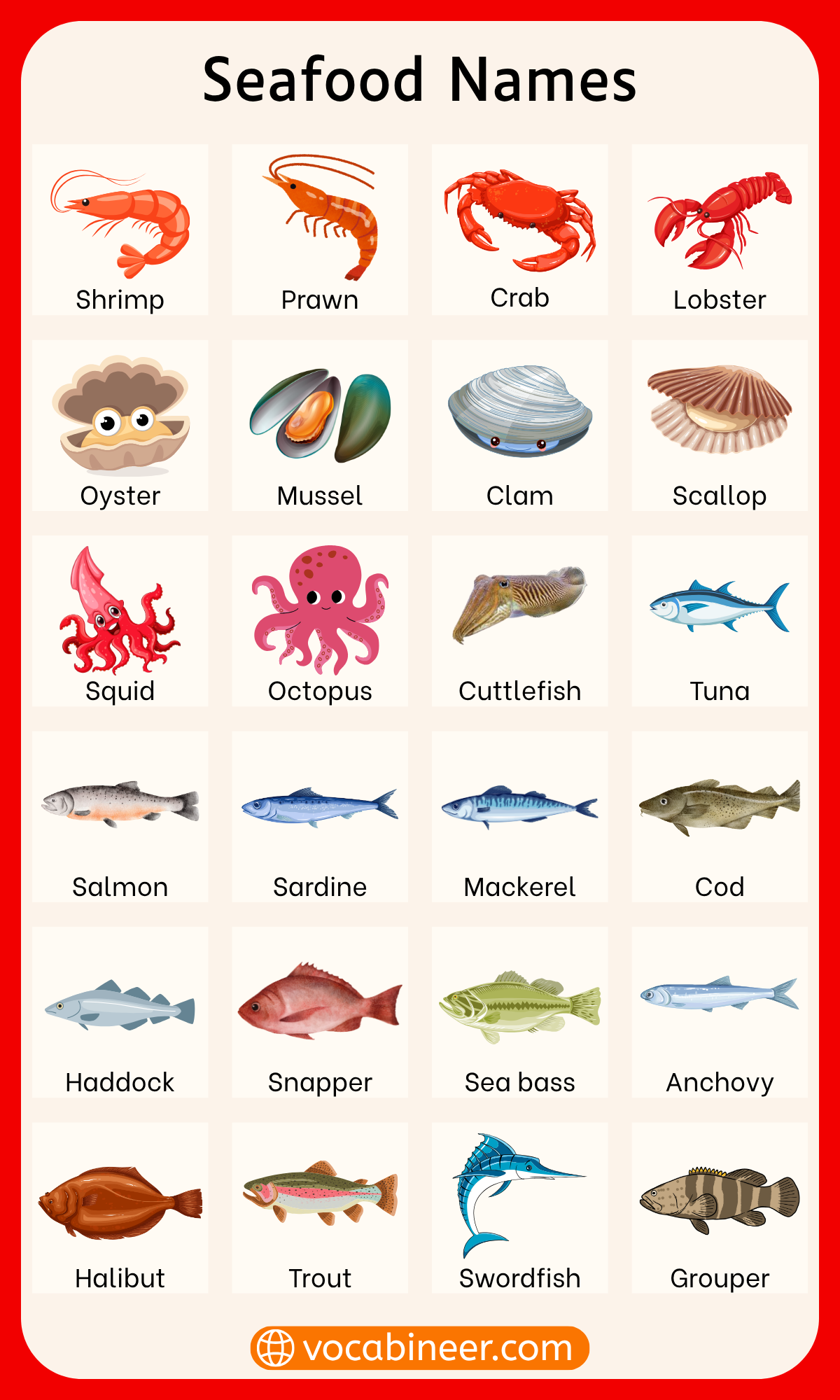
Seafood Names with Simple Meanings
Some seafood names are easy to recognize, while others need a short meaning. This table explains common seafood vocabulary in simple English for learners, kids, teachers, and food readers.
- Salmon – A pink-fleshed fish rich in omega-3, often eaten grilled, smoked, or in sushi.

- Tuna – A large, meaty fish commonly used in steaks, canned tuna, and sushi.

- Cod – A mild white fish popular for fish and chips and baking dishes.

- Mackerel – An oily fish with strong flavor, rich in healthy fats, often grilled or smoked.

- Sardine – Small oily fish usually eaten canned, grilled, or preserved in oil.

- Trout – A freshwater fish similar to salmon, often pan-fried or baked.

- Snapper – A firm, white fish enjoyed grilled, baked, or in seafood curries.

- Halibut – A lean white fish with mild flavor, often cooked as steaks or fillets.

- Fish – A general term for aquatic animals eaten as seafood, including fresh and saltwater types.

- Anchovy – Small, salty fish usually preserved, used in pizzas, sauces, and salads.

- Shrimp – A small shellfish with sweet flavor, commonly grilled, fried, or added to pasta and curries.

- Prawn – A large shellfish similar to shrimp, often used in curries, grills, and fried dishes.

- Crab – A crustacean with sweet, delicate meat, commonly boiled, steamed, or used in crab cakes.

- Lobster – A luxury seafood with tender meat, usually boiled, grilled, or served with butter.

- Clam – A shellfish found in sand or mud, often eaten steamed, in soups, or pasta dishes.

- Mussel – A bivalve mollusk with dark shells, usually steamed and served with sauces.

- Oyster – A shellfish eaten raw, grilled, or baked, famous for its unique salty flavor.

- Catfish – A freshwater fish with a mild taste, commonly fried or grilled.

- Squid – A seafood with tender rings, often fried as calamari or cooked in stews.

- Octopus – A soft-bodied seafood with chewy texture, eaten grilled, boiled, or in salads.

Seafood Names with Pronunciation
Pronunciation helps learners say seafood names correctly in restaurants, markets, and classrooms. The pronunciations below are simple sound guides, not strict dictionary symbols.
| Seafood Name | Simple Pronunciation |
|---|---|
| Salmon | 🔊 SAM-uhn |
| Tuna | 🔊 TOO-nuh |
| Cod | 🔊 kod |
| Mackerel | 🔊 MAK-uh-ruhl |
| Sardine | 🔊 sar-DEEN |
| Trout | 🔊 trout |
| Shrimp | 🔊 shrimp |
| Prawn | 🔊 prawn |
| Crab | 🔊 krab |
| Lobster | 🔊 LOB-ster |
| Clam | 🔊 klam |
| Mussel | 🔊 MUS-uhl |
| Oyster | 🔊 OY-ster |
| Scallop | 🔊 SKAL-uhp |
| Squid | 🔊 skwid |
| Octopus | 🔊 OK-tuh-pus |
| Cuttlefish | 🔊 KUT-l-fish |
| Abalone | 🔊 ab-uh-LOH-nee |
| Caviar | 🔊 KAV-ee-ar |
| Calamari | 🔊 kal-uh-MAR-ee |
Seafood, Fish, and Shellfish Difference
These three food words are related, but each one has a different meaning. The broad category is seafood, which covers edible aquatic foods. Inside that group, fish have fins and gills, while shellfish have shells or shell-like outer bodies.
| Word | Simple Meaning | Examples |
|---|---|---|
| Seafood | Edible aquatic animals used as food | Fish, shrimp, crab, squid |
| Fish | Seafood animals with fins and gills | Salmon, tuna, cod, trout |
| Shellfish | Seafood with shells or shell-like outer bodies | Crab, lobster, clam, oyster |
| Crustacean | Shellfish with jointed legs and a hard outer shell | Shrimp, crab, lobster |
| Mollusk | Soft-bodied seafood, often with a shell | Clam, mussel, oyster, scallop |
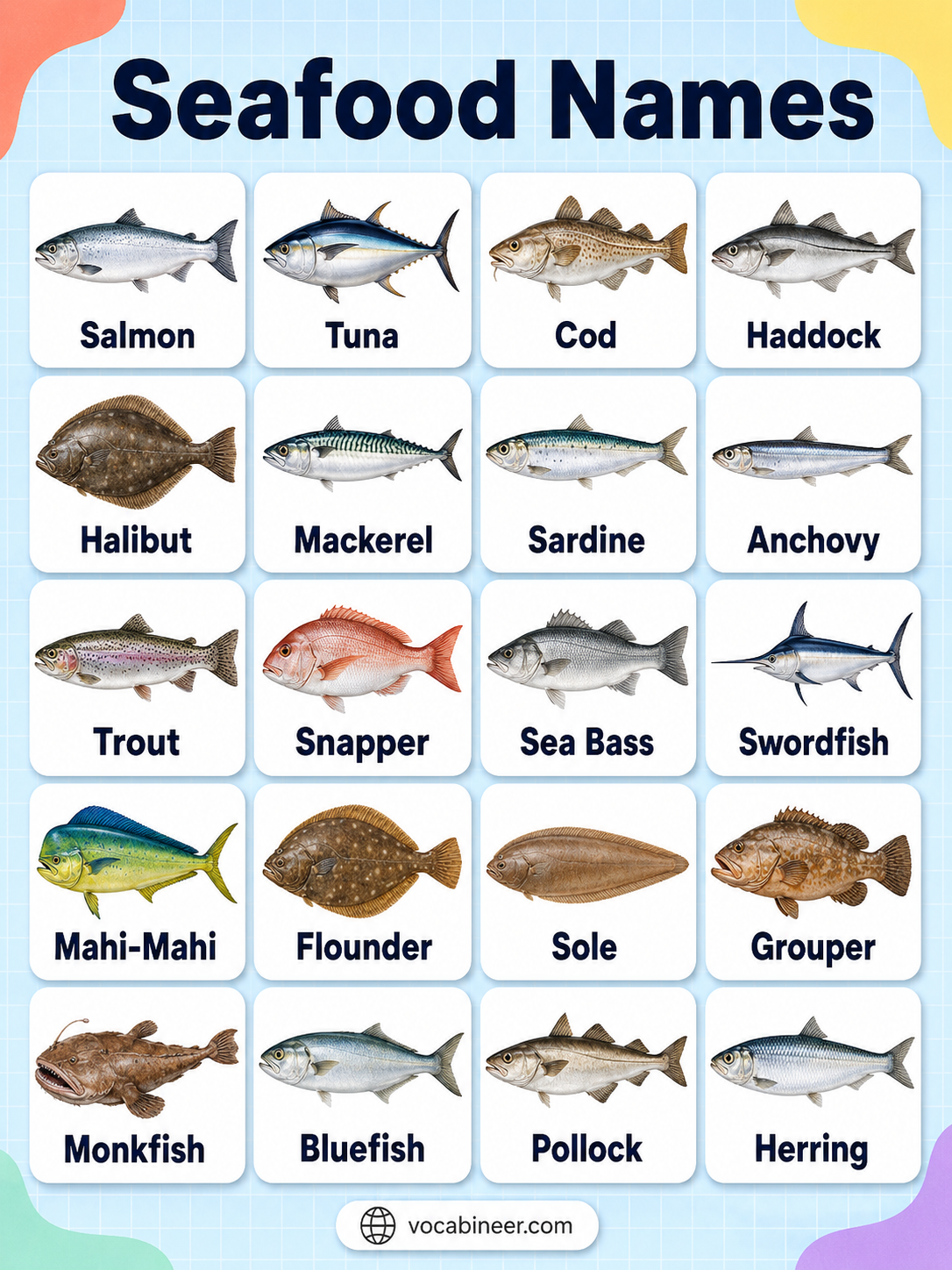
Fish Names Used as Seafood
Fish are the most common seafood group in everyday English. These names appear often in restaurants, supermarkets, frozen-food sections, canned-food shelves, and home cooking.
- Salmon
- Tuna
- Cod
- Mackerel
- Sardine
- Trout
- Snapper
- Halibut
- Catfish
- Tilapia
- Carp
- Perch
- Haddock
- Herring
- Anchovy
- Sea bass
- Grouper
- Monkfish
- Eel
- Swordfish
Some fish have mild white flesh, such as cod, haddock, tilapia, and halibut. Others, such as salmon, tuna, mackerel, and sardines, usually have a richer taste and stronger flavor.
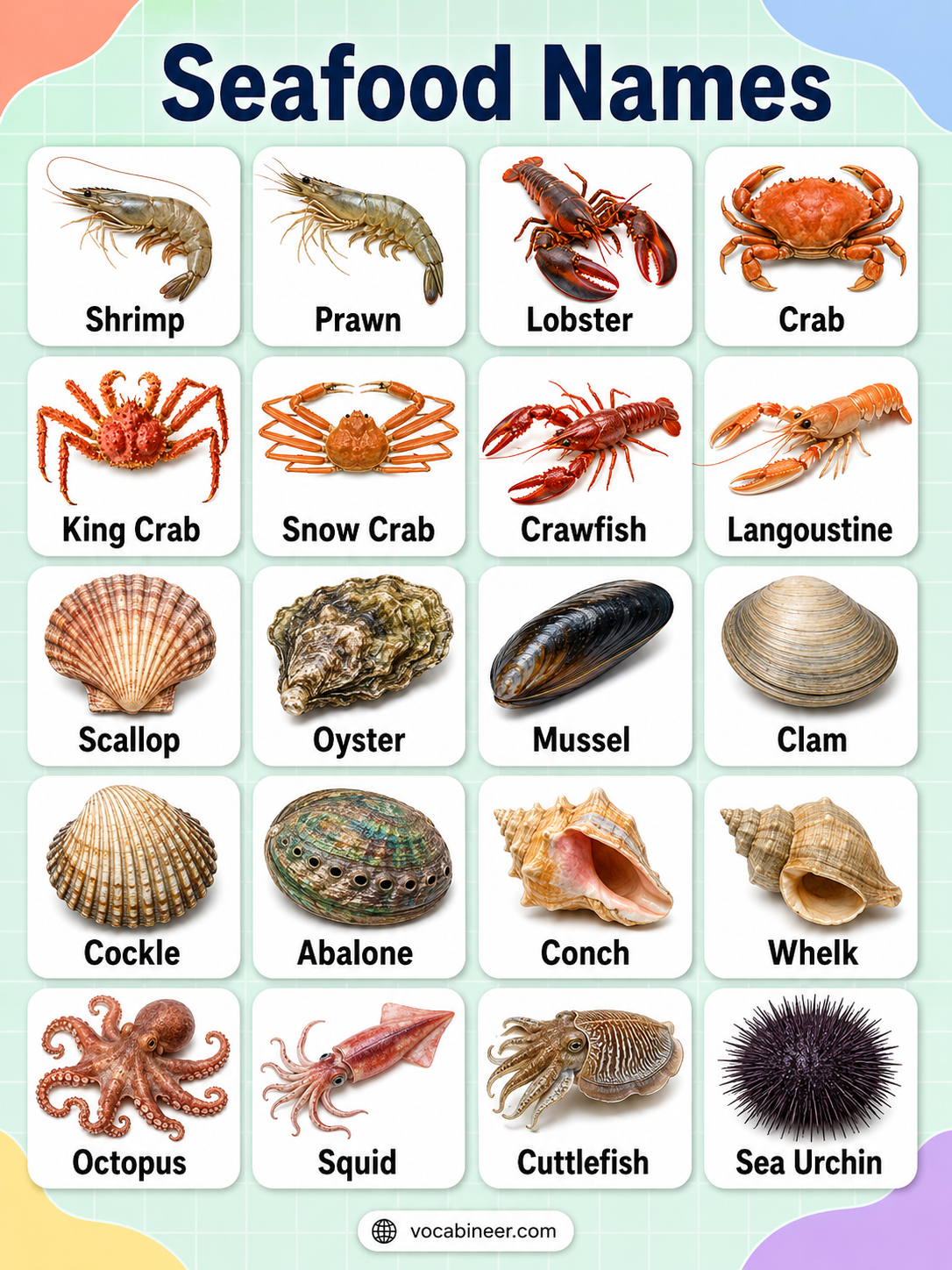
Shellfish Names in English
Shellfish are seafood animals with shells or shell-like outer parts. This group includes crustaceans such as shrimp and crab, and mollusks such as clams, mussels, oysters, and scallops.
- Shrimp
- Prawn
- Crab
- Lobster
- Crayfish
- Langoustine
- Clam
- Mussel
- Oyster
- Scallop
- Abalone
- Conch
- Whelk
- Cockle
- Sea snail
Crustacean Seafood Names
Crustaceans are shellfish with hard outer shells, jointed legs, and segmented bodies. Many popular seafood dishes use crustaceans because their meat is often sweet, firm, and flavorful.
- Shrimp
- Prawn
- Crab
- Lobster
- Crayfish
- Langoustine
- King crab
- Snow crab
- Blue crab
- Stone crab
- Mud crab
- Spiny lobster
Crabs and lobsters usually have claws or strong legs, while shrimp and prawns are smaller and curved. Crayfish look like small lobsters and usually live in freshwater.
Mollusk Seafood Names
Mollusks are soft-bodied seafood animals. In food vocabulary, this section focuses mainly on shell mollusks such as clams, mussels, oysters, scallops, abalone, conch, and whelk.
- Clam
- Mussel
- Oyster
- Scallop
- Abalone
- Conch
- Whelk
- Cockle
- Razor clam
- Sea snail
- Limpet
- Geoduck
Clams, mussels, oysters, and scallops are common bivalves, which means they have two shells. Meanwhile, abalone, conch, whelk, limpets, and sea snails are shell mollusks used in some coastal cuisines.
Squid, Octopus, and Similar Seafood
Squid, octopus, and cuttlefish are often grouped with seafood, but they are not fish. They are soft-bodied sea animals used in many cooked dishes, especially in Asian, Mediterranean, and coastal cuisines.
- Squid
- Octopus
- Cuttlefish
- Calamari
- Baby octopus
- Squid rings
- Cuttlefish strips
- Stuffed squid
- Grilled octopus
- Fried calamari
Calamari is a food name often used for cooked squid, especially fried squid rings. Octopus usually has a firmer, chewier texture, while squid and cuttlefish can taste mild when cooked properly.
Saltwater and Freshwater Seafood Names
Seafood can come from oceans, rivers, lakes, ponds, farms, and coastal waters. In everyday English, many people use seafood for both saltwater and freshwater edible aquatic animals.
| Type | Seafood Examples |
|---|---|
| Saltwater seafood | Tuna, cod, mackerel, sardine, snapper, halibut, lobster, oyster, squid |
| Freshwater seafood | Catfish, trout, tilapia, carp, perch, crayfish |
| Both or farmed in different waters | Salmon, shrimp, prawn, eel |
| Coastal seafood | Crab, clam, mussel, oyster, scallop |
| Reef fish | Snapper, grouper, sea bass |
Seafood Names by Picture Type
Pictures help learners remember seafood names faster. Fish usually have fins and tails, crustaceans often have hard shells and legs, while clams, mussels, oysters, and scallops have two shells.
| Picture Clue | Seafood Examples |
|---|---|
| Fish with fins and tail | Salmon, tuna, cod, trout |
| Hard shell and claws | Crab, lobster, crayfish |
| Small curved shellfish | Shrimp, prawn |
| Two-shell seafood | Clam, mussel, oyster, scallop |
| Soft body with arms | Squid, octopus, cuttlefish |
| Round spiky seafood | Sea urchin |
| Fish eggs | Roe, caviar |
| Long snake-like body | Eel |
Seafood Dishes and Menu Words
Seafood names often appear inside dish names on restaurant menus. These words help learners understand what they are ordering or reading in recipes.
| Seafood Dish or Menu Word | Meaning |
|---|---|
| Fish and chips | Fried fish served with fries. |
| Grilled shrimp | Shrimp cooked on a grill or hot surface. |
| Fried calamari | Fried squid, often served as rings. |
| Crab cakes | Patties made with crab meat and seasonings. |
| Lobster roll | A sandwich filled with lobster meat. |
| Clam chowder | A creamy soup made with clams. |
| Seafood pasta | Pasta served with seafood such as shrimp, mussels, or clams. |
| Fish tacos | Tacos filled with cooked fish and toppings. |
| Sushi | A Japanese dish that may include raw or cooked seafood. |
| Seafood platter | A mixed plate with several seafood items. |
Seafood Market and Menu Words
Seafood markets, grocery stores, and restaurants use special words for cuts, preparation, freshness, and serving style. These words help learners understand signs, labels, and menus.
| Word | Meaning |
|---|---|
| Fillet | A boneless piece of fish. |
| Whole fish | A fish sold with head, tail, and body. |
| Steak | A thick cut of fish. |
| Shell-on | Seafood served or sold with the shell still on. |
| Peeled | Shrimp or prawns with the shell removed. |
| Deveined | Shrimp with the dark vein removed. |
| Fresh | Sold chilled and not frozen, though freshness still depends on handling and storage. |
| Frozen | Kept very cold and hard for storage. |
| Raw | Not cooked. |
| Smoked | Flavored or preserved with smoke. |
| Steamed | Cooked with steam. |
| Grilled | Cooked over heat or flame. |
| Fried | Cooked in hot oil. |
| Canned | Preserved in a tin or can. |
Seafood Names by Use
Seafood names become easier to remember when learners connect them with common uses. This section gives practical examples without turning the article into a recipe guide.
| Use | Seafood Examples |
|---|---|
| For grilling | Salmon, tuna, shrimp, lobster, octopus |
| For frying | Cod, calamari, shrimp, catfish, fish fillet |
| For soups | Clams, mussels, crab, fish pieces, shrimp |
| For sushi | Tuna, salmon, eel, roe, shrimp |
| For pasta | Shrimp, mussels, clams, scallops, squid |
| For sandwiches | Tuna, crab, lobster, fried fish |
| For curries | Prawns, fish, crab, mussels |
| For salads | Tuna, shrimp, crab, octopus |
Seafood Names for Kids and Beginners
Kids and beginner English learners often need short words, spellings, and easy examples. These seafood names are common, useful, and simple enough for early vocabulary practice.
| Seafood Name | Spelling |
|---|---|
| Fish | F-I-S-H |
| Crab | C-R-A-B |
| Shrimp | S-H-R-I-M-P |
| Prawn | P-R-A-W-N |
| Tuna | T-U-N-A |
| Cod | C-O-D |
| Clam | C-L-A-M |
| Squid | S-Q-U-I-D |
| Oyster | O-Y-S-T-E-R |
| Mussel | M-U-S-S-E-L |
| Lobster | L-O-B-S-T-E-R |
| Octopus | O-C-T-O-P-U-S |
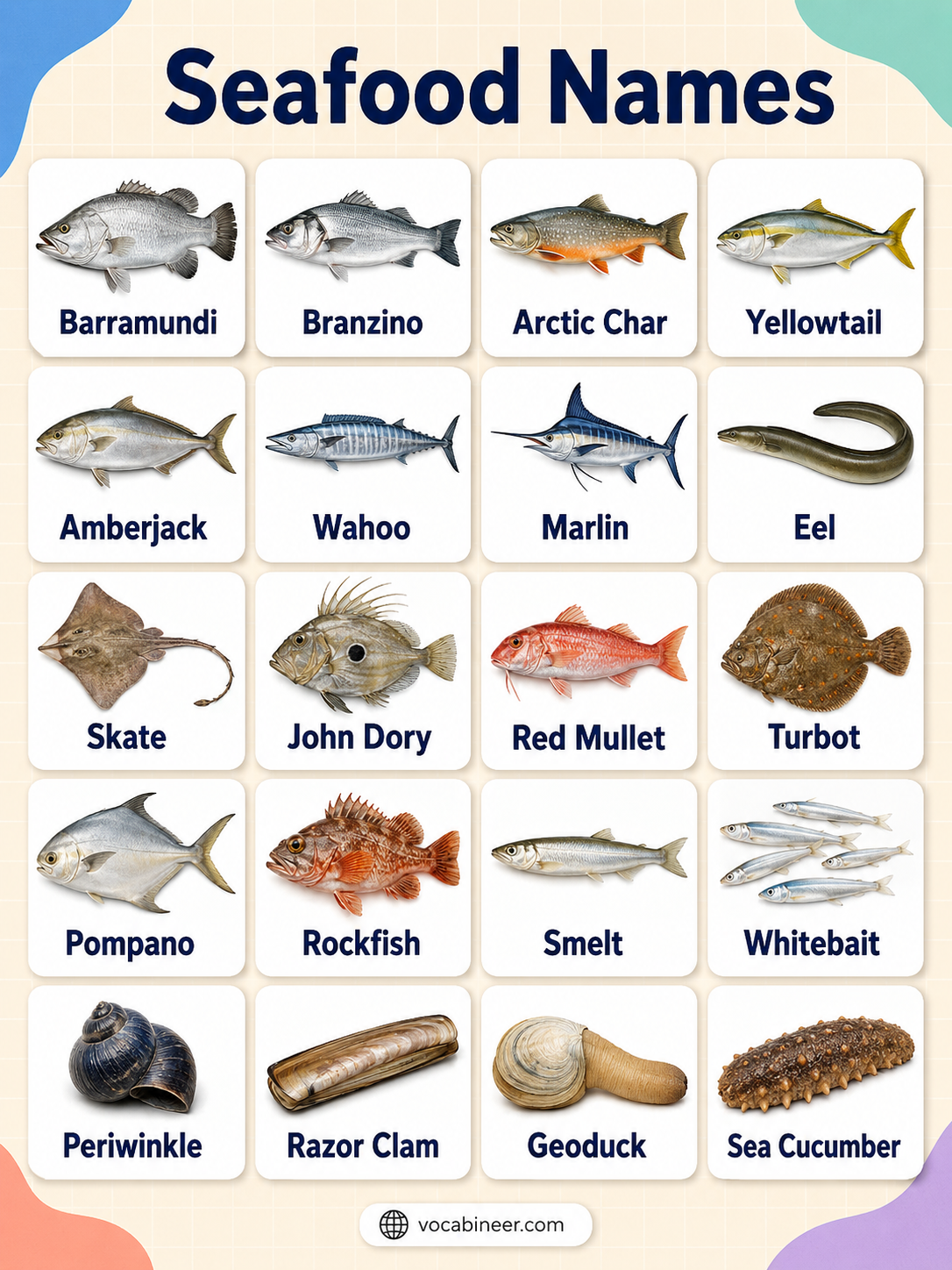
Rare and Unusual Seafood Names
Rare and unusual seafood names are useful for advanced learners, food lovers, travelers, and menu readers. These foods may not appear in every market, but they are common in some regional cuisines.
- Abalone
- Sea urchin
- Cuttlefish
- Eel
- Razor clam
- Conch
- Whelk
- Monkfish
- Flying fish
- Stone crab
- Langoustine
- Geoduck
- Cockle
- Caviar
- Roe
- Sea cucumber
- Spiny lobster
- Periwinkle
- Limpet
- Barramundi
Note: Sea cucumber is not a vegetable. It is an edible marine animal used in some regional cuisines.
Seafood Names Often Confused with Each Other
Some seafood names look similar, sound similar, or appear in similar dishes. These quick comparisons help learners avoid common mistakes.
| Confusing Pair | Main Difference |
|---|---|
| Shrimp vs Prawn | The names are used differently by country; prawns are often larger in everyday food English, but the difference is not always strict. |
| Fish vs Seafood | Fish is one type of seafood; seafood is the broader food group. |
| Shellfish vs Fish | Shellfish have shells or shell-like bodies; fish usually have fins and gills. |
| Clam vs Mussel | Clams often have rounder, harder shells; mussels usually have darker, longer shells. |
| Squid vs Octopus | Squid has a longer body and arms/tentacles; octopus has eight arms and a rounder body. |
| Lobster vs Crayfish | Lobster is usually larger and marine; crayfish is usually smaller and freshwater. |
| Oyster vs Scallop | Oysters have rough shells and are often eaten raw or baked; scallops are known for round, tender meat. |
| Salmon vs Trout | Both can look similar, but salmon often has richer, pinker flesh and a stronger flavor. |
| Tuna vs Mackerel | Tuna is usually larger and meatier; mackerel is oilier and stronger in flavor. |
| Roe vs Caviar | Roe means fish eggs; caviar usually refers to salted roe, especially from sturgeon in strict use. |
Quick Safety Note About Seafood
Seafood is common in many cuisines, but some people are allergic to fish, shellfish, or both. In restaurants, learners should ask about ingredients if they have allergies, dietary limits, religious food rules, or cross-contact concerns.
Also, raw seafood dishes such as oysters, sushi, and sashimi may not suit everyone. Food safety depends on freshness, handling, storage, preparation, and personal health needs.
FAQs
Common seafood names include salmon, tuna, cod, mackerel, sardine, shrimp, prawn, crab, lobster, clam, mussel, oyster, squid, and octopus.
Fish is one type of seafood, but seafood is a broader word. It can also include shrimp, crab, lobster, clams, mussels, oysters, squid, and octopus.
Common shellfish names include shrimp, prawn, crab, lobster, crayfish, clam, mussel, oyster, scallop, abalone, conch, and whelk.
Shrimp and prawns look similar, and the names are used differently by country. In everyday food English, prawns are often larger, but the difference is not always strict.
Useful restaurant seafood names include salmon fillet, tuna steak, grilled shrimp, fried calamari, crab cakes, steamed mussels, lobster roll, fish tacos, sushi, and seafood pasta.
Read More
