

Condiments are small flavor add-ons that make food taste sweeter, spicier, creamier, tangier, saltier, or richer. People search for condiments names when they want to learn common food words such as ketchup, mustard, mayonnaise, relish, soy sauce, hot sauce, barbecue sauce, jam, honey, salsa, chutney, tahini, and hummus.
A condiment may be a sauce, spread, dip, relish, pickle, seasoning, dressing, or sweet topping. Many condiments sit on restaurant tables, while others are used with sandwiches, burgers, fries, salads, rice dishes, noodles, grilled foods, breakfast meals, and snacks.
In This Page
What Is a Condiment?
A condiment is a food added in a small amount to improve or change the flavor of another food. It is not usually the main part of a meal; instead, it adds taste, moisture, color, heat, sweetness, creaminess, saltiness, or tang.
Common examples include ketchup, mustard, mayonnaise, hot sauce, soy sauce, vinegar, barbecue sauce, relish, salsa, chutney, jam, honey, and maple syrup.
Everyday Condiments People Use Most
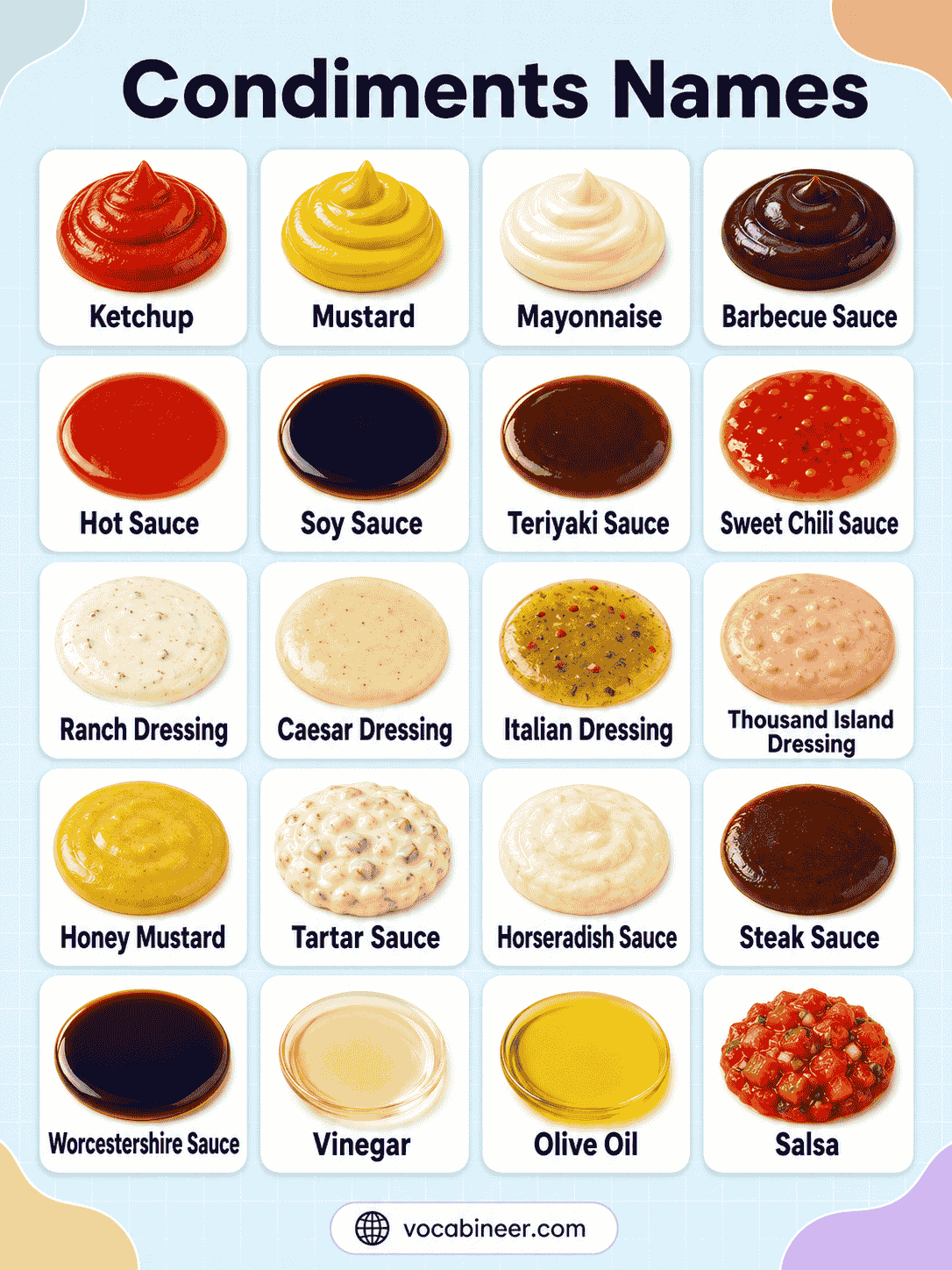
These are the condiment names many people see in homes, restaurants, fast-food places, lunch boxes, grocery stores, and cafés. They include sauces, spreads, dips, sweet toppings, pickled add-ons, and seasonings.
- Ketchup
- Mustard
- Mayonnaise
- Hot sauce
- Barbecue sauce
- Soy sauce
- Vinegar
- Relish
- Salsa
- Chutney
- Ranch dressing
- Salad dressing
- Tartar sauce
- Steak sauce
- Worcestershire sauce
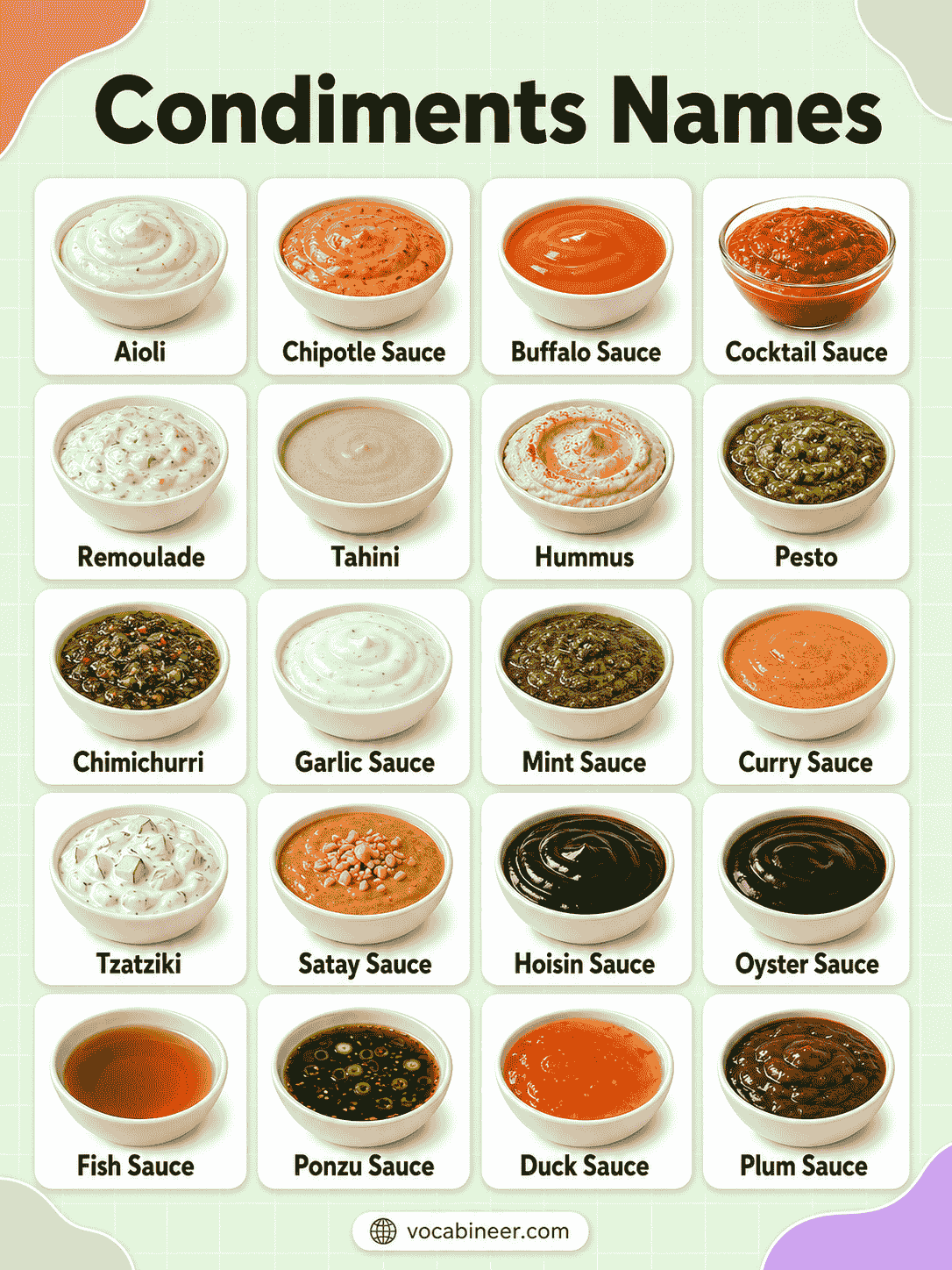
- Aioli
- Honey
- Jam
- Jelly
- Marmalade
- Maple syrup
- Peanut butter
- Hummus
- Tahini
- Guacamole
- Pesto
- Sriracha
- Chili oil
- Pickles
- Salt
- Pepper
Simple Meanings of Common Condiments
Some condiment names are easy to recognize, but others need a short explanation. This table gives simple meanings for common condiments used in English food vocabulary.
| Condiment | Simple Meaning |
|---|---|
| Ketchup | A sweet and tangy tomato-based sauce often used with fries, burgers, and sandwiches. |
| Mustard | A sharp yellow or brown condiment made from mustard seeds. |
| Mayonnaise | A creamy oil-based condiment; many traditional versions include egg. |
| Relish | A chopped pickled condiment often used on hot dogs, burgers, and sandwiches. |
| Hot sauce | A spicy sauce made with chili peppers. |
| Soy sauce | A salty dark sauce used in many Asian dishes. |
| Barbecue sauce | A smoky, sweet, and tangy sauce used with grilled or roasted foods. |
| Worcestershire sauce | A thin savory sauce with a tangy, salty, and slightly sweet flavor. |
| Salsa | A tomato, chili, or vegetable-based condiment often used with tacos, chips, and grilled foods. |
| Chutney | A sweet, sour, or spicy condiment made with fruit, vegetables, herbs, or spices. |
| Jam | A sweet fruit spread used on bread, toast, pastries, and desserts. |
| Jelly | A smooth sweet fruit spread made from fruit juice. |
| Honey | A thick natural sweetener made by bees. |
| Maple syrup | A sweet syrup often used on pancakes, waffles, and breakfast foods. |
| Tahini | A creamy paste made from sesame seeds. |
| Hummus | A chickpea-based dip often eaten with bread, vegetables, or snacks. |
| Sriracha | A spicy chili sauce with a garlicky taste. |
| Harissa | A spicy chili paste used in North African and Middle Eastern dishes. |
| Wasabi | A sharp green Japanese-style condiment often served with sushi. |
| Gochujang | A Korean chili paste with a spicy, savory, and slightly sweet taste. |
Sauces, Spreads, Dips, and Relishes: What Is the Difference?
Many condiments look similar, but the words do not always mean the same thing. A condiment is the broad category, while sauces, spreads, dips, dressings, and relishes are different types of condiments.
| Word | Simple Meaning | Examples |
|---|---|---|
| Condiment | A broad word for flavor add-ons | Ketchup, mustard, relish, hot sauce |
| Sauce | A liquid or semi-liquid condiment | Soy sauce, barbecue sauce, hot sauce |
| Spread | A thicker condiment spread on bread, crackers, or toast | Jam, peanut butter, cream cheese spread |
| Dip | A condiment used for dipping food | Hummus, salsa, guacamole, queso |
| Relish | A chopped pickled condiment | Pickle relish, chow chow, sweet relish |
| Dressing | A sauce used mostly on salads | Ranch, Caesar dressing, Italian dressing |
Classic Sauces for Burgers, Fries, and Sandwiches
Sauces are among the most common condiments because they are easy to add to fast food, snacks, and everyday meals. Many sauces taste tangy, creamy, smoky, spicy, salty, or sweet.
- Ketchup
- Mustard
- Mayonnaise
- Barbecue sauce
- Hot sauce
- Ranch dressing
- Tartar sauce
- Steak sauce
- Burger sauce
- Garlic sauce
- Cheese sauce
- Buffalo sauce
- Honey mustard
- Thousand Island dressing
- Caesar dressing
- Italian dressing
- Cocktail sauce
- Remoulade
- Aioli
- Worcestershire sauce
Hot, Spicy, and Pepper-Based Condiments
Spicy condiments add heat and strong flavor to meals. They often use chili peppers, pepper paste, garlic, vinegar, oil, mustard, horseradish, or spices.
- Hot sauce
- Sriracha
- Chili oil
- Chili paste
- Harissa
- Gochujang
- Wasabi
- Horseradish
- Spicy mustard
- Buffalo sauce
- Peri-peri sauce
- Sambal
- Chili crisp
- Jalapeño relish
- Pickled jalapeños
- Chipotle sauce
- Green chili sauce
- Red chili sauce
- Pepper sauce
- Spicy salsa
Sweet Toppings and Spreads
Sweet condiments are used on breakfast foods, bread, toast, pancakes, waffles, desserts, yogurt, drinks, and snacks. Some are fruit-based, while others are syrupy, creamy, or chocolate-flavored.
- Jam
- Jelly
- Marmalade
- Honey
- Maple syrup
- Pancake syrup
- Chocolate syrup
- Caramel sauce
- Fruit preserves
- Strawberry sauce
- Date syrup
- Molasses
- Hazelnut spread
- Chocolate spread
- Peanut butter with honey
- Fruit butter
- Apple butter
- Sweetened condensed milk
- Cinnamon sugar
- Powdered sugar
Pickles, Relishes, and Tangy Add-Ons
Pickled and tangy condiments add sourness, crunch, saltiness, or sharpness to food. They are often served with burgers, sandwiches, hot dogs, tacos, rice dishes, grilled foods, and snack plates.
- Pickles
- Pickle relish
- Sweet relish
- Dill relish
- Chow chow
- Piccalilli
- Pickled onions
- Pickled jalapeños
- Pickled peppers
- Pickled ginger
- Pickled garlic
- Pickled cucumber slices
- Pickled red onions
- Pickled banana peppers
- Pickle juice
- Chutney
- Mango chutney
- Tamarind chutney
- Mint chutney
- Cranberry relish
Creamy Spreads and Dips
Creamy spreads and dips are thicker condiments used with bread, sandwiches, wraps, vegetables, chips, crackers, grilled foods, and snack plates. Many of them add richness, smooth texture, or mild flavor.
- Mayonnaise
- Aioli
- Ranch dip
- Sour cream
- Cream cheese spread
- Hummus
- Tahini
- Guacamole
- Queso
- Bean dip
- Tzatziki
- Yogurt sauce
- Garlic dip
- Cheese spread
- Pimento cheese
- Spinach dip
- Artichoke dip
- Onion dip
- Peanut butter
- Almond butter
Soy-Based and Asian-Style Condiments
Many Asian-style condiments are salty, savory, spicy, tangy, or umami-rich. They are commonly used with rice, noodles, sushi, dumplings, stir-fries, soups, grilled foods, and dipping sauces.
- Soy sauce
- Tamari
- Fish sauce
- Oyster sauce
- Hoisin sauce
- Teriyaki sauce
- Ponzu
- Miso paste
- Gochujang
- Sriracha
- Chili oil
- Sambal
- Wasabi
- Pickled ginger
- Rice vinegar
- Black vinegar
- Sesame oil
- Sweet chili sauce
- Plum sauce
- Duck sauce
Table Condiments You See in Restaurants
Table condiments are the flavor add-ons people often see on restaurant tables, counters, trays, or condiment stations. They are usually easy to add after food is served.
- Salt
- Black pepper
- Ketchup
- Mustard
- Mayonnaise
- Hot sauce
- Vinegar
- Soy sauce
- Chili flakes
- Parmesan cheese
- Sugar packets
- Honey packets
- Jam packets
- Relish
- Pickles
- Barbecue sauce
- Salad dressing
- Lemon wedges
- Lime wedges
- Chili oil
Condiments Grouped by Taste
Grouping condiments by taste helps learners understand why people use them. Some add sweetness, while others add heat, tang, creaminess, saltiness, smokiness, or pickled flavor.
| Taste or Use | Condiment Examples |
|---|---|
| Sweet | Honey, jam, jelly, maple syrup, marmalade |
| Spicy | Hot sauce, sriracha, harissa, chili oil, wasabi |
| Tangy | Mustard, vinegar, relish, chutney, barbecue sauce |
| Creamy | Mayonnaise, aioli, ranch, hummus, tahini |
| Salty and savory | Soy sauce, Worcestershire sauce, fish sauce, miso paste |
| Smoky | Barbecue sauce, chipotle sauce, smoked hot sauce |
| Pickled | Relish, pickles, pickled onions, chow chow |
| Herby | Pesto, chimichurri, mint chutney, green sauce |
Condiments That Are Often Mixed Up
Some condiment names look similar, sound similar, or appear in similar meals. These quick comparisons help readers choose the correct word.
| Confusing Pair | Main Difference |
|---|---|
| Ketchup vs Tomato Sauce | Ketchup is usually sweet and tangy; tomato sauce may be a cooking sauce or pasta sauce. |
| Jam vs Jelly | Jam usually contains crushed fruit; jelly is smoother and made from fruit juice. |
| Relish vs Chutney | Relish is often chopped and pickled; chutney can be sweet, sour, spicy, fresh, or cooked. |
| Salsa vs Hot Sauce | Salsa is usually thicker and chunkier; hot sauce is thinner and mainly spicy. |
| Mayonnaise vs Aioli | Mayonnaise is usually a creamy oil-based condiment; aioli often has garlic flavor. |
| Soy Sauce vs Worcestershire Sauce | Soy sauce is salty and soy-based; Worcestershire sauce is tangy, savory, and more complex. |
| Mustard vs Dijon Mustard | Mustard is the general condiment; Dijon is a sharper style of mustard. |
| Peanut Butter vs Nut Spread | Peanut butter uses peanuts; nut spread can use almonds, hazelnuts, cashews, or mixed nuts. |
| Hummus vs Tahini | Hummus is a chickpea dip; tahini is sesame seed paste. |
| Pickles vs Relish | Pickles are usually whole or sliced pieces; relish is chopped and spoonable. |
Condiments for Common Meals
Different meals use different condiments. This section connects condiment names with real foods people often eat at home, in restaurants, or at fast-food places.
- Burgers: Ketchup, mustard, mayonnaise, relish, barbecue sauce, pickles
- Fries: Ketchup, mayonnaise, cheese sauce, ranch, vinegar, hot sauce
- Hot dogs: Mustard, ketchup, relish, onions, chili sauce
- Sandwiches: Mayonnaise, mustard, aioli, chutney, pickles, pesto
- Tacos: Salsa, hot sauce, guacamole, sour cream, pickled onions
- Salads: Ranch, Caesar dressing, Italian dressing, vinaigrette
- Sushi: Soy sauce, wasabi, pickled ginger
- Noodles: Soy sauce, chili oil, sesame oil, hoisin sauce
- Grilled meat: Barbecue sauce, steak sauce, chimichurri, mustard
- Breakfast foods: Jam, jelly, honey, maple syrup, peanut butter
- Snacks: Hummus, salsa, guacamole, queso, ranch dip
- Rice dishes: Soy sauce, chili sauce, kimchi, pickled vegetables
FAQs
Condiments names are names of foods added in small amounts for flavor, such as ketchup, mustard, mayonnaise, relish, soy sauce, hot sauce, vinegar, jam, honey, and salsa.
Common condiments include ketchup, mustard, mayonnaise, hot sauce, soy sauce, barbecue sauce, relish, vinegar, salsa, chutney, jam, jelly, honey, and maple syrup.
Not always. A sauce can be a condiment, but condiment is a broader word that can include sauces, spreads, dips, relishes, pickles, seasonings, dressings, and sweet toppings.
Sweet condiments include jam, jelly, marmalade, honey, maple syrup, chocolate syrup, caramel sauce, fruit preserves, sweet spreads, and pancake syrup.
Restaurant condiments often include ketchup, mustard, mayonnaise, salt, pepper, hot sauce, vinegar, soy sauce, barbecue sauce, relish, salad dressing, and chili flakes.
Read More
- Baking Tools Name
- Healthy Foods Name
- Bakery Items Names
- Sour Food Names
- Sweet Food Names
- Salty Food Names