Sour foods have a sharp, tart, tangy, or acidic taste that makes the mouth feel fresh and alert. People often search for sour foods name lists when they want clear examples such as lemon, lime, tamarind, vinegar, yogurt, pickles, cranberries, gooseberries, and fermented foods.
However, sour taste does not mean a food is bad, unhealthy, or difficult to eat. In cooking, sour foods add brightness, balance sweetness, cut through rich flavors, and make sauces, drinks, snacks, salads, and chutneys taste more lively.
In This Page
Common Sour Food Names
Common sour food names include fruits, dairy foods, pickled foods, fermented foods, sauces, drinks, and snacks. Some taste mildly tangy, while others taste very sharp or mouth-puckering.
- Lemon
- Lime
- Tamarind
- Vinegar
- Yogurt
- Kefir
- Sour cream
- Pickles
- Sauerkraut
- Kimchi
- Cranberry
- Gooseberry
- Green mango
- Green apple
- Grapefruit
- Sour orange
- Tart cherry
- Rhubarb
- Pomegranate
- Passion fruit
- Star fruit
- Buttermilk
- Labneh
- Mustard
- Pickled onion
- Pickled cucumber
- Lemonade
- Kombucha
- Sour candy
- Sour gummies
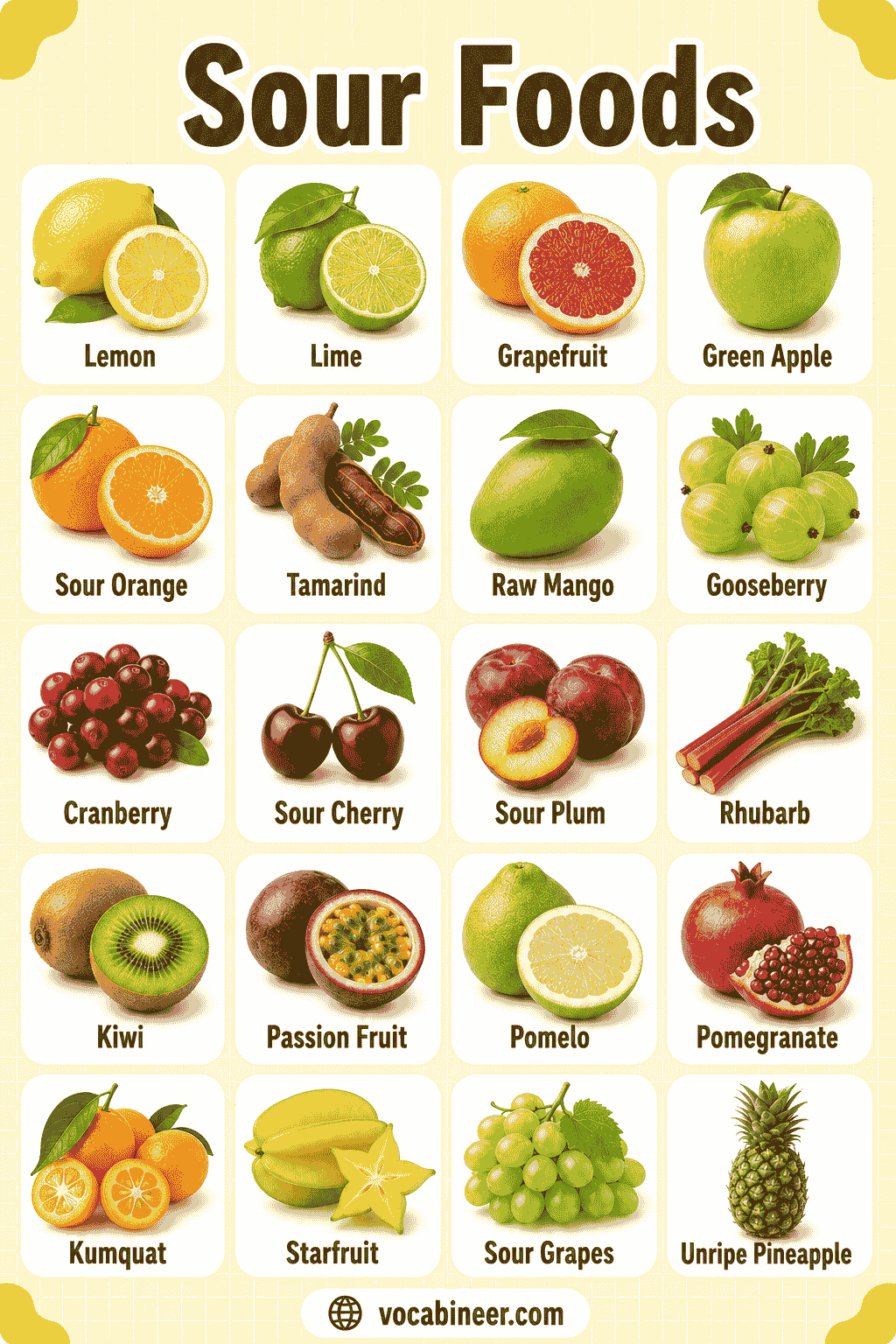
Sour Food Names with Simple Meanings
Some sour food names are easy to recognize, but others need a simple meaning. This table explains the most useful sour foods for learners, kids, teachers, and general readers.
| Sour Food | Simple Meaning |
|---|---|
| Lemon | A yellow citrus fruit with a sharp sour taste. |
| Lime | A green citrus fruit with a strong tangy flavor. |
| Tamarind | A brown pod fruit used for deep sour flavor in sauces, chutneys, drinks, and soups. |
| Vinegar | A sour liquid used in pickles, salad dressings, marinades, and sauces. |
| Yogurt | A cultured dairy food with a creamy texture and mild tangy taste. |
| Kefir | A fermented milk drink with a sour, tangy, and slightly fizzy taste. |
| Sour cream | A thick cultured cream with a rich, tangy flavor. |
| Pickles | Vegetables preserved in vinegar, salt brine, or fermentation. |
| Kimchi | A Korean fermented vegetable dish with sour, spicy, and salty flavors. |
| Sauerkraut | Fermented cabbage with a sour and salty taste. |
| Cranberry | A small red fruit with a tart and sharp taste. |
| Gooseberry | A small round fruit that can taste sour, tart, or slightly sweet. |
| Green mango | An unripe mango with a firm texture and sour taste. |
| Rhubarb | A tart plant stalk often used like a fruit in pies, sauces, jams, and desserts. |
| Kombucha | A fermented tea drink with a tangy and slightly sour taste. |
| Sumac | A red seasoning with a lemony sour flavor. |
| Amchur powder | A sour powder made from dried green mango. |
| Buttermilk | A tangy dairy drink often used in cooking, baking, and marinades. |
| Labneh | A thick strained yogurt with a creamy and tangy taste. |
| Sour candy | Candy made with strong tart flavoring that creates a puckering taste. |
What Does Sour Taste Mean?
Sour taste means a sharp, tangy, or tart flavor that often comes from natural acids, fermentation, or pickling. For example, lemon and lime taste sour because of their citrus flavor, while yogurt and kefir taste tangy because of fermentation.
Still, sour does not always mean unpleasant. Many recipes use sour ingredients to balance sweet, salty, spicy, or rich flavors. As a result, a little lemon juice, vinegar, yogurt, or tamarind can make a dish taste fresher and more complete.
Sour Fruits Names
Sour fruits are some of the easiest sour foods to recognize. Many fruits taste tart when fresh, while others taste sour mostly before they become fully ripe.
- Lemon
- Lime
- Tamarind
- Cranberry
- Gooseberry
- Green mango
- Green apple
- Grapefruit
- Sour orange
- Tart cherry
- Sour grapes
- Pomegranate
- Rhubarb
- Passion fruit
- Star fruit
- Unripe plum
- Unripe apricot
- Sour plum
- Bilimbi
- Amla
- Jamun
- Red currant
- Black currant
- Kumquat
- Pomelo
Rhubarb is a tart plant stalk, but many people use it like a fruit in sweet recipes. In addition, lemon, lime, tamarind, and green mango often appear in juices, chutneys, salads, jams, sauces, marinades, street foods, and spicy snacks.
Sour Vegetables Names
Some vegetables taste naturally tangy, while others become sour after pickling or fermentation. Because of that, this section includes fresh vegetables with a tart note and vegetables commonly eaten in sour forms.
- Tomato
- Green tomato
- Pickled cucumber
- Pickled onion
- Pickled carrot
- Pickled beetroot
- Pickled radish
- Pickled cabbage
- Pickled jalapeño
- Pickled green chili
- Fermented cabbage
- Fermented radish
- Sauerkraut
- Kimchi
- Sour cucumber
- Pickled cauliflower
- Pickled okra
- Pickled turnip
- Pickled garlic
- Pickled peppers
Tomato and green tomato can add a light tart taste to recipes. Meanwhile, pickled vegetables get their sour taste from vinegar, salt brine, fermentation, or a sour seasoning mixture.
Sour Dairy Foods
Some dairy foods taste clearly sour, while others have only a mild tang depending on the brand, culture, and preparation. These foods can taste creamy, sharp, lightly tangy, or strongly fermented.
- Yogurt
- Greek yogurt
- Kefir
- Sour cream
- Buttermilk
- Labneh
- Cultured cream
- Cultured butter
- Tangy cottage cheese
- Tangy cream cheese
- Quark
- Fermented milk
- Lassi
- Ayran
- Skyr
For example, yogurt can taste mildly sour, while kefir often tastes sharper and more fermented. Similarly, sour cream adds a creamy tang to dips, soups, baked potatoes, tacos, and sauces.
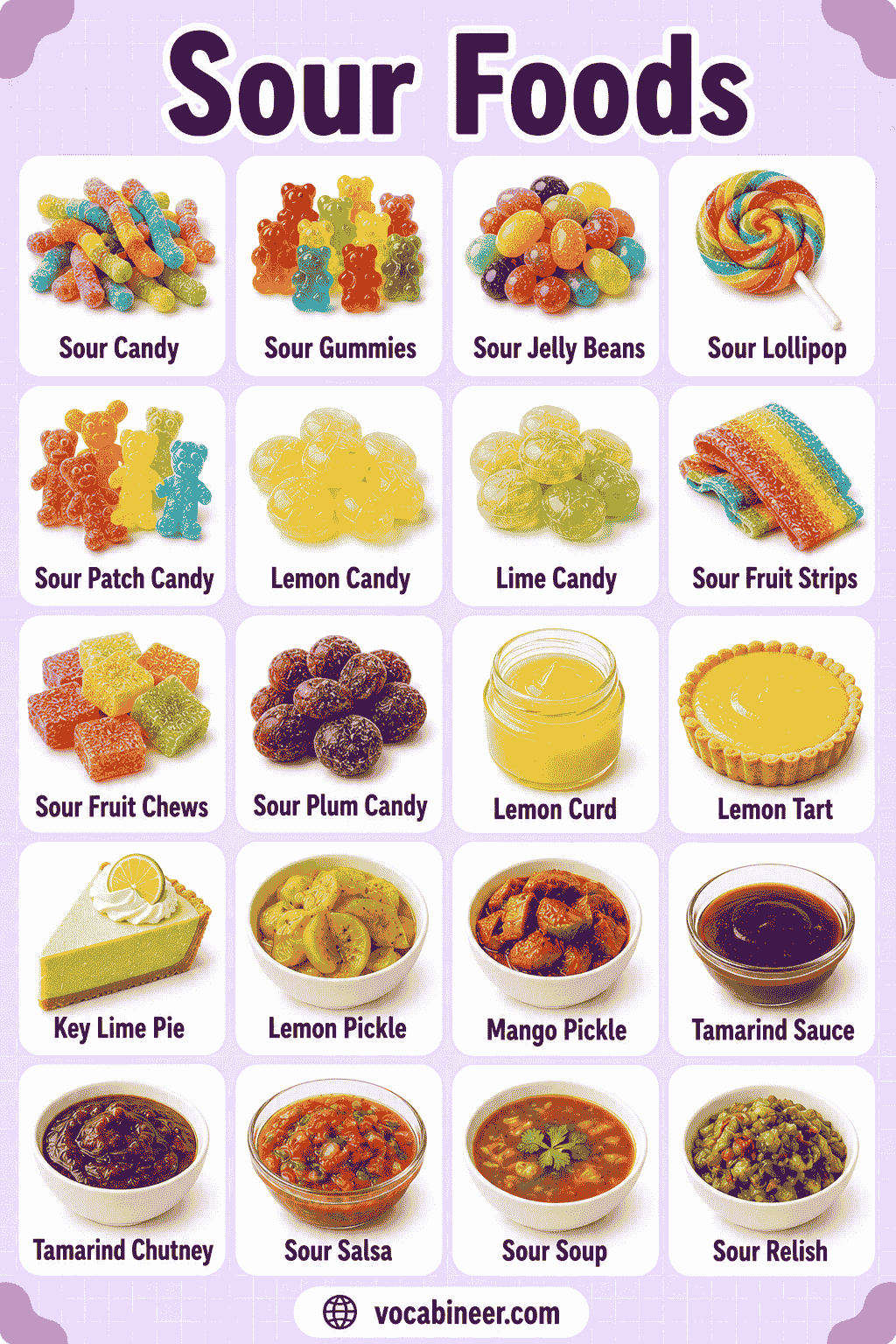
Fermented Sour Foods
Fermentation can create a sour or tangy taste in foods because friendly microbes change sugars into acids. Therefore, many fermented foods have a bright, sharp flavor along with a deeper savory taste.
- Yogurt
- Kefir
- Sauerkraut
- Kimchi
- Fermented pickles
- Sourdough bread
- Fermented cabbage
- Fermented radish
- Fermented carrots
- Fermented garlic
- Fermented chili sauce
- Fermented soybean paste
- Kombucha
- Vinegar
- Kvass
- Fermented fruit drink
- Idli batter
- Dosa batter
However, fermented foods do not all taste the same. Some taste mild and creamy, like yogurt, while others taste salty, spicy, and sour, like kimchi or fermented pickles.
Pickled Sour Foods
Pickled sour foods get their sharp flavor from vinegar, brine, salt, spices, or fermentation. Many people eat them as side dishes, toppings, snacks, or flavor boosters.
- Pickles
- Pickled cucumber
- Pickled onion
- Pickled carrot
- Pickled beetroot
- Pickled radish
- Pickled jalapeño
- Pickled green chili
- Pickled garlic
- Pickled ginger
- Pickled mango
- Pickled lemon
- Pickled lime
- Pickled cabbage
- Pickled cauliflower
- Pickled okra
- Pickled turnip
- Pickled olives
- Pickled peppers
- Pickle relish
In cooking, pickled foods add crunch, saltiness, and sourness at the same time. As a result, people use them in sandwiches, burgers, rice bowls, salads, wraps, and spicy meals.
Sour Sauces, Condiments, and Cooking Ingredients
Sour sauces and ingredients help cooks add sharpness and balance to dishes. They work especially well in salads, chutneys, marinades, soups, dips, sauces, snacks, and grilled foods.
- Lemon juice
- Lime juice
- Vinegar
- Apple cider vinegar
- White vinegar
- Rice vinegar
- Balsamic vinegar
- Tamarind paste
- Tamarind sauce
- Mustard
- Pickle juice
- Sour cream
- Yogurt sauce
- Lemon sauce
- Lime dressing
- Kimchi juice
- Sumac
- Amchur powder
- Citric acid
- Sour plum sauce
- Worcestershire sauce
- Fermented chili sauce
- Hot sauce
- Relish
- Chaat masala
For example, lemon juice brightens salads, while vinegar sharpens pickles and dressings. Similarly, tamarind paste gives chutneys, soups, and sauces a deep fruity sour flavor.
Sour Drinks Names
Sour drinks can taste refreshing, tangy, fruity, fermented, or sharply citrusy. Some drinks taste naturally sour, while others use lemon, lime, tamarind, yogurt, vinegar, or fermentation for their flavor.
- Lemonade
- Limeade
- Tamarind drink
- Sour plum drink
- Cranberry juice
- Grapefruit juice
- Pomegranate juice
- Green mango drink
- Kombucha
- Kefir drink
- Buttermilk
- Lassi
- Ayran
- Drinking yogurt
- Apple cider vinegar drink
- Lemon water
- Lime water
- Sour cherry juice
- Passion fruit juice
- Fermented fruit drink
However, sour drinks can also contain sugar, salt, or flavoring. Therefore, readers should check labels when buying bottled lemonade, cranberry juice, kombucha, or flavored yogurt drinks.
Sour Snacks and Candies
Sour snacks and candies use tart flavors to create a sharp, fun taste. Children and adults often recognize sour candy because it gives a strong puckering feeling.
- Sour candy
- Sour gummies
- Sour belts
- Sour worms
- Sour lollipops
- Sour hard candy
- Sour fruit chews
- Sour fruit snacks
- Sour jelly beans
- Sour powder candy
- Sour spray candy
- Sour popping candy
- Sour chips
- Salt and vinegar chips
- Pickle-flavored chips
- Lemon-flavored snacks
- Tamarind candy
- Green mango slices
- Sour plum candy
- Sour fruit leather
Still, sour candy and sour snacks should not define the whole sour food category. They use sour flavor mainly for taste, while fruits, dairy foods, pickles, and fermented foods also appear in everyday meals.
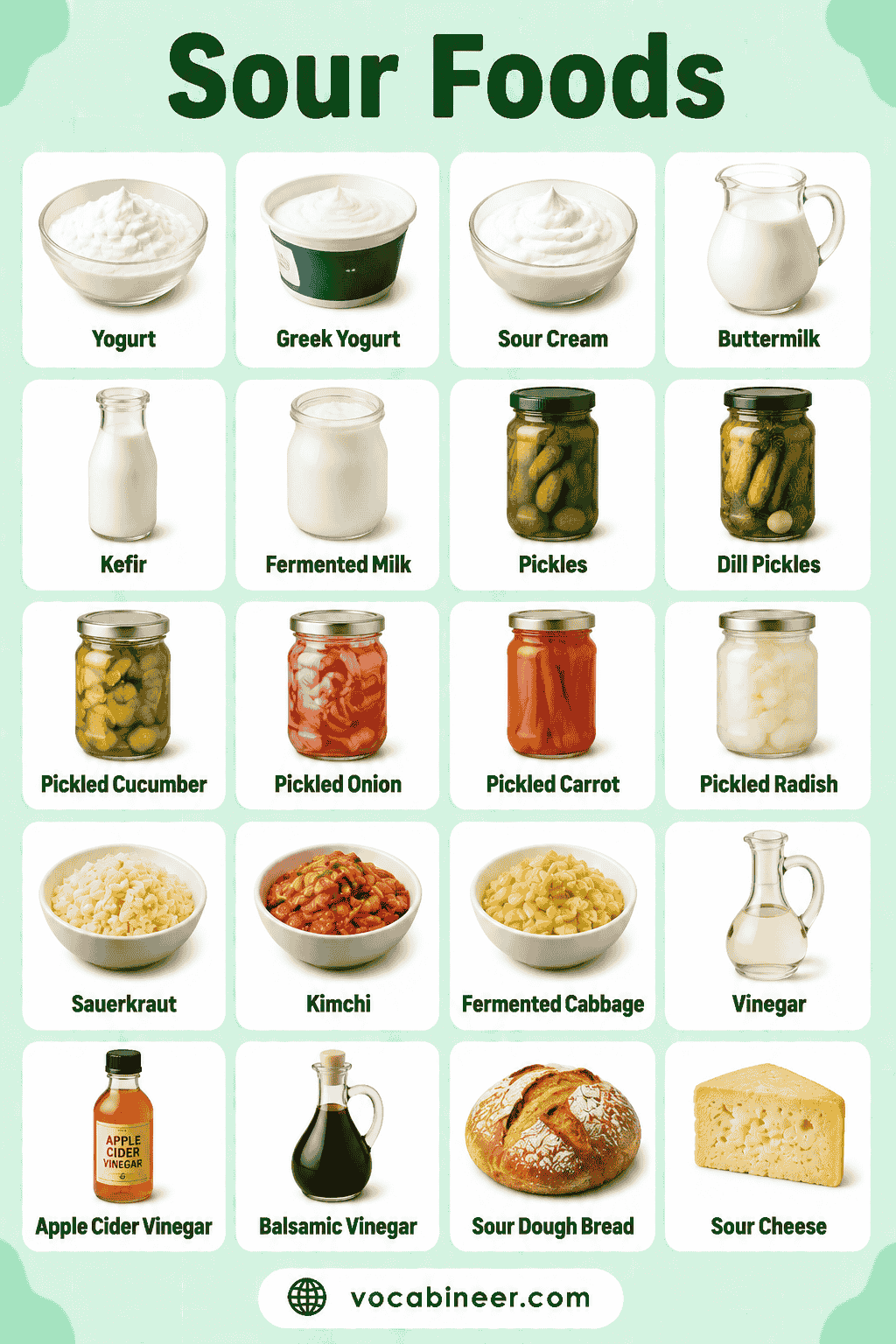
Mildly Sour and Very Sour Foods
Not all sour foods taste equally strong. Some foods have a soft tang, while others taste sharp enough to make the mouth pucker.
| Sourness Level | Food Examples |
|---|---|
| Mildly sour | Yogurt, sour cream, green apple, kefir, buttermilk |
| Medium sour | Grapefruit, pomegranate, pickles, kombucha, green mango |
| Very sour | Lemon, lime, vinegar, tamarind, sour candy |
| Tangy and salty | Pickles, kimchi, sauerkraut, mustard, pickle relish |
| Tart and fruity | Cranberries, gooseberries, tart cherries, rhubarb, sour grapes |
This grouping helps learners understand sour food names more clearly. For example, yogurt may taste lightly tangy, whereas lemon juice and vinegar taste much sharper.
Sour Foods vs Acidic Foods
Sour foods and acidic foods are related, but they are not always the same in everyday language. Sour foods taste sharp, tart, or tangy, while acidic foods contain acids and may or may not taste strongly sour.
For a vocabulary article, it is better to focus on taste and common food names. For example, lemon, lime, vinegar, yogurt, and tamarind clearly taste sour. In contrast, some acidic foods may taste mild, sweet, bitter, or savory depending on the food and recipe.
| Term | Simple Meaning | Examples |
|---|---|---|
| Sour food | A food that tastes tart, tangy, or sharp | Lemon, lime, yogurt, pickles |
| Acidic food | A food that contains acids | Citrus fruits, vinegar, tomatoes |
| Tangy food | A food with a lively sour taste | Kefir, mustard, sour cream |
| Tart food | A sharp fruity sour taste | Cranberries, gooseberries, tart cherries |
People with acid reflux, tooth sensitivity, or medical diet restrictions may need personal advice about sour or acidic foods. However, this guide focuses on food names and taste vocabulary.
How Sour Foods Are Used in Cooking
Sour foods help cooks balance flavor. For example, lemon juice can make fish, salads, and soups taste fresher, while vinegar can sharpen pickles, sauces, and dressings.
Many cuisines also use sour foods to balance spicy, sweet, salty, or fatty dishes. Tamarind adds sour depth to chutneys and soups; yogurt cools spicy foods; meanwhile, pickles add sour crunch to burgers, sandwiches, rice dishes, and wraps.
- Salads: Lemon juice, vinegar, lime dressing
- Chutneys: Tamarind, green mango, lemon
- Marinades: Vinegar, yogurt, lemon juice
- Soups: Tamarind, lime, fermented vegetables
- Dips: Sour cream, yogurt, labneh
- Snacks: Pickles, sour fruit, tamarind candy
- Drinks: Lemonade, kombucha, kefir, sour plum drink
- Street foods: Amchur powder, chaat masala, lime juice
Sour Foods Often Confused with Each Other
Some sour foods look similar or appear in similar recipes, but they do not always taste the same. These quick comparisons help readers understand common differences.
| Confusing Pair | Main Difference |
|---|---|
| Lemon vs Lime | Lemon tastes bright and sharp; lime often tastes sharper, greener, and slightly bitter. |
| Yogurt vs Sour Cream | Yogurt usually tastes tangy and lighter; sour cream tastes thicker, richer, and creamier. |
| Pickles vs Vinegar | Pickles are foods soaked or fermented in sour liquid; vinegar is a sour liquid ingredient. |
| Kimchi vs Sauerkraut | Kimchi often tastes spicy, sour, and garlicky; sauerkraut usually tastes sour and salty. |
| Tamarind vs Lemon | Tamarind gives a deep fruity sour taste; lemon gives a bright citrus sour taste. |
| Cranberry vs Cherry | Cranberries usually taste tart and sharp; cherries can taste sweet or tart depending on the variety. |
| Kefir vs Buttermilk | Kefir often tastes more fermented and fizzy; buttermilk tastes mild, creamy, and tangy. |
| Green Mango vs Ripe Mango | Green mango tastes sour and crisp; ripe mango tastes sweet and soft. |
FAQs
Sour food names are names of foods with a sharp, tart, tangy, or acidic taste, such as lemon, lime, tamarind, vinegar, yogurt, pickles, cranberries, gooseberries, and kimchi.
Common sour fruits include lemons, limes, cranberries, gooseberries, green mangoes, grapefruit, green apples, sour grapes, tart cherries, tamarind, and passion fruit.
Sour dairy foods include yogurt, kefir, sour cream, buttermilk, labneh, cultured cream, drinking yogurt, and some fermented milk products.
Not always. Sour foods taste sharp or tangy, while acidic foods contain acids. Some acidic foods taste strongly sour, but others may taste mild, sweet, bitter, or savory.
Common sour cooking ingredients include lemon juice, lime juice, vinegar, tamarind paste, yogurt, sour cream, mustard, pickle juice, sumac, and amchur powder.
Read More