A bite of bitter melon can taste intensely sharp, while dark chocolate may leave only a mild bitter note. Although both foods belong in a bitter-food guide, their flavor, appearance, strength, and everyday uses are very different.
Learning bitter food names helps readers describe taste more accurately and recognize unfamiliar vegetables, fruits, drinks, and flavoring ingredients. The following groups also explain when a food is truly bitter and when its flavor is mainly sour, astringent, peppery, or pungent.
In This Page
What Makes a Food Taste Bitter?
Bitterness is one of the basic tastes, along with sweetness, sourness, saltiness, and umami. Foods may taste bitter because they naturally contain plant compounds that stimulate bitter-taste receptors on the tongue.
However, bitterness is not equally strong in every food or for every person. Plant variety, maturity, growing conditions, brewing time, roasting, preparation, and personal taste sensitivity can all change how bitter something seems.
A food may also combine several sensations. For example, grapefruit tastes both sour and bitter, while strong tea may feel bitter and astringent. Arugula, by contrast, tastes peppery with a mild bitter edge.
Bitter Leafy Green Names
Many leafy greens contain natural bitter compounds. Younger leaves often taste milder, while mature leaves or plants grown in hot conditions may develop a sharper flavor.
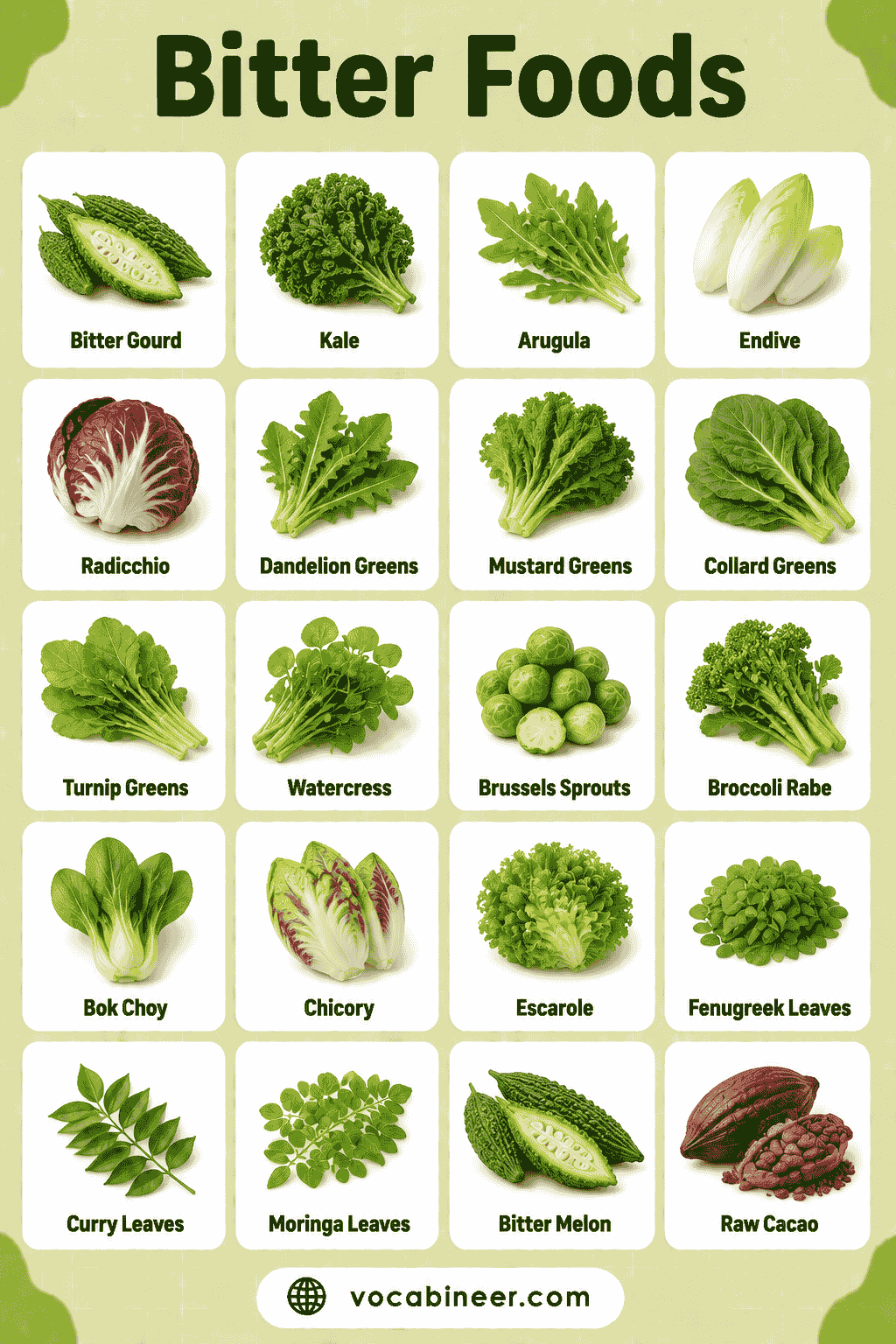
Dandelion greens are long, jagged leaves from the dandelion plant. They have an earthy, noticeably bitter taste and commonly appear in salads, sautés, soups, and cooked green mixtures.
Chicory /ˈtʃɪkəri/ 🔊 is a leafy plant with a firm texture and a distinctly bitter flavor. Cooks use its leaves in salads, while roasted chicory root sometimes flavors coffee-style drinks.
Endive /ˈɛnˌdaɪv/ 🔊 has tightly packed leaves and a crisp texture. Depending on the variety, its leaves may look pale and pointed or green and curly, with a mild to moderate bitterness.
Escarole /ˈɛskəroʊl/ 🔊 is a broad-leaf form of endive with wavy green leaves. Its outer leaves usually taste more bitter than the pale inner ones.
Radicchio /rəˈdiːkioʊ/ 🔊 is a compact leafy vegetable with purple-red leaves and white veins. It tastes crisp and bitter when raw, although grilling or roasting can soften its sharpness.
Mustard greens have broad, crinkled leaves with peppery and bitter notes. Their flavor becomes stronger as the leaves mature, so cooking often makes them more approachable.
Turnip greens are the leafy tops of turnip plants. They have an earthy, slightly peppery bitterness and commonly appear in soups, stews, and cooked vegetable dishes.
Arugula /əˈruːɡələ/ 🔊 has narrow green leaves with rounded or jagged edges. Its flavor is mainly peppery, though mature leaves can develop a clear bitter note.
Kale is a dark leafy green with flat or curly leaves. Some varieties taste mild, whereas mature raw kale may have a stronger earthy bitterness.
Collard greens have large, smooth, blue-green leaves and a sturdy texture. Their bitterness is usually moderate, and slow cooking can soften both the leaves and their flavor.
Vegetables with Bitter Notes
Not every vegetable in this group tastes strongly bitter. Some have only a mild bitter edge that changes with variety, age, or cooking method.
Bitter melon, also called bitter gourd, is an elongated green vegetable with a deeply ridged or bumpy surface. It has one of the strongest bitter flavors among commonly cooked vegetables.
Broccoli rabe /ˈbrɑːkəli rɑːb/ 🔊 has thin stems, leafy greens, and small broccoli-like buds. Its flavor combines bitterness with a mustard-like sharpness.
Brussels sprouts are small, round green vegetables made of tightly layered leaves. Fresh, properly cooked sprouts may taste mildly bitter, while overcooking can create a stronger and less pleasant flavor.
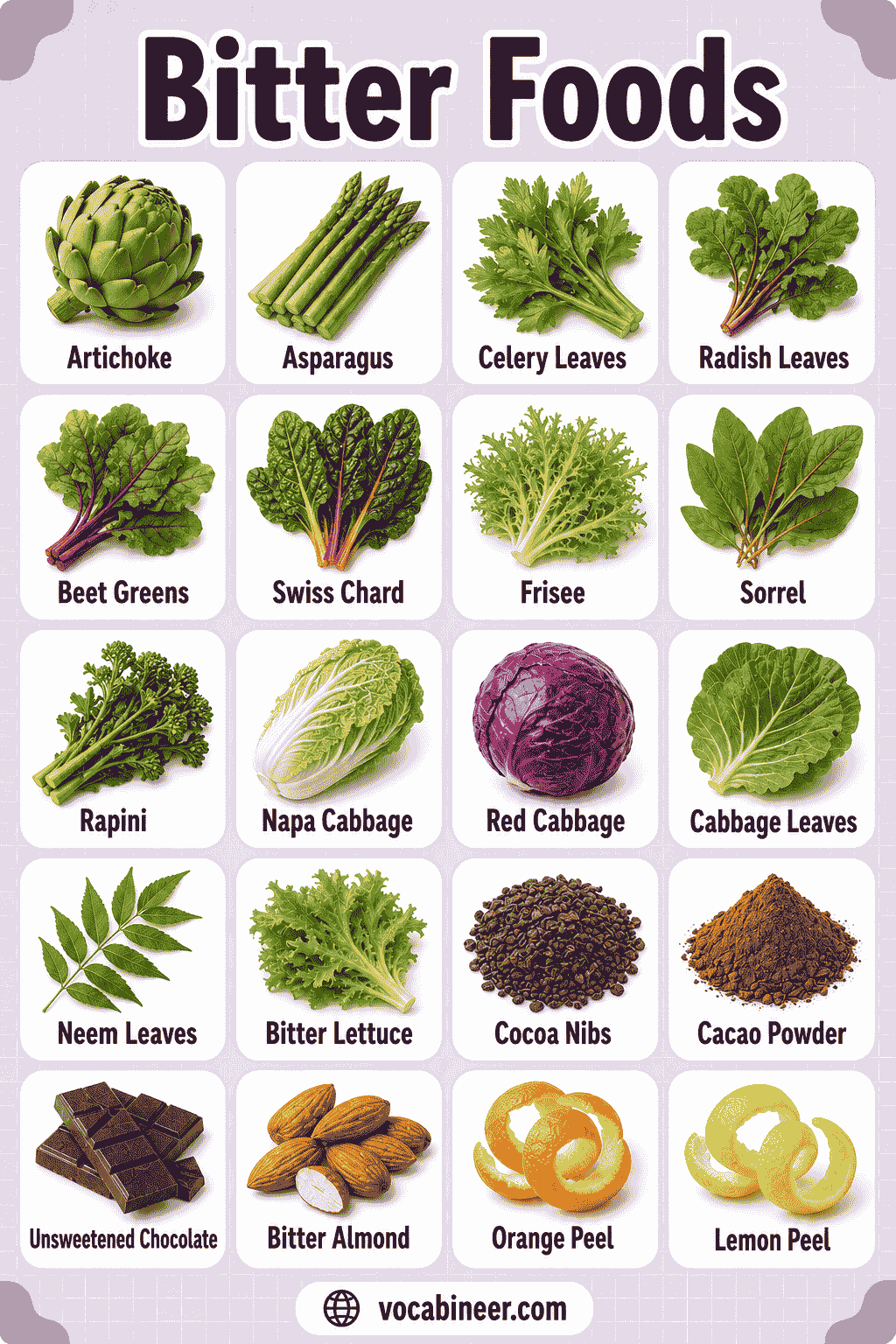
Artichoke has a rounded flower-head shape with thick overlapping leaves. Its edible heart and leaf bases have an earthy flavor with mild bitterness.
Eggplant is usually purple with smooth, glossy skin, although other colors and shapes exist. Modern varieties are often mild, but mature or older eggplants may develop slightly bitter notes.
Bitter Fruits and Fruit Parts
Fruit flesh, skin, peel, seeds, and white inner layers can taste very different from one another. Therefore, identifying the exact bitter part improves both vocabulary and visual accuracy.
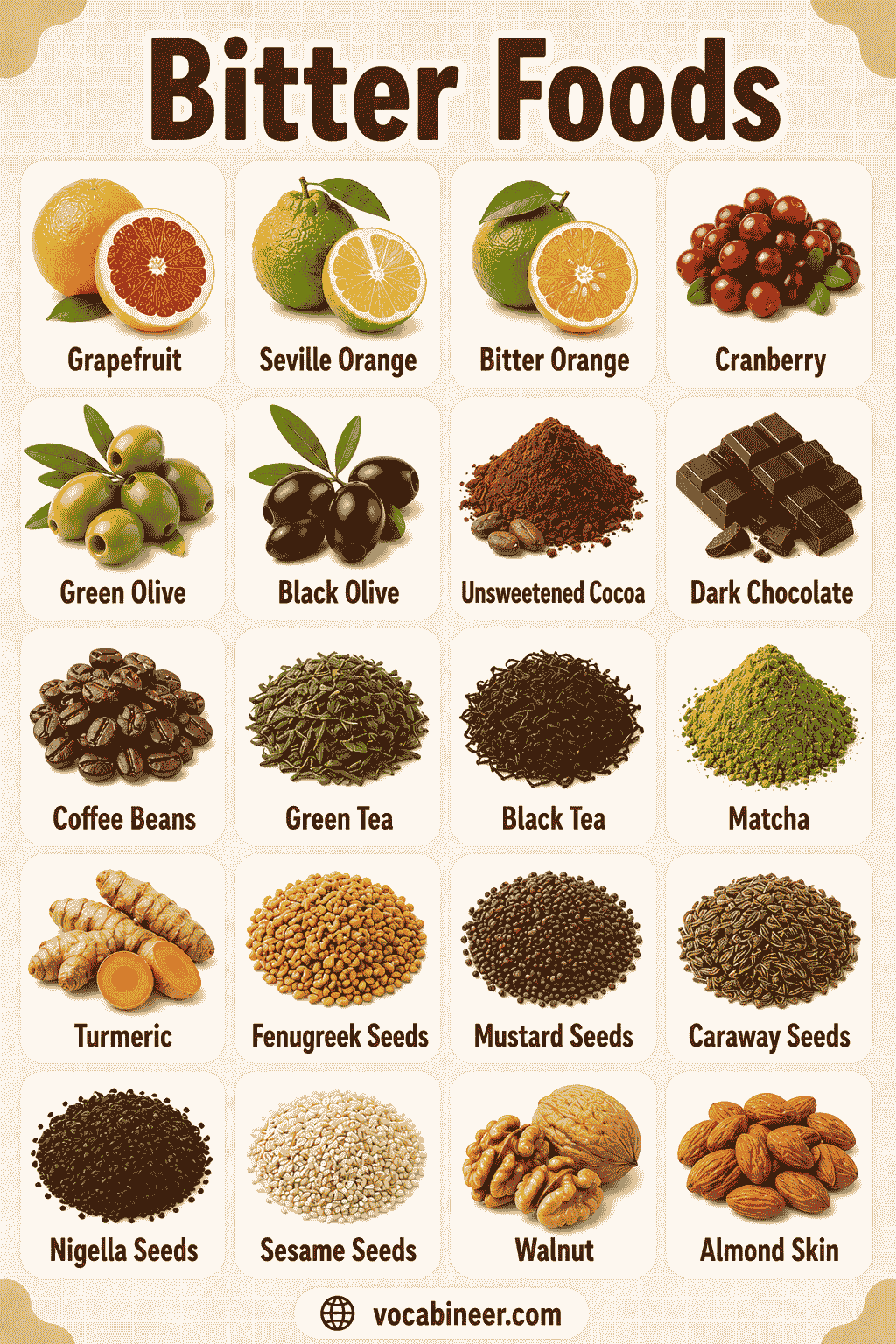
Grapefruit is a large citrus fruit with yellow, pink, or orange flesh. Its juicy segments combine sourness with a recognizable bitter taste.
Pomelo /ˈpɑːməloʊ/ 🔊 is a large citrus fruit with a thick rind and pale flesh. The fruit itself is often milder than grapefruit, though its membranes and thick white pith may taste bitter.
Bitter orange, sometimes called Seville orange, has a rough orange peel and sharply flavored flesh. It tastes both sour and bitter, so people often use it in marmalade and flavorings rather than eating it like a sweet orange.
Citrus peel is the colored outer skin of oranges, lemons, limes, grapefruit, and related fruits. It contains aromatic oils but can also have a strong bitter taste, especially when eaten in larger pieces.
Citrus pith is the white, spongy layer between the colored peel and the juicy fruit. It is usually more bitter than the flesh and may cling to individual citrus segments.
Cranberries are small red berries with a firm skin. They taste mainly tart or sour, although they can also have bitter and astringent notes when eaten without sweetening.
Olives are small oval fruits that may be green, purple, brown, or black. Freshly harvested olives taste intensely bitter, so producers cure them before selling them as table olives.
Grapefruit note: Grapefruit and grapefruit juice can interact with certain medicines. People who take prescription medication should follow label guidance or ask a pharmacist whether grapefruit is suitable for them.
Cocoa, Chocolate, and Nuts with Bitter Notes
Cocoa-based foods can range from intensely bitter to very sweet. Added sugar, milk, cocoa content, and roasting all affect the final flavor.
Unsweetened cocoa powder is a fine brown powder made from processed cacao beans. Without sugar, it has a strong roasted bitterness and a dry texture.
Cacao nibs /kəˈkaʊ/ 🔊 are small crunchy pieces of roasted cacao beans. They taste deeply chocolatey but much more bitter than ordinary sweet chocolate.
Dark chocolate contains cocoa solids, cocoa butter, and varying amounts of sugar. Higher-cocoa products generally taste more bitter, although the exact flavor depends on the recipe and cacao source.
Walnuts have wrinkled, pale-brown kernels covered by a thin skin. That skin can contribute a mild bitter or astringent taste, especially when the nuts are older.
Drinks with Bitter Flavors
Several familiar drinks contain natural bitterness. Brewing strength, water temperature, roasting, extraction time, and added sugar can change how strongly readers notice it.
Black coffee is brewed coffee served without milk, cream, or sugar. Its flavor may include bitter, roasted, nutty, smoky, fruity, or acidic notes.
Espresso is a small, concentrated coffee made by forcing hot water through finely ground coffee. Because it is concentrated, its bitterness and roasted flavor may seem stronger than regular brewed coffee.
Green tea comes from tea leaves that undergo limited oxidation. It can taste grassy, vegetal, bitter, and astringent, particularly when brewed too long or with overly hot water.
Black tea uses more fully oxidized tea leaves and usually has a deeper color than green tea. Strong brewing may create both bitterness and a drying mouthfeel.
Tonic water is a carbonated drink with a characteristic bitter flavor from quinine. Commercial versions often contain sweetener to balance that bitterness.
Unsweetened cocoa drink combines cocoa powder with water or milk but contains no added sugar. As a result, it tastes far more bitter than ordinary sweetened hot chocolate.
Bitter Herbs and Flavoring Ingredients
These ingredients add bitterness to dishes, drinks, seasonings, or commercial flavorings. Several are too intense to eat alone, so the descriptions focus on their culinary role rather than direct consumption.
Fenugreek leaves /ˈfɛnjəɡriːk/ 🔊 are small green leaves used fresh or dried. They have an earthy aroma with noticeable bitterness and commonly flavor curries, breads, and vegetable dishes.
Fenugreek seeds are small, hard, yellow-brown seeds with a slightly angular shape. Their flavor is bitter, nutty, and mildly sweet after careful cooking or toasting.
Turmeric is a bright yellow-orange spice made from a dried underground stem. It tastes earthy, warm, and mildly bitter rather than hot like chili pepper.
Hops are cone-shaped flowers used mainly to flavor beer. They contribute bitterness and aroma, but people do not normally eat the cones as a standalone food.
Gentian /ˈdʒɛnʃən/ 🔊 is a flowering plant whose root has an intensely bitter taste. Food and drink makers use small controlled amounts in specialized flavorings and bitter beverages.
Wormwood is a silvery-green herb with a powerful bitter flavor. It appears in carefully formulated commercial products rather than ordinary everyday meals.
Why Some Bitter Foods Taste Stronger Than Others
Two foods from the same group may taste surprisingly different. Even two heads of radicchio or two cups of coffee can vary in bitterness because many factors influence the final flavor.
- Plant variety: Some cultivars naturally contain stronger bitter compounds than others.
- Age and maturity: Older leaves, fruits, and vegetables may taste more bitter than younger ones.
- Growing conditions: Heat, drought, and plant stress can increase bitterness in certain greens.
- Food concentration: Espresso and unsweetened cocoa deliver concentrated flavors in small amounts.
- Brewing time: Tea and coffee often become harsher when extraction continues too long.
- Roasting level: Roasting can soften some bitter vegetables but may create burnt bitterness when food chars.
- Added ingredients: Salt, fat, sweetness, and acidity can balance bitterness without removing it completely.
- Taste sensitivity: Some people detect bitter compounds much more strongly than others.
Bitter, Sour, Astringent, and Pungent Flavors
These sensations often appear together, but they do not mean the same thing. Using the correct word helps readers describe food more precisely.
| Sensation | Meaning | Common examples |
|---|---|---|
| Bitter | A sharp or lingering basic taste | Bitter melon, dandelion greens, black coffee |
| Sour | An acidic, tart taste | Lemon juice, lime juice, vinegar |
| Astringent | A dry or puckering mouthfeel | Strong tea, cranberries, unripe fruit |
| Pungent | A hot, piercing, or irritating sensation | Mustard, horseradish, wasabi |
Bitter vs. Sour
Bitterness and sourness activate different taste sensations. Bitter melon and black coffee are classic bitter examples, whereas lemon juice and vinegar are mainly sour because of their acidity.
Some foods contain both sensations. Grapefruit, for instance, has acidic sourness along with natural bitter compounds.
Bitter vs. Astringent
A bitter taste develops on the tongue, while astringency feels dry, rough, or puckering across the mouth. Strong green tea may create both experiences at the same time.
Cranberries and walnuts can also feel astringent. Therefore, their drying sensation should not automatically be described as pure bitterness.
Bitter vs. Pungent
Pungency produces heat, sharpness, or irritation rather than an ordinary basic taste. Mustard, horseradish, radish, ginger, and wasabi are mainly pungent.
Arugula sits between categories because it tastes peppery and may also have a mild bitter edge. In contrast, bitter melon lacks the burning sensation associated with pungent foods.
How Preparation Changes Bitterness
Cooking cannot make every bitter food mild, but preparation often changes how bitterness develops or how strongly people perceive it. The best method depends on the food.
Blanching leafy greens briefly in boiling water can remove some bitter compounds. Afterward, cooks usually drain the greens before sautéing or adding them to another dish.
Roasting may soften the bitterness of Brussels sprouts, radicchio, eggplant, and other vegetables by developing browned and slightly sweet flavors. However, burning or heavy charring can add a new harsh bitterness.
Soaking or salting may reduce bitterness in certain vegetables. Bitter melon and some older eggplants, for example, may taste milder after careful preparation.
Removing citrus pith reduces the bitter white material beneath the colored peel. Cooks may use only the thin outer zest when they want citrus aroma without as much bitterness.
Shorter brewing can make tea and coffee less bitter and less astringent. Water that is too hot may also extract harsher flavors from some teas.
Balancing ingredients such as salt, fat, sweetness, or acidity can make bitterness feel less dominant. These ingredients change the overall flavor balance rather than turning the bitter food into a sweet one.
Bitter Food Names That Commonly Cause Confusion
Some foods have several names, while others change flavor depending on which part or preparation readers mean. The following distinctions prevent duplicate entries and inaccurate labels.
Bitter Melon and Bitter Gourd
Bitter melon and bitter gourd are two common English names for the same vegetable. Regional names include karela and balsam pear, but they should not appear as separate foods in one list.
Despite the word melon, the vegetable does not taste sweet like watermelon or cantaloupe. Its green, deeply textured surface and strong bitterness make it easy to distinguish.
Grapefruit Flesh, Peel, and Pith
The juicy flesh of grapefruit tastes both sour and bitter. Meanwhile, the colored peel adds aromatic bitterness, and the thick white pith usually tastes even more bitter.
A picture labeled grapefruit should show the fruit or its segments. By contrast, citrus peel and citrus pith require close-up images of the specific fruit layers.
Cocoa Powder and Dark Chocolate
Unsweetened cocoa powder contains no added sugar, so its bitterness is direct and concentrated. Dark chocolate, however, combines cocoa with fat and varying amounts of sugar.
Consequently, two dark chocolate bars can taste very different. A product with more sugar may taste only mildly bitter, even when the label still says dark chocolate.
Fresh and Cured Olives
Freshly harvested olives contain powerful bitter compounds and are not the same as ready-to-eat table olives. Producers cure olives in brine, salt, water, or another solution to make them palatable.
Green and black olives do not represent completely separate fruit species. Their color can reflect variety, ripeness, and processing.
When an Unexpected Bitter Taste Needs Caution
Natural bitterness is normal in bitter melon, dandelion greens, coffee, cocoa, citrus peel, and the other foods described above. However, an unexpected bitter flavor in a food that should taste mild may come from burning, overbrewing, oxidation, damage, overmaturity, or spoilage.
Do not taste unidentified wild plants to decide whether they are edible. Bitter almonds, apricot kernels, and improperly processed bitter cassava should not appear as ordinary ready-to-eat bitter foods because they may contain harmful natural compounds.
A person should stop eating a normally mild food when it develops an unusually strong, chemical, rotten, or otherwise suspicious taste. Children should also avoid tasting unknown leaves, berries, seeds, or garden plants without adult guidance.
FAQs
Common examples include bitter melon, dandelion greens, chicory, radicchio, endive, broccoli rabe, grapefruit, citrus peel, unsweetened cocoa, dark chocolate, black coffee, and green tea.
No. Bitterness is a basic taste found in foods such as bitter melon and coffee, while sourness comes mainly from acidity in foods such as lemon juice and vinegar. Grapefruit contains both bitter and sour qualities.
Variety, maturity, growing temperature, drought, storage, and preparation can all influence bitterness. Mature leaves and plants exposed to heat or stress often develop stronger flavors.
Yes, some methods can soften or balance bitterness. Blanching, roasting, soaking, removing citrus pith, shortening brewing time, and pairing food with salt, fat, acidity, or mild sweetness may help.
No. Many familiar foods naturally taste bitter and are safe when properly prepared, but bitterness does not guarantee safety. Avoid unidentified wild plants, bitter almonds, apricot kernels, and improperly processed bitter cassava.
Read More