A cracker may break with a sharp snap, crumble into tender flakes, or crunch with visible grains and seeds. Its surface can be smooth, salted, perforated, puffed, glazed, woven, or scattered with herbs.
Cracker names may describe a traditional style, main ingredient, texture, filling, flavour, shape, or regional preparation. The types below are organised by their clearest identifying features, followed by direct comparisons of varieties that readers commonly confuse.
In This Page
What Counts as a Cracker?
A cracker is generally a dry, flat food with a crisp, brittle, flaky, or crunchy texture. Most varieties use flour, grains, starches, seeds, nuts, or legumes, although cooks may bake, dry, puff, grill, roast, or fry them.
Common features include:
- low moisture and a firm bite
- a flat, thin, or compact form
- a flour-, grain-, starch-, seed-, or legume-based mixture
- a plain, savoury, seasoned, or mildly sweet flavour
- enough strength to eat alone or support a topping
Many wheat crackers have small docking holes across the surface. These holes allow steam to escape during baking, helping the dough remain flat instead of developing large air pockets.
However, cracker names do not follow one strict classification system:
- Saltine identifies an established cracker style.
- Rice cracker names the main grain.
- Cheese cracker describes the dominant flavour.
- Sandwich cracker refers to the construction.
- Gluten-free cracker indicates a dietary formulation.
Labels such as vegan, organic, low-sodium, high-protein, and gluten-free can apply to many cracker styles. Similarly, a brand name identifies a commercial product rather than a universal cracker category.
Common Types of Crackers
Common crackers differ in thickness, flavour, texture, and use. Some are plain enough for soup or cheese, while others are made for snacking.
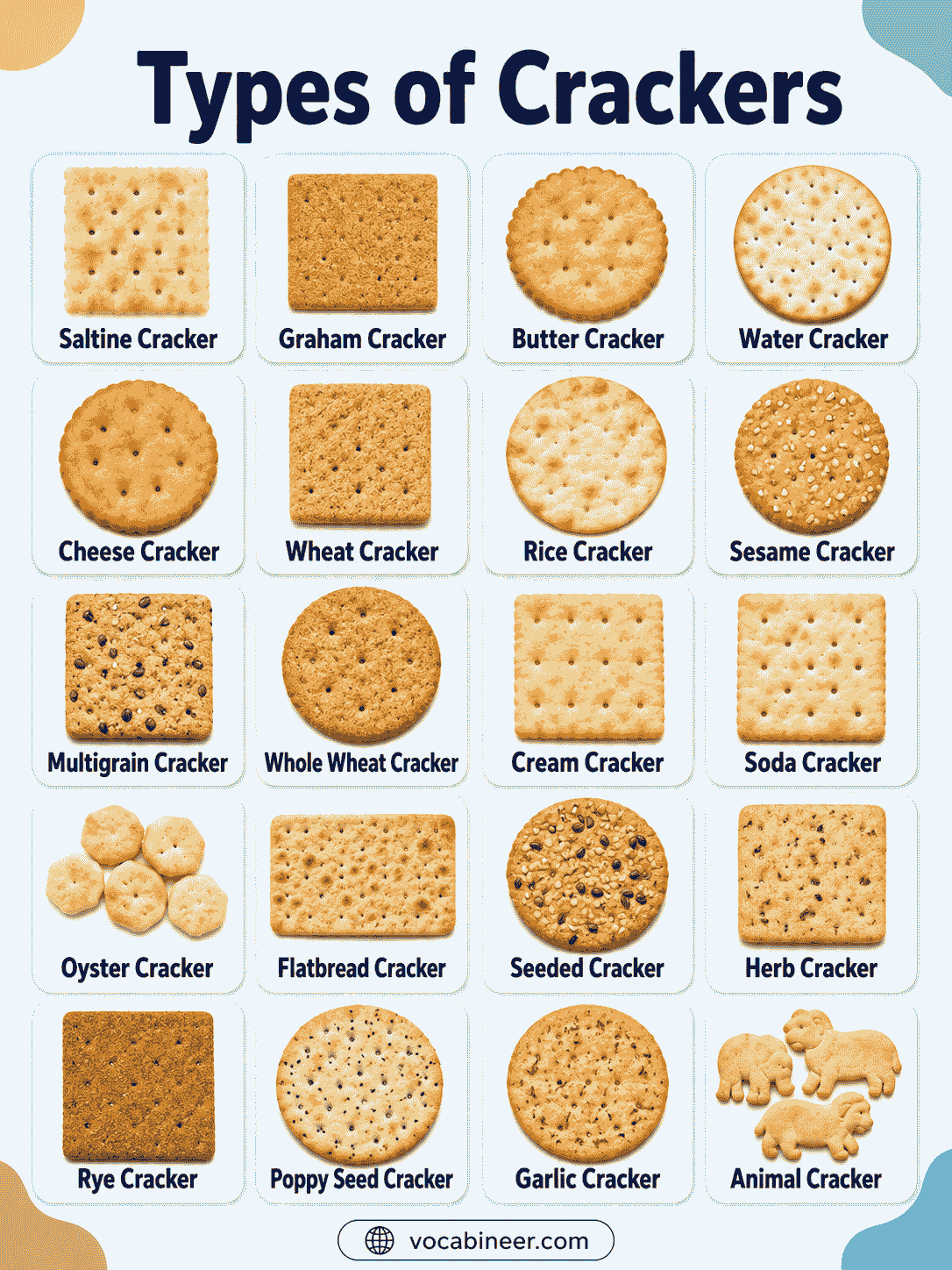
Saltine or soda cracker is a thin, square cracker with docking holes and surface salt. Its dry, brittle texture suits soup, cheese, and spreads.
Cream cracker is thicker and more layered than a saltine. Its mild flavour pairs well with butter, jam, cheese, and savoury toppings.
Water cracker is a thin, hard cracker with a neutral taste. It is commonly served with cheese, pâté, chutney, and light spreads.
Oyster cracker is a small, round or compact cracker often added to chowder, chilli, stew, and soup. It has a crisp, dense bite.
Buttery cracker contains more fat than plain crackers, giving it a richer flavour and tender crumb. Round and scalloped shapes are common.
Whole-wheat cracker uses whole-wheat flour, which creates a darker colour and fuller grain taste. It may be thin, crisp, or slightly coarse.
Multigrain cracker combines grains such as wheat, oats, rye, barley, millet, or corn. Visible flakes often add texture and a toasted flavour.
Rye cracker has a darker appearance and an earthy, slightly tangy taste. Thin versions are crisp, while thicker ones resemble crispbread.
Oatcake is an oat-based savoury biscuit with a dry, crumbly texture. It is commonly round or triangular and served with cheese.
Rice cracker is made from rice flour, rice dough, or whole rice grains. Depending on the style, it may be baked, fried, puffed, or glazed.
Corn cracker uses cornmeal or corn flour, giving it a golden colour and slightly sweet grain flavour. It usually has a firm crunch.
Seeded cracker contains sesame, flax, sunflower, pumpkin, or mixed seeds. The visible seeds create a coarse surface and toasted taste.
Cheese cracker contains cheese, cheese powder, or cheese seasoning. Its strong savoury flavour makes it suitable for eating without toppings.
Sandwich cracker consists of two crackers joined by a filling such as cheese, peanut butter, or cream. It is usually sold as a ready-to-eat snack.
Flatbread cracker is rolled thin and baked until crisp. Toasted bubbles, irregular edges, herbs, or seeds often give it a handmade appearance.
Classic Crackers Found in Shops and Kitchens
These familiar crackers usually rely on mild wheat-based doughs and restrained seasoning. Although their ingredients may appear similar, differences in thickness, layering, fat content, and shape give each style a distinct texture and use.
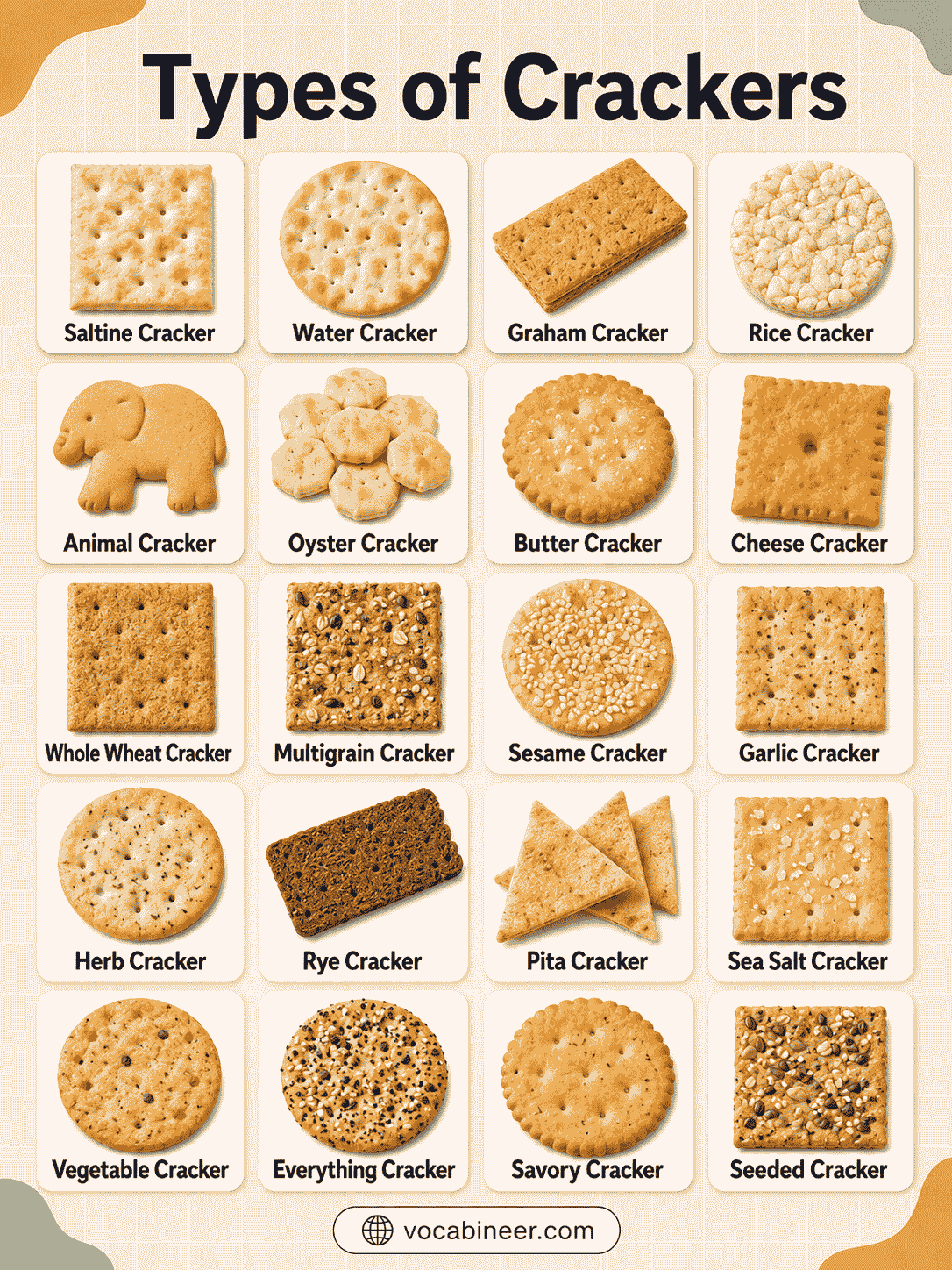
Saltine or soda cracker is a thin, square cracker with docking holes and surface salt. Its dry, brittle texture works well with soup, spreads, cheese, or plain snacking.
Cream cracker is thicker, firmer, and more layered than a saltine. The name traditionally relates to the production process rather than proving that the recipe contains dairy cream.
Water cracker, also called a water biscuit, is thin, hard, and deliberately neutral. Its restrained flavour allows cheese, pâté, chutney, and other toppings to remain prominent.
Oyster cracker is a small, round or compact cracker commonly served with chowder, chilli, stew, and soup. It resembles a miniature soda cracker but usually feels denser.
Buttery cracker contains more fat than a water cracker or saltine, creating a richer flavour and tender crumb. Round, oval, and scalloped versions are especially common.
Crackers Made from Grains, Seeds, and Legumes
Ingredient-based names explain what a cracker contains rather than defining one exact shape. Therefore, crackers made from the same grain may still differ in thickness, colour, seasoning, and cooking method.
Whole-wheat cracker uses whole-wheat flour, giving it a deeper colour and fuller grain flavour. Thin versions remain crisp, whereas thicker ones may feel coarse and crumbly.
Multigrain cracker combines grains such as wheat, oats, rye, barley, millet, or corn. Visible flakes often create a rough surface and a more complex toasted taste.
Rye cracker has an earthy, slightly tangy flavour and darker appearance than most wheat crackers. Large, dense versions may sit close to traditional rye crispbread.
Oatcake is an oat-based savoury biscuit commonly associated with Scotland. It is usually round or triangular, with a dry, crumbly texture and mild toasted flavour.
Rice cracker is a broad family covering thin, puffed, baked, fried, and glazed forms. Some use rice flour, while others retain visible whole or broken grains.
Corn cracker uses cornmeal, corn flour, or another corn-based ingredient. It often has a golden colour, firm crunch, and slightly sweet grain flavour.
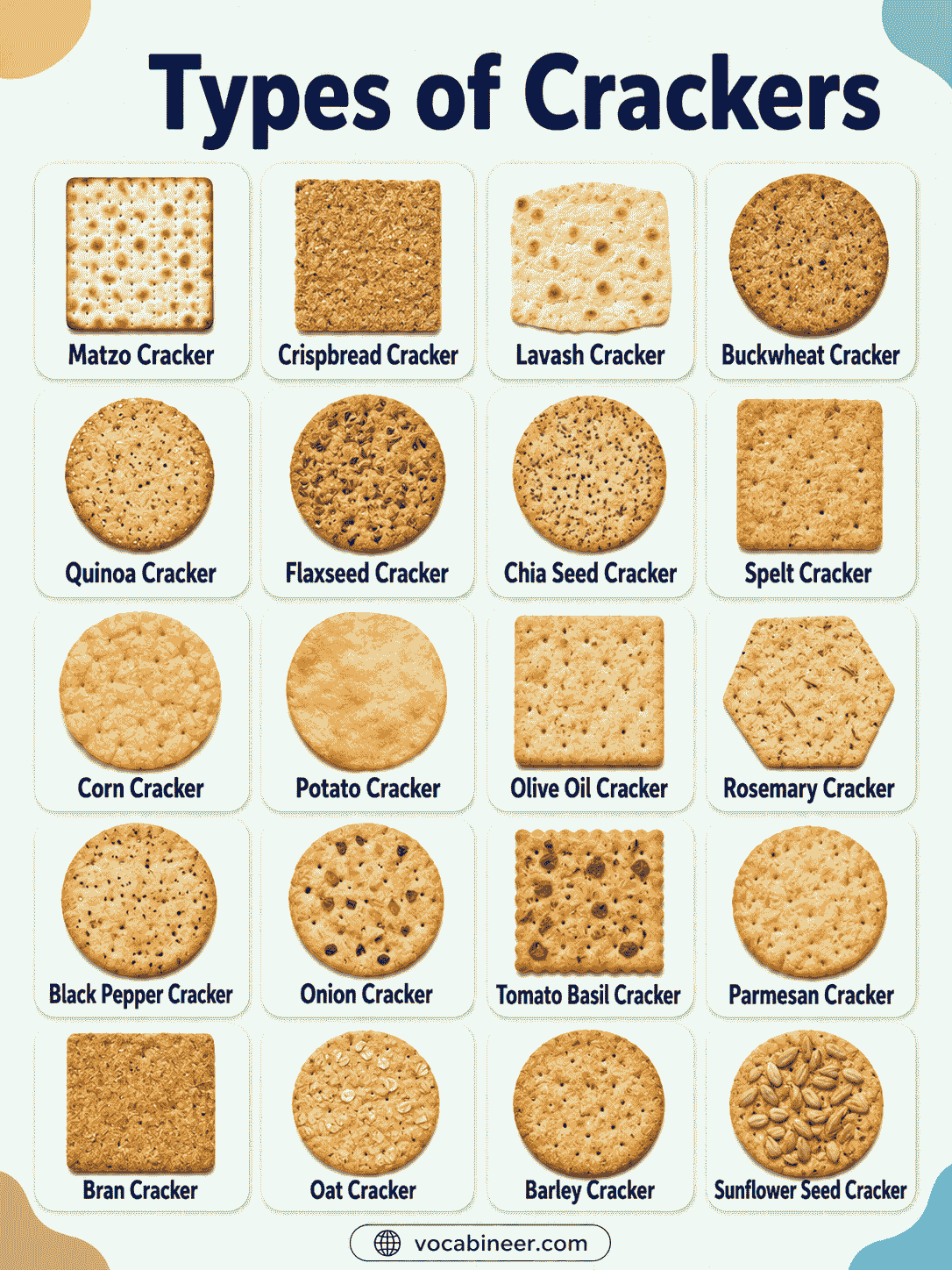
Buckwheat cracker contains buckwheat flour, which gives it an earthy taste and grey-brown colour. Recipes often combine buckwheat with seeds or another flour for structure.
Seeded cracker contains sesame, flax, sunflower, pumpkin, chia, poppy, or mixed seeds. The visible seeds create a coarse surface, strong crunch, and toasted flavour.
Nut-and-seed cracker relies heavily on chopped or ground nuts and seeds, sometimes with little conventional flour. Its dense, irregular structure holds cheese and thick spreads well.
Chickpea cracker uses chickpea flour, producing a pale golden colour and mildly earthy taste. Cumin, sesame, herbs, garlic, and chilli commonly complement the base.
Lentil cracker contains lentil flour, lentil paste, or another processed lentil ingredient. Depending on the recipe, it may be thin and crisp or light and puffed.
Crackers with Distinctive Textures and Shapes
Some varieties take their identity from the way the dough expands, layers, interlocks, or sets. These visible structures affect how the cracker breaks, holds toppings, and feels in the mouth.
Puffed cracker expands during frying or baking, creating a light structure filled with air pockets. Rice, starch, legumes, and seafood-flavoured mixtures commonly form the base.
Woven wheat cracker has a visible crosshatched surface formed from interlaced wheat strands. Its coarse structure creates a firm, grainy crunch and holds soft toppings well.
Fruit-and-nut crisp is baked in a loaf, sliced thinly, and baked again until brittle. Visible fruit, nuts, and seeds give every piece a different pattern.
Seed crisp consists largely of seeds bound into a thin sheet. It usually has an irregular edge, dense crunch, and firmer structure than a conventional flour cracker.
Crispbread and Flatbread-Style Crackers
Some crisp foods appear beside crackers even though they remain closely connected to bread traditions. Their broad surfaces and firm structures make them especially suitable for dips, cheese, spreads, and layered toppings.
Crispbread is a flat, dry bread traditionally made with rye. It commonly appears as a large round, rectangle, or sheet with a coarse and very firm texture.
Flatbread cracker is rolled thin and baked until crisp. Toasted bubbles, uneven edges, herbs, seeds, or salt crystals often give it a handmade appearance.
Lavash cracker is a brittle, extra-thin form inspired by lavash flatbread. Its large, irregular pieces work particularly well with hummus, soft cheese, and savoury dips.
Matzo or matzah 🔊 MAHT-soh is unleavened bread with an important place in Jewish tradition. Commercial sheets are pale, perforated, dry, and distinctly cracker-like.
Crackers Named for Their Fillings and Flavours
Some crackers take their names from an added centre, surface coating, or dominant seasoning rather than the base dough. Consequently, the same flavour may appear in wheat, rice, corn, seed, or legume crackers.
Filled Crackers
Filled crackers place a savoury or sweet centre between two small pieces. Their compact form makes them convenient snacks, while the outer layers provide most of the crisp texture.
Sandwich cracker is the general name for two crackers joined by a filling. Common centres include cheese, peanut butter, chocolate, vanilla cream, and fruit paste.
Cheese sandwich cracker combines two savoury crackers with a smooth cheese-flavoured centre. The outer pieces provide structure, while the filling supplies most of the taste.
Peanut butter cracker contains peanut butter or a peanut-flavoured layer between two crackers. Salty and mildly sweet versions create different sweet-and-savoury balances.
Savoury Flavoured Crackers
Seasoning may appear inside the dough, across the surface, or as a powdered coating. However, the flavour name does not reveal the cracker’s grain, thickness, or construction.
Cheese cracker contains cheese, cheese powder, or cheese flavouring and often has a golden or orange colour. Its strong savoury taste usually makes toppings unnecessary.
Herb cracker includes rosemary, thyme, oregano, basil, dill, or mixed herbs. A simple wheat or flatbread base allows the herbal aroma to remain noticeable.
Garlic cracker has garlic mixed into the dough or applied as a surface seasoning. It pairs naturally with hummus, tomato dips, cheese spreads, and soup.
Black pepper cracker contains cracked pepper or pepper seasoning. Its mild heat and sharp aroma work especially well with cheese, pâté, and savoury spreads.
Chilli cracker uses chilli powder, flakes, paste, or spicy seasoning. Heat levels range from gentle warmth to a strong, lingering finish.
Vegetable cracker contains vegetable powder, purée, dried pieces, or flavouring. Tomato, spinach, beetroot, onion, and carrot may affect both colour and taste.
Seaweed cracker includes seaweed flakes, powder, or seasoning. Rice-based versions are especially common and often combine seaweed with salt or soy flavour.
Sweet Crackers
Sweet crackers maintain a dry, crisp form but often behave more like biscuits or cookies. Their names reflect culinary tradition rather than a strict savoury-cracker definition.
Graham cracker is a mildly sweet whole-wheat cracker, usually formed as a perforated rectangle. Honey, cinnamon, or molasses may provide its familiar flavour.
Animal cracker is a small, sweet biscuit shaped like an animal. Although called a cracker, its sweetness places it closer to a plain cookie.
Regional Crackers with Distinct Ingredients and Shapes
Regional cracker traditions use distinctive grains, batters, seasonings, and cooking techniques. Keeping their established names preserves differences that a broad label such as rice cracker or flat cracker might hide.
Senbei 🔊 sen-bay is a Japanese rice cracker available in thin, thick, baked, grilled, or fried forms. Soy sauce, seaweed, sesame, salt, and chilli are common seasonings.
Arare 🔊 ah-rah-reh are small Japanese crackers usually made from glutinous rice. They often appear as tiny cubes, pellets, crescents, or mixed snack shapes.
Papadum 🔊 PAP-uh-dum is a very thin South Asian crisp commonly made from legume flour. Roasting or frying creates a fragile surface covered with small bubbles.
Khakhra 🔊 KHAH-krah is a thin, roasted flatbread from western India, usually made with wheat flour. Cumin, fenugreek, chilli, or herbs may flavour its brittle surface.
Prawn cracker is a starch-based cracker containing prawn ingredients or flavouring. Uncooked pieces expand rapidly during frying into light, airy discs or curls.
Rempeyek is an Indonesian fried cracker made from thin, seasoned batter. Peanuts, beans, anchovies, or other ingredients remain visible across its irregular, lacy surface.
Rengginang is an Indonesian cracker made from shaped clusters of sticky-rice grains. Drying and frying expand the grains while preserving their coarse, visible structure.
Plain Crackers People Often Confuse
Saltines, cream crackers, water crackers, and oyster crackers all have mild flavours. However, their size, thickness, layering, and serving roles make them recognisably different.
| Feature | Saltine | Cream cracker | Water cracker | Oyster cracker |
|---|---|---|---|---|
| Usual shape | Thin square | Thick rectangle | Often thin and round | Small round or compact piece |
| Texture | Dry and brittle | Firm and slightly flaky | Hard and delicate | Crisp and dense |
| Flavour | Lightly salted | Mild and richer | Very neutral | Mildly salted |
| Surface clue | Holes and surface salt | Layered, perforated surface | Fine, plain surface | Very small size |
| Common use | Soup and spreads | Cheese, butter, jam | Cheese and pâté | Chowder, chilli, soup |
Saltines and oyster crackers belong to the wider soda-cracker family. By contrast, water crackers are thinner and more neutral, whereas cream crackers are thicker and more substantial.
Crackers vs. Crispbread
Crackers and crispbread often appear together because both are dry, crisp foods served with cheese and toppings. Nevertheless, their underlying food identities, usual sizes, and traditional ingredients differ.
| Feature | Crackers | Crispbread |
|---|---|---|
| Basic identity | Crisp biscuit or snack | Flat, dry bread |
| Usual size | Small individual pieces | Larger sheets or rounds |
| Common base | Wheat or many alternatives | Traditionally rye |
| Texture | Flaky, tender, brittle, or crunchy | Firm, coarse, and very dry |
| Typical use | Snacking, soup, dips, cheese | Open toppings and light meals |
Some thin rye products sit close to both categories. Regional tradition and product labelling often determine whether people call them crackers or crispbread.
Crackers vs. Biscuits
The words cracker and biscuit overlap differently across regions. British usage commonly treats crackers as savoury biscuits, whereas American usage often separates crisp crackers from sweet cookies and soft baked biscuits.
| Feature | Crackers | Sweet biscuits or cookies |
|---|---|---|
| Usual flavour | Plain, salty, or savoury | Usually sweet |
| Common texture | Dry, crisp, brittle, or flaky | Crisp, crumbly, chewy, or soft |
| Typical use | Cheese, soup, dips, snacking | Dessert, tea, or sweet snacking |
| Common ingredients | Flour, grains, seeds, seasoning | Flour, sugar, fat, flavourings |
| Naming overlap | Graham and animal crackers may be sweet | Some savoury biscuits resemble crackers |
Regional wording explains why names such as cream cracker, water biscuit, graham cracker, and animal cracker do not fit one universal naming rule.
Choosing Crackers for Cheese, Dips, Soup, and Toppings
The best cracker depends on flavour strength, thickness, surface size, and resistance to breaking. Neutral varieties support delicate toppings, whereas sturdy crackers handle dense dips and layered ingredients.
- For cheese: Water crackers keep the focus on the cheese, while cream crackers and oatcakes provide a richer, more substantial base.
- For thick dips: Flatbread, seeded, woven wheat, and whole-wheat crackers resist snapping in hummus, bean dip, or cheese spread.
- For soup: Saltines and oyster crackers absorb broth easily without adding a strong competing flavour.
- For pâté and soft spreads: Water crackers, rye crackers, and thin flatbread crackers provide a clean, crisp base.
- For layered toppings: Crispbread, seed crisps, and large flatbread crackers hold vegetables, eggs, smoked fish, and cheese.
- For plain snacking: Cheese, buttery, rice, chilli, puffed, and sandwich crackers contain enough flavour to eat alone.
- For sweet spreads: Graham crackers pair naturally with fruit, nut butter, chocolate spread, and other sweet toppings.
FAQs
Usually, yes. A saltine is a familiar type of soda cracker: thin, dry, lightly salted, and commonly square with docking holes.
The name traditionally relates to the creaming process used during manufacture, not necessarily to dairy cream. They are generally thicker and more layered than water crackers.
They are traditionally called crackers, but their sweetness and dessert uses place them closer to biscuits or cookies than to savoury table crackers.
Crispbread is technically a flat, dry bread, often made with rye. People group it with crackers because of its crisp texture and similar serving uses.
Flatbread crackers, seed crisps, woven wheat crackers, and sturdy whole-grain crackers usually handle hummus, bean dip, and thick cheese spreads without breaking.
Read More
- Types of Food in English
- Different Types of Candy
- Sweets and their Names
- Different Types of Chips
- Types of Chocolate
- Types of Cookies