Pickled foods have a sour, salty, tangy, sharp, spicy, or sweet-sour taste because they sit in vinegar, salt brine, spices, oil, or fermentation. People search for pickled food names when they want clear examples such as cucumber pickles, pickled onions, kimchi, sauerkraut, olives, gherkins, mango pickle, lemon pickle, relish, and pickled eggs.
However, not every pickled food name needs the word pickled before it. Some foods already have special names, such as kimchi, sauerkraut, gherkins, achar, relish, and piccalilli, while others need the full phrase, such as pickled cucumber, pickled carrot, or pickled eggs.
In This Page
What Are Pickled Foods?
Pickled foods are foods preserved or flavored in vinegar, salt brine, spices, oil, or fermentation. They often taste sour, salty, tangy, sharp, spicy, or sweet-sour.
Common examples include pickled cucumbers, pickled onions, carrots, radishes, cabbage, kimchi, sauerkraut, olives, mango pickle, lemon pickle, relish, gherkins, and pickled eggs.
Common Pickled Food Names
These are some of the most common pickled food names seen in kitchens, restaurants, grocery stores, lunch boxes, and food markets.
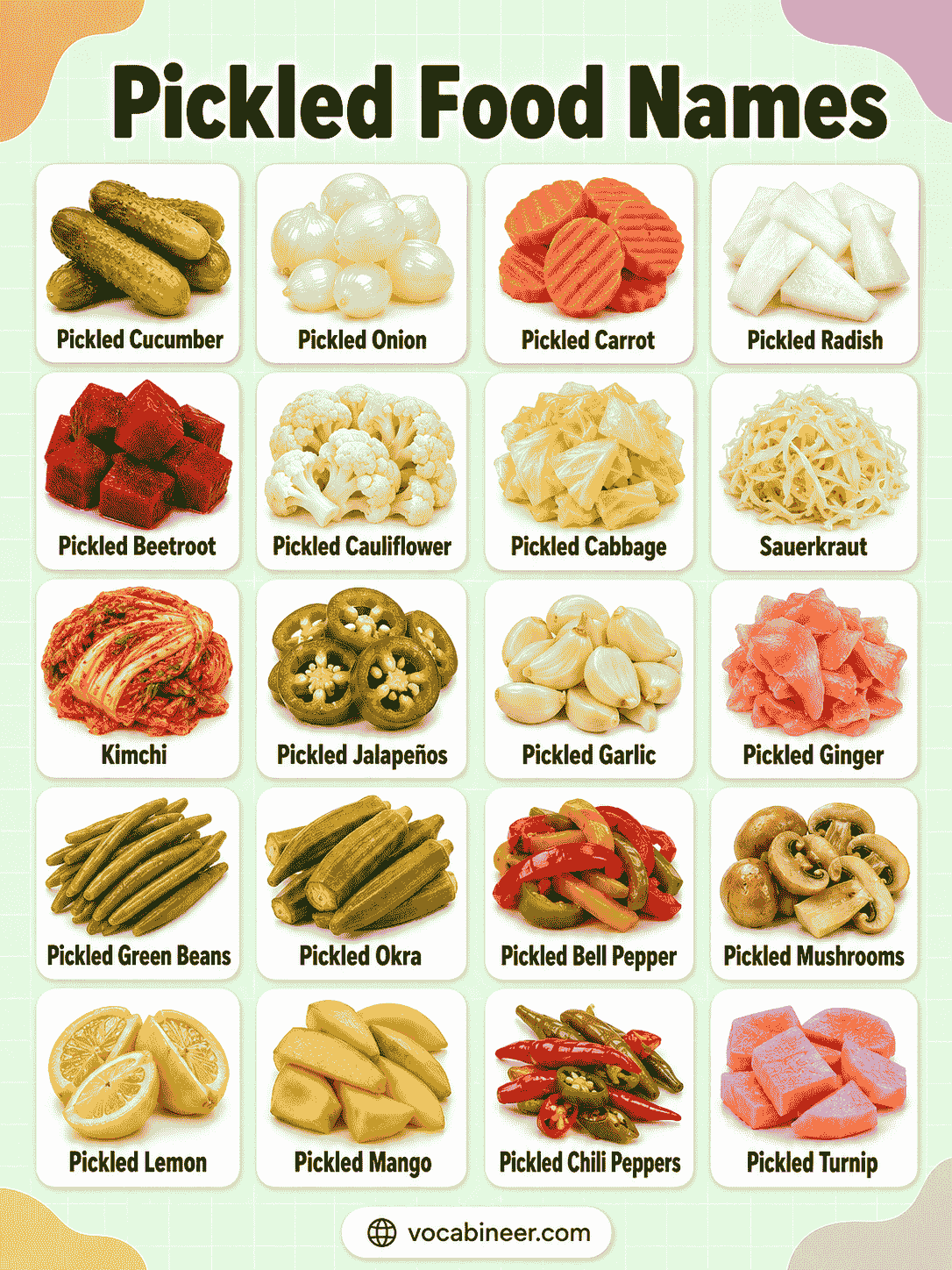
- Pickled cucumber
- Gherkins
- Pickled onion
- Carrot pickle
- Pickled radish
- Beetroot pickle
- Cabbage pickle
- Pickled cauliflower
- Pickled jalapeños
- Pickled garlic
- Pickled ginger
- Pickled turnip
- Mango pickle
- Lemon pickle
- Lime pickle
- Olives
- Kimchi
- Sauerkraut
- Pickled eggs
- Pickled herring
- Pickle relish
- Piccalilli
- Chow chow
- Achar
- Takuan
- Umeboshi
- Giardiniera
- Curtido
- Pickle juice
- Fermented cucumber pickles
Pickled Food Names with Simple Meanings
Some pickled food names are easy to understand, while others need a short meaning. This table explains useful pickle vocabulary for learners, kids, teachers, food readers, and menu users.
| Pickled Food | Simple Meaning |
|---|---|
| Pickled cucumber | Cucumber preserved in vinegar, salt brine, or fermentation, often called a pickle. |
| Gherkin | A small cucumber pickle with a crisp texture. |
| Pickled onion | Onion soaked in vinegar or brine for a sharp, tangy taste. |
| Carrot pickle | Carrot preserved with vinegar, brine, spices, or a sweet-sour mixture. |
| Pickled radish | Radish pickled for a crunchy, sour, salty, or sweet-sour taste. |
| Beetroot pickle | Beetroot preserved in vinegar, often bright red and tangy. |
| Kimchi | A Korean fermented vegetable food, often spicy, sour, salty, and garlicky. |
| Sauerkraut | Fermented cabbage with a sour and salty taste. |
| Mango pickle | Unripe mango preserved with salt, oil, vinegar, or spices. |
| Lemon pickle | Lemon preserved with salt, oil, brine, or spices. |
| Olives | Fruits usually cured or brined before eating. |
| Pickled eggs | Boiled eggs preserved in vinegar or brine. |
| Relish | A chopped pickled condiment used on burgers, hot dogs, and sandwiches. |
| Piccalilli | A yellow pickled vegetable relish often flavored with mustard. |
| Chow chow | A pickled vegetable relish made with mixed vegetables. |
| Achar | A South Asian pickle made with mango, lemon, chili, vegetables, oil, or spices. |
| Takuan | Japanese pickled daikon radish, often yellow and crunchy. |
| Umeboshi | Japanese pickled plum with a salty-sour taste. |
| Giardiniera | Italian-style pickled mixed vegetables. |
| Curtido | A Salvadoran pickled cabbage slaw often served with pupusas. |
Pickled Vegetable Names
Vegetables are the most common pickled foods in many homes and restaurants. Under this heading, the food names are kept clean because the word pickled is already clear from the section title.
- Cucumber
- Onion
- Carrot
- Radish
- Beetroot
- Cabbage
- Cauliflower
- Garlic
- Ginger
- Turnip
- Jalapeños
- Green chilies
- Peppers
- Okra
- Asparagus
- Mushrooms
- Green beans
- Tomatoes
- Red cabbage
- Daikon radish
- Zucchini
- Eggplant
- Shallots
- Celery
- Mixed vegetables
Pickled Fruit Names
Fruits can also be pickled, especially unripe fruits, citrus fruits, berries, and firm fruits. Many fruit pickles taste sour, salty, spicy, tangy, or sweet-sour.
- Mango
- Lemon
- Lime
- Olives
- Gooseberry
- Cherries
- Watermelon rind
- Green papaya
- Pineapple
- Plum
- Umeboshi
- Grapes
- Peaches
- Apples
- Pears
- Figs
- Apricots
- Strawberries
- Cranberries
- Green tomatoes
Pickled Eggs and Other Animal-Based Foods
Some animal-based foods can also be pickled or brined. These foods are less common than pickled vegetables, but they appear in regional dishes, bar snacks, seafood menus, and preserved-food traditions.
- Pickled eggs
- Beet-pickled eggs
- Spiced pickled eggs
- Pickled quail eggs
- Pickled herring
- Pickled fish
- Pickled shrimp
- Pickled mussels
- Pickled oysters
- Pickled squid
- Pickled octopus
- Pickled pork
- Pickled sausage
- Pickled tongue
- Feta in brine
- Brined cheese
Pickled Condiments and Side Foods
These condiments and side foods add sharp flavor without needing a large portion. A small spoonful can bring tang, crunch, spice, or brightness to sandwiches, burgers, rice dishes, curries, salads, grilled foods, and snacks.
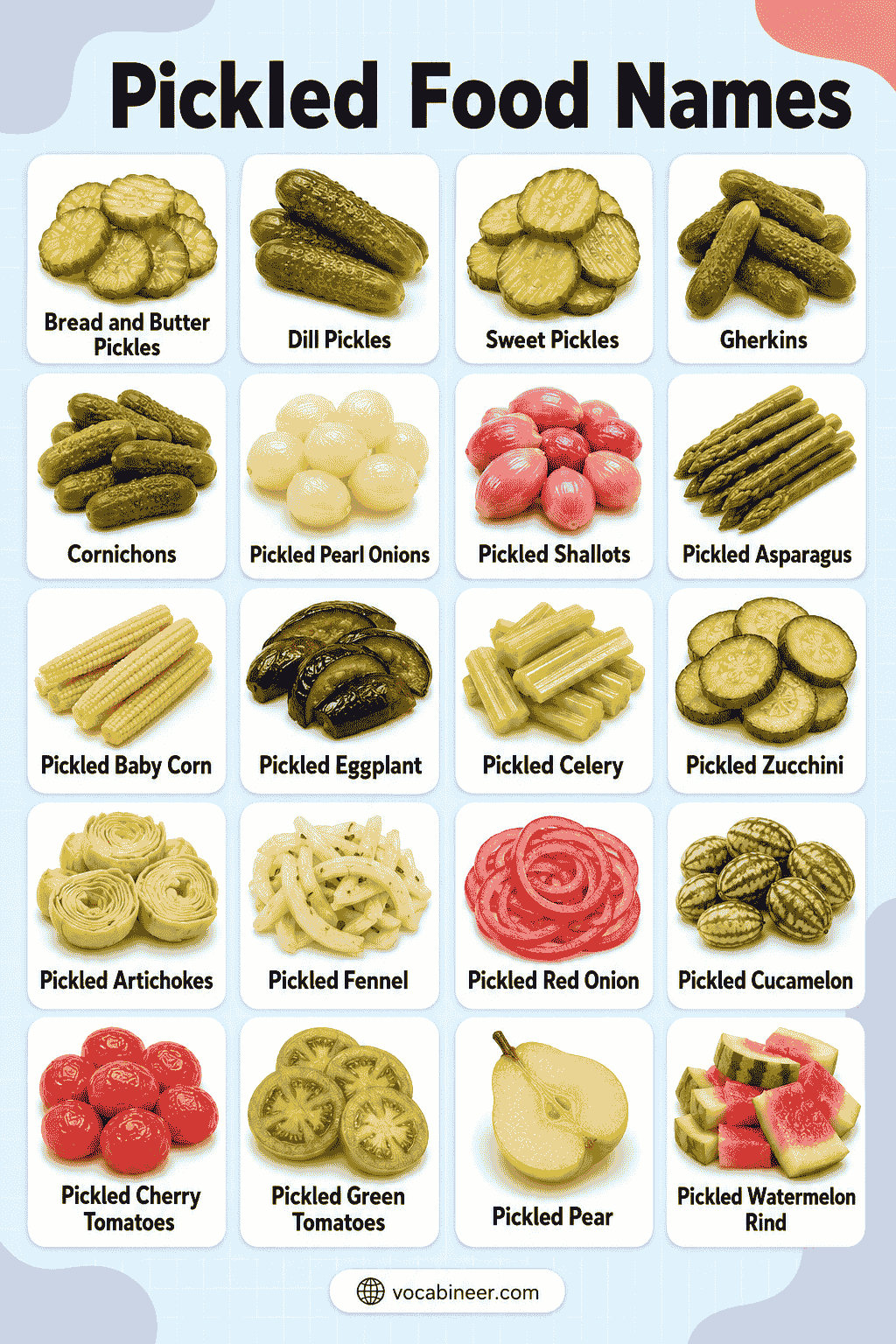
- Pickle relish
- Sweet relish
- Dill relish
- Piccalilli
- Chow chow
- Chutney
- Pickled salsa
- Mustard seeds in brine
- Pickled ginger
- Pickled garlic
- Pickled jalapeños
- Pickled chilies
- Pickle juice
- Pickled pepperoncini
- Pickled banana peppers
- Pickled red onions
- Pickled slaw
- Pickled cabbage salad
- Cucumber pickle slices
- Mixed pickle
Traditional Pickled Foods from Different Cuisines
Many cultures have special pickled foods with local names, ingredients, and flavors. These names are useful for reading menus, food labels, travel guides, recipes, and restaurant descriptions.
| Pickled Food | Common Use or Origin |
|---|---|
| Kimchi | Korean fermented vegetables, often spicy, sour, and salty. |
| Sauerkraut | Fermented cabbage used in many European dishes. |
| Achar | South Asian pickle made with mango, lemon, chili, or mixed vegetables. |
| Gherkins | Small cucumber pickles used in sandwiches, burgers, and snack plates. |
| Takuan | Japanese pickled daikon radish, often served with rice. |
| Umeboshi | Japanese pickled plum with a strong salty-sour flavor. |
| Giardiniera | Italian-style pickled mixed vegetables. |
| Curtido | Salvadoran pickled cabbage slaw. |
| Piccalilli | Mustard-flavored pickled vegetable relish. |
| Chow chow | Pickled vegetable relish used in some regional cuisines. |
| Cornichons | Small French-style gherkins often served with cheese or meat. |
| Preserved lemons | Salt-preserved lemons used in North African and Middle Eastern cooking. |
Pickled Foods by Brine, Vinegar, and Fermentation
Pickled foods can be made in different ways. Some use vinegar, some sit in salt brine, and others become sour through fermentation.
| Type | Simple Meaning | Examples |
|---|---|---|
| Vinegar pickles | Foods preserved or flavored with vinegar | Pickled onions, beetroot pickle, gherkins |
| Brined foods | Foods soaked in salty water | Olives, preserved lemons, some cucumber pickles |
| Fermented pickles | Foods soured by fermentation | Kimchi, sauerkraut, fermented cucumbers |
| Spiced pickles | Pickled foods mixed with spices | Mango pickle, achar, lemon pickle |
| Sweet pickles | Pickles with a sweet-sour flavor | Sweet gherkins, bread-and-butter pickles |
| Quick pickles | Foods pickled for a short time before eating | Quick onions, quick cucumbers, quick carrots |
Pickled Foods vs Fermented Foods
These two terms are related, but they do not always mean the same thing. A pickled food may use vinegar, brine, oil, spices, or fermentation for flavor and preservation. During fermentation, natural microbes create sourness over time, as in foods such as kimchi, sauerkraut, and fermented cucumber pickles.
| Term | Simple Meaning | Examples |
|---|---|---|
| Pickled food | Food preserved or flavored in vinegar, brine, spices, oil, or fermentation | Pickled onions, gherkins, mango pickle |
| Fermented food | Food changed by natural microbes over time | Kimchi, sauerkraut, fermented cucumbers |
| Vinegar pickle | Pickle made sour with vinegar | Pickled beetroot, quick onions |
| Brined food | Food soaked in salty water | Olives, preserved lemons |
| Spiced pickle | Pickle made with strong spices, oil, or seasoning | Achar, lemon pickle, chili pickle |
Pickled Food Names for Kids and Beginners
Kids and beginner English learners usually need simple pickled food names first. These words are common, easy to recognize, and useful for food charts, menus, picture cards, and spelling practice.
| Pickled Food | Spelling |
|---|---|
| Pickle | P-I-C-K-L-E |
| Olive | O-L-I-V-E |
| Kimchi | K-I-M-C-H-I |
| Gherkin | G-H-E-R-K-I-N |
| Onion | O-N-I-O-N |
| Carrot | C-A-R-R-O-T |
| Radish | R-A-D-I-S-H |
| Cabbage | C-A-B-B-A-G-E |
| Beetroot | B-E-E-T-R-O-O-T |
| Lemon | L-E-M-O-N |
| Mango | M-A-N-G-O |
| Egg | E-G-G |
Pickled Foods by Taste and Texture
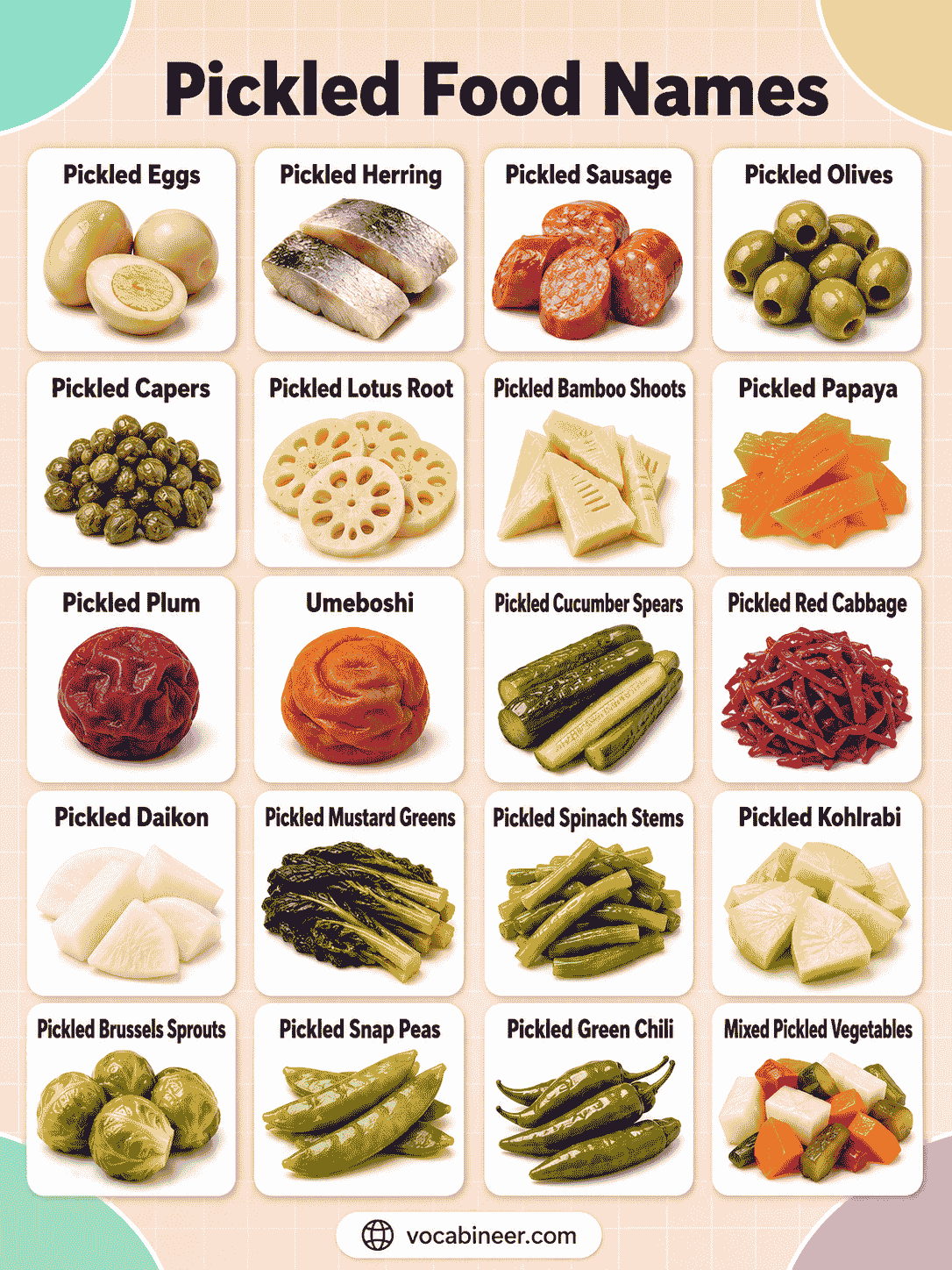
Pickled foods can taste sour, salty, spicy, sweet-sour, sharp, or crunchy. This section helps readers recognize pickled foods by the way they feel and taste.
| Taste or Texture | Pickled Food Examples |
|---|---|
| Sour and salty | Sauerkraut, olives, preserved lemons |
| Spicy and tangy | Kimchi, chili pickle, achar |
| Sweet-sour | Sweet gherkins, bread-and-butter pickles |
| Crunchy | Cucumber pickles, carrots, radishes |
| Sharp and strong | Pickled onions, pickled garlic, pickle juice |
| Soft and rich | Pickled eggs, brined cheese, pickled fish |
Pickled Foods Often Confused with Each Other
Some pickled food names look similar or sound similar, but they do not always mean the same thing. These quick comparisons help readers understand common differences.
| Confusing Pair | Main Difference |
|---|---|
| Pickles vs Gherkins | Gherkins are small cucumber pickles; pickles can mean many pickled foods. |
| Pickled vs Fermented | Pickled foods use vinegar, brine, or fermentation; fermented foods become sour through microbial activity. |
| Kimchi vs Sauerkraut | Kimchi is often spicy and seasoned; sauerkraut is usually fermented cabbage with salt. |
| Pickled onion vs Raw onion | Pickled onion tastes tangy and softer; raw onion tastes sharp and fresh. |
| Relish vs Pickles | Relish is a chopped pickled condiment; pickles are often whole or sliced pieces. |
| Pickled cucumber vs Cucumber pickle | Both can mean cucumber preserved in vinegar or brine. |
| Olives vs Pickled vegetables | Olives are fruits usually cured or brined; pickled vegetables are vegetables preserved in vinegar or brine. |
| Achar vs Chutney | Achar is usually a pickle; chutney can be fresh, cooked, sweet, sour, or spicy. |
How Pickled Foods Are Used in Meals
Pickled foods add sourness, saltiness, crunch, spice, and brightness to meals. They often work as toppings, side dishes, condiments, snacks, and flavor boosters.
- Sandwiches: Cucumber pickles, gherkins, relish, pickled onions
- Burgers: Pickles, relish, jalapeños, pickled onions
- Rice dishes: Kimchi, takuan, pickled ginger, mixed vegetables
- Curries: Achar, mango pickle, lemon pickle, mixed pickle
- Tacos and wraps: Pickled onions, jalapeños, carrots
- Salads: Beetroot pickle, pickled cabbage, cucumber slices
- Snack plates: Olives, pickled eggs, peppers, gherkins
- Seafood dishes: Pickled ginger, onions, vegetables
- Breakfast plates: Olives, onions, vegetables, brined cheese
- Street foods: Pickled chilies, carrots, turnips, relish
FAQs
Pickled food names are names of foods preserved or flavored in vinegar, brine, spices, oil, or fermentation, such as pickled cucumber, pickled onion, kimchi, sauerkraut, olives, gherkins, and pickled eggs.
Common pickled vegetables include cucumbers, onions, carrots, radishes, beetroot, cabbage, cauliflower, garlic, jalapeños, turnips, peppers, ginger, and okra.
Not always. Some pickled foods are fermented, such as kimchi and sauerkraut, but many pickled foods use vinegar or brine and do not need fermentation.
Pickled fruits include mango, lemon, lime, olives, gooseberry, cherries, watermelon rind, green papaya, plums, grapes, and some regional fruit pickles.
Pickled foods are used in sandwiches, burgers, salads, rice bowls, curries, tacos, wraps, seafood dishes, snack plates, breakfast plates, and side dishes.
Read More
- Baking Tools Name
- Healthy Foods Name
- Bakery Items Names
- Sour Food Names
- Sweet Food Names
- Salty Food Names