

A coarse-salted pretzel delivers a quick salty crunch, while an olive gives a deeper briny bite. Feta, prosciutto, anchovies, and soy sauce also taste salty, yet each food develops that flavor through a different ingredient or preparation method.
These salty food names cover familiar snacks, cheeses, meats, seafood, preserved vegetables, sauces, and seasonings. The guide also explains the differences between salty, savory, umami, and briny, so readers can describe food flavors more accurately.
In This Page
What Gives Salty Foods Their Flavor?
Saltiness is one of the basic tastes that the tongue can detect. Table salt, sea salt, brine, curing mixtures, fermented sauces, and seasoning blends commonly create this flavor.
Food makers develop saltiness in several ways. They may sprinkle salt directly onto chips, crackers, nuts, or popcorn. They may also soak cheese and vegetables in brine, cure meat or fish with salt, or ferment ingredients in a salted mixture.
However, products with the same name can taste very different. One brand of crackers may use only a light coating of salt, while another may taste noticeably saltier. Recipes, brine strength, curing time, and added sauces can also change the final flavor.
The word salty describes taste rather than a complete food category. Plain popcorn, fresh fish, unsalted butter, and raw nuts do not automatically belong on a salty-food list. More precise names such as salted popcorn, smoked salmon, salted butter, and salted peanuts identify the intended foods clearly.
Familiar Salty Snack Names
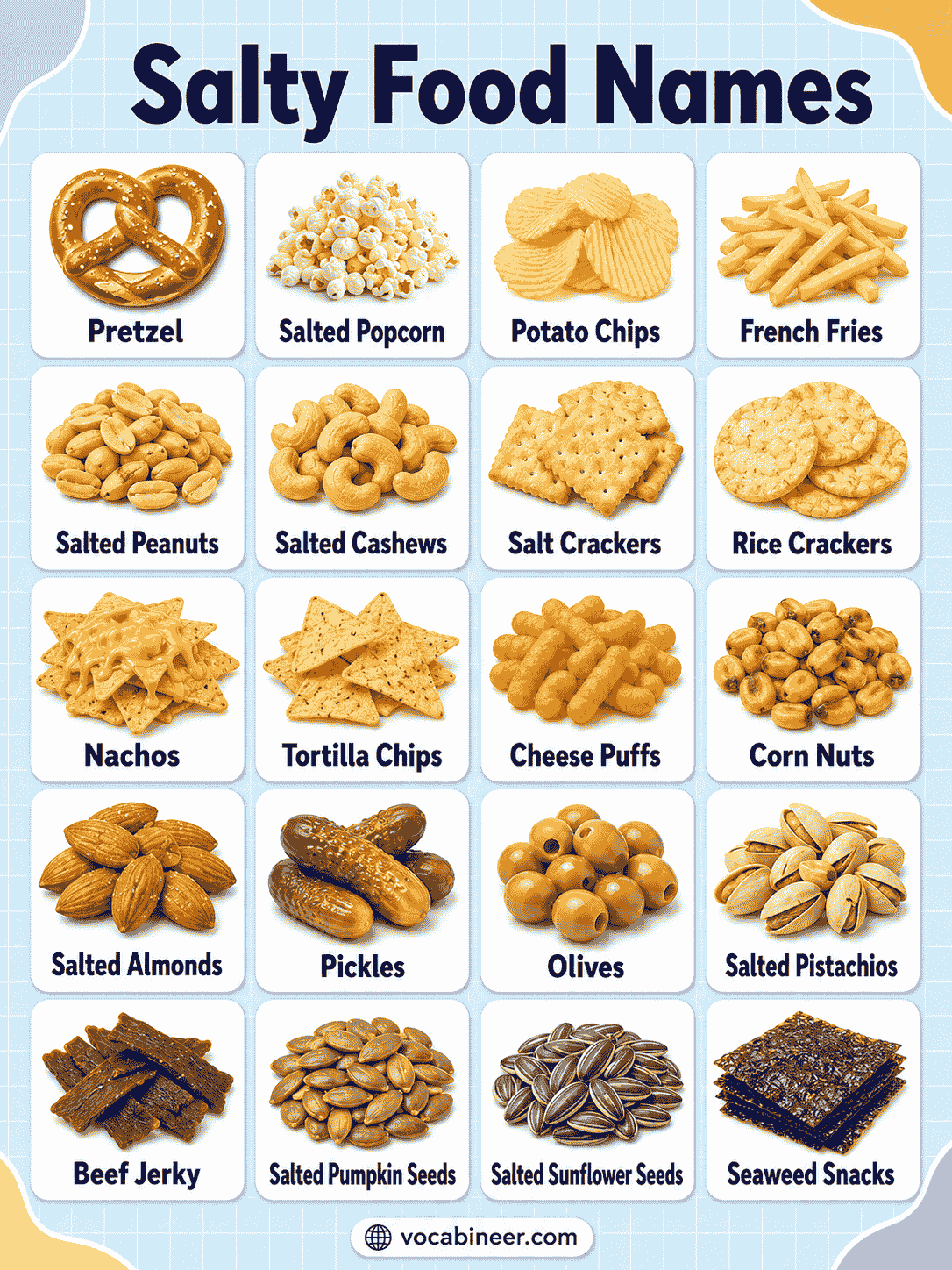
Salty snacks often carry salt or seasoning directly on their surfaces. Their crisp textures, small portions, and recognizable shapes make them common choices for snack bowls, lunch boxes, parties, and road trips.
Potato chips are thin potato slices that manufacturers fry or bake until crisp. Most varieties include salt, although brands may add cheese, barbecue, vinegar, chili, or other seasonings.
Tortilla chips are crisp triangular snacks that producers commonly make from corn tortillas. Salt often coats the surface, and people frequently serve them with salsa, guacamole, bean dip, or cheese dip.
Corn chips are dense, crunchy snacks made from processed corn dough. They usually look thicker and more curved than tortilla chips.
Pretzels are firm baked snacks with twisted, looped, or stick-like shapes. Bakers often add coarse salt crystals to the surface before baking.
Cheese crackers are small baked crackers flavored with cheese or cheese seasoning. They combine saltiness with a rich savory flavor and may come in square, round, or fish-shaped forms.
Saltine crackers are thin, crisp square crackers with small holes and visible surface salt. People commonly eat them with soup, cheese, spreads, or dips.
Salted breadsticks are long, narrow baked sticks with a dry, crisp texture. Salt crystals or a seasoned coating distinguish them from plain breadsticks.
Salted popcorn consists of popped corn mixed with salt and sometimes butter or oil. Plain air-popped popcorn has a mild flavor until someone adds seasoning.
Salted peanuts are roasted or fried peanuts coated with salt. Their reddish-brown skins and small oval shapes make them easy to recognize.
Salted cashews are curved, cream-colored nuts with smooth surfaces. Roasting and salt give them a richer flavor than plain raw cashews.
Salted pistachios are green nuts that often come inside pale, partly opened shells. Salt may coat the shells, kernels, or both.
Salty Cheese and Dairy Food Names
Cheeses differ in moisture, aging, texture, milk source, and preparation. Therefore, specific names such as feta and Parmesan communicate more than the general word cheese.
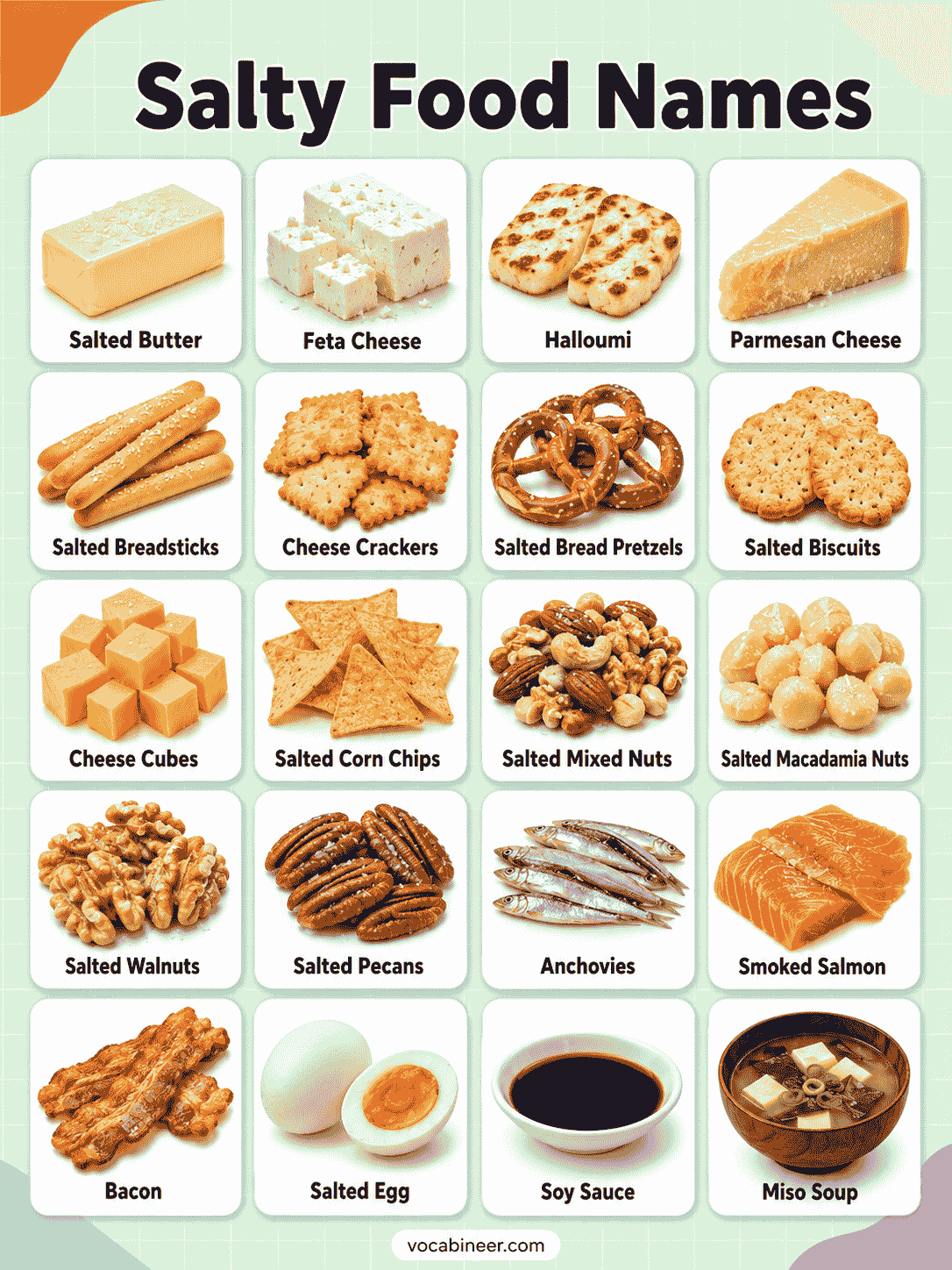
Feta is a crumbly white cheese that cheesemakers commonly keep in brine. It has a tangy, salty flavor and often appears in salads, pastries, vegetable dishes, and grain bowls.
Halloumi /həˈluːmi/ 🔊 is a firm white brined cheese that holds its shape during grilling or pan-cooking. Thick slices often develop golden grill marks while remaining chewy inside.
Parmesan is a hard aged cheese with a pale yellow color and granular texture. It combines noticeable saltiness with a deep umami flavor, so people commonly grate it over pasta, soups, vegetables, and salads.
Pecorino Romano /ˌpɛkəˈriːnoʊ roʊˈmɑːnoʊ/ 🔊 is a firm Italian sheep’s-milk cheese with a sharp, concentrated flavor. Cooks often grate it over pasta, sauces, soups, and roasted vegetables.
Blue cheese contains distinctive blue or green veins. Different varieties may taste sharp, salty, tangy, creamy, earthy, or slightly pungent.
Processed cheese combines cheese with other dairy ingredients, emulsifiers, and flavorings to create a smooth, consistent texture. Many products taste noticeably salty, although recipes differ between brands.
Salted butter contains added salt, which gives it a more savory flavor than unsalted butter. People spread it on bread or use it with vegetables, potatoes, pasta, and cooked dishes.
Cured Meat Names with Salty Flavors
Meat processors use curing, seasoning, drying, fermentation, and smoking to create distinctive products. These methods often add saltiness, but each method changes the meat in a different way.
Bacon is a cured pork product commonly made from pork belly in the United States. Frying or baking gives it a crisp texture and a smoky, savory, salty flavor.
Cured ham comes from a pig’s hind leg. Producers treat it with salt or brine and may also smoke, cook, dry, or age it.
Salami /səˈlɑːmi/ 🔊 is a seasoned sausage that makers commonly cure, ferment, or dry. It usually has a firm texture and appears in thin round slices.
Pepperoni is a spicy cured sausage often made from pork, beef, or both. Its red-orange slices commonly appear on pizza, sandwiches, and snack trays.
Prosciutto /proʊˈʃuːtoʊ/ 🔊 is an Italian dry-cured ham that comes in very thin slices. The curing and drying process concentrates its savory and salty flavor.
Beef jerky consists of seasoned beef strips or formed meat pieces that producers dry to remove moisture. Salt, spices, and marinades give jerky its concentrated flavor and chewy texture.
Corned beef is beef cured in seasoned brine. The word corned refers historically to the coarse grains, or “corns,” of salt used during curing rather than to the vegetable corn.
Brined, Pickled, and Fermented Salty Foods
Brine, vinegar, fermentation, and salt-based preservation create many salty foods. Although these methods sometimes overlap, the terms brined, pickled, and fermented do not mean exactly the same thing.
Olives are small fruits that producers cure before people eat them. Table olives may look green, purple, brown, or black and often have a salty, briny flavor.
Dill pickles are cucumbers preserved with dill in brine, vinegar, or both. They taste salty and sour and may come whole, sliced, or cut into spears.
Capers /ˈkeɪpərz/ 🔊 are small flower buds preserved in salt or brine. Their tiny green shape and sharp flavor make them a familiar addition to pasta, salads, sauces, and fish dishes.
Sauerkraut /ˈsaʊərkraʊt/ 🔊 is finely cut cabbage fermented with salt. It has a soft or lightly crisp texture and a sour, salty taste.
Kimchi /ˈkɪmtʃi/ 🔊 refers to a family of Korean fermented vegetable dishes. Many versions use cabbage or radish and combine salty, sour, spicy, and umami-rich flavors.
Salted duck egg is a duck egg cured in salt or brine. When cooks cut it open, they usually find a firm white surrounding a rich orange yolk.
Salty Seafood Names and Briny Flavors
Fresh seafood does not automatically taste intensely salty simply because it comes from the ocean. Saltiness usually comes from brining, curing, canning, drying, smoking, or added seasoning, while briny flavor may reflect the food’s marine character.
Anchovies are small fish that processors often cure with salt and pack in oil. Their narrow fillets have a concentrated salty and umami-rich flavor that works well in dressings, sauces, pizza, and salads.
Sardines in brine are small fish packed in salted water. Sardines may also come in oil, tomato sauce, or plain water, so the phrase in brine identifies the salty version precisely.
Smoked salmon commonly undergoes salting or curing before smoking. Thin orange-pink slices deliver smoky, savory, and noticeably salty flavors.
Salt cod is cod preserved with salt and often dried. Cooks usually soak it in water before cooking to rehydrate the fish and draw out excess salt.
Salted herring is herring preserved with salt or brine. People may buy it whole, as fillets, or in pieces for salads and preserved-fish dishes.
Oysters are shellfish with rough outer shells and soft interiors. Their flavor may range from mild and fresh to noticeably briny, depending on the species, growing water, and preparation.
Salty Sauces, Pastes, and Seasonings
These concentrated ingredients add saltiness to other foods rather than serving as ordinary standalone snacks. Even a small quantity can strongly affect the flavor of a soup, sauce, marinade, stir-fry, or cooked dish.
Soy sauce is a dark fermented liquid seasoning. It combines concentrated saltiness with umami, although manufacturers also sell reduced-sodium versions.
Fish sauce is a thin fermented seasoning commonly made from fish and salt. It has a powerful aroma and a strong salty, savory flavor.
Miso paste /ˈmiːsoʊ/ 🔊 is a fermented seasoning commonly made from soybeans, salt, and cultured grain. Depending on the type, it may taste salty, earthy, mildly sweet, or deeply umami-rich.
Bouillon /ˈbuːljɑːn/ 🔊 may refer to a clear seasoned broth. American grocery labels also use the word for concentrated cubes, powders, granules, and pastes that people dissolve in water.
Seasoned salt blends salt with spices, herbs, and other flavorings. Cooks sprinkle it over fries, popcorn, vegetables, meat, potatoes, and other prepared foods.
Salty, Savory, Umami, and Briny Compared
These flavor words often overlap, but each one communicates a different idea. A food can taste salty and umami-rich, savory without much salt, or briny because it comes from saltwater or a brining process.
| Word | Main meaning | Familiar examples |
|---|---|---|
| Salty | A basic taste associated mainly with salt | Pretzels, salted nuts, soy sauce |
| Savory | A broad non-sweet food quality | Roast chicken, soup, cheese crackers |
| Umami | A deep, meaty, or broth-like basic taste | Parmesan, miso, mushrooms |
| Briny | A salty quality associated with brine or the sea | Olives, capers, oysters |
A pretzel tastes salty because salt plays a clear role in its flavor. Roast chicken may taste savory because browning, herbs, meat juices, and spices create a rich non-sweet taste even when the cook uses little salt.
Parmesan and soy sauce show how saltiness and umami can appear together. Both taste salty, but they also provide a deeper savory quality that plain salt cannot create.
The word briny suits foods associated with brine or seawater. Olives, capers, feta, pickles, and oysters may all taste briny, although they differ greatly in texture and preparation.
How Salt Creates Different Salty Foods
Salt does more than season the surface of food. It can draw out moisture, influence texture, support fermentation, slow spoilage, and concentrate flavor.
Direct Salting and Brining
Food makers add salt directly to the mixture or surface of salted foods. Salted popcorn, salted nuts, salted butter, and saltine crackers provide familiar examples.
To make brined foods, producers soak or hold ingredients in salty liquid. Feta, olives, some pickles, and salted duck eggs may gain much of their salty character from brine.
Some products use both methods. A maker may apply dry salt first, add brine later, or season the food again before packaging.
Pickling and Fermentation
Pickling preserves food in brine, vinegar, or another acidic liquid. Some dill pickles ferment naturally, while many commercial pickles rely mainly on vinegar.
During fermentation, microorganisms transform ingredients over time. Salt often helps control this process in sauerkraut, kimchi, miso, and soy sauce.
A product can fit both categories. However, not every pickle ferments, and not every brined food goes through fermentation.
Curing and Smoking
Curing uses salt, brine, drying, sugar, or approved curing ingredients to preserve meat or fish and shape its flavor. Bacon, cured ham, prosciutto, corned beef, and salt cod fit this broad process.
Smoking exposes food to smoke for flavor, processing, or preservation. Producers often cure salmon and meat before smoking them, which explains why many smoked products taste salty as well as smoky.
Smoke itself does not create saltiness. A food can taste strongly smoky while containing only a modest amount of salt.
Why Saltiness Changes from One Product to Another
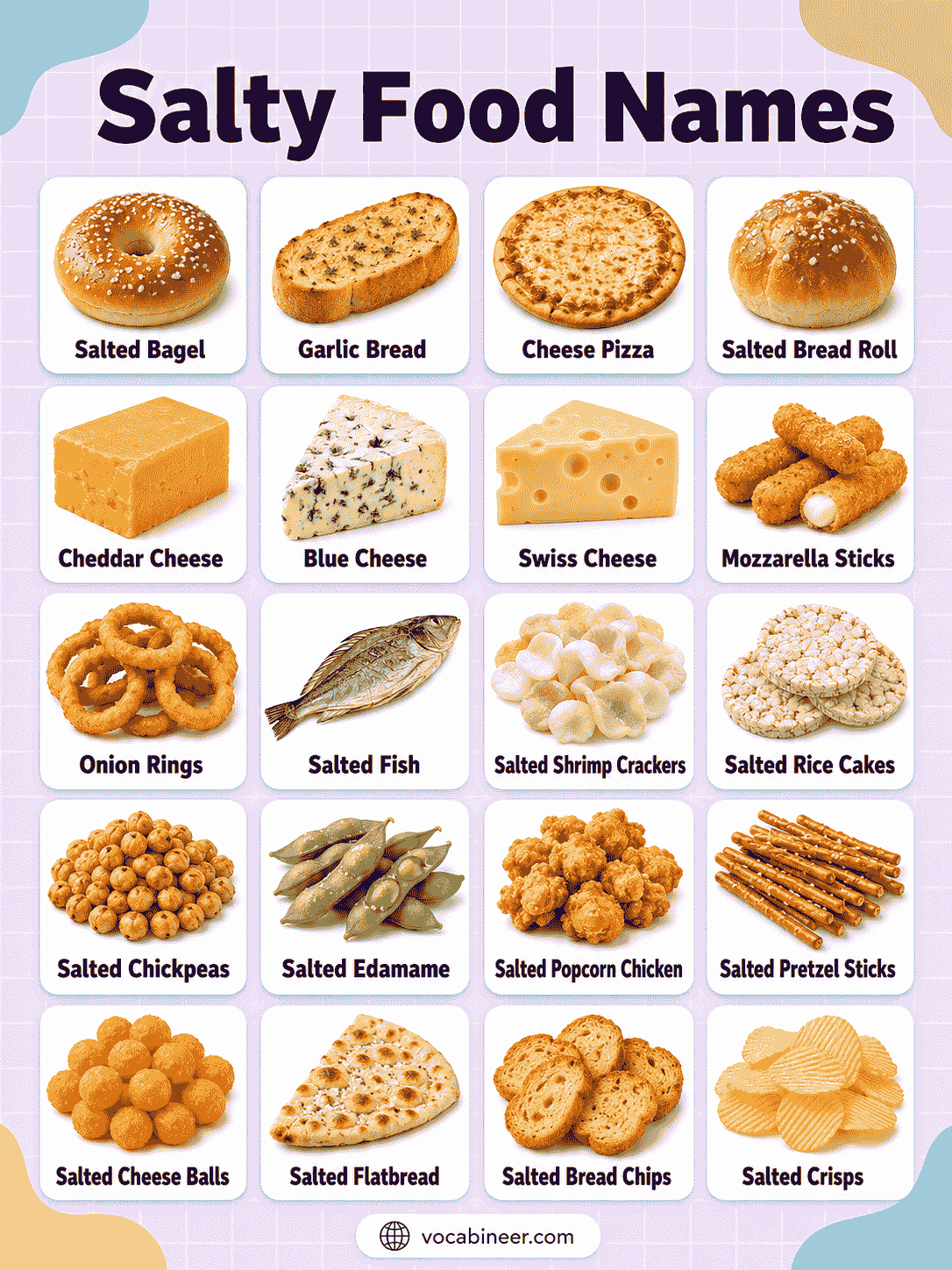
Two products with the same name may deliver noticeably different levels of saltiness. Manufacturers, cooks, and preservation methods all influence the final taste.
- Recipe: Makers use different quantities of salt, brine, and seasoning.
- Brand: One cracker, cheese, or jerky brand may taste saltier than another.
- Brine strength: A stronger brine often creates more concentrated saltiness.
- Curing time: Longer curing can reduce moisture and intensify flavor.
- Rinsing: Water can remove some surface salt from feta, olives, and capers.
- Soaking: Soaking salt cod can draw out salt and restore moisture.
- Added sauces: Soy sauce, cheese sauce, and salty dressings can change the taste of a whole dish.
- Reduced-sodium formulas: These products contain less sodium than comparable standard versions, though they may still taste salty.
- Other flavors: Sugar, acidity, fat, spices, and umami may soften or intensify perceived saltiness.
Because products vary, accurate descriptions use words such as often, commonly, usually, may, and can rather than claiming that every version tastes identical.
Salty Taste vs. Sodium on Food Labels
A person cannot determine the exact sodium content of a food by taste alone. Some products contain sodium without tasting strongly salty, while concentrated condiments may deliver an intense salty taste in a small amount.
Packaged foods show sodium on the Nutrition Facts label. Readers should check both the sodium amount per serving and the listed serving size. Eating several servings increases total sodium intake even though the flavor of each bite remains unchanged.
Taste still supports vocabulary learning. Pretzels, anchovies, soy sauce, feta, and pickles commonly taste salty. Plain rice, fresh fruit, unsalted nuts, and unseasoned fresh meat do not usually belong in this category.
Anyone following a medically prescribed sodium limit should rely on product labels and guidance from a qualified health professional rather than flavor alone.
Salty Food Words That Learners Often Confuse
Several salty foods share similar colors, shapes, ingredients, or preservation methods. These focused comparisons help readers choose the most accurate English term.
Plain Nuts and Salted Nuts
Plain peanuts, cashews, pistachios, almonds, and walnuts do not automatically taste salty. Without added seasoning, they may taste mild, nutty, sweet, earthy, or roasted.
The word salted matters when salt defines the product. Therefore, salted peanuts and salted pistachios communicate the intended flavor more accurately than the broad names peanuts and pistachios.
Feta, Halloumi, and Parmesan
Feta has a crumbly texture, and cheesemakers commonly keep it in brine. Halloumi has a firmer structure, so cooks can grill or pan-cook thick slices without melting them completely.
Parmesan differs from both because aging gives it a hard, granular texture. People usually grate it, and its flavor combines saltiness with pronounced umami.
Fresh Fish, Anchovies, and Brined Sardines
Fresh fish does not automatically taste intensely salty. Its flavor depends on species, freshness, seasoning, cooking method, and added sauces.
Processors commonly cure anchovies with salt, which creates their concentrated flavor. Sardines may come in water, oil, tomato sauce, or brine, so sardines in brine identifies the salty preparation clearly.
Salted Duck Eggs and Other Preserved Eggs
Salt or brine gives a salted duck egg its firm white, rich orange yolk, and distinctive salty flavor. An ordinary hard-boiled egg does not develop the same texture or taste.
A century egg uses a different preservation process and develops a dark translucent white with a creamy green-gray yolk. A pickled egg usually sits in vinegar or seasoned brine, so the three terms do not function as synonyms.
Bouillon, Broth, and Bouillon Cubes
Broth is a seasoned liquid that people may drink alone or use as a soup base. Bouillon can name a similar clear liquid, but American grocery labels also apply the word to concentrated products.
A bouillon cube contains concentrated seasonings that dissolve in water or melt into food. The dry cube itself does not represent a complete bowl of soup.
FAQs
Common salty foods include potato chips, pretzels, saltine crackers, salted popcorn, salted nuts, feta, Parmesan, bacon, salami, olives, pickles, anchovies, smoked salmon, soy sauce, and miso paste.
No. Salty describes a basic taste associated mainly with salt. Savory is a broader everyday term for rich, non-sweet foods, so roast chicken can taste savory without tasting strongly salty.
Briny describes a salty quality associated with brine or seawater. Olives, capers, pickles, feta, oysters, and preserved seafood may have briny flavors.
No. Salty describes the flavor that a person perceives, while sodium is a mineral measured on food labels. Because taste cannot reveal an exact amount, the Nutrition Facts label provides more reliable information.
Brands use different recipes, salt quantities, brine strengths, seasonings, curing times, and preparation methods. Reduced-sodium formulas, rinsing, and soaking can also change the final taste.
Read More
- Baking Tools Name
- Healthy Foods Name
- Bakery Items Names
- Sour Food Names
- Sweet Food Names
- Crockery Items Names