A splash of milk can soften strong coffee, add richness to a sauce, or make a bowl of cereal taste smooth and comforting. However, not every carton offers the same flavor, thickness, sweetness, or cooking performance.
The many types of milk include dairy milk from animals, cow’s milk with different fat levels, shelf-stable products, concentrated forms, and plant-based alternatives. Once you understand what each name means, you can recognize milk varieties more easily and choose the right one for drinking, baking, cooking, or storing.
In This Page
What Is Milk?
Milk is the liquid that female mammals naturally produce to feed their young. In everyday American English, the word milk usually means cow’s milk unless the label names another animal, such as a goat, sheep, buffalo, or camel.
Plant-based milk does not come from an animal. Instead, producers combine water with an ingredient such as soybeans, oats, almonds, rice, peas, or seeds. Although people use these beverages much like dairy milk, their flavor, protein, fat, sweetness, and texture can differ widely.
Pronunciation
- 🔊 Milk /mɪlk/
- 🔊 Dairy /ˈder.i/
- 🔊 Lactose /ˈlæk.toʊs/
- 🔊 Pasteurized /ˈpæs.tʃə.raɪzd/
- 🔊 Homogenized /həˈmɑː.dʒə.naɪzd/
What Makes Milk Types Different?
A milk label may describe its source, fat level, processing method, physical form, or a special product feature. Therefore, two cartons can share one quality while differing in several others.
| Label category | What it tells you | Familiar examples |
|---|---|---|
| Source | The animal or plant ingredient | Cow, goat, oat, almond |
| Fat content | How much milkfat remains | Whole, 2%, 1%, skim |
| Processing | How producers treat the milk | Pasteurized, homogenized, UHT |
| Physical form | Whether producers remove water | Evaporated, condensed, powdered |
| Special feature | A dietary or production detail | Lactose-free, A2, organic |
| Flavor | An added taste | Chocolate, strawberry, vanilla |
Milk from Different Animals
People around the world drink milk from several domesticated animals. Because every species produces milk with a different natural composition, the flavor, richness, texture, and best culinary uses also change.
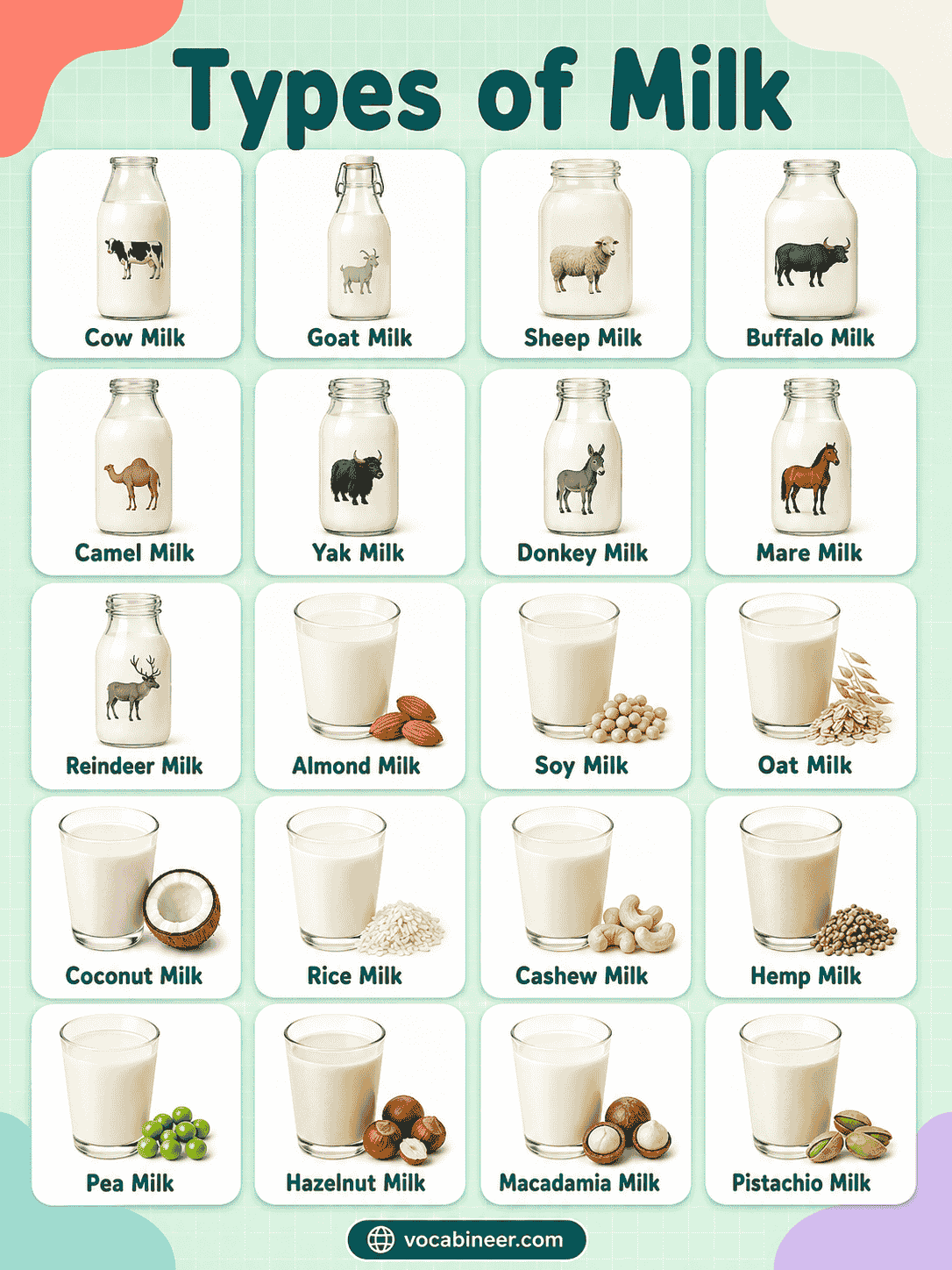
Cow’s milk is the most familiar dairy choice in U.S. grocery stores. Its mild flavor works well in cereal, coffee, smoothies, soups, sauces, desserts, and baked foods, while dairy producers also turn it into cheese, yogurt, butter, and cream.
Goat milk has a creamy texture with a flavor that may taste earthy, tangy, or slightly sweet. Although some people drink it fresh, it also appears frequently in yogurt and cheeses with a distinctive savory character.
Buffalo milk feels noticeably rich because it contains more fat and milk solids than standard cow’s milk. As a result, it creates a dense texture in yogurt, butter, desserts, and traditional buffalo mozzarella.
Sheep milk offers a concentrated combination of fat, protein, and milk solids. Rather than appearing widely as an everyday drink, it commonly becomes rich yogurt and flavorful cheeses such as feta, pecorino, and Roquefort.
Camel milk remains an important food in many desert and dry-climate regions. Its texture resembles cow’s milk in several ways, though some varieties have a slightly salty or distinctly earthy flavor.
Yak milk has a full body and a high concentration of milk solids. In mountain communities, people often use it for butter, cheese, fermented dairy foods, and rich milk tea.
Mare milk comes from female horses and has a lighter texture than sheep or buffalo milk. Since it does not produce firm cheese easily, people more often drink it fresh or use it in fermented beverages.
Donkey milk has a thin body and a mild flavor. It remains uncommon in mainstream American stores, so shoppers usually encounter it as a regional, specialty, or limited-production dairy product.
Dairy Milk by Fat Content
Standard cow’s milk appears in several fat levels. While the basic milk remains similar, the amount of milkfat changes its richness, mouthfeel, flavor, color, and behavior in recipes.
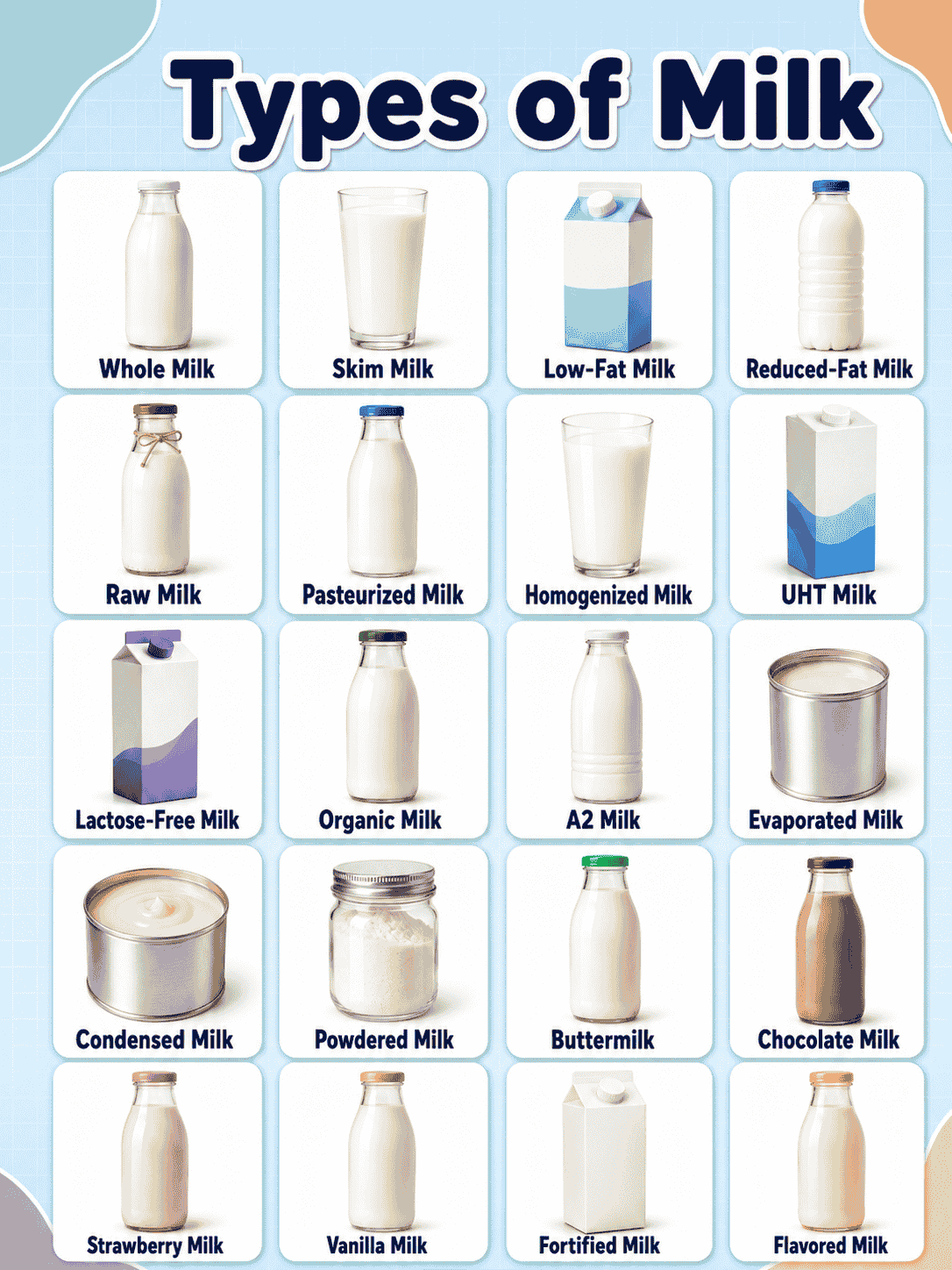
Whole milk contains about 3.25% milkfat in the United States. Its creamy body makes it a dependable choice for drinking, coffee, custards, mashed potatoes, soups, sauces, and baked goods that benefit from extra richness.
Reduced-fat milk usually carries a 2% milk label. It tastes lighter than whole milk, yet it still provides enough body for cereal, drinks, smoothies, soups, and general cooking.
Low-fat milk commonly appears as 1% milk. Because it contains less fat, it feels thinner than whole or 2% milk and adds less richness to coffee, desserts, and creamy dishes.
Skim milk has almost all its milkfat removed. Stores may also call it nonfat milk or fat-free milk, and its light consistency suits people who want dairy milk without the fuller body of higher-fat varieties.
How Processing Changes Milk
Processing can improve safety, prevent separation, extend storage life, or change milk’s consistency. Moreover, one carton may carry several processing terms because each method performs a different job.
Raw milk has not gone through pasteurization. Since untreated milk can carry harmful microorganisms, it requires careful handling and presents a greater food-safety risk than pasteurized milk.
Pasteurized milk receives controlled heat treatment that destroys harmful microorganisms. It still requires refrigeration, but pasteurization makes ordinary drinking milk considerably safer.
Homogenized milk goes through a mechanical process that breaks large fat droplets into much smaller ones. Consequently, the cream stays distributed through the liquid instead of quickly forming a thick layer at the top.
Ultra-pasteurized milk receives more intense heat treatment than conventionally pasteurized milk. This process extends its refrigerated shelf life before opening, although stores still sell it from a chilled case.
UHT milk undergoes ultra-high-temperature treatment and enters sterile, airtight packaging. Therefore, an unopened carton can remain at room temperature for months, but the milk needs refrigeration after opening.
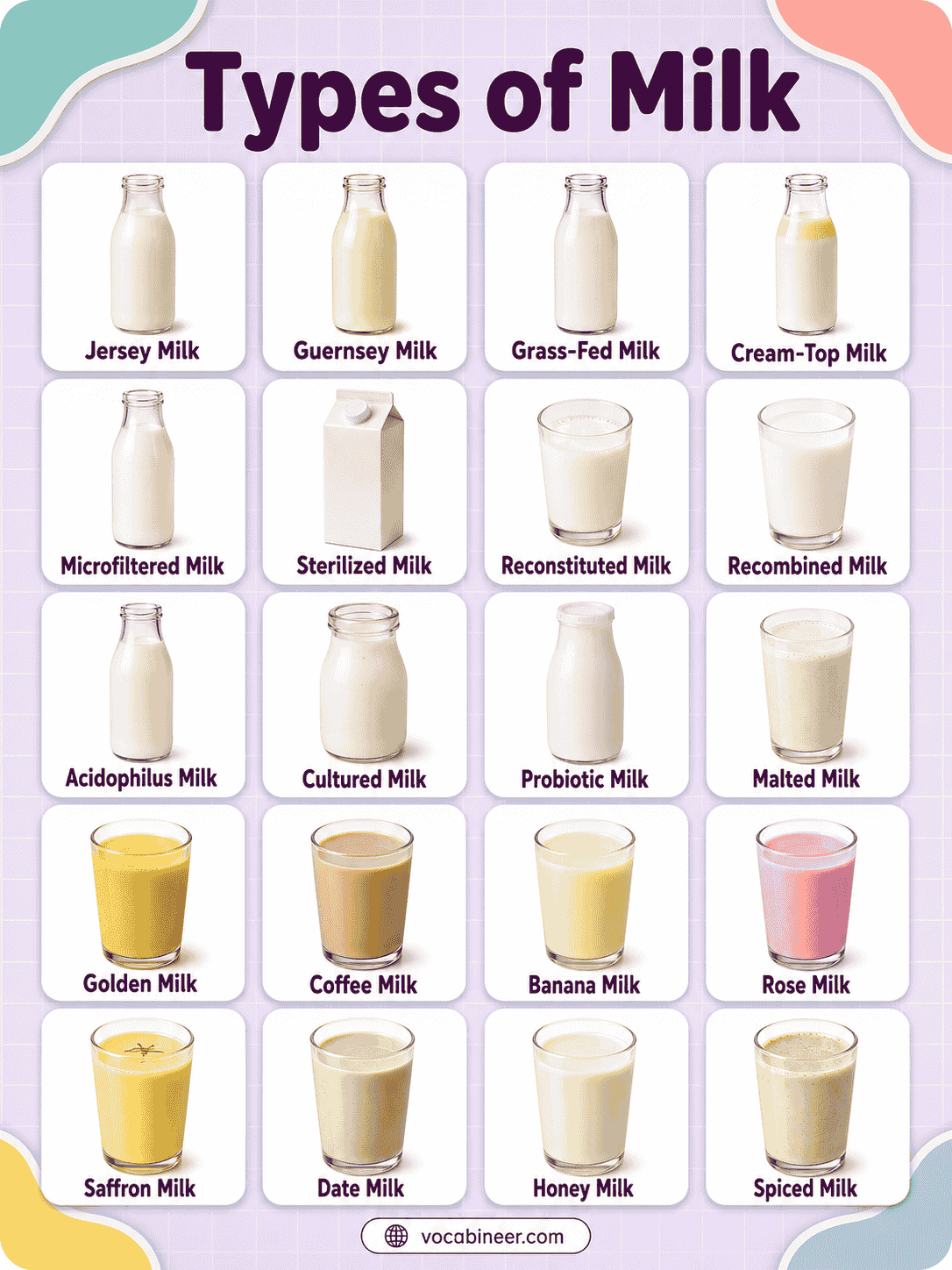
Cream-top milk does not go through homogenization. As the container rests, the cream naturally rises, so shaking or stirring the milk blends the rich top layer back into the liquid.
Filtered milk passes through specialized filters that separate or concentrate selected components. Depending on the product, filtration may reduce lactose, increase protein, or help the milk remain fresh longer under refrigeration.
Concentrated and Dried Milk
Removing water gives milk a thicker texture or a longer storage life. However, sweetness and concentration vary, so these products cannot automatically replace one another in recipes.
Evaporated milk is unsweetened dairy milk with part of its water removed. Its concentrated body and mildly cooked flavor add richness to soups, casseroles, sauces, custards, pumpkin pie, and creamy drinks.
Sweetened condensed milk combines concentrated milk with a large amount of sugar. Because it is thick, sticky, and intensely sweet, it belongs in fudge, pies, caramel, no-churn ice cream, coffee drinks, and layered desserts rather than savory recipes.
Powdered milk, also called dry milk, contains very little moisture. You can mix it with water for drinking or add the powder directly to bread dough, cake mixes, sauces, drink powders, and emergency food supplies.
Malted milk powder usually combines dried milk ingredients with malted barley and wheat flour. Its toasted sweetness gives milkshakes, cookies, candies, cakes, and hot drinks a recognizable malt flavor.
Specialty Dairy Milk
Specialty labels may describe a change in the milk, the cows that produced it, or the farming method behind it. For instance, lactose-free, organic, and A2 milk still belong to the dairy category, but each term identifies a different feature.
Lactose-free milk is dairy milk in which producers break down lactose, the natural sugar found in milk. It can help people who have trouble digesting lactose; however, it still contains dairy proteins and is not suitable for someone with a milk allergy.
A2 milk comes from selected cows whose milk contains only the A2 form of beta-casein rather than both A1 and A2 forms. Despite the special protein label, it usually contains lactose unless the package also says lactose-free.
Organic milk comes from farms that follow certified organic production standards. The term refers to farming and livestock-management practices, not to the milk’s fat level, lactose content, or processing method.
Grass-fed milk comes from cows whose diets include a defined amount of grass or forage. Nevertheless, feeding claims vary by certification, so shoppers should read the complete package instead of assuming that grass-fed and organic mean the same thing.
Flavored milk includes ingredients that create tastes such as chocolate, strawberry, vanilla, or banana. Many flavored products also contain added sugar, which makes the Nutrition Facts label especially useful.
Cultured milk develops when beneficial cultures ferment part of the lactose and create acidity. This process gives cultured dairy products a tangy flavor and can also make their texture thicker or smoother.
Buttermilk in modern American grocery stores is usually cultured milk rather than liquid left over from homemade butter making. Its acidity gives pancakes, biscuits, cakes, marinades, and quick breads a tender texture and gentle tang.
Plant-Based Milk Alternatives
Plant-based milk begins with nuts, grains, legumes, seeds, or coconut blended or processed with water. However, brands often add oils, sweeteners, salt, stabilizers, vitamins, or minerals, so two products made from the same plant may perform very differently.
Almond milk has a light consistency and a mild nutty flavor. Unsweetened varieties suit cereal, smoothies, cold drinks, and many baked foods, although they usually add less body than whole dairy milk.
Oat milk generally feels smooth and creamy, with a mild cereal-like sweetness. Because of its fuller body, it works especially well in coffee, hot chocolate, cereal, smoothies, sauces, and baking.
Soy milk comes from soybeans and usually contains more protein than most common nut or grain beverages. Its balanced structure makes unsweetened soy milk useful in drinks, baking, sauces, soups, and many recipes that normally use dairy milk.
Coconut milk beverage comes in refrigerated or shelf-stable cartons for everyday drinking. Producers dilute the coconut base, so it feels lighter than canned coconut milk and works in cereal, coffee, smoothies, and cold drinks.
Canned coconut milk contains a much more concentrated combination of coconut and water. As a result, it creates the thick, rich texture needed in curries, soups, sauces, puddings, and tropical desserts.
Rice milk has a thin body and a naturally mild, slightly sweet grain flavor. It works in cereal, smoothies, and light drinks, but it adds less protein and creaminess than dairy, soy, or richer oat beverages.
Cashew milk has a gentle nut flavor and can range from thin to noticeably creamy. Richer versions blend smoothly into soups, sauces, coffee, smoothies, and desserts.
Macadamia milk offers a soft buttery flavor with a smooth finish. It pairs naturally with coffee, cocoa, cereal, and desserts, although its nutty taste may stand out in delicate savory dishes.
Hazelnut milk has a stronger toasted aroma than many other nut beverages. Therefore, it complements coffee, chocolate, baked goods, and sweet breakfast foods better than recipes that need a completely neutral flavor.
Pea milk usually relies on protein extracted from yellow peas rather than blended green peas. Many commercial versions aim to provide a creamy texture and more protein than typical almond or rice milk.
Hemp milk comes from hemp seeds and has an earthy, slightly nutty or grassy flavor. It can suit cereal, smoothies, savory dishes, and strongly flavored baking where its seed-like character will not overpower other ingredients.
Flax milk uses flaxseeds as its main plant ingredient. Its flavor usually remains mild, but brands vary in thickness, added protein, fortification, sweetness, and overall texture.
Sesame milk has a recognizable seed flavor that can taste toasted, nutty, or slightly bitter. It pairs well with cocoa, coffee, smoothies, warm spices, and recipes that already include sesame.
Sunflower seed milk provides an alternative for people who avoid dairy and tree nuts but can safely eat sunflower seeds. Depending on the formula, it may taste mild and creamy or retain a stronger roasted-seed note.
Blended plant milk combines two or more plant sources, such as oat and pea or almond and coconut. Producers create these blends to balance flavor, creaminess, protein, foaming ability, and heat stability.
How Milk Changes Flavor and Texture
Source, fat, protein, sugar, processing, and added ingredients all influence the way milk tastes and feels. Therefore, the richest option is not always the best choice for every drink or dish.
| Milk type | Usual body | Typical flavor | Useful qualities |
|---|---|---|---|
| Whole milk | Full and creamy | Mild dairy flavor | Adds richness and smoothness |
| Skim milk | Thin and light | Mild but less rich | Keeps drinks and recipes lighter |
| Evaporated milk | Thick and concentrated | Slightly cooked | Builds body without added sugar |
| Condensed milk | Very thick | Intensely sweet | Sweetens and thickens desserts |
| Goat milk | Creamy | Earthy or tangy | Adds distinctive dairy flavor |
| Oat milk | Smooth and medium-bodied | Mildly sweet | Works well in coffee and cereal |
| Almond milk | Light | Gently nutty | Suits cold drinks and light baking |
| Soy milk | Medium-bodied | Mild bean or neutral flavor | Offers structure in cooking and baking |
| Rice milk | Thin | Light and slightly sweet | Keeps flavors delicate |
| Canned coconut milk | Very rich | Clear coconut flavor | Thickens curries, sauces, and desserts |
Matching Milk to Drinks
The right choice depends on the drink’s temperature, flavor, and desired texture. In addition, products designed for coffee often contain ingredients that improve foaming and reduce separation.
| Drink | Milk choices that often work well | What to consider |
|---|---|---|
| Plain drinking | Cow’s, goat, lactose-free, soy, oat, almond | Personal taste, sweetness, allergies |
| Coffee | Whole, 2%, oat, soy, barista blends | Body, foam, heat stability |
| Tea | Dairy, oat, soy, mild nut milk | Neutral flavor and resistance to separation |
| Hot chocolate | Whole, oat, soy, cashew | Richness and compatibility with cocoa |
| Cereal | Dairy or most plant-based options | Preferred sweetness and thickness |
| Smoothies | Dairy, soy, oat, almond, coconut beverage | Flavor match with fruit and other ingredients |
| Milkshakes | Whole, evaporated, oat, cashew | Creaminess and thickness |
| Protein drinks | Dairy, soy, pea | Protein level and added sweeteners |
How Milk Performs in Recipes
Milk contributes more than moisture. Its fat can add richness, its protein can help with structure and browning, and its natural or added sugar can influence sweetness.
| Recipe use | Suitable milk choices | Important detail |
|---|---|---|
| Creamy soup | Whole, evaporated, oat, cashew | Choose an unsweetened, neutral flavor |
| Savory sauce | Whole, evaporated, soy, oat | Avoid vanilla-flavored products |
| Bread | Dairy, soy, oat, almond | Slight sweetness may affect flavor |
| Cakes and muffins | Dairy, soy, oat, almond | Keep the thickness close to the recipe’s expectation |
| Custard | Whole or evaporated milk | Dairy fat and protein support a reliable texture |
| Pancakes and biscuits | Buttermilk, dairy, soy | Acidity and thickness can change the rise |
| Curry | Canned coconut milk | A carton coconut beverage is usually too thin |
| Pudding | Whole, evaporated, soy, coconut | Different proteins may change the setting |
| Mashed potatoes | Whole, evaporated, unsweetened oat | Richer milk creates a creamier result |
| Frozen desserts | Whole, condensed, coconut, oat | More fat or sugar generally creates a softer texture |
Milk Labels That Often Cause Confusion
Several milk terms sound interchangeable even though they describe different ingredients, processes, or dietary concerns. Reading the full label prevents shopping mistakes and unsuitable recipe substitutions.
| Commonly confused labels | The key difference |
|---|---|
| Lactose-free and dairy-free | Lactose-free milk remains dairy; dairy-free products contain no dairy milk |
| Lactose intolerance and milk allergy | Intolerance affects lactose digestion; allergy involves an immune reaction to milk proteins |
| Pasteurized and homogenized | Pasteurization improves safety; homogenization keeps milkfat evenly distributed |
| UHT and ultra-pasteurized | UHT milk can remain shelf-stable in sterile packaging; ultra-pasteurized milk often stays refrigerated |
| Evaporated and condensed | Evaporated milk is unsweetened; sweetened condensed milk contains a large amount of sugar |
| Whole milk and 2% milk | Whole milk contains more milkfat; 2% milk is reduced-fat |
| Skim and nonfat milk | Both names usually refer to the lowest-fat standard dairy choice |
| A2 and lactose-free milk | A2 describes a protein type; lactose-free describes the milk sugar |
| Organic and grass-fed milk | Organic follows certified production standards; grass-fed focuses on the cows’ diet |
| Coconut beverage and canned coconut milk | The beverage suits drinking; the canned form provides concentrated richness |
| Shelf-stable and opened milk | Shelf-stable milk can stay unrefrigerated only while the package remains sealed |
FAQs
The main groups include milk from animals, dairy milk classified by fat content, processed milk, concentrated or dried milk, specialty dairy products, and plant-based alternatives.
Whole milk contains more milkfat, so it tastes richer and feels creamier. Skim milk has almost all its fat removed, which gives it a thinner body.
Yes. It still comes from an animal, usually a cow, but producers break down its lactose. Because it retains milk proteins, it is not the same as a dairy-free product.
Whole milk creates a rich texture, while oat milk, soy milk, and barista-style blends can also provide good body and foam. Results vary by brand and formulation.
No. Protein, fat, sugar, calcium, vitamin D, and calories can vary greatly by plant source and brand, so comparing labels gives the clearest information.
Read More
- Baking Tools Name
- Healthy Foods Name
- Bakery Items Names
- Types of Biscuits
- Sour Food Names
- Sweet Food Names
- Salty Food Names