Types of windows are the common window styles used in homes and buildings, and they differ by how they open, their shape, and their frame material. These window types include double-hung, sliding, casement, awning, hopper, picture, bay, bow, skylight, and other popular names people use for window designs.
In this post, you will learn types of windows in a clear order with names, short uses, and pictures where relevant. It covers window types by opening style, window shapes and designs, frame materials, and common home-area windows, so the topic is easier to recognize, compare, and remember.
In This Page
Main Types of Windows
Windows can be grouped in simple ways, such as how they open, their shape, and their frame material. Because each type fits a different need, learning the main window types makes window names easier to recognize and compare.
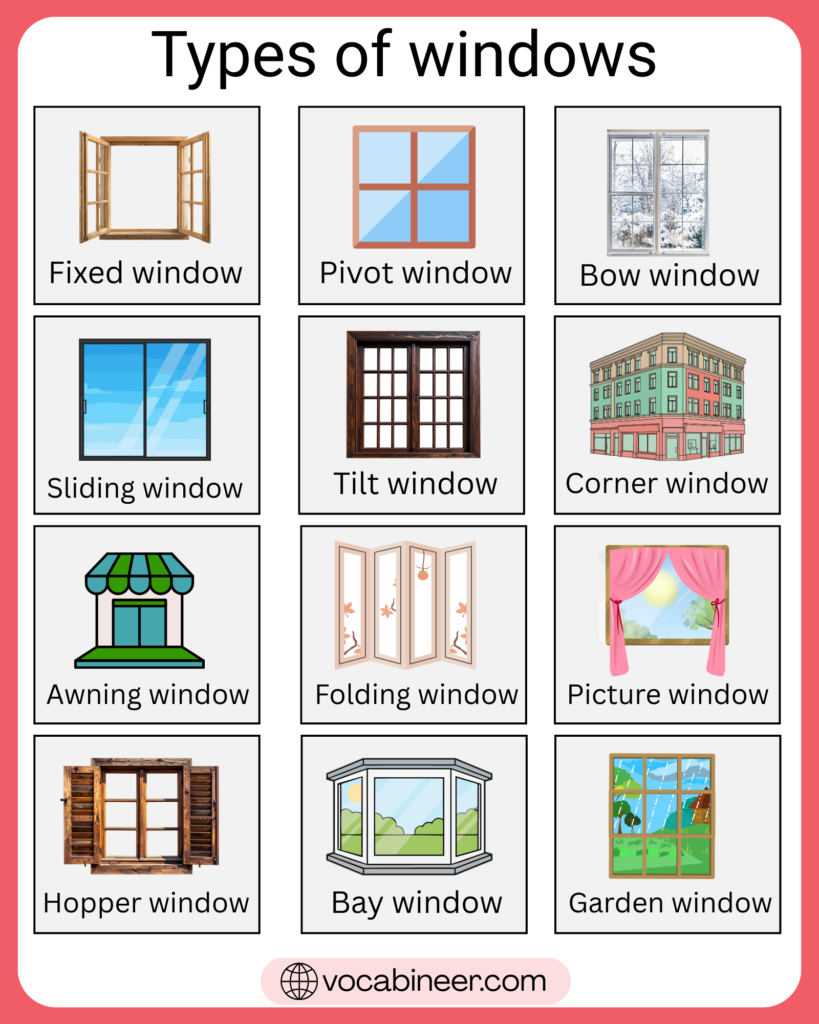
- Single-hung window: One sash moves up and down, while the other stays fixed.
- Double-hung window: Both sashes move, so it offers more airflow control.
- Sliding window: One panel slides sideways on a track, so it saves space.
- Casement window: Opens outward like a door using a side hinge for strong airflow.
- Awning window: Hinges at the top and opens outward, which helps during light rain.
- Hopper window: Hinges at the bottom and opens inward, often used in basements.
- Fixed window: Does not open and is used mainly for light and view.
- Picture window: A large fixed window made to frame outdoor views.
- Bay window: A window set that projects outward and adds space and light.
- Bow window: A curved window set made from several panels for a rounded look.
- Garden window: A small box-style window that projects outward for plants and light.
- Transom window: A small window placed above a door or larger window for extra light.
- Arched window: A window with a curved top that adds a decorative style.
- Glass block window: A thick glass window that gives light while keeping privacy.
- Skylight: A roof window that brings daylight from above into a room.
- Roof window: A roof-installed window that often opens for attic airflow and light.
Types of Windows by How They Open
How a window opens affects airflow, cleaning, and space use. For example, sliding and hung windows save space, while casement styles open wide for stronger ventilation.
Single-Hung and Double-Hung Windows
- Single-hung window: The bottom sash moves up, while the top sash stays fixed.
- Double-hung window: Both top and bottom sashes move, so you can control airflow better.
- Tilt-in double-hung window: A double-hung window that tilts inward for easier cleaning.
Sliding Windows
- Sliding window: A window with one or more panels that slide left or right on a track.
- Single-slider window: One panel moves while the other stays fixed, so it stays simple and easy to use.
- Double-slider window: Both panels slide, so it allows more flexible airflow control.
Casement Windows
- Casement window: A side-hinged window that opens outward like a door for strong ventilation.
- Single casement window: One casement panel that opens outward from one side.
- Double casement window: Two casement panels that open from the center for a wider opening.
Awning Windows
- Awning window: A top-hinged window that opens outward, so it can allow air in during light rain.
- Wide awning window: A longer awning style used above other windows for extra airflow.
- Awning combo window: An awning window used together with fixed or picture windows for light and ventilation.
Hopper Windows
- Hopper window: A bottom-hinged window that opens inward, often used in basements and small rooms.
- Basement hopper window: A hopper style made for basement spaces where safety and airflow matter.
- Small hopper window: A compact hopper window used in tight spaces for controlled ventilation.
Fixed and Picture Windows
- Fixed window: A window that does not open and is used mainly for daylight and views.
- Picture window: A large fixed window designed to frame an outdoor view and bring in more light.
- Fixed glass panel window: A fixed window panel used in modern designs for clean, simple looks.
Skylight and Roof Windows
- Skylight: A roof window that brings natural light from above into a room.
- Ventilated skylight: A skylight that opens, so it adds airflow as well as light.
- Roof window: A roof-installed window that often opens, especially in attic or loft spaces.
Types of Windows by Shape and Design
Window shape and design change how a window looks and how it fits the room. For example, some styles add extra space and a wide view, while others add privacy or a decorative top shape. Because of that, these designs are common in both modern and traditional homes.
Bay and Bow Windows
- Bay window: A window set that projects outward, so it adds space, light, and a wider view.
- Bow window: A curved window set made from several panels, which creates a rounded front look.
- Box bay window: A bay window with sharper angles that forms a more box-like shape.
Garden Windows
- Garden window: A small box-style window that projects outward and creates a mini shelf for plants.
- Kitchen garden window: A garden window often placed near sinks for sunlight and herb plants.
- Greenhouse-style window: A garden-style window that brings more light and supports indoor plants.
Transom Windows
- Transom window: A small window placed above a door or a larger window to add extra light.
- Fixed transom window: A transom window that stays closed and works mainly for daylight.
- Vent transom window: A transom window that opens for small airflow in some designs.
Arched and Round-Top Windows
- Arched window: A window with a curved top that adds a decorative and classic look.
- Round-top window: An arched-style window with a more rounded curve, often used above doors.
- Half-round window: A semi-circle window commonly placed above entry doors for extra light.
Glass Block Windows
- Glass block window: A window made from thick glass blocks that lets light in while keeping privacy.
- Bathroom glass block window: A common privacy window choice for bathrooms and shower areas.
- Basement glass block window: A sturdy basement window style that adds light and improves privacy.
Types of Windows by Frame Material
Window frame material affects strength, cost, and how the window handles weather. For example, some frames need more care, while others stay low-maintenance. Because of that, material choice matters for both indoor comfort and long-term use.
Vinyl Windows
- Vinyl window: A low-maintenance window frame type that resists moisture and does not need painting.
- Vinyl double-hung window: A popular vinyl option used in many homes for easy use and cleaning.
- Vinyl sliding window: A vinyl frame window that saves space and suits modern layouts.
Aluminum Windows
- Aluminum window: A strong frame type that suits modern designs and holds glass firmly.
- Aluminum sliding window: A common aluminum option used for smooth sliding and clean looks.
- Aluminum frame glass window: A window that uses aluminum framing to support larger glass panels.
Wood Windows
- Wood window: A classic frame type with a natural look that suits traditional home styles.
- Wood casement window: A wood-framed casement window used for strong ventilation and style.
- Wood sash window: A wood-framed sliding sash style, often seen in classic designs.
Fiberglass Windows
- Fiberglass window: A durable frame type that handles weather changes well and stays stable.
- Fiberglass casement window: A fiberglass window style that offers strong sealing and long life.
- Fiberglass picture window: A fixed fiberglass frame window used for wide views and light.
Composite Windows
- Composite window: A frame type made from mixed materials for strength and better insulation.
- Composite double-hung window: A common composite style used for comfort and energy performance.
- Composite frame window: A general composite option used for long-term durability and low upkeep.
Types of Windows for Common Home Areas
Different rooms often need different window types. For example, bathrooms need privacy, kitchens need easy ventilation, and living rooms often need larger windows for light. Because of that, this section groups common window types by home area.
Bathroom Windows
- Bathroom frosted window: A privacy window that lets light in while blocking clear visibility.
- Bathroom awning window: A top-hinged window that allows airflow while keeping more privacy.
- Bathroom glass block window: A thick glass window that brings light while staying private.
Kitchen Windows
- Kitchen sliding window: A space-saving window that opens easily above sinks and counters.
- Kitchen casement window: A side-hinged window that opens wide for strong ventilation.
- Kitchen garden window: A box-style window that adds a sunny shelf for herbs and plants.
Bedroom Windows
- Bedroom double-hung window: A common bedroom window that supports airflow control and easy cleaning.
- Bedroom casement window: A window that opens outward and seals well, so it suits quieter bedrooms.
- Bedroom sliding window: A simple option that saves space and works well in smaller rooms.
Living Room Windows
- Living room picture window: A large fixed window that brings in more light and wide outdoor views.
- Living room bay window: A projecting window style that adds space, light, and a wider angle view.
- Living room bow window: A curved window set that creates a softer, rounded front look.
Basement Windows
- Basement hopper window: A bottom-hinged window that opens inward for controlled ventilation.
- Basement glass block window: A privacy window that lets light in while keeping the basement more secure.
- Basement fixed window: A closed window used mainly for light when ventilation is not needed.
Window Names List
This quick list helps you scan common window names in one place. It is useful for recognition, label reading, and basic home vocabulary.
- Single-hung window
- Double-hung window
- Tilt-in double-hung window
- Sliding window
- Single-slider window
- Double-slider window
- Casement window
- Awning window
- Hopper window
- Fixed window
- Picture window
- Bay window
- Bow window
- Garden window
- Transom window
- Arched window
- Round-top window
- Half-round window
- Glass block window
- Skylight
- Roof window
- Vinyl window
- Aluminum window
- Wood window
- Fiberglass window
- Composite window
Casement vs Sliding vs Double-Hung Windows
These three window types are very common, yet each one opens differently. Casement windows swing outward, sliding windows move side to side, and double-hung windows move up and down. Because of that, the best choice depends on space, airflow needs, and cleaning preference.
| Window Type | How It Opens | Best For | Key Point |
|---|---|---|---|
| Casement | Opens outward on a hinge | Strong airflow and tight sealing | Opens wide and seals well |
| Sliding | Slides left or right | Space-saving layouts | Easy to operate on wide openings |
| Double-hung | Sashes move up and down | Bedrooms and general home use | Flexible airflow and easy cleaning |
FAQs
Common types include double-hung windows, sliding windows, casement windows, awning windows, and fixed or picture windows.
Casement windows often give strong ventilation because they open wide and direct air into the room.
Frosted windows, glass block windows, and small awning windows are common for bathrooms because they support privacy and airflow.
A picture window is usually larger and made for views, while a fixed window can be any size and is mainly used for light.
Vinyl and fiberglass frames are often easy to maintain because they resist moisture and do not need frequent painting.
Conclusion
Types of windows become easier to understand when you group them by how they open, their design, their frame material, and the room where they fit best. Because each window type serves a different purpose, the right choice can improve light, airflow, privacy, and comfort.
At the same time, learning window names builds stronger home vocabulary, especially when you compare common types like casement, sliding, and double-hung windows.
Read More