Food nouns are words we use for foods, drinks, meals, ingredients, snacks, and sweet items. These words help us talk about what we eat and drink in everyday English. Words like apple, rice, bread, and juice are all food nouns.
Because food is part of daily life, food nouns are some of the most useful words in English. We use them while shopping, cooking, ordering meals, talking about health, and describing favorite dishes. This article gives you a strong list of food nouns with grouped examples and simple sentence use.
In This Page
What Are Food Nouns?
Food nouns are naming words for things we eat and drink. They include fruits, vegetables, meals, snacks, sweets, drinks, and ingredients used in cooking.
These nouns help us describe food clearly in everyday English. Whether you are talking about breakfast, shopping at the market, reading a recipe, or ordering in a restaurant, food nouns are essential vocabulary.
For example:
- apple
- milk
- soup
- cake
- rice
- tea
Some food nouns are countable, which means we can count them one by one, such as apple or egg. Others are uncountable, which means we usually talk about them as a whole amount, such as rice, sugar, or milk.
Countable and Uncountable Food Nouns
One of the most useful grammar points in this topic is knowing whether a food noun is countable or uncountable. This helps learners use articles, numbers, and quantity words correctly.
Countable food nouns can be counted as separate items. Uncountable food nouns are usually treated as a mass, so we often use words like some, a little, or much with them.
| Type | Examples | Simple Use |
|---|---|---|
| Countable food nouns | apple, burger, egg, cookie, banana | can be counted individually |
| Uncountable food nouns | rice, sugar, milk, bread, cheese | usually treated as a mass, not as separate units |
For example:
- I ate an apple.
- She bought three eggs.
- We need some rice.
- Add a little sugar to the tea.
This short comparison gives the main grammar idea without turning the article into a worksheet.
List of 150 Food Nouns in English
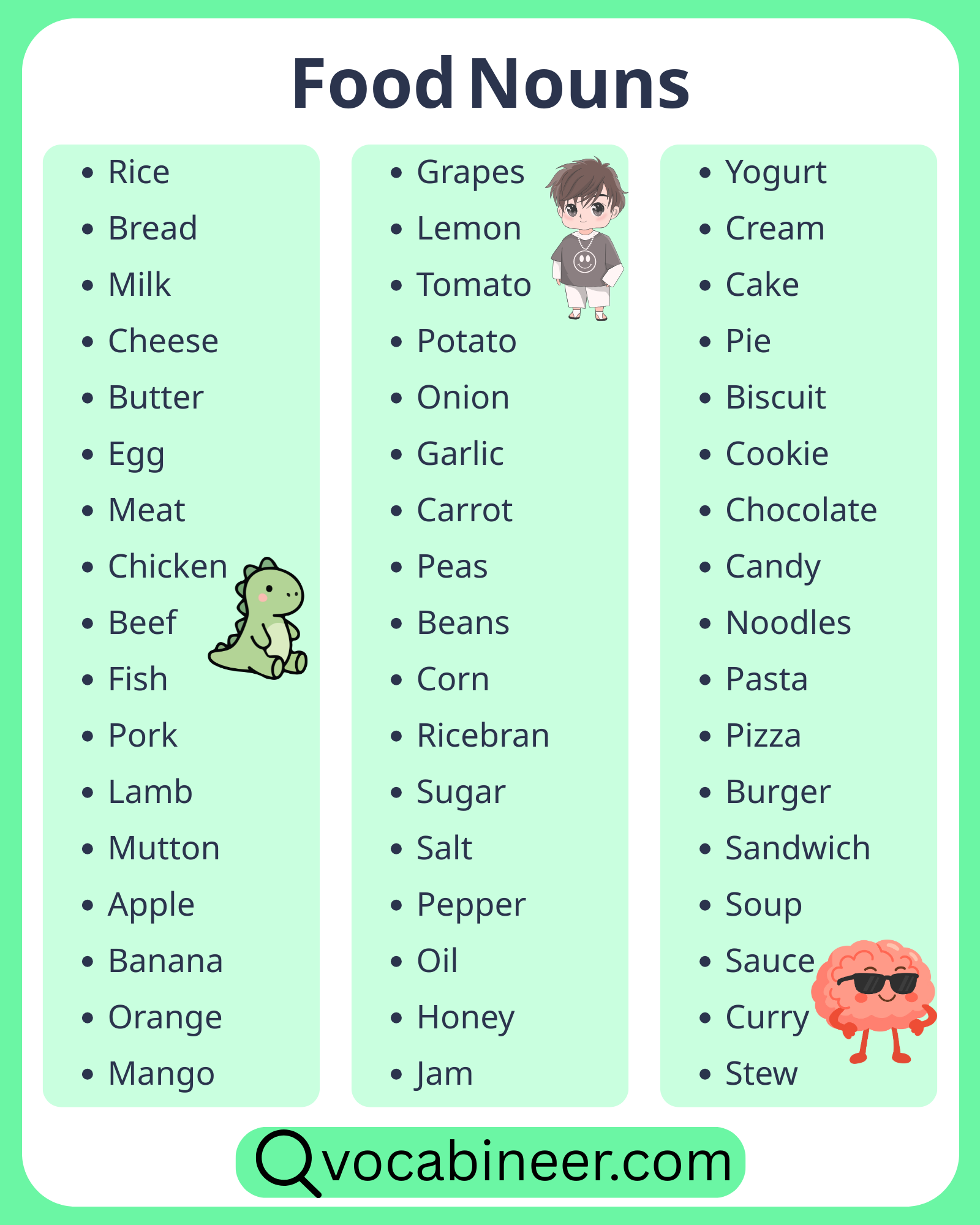
Below is a useful list of 150 food nouns in English. It includes everyday foods, drinks, ingredients, meals, snacks, and dishes that learners are likely to meet in daily life. The list is designed to stay practical and easy to scan, so the words can be used in real speaking and writing situations.
- Apple
- Banana
- Orange
- Mango
- Grape
- Pear
- Peach
- Pineapple
- Watermelon
- Melon
- Lemon
- Lime
- Strawberry
- Blueberry
- Raspberry
- Cherry
- Coconut
- Papaya
- Guava
- Fig
- Carrot
- Potato
- Tomato
- Onion
- Garlic
- Cabbage
- Cauliflower
- Broccoli
- Spinach
- Lettuce
- Cucumber
- Radish
- Beetroot
- Pumpkin
- Pea
- Bean
- Corn
- Chili
- Eggplant
- Mushroom
- Bread
- Rice
- Pasta
- Noodle
- Flour
- Sugar
- Salt
- Butter
- Cheese
- Cream
- Yogurt
- Milk
- Tea
- Coffee
- Juice
- Water
- Soup
- Salad
- Sandwich
- Burger
- Pizza
- Curry
- Stew
- Sauce
- Jam
- Honey
- Egg
- Omelet
- Sausage
- Chicken
- Beef
- Lamb
- Fish
- Prawn
- Crab
- Shrimp
- Tuna
- Salmon
- Sardine
- Cake
- Cookie
- Biscuit
- Candy
- Chocolate
- Donut
- Muffin
- Cupcake
- Pie
- Pudding
- Ice cream
- Chip
- Popcorn
- Cracker
- Peanut
- Almond
- Cashew
- Walnut
- Raisin
- Date
- Breakfast
- Lunch
- Dinner
- Snack
- Dessert
- Meal
- Toast
- Pancake
- Waffle
- Cereal
- Porridge
- Oatmeal
- Biryani
- Kebab
- Meatball
- Dumpling
- Roll
- Wrap
- Taco
- Fries
- Pastry
- Syrup
- Vinegar
- Oil
- Spice
- Herb
- Mayonnaise
- Ketchup
- Mustard
- Pickle
- Chutney
- Coconut milk
- Lentil
- Chickpea
- Barley
- Oat
- Wheat
- Rice cake
- Fruit salad
- Milkshake
- Smoothie
- Lemonade
- Soda
- Cola
- Scone
- Garlic bread
- Fried rice
- Noodle soup
- Tomato soup
- Fried chicken
- Gravy
Food Nouns for Fruits
Fruit nouns are some of the most familiar food words in English. They are easy to picture, common in daily speech, and useful in health, shopping, and meal vocabulary. This group helps learners build a strong foundation because fruit words appear often in beginner lessons and simple conversations.
Apple
I ate an apple after lunch.
Banana
She bought a banana from the shop.
Orange
The orange was sweet and juicy.
Mango
We had mango for dessert.
Grape
He washed the grapes before eating them.
Pear
The pear was soft and fresh.
Peach
She sliced a peach for breakfast.
Pineapple
The pineapple tasted sweet.
Watermelon
They shared a watermelon in the summer heat.
Strawberry
I added a strawberry to the cake.
Other useful fruit nouns from the main list include melon, lemon, lime, blueberry, raspberry, cherry, coconut, papaya, guava, fig, raisin, and date.
Food Nouns for Vegetables
Vegetable nouns are very important in cooking, healthy eating, shopping, and recipe vocabulary. They help learners describe ingredients more naturally and understand common food-related English. These words are especially practical because they appear often in markets, meal descriptions, and home cooking.
Carrot
The rabbit ate a carrot.
Potato
My mother cooked potato curry for dinner.
Tomato
He cut a tomato for the salad.
Onion
The onion made my eyes water.
Garlic
Add garlic to the soup for more flavor.
Cabbage
We bought a cabbage from the market.
Cauliflower
The cauliflower was fresh and clean.
Broccoli
She steamed broccoli for lunch.
Spinach
Spinach is rich in nutrients.
Cucumber
I put cucumber in the sandwich.
Food Nouns for Meals and Dishes
This section includes meal names and prepared dishes people commonly talk about at home, in restaurants, and in everyday English. These nouns are useful because they help learners talk about full meals, not only single ingredients. They also make the article more practical for speaking and writing about real eating situations.
Breakfast
We eat breakfast at seven o’clock.
Lunch
Her lunch was simple and healthy.
Dinner
The family had dinner together.
Soup
The soup was hot and tasty.
Salad
She made a fresh salad with tomatoes and lettuce.
Sandwich
I took a sandwich to school.
Burger
He ordered a burger and fries.
Pizza
The children shared a pizza.
Curry
My grandmother cooks delicious curry.
Stew
The stew smelled wonderful.
Food Nouns for Snacks and Sweets
Snack and sweet nouns are very common in spoken English, especially when talking about treats, parties, lunch boxes, desserts, or favorite foods. These words add everyday usefulness to the article. They are also helpful because many learners meet them often in casual conversation and food descriptions.
Cake
She baked a cake for my birthday.
Cookie
I ate a cookie with tea.
Biscuit
He bought a packet of biscuits.
Candy
The child received candy from her aunt.
Chocolate
She likes dark chocolate.
Donut
We had a donut in the evening.
Muffin
The muffin was warm and soft.
Cupcake
Each child got a cupcake at the party.
Pie
My mother made an apple pie.
Ice cream
The children wanted ice cream after dinner.
Other useful snack and sweet nouns include pudding, chip, popcorn, cracker, peanut, almond, cashew, walnut, pastry, and scone.
Food Nouns for Drinks and Ingredients
Drinks and ingredient nouns are essential because they appear in recipes, cafes, grocery shopping, and daily meal descriptions. Learners need these words often because they are part of both food vocabulary and basic conversation. This group includes both things we drink and things we use to prepare food.
Milk
The child drank a glass of milk.
Tea
My father drinks tea every morning.
Coffee
She ordered coffee at the cafe.
Juice
We had orange juice with breakfast.
Water
Please drink enough water every day.
Flour
The baker mixed flour with water.
Sugar
Add a little sugar to the tea.
Salt
The soup needs more salt.
Butter
Spread butter on the toast.
Cheese
The sandwich has cheese in it.
Food Nouns in Sentences
Sentence examples help learners understand how food nouns work in real English. They also make vocabulary easier to remember because each word appears in a clear and natural context. These simple examples are useful for speaking practice, classroom use, and beginner writing.
- I ate an apple after school.
- My mother cooked rice for dinner.
- She added sugar to the tea.
- We bought bread from the bakery.
- The children shared a pizza at lunch.
- He drank a glass of milk before bed.
- I put butter on the toast.
- They ordered soup and salad at the restaurant.
- The chef prepared chicken with rice.
- She packed a sandwich for work.
- We had ice cream after dinner.
- He sliced a tomato for the burger.
- The market sells fresh mangoes and bananas.
- My sister likes coffee, but I prefer juice.
- The soup needs a little salt.
FAQs
Food nouns are naming words for foods, drinks, ingredients, meals, and edible items. Words like apple, bread, milk, and rice are food nouns.
Countable food nouns can be counted one by one, such as egg or banana. Uncountable food nouns are usually treated as a mass, such as rice, sugar, or milk.
Some common examples are apple, bread, milk, rice, soup, pizza, salad, tea, cake, and chocolate.
Yes. Rice is a food noun, and it is usually an uncountable noun in English.
Food nouns are important because they help us talk about meals, shopping, cooking, restaurants, and daily life clearly and naturally.
Summary
Food nouns are words for foods, drinks, ingredients, meals, snacks, and sweets. They are an important part of everyday English because we use them in daily conversation, cooking, shopping, and writing.
In this article, you learned 150 food nouns in English, a simple comparison table, grouped sections, and sentence use. The best way to remember food nouns is to learn them by category and use them in everyday English sentences.
Read More
- List of Nouns in English
- Common Place Nouns in English
- Common Person Nouns in English
- Collective Nouns for Things in English