

A can of corn, tuna, beans, or peaches can stay in a pantry for months and still be ready when someone needs a quick meal. Canned foods are useful because they are sealed, shelf-stable, and easy to heat, serve, or add to everyday dishes.
This guide shares canned foods names in clear groups without turning the topic into a recipe list. You will find common canned food items, picture-friendly examples, simple meanings, pantry uses, label words, and basic choosing tips.
In This Page
What Are Canned Foods?
Canned foods are foods sealed inside metal cans or tins to help them last longer. Many canned foods are cooked or partly cooked before sealing, so they are usually quick to prepare. Some are ready to eat after heating, while others are used in soups, rice dishes, pasta, salads, sandwiches, sauces, or desserts.
Canned foods are also called canned goods or tinned foods in some places. Common examples include canned corn, canned beans, canned tuna, canned tomatoes, canned soup, canned peaches, canned chicken, and canned coconut milk.
Most Common Canned Food Names
These are some of the most familiar canned food items found in homes, grocery stores, pantry lists, classroom charts, and food vocabulary lessons.
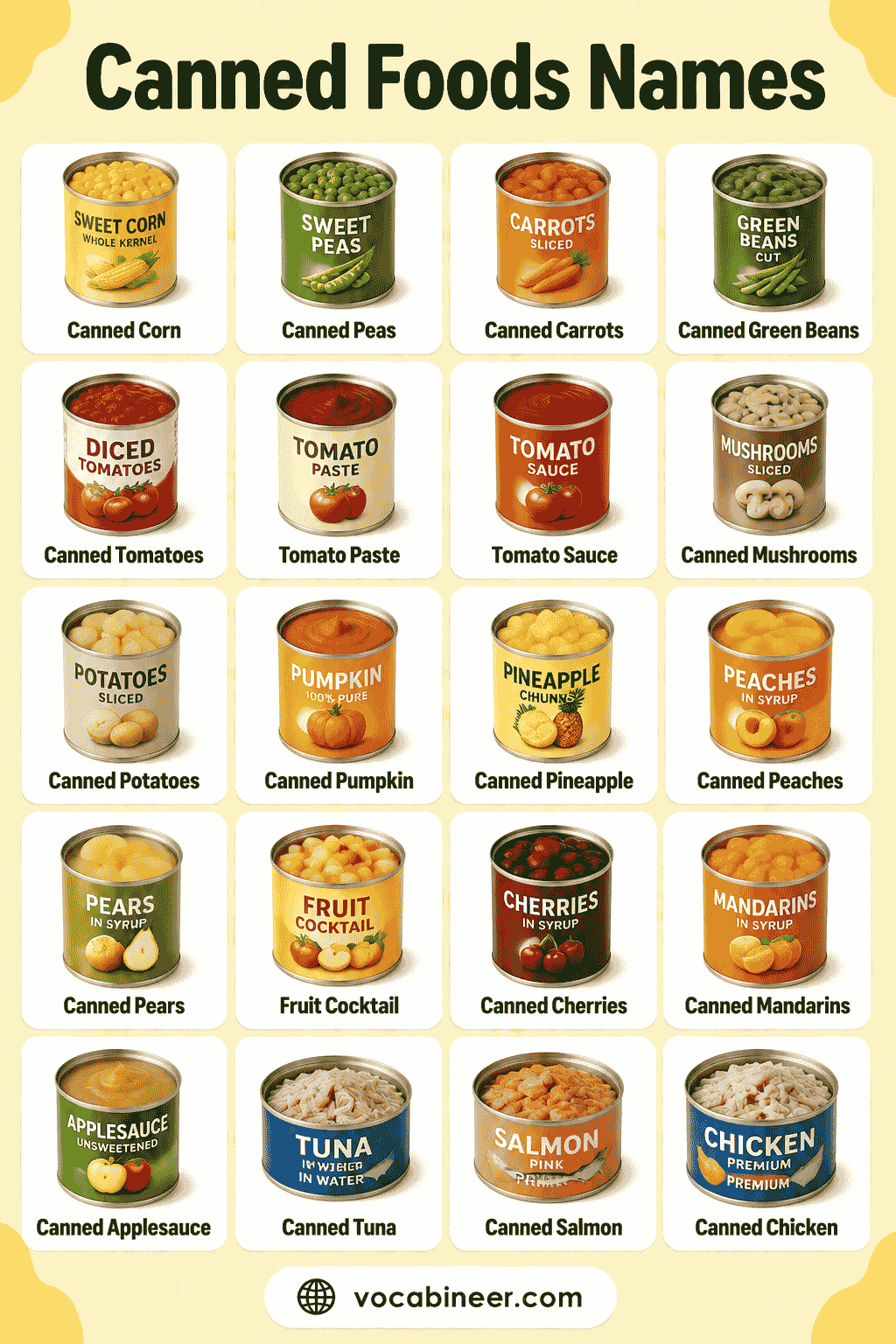
- canned corn
- canned peas
- canned carrots
- canned tomatoes
- canned green beans
- canned mushrooms
- canned pumpkin
- canned peaches
- canned pineapple
- canned pears
- canned fruit cocktail
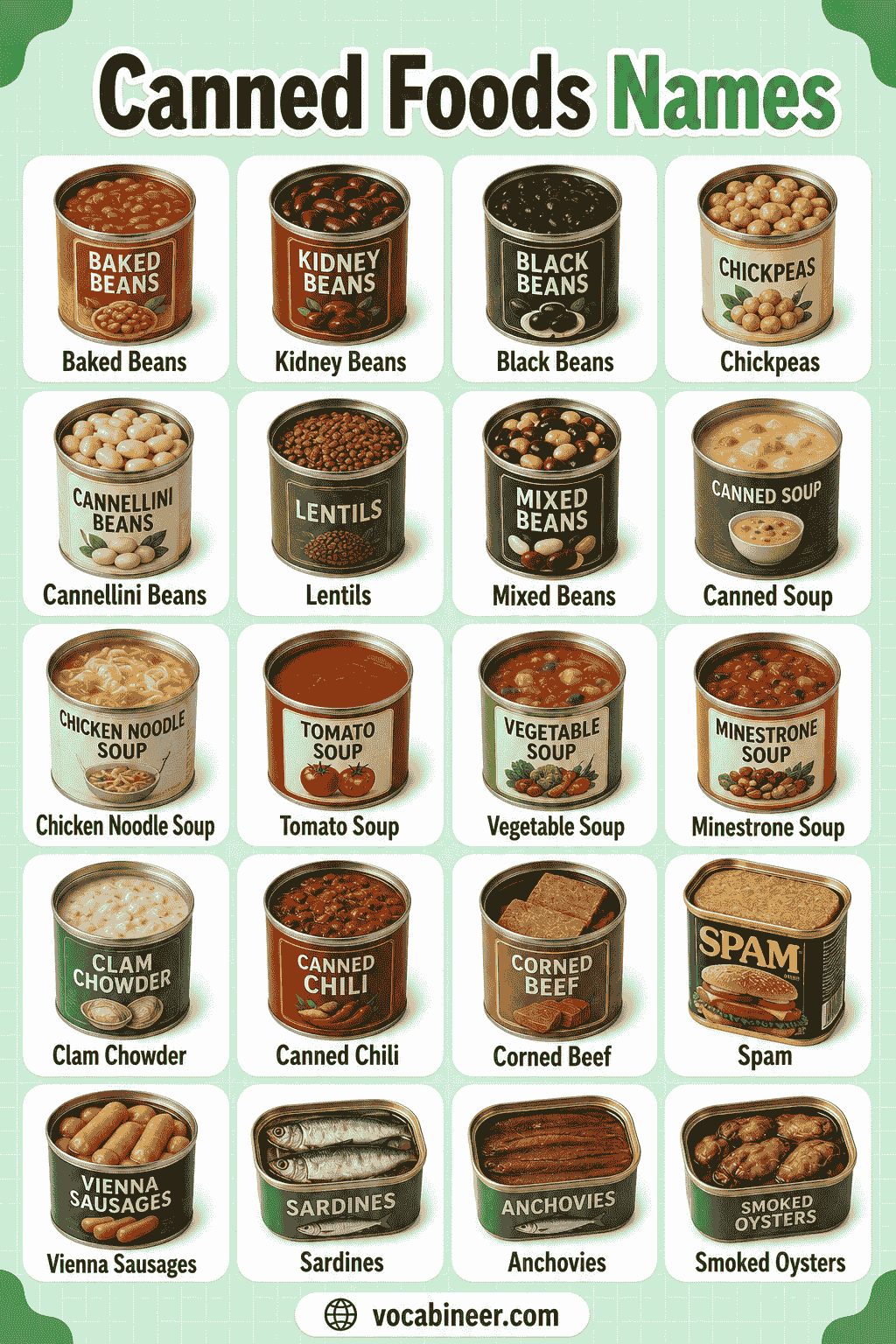
- canned black beans
- canned kidney beans
- canned chickpeas
- canned baked beans
- canned tuna
- canned salmon
- canned sardines
- canned chicken
- canned corned beef
- canned tomato soup
- canned vegetable soup
- canned chili
- canned tomato sauce
- canned tomato paste
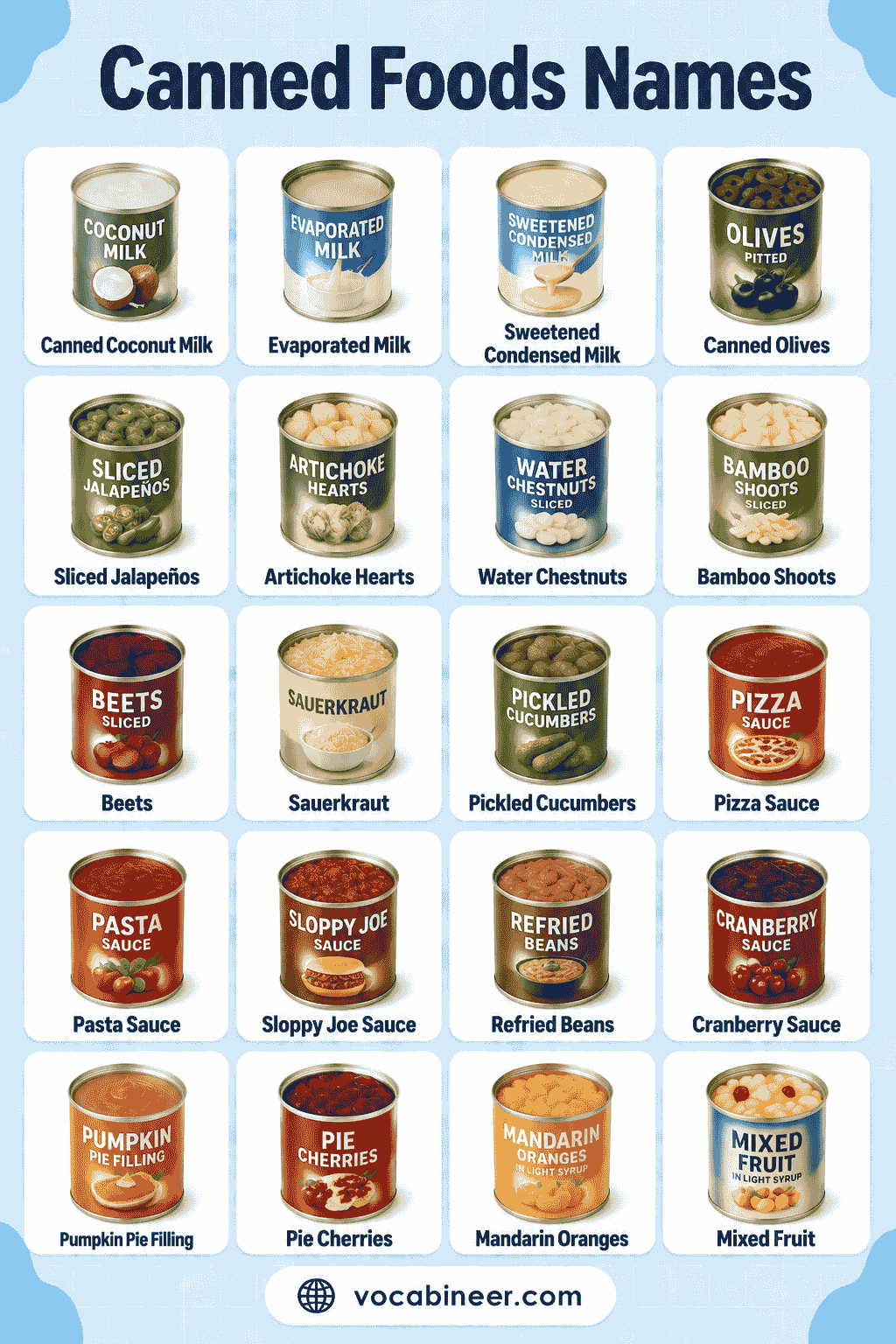
- canned coconut milk
- canned condensed milk
- canned evaporated milk
Everyday Pantry Canned Goods
Many people keep canned goods in the pantry because they last longer than fresh foods and help with quick cooking. These foods are useful for backup meals, side dishes, soups, sauces, sandwich fillings, and simple family dinners.
| Pantry Use | Common Examples |
|---|---|
| Side dishes | canned corn, canned peas, canned carrots, canned green beans |
| Quick proteins | canned tuna, canned salmon, canned chicken, canned beans |
| Meal bases | canned tomatoes, canned broth, canned soup, canned chili |
| Sweet foods | canned peaches, canned pineapple, canned fruit cocktail |
| Cooking sauces | canned tomato sauce, canned tomato paste, canned coconut milk |
| Baking and desserts | canned pumpkin, canned condensed milk, canned pie filling |
Vegetables Sold in Cans
Vegetables in cans are often soft, easy to heat, and simple to add to meals. They are used in soups, rice dishes, casseroles, pasta, stews, salads, and quick side dishes.
- canned corn
- canned peas
- canned carrots
- canned green beans
- canned tomatoes
- canned diced tomatoes
- canned crushed tomatoes
- canned potatoes
- canned mushrooms
- canned spinach
- canned pumpkin
- canned beets
- canned mixed vegetables
- canned sweet potatoes
- canned asparagus
- canned artichokes
- canned roasted peppers
- canned bamboo shoots
- canned water chestnuts
Fruits Sold in Cans
Fruit in cans is often packed in water, juice, light syrup, or heavy syrup. These foods are common in fruit salads, desserts, breakfast bowls, smoothies, baking, and quick snacks.
- canned peaches
- canned pineapple
- canned pears
- canned cherries
- canned mango
- canned apricots
- canned plums
- canned lychees
- canned mandarin oranges
- canned fruit cocktail
- canned applesauce
- canned cranberry sauce
- canned grapefruit
- canned guava
- canned figs
Beans and Legumes in Cans
Beans and legumes in cans are filling pantry foods. They work well in salads, soups, chili, rice bowls, tacos, wraps, stews, dips, and simple protein-rich meals.
- canned black beans
- canned kidney beans
- canned chickpeas
- canned lentils
- canned pinto beans
- canned navy beans
- canned cannellini beans
- canned baked beans
- canned butter beans
- canned refried beans
- canned black-eyed peas
- canned lima beans
- canned great northern beans
- canned mixed beans
- canned fava beans
Fish and Seafood in Cans
Fish and seafood in cans are often packed in water, oil, brine, or sauce. They are used in sandwiches, salads, pasta, rice dishes, spreads, snacks, and quick meals.
- canned tuna
- canned salmon
- canned sardines
- canned mackerel
- canned anchovies
- canned crab
- canned clams
- canned oysters
- canned mussels
- canned shrimp
- canned herring
- canned trout
- canned pilchards
Meat and Poultry in Cans
Meat and poultry in cans are usually cooked before canning. These foods can be used for sandwiches, stews, casseroles, rice dishes, pies, soups, and pantry meals.
- canned chicken
- canned beef
- canned corned beef
- canned ham
- canned turkey
- canned luncheon meat
- canned sausage
- canned meatballs
- canned pulled pork
- canned beef chunks
- canned chicken breast
- canned roast beef
- canned Vienna sausages
Ready Meals in Cans
Some canned foods are made as quick meals. They are usually heated and served, although some can also be used as a base for simple cooking.
- canned tomato soup
- canned chicken soup
- canned vegetable soup
- canned mushroom soup
- canned lentil soup
- canned bean soup
- canned noodle soup
- canned minestrone
- canned clam chowder
- canned beef soup
- canned chicken noodle soup
- canned split pea soup
- canned beef stew
- canned chicken stew
- canned chili
- canned ravioli
- canned pasta
- canned spaghetti
- canned curry
- canned baked beans
- canned meatballs
- canned chicken and rice
Canned Foods Used for Cooking
Some canned foods are not usually eaten alone. Instead, they are added to recipes as cooking bases, sauces, liquids, or flavor builders.
- canned whole tomatoes
- canned diced tomatoes
- canned crushed tomatoes
- canned stewed tomatoes
- canned tomato sauce
- canned tomato paste
- canned pasta sauce
- canned pizza sauce
- canned enchilada sauce
- canned chili sauce
- canned curry sauce
- canned gravy
- canned broth
- canned stock
- canned coconut milk
- canned coconut cream
Milk Products in Cans
Milk-based canned foods are used in tea, coffee, desserts, sauces, baking, sweet dishes, and creamy recipes. Some are sweet, while others are unsweetened.
- canned evaporated milk
- canned condensed milk
- canned coconut milk
- canned coconut cream
- canned table cream
- canned caramelized condensed milk
Sweet Foods in Cans
Sweet canned foods are often used in pies, cakes, puddings, toppings, fruit salads, and quick desserts. Many contain syrup, sugar, or thick sweet filling.
- canned cherry pie filling
- canned apple pie filling
- canned blueberry pie filling
- canned peach pie filling
- canned pumpkin pie filling
- canned sweetened condensed milk
- canned fruit cocktail
- canned peaches in syrup
- canned pineapple slices
- canned mandarin oranges
- canned cranberry sauce
- canned applesauce
- canned caramel
Picture-Friendly Canned Food Examples
Some canned foods are easier to show in pictures because they have clear colors, shapes, or familiar appearances. These examples work well for charts, flashcards, worksheets, labels, and image-based vocabulary learning.
| Canned Food | Picture Clue |
|---|---|
| canned corn | yellow kernels |
| canned peas | small green peas |
| canned carrots | orange slices or cubes |
| canned tomatoes | red tomato pieces |
| canned green beans | long green pieces |
| canned mushrooms | mushroom slices |
| canned pumpkin | orange puree |
| canned peaches | yellow-orange slices |
| canned pineapple | rings, chunks, or slices |
| canned cherries | small red fruits |
| canned tuna | flaky fish pieces |
| canned sardines | small fish |
| canned beans | clear bean shapes |
| canned soup | bowl or can image |
| canned coconut milk | white creamy liquid |
Canned Food Names That Are Easy to Confuse
Some canned food names sound similar or appear in similar meals. The table below explains the difference in simple words.
| Confusing Names | Simple Difference |
|---|---|
| tomato sauce and tomato paste | Tomato sauce is thinner; tomato paste is thick and concentrated. |
| evaporated milk and condensed milk | Evaporated milk is unsweetened; condensed milk is sweetened and thick. |
| coconut milk and coconut cream | Coconut cream is thicker and richer than coconut milk. |
| diced tomatoes and crushed tomatoes | Diced tomatoes are small chunks; crushed tomatoes are softer and more blended. |
| chickpeas and green peas | Chickpeas are round legumes; green peas are small sweet peas. |
| canned salmon and canned tuna | Both are fish, but salmon is richer and often pink-orange. |
| baked beans and kidney beans | Baked beans are cooked in sauce; kidney beans are plain beans used in meals. |
| fruit cocktail and mixed fruit | Both mean mixed fruit pieces, but fruit cocktail often has smaller sweet pieces. |
Simple Meanings of Less Familiar Canned Foods
Some canned food names may be new or confusing in vocabulary lists. These short meanings make them easier to understand.
| Canned Food | Simple Meaning |
|---|---|
| chickpeas | round beans used in salads, soups, and hummus |
| sardines | small fish often packed in oil, water, or sauce |
| anchovies | small salty fish used in sauces, pizza, and salads |
| artichokes | edible flower buds used in salads, dips, and pasta |
| evaporated milk | canned milk with some water removed |
| condensed milk | thick sweetened milk used in desserts |
| coconut milk | creamy liquid made from coconut |
| coconut cream | thicker coconut product used in curries and desserts |
| refried beans | cooked and mashed beans used in Mexican-style meals |
| tomato paste | thick concentrated tomato product |
| fruit cocktail | mixed canned fruit pieces |
| minestrone | vegetable soup often made with beans or pasta |
| clam chowder | creamy soup made with clams |
| bamboo shoots | tender shoots used in Asian-style cooking |
| water chestnuts | crisp white vegetables often used in stir-fries |
Kitchen Uses for Canned Foods
Different canned foods have different roles in the kitchen. Some add protein, some work as side dishes, and others help make sauces, soups, desserts, or quick meals.
| Kitchen Use | Canned Food Examples |
|---|---|
| Quick proteins | tuna, salmon, chicken, sardines, beans |
| Side dishes | corn, peas, carrots, green beans, potatoes |
| Soup bases | tomatoes, broth, beans, mixed vegetables |
| Pasta meals | tomato sauce, diced tomatoes, mushrooms, tuna |
| Sandwich fillings | tuna, chicken, salmon, luncheon meat |
| Salad toppings | chickpeas, corn, beans, artichokes, tuna |
| Dessert ingredients | peaches, pineapple, cherry filling, condensed milk |
| Breakfast or snacks | baked beans, fruit cocktail, applesauce |
| Backup meals | chili, stew, soup, pasta, beans |
Fresh Foods vs Canned Foods
Fresh foods and canned foods can both be useful. The better choice depends on storage time, cooking needs, texture, taste, and how quickly the food will be used.
| Point | Canned Foods | Fresh Foods |
|---|---|---|
| Storage | last longer in the pantry | spoil faster |
| Preparation | often ready to heat or use | may need washing, peeling, or cutting |
| Texture | often softer | usually firmer or crispier |
| Taste | may taste different because of liquid, salt, or syrup | often tastes fresher |
| Convenience | useful for quick meals | better when fresh cooking is planned |
| Pantry value | good for backup meals | less useful for long storage |
How to Read Food Labels on Cans
Food labels on cans explain what is inside. They may show ingredients, serving size, sodium level, added sugar, calories, allergens, storage instructions, and packing liquid.
Check whether the food is packed in water, oil, brine, juice, or syrup. For example, canned fruit in juice is different from canned fruit in heavy syrup. Similarly, canned tuna in water is different from canned tuna in oil.
Useful label words:
- no added salt
- low sodium
- reduced sodium
- in water
- in oil
- in brine
- in juice
- in syrup
- no added sugar
- ready to eat
- condensed
- evaporated
- organic
- unsweetened
How to Choose Canned Foods Wisely
Choose canned foods according to how you plan to use them. For daily meals, canned tomatoes, beans, tuna, corn, peas, and soup are practical pantry choices. For desserts, canned peaches, pineapple, cherries, and condensed milk are more useful.
Before buying or using canned foods, check the expiry date, label, and can condition. Avoid cans that are leaking, badly dented, rusted, or bulging. When needed, rinse canned beans or vegetables to reduce extra liquid or salt.
FAQs
Canned foods are foods sealed in cans or tins to help them last longer. Common examples include canned corn, canned beans, canned tuna, canned tomatoes, canned soup, and canned peaches.
Common canned foods names include corn, peas, carrots, tomatoes, beans, tuna, salmon, chicken, soup, peaches, pineapple, coconut milk, tomato sauce, and condensed milk.
Many vegetables come in cans, including corn, peas, carrots, green beans, tomatoes, potatoes, mushrooms, spinach, pumpkin, beets, asparagus, and artichokes.
Common canned fruits include peaches, pineapple, pears, cherries, mango, apricots, plums, lychees, mandarin oranges, applesauce, cranberry sauce, and fruit cocktail.
Yes. Canned foods and tinned foods usually mean the same thing. “Canned foods” is more common in American English, while “tinned foods” is common in British English and some other varieties of English.
Read More