

Neuter gender nouns are nouns for things that are neither male nor female. In English, they usually refer to non-living things, and we commonly use the pronouns it and its with them.
This article explains neuter gender nouns in a simple way. You will find a clear list, grouped examples, sentence uses, a short comparison with other noun genders, and easy answers to common questions.
In This Page
What Are Neuter Gender Nouns?
A neuter gender noun is a noun that names a thing with no male or female gender. These nouns usually refer to objects, places, vehicles, machines, and other non-living things.
Examples of neuter gender nouns include:
- book
- table
- car
- house
- computer
We use neuter gender nouns when we talk about things, not male or female living beings. In English, the pronouns it and its are commonly used with these nouns.
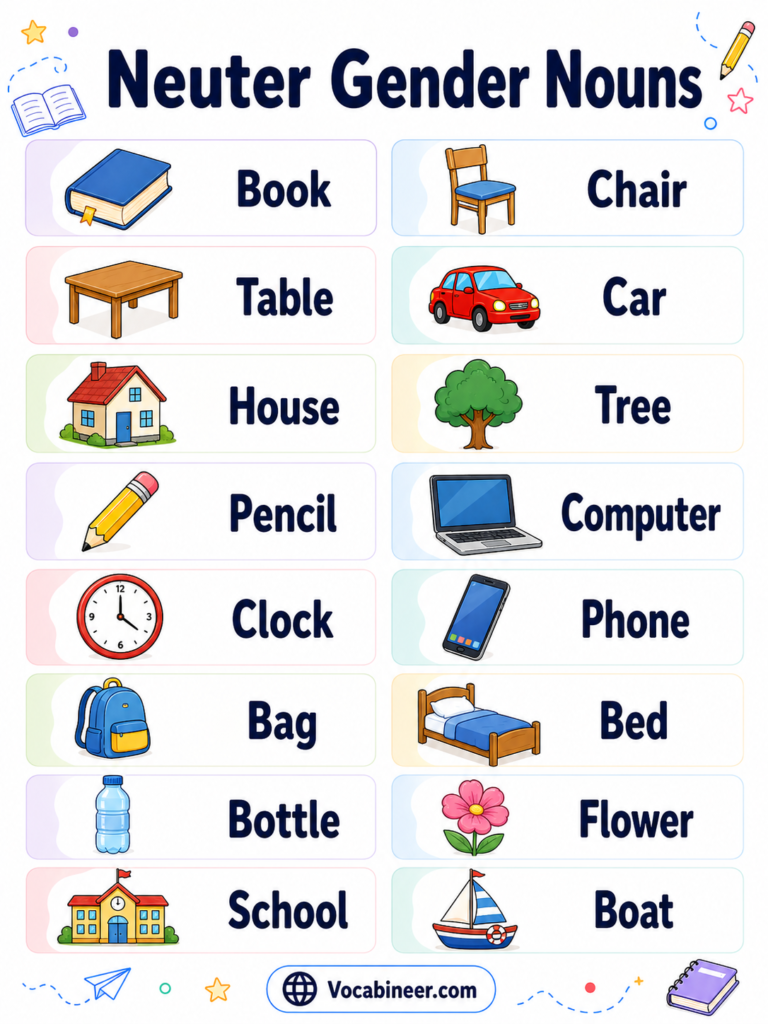
Neuter Gender Nouns List in English
Here is a clean list of 100 common neuter gender nouns in English:
- Book
- Pen
- Pencil
- Notebook
- Table
- Chair
- Desk
- Door
- Window
- Wall
- Floor
- Room
- House
- Building
- School
- Library
- Road
- Bridge
- Garden
- Park
- Car
- Bus
- Train
- Truck
- Bicycle
- Ship
- Boat
- Plane
- Computer
- Laptop
- Phone
- Television
- Radio
- Clock
- Fan
- Lamp
- Mirror
- Bag
- Box
- Bottle
- Cup
- Glass
- Plate
- Bowl
- Spoon
- Fork
- Knife
- Bed
- Pillow
- Blanket
- Sofa
- Curtain
- Cupboard
- Drawer
- Shelf
- Bucket
- Machine
- Engine
- Robot
- Printer
- Keyboard
- Mouse
- Screen
- Camera
- Battery
- Helmet
- Ticket
- Map
- Key
- Wallet
- Watch
- Umbrella
- Toolbox
- Hammer
- Nail
- Scissors
- Needle
- Jar
- Tin
- Tray
- Mug
- Soap
- Towel
- Hanger
- Shoe
- Shirt
- Cap
- Toy
- Ball
- Doll
- Puzzle
- Gate
- Fence
- Path
- Staircase
- Bench
- Helmet
- Suitcase
- Bottle opener
- Remote
Neuter Gender Nouns by Category
Grouping the nouns makes them easier to learn and remember.
Everyday Objects
These are common things we use or see every day:
- book
- pen
- pencil
- notebook
- table
- chair
- bag
- box
- bottle
- clock
Places and Buildings
These nouns name places and structures:
- room
- house
- building
- school
- library
- road
- bridge
- garden
- park
- gate
Vehicles and Machines
These are machines or forms of transport:
- car
- bus
- train
- truck
- bicycle
- ship
- boat
- plane
- machine
- engine
Household and Classroom Things
These are useful home and study items:
- desk
- lamp
- mirror
- bed
- pillow
- blanket
- computer
- printer
- cupboard
- drawer
Tools and Personal Items
These are common personal or practical things:
- key
- wallet
- watch
- umbrella
- toolbox
- hammer
- scissors
- needle
- shoe
- towel
How to Use Neuter Gender Nouns with It and Its
In English, we normally use it for a neuter noun and its to show possession.
Examples:
- The car is old. It needs repair.
- The book is on the desk. Its cover is blue.
- The school is large. It has a big library.
- The computer is slow. Its screen is cracked.
A simple way to remember this is:
- it = the thing
- its = something belongs to the thing
Neuter Gender Nouns in Sentences
Here are simple example sentences:
- I bought a new book yesterday. It is on my desk now.
- The car stopped suddenly because its engine was too hot.
- The house looks beautiful. Its roof is red.
- The clock is on the wall, but it is not working.
- The computer is on the table. Its keyboard is clean.
- The train is late, but it will arrive soon.
- The lamp is beside the bed, and it gives soft light.
- The school is near my home. It has a large playground.
- The bridge is old, but it is still strong.
- The bicycle is new. Its seat is very comfortable.
Neuter Gender vs Masculine, Feminine, and Common Gender
English grammar commonly groups nouns into masculine, feminine, common, and neuter gender.
| Type | Meaning | Examples |
|---|---|---|
| Masculine gender | nouns for male beings | man, boy, king |
| Feminine gender | nouns for female beings | woman, girl, queen |
| Common gender | nouns for either male or female | teacher, student, friend |
| Neuter gender | nouns for things with no gender | book, car, house |
This comparison makes the topic easier to understand because neuter gender is only one part of the wider noun-gender system.
FAQs
Neuter gender nouns are nouns for things that are neither male nor female. They usually refer to non-living objects, places, and machines.
Common examples include book, pen, chair, car, house, computer, and school.
We use it because English commonly uses it and its for things without male or female gender.
Yes. Words like car, bus, train, house, and school are commonly treated as neuter gender nouns.
Neuter gender refers to things without male or female gender, while common gender refers to nouns that can apply to either male or female people, such as teacher or student.
Summary
Neuter gender nouns are nouns for things that are neither male nor female. In English, they usually refer to non-living things, and we commonly use it and its with them.
In this article, you learned the meaning of neuter gender nouns, saw a list of examples, explored grouped categories, learned how to use it and its, and compared neuter gender with the other noun genders. This makes the topic easier to understand and use in everyday English.
Read More
- List of Nouns in English
- Possessive Nouns in English
- Regular Plural Nouns in English
- Irregular Plural Nouns in English