Amphibian animals are cold-blooded animals that usually live both in water and on land during different stages of life. They are known for soft skin, egg-laying habits, and unique life cycles that often begin in water.
In this article, you will learn about amphibian animals, their names, types, pictures, and key features. It also covers common examples such as frogs, toads, salamanders, and newts to make the topic easier to understand.

In This Page
List of Common Amphibian Animals
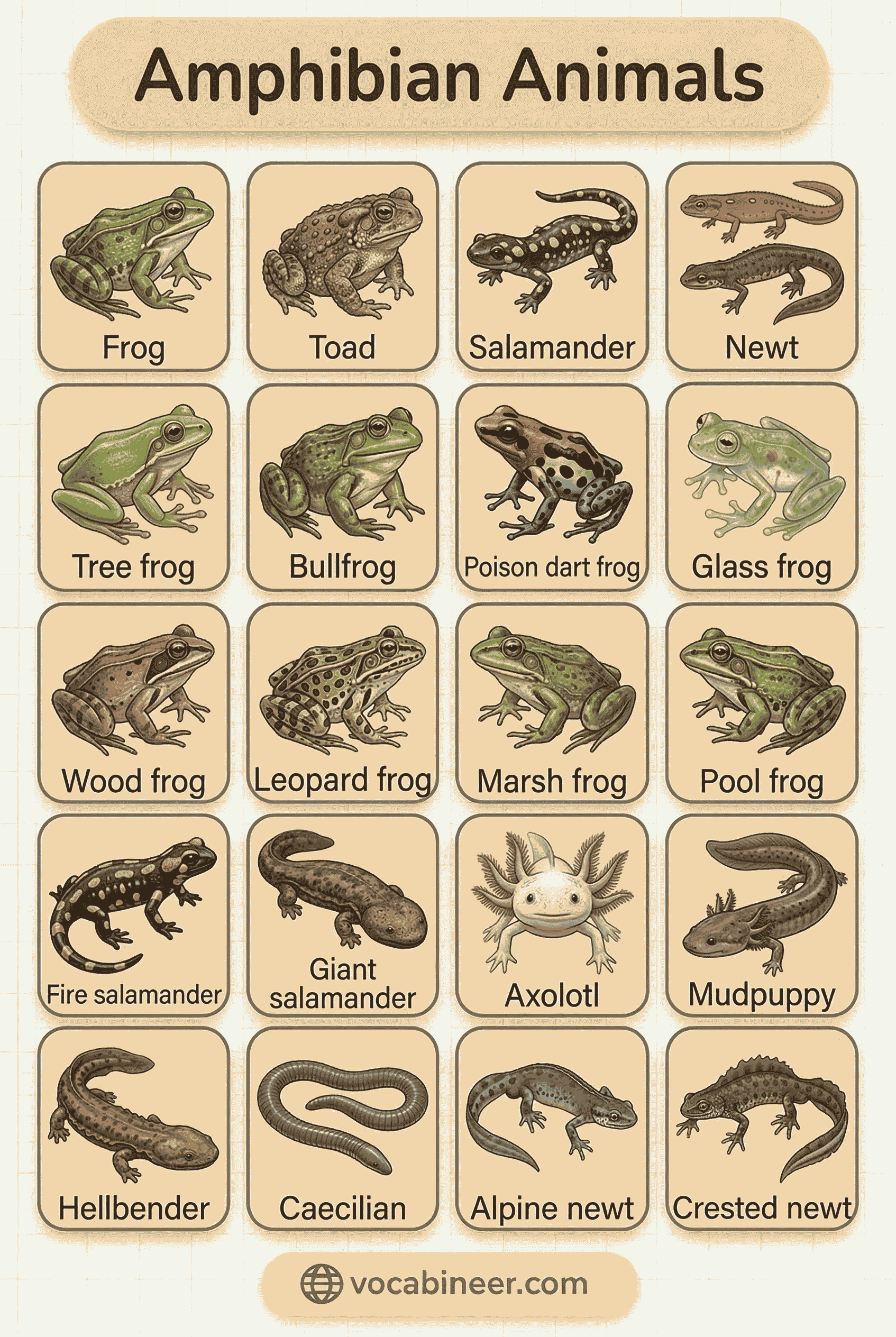
Common amphibians are species students often learn first in biology. They include frogs, toads, salamanders, newts, and other amphibians with different habitats, body shapes, and behaviors. Below is a list of 20 common amphibian animal names with simple descriptions.
Frog
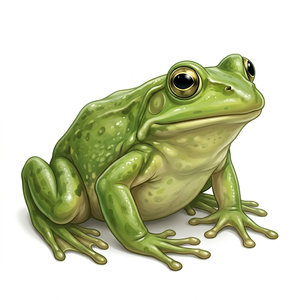
A frog is a jumping amphibian with smooth, moist skin and strong back legs. Most frogs live near ponds, lakes, streams, or wetlands and begin life as tadpoles in water.
Toad
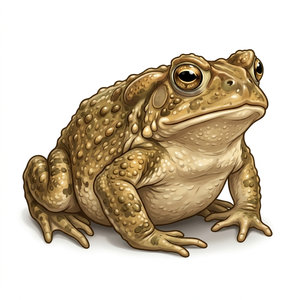
A toad is a short-legged amphibian with dry, bumpy skin and a broad body. It usually spends more time on land than a frog but still needs water or moist places for breeding.
Salamander
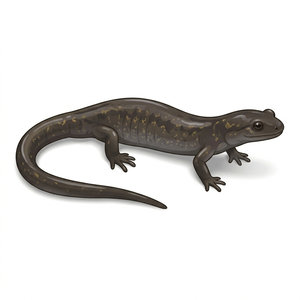
A salamander is a long-bodied amphibian with a tail, four short legs, and soft, moist skin. Many salamanders live under logs, rocks, or leaves in damp forests and near streams.
Newt
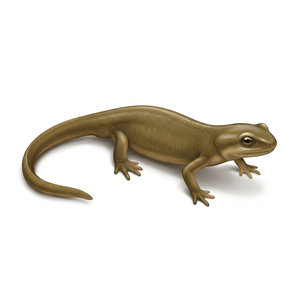
A newt is a small type of salamander that often spends part of its life in water and part on land. It usually has a long tail, short legs, and skin that may feel rougher than that of other salamanders.
Tree Frog
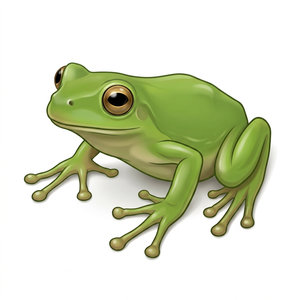
A tree frog is a small climbing frog with sticky toe pads that help it grip leaves, branches, and tree trunks. Many tree frogs live in warm, humid areas and become active at night.
Bullfrog
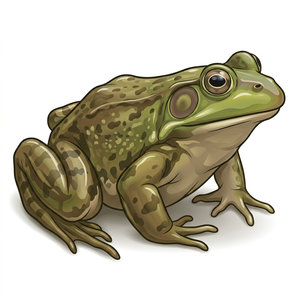
A bullfrog is a large, powerful frog known for its deep, booming call. It commonly lives around ponds, lakes, marshes, and slow-moving streams, where it feeds on insects and other small animals.
Poison Dart Frog
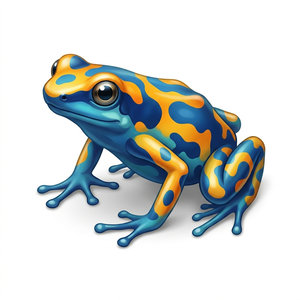
A poison dart frog is a small, brightly colored tropical frog found mainly in Central and South America. Its vivid colors can warn predators about toxic skin chemicals produced by some species in the wild.
Glass Frog
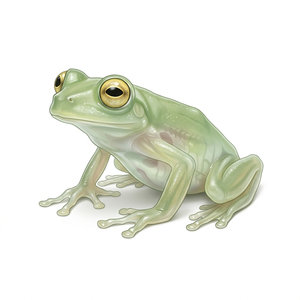
A glass frog is a small tropical tree frog known for the partly transparent skin on its underside. This unusual feature can make some of its internal organs visible through the skin.
Leopard Frog
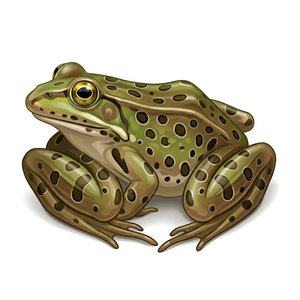
A leopard frog is a medium-sized frog covered with dark spots that resemble a leopard’s markings. It usually lives near ponds, marshes, meadows, and other areas with plenty of freshwater.
Green Frog
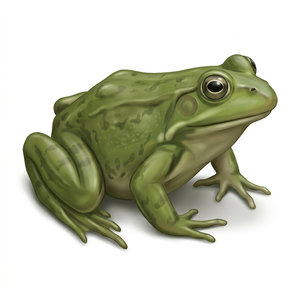
A green frog is a medium-sized freshwater frog that may appear green, brown, or a mixture of both colors. It commonly lives along the edges of ponds, lakes, streams, and wetlands.
Wood Frog
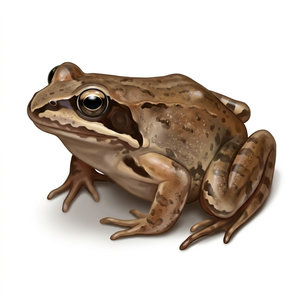
A wood frog is a small frog that lives mainly in forests, wetlands, and other cool habitats. It is especially known for surviving freezing winter temperatures by entering a remarkable dormant state.
American Toad
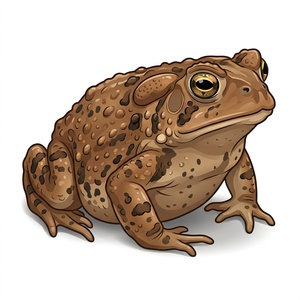
An American toad is a common North American amphibian with rough, warty skin and a stocky body. It often lives in forests, gardens, fields, and backyards, where it feeds on insects and other small invertebrates.
Cane Toad
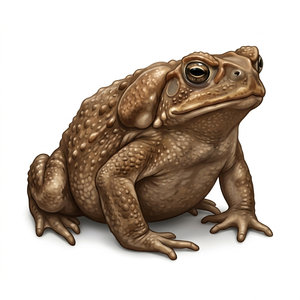
A cane toad is a very large toad with a broad body and noticeable poison glands behind its eyes. It can live in many habitats and releases toxic secretions that help protect it from predators.
Fire-Bellied Toad
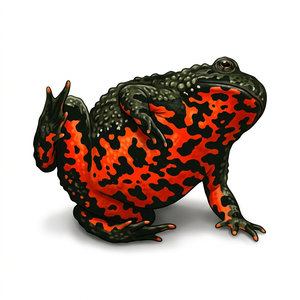
A fire-bellied toad is a small amphibian with a dark upper body and a bright red, orange, or yellow underside. When threatened, it may display its colorful belly as a warning to predators.
Tiger Salamander
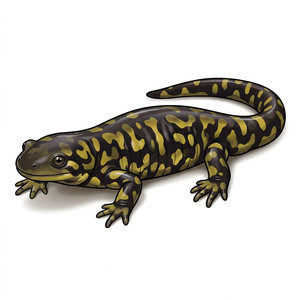
A tiger salamander is a large, heavy-bodied salamander with yellow, cream, or olive markings over a dark background. It usually spends much of its life underground and returns to ponds or pools to breed.
Spotted Salamander
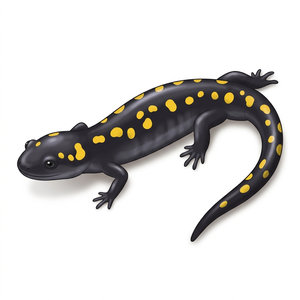
A spotted salamander is a dark-colored woodland amphibian with rows of bright yellow or orange spots along its body. It usually hides beneath logs or leaves and moves to temporary pools during the breeding season.
Axolotl
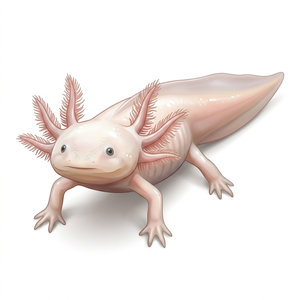
An axolotl is a fully aquatic salamander that keeps its feathery external gills throughout adulthood. It lives in water for its entire life and is well known for its ability to regenerate damaged body parts.
Mudpuppy
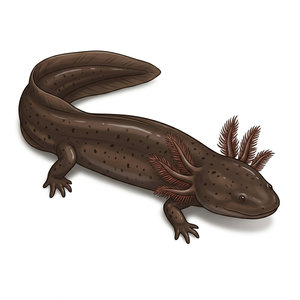
A mudpuppy is a large aquatic salamander with external gills that look like soft, feathery branches beside its head. It lives in lakes, rivers, and streams and remains underwater throughout its life.
Red-Spotted Newt
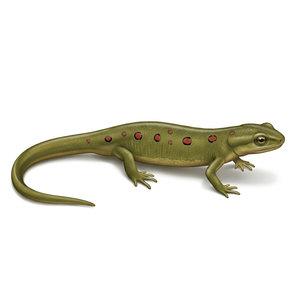
A red-spotted newt is a North American newt with several life stages and distinctive red spots. Its juvenile stage is often bright orange or reddish, while adults usually become olive green and return to the water.
Caecilian
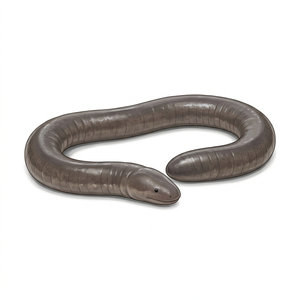
A caecilian is a long, legless amphibian with a body that resembles a worm or snake. Most species live underground in moist tropical soil, where they use their strong heads to burrow and search for small prey.
Different Types of Amphibians
Amphibians are cold-blooded animals that can live both in water and on land. They breathe through their skin and lay eggs in moist places. There are three main types of amphibians, and each group has unique features.
- Frogs: Small amphibians with smooth, moist skin and long back legs for jumping. Most live near water and eat insects.
- Toads: Similar to frogs but with dry, bumpy skin and shorter legs. They spend more time on land.
- Salamanders: Slender animals with tails that look a bit like lizards. They breathe through skin and gills.
- Newts: A kind of salamander that spends time in both water and on land during its life.
- Caecilians: Worm-like amphibians without legs that live underground or in muddy water. They are rarely seen.
Amphibian Animals That Live in Water
Some amphibian animals spend most or all of their lives in water. They have gills to breathe underwater and soft skin that absorbs oxygen. These creatures are usually found in ponds, lakes, or slow-moving rivers.
- Axolotl: A Mexican salamander that lives only in water and keeps its gills for life.
- Mudpuppy: A large aquatic salamander that stays underwater and breathes through external gills.
- Newt: An amphibian that begins life in water, later moves to land, and often returns to ponds.
- Tadpole: The young stage of a frog or toad that lives fully in water and breathes with gills.
- African Clawed Frog: A fully aquatic frog found in rivers and ponds in Africa.
- Sirens: Long, eel-like amphibians with small legs that live in muddy water areas.
- Olm: A blind cave-dwelling amphibian found in underground waters of Europe.
- Congo Eel: A type of aquatic salamander that lives in deep rivers and swamps.
- Hellbender: A giant salamander from North America that hides under rocks in clear rivers.
- Asiatic Salamander: Water-loving amphibians found in cool mountain streams of Asia.
Amphibian Animals That Live on Land
Some amphibian animals live mostly on land after growing from their water stage. They breathe through their lungs and skin but still need damp places to survive. These species often hide under leaves, soil, or logs to stay moist.
- Toad: A land amphibian with dry, bumpy skin that prefers gardens, forests, and fields.
- Tree Frog: A small amphibian that lives on trees and plants in warm, humid areas.
- Spadefoot Toad: A desert amphibian that digs burrows and stays underground during dry weather.
- Red Salamander: A bright-colored salamander that lives under rocks in moist forests.
- Tiger Salamander: A large land-dwelling amphibian that digs tunnels and comes out during rain.
- Newt: Spends part of its adult life on land before returning to water to breed.
- Fire Salamander: A black-and-yellow amphibian that lives on land in cool, wet forests.
- California Newt: A rough-skinned amphibian that walks on land most of the year.
- Giant Salamander: Though often near water, it can crawl short distances on wet land.
- Common Toad: A brown amphibian found in gardens, fields, and wooded areas across Europe.
Unique Amphibian Animals Name
Some amphibians are rare and special because of their colors, shapes, or unusual habits. These animals live in unique environments and show how diverse amphibian life can be.
- Axolotl: A pink Mexican salamander that stays in its larval stage forever.
- Glass Frog: A tiny frog with see-through skin found in Central and South America.
- Olm: A blind, white amphibian that lives in underground caves of Europe.
- Surinam Toad: A flat toad that carries eggs inside the skin of its back.
- Darwin’s Frog: A small frog from South America that keeps its young inside its mouth.
- Golden Poison Frog: One of the most toxic frogs on Earth, found in Colombia.
- Chinese Giant Salamander: The largest amphibian in the world, living in mountain rivers.
- Purple Frog: A round, purple frog from India that lives underground most of the time.
- Harlequin Toad: A colorful, patterned toad from Central and South America.
- Hellbender: A large aquatic salamander from North America that hides under rocks.
- Amazon Milk Frog: A blue-gray frog that produces a milky skin secretion for protection.
- Fire Salamander: A black-and-yellow amphibian that lives in European forests.
- Malayan Horned Frog: A brown frog with horn-like ridges above its eyes.
- Vietnamese Mossy Frog: A bumpy green frog that looks like moss to blend in.
- Bornean Flat-Headed Frog: A rare frog that has no lungs and breathes through its skin.
Endangered Amphibians
Many amphibians around the world are in danger of disappearing because of pollution, habitat loss, and climate change. These endangered amphibians remind us how fragile life in ponds, forests, and rivers can be.
- Chinese Giant Salamander: The world’s largest amphibian; threatened by hunting and water pollution in China.
- Axolotl: A Mexican salamander close to extinction due to shrinking lakes and urban growth.
- Golden Poison Frog: Found in Colombia; faces danger from habitat loss and illegal wildlife trade.
- Harlequin Frog: Brightly patterned frog species in Central and South America dying from a skin fungus.
- Mountain Yellow-Legged Frog: Native to the United States; affected by pollution and disease.
- Darwin’s Frog: From Chile and Argentina; disappearing because of forest destruction.
- Hellbender: A large salamander from North America threatened by dirty water and habitat changes.
- Purple Frog: A rare underground frog from India facing danger from deforestation.
- Panamanian Golden Frog: Bright yellow frog from Panama; now extinct in the wild.
- Luristan Newt: A black-and-white amphibian from Iran threatened by drought and illegal trade.
- Lao Newt: Found in Laos; habitat loss from farming is causing population decline.
- Andean Marsupial Frog: Carries eggs on its back; endangered by loss of mountain habitats.
- Cave Salamander: Sensitive to water pollution; found in caves across Europe.
- Ecuadorian Stream Frog: Losing homes due to mining and forest cutting.
- Kihansi Spray Toad: Native to Tanzania; nearly extinct because of dam construction.
Other Interesting Amphibian Animals
Besides the common and unique species, there are other amphibians worth mentioning. These animals add variety to the group. Below is a list of other interesting amphibian animals.
- Marbled Salamander
- Waxy Monkey Tree Frog
- Tomato Frog
- Black Rain Frog
- Desert Rain Frog
- Blue Poison Dart Frog
- Spanish Ribbed Newt
- Clawed Salamander
- Green Tree Frog
- Alpine Newt
- Strawberry Poison Frog
- Gray Tree Frog
- Spotted Salamander
- Oriental Fire-Bellied Toad
- Smoky Jungle Frog
- Painted Reed Frog
- Pacman Frog
- Eastern Newt
- Woodland Salamander
- Leopard Frog
Conclusion
Learning amphibian animals name with pictures helps readers understand this diverse group. From frogs and toads to salamanders, newts, and caecilians, amphibians show unique traits that connect land and water life. Knowing their names makes science, travel, and classroom discussions easier and more meaningful.
FAQs
The three main types of amphibians are frogs and toads (Anura), salamanders and newts (Caudata), and caecilians (Gymnophiona). Each group has unique traits and habitats.
The Chinese giant salamander is the largest amphibian. It can grow over 5 feet long and is critically endangered.
No, amphibians cannot live only on land. They need water for reproduction, and many depend on moist habitats.
Some amphibians remain fully aquatic, such as the axolotl, siren, and mudpuppy. They keep gills and never fully adapt to land.
Amphibians are endangered due to pollution, habitat loss, climate change, and disease. Species like the golden toad have already gone extinct.
Read More