

Sea animals include many creatures that live in saltwater environments such as oceans and seas. Some are large and powerful, while others are small, colorful, or soft-bodied. These animals are an important part of marine life around the world.
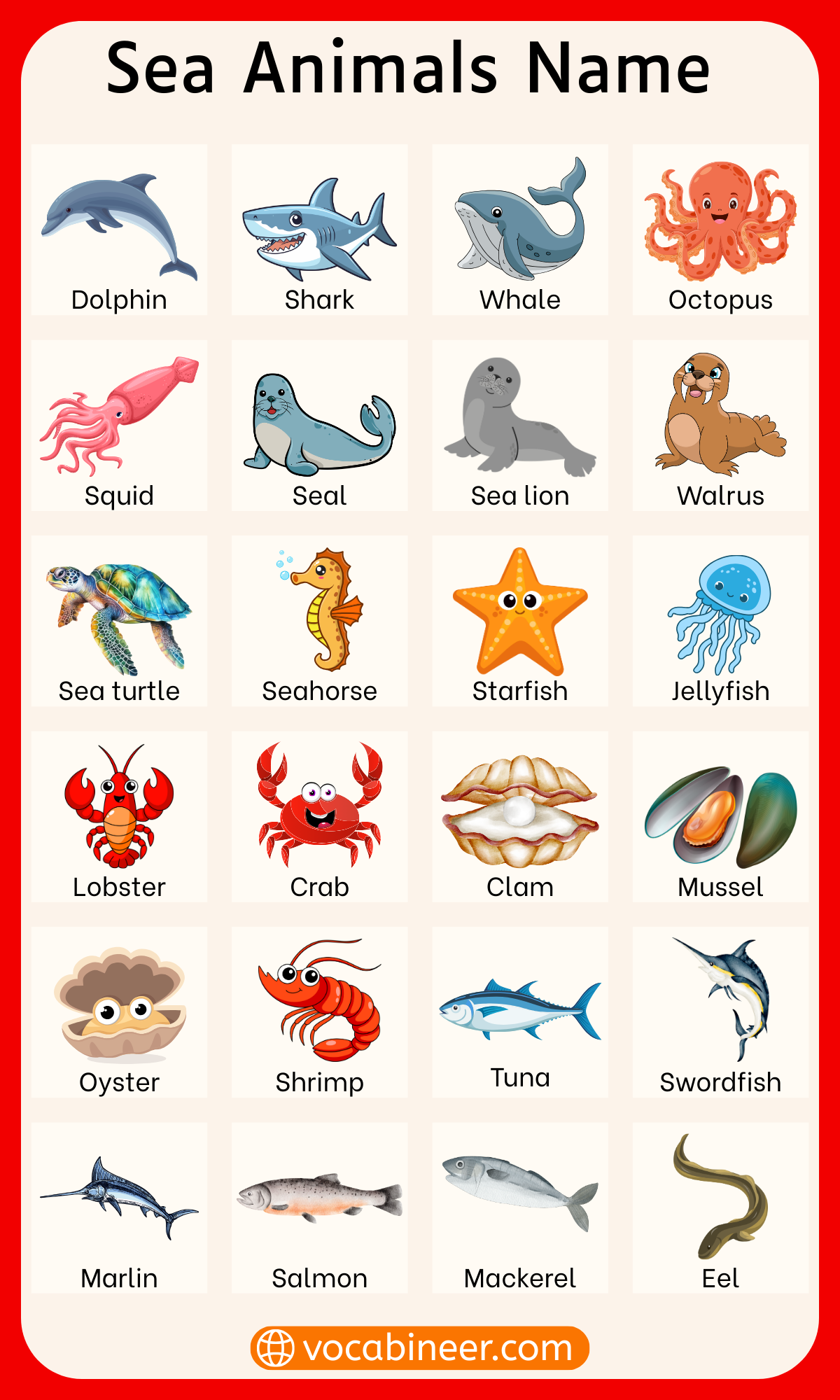
This post explains sea animals with names and pictures to make learning easier. It helps readers identify common ocean animals, understand simple groups, and improve animal vocabulary step by step.
In This Page
What Are Sea Animals?
Sea animals are animals that live in the sea or ocean. They can be small like shrimp and seahorses or huge like whales and sharks. Some sea animals breathe through gills, while others come to the surface to breathe air.
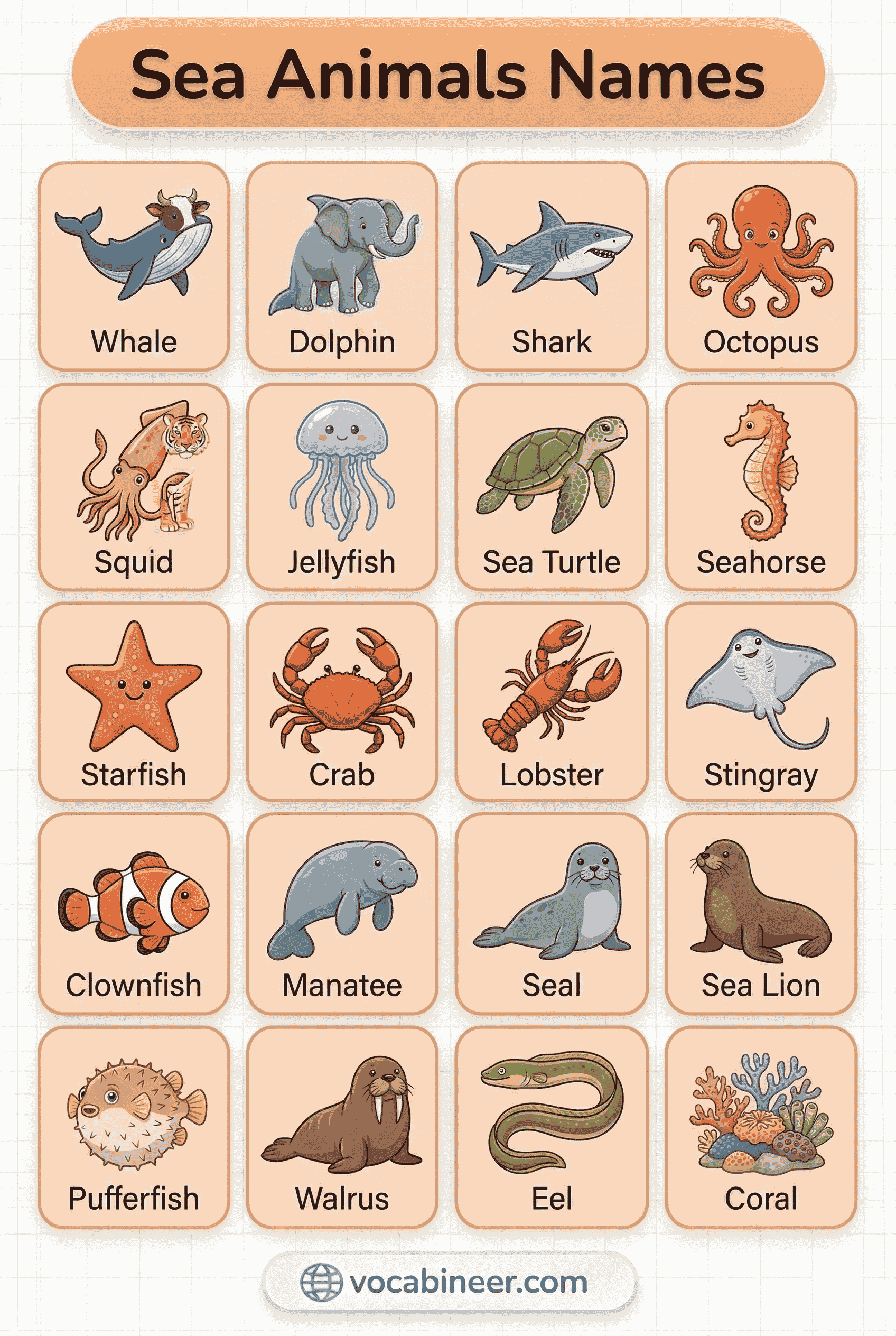
Common sea animals include fish, shark, dolphin, whale, crab, lobster, octopus, jellyfish, seahorse, sea turtle, seal, starfish, squid, and stingray.
Sea Animals vs Ocean Animals vs Aquatic Animals
These words are related, but they do not always mean exactly the same thing.
| Term | Simple Meaning | Examples |
|---|---|---|
| Sea animals | Animals that live in seas or oceans | Dolphin, shark, crab, octopus |
| Ocean animals | Animals that live in oceans | Whale, sea turtle, jellyfish |
| Aquatic animals | Animals that live in water, including freshwater or saltwater | Fish, frog, turtle, crab |
Common Sea Animals Names with Pictures
These are common sea animal names that children often learn first.
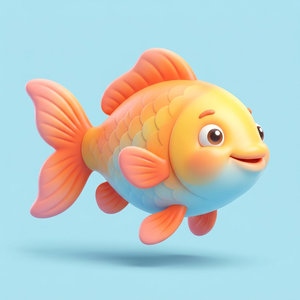
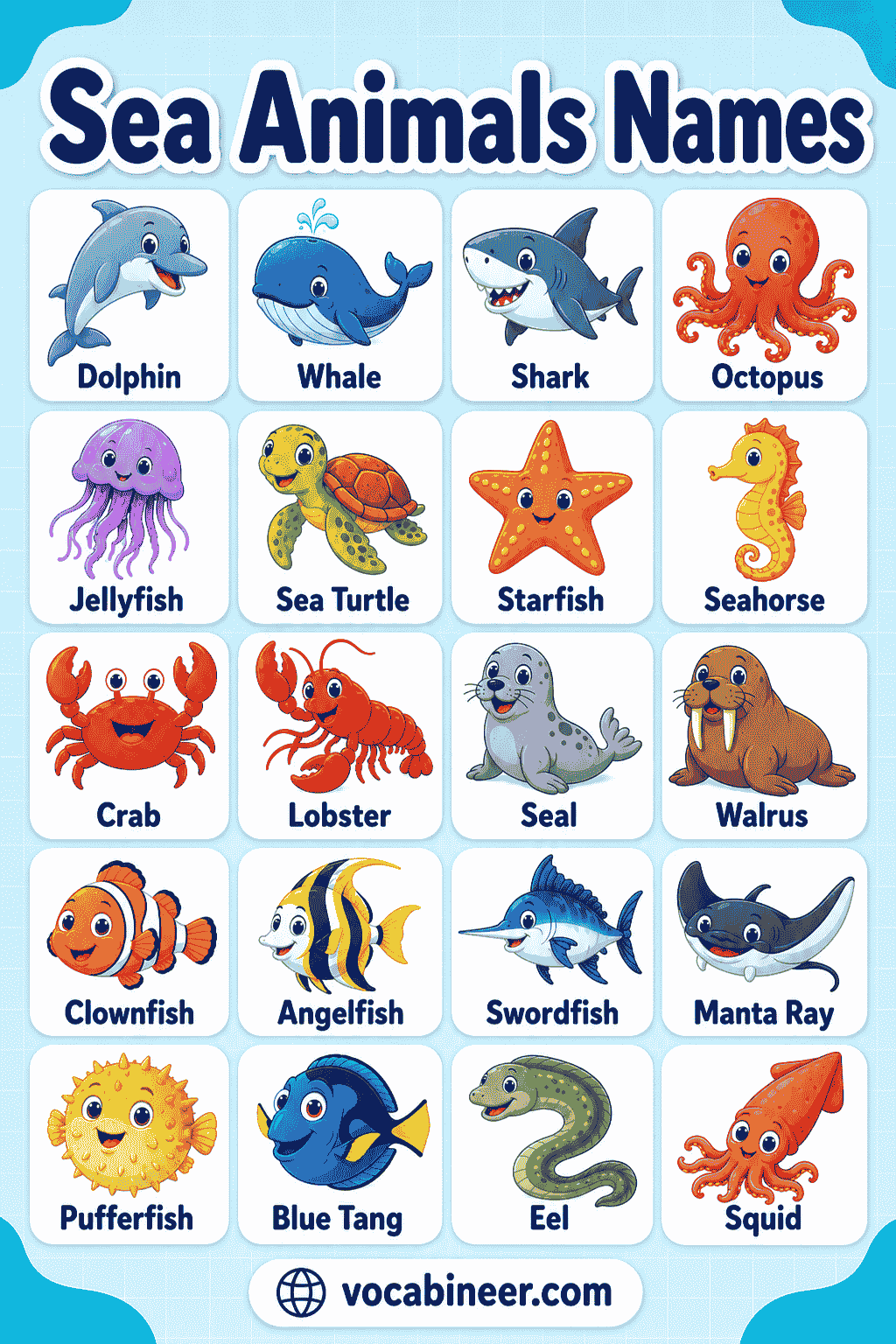
- Fish — A water animal with fins and gills.
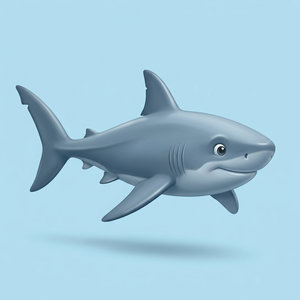
- Shark — A strong sea animal with sharp teeth.
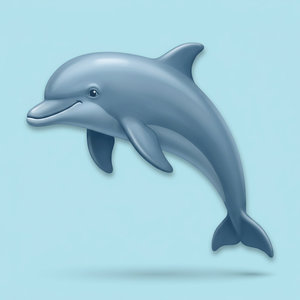
- Dolphin — A smart sea mammal that swims in groups.
- Whale — A very large sea mammal that breathes air.
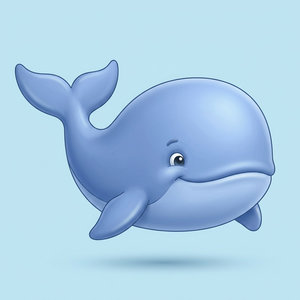
- Crab — A sea animal with a hard shell and claws.
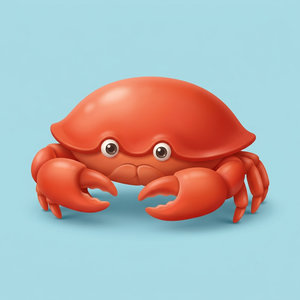
- Lobster — A long sea animal with a hard shell and big claws.
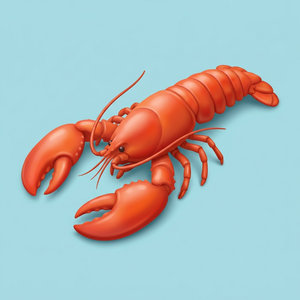
- Shrimp — A small sea animal with a curved body.
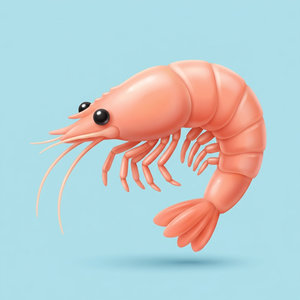
- Octopus — A soft-bodied sea animal with eight arms.
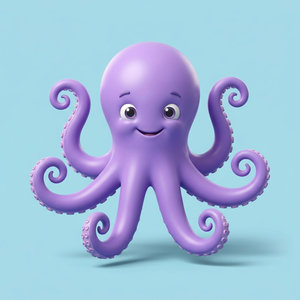
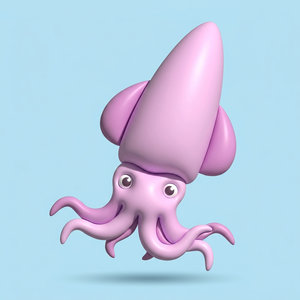
- Squid — A fast sea animal with a long body and tentacles.
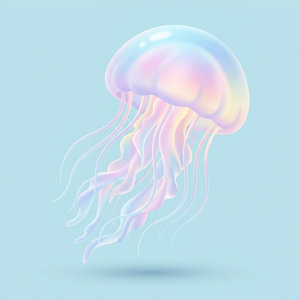
- Jellyfish — A soft sea animal that floats in the water.
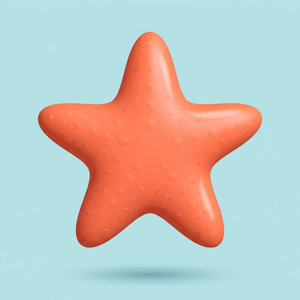
- Starfish — A star-shaped sea animal also called a sea star.
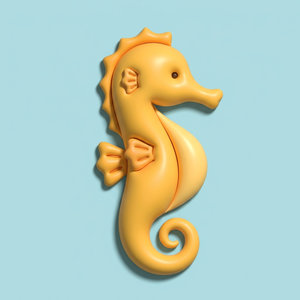
- Seahorse — A small sea animal with a horse-like head.
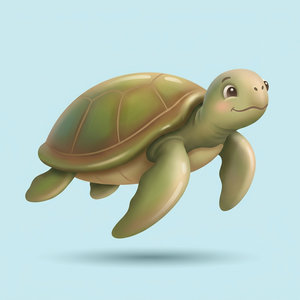
- Sea Turtle — A turtle that lives in the ocean.
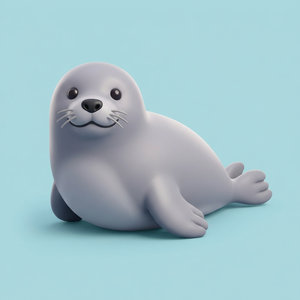
- Seal — A sea mammal with flippers and a smooth body.
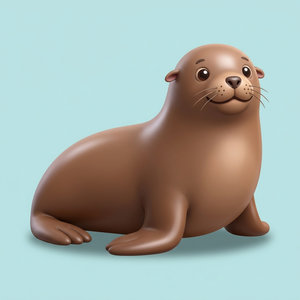
- Sea Lion — A sea mammal that can move well on land and swim well in water.
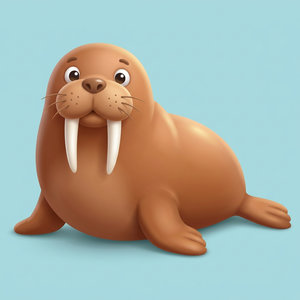
- Walrus — A large sea mammal with tusks.
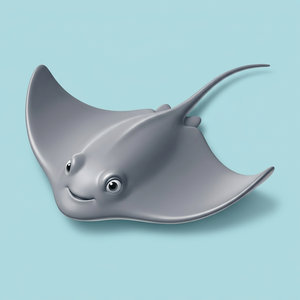
- Stingray — A flat sea animal with wide fins and a long tail.
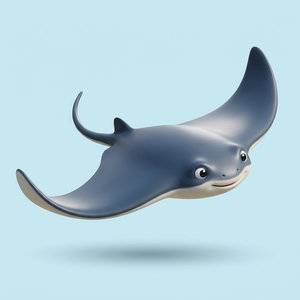
- Manta Ray — A large ray with wide wing-like fins.
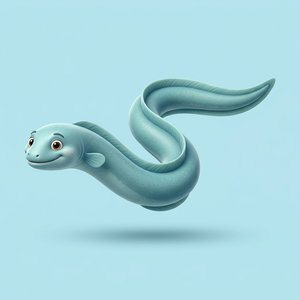
- Eel — A long fish with a snake-like body.
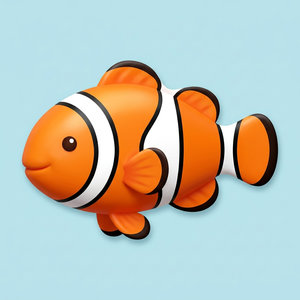
- Clownfish — A small colorful fish often found near sea anemones.
Sea Animals Names with Simple Meanings
This list gives easy meanings for sea animal vocabulary.
- Dolphin — A smart sea mammal that swims and jumps in the water.
- Whale — A huge sea mammal that breathes air through a blowhole.
- Shark — A powerful fish with sharp teeth and strong fins.
- Crab — A shell animal with claws and many legs.
- Lobster — A sea animal with a long body, hard shell, and claws.
- Octopus — A soft sea animal with eight arms.
- Squid — A soft sea animal with a long body and tentacles.
- Jellyfish — A soft floating sea animal with tentacles.
- Seahorse — A small fish with a curled tail and horse-like head.
- Sea Turtle — A sea reptile with flippers and a hard shell.
- Seal — A sea mammal that swims with flippers.
- Sea Lion — A sea mammal that barks and moves well on land.
- Walrus — A large sea mammal with long tusks.
- Starfish — A star-shaped sea animal that lives on the ocean floor.
- Stingray — A flat sea animal that glides through the water.
- Manta Ray — A large gentle ray with wide fins.
- Clownfish — A bright orange fish with white stripes.
- Eel — A long fish that looks like a snake.
- Sea Urchin — A small round sea animal with spines.
- Sea Otter — A furry sea mammal that floats on its back.
Main Groups of Sea Animals
Sea animals can be grouped by body type, habitat, and animal family. These groups help kids understand the ocean world more clearly.
- Fish — Sea animals with fins, gills, and usually scales.
- Sea mammals — Sea animals that breathe air and feed milk to their babies.
- Shell animals — Sea animals with hard shells or outer coverings.
- Soft-bodied sea animals — Sea animals with soft bodies, arms, or tentacles.
- Sea reptiles — Reptiles that live in or near the ocean.
- Sea birds — Birds that live near the sea and catch food from water.
- Coral reef animals — Sea animals that live around coral reefs.
- Deep sea animals — Sea animals that live deep below the ocean surface.
Fish Names in the Sea
Many sea animals are fish, but not every sea animal is a fish. Fish usually have gills and fins.
- Fish — A general name for animals that live in water and breathe through gills.
- Shark — A large fish with strong fins and sharp teeth.
- Clownfish — A small colorful fish with orange and white stripes.
- Tuna — A fast-swimming fish often found in oceans.
- Salmon — A fish that can live in both saltwater and freshwater.
- Swordfish — A large fish with a long pointed bill.
- Angelfish — A colorful fish often seen around coral reefs.
- Pufferfish — A fish that can puff up its body.
- Blowfish — Another name often used for pufferfish.
- Eel — A long fish with a snake-like body.
- Stingray — A flat fish-like sea animal with a long tail.
- Manta Ray — A large ray with wide fins.
- Seahorse — A small fish with a horse-like head and curled tail.
Sea Mammals Names
Sea mammals live in the sea, but they are not fish. They breathe air, give birth to babies, and feed their babies milk.
- Dolphin — A smart sea mammal that swims in groups.
- Whale — A huge sea mammal that breathes through a blowhole.
- Blue Whale — The largest animal in the world.
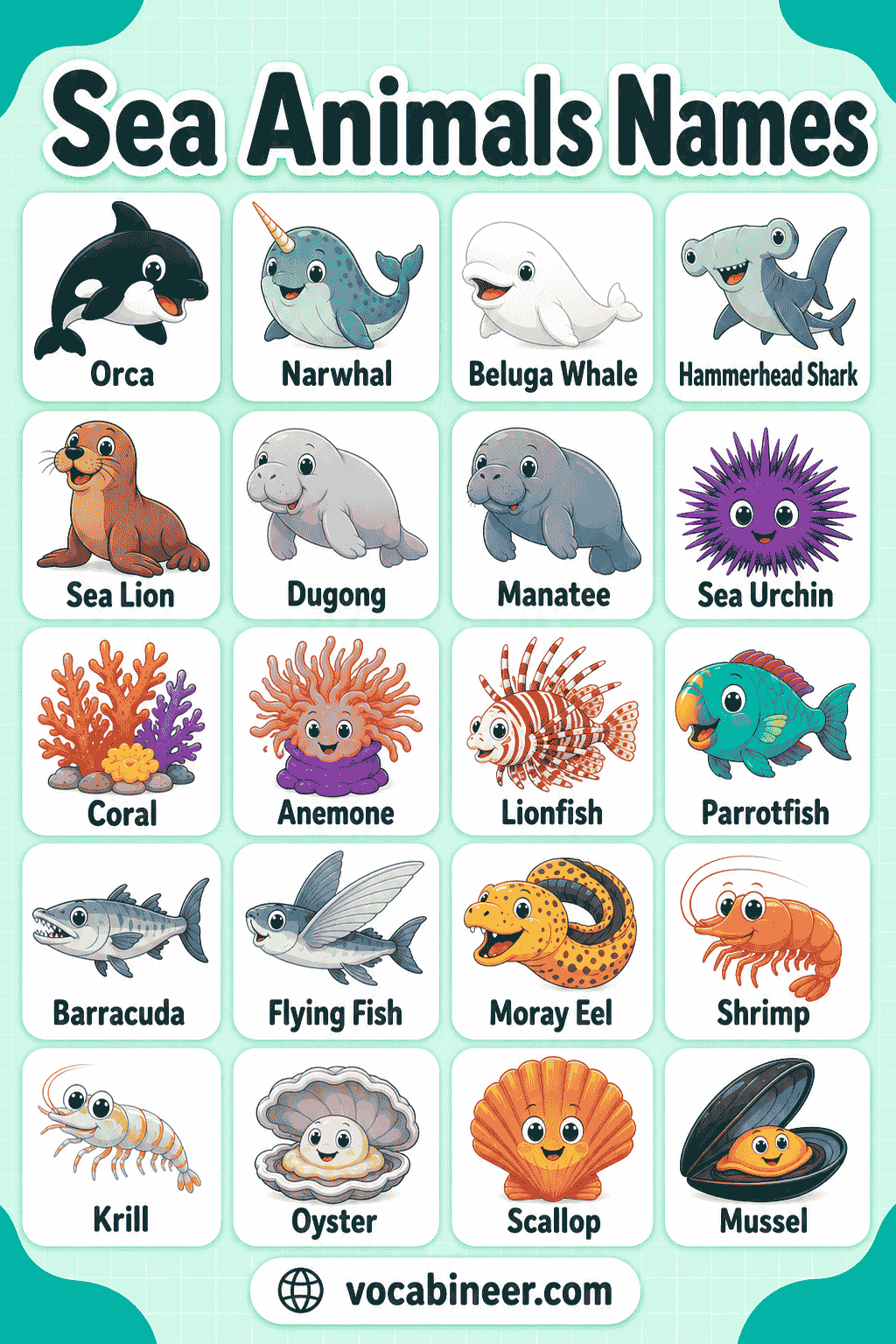
- Orca — A black-and-white sea mammal also called a killer whale.
- Seal — A sea mammal with flippers and a smooth body.
- Sea Lion — A sea mammal with visible ear flaps and strong front flippers.
- Walrus — A large sea mammal with tusks.
- Sea Otter — A furry sea mammal that floats on its back.
- Narwhal — A whale with a long tusk.
- Manatee — A gentle sea mammal also called a sea cow.
- Dugong — A sea mammal that eats seagrass.
Shell Animals Names
Shell animals often have hard outer coverings that protect their bodies. Some live on the sea floor, while others hide in sand, rocks, or shells.
- Crab — A shell animal with claws and a wide body.
- Lobster — A long shell animal with big claws.
- Shrimp — A small shell animal with a curved body.
- Prawn — A shrimp-like sea animal used in food vocabulary.
- Clam — A shell animal with two hard shells.
- Oyster — A shell animal that lives in rough shells.
- Mussel — A small shell animal with a dark shell.
- Scallop — A shell animal with a fan-shaped shell.
- Hermit Crab — A crab that lives inside an empty shell.
- Sea Snail — A sea animal with a spiral shell.
- Conch — A sea snail with a large shell.
- Barnacle — A small shell animal that attaches to rocks, boats, or sea animals.
Soft-Bodied Sea Animals
Some sea animals have soft bodies instead of bones or hard shells. Many of them have arms, tentacles, or flexible bodies.
- Octopus — A soft sea animal with eight arms.
- Squid — A fast sea animal with a long body and tentacles.
- Cuttlefish — A soft-bodied sea animal that can change color.
- Jellyfish — A soft floating sea animal with tentacles.
- Sea Slug — A soft colorful sea animal that crawls slowly.
- Sea Cucumber — A soft sea animal shaped like a cucumber.
- Sea Anemone — A soft sea animal with tentacles that looks like a flower.
Sea Reptiles Names
Sea reptiles live in or near saltwater. They breathe air and may come to land for nesting or resting.
- Sea Turtle — A turtle that lives in the ocean and swims with flippers.
- Marine Iguana — A sea reptile that lives near the ocean and eats algae.
- Sea Snake — A snake that lives in warm ocean water.
- Saltwater Crocodile — A large reptile that can live in coastal and saltwater areas.
Dangerous Sea Animals
Some sea animals can be dangerous because they have sharp teeth, venom, spines, or strong bodies. Children should learn about them in a safe and calm way.
- Shark — Some sharks can be dangerous because they are large and powerful.
- Jellyfish — Some jellyfish can sting with their tentacles.
- Stingray — A stingray may sting if stepped on or disturbed.
- Sea Urchin — A sea urchin has sharp spines.
- Stonefish — A venomous fish that can hide near rocks.
- Lionfish — A fish with venomous spines.
- Sea Snake — A snake that can be venomous.
- Barracuda — A fast fish with sharp teeth.
- Blue-Ringed Octopus — A small octopus known for strong venom.
- Moray Eel — An eel with sharp teeth that hides in rocks.
Cute Sea Animals for Kids
Some sea animals look cute, friendly, or colorful in children’s books, flashcards, and posters.
- Dolphin — A friendly-looking sea mammal that jumps in the water.
- Seahorse — A tiny sea animal with a curled tail.
- Clownfish — A bright orange fish with white stripes.
- Sea Turtle — A gentle sea reptile with flippers.
- Sea Otter — A furry animal that floats on its back.
- Seal — A smooth sea mammal with big eyes.
- Penguin — A sea bird that swims well.
- Starfish — A star-shaped sea animal.
- Baby Shark — A young shark often used in kids songs and lessons.
- Baby Whale — A young whale called a calf.
Sea Animals for Preschool and Kindergarten
Preschool and kindergarten children should start with simple sea animal names that are easy to see, say, and remember. These words work well for picture cards, posters, tracing sheets, coloring pages, and beginner vocabulary lessons.
- Fish — A common sea animal with fins.
- Crab — A sea animal with claws.
- Shark — A strong sea animal with sharp teeth.
- Whale — A very large sea animal.
- Dolphin — A smart sea animal that swims and jumps.
- Sea Turtle — A turtle that lives in the ocean.
- Octopus — A sea animal with eight arms.
- Starfish — A star-shaped sea animal.
- Jellyfish — A soft sea animal that floats in water.
- Seahorse — A small sea animal with a horse-like head.
- Seal — A sea animal with flippers.
- Lobster — A sea animal with a hard shell and claws.
- Shrimp — A small sea animal with a curved body.
- Squid — A sea animal with a long body and tentacles.
- Stingray — A flat sea animal with a long tail.
- Clownfish — A small orange fish with white stripes.
Sea Animal Body Parts
Sea animal body parts help children describe what they see in pictures.
- Fins — Body parts that help fish and some sea animals swim.
- Gills — Body parts that help fish breathe in water.
- Scales — Small hard plates that cover many fish.
- Shell — A hard covering that protects animals like crabs, clams, and turtles.
- Claws — Sharp gripping parts found on crabs and lobsters.
- Tentacles — Long flexible parts found on jellyfish, squid, and anemones.
- Arms — Octopuses have eight arms.
- Flippers — Wide body parts used by seals, sea turtles, and whales for swimming.
- Tail — A body part that helps many sea animals move.
- Teeth — Sharp or flat parts used for biting or eating.
- Beak — A hard mouth part found in octopuses and squid.
- Blowhole — A breathing hole on top of whales and dolphins.
Where Do Sea Animals Live?
Sea animals live in many parts of the sea and ocean. Some stay near the shore, while others live far below the surface.
- Ocean — A very large body of saltwater where many sea animals live.
- Sea — A smaller saltwater area that connects to the ocean.
- Coral reef — A colorful underwater habitat for fish, crabs, sea turtles, and many other animals.
- Deep sea — A dark, deep part of the ocean where unusual animals live.
- Shore — The area near the edge of the sea.
- Ocean floor — The bottom of the ocean where crabs, starfish, rays, and other animals may live.
- Arctic waters — Cold ocean areas where animals like seals, walruses, and some whales live.
- Open ocean — Wide ocean water where animals like tuna, sharks, dolphins, and whales swim.
Sea Animals A to Z List
Here is a simple A to Z style list of sea animal names. Some letters have more common sea animals than others.
- A — Angelfish, Anemone
- B — Blue Whale, Barracuda
- C — Crab, Clownfish, Cuttlefish
- D — Dolphin, Dugong
- E — Eel
- F — Fish
- H — Hermit Crab
- J — Jellyfish
- L — Lobster, Lionfish
- M — Manta Ray, Mussel, Manatee
- N — Narwhal
- O — Octopus, Oyster, Orca
- P — Pufferfish, Prawn, Penguin
- R — Ray
- S — Shark, Seahorse, Seal, Sea Turtle, Squid, Starfish
- T — Tuna
- W — Whale, Walrus
Sea Animals Names Chart
| Sea Animal | Group | Simple Meaning |
|---|---|---|
| Dolphin | Mammal | A smart sea animal that breathes air |
| Whale | Mammal | A huge sea animal with a blowhole |
| Shark | Fish | A strong fish with sharp teeth |
| Crab | Crustacean | A shell animal with claws |
| Lobster | Crustacean | A long shell animal with big claws |
| Octopus | Mollusk | A soft sea animal with eight arms |
| Squid | Mollusk | A soft sea animal with a long body |
| Jellyfish | Soft-bodied animal | A floating sea animal with tentacles |
| Sea Turtle | Reptile | A turtle that lives in the ocean |
| Seahorse | Fish | A small fish with a horse-like head |
| Seal | Mammal | A sea animal with flippers |
| Starfish | Sea star | A star-shaped sea animal |
| Clownfish | Fish | A small orange fish with white stripes |
| Stingray | Ray | A flat sea animal with a long tail |
| Walrus | Mammal | A large sea animal with tusks |
Easy Sea Animal Sentences for Kids
These simple sentences help children use sea animal names in English.
- A dolphin swims in the sea.
- A crab walks on the sand.
- A shark has sharp teeth.
- A whale is very big.
- An octopus has eight arms.
- A seahorse is small.
- A sea turtle swims slowly.
- A jellyfish floats in the water.
- A lobster has claws.
- A squid has tentacles.
- A seal has flippers.
- A clownfish is orange and white.
- A starfish looks like a star.
- A stingray has a flat body.
- A walrus has long tusks.
Confusing Sea Animal Names Explained
Some sea animal names can confuse children and beginner English learners. This table explains the differences simply.
| Terms | Simple Difference |
|---|---|
| Sea animals vs Ocean animals | People often use both terms for animals that live in saltwater. |
| Sea animals vs Aquatic animals | Sea animals live in seas or oceans. Aquatic animals can live in any water. |
| Fish vs Sea mammals | Fish breathe with gills. Sea mammals breathe air. |
| Dolphin vs Fish | A dolphin is a mammal, not a fish. |
| Whale vs Fish | A whale is a mammal that breathes air. |
| Seal vs Sea Lion | Sea lions usually have visible ear flaps and move better on land. |
| Octopus vs Squid | An octopus has eight arms. A squid has a longer body and tentacles. |
| Starfish vs Sea Star | Sea star is more accurate, but many people say starfish. |
| Crab vs Lobster | A crab has a wider body. A lobster has a longer body and larger claws. |
| Turtle vs Sea Turtle | A sea turtle lives in the ocean, but not all turtles live in the sea. |
Conclusion
Learning the names of sea animals with their images helps us connect words to the creatures that live in oceans. From tiny plankton to giant whales, each name reflects how these animals fit into marine life. This post brings together the names of fish, mammals, reptiles, and other groups, so readers can talk about them confidently in classrooms, nature discussions, and everyday conversations.
FAQs
Some of the most common sea animals are tuna, sardines, dolphins, jellyfish, crabs, and sea turtles, as they live in many different regions.
Marine mammals include whales, dolphins, seals, sea lions, and walruses, all of which breathe air and feed their young with milk.
Certain species can be harmful, such as sharks, sea snakes, jellyfish, and stingrays, though most attacks or stings happen only when animals feel threatened.
Tiny organisms like plankton, krill, and coral polyps are vital because they support the entire food chain and keep ecosystems alive.
Rare creatures include the narwhal, giant squid, dugong, and beluga whale, as they live in specific habitats or deep waters.
Read More