Things with red color are easy to notice because red is bold and visually striking. This color appears in many familiar places, including fruits, flowers, animals, signs, and everyday objects. Whether seen in soft shades or deeper tones, red often stands out quickly and leaves a strong visual impression.
This article introduces different things with red color using familiar examples. Learning these names helps readers describe objects clearly and understand color-based descriptions in simple learning and everyday conversations.
In This Page
What Does the Color Red Look Like?
Red is a warm primary color that appears in light, bright, dark, and earthy shades. Some objects look scarlet or cherry red, while others appear crimson, burgundy, maroon, brick red, coral, or ruby red. Lighting and nearby colors can also make the same shade look brighter outdoors or deeper indoors.
People often associate red with love, energy, courage, excitement, danger, and urgency. However, its meaning depends on the object, situation, and culture. For example, a red rose may express affection, whereas a red traffic light tells drivers to stop.
List of Common Things with Red Color
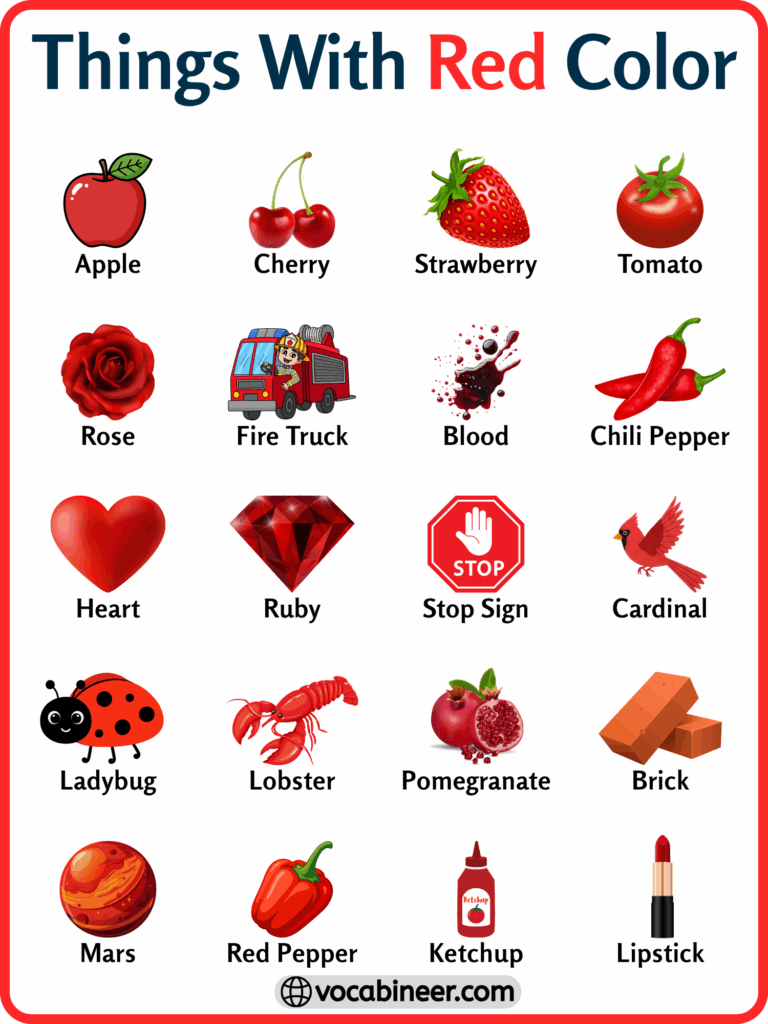
Red is the color of energy, passion, and love. It stands out strongly in nature and in many man-made objects. Red often represents warmth, excitement, and courage. Here are some common things that are red, with short and clear descriptions:
- Red Rose: This bright flower often represents love, affection, and admiration.
- Red Apple: A crisp fruit with red skin and sweet or slightly tart flesh.
- Strawberry: This juicy fruit has a bright red surface covered with tiny seeds.
- Cherry: A small round fruit that may taste sweet or sour.
- Tomato: Although technically a fruit, the tomato commonly appears in savory dishes.
- Red Pepper: Depending on the variety, a red pepper may taste sweet, mild, or hot.
- Fire Truck: Emergency departments often use red paint because it attracts attention quickly.
- Stop Sign: This familiar red sign tells drivers to stop before continuing.
- Red Balloon: Bright balloons often appear at birthdays, school events, and celebrations.
- Red Heart: People commonly use this symbol to express love, care, and affection.
- Ruby: Known for its rich color, ruby is one of the most recognizable red gemstones.
- Cardinal: Adult male cardinals usually display vivid red feathers.
- Ladybug: This small beetle often has red wing covers marked with black spots.
- Red Car: A vehicle painted red tends to look bold and eye-catching.
- Red Dress: This clothing item may create a bright, confident appearance.
- Red Candle: People use red candles for decoration, celebrations, or special occasions.
- Fire Extinguisher: Many fire extinguishers come in bright red cylinders for easy recognition.
- Red Umbrella: A red umbrella adds a strong burst of color on a rainy day.
- Red Backpack: Students and travelers use red bags to carry books or personal items.
- Red Toy: Any child’s play object made in red may be described with this simple phrase.
Red Fruits
Red fruits range from bright berries to deep burgundy tree fruits.
- Apple: Many apple varieties develop glossy red skin as they ripen.
- Strawberry: Sweet flavor and a bright exterior make strawberries easy to recognize.
- Cherry: Some cherries appear light red, whereas others ripen to dark burgundy.
- Raspberry: This delicate berry consists of many tiny connected sections.
- Cranberry: Because cranberries taste tart, people often use them in sauces and drinks.
- Pomegranate: Inside the firm skin, the fruit contains many juicy red seeds.
- Red Grapes: Depending on the variety, these grapes may look pink, crimson, or reddish purple.
- Watermelon: Its green rind surrounds juicy pink or red flesh.
- Red Currant: Small translucent berries grow together in attractive clusters.
- Blood Orange: Unlike ordinary oranges, this variety may contain dark red or maroon flesh.
- Red Pear: Several pear varieties develop red or partly red skin.
- Red Plum: Smooth skin and juicy flesh make this stone fruit a familiar summer food.
- Dragon Fruit: Certain varieties have vivid magenta skin and deep red flesh.
- Red Gooseberry: As some gooseberries mature, their color changes from green to red or purple.
- Red Mulberry: Before turning dark purple, many ripe mulberries pass through a red stage.
- Red Fig: Some fig varieties have reddish flesh or red-purple skin.
Although these fruits share a similar color, their flavors range from sweet and mild to sharp and tangy.
Red Vegetables and Cooking Ingredients
Several vegetables, roots, leaves, and cooking ingredients naturally develop red pigments.
- Tomato: Ripe tomatoes may look scarlet, crimson, or deep red.
- Red Bell Pepper: After ripening fully, a green bell pepper may become red and taste sweeter.
- Red Chili Pepper: These peppers vary greatly in shape, size, and heat.
- Beet: Beneath its skin, this root vegetable usually has dark red or purple-red flesh.
- Red Cabbage: Despite its name, the leaves often appear purple, burgundy, or reddish blue.
- Red Onion: The outer skin looks red-purple, while the inner layers contain colored rings.
- Radish: Many common varieties have bright red skin and crisp white flesh.
- Red Potato: Smooth red skin surrounds pale, creamy flesh.
- Rhubarb: Although its leaves are not eaten, the pink-red stalks are used in desserts and sauces.
- Red Lettuce: Burgundy edges and red-tinted leaves give this vegetable a decorative appearance.
- Red Okra: Certain varieties grow burgundy or reddish pods.
- Red Corn: Some traditional corn varieties produce deep red kernels.
- Kidney Beans: Their curved shape and dark red-brown color inspired their name.
- Adzuki Beans: These small reddish beans often appear in sweet and savory dishes.
- Paprika: Manufacturers make this red spice by drying and grinding peppers.
- Tomato Paste: Because it contains concentrated tomatoes, this ingredient has a rich red color.
In addition to adding color, many of these foods bring sweetness, earthiness, spice, or acidity to a meal.
Red Foods and Desserts
Prepared foods may become red through fruits, vegetables, sauces, decorations, or food coloring.
- Strawberry Cake: Fresh berries, jam, or flavored frosting can give this cake a red or pink appearance.
- Red Velvet Cake: Cocoa and coloring create its familiar deep red or reddish-brown crumb.
- Cherry Pie: A sweetened cherry filling gives this baked dessert a glossy red center.
- Strawberry Ice Cream: Fruit pieces or puree may create a soft pink-red shade.
- Raspberry Sorbet: This frozen dessert often has a bright and refreshing red color.
- Tomato Soup: Depending on the recipe, it may look orange-red or deep crimson.
- Red Jelly: Fruit flavoring and coloring give this dessert or spread its bright appearance.
- Strawberry Jam: Cooking strawberries with sugar produces a thick red spread.
- Cherry Jam: Its color may range from bright ruby to dark burgundy.
- Red Candy: Cherry, strawberry, raspberry, and fruit-punch flavors often come in red wrappers or coatings.
- Red Lollipop: This hard candy commonly features a berry or cherry flavor.
- Red Popsicle: Fruit juice or flavored syrup creates a vivid frozen treat.
- Red Cupcake: Bakers may use red batter, frosting, sprinkles, or fruit decorations.
- Strawberry Donut: Pink-red icing gives this pastry a colorful finish.
- Fruit Salad: Strawberries, cherries, raspberries, and watermelon add red to a mixed fruit bowl.
- Pasta with Tomato Sauce: A tomato-based sauce coats the pasta in a rich red color.
- Salsa: Tomatoes and red peppers often give this dip its bright appearance.
- Ketchup: Concentrated tomatoes create this familiar red condiment.
While some foods are naturally red, others receive their color from added ingredients or decorative toppings.
Red Drinks
Many beverages get their red color from berries, flowers, vegetables, or flavored syrups.
- Watermelon Juice: Blended red watermelon creates a light, refreshing drink.
- Strawberry Smoothie: Strawberries give the mixture a pink or red tint.
- Raspberry Juice: Naturally sweet and tart, this beverage often looks deep red.
- Cranberry Juice: Its color ranges from bright ruby to dark crimson.
- Pomegranate Juice: Crushed seeds produce a rich red drink with a bold flavor.
- Cherry Juice: Sweet and tart cherry varieties create slightly different shades.
- Beet Juice: Because beets contain strong natural pigments, the juice looks dark red or purple-red.
- Hibiscus Tea: Once steeped, dried hibiscus flowers produce a vivid ruby beverage.
- Fruit Punch: Mixed juices and syrups often create a bright red party drink.
- Strawberry Milkshake: Milk and ice cream soften the fruit’s red color into pink.
- Rose Syrup Drink: Red or pink rose syrup adds sweetness and fragrance.
- Red Smoothie: Berries, beets, cherries, or pomegranate may provide the color.
- Red Mocktail: Fruit juices and flavored syrups create a colorful nonalcoholic drink.
For a more precise description, readers can use phrases such as dark red juice, bright ruby tea, or pale pink smoothie.
Red Flowers
Red flowers add warmth and contrast to gardens, bouquets, and celebrations.
- Rose: Few flowers are more strongly associated with red than the rose.
- Tulip: Smooth, cup-shaped petals make red tulips especially striking.
- Poppy: Thin petals and a dark center create a delicate appearance.
- Hibiscus: Its broad tropical petals surround a long central column.
- Carnation: Ruffled petals give this popular bouquet flower a soft texture.
- Dahlia: Layers of petals form a bold, rounded bloom.
- Geranium: These plants produce clusters of vivid flowers above rounded leaves.
- Camellia: Glossy leaves and rose-like blossoms make camellias popular ornamental plants.
- Chrysanthemum: Depending on the variety, the flowers may look scarlet, burgundy, or brick red.
- Azalea: In spring, this shrub produces clusters of funnel-shaped blossoms.
- Peony: Large, soft petals create a full and elegant flower.
- Zinnia: Bright petals surround a compact central disk.
- Begonia: Gardeners grow begonias for both their flowers and decorative leaves.
- Petunia: Its trumpet-shaped blooms appear in hanging baskets and flower beds.
- Anthurium: A glossy red spathe surrounds the plant’s upright flower spike.
- Bougainvillea: Papery red bracts make this climbing plant highly noticeable.
- Amaryllis: Several large trumpet-shaped flowers rise from one tall stem.
- Red Orchid: Many orchid varieties display deep red, burgundy, or reddish-purple petals.
- Red Lily: Long petals and prominent stamens create a dramatic bloom.
- Bottlebrush: Its narrow flower clusters resemble a brush used to clean bottles.
Some blooms are naturally scarlet, whereas others lean toward coral, wine red, or magenta.
Red Animals and Insects
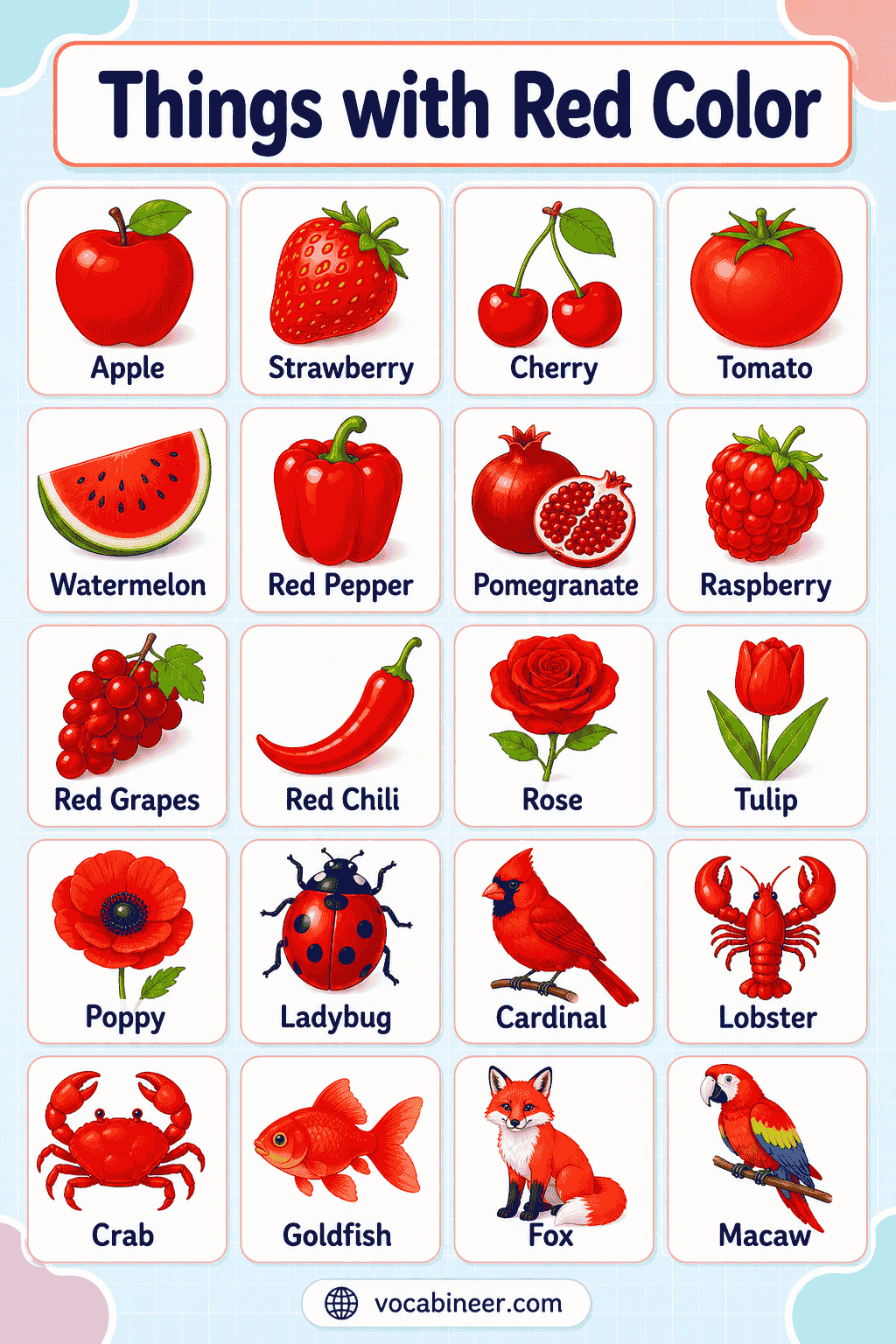
Animals may show red through their fur, feathers, shells, skin, scales, or markings.
- Red Fox: Its coat usually appears reddish orange rather than pure red.
- Red Panda: Reddish-brown fur, a pale face, and a ringed tail make this animal easy to recognize.
- Red Squirrel: Its fur may range from rusty orange to deep chestnut.
- Cardinal: Adult males often display bright scarlet feathers.
- Scarlet Macaw: Red plumage covers much of the bird’s body, while blue and yellow appear on its wings.
- Scarlet Ibis: Strong red coloring makes this wading bird highly distinctive.
- American Robin: Its breast looks rusty orange-red rather than bright scarlet.
- Vermilion Flycatcher: Adult males often display red feathers with darker wings and backs.
- Red-Crested Cardinal: A red head and pointed crest contrast with its lighter body.
- Flamingo: Pigments in its diet can produce pink, coral, or reddish feathers.
- Ladybug: Red wing covers with dark spots make this beetle familiar to children.
- Scarlet Lily Beetle: Its smooth, shiny body appears bright red.
- Red Admiral Butterfly: Orange-red bands cross its dark wings.
- Scarlet Dragonfly: Adult males of some species develop striking red bodies.
- Red Ant: Several ant species have reddish or rust-colored bodies.
- Red Velvet Ant: Despite its name, this insect is a wingless female wasp.
- Red Crab: Various crab species have naturally red or orange-red shells.
- Lobster: A living lobster may look brown, greenish, or blue-gray; however, cooking turns the shell bright red.
- Sea Star: Some species display brilliant red or orange coloring.
- Red-Eyed Tree Frog: Although its body is green, vivid red eyes give the animal its name.
- Tomato Frog: Its rounded body may appear red-orange or tomato colored.
- Red Salamander: Dark spots cover its red or orange skin.
- Red-Spotted Newt: During its juvenile stage, this amphibian looks bright orange-red.
- Red-Eared Slider: A bold red stripe appears behind each eye.
- Red Lionfish: Reddish stripes and long spines make this reef fish visually dramatic.
- Red Jellyfish: Several jellyfish species have red, orange, or reddish-brown bodies.
- Red Coral: Rather than a plant or stone, coral is formed by colonies of tiny marine animals.
Because animal names can be misleading, the description should explain which body part actually appears red.
Red Stones and Minerals
Minerals may appear red because of their chemical composition, trace elements, or inclusions.
- Ruby: Chromium gives this precious variety of corundum its famous red color.
- Garnet: Although garnets occur in several colors, deep red varieties are especially familiar.
- Red Jasper: This opaque stone usually looks brick red or reddish brown.
- Carnelian: Its translucent color ranges from orange-red to dark brown-red.
- Red Agate: Bands or patches of red appear within this form of chalcedony.
- Red Spinel: Because it can resemble ruby, people sometimes confuse the two gemstones.
- Red Beryl: This extremely rare mineral displays a vivid red or raspberry shade.
- Red Tourmaline: Jewelers often call fine red tourmaline rubellite.
- Red Quartz: Iron-rich inclusions may give quartz a reddish appearance.
- Red Aventurine: Small mineral particles create warm red or orange tones.
- Red Jade: Sellers use this trade name for certain naturally red or treated stones.
- Red Coral Gemstone: After polishing, coral has traditionally been used in jewelry and decorative objects.
- Red Diamond: Naturally red diamonds are exceptionally rare.
- Pyrope Garnet: This garnet variety commonly displays deep blood-red shades.
- Rhodonite: Pink-red surfaces often contain striking black veins.
- Red Granite: Red feldspar can give the rock a pink or reddish tone.
- Red Feldspar: This mineral contributes warm red coloring to many rocks.
- Cinnabar: Its vivid red color once made it an important pigment; however, it contains mercury and requires careful handling.
Besides color, transparency, hardness, pattern, and shine help distinguish one red stone from another.
Red Household Items
Red furnishings and decorations can make a room feel warm, lively, or dramatic.
- Red Sofa
- Red Chair
- Red Cushion
- Red Pillow
- Red Blanket
- Red Bedspread
- Red Curtain
- Red Rug
- Red Carpet
- Red Floor Mat
- Red Tablecloth
- Red Vase
- Red Lamp
- Red Wall Clock
- Red Picture Frame
- Red Basket
- Red Plant Pot
- Red Cup
- Red Plate
- Red Bowl
- Red Kettle
- Red Toaster
- Red Cabinet
- Red Storage Box
- Red Candle Holder
For example, a red cushion can add a small color accent, while a red sofa becomes the main visual feature of a room.
Red Clothing and Accessories
Red clothing may look cheerful, elegant, sporty, festive, or bold.
Common Red Clothing
- Red Shirt
- Red T-Shirt
- Red Pants
- Red Dress
- Red Skirt
- Red Jacket
- Red Coat
- Red Sweater
- Red Hoodie
- Red Scarf
- Red Shawl
- Red Blazer
- Red Suit
- Red Gown
- Red Robe
- Red Pajamas
- Red Socks
- Red Gloves
- Red Uniform
- Red Swimsuit
Popular Red Accessories
- Red Hat
- Red Cap
- Red Belt
- Red Shoes
- Red Boots
- Red Sandals
- Red Handbag
- Red Backpack
- Red Wallet
- Red Watch
- Red Sunglasses
- Red Hairband
- Red Bow Tie
- Red Necktie
- Red Bracelet
- Red Necklace
- Red Earrings
- Red Umbrella
- Red Phone Case
Instead of simply saying red clothes, learners can use more exact phrases such as a crimson scarf, a burgundy coat, or bright red sneakers.
Red Vehicles
Red paint makes many vehicles appear energetic and easy to notice.
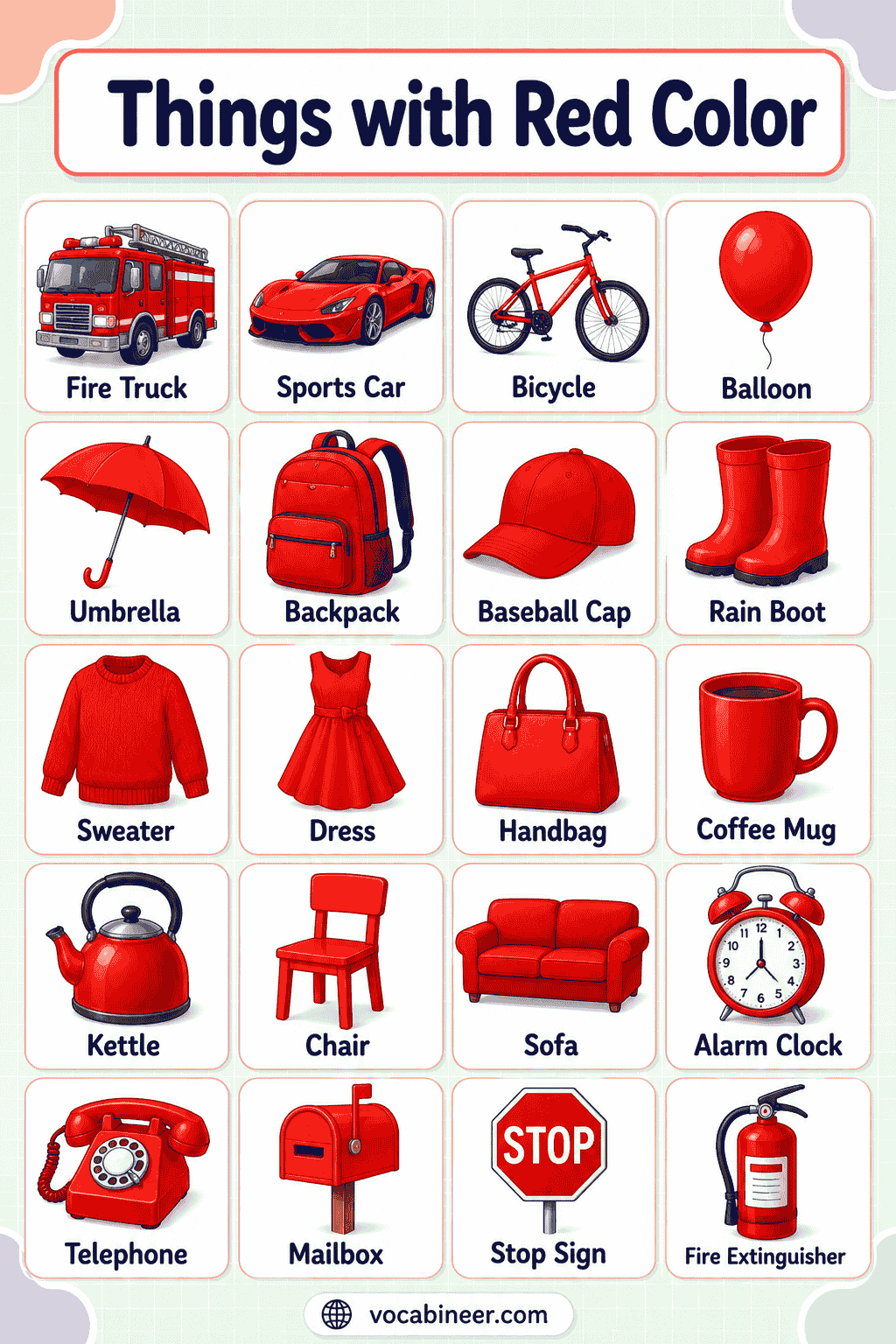
- Red Car: A passenger vehicle with a red exterior.
- Fire Truck: Fire departments commonly use bright colors and reflective markings for visibility.
- Red Bus: Some cities use red as part of their public transportation identity.
- Red Truck: Pickup trucks, cargo trucks, and service vehicles may all come in red.
- Red Motorcycle: Painted panels and fuel tanks create a sporty appearance.
- Red Bicycle: A bright frame helps this two-wheeled vehicle stand out.
- Red Scooter: Both motorized and push scooters are available in red.
- Red Train: A locomotive or passenger train may feature red bodywork or stripes.
- Red Tractor: Several agricultural brands are closely associated with red machinery.
- Red Jeep: Off-road vehicles often use bold exterior colors.
- Red Van: Families and businesses may choose red passenger or cargo vans.
- Red Airplane: Aircraft may have red bodies, tails, wings, or decorative markings.
- Red Helicopter: Rescue and emergency helicopters sometimes use red for easier identification.
- Red Boat: Small boats and rescue craft may feature red hulls.
- Red Race Car: Bright paint and sponsor graphics create a dramatic competition vehicle.
- Red Wagon: Children often use this small four-wheeled cart for play.
Although emergency vehicles frequently use red, color standards vary by country and organization.
Red School and Office Items
Classrooms and workplaces contain many useful red supplies.
- Red Pencil
- Red Pen
- Red Marker
- Red Crayon
- Red Notebook
- Red Book
- Red Folder
- Red Binder
- Red Backpack
- Red Lunchbox
- Red Ruler
- Red Scissors
- Red Eraser
- Red Stapler
- Red Tape
- Red Pencil Case
- Red Paper
- Red Sticky Note
- Red Desk Organizer
- Red Bulletin Board
Teachers may also use red pens or markers to highlight corrections, important instructions, or key vocabulary.
Red Toys and Party Items
Bright red objects often appear in playrooms, classrooms, and celebrations.
- Red Ball
- Red Toy Car
- Red Building Block
- Red Kite
- Red Balloon
- Red Teddy Bear
- Red Yo-Yo
- Red Wagon
- Red Puzzle Piece
- Red Robot
- Red Doll Dress
- Red Drum
- Red Toy Train
- Red Jump Rope
- Red Party Hat
- Red Gift Box
- Red Ribbon
- Red Paper Lantern
- Red Birthday Candle
- Red Party Cup
During a color-sorting activity, children can place these items together and practice saying each name aloud.
Red Tools and Technology
Toolmakers and technology brands often use red cases, handles, or protective coverings.
- Red Hammer
- Red Screwdriver
- Red Toolbox
- Red Drill
- Red Tape Measure
- Red Pliers
- Red Wrench
- Red Utility Knife
- Red Flashlight
- Red Ladder
- Red Laptop
- Red Smartphone
- Red Tablet
- Red Keyboard
- Red Mouse
- Red Headphones
- Red Speaker
- Red Camera
- Red Smartwatch
- Red Power Bank
In this category, red usually describes the outer casing rather than the object’s natural material.
Red Signs and Safety Items
Red frequently communicates stopping, danger, prohibition, urgency, or emergency information.
- Stop Sign: Its red octagonal shape tells drivers to stop completely.
- No-Entry Sign: A red circular design blocks traffic from entering a road or area.
- Red Traffic Light: Drivers and pedestrians must stop when this signal appears.
- Warning Light: A flashing red light may indicate danger, failure, or an emergency.
- Fire Extinguisher: Bright coloring helps people locate this safety device quickly.
- Fire Alarm: Many alarm boxes and pull stations are red for visibility.
- Emergency Button: Pressing this button activates an urgent safety function.
- Exit Sign: Some buildings use illuminated red letters to mark exits.
- Hazard Label: Red often identifies serious warnings or prohibited actions.
- Barrier Tape: Red-and-white tape may block access to dangerous or restricted areas.
- Rescue Buoy: A bright red or orange flotation device remains easy to see near water.
- Emergency Stop Button: Machinery often includes a large red control for immediate shutdown.
Because safety systems differ by location, readers should follow the official symbols and instructions used in their area.
Red Things in Nature
Natural processes create red through pigments, minerals, heat, and changing light.
- Sunset: Dust, moisture, and atmospheric conditions can make the evening sky appear red.
- Sunrise: In a similar way, the morning sky may glow scarlet, coral, or orange-red.
- Autumn Leaf: As green pigments fade, some leaves turn crimson or burgundy.
- Red Soil: Iron-rich minerals often produce a reddish-brown color.
- Red Sand: Certain deserts and beaches contain red mineral particles.
- Red Rock: Iron oxide gives many cliffs and rock formations their warm coloring.
- Lava: Extremely hot lava can glow red, orange, or yellow.
- Ember: A piece of burning wood or coal may continue glowing deep red.
- Mars: Iron minerals make much of the planet’s surface appear reddish.
- Red Tide: Some algal blooms discolor seawater red or brown, although the visible shade varies.
- Red Moon: During a total lunar eclipse, Earth’s atmosphere may make the Moon appear coppery red.
- Red Maple Leaf: During fall, many maple leaves develop brilliant red coloring.
Nature rarely produces one exact shade, so descriptions such as rust red, copper red, and orange-red may be more accurate.
Things with Red Color for Kids
Simple examples help children connect color words with familiar objects.
| Red thing | Easy example sentence |
|---|---|
| Red Apple | I ate a red apple at lunch. |
| Red Ball | The red ball rolled across the floor. |
| Red Car | A red car stopped near our house. |
| Red Chair | Mia sat on the red chair. |
| Red Bag | My books are inside the red bag. |
| Red Flower | The red flower opened in the sun. |
| Red Dress | She wore a red dress to the party. |
| Red Cup | The red cup is full of water. |
| Red Toy | The red toy is under the bed. |
| Red Hat | Noah put on his red hat. |
| Red Kite | The red kite flew high in the sky. |
| Red Balloon | A red balloon floated above the table. |
In addition, children can point to each object, repeat its name, and then use it in a complete sentence.
How to Describe Red Things in English
English usually places a color adjective before the noun it describes.
Examples include:
- a red apple;
- a bright red balloon;
- a dark red flower;
- a shiny red car;
- a soft red blanket;
- a small red bird;
- a deep red gemstone;
- a pale red sunset.
More descriptive sentences provide useful context:
- The child is holding a bright red ball.
- Near the fence, a deep red rose grows in the sunlight.
- This morning, we saw a small red bird in the tree.
- On the counter, the kitchen has a shiny red kettle.
- After cleaning the room, she placed a soft red cushion on the sofa.
When a more exact shade improves the meaning, use words such as crimson, scarlet, burgundy, maroon, ruby, coral, or brick red.
FAQs
Common examples include apples, strawberries, tomatoes, roses, balloons, fire trucks, stop signs, rubies, red cars, and cardinals.
Strawberries, cherries, tomatoes, raspberries, cranberries, pomegranates, red peppers, beets, and red currants naturally appear red or reddish.
Red foxes, red pandas, cardinals, scarlet macaws, ladybugs, red crabs, red salamanders, and several butterflies show red, orange-red, or reddish-brown coloring.
Because red attracts attention quickly, many signs use it to communicate stopping, danger, prohibition, fire safety, or urgent information.
Children can match pictures with words, sort objects by color, repeat names aloud, and practice short sentences about red fruits, toys, flowers, clothes, and classroom supplies.
Read More