

Gymnastics is a sport that uses strength, balance, flexibility, coordination, and body control to perform different movements on the floor or with equipment. It includes several forms, such as artistic gymnastics, rhythmic gymnastics, trampoline gymnastics, aerobic gymnastics, and acrobatic gymnastics.
Each type of gymnastics has its own skills, routines, and style of performance. Learning the types of gymnastics sports with names and pictures helps students understand sports vocabulary and makes it easier to recognize these activities in school lessons, fitness discussions, and sporting events.
In This Page
List of Common Gymnastics Sports Names
Gymnastics includes many sports that test balance, strength, and flexibility. Below is a list of common gymnastics sports names practiced around the world.
- Artistic Gymnastics
- Rhythmic Gymnastics
- Trampoline Gymnastics
- Acrobatic Gymnastics
- Aerobic Gymnastics
- Tumbling
- Floor Exercise
- Vault
- Uneven Bars
- Balance Beam
- Parallel Bars
- Rings
- Pommel Horse
- Rope Climbing
- Ribbon Routine
- Hoop Routine
- Ball Routine
- Clubs Routine
- Mixed Pair Gymnastics
- Group Gymnastics
Main Types of Gymnastics Sports
Gymnastics includes several competitive and performance-based forms that use strength, flexibility, balance, coordination, and body control. Some types focus on apparatus, while others emphasize dance, acrobatics, tumbling, or team routines.
Artistic Gymnastics
A major form of gymnastics in which athletes perform routines on different apparatus while showing strength, balance, flexibility, and control.
Men’s Artistic Gymnastics
A branch of artistic gymnastics for male athletes, with events such as floor exercise, rings, vault, parallel bars, and horizontal bar.
Women’s Artistic Gymnastics
A branch of artistic gymnastics for female athletes, with events such as vault, uneven bars, balance beam, and floor exercise.
Rhythmic Gymnastics
A graceful form of gymnastics that combines dance-like movements with apparatus such as ribbons, hoops, balls, clubs, and ropes.
Trampoline Gymnastics
A form of gymnastics in which athletes perform controlled jumps, twists, and aerial movements on a trampoline.
Synchronized Trampoline
A trampoline event in which two gymnasts perform matching routines at the same time on separate trampolines.
Double Mini-Trampoline
A gymnastics event that uses a small angled and flat trampoline setup for short sequences of jumps and aerial skills.
Tumbling Gymnastics
A form of gymnastics performed on a long spring track, where athletes complete connected acrobatic and tumbling movements.
Acrobatic Gymnastics
A partner or group discipline that combines balances, lifts, throws, and coordinated acrobatic movements.
Aerobic Gymnastics
A fast-paced form of gymnastics that combines continuous movement with strength, flexibility, coordination, and rhythm.
Parkour Gymnastics
A movement-based discipline that involves passing over, under, and around obstacles with speed, control, and creativity.
Gymnastics for All
A recreational and performance-based form of gymnastics designed for people of different ages and skill levels.
TeamGym
A team-based form of gymnastics that combines group floor routines with tumbling and trampoline-style events.
Aesthetic Group Gymnastics
A group discipline that focuses on flowing body movements, balance, flexibility, coordination, and synchronized performance.
Wheel Gymnastics
A form of gymnastics in which athletes perform movements while using a large circular gymnastics wheel.
Floor Gymnastics
A gymnastics event based on routines performed on a floor area using tumbling, jumps, turns, balances, and choreographed movements.
Vault Gymnastics
A gymnastics event in which athletes perform a powerful movement over a vaulting apparatus and finish with a controlled landing.
Balance Beam Gymnastics
A gymnastics event in which athletes perform jumps, turns, balances, and acrobatic movements on a narrow beam.
Uneven Bars Gymnastics
A gymnastics event performed on two horizontal bars set at different heights.
Horizontal Bar Gymnastics
A gymnastics event in which athletes perform swings, turns, releases, and other movements around a single high bar.
Olympic Gymnastics Disciplines Names
The list of Olympic gymnastics sports names includes the disciplines recognized in global competitions. Learning these names helps identify which types of gymnastics appear in major events.
- Men’s Artistic Gymnastics: Includes floor exercise, pommel horse, still rings, vault, parallel bars, and horizontal bar. Focuses on strength and skill.
- Women’s Artistic Gymnastics: Consists of vault, uneven bars, balance beam, and floor exercise. Emphasizes balance, grace, and controlled movement.
- Rhythmic Gymnastics at the Olympics: Performed with ribbons, hoops, clubs, and balls. Judged for rhythm, creativity, and execution.
- Trampoline Events: Athletes perform multiple flips and twists at height. Scored on precision, height, and aerial control.
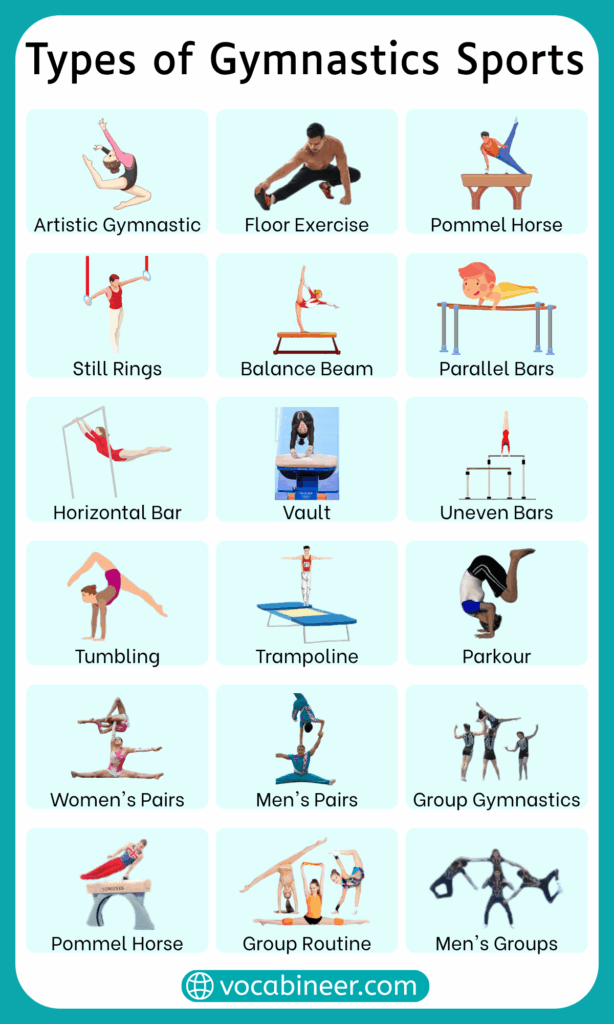
Other Recognized Gymnastics Forms Names
Besides Olympic and main types, there are other forms in the list of gymnastics sports names that are practiced worldwide.
- General Gymnastics: Non-competitive and suitable for all ages. Focuses on coordination, flexibility, and safe exercises.
- Team Gym: Combines tumbling, trampette, and group floor routines. Teams perform synchronized exercises showing agility and teamwork.
List of Key Apparatus Names in Artistic Gymnastics
Learning the names of key artistic gymnastics apparatus is essential for understanding performance and judging.
- Floor Exercises: Combines jumps, tumbling, and dance-like moves on a spring floor. Highlights control, strength, and flow.
- Vault: Athletes sprint, spring off the table, and perform flips or twists before landing safely.
- Balance Beam: Narrow beam for jumps, turns, and acrobatics. Requires precision and concentration.
- Uneven Bars: Two bars at different heights for swinging, transitions, and release moves. Emphasizes upper-body strength.
- Pommel Horse: Continuous circular leg swings and handstands. Requires rhythm, balance, and coordination.
- Rings: Includes static holds and swinging movements. Strength and stability are critical.
- Parallel Bars: Swings, flight elements, and controlled landings. Displays power, precision, and coordination.
Conclusion
Learning the list of gymnastics sports names with pictures helps readers understand different disciplines, apparatus, and routines. Recognizing these common types of gymnastics makes it easier to discuss competitions and events confidently while identifying artistic and acrobatic forms.
FAQs about Types of Gymnastics Sports
The main types of gymnastics sports include artistic, rhythmic, trampoline, acrobatic, aerobic, and tumbling. Each type has unique skills, routines, and apparatus.
Common apparatus in artistic gymnastics are floor, vault, balance beam, uneven bars, pommel horse, rings, and parallel bars. Each requires specific skills to perform routines.
Olympic gymnastics sports include men’s and women’s artistic gymnastics, rhythmic gymnastics, and trampoline events. These are judged based on execution, difficulty, and performance quality.
Acrobatic gymnastics focuses on pairs or groups performing lifts, balances, and throws, while artistic gymnastics emphasizes individual skills on apparatus like bars, beam, and floor.
Knowing the names of gymnastics sports helps identify disciplines, recognize routines, discuss events confidently, and understand both artistic and acrobatic forms with clarity.
Read More