Diseases names are useful health vocabulary words that help learners talk about common illnesses, symptoms, and medical conditions in English. Words like cold, flu, asthma, diabetes, malaria, dengue, cancer, and heart disease are often used in daily conversation, school lessons, hospitals, health articles, and English vocabulary practice.
This guide explains diseases names in English with simple meanings, categories, symptoms, example sentences, and picture ideas. It is helpful for students, kids, ESL learners, beginners, teachers, and anyone learning basic health and medical vocabulary.
In This Page
Medical Disclaimer
This article is for English vocabulary learning only. It does not give medical advice, diagnosis, or treatment. For personal health problems, always speak with a qualified doctor or healthcare professional.
What Are Diseases?
Diseases are health conditions that affect the body or mind. Some diseases are caused by germs, while others may be linked to lifestyle, genetics, nutrition, age, environment, or other health factors.
A disease may affect one part of the body, such as the skin, lungs, heart, stomach, blood, brain, bones, eyes, or ears. Some diseases are short-term, while others last for a long time and need regular care.
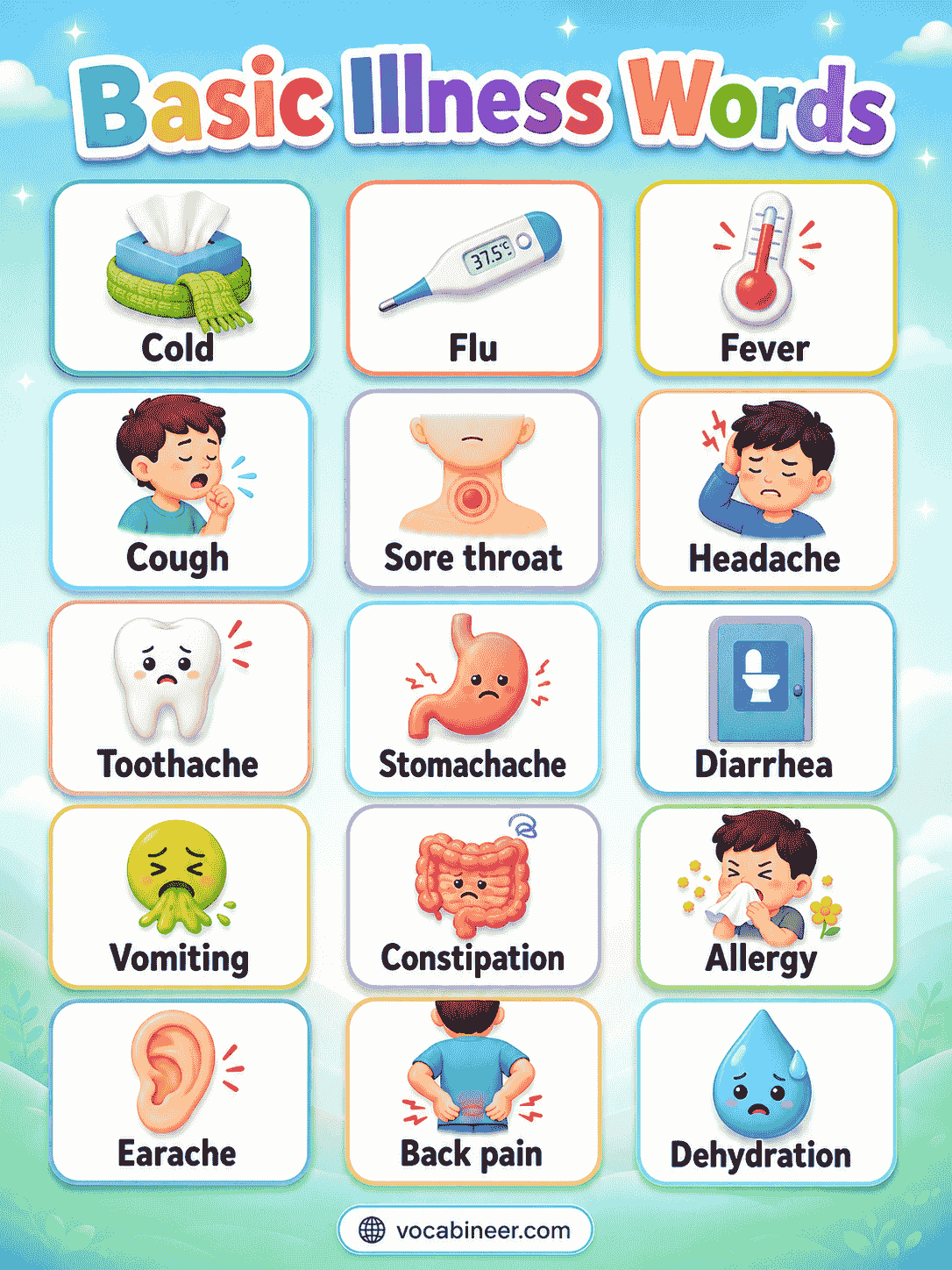
Common Diseases, Illnesses, and Symptoms
Some health words are diseases, some are illnesses, and some are symptoms. Words like fever, cough, headache, toothache, and vomiting are often symptoms, but learners commonly search for them with disease names.
Common health vocabulary includes:
- Cold — a common illness affecting the nose and throat
- Flu — a viral illness that may cause fever, body pain, and tiredness
- Fever — a higher-than-normal body temperature
- Cough — a sudden sound from the throat or chest
- Asthma — a condition that can make breathing difficult
- Diabetes — a disease that affects blood sugar
- Malaria — a mosquito-borne disease that may cause fever and chills
- Dengue — a mosquito-borne viral illness
- Headache — pain in the head
- Toothache — pain in or around a tooth
Main Types of Diseases
Diseases can be grouped by cause, duration, or the part of the body they affect.
| Type of Disease | Simple Meaning | Examples |
|---|---|---|
| Infectious diseases | Diseases caused by germs and may sometimes spread | Flu, COVID-19, tuberculosis, malaria |
| Non-infectious diseases | Diseases not spread from person to person | Diabetes, cancer, asthma, heart disease |
| Acute diseases | Illnesses that often start suddenly and may last a short time | Cold, flu, food poisoning |
| Chronic diseases | Long-term diseases that may need ongoing care | Diabetes, asthma, arthritis |
| Genetic diseases | Diseases linked to inherited genes | Sickle cell disease, thalassemia, hemophilia |
| Deficiency diseases | Diseases caused by a lack of nutrients | Rickets, scurvy, anemia |
| Skin diseases | Conditions that affect the skin | Acne, eczema, psoriasis, ringworm |
| Body system diseases | Diseases that affect body systems or organs | Stroke, pneumonia, kidney disease |
Diseases Names by Category
Disease names are easier to learn when they are grouped by type. These categories help learners understand how different health words are connected.
- Common illnesses and symptoms: cold, flu, fever, cough, headache
- Infectious diseases: malaria, dengue, tuberculosis, typhoid
- Non-infectious diseases: diabetes, asthma, cancer, heart disease
- Long-term diseases: arthritis, asthma, diabetes, high blood pressure
- Genetic diseases: sickle cell disease, thalassemia, hemophilia
- Deficiency diseases: rickets, scurvy, anemia
- Skin diseases: acne, eczema, psoriasis, ringworm
- Body system diseases: stroke, pneumonia, kidney disease, liver disease
100 Diseases Names with Meanings
This list includes disease names, illness names, symptoms, and common health conditions used in English vocabulary learning.
Common Illnesses and Symptoms
These words are common in daily health conversations and beginner English lessons.
| No. | Disease, Illness, or Symptom | Simple Meaning |
|---|---|---|
| 1 | Cold | A common illness affecting the nose and throat |
| 2 | Flu | A viral illness that may cause fever and body pain |
| 3 | Fever | High body temperature |
| 4 | Cough | A sudden sound from the throat or chest |
| 5 | Sore throat | Pain or irritation in the throat |
| 6 | Headache | Pain in the head |
| 7 | Toothache | Pain in or around a tooth |
| 8 | Stomachache | Pain in the stomach area |
| 9 | Diarrhea | Frequent loose or watery stool |
| 10 | Vomiting | Throwing up food or liquid from the stomach |
| 11 | Food poisoning | Illness caused by unsafe or spoiled food |
| 12 | Constipation | Difficulty passing stool |
| 13 | Acidity | Burning or sour feeling caused by stomach acid |
| 14 | Allergy | A reaction to something the body does not accept well |
| 15 | Skin allergy | An allergic reaction on the skin |
| 16 | Earache | Pain in the ear |
| 17 | Back pain | Pain in the back |
| 18 | Joint pain | Pain in joints |
| 19 | Muscle pain | Pain in muscles |
| 20 | Dehydration | A condition caused by not having enough water in the body |
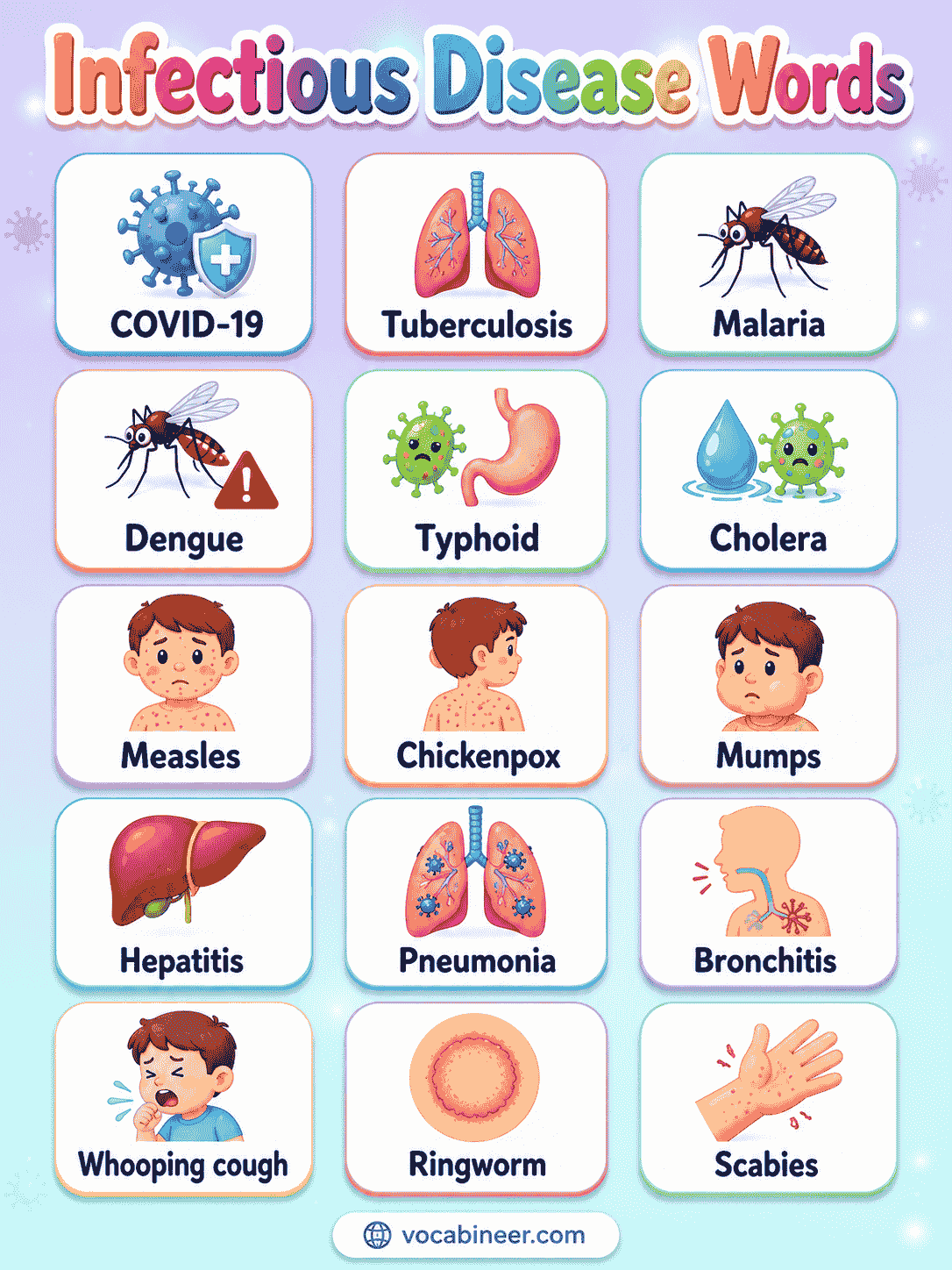
Infectious Diseases
These diseases are caused by germs such as viruses, bacteria, fungi, or parasites.
| No. | Disease Name | Simple Meaning |
|---|---|---|
| 21 | COVID-19 | A viral disease that can affect breathing and general health |
| 22 | Tuberculosis | A bacterial disease that usually affects the lungs |
| 23 | Malaria | A mosquito-borne disease that may cause fever and chills |
| 24 | Dengue | A mosquito-borne viral illness |
| 25 | Typhoid | A bacterial illness often linked to unsafe food or water |
| 26 | Cholera | A bacterial disease that can cause severe diarrhea |
| 27 | Measles | A contagious viral disease with fever and rash |
| 28 | Chickenpox | A contagious disease with itchy spots or blisters |
| 29 | Mumps | A viral disease that can cause swelling near the jaw |
| 30 | Hepatitis | Inflammation of the liver, often caused by infection |
| 31 | Pneumonia | Infection or inflammation in the lungs |
| 32 | Bronchitis | Inflammation of the breathing tubes |
| 33 | Whooping cough | A contagious cough illness |
| 34 | Meningitis | Inflammation around the brain and spinal cord |
| 35 | Rabies | A serious viral disease often spread through animal bites |
| 36 | Tetanus | A serious bacterial disease affecting nerves and muscles |
| 37 | Polio | A viral disease that can affect movement |
| 38 | Ringworm | A fungal skin infection |
| 39 | Scabies | A skin condition caused by tiny mites |
| 40 | Hand, foot, and mouth disease | A contagious illness common in children |
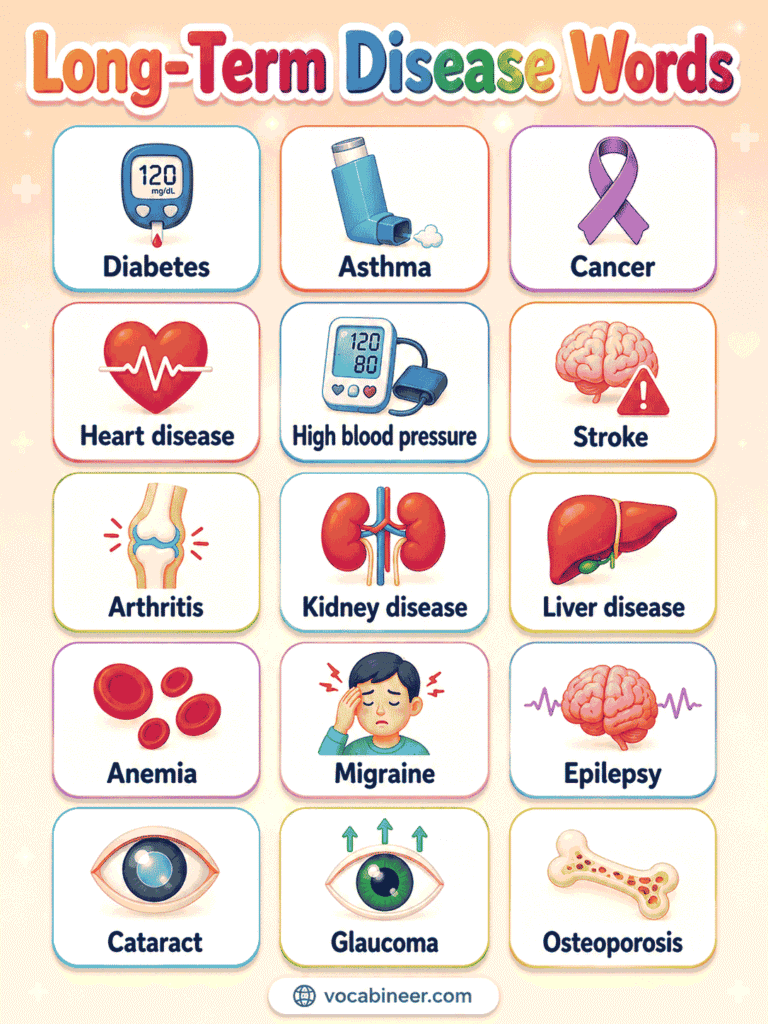
Long-Term Diseases
These diseases may last for a long time and may need regular care.
| No. | Disease Name | Simple Meaning |
|---|---|---|
| 41 | Diabetes | A disease that affects blood sugar levels |
| 42 | Asthma | A condition that can make breathing difficult |
| 43 | Cancer | A disease in which abnormal cells grow uncontrollably |
| 44 | Heart disease | A disease affecting the heart |
| 45 | High blood pressure | A condition where blood pressure is too high |
| 46 | Stroke | A condition caused by blocked or bleeding blood vessels in the brain |
| 47 | Arthritis | A disease causing joint pain or swelling |
| 48 | Kidney disease | A condition affecting kidney function |
| 49 | Liver disease | A condition affecting the liver |
| 50 | Anemia | A condition with low healthy red blood cells or hemoglobin |
| 51 | Migraine | A severe type of headache |
| 52 | Epilepsy | A condition that can cause seizures |
| 53 | Parkinson’s disease | A nervous system disease affecting movement |
| 54 | Alzheimer’s disease | A brain disease affecting memory and thinking |
| 55 | COPD | A long-term lung disease that makes breathing hard |
| 56 | Obesity | A condition of having too much body fat |
| 57 | Depression | A mental health condition with long-lasting sadness or low mood |
| 58 | Anxiety disorder | A condition involving strong worry or fear |
| 59 | Gout | A painful joint condition often affecting the foot |
| 60 | Osteoporosis | A condition that makes bones weak or fragile |
Genetic and Deficiency Diseases
These diseases may be linked to inherited traits or a lack of important nutrients.
| No. | Disease Name | Simple Meaning |
|---|---|---|
| 61 | Sickle cell disease | An inherited blood disorder affecting red blood cells |
| 62 | Thalassemia | An inherited blood disorder affecting hemoglobin |
| 63 | Hemophilia | A condition where blood does not clot normally |
| 64 | Cystic fibrosis | An inherited disease affecting lungs and digestion |
| 65 | Down syndrome | A genetic condition affecting development |
| 66 | Rickets | A bone disease often linked to vitamin D deficiency |
| 67 | Scurvy | A disease caused by vitamin C deficiency |
| 68 | Beriberi | A disease linked to vitamin B1 deficiency |
| 69 | Goiter | Swelling in the neck often linked to thyroid problems |
| 70 | Night blindness | Poor vision in low light, sometimes linked to vitamin A deficiency |
Skin Diseases
These disease names are useful for learning skin-related health vocabulary.
| No. | Disease Name | Simple Meaning |
|---|---|---|
| 71 | Acne | A skin condition with pimples |
| 72 | Eczema | A skin condition causing dryness, redness, or itching |
| 73 | Psoriasis | A skin disease with thick, scaly patches |
| 74 | Rash | Red or irritated skin |
| 75 | Warts | Small skin growths caused by a virus |
| 76 | Hives | Raised itchy bumps on the skin |
| 77 | Vitiligo | A condition causing loss of skin color in patches |
| 78 | Boil | A painful swollen skin infection |
| 79 | Fungal infection | An infection caused by fungus |
| 80 | Skin infection | Infection affecting the skin |
Diseases by Body Part or System
These names are grouped by the part or system of the body they affect.
| No. | Disease Name | Simple Meaning |
|---|---|---|
| 81 | Heart attack | A serious heart problem caused by blocked blood flow |
| 82 | Heart failure | A condition where the heart does not pump well enough |
| 83 | Angina | Chest pain linked to reduced blood flow to the heart |
| 84 | Arrhythmia | An irregular heartbeat |
| 85 | Atherosclerosis | Hardening or narrowing of arteries |
| 86 | Cataract | Clouding of the eye lens |
| 87 | Glaucoma | An eye disease that can damage vision |
| 88 | Conjunctivitis | Red or inflamed eyes, often called pink eye |
| 89 | Ear infection | Infection in the ear |
| 90 | Hearing loss | Partial or complete loss of hearing |
| 91 | Tinnitus | Ringing or buzzing sound in the ears |
| 92 | Gastritis | Inflammation of the stomach lining |
| 93 | Ulcer | A sore inside the stomach or other body part |
| 94 | Appendicitis | Inflammation of the appendix |
| 95 | Leukemia | A cancer of blood-forming tissues |
| 96 | Sickle cell anemia | A form of sickle cell disease affecting blood cells |
| 97 | Fracture | A broken bone |
| 98 | Kidney stone | A hard stone-like deposit in the kidney |
| 99 | Gallstone | A hard deposit in the gallbladder |
| 100 | Sinusitis | Inflammation or infection of the sinuses |
Most Common Diseases and Illnesses
Some disease and illness names are used more often in daily English because they describe common health problems.
Common examples include:
- Cold — a common nose and throat illness
- Flu — a viral illness with fever and body pain
- Fever — high body temperature
- Cough — a sudden throat or chest sound
- Asthma — a condition that can affect breathing
- Diabetes — a disease that affects blood sugar
- Malaria — a mosquito-borne disease
- Dengue — a mosquito-borne viral illness
- Chickenpox — a contagious illness with itchy spots
- Food poisoning — illness caused by unsafe food
Diseases Names with Symptoms
This table shows common diseases or health problems with simple symptom examples.
| Disease or Health Problem | Common Symptoms |
|---|---|
| Cold | Runny nose, cough, sore throat |
| Flu | Fever, body pain, tiredness |
| Asthma | Wheezing, coughing, trouble breathing |
| Malaria | Fever, chills, sweating |
| Dengue | High fever, body pain, rash |
| Chickenpox | Itchy rash, fever, spots |
| Diabetes | Increased thirst, frequent urination, tiredness |
| Food poisoning | Vomiting, diarrhea, stomach pain |
| Ear infection | Ear pain, fever, hearing trouble |
| Pneumonia | Cough, fever, chest pain, breathing trouble |
Diseases Names with Example Sentences
Example sentences help learners use disease names correctly in English.
- He has a fever today.
- She caught a cold last week.
- The flu can make people feel very tired.
- Asthma can make breathing difficult.
- Diabetes affects blood sugar.
- Malaria is spread by mosquitoes.
- Dengue can cause high fever and body pain.
- Chickenpox often causes itchy spots.
- Arthritis can cause joint pain.
- Anemia can make a person feel weak.
Common Diseases and Illnesses for Kids
Children often learn simple health words first because these words are common at home, school, and clinics.
Common diseases, illnesses, and symptoms for kids include:
- Fever — high body temperature
- Cold — a common nose and throat illness
- Cough — a common throat or chest symptom
- Flu — a viral illness
- Sore throat — pain or irritation in the throat
- Ear infection — infection in the ear
- Chickenpox — an illness with itchy spots
- Measles — a contagious illness with rash and fever
- Mumps — an illness that may cause swelling near the jaw
- Diarrhea — loose or watery stool
Diseases Names with Pictures Chart
A disease names picture chart can help learners connect health words with simple visual examples.
Picture chart ideas:
- Common illnesses: cold, flu, fever, cough
- Skin problems: acne, rash, eczema, ringworm
- Mosquito-borne diseases: malaria, dengue
- Children’s illnesses: chickenpox, measles, mumps
- Long-term diseases: asthma, diabetes, arthritis
- Eye and ear problems: cataract, conjunctivitis, ear infection
When to Get Medical Help
This section gives general safety guidance for readers learning health vocabulary.
Seek medical help if someone has:
- Chest pain
- Trouble breathing
- Severe pain
- High fever
- Severe dehydration
- Confusion
- Fainting
- Serious injury
- Symptoms that get worse
- Symptoms that do not improve
Difference Between Common Disease Terms
Some health words look similar, but they do not always mean the same thing.
| Comparison | Main Difference |
|---|---|
| Disease vs illness | A disease is a medical condition; illness is how a person feels when unwell. |
| Infection vs disease | An infection is caused by germs; a disease can have many causes. |
| Symptom vs disease | A symptom is what a person feels or notices; a disease is the health condition. |
| Acute disease vs chronic disease | Acute diseases often start suddenly and may last a short time; chronic diseases last longer and may need ongoing care. |
| Cold vs flu | A cold is usually milder; flu is often stronger and may cause fever and body pain. |
| Diabetes vs high blood pressure | Diabetes affects blood sugar; high blood pressure affects blood pressure. |
Common Mistakes When Learning Diseases Names
Learners often confuse disease names, symptom names, and general health words.
Common mistakes include:
- Calling every symptom a disease
- Confusing cold and flu
- Using infection and disease as the same word
- Mixing up diabetes and high blood pressure
- Spelling disease names incorrectly
- Forgetting that some diseases can have more than one symptom
How to Learn Diseases Names Easily
Disease vocabulary becomes easier when words are grouped by type, body part, or symptom.
Helpful learning tips:
- Learn common illness names first
- Group disease names by category
- Use picture charts for visual memory
- Practice simple example sentences
- Compare similar health words in tables
- Learn related symptom names
- Review medical vocabulary slowly
Related Health Vocabulary
Related vocabulary helps learners understand disease names in a wider health context.
Useful related topics include:
- Body parts
- Symptoms names
- Types of doctors
- Hospital vocabulary
- Medical tools
- Medicine names
- First aid vocabulary
FAQ
Common disease names in English include cold, flu, asthma, diabetes, malaria, dengue, chickenpox, measles, tuberculosis, and heart disease.
Infectious diseases are diseases caused by germs such as viruses, bacteria, fungi, or parasites. Examples include flu, COVID-19, tuberculosis, malaria, dengue, and measles.
A disease is a health condition, while a symptom is something a person feels or notices. For example, flu is an illness, while fever and cough are symptoms.
Common diseases and illnesses for kids include cold, flu, fever, cough, sore throat, ear infection, chickenpox, measles, mumps, and diarrhea.
Students should learn disease names to build health vocabulary, understand simple medical topics, read health lessons, and talk about common illnesses in English.
Read More
- Types of Doctors in English
- 3 Letter Words in English
- 4 Letter Words in English
- 5 Letter Words in English
- 6 Letter Words in English
- Rhyming Words in English
- Basic English Words for Kids
- Positive Words List in English