

Clothes are the items people wear in daily life, and their types change based on weather, activities, age, and occasions. Clothing names are commonly used in conversations, shopping pages, school lessons, and travel settings. Understanding these terms makes it easier to follow outfit descriptions and talk about what people wear in everyday situations.
This article explains the types of clothes through clear sections and lists. It focuses on common clothing names in English, helping readers recognize outfits worn for daily routines, formal events, and different seasons.
In This Page
Types of Clothes by Everyday Wear
Everyday clothes are worn during regular daily activities such as staying at home, going outside, or meeting people casually. These clothes focus on comfort, ease of movement, and simple style. Their names are commonly used in daily conversations and online clothing listings.
- Casual clothes are worn during normal daily routines. These include t-shirts, jeans, casual tops, and simple trousers that feel comfortable throughout the day.
- Home wear includes clothes worn inside the house. Examples are loose shirts, soft pants, and relaxed outfits meant for comfort.
- Sleepwear refers to clothes worn while sleeping. Pajamas, night suits, and sleep shirts fall under this group.
- Loungewear is worn during rest time at home. These clothes are soft and relaxed but suitable for short outings as well.
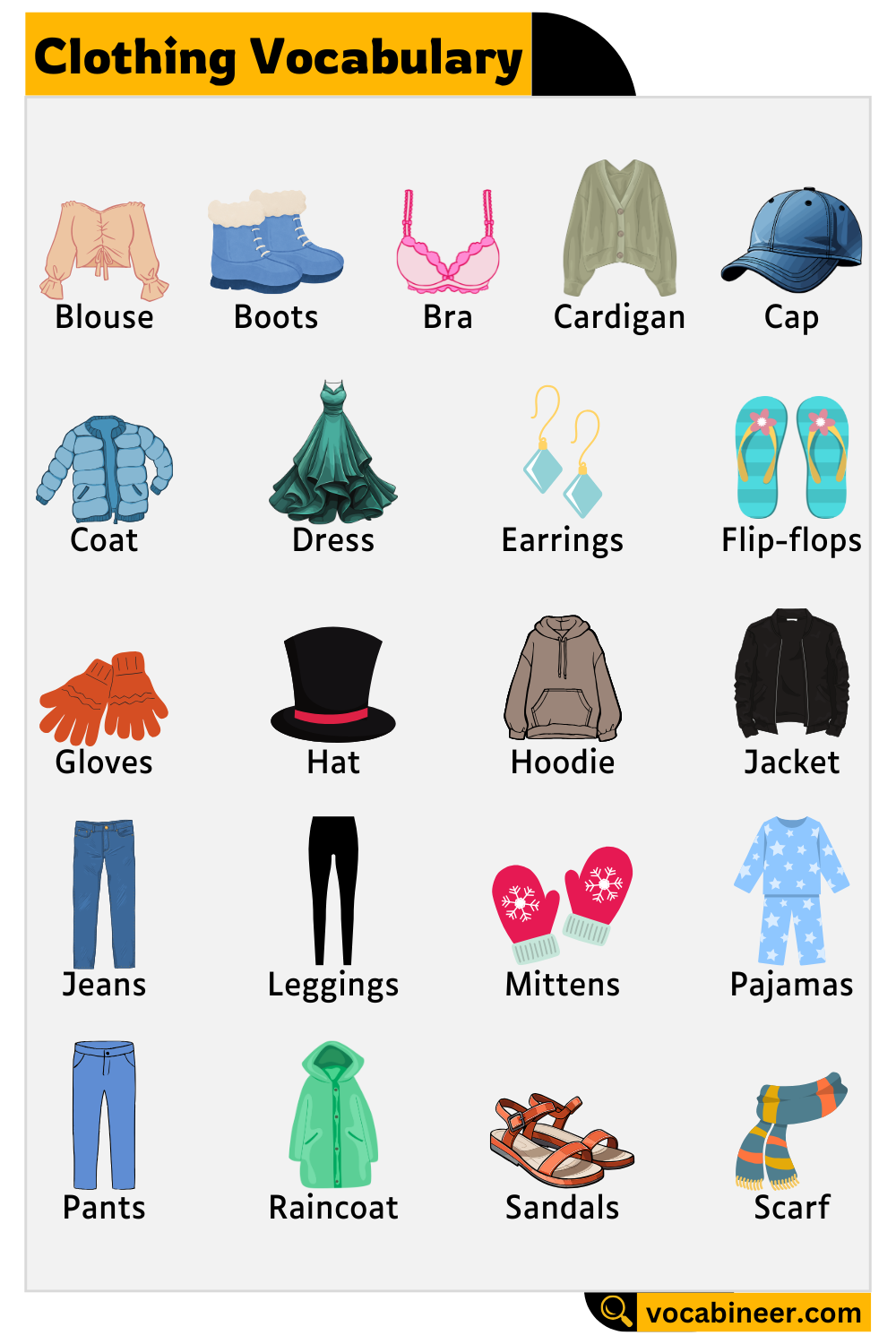
Types of Clothes by Season
Seasonal clothes are selected based on weather conditions. These clothes help the body stay cool or warm and are often mentioned in seasonal outfit discussions and shopping categories.
- Summer clothes are lightweight and breathable. Cotton shirts, shorts, skirts, and light dresses are common summer choices.
- Winter clothes are designed to keep the body warm. Sweaters, jackets, coats, scarves, and thermal wear are included.
- Rainy season clothes are worn during wet weather. Raincoats, waterproof jackets, and ponchos help protect from rain.
- All-season clothes can be worn throughout the year. Jeans, full-sleeve shirts, and light jackets often fit this category.
Types of Clothes by Occasion
Occasion-based clothes are worn depending on events, gatherings, or social settings. These clothing names appear often in invitations and dress instructions.
- Formal clothes are worn at official events, meetings, or ceremonies. Suits, blazers, formal shirts, and formal dresses are common examples.
- Party wear includes stylish outfits worn during celebrations. These may include decorated dresses, fashionable tops, or coordinated sets.
- Office wear is worn in professional workplaces. Shirts, trousers, skirts, and blouses are part of office clothing.
- Traditional clothes are worn during cultural events and festivals. These outfits reflect cultural identity and customs.
Types of Clothes for Men
Men’s clothing includes casual wear, formal wear, sportswear, outerwear, and traditional styles for different occasions and weather conditions. Learning common types of clothes for men helps children and English learners build clothing vocabulary and recognize everyday garments more easily.
T-Shirt
A T-shirt is a casual top with short sleeves and a simple round or V-shaped neckline. Men commonly wear it with jeans, shorts, or casual trousers.
Shirt
A shirt is an upper-body garment with sleeves, a collar, and a front opening with buttons. It works well for both casual and formal outfits.
Polo Shirt
A polo shirt has a soft collar, short sleeves, and a short buttoned opening at the neck. Its neat design suits casual and semi-formal wear.
Dress Shirt
A dress shirt has a structured collar, long sleeves, and a buttoned front. Men often pair it with formal trousers, ties, and suits.
Sweater
A sweater is a knitted garment that adds warmth during cool or cold weather. It comes in styles such as crew neck, V-neck, and turtleneck.
Hoodie
A hoodie is a casual top with long sleeves and an attached hood. Many designs also include a front pocket and soft fleece lining.
Jacket
A jacket is an outer garment that provides warmth, protection, or style. Different types include denim, leather, bomber, and winter jackets.
Blazer
A blazer is a structured jacket that creates a smart appearance without requiring a full matching suit. Men often wear it with shirts, chinos, or dress trousers.
Suit
A suit usually combines a matching jacket and trousers. Men wear suits for business meetings, weddings, ceremonies, and other formal events.
Waistcoat
A waistcoat is a sleeveless formal garment worn over a shirt and under a suit jacket. It often forms part of a three-piece suit.
Jeans
Jeans are durable trousers usually made from denim. Men wear them for casual and everyday outfits.
Chinos
Chinos are lightweight cotton trousers with a cleaner appearance than jeans. They suit casual, smart-casual, and semi-formal clothing.
Dress Trousers
Dress trousers are tailored pants designed for formal or professional wear. Men commonly pair them with shirts, blazers, or suit jackets.
Cargo Pants
Cargo pants have a relaxed fit and several large utility pockets. Their practical design makes them popular for casual and outdoor wear.
Shorts
Shorts cover the body from the waist to above or around the knees. Men commonly wear them in warm weather, during exercise, or for casual activities.
Track Pants
Track pants are comfortable athletic trousers made for exercise, sports, or casual wear. Soft fabric and an elastic waistband allow easy movement.
Kurta
A kurta is a long, loose shirt that usually reaches the knees or thighs. Men often wear it with trousers or other traditional lower garments.
Sherwani
A sherwani is a long formal coat-like garment worn for weddings, celebrations, and traditional events. Its detailed embroidery often gives it an elegant appearance.
Overcoat
An overcoat is a long outer garment worn over other clothes during cold weather. Thick fabric helps provide additional warmth.
Vest
A vest is a sleeveless garment worn over or under other clothing. Depending on the style, it can provide warmth, utility, or a casual layered look.
Types of Clothes for Women
Women’s clothing includes casual wear, formal wear, sportswear, outerwear, traditional clothing, and seasonal garments for different occasions and weather conditions. Learning common types of clothes for women helps children and English learners build clothing vocabulary and recognize everyday garments more easily.
T-Shirt
A T-shirt is a casual top with short sleeves and a round or V-shaped neckline. Women often pair it with jeans, shorts, skirts, or casual trousers.
Blouse
A blouse is a lightweight upper-body garment that may include buttons, collars, pleats, or decorative details. It works well for casual, office, and semi-formal outfits.
Shirt
A shirt usually has a collar, sleeves, and a buttoned front. Women wear shirts with trousers, jeans, skirts, or layered outfits.
Tank Top
A tank top is a sleeveless top with wide or narrow shoulder straps. People commonly wear it in warm weather or as a base layer.
Sweater
A sweater is a knitted garment that provides warmth during cool or cold weather. Common styles include crew neck, V-neck, and turtleneck designs.
Cardigan
A cardigan is a knitted top with an open front that may include buttons or a zipper. Its flexible design makes it easy to layer over shirts, dresses, and tops.
Hoodie
A hoodie is a casual long-sleeved top with an attached hood. Many styles also include a front pocket and soft fleece fabric.
Jacket
A jacket is an outer garment that adds warmth, protection, or style. Common options include denim, leather, bomber, and winter jackets.
Blazer
A blazer is a structured jacket that gives an outfit a smart and polished appearance. Women often wear it with dresses, skirts, jeans, or tailored trousers.
Dress
A dress is a one-piece garment that covers the upper body and extends downward in different lengths. Styles range from casual and summer dresses to formal evening wear.
Skirt
A skirt is a lower-body garment that hangs from the waist. It comes in many lengths and styles, including mini, midi, maxi, pleated, and pencil skirts.
Jeans
Jeans are durable trousers usually made from denim. Women wear them in many cuts, including straight, skinny, wide-leg, and bootcut styles.
Trousers
Trousers cover both legs separately and come in casual, professional, and formal designs. Women often pair them with shirts, blouses, sweaters, or blazers.
Leggings
Leggings are close-fitting stretch trousers that provide comfort and flexibility. People commonly wear them for exercise, casual outfits, or layering.
Shorts
Shorts cover the body from the waist to above or around the knees. Women often wear them during warm weather, exercise, or casual activities.
Jumpsuit
A jumpsuit is a one-piece garment that combines a top and trousers. Different styles suit casual wear, work, parties, and formal occasions.
Kurta
A kurta is a long, loose top that usually reaches the thighs or knees. Women often wear it with trousers, leggings, or other traditional lower garments.
Saree
A saree is a long piece of fabric wrapped and draped around the body with a fitted blouse. Women commonly wear it for traditional, formal, and festive occasions.
Coat
A coat is a longer outer garment that provides warmth and protection during cold weather. Wool, padded, and trench styles are common.
Vest
A vest is a sleeveless garment worn over or under other clothing. Depending on the design, it can add warmth, utility, or an extra layer to an outfit.
Types of Clothes for Children
Children’s clothing includes everyday wear, school clothes, sleepwear, sportswear, outerwear, and seasonal garments designed for comfort and easy movement. Learning common types of clothes for children helps kids and English learners build clothing vocabulary and recognize familiar garments more easily.
T-Shirt
A T-shirt is a soft casual top with short sleeves and a simple neckline. Children often wear it with shorts, jeans, skirts, or trousers.
Shirt
A shirt usually has a collar, sleeves, and a buttoned front. Children may wear shirts for school, family events, or everyday outfits.
Polo Shirt
A polo shirt has a soft collar, short sleeves, and a short buttoned opening at the neck. Its neat design works well for school and casual wear.
Sweater
A sweater is a knitted garment that keeps children warm during cool or cold weather. Common styles include crew neck, V-neck, and patterned designs.
Hoodie
A hoodie is a casual long-sleeved top with an attached hood. Many styles also include a front pocket and soft fleece lining.
Jacket
A jacket is an outer garment that provides warmth and protection. Children wear denim, rain, fleece, and winter jackets in different seasons.
Coat
A coat is a longer outer garment designed for cold weather. Thick fabric or insulation helps keep the body warm.
Dress
A dress is a one-piece garment that covers the upper body and extends downward. Children wear casual, party, summer, and formal dresses.
Skirt
A skirt is a lower-body garment that hangs from the waist. It comes in different lengths, colors, and styles for school or casual wear.
Jeans
Jeans are durable trousers made from denim. Children often wear them for school, outings, and everyday activities.
Trousers
Trousers cover both legs separately and come in casual, school, and formal styles. Comfortable fabrics allow children to move easily.
Shorts
Shorts cover the body from the waist to above or around the knees. Children commonly wear them in warm weather and during active play.
Leggings
Leggings are close-fitting stretch trousers that provide comfort and flexibility. Children often wear them with T-shirts, dresses, or long tops.
Track Pants
Track pants are soft athletic trousers with a flexible waistband. They work well for sports, exercise, school activities, and casual wear.
Pajamas
Pajamas are comfortable clothes designed for sleeping. Sets often include a soft top with matching trousers or shorts.
Overalls
Overalls are one-piece garments with trousers and a bib-style upper section held by shoulder straps. Children often wear them for casual play.
Raincoat
A raincoat is a water-resistant outer garment that helps keep children dry during wet weather. Many designs include a hood.
School Uniform
A school uniform is a standard set of clothes worn by students at school. It may include shirts, trousers, skirts, sweaters, or blazers.
Swimsuit
A swimsuit is clothing designed for swimming and water activities. Styles vary according to age, activity, and design.
Dungarees
Dungarees are sturdy overalls usually made from denim or similar fabric. Their practical design makes them suitable for active everyday wear.

Types of Clothes by Body Coverage
Some clothes are grouped by the part of the body they cover. These terms are often used in basic clothing descriptions.
- Upper body clothes include shirts, blouses, tops, jackets, and sweaters.
- Lower body clothes include pants, skirts, trousers, shorts, and leggings.
- Full body clothes include dresses, jumpsuits, robes, and coveralls.
Types of Clothes by Fabric
Fabric-based clothing names describe the material used to make clothes. These terms appear often in product descriptions.
- Cotton clothes are soft, breathable, and suitable for warm weather.
- Wool clothes are warm and worn in cold seasons.
- Denim clothes include jeans and jackets made from thick cotton fabric.
- Silk clothes are smooth and often worn on special occasions.
- Synthetic clothes are made from man-made fibers and used for sports or performance wear.
Types of Clothes by Fit
Fit describes how clothes sit on the body. These terms are commonly used when buying clothes.
- Loose fit clothes hang freely and allow more movement.
- Regular fit clothes provide a balanced fit that is not tight or loose.
- Slim fit clothes follow the shape of the body closely.
- Oversized clothes are intentionally made larger for style or comfort.
Types of Clothes by Length
Length-based terms describe how long a garment is.
- Short length clothes end above the knee.
- Knee length clothes reach the knee.
- Long length clothes extend below the knee or to the ankle.
Types of Clothes by Activity
Some clothes are designed for specific physical activities.
- Sportswear is worn during sports activities.
- Gym wear includes clothes designed for workouts.
- Activewear supports movement and flexibility.
- Yoga wear is stretchable and comfortable for yoga practice.
Types of Clothes by Layering
Layered clothing helps manage body temperature.
- Base layer clothing is worn closest to the skin.
- Mid-layer clothing provides insulation and warmth.
- Outer layer clothing protects against weather conditions.
Types of Clothes by Formality Level
Formality level describes how formal clothes appear.
- Casual wear is relaxed and used daily.
- Semi-formal wear is neat and worn at meetings.
- Formal wear is worn at official events.
Types of Clothes by Age Group
Clothing styles often vary based on age.
- Teen clothing is designed for teenagers.
- Adult clothing is worn by grown individuals.
- Senior clothing focuses on comfort and ease.
Types of Clothes by Fastening Style
Some clothes are grouped by how they are closed.
- Buttoned clothes use buttons to fasten.
- Zippered clothes close using zippers.
- Pullover clothes are worn by pulling over the head.
- Wrap-style clothes are wrapped and tied around the body.
Types of Clothes by Gender-Neutral Use
Some clothing styles are worn by all genders.
- Unisex clothing is designed for everyone.
- Gender-neutral clothing avoids gender-specific design.
Types of Clothes by Purpose
Purpose-based clothes are worn for specific needs.
- Workwear is worn during physical or skilled work.
- Protective clothing is designed for safety.
- Performance clothing supports physical tasks.
Types of Clothes Used Worldwide
Clothing varies across regions and cultures.
- Western clothes are modern styles worn globally.
- Ethnic clothes reflect traditional cultural dress.
- Cultural outfits are worn during festivals and ceremonies.
Common Clothing Words Used in English
Some general words describe clothes as a group.
- Clothes refers to items worn on the body.
- Apparel is a formal word for clothing.
- Garments means individual clothing items.
- Outfit is a set of clothes worn together.
- Wardrobe refers to a collection of clothes.
FAQs About Types of Clothes
The main types of clothes include casual clothes, formal clothes, seasonal clothes, traditional clothes, and activity-based clothing. These categories help describe what people wear in daily life, events, work, and different weather conditions.
Clothes are commonly classified as summer clothes, winter clothes, rainy season clothes, and all-season clothes. This grouping is based on weather needs like staying cool, warm, or dry.
Casual clothes are worn for daily comfort, such as t-shirts and jeans, while formal clothes are worn for official events and include suits, blazers, and formal dresses.
Yes, clothes are often grouped as men’s clothes, women’s clothes, and children’s clothes because of differences in fit, style, and usage, even though some items are shared across groups.
Learning the types of clothes in English helps readers understand clothing descriptions, shopping information, and everyday conversations where outfit names are commonly used.
Conclusion
Understanding the types of clothes helps readers recognize clothing names used in conversations, shopping descriptions, and written content. With clear categories and detailed examples, readers can identify clothes worn for seasons, activities, age groups, and occasions. This structured knowledge supports better understanding of everyday clothing terms and improves clarity when reading or discussing outfits.
Read More
