Fruits that start with C include well-known names such as cherry, coconut, cranberry, cantaloupe, and clementine. The letter C is also especially rich in citrus fruits and creamy tropical fruits, with names such as calamansi, citron, cherimoya, canistel, cempedak, and cupuaçu.
Below, you will find 55 fruit names beginning with C with short descriptions that explain their appearance, flavor, origin, or texture. The article also highlights C fruits with unusual citrus forms, creamy flesh, cherry-like names, and strong regional links to South America and Asia.
In This Page
Common Fruits That Start With C
Fruits that start with the letter C include berries, citrus fruits, melons, and tropical fruits from many parts of the world. Learning these C fruit names helps children and English learners build food vocabulary and recognize different fruits more easily.
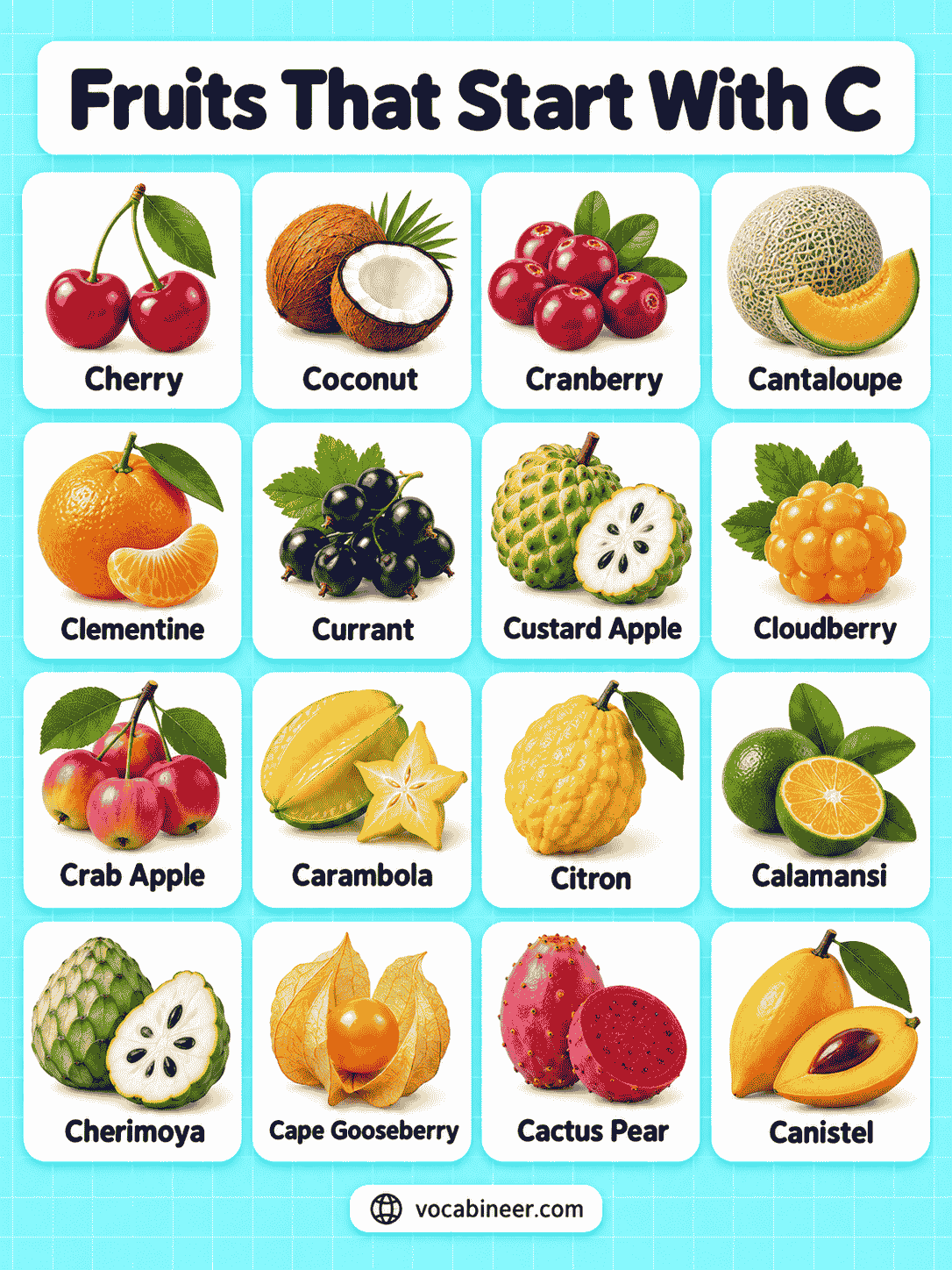
Cherry
A cherry is a small round stone fruit with red, dark red, or yellow skin. Its flavor can be sweet or tart.
Coconut
A coconut is a large tropical fruit with a hard shell, white flesh, and coconut water inside. People use it in drinks, desserts, and cooking.
Cranberry
A cranberry is a small red berry with a sharp tart taste. People often use it in juice, sauce, and dried fruit mixes.
Cantaloupe
A cantaloupe is a sweet melon with rough outer skin and soft orange flesh. It is juicy and refreshing.
Clementine
A clementine is a small citrus fruit with loose orange skin and sweet juicy segments. It is easy to peel and eat.
Currant
Currants are small berries that grow in red, black, or white varieties. They have a tart to sweet flavor depending on the type.
Custard Apple
A custard apple is a tropical fruit with green skin and soft creamy flesh. Its sweet taste makes it popular as a fresh fruit.
Crab Apple
A crab apple is a small apple-like fruit with a tart flavor. People often use it in jelly and preserves.
Cape Gooseberry
Cape gooseberry is a small yellow-orange fruit covered by a papery husk. It has a sweet-tart flavor.
Carambola
Carambola, also called star fruit, has a waxy yellow skin and juicy flesh. When sliced, it forms a star shape.
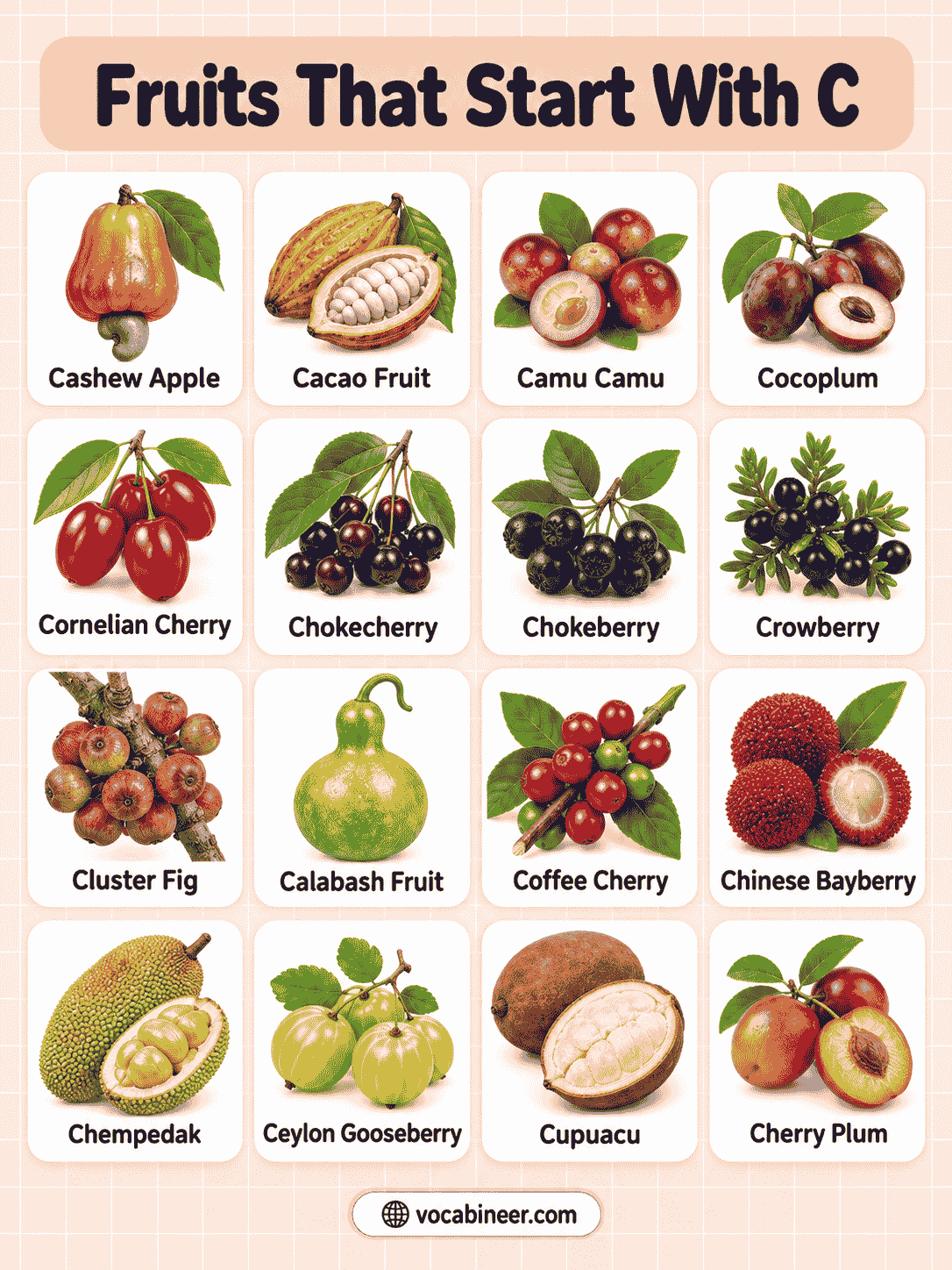
Cashew Apple
A cashew apple is the swollen fruit that grows above the cashew nut. It has a juicy flesh and a sweet, slightly sharp taste.
Cherimoya
A cherimoya is a tropical fruit with green scaly skin and soft white flesh. Its flavor is sweet and creamy.
Citron
A citron is a large fragrant citrus fruit with a very thick rind. People often use its peel in candy and preserves.
Calamansi
Calamansi is a small citrus fruit with a sour and slightly sweet taste. It is common in drinks, sauces, and marinades.
Chico Fruit
Chico fruit, also called sapodilla, has brown skin and sweet grainy flesh. Its flavor often reminds people of brown sugar or pear.
Canistel
Canistel is a yellow tropical fruit with soft dense flesh. It has a mildly sweet taste and a texture similar to cooked egg yolk.
Cloudberry
A cloudberry is a soft golden-orange berry that grows in cool regions. It has a sweet and slightly tart taste.
Cornelian Cherry
Cornelian cherry is a small red fruit with a tart flavor. People often use it in syrups, jams, and drinks.
Cupuaçu
Cupuaçu is a tropical fruit related to cacao. It has a thick shell and fragrant creamy pulp inside.
Cactus Pear
Cactus pear, also called prickly pear, grows on certain cactus plants. It has colorful skin and sweet juicy flesh with small seeds.
55 Fruits That Start With C: Complete List
The list below contains exactly 55 fruit names beginning with C. It combines familiar fruits with tropical species, berries, citrus fruits, regional names, and several clearly identified varieties.
Tropical and Everyday C Fruits
Cacao Fruit
Cacao fruit grows in large pods filled with seeds surrounded by soft sweet-tart pulp.
Cactus Pear
Cactus pear has colorful skin and juicy flesh filled with numerous small edible seeds.
Caimito
Also called star apple, Caimito has smooth skin and soft, sweet, milky flesh.
Calabash
Calabash develops a large hard shell around soft inner pulp as the fruit matures.
Calamansi
Calamansi is a small citrus fruit with thin skin and strongly sour juice.
Calamondin
Calamondin is a small orange-colored citrus with a fragrant and acidic flavor.
Cam Sành
Cam Sành is a Vietnamese citrus fruit with greenish skin and juicy orange flesh.
Camu Camu
Camu camu is a small reddish-purple Amazonian fruit with an intensely tart taste.
Canistel
Canistel has yellow skin and dense sweet flesh with a soft texture when fully ripe.
Canary Melon
Canary melon has bright yellow skin and pale flesh with a mild sweetness.
Cantaloupe
Sweet orange flesh and a fragrant aroma make cantaloupe one of the best-known melons.
Cape Gooseberry
Cape gooseberry is a small golden fruit enclosed inside a thin papery husk.
Caper Berry
Caper berry is an elongated fruit with a tangy taste and many small seeds.
Cara Cara Orange
Cara Cara is a sweet orange variety with pinkish-red flesh and relatively low acidity.
Citrus and Small C Fruits
Carambola
Carambola, or star fruit, has crisp juicy flesh and forms a star shape when sliced.
Carissa
Carissa produces small red fruits with juicy flesh and a sweet-tart taste when ripe.
Cashew Apple
Cashew apple is a colorful fleshy fruit attached to the cashew nut and has juicy, slightly astringent flesh.
Cattley Guava
Cattley guava is a small round fruit with aromatic pulp and a sweet-tart flavor.
Caviar Lime
Caviar lime contains tiny pearl-like pieces of citrus pulp that release tart juice when bitten.
Cedar Bay Cherry
Cedar Bay cherry is a small red Australian fruit with juicy, pleasantly sweet flesh.
Cempedak
Cempedak has thick skin and soft yellow flesh with a rich tropical aroma.
Centennial Variegated Kumquat
This kumquat variety produces small striped fruits with tart flesh and aromatic peel.
Ceylon Gooseberry
Ceylon gooseberry is a dark-purple fruit with juicy flesh and noticeable acidity.
Charichuelo
Charichuelo is a tropical fruit with yellow skin and soft white pulp with a sweet-tart taste.
Cherimoya
Green textured skin surrounds creamy white flesh with a fragrant and naturally sweet flavor.
Cherry
Cherries are small stone fruits that can range from bright red to deep purple.
Cherry Plum
Cherry plum is a small round stone fruit with juicy flesh that may taste sweet or tart.
Chico Fruit
Chico fruit has brown skin and soft grainy flesh with a rich caramel-like sweetness.
Wild and Regional C Fruits
Chilean Guava
Chilean guava is a small red berry with fragrant flesh and a sweet, slightly spicy flavor.
Chinese Date
Also called jujube, Chinese date has crisp flesh when fresh and becomes sweeter when dried.
Chinese Quince
Chinese quince is a large aromatic fruit with firm flesh and a noticeably tart taste.
Chokeberry
Chokeberry is a dark fruit with an intensely tart and astringent flavor.
Chokecherry
Chokecherry produces small dark-red to black fruits with a sharp, puckering taste.
Chupa Chupa
Chupa chupa is a South American tropical fruit with thick skin and sweet orange-yellow pulp.
Citron
Citron is a large aromatic citrus fruit with a thick rind and relatively little juicy flesh.
Clementine
Clementine has thin easy-peeling skin and sweet, juicy segments.
Cloudberry
Cloudberry is a golden-orange fruit that grows in cool northern regions and has a sweet-tart flavor.
Cluster Fig
Cluster fig grows in groups along tree branches and develops soft edible flesh when ripe.
Cocky Apple
Cocky apple is an Australian native fruit with edible flesh inside its green outer skin.
Cocona
Cocona is a South American fruit with yellow, orange, or red skin and tart juicy flesh.
Cocoplum
Cocoplum is a small coastal fruit that may ripen white, pink, red, or purple.
Coconut
Coconut is a tropical drupe with a fibrous husk, hard shell, white flesh, and liquid inside.
Named Fruit Varieties Beginning With C
Coffee Cherry
Coffee cherry is the red or yellow fruit that surrounds coffee beans inside.
Cornelian Cherry
Cornelian cherry is a small red fruit with tart flesh despite not being a true cherry.
Crabapple
Crabapples are small apples with firm flesh and flavors ranging from tart to mildly sweet.
Cranberry
Bright-red cranberries have firm flesh and a naturally sharp acidic taste.
Crowberry
Crowberry is a small dark fruit found in cool regions and has a mild, slightly tart flavor.
Cupuaçu
Cupuaçu is an Amazonian fruit with thick brown skin and fragrant creamy pulp.
Currant
Currants grow in small clusters and may be red, white, or dark purple-black.
Custard Apple
Soft creamy flesh and natural sweetness give custard apple its dessert-like character.
Cudrang
Cudrang produces round reddish fruits with sweet edible flesh when fully mature.
Cavendish Banana
Cavendish is a widely grown banana variety with soft, mildly sweet flesh.
Cortland Apple
Cortland apple has crisp white flesh with a balanced sweet-tart flavor.
Crenshaw Melon
Crenshaw melon has yellow-green skin and soft, fragrant orange or salmon-colored flesh.
Cripps Pink Apple
Cripps Pink is a crisp apple variety with firm flesh and a bright sweet-tart taste.
How C Citrus Fruits Differ
The letter C has one of the strongest citrus groups in the alphabet fruit series. Some are sweet and easy to peel, while others are valued more for sharp juice, thick rind, or unusual pulp.
| Fruit | Flavor | Best-Known Feature |
|---|---|---|
| Calamansi | very sour | small size and sharp juice |
| Calamondin | sour and aromatic | fragrant peel |
| Cam Sành | sweet-tart | greenish skin and orange flesh |
| Cara Cara Orange | sweet | pink-red flesh |
| Caviar Lime | tart | pearl-like pulp |
| Centennial Variegated Kumquat | tart-sweet | striped skin |
| Citron | mildly acidic | very thick rind |
| Clementine | sweet | easy-peeling skin |
Clementine and Cara Cara orange sit on the sweeter side, while calamansi and caviar lime provide much sharper citrus flavor.
Creamy Tropical Fruits That Start With C
Several C fruits stand out for their soft, rich, or custard-like flesh.
Cherimoya
Cherimoya has creamy white flesh with a fragrant, naturally sweet flavor.
Custard Apple
Custard apple has soft pulp with a rich sweetness and smooth texture.
Canistel
Canistel has dense yellow flesh with a sweet flavor and a texture often compared with cooked egg yolk.
Cempedak
Cempedak contains soft yellow flesh with strong tropical sweetness and aroma.
Caimito
Caimito has soft milky pulp that becomes pleasantly sweet when fully ripe.
Cupuaçu
Cupuaçu contains fragrant creamy pulp with a distinctive tropical flavor.
This group gives C a stronger creamy-fruit identity than many other letters.
C Fruits with “Cherry” in Their Names
Several C fruits contain cherry in their English names, but they are not all the same type of fruit.
Cherry
True cherries are stone fruits belonging to the genus Prunus.
Cedar Bay Cherry
Cedar Bay cherry is an Australian native fruit with small red edible fruits.
Chokecherry
Chokecherry is also a Prunus fruit, although its sharp taste differs from common sweet cherries.
Cornelian Cherry
Despite the name, Cornelian cherry belongs to the dogwood family rather than the true cherry group.
Coffee Cherry
Coffee cherry is the fleshy fruit surrounding the seeds that become coffee beans.
This naming pattern is useful for learners because the word cherry does not always indicate a true cherry.
Berries and Small Fruits Beginning With C
C also has a wide range of small fruits, from bright-red cranberries to golden cloudberries.
| Fruit | Appearance | Flavor |
|---|---|---|
| Camu Camu | reddish-purple | very tart |
| Cape Gooseberry | golden with papery husk | sweet-tart |
| Cedar Bay Cherry | small red fruit | sweet |
| Ceylon Gooseberry | dark purple | tart |
| Cherry | red to dark purple | sweet or tart |
| Chilean Guava | small red berry | sweet and fragrant |
| Chokeberry | dark purple-black | strongly astringent |
| Chokecherry | red-black | sharp and tart |
| Cloudberry | golden-orange | sweet-tart |
| Cocoplum | white to purple | mild |
| Cornelian Cherry | bright red | tart |
| Cranberry | bright red | sharply tart |
| Crowberry | dark purple-black | mildly tart |
| Currant | red, white, or black | tart |
Their different colors and shapes make this section especially useful when the article includes pictures.
Unusual C Fruits from Around the World
Some C fruits are rarely seen outside the places where they grow.
Charichuelo
Charichuelo has yellow skin and soft pale pulp with a pleasant sweet-tart flavor.
Cudrang
Cudrang produces reddish fruits with sweet edible flesh when fully ripe.
Cocky Apple
This Australian native fruit develops edible flesh inside a green outer skin.
Chupa Chupa
Chupa chupa has thick skin and sweet orange-yellow pulp.
Ceylon Gooseberry
Dark-purple skin surrounds juicy tart flesh in this tropical fruit.
Cocona
Cocona has colorful skin and juicy acidic flesh that is often used in drinks or sauces.
Cedar Bay Cherry
This Australian fruit is small, red, and pleasantly sweet when mature.
Camu Camu
Camu camu is a small Amazonian fruit with an intensely tart flavor.
These fruits give the C list genuine regional depth without adding culinary vegetables simply to make the count larger.
C Fruits from South America and Asia
South America and Asia contribute many of the most distinctive C fruits.
South American examples include cacao fruit, camu camu, cocona, cupuaçu, chupa chupa, and Caimito. These fruits range from the very tart flavor of camu camu to the creamy pulp of cupuaçu and the soft sweetness of Caimito.
Asian examples include calamansi, Cam Sành, cempedak, chico fruit, Ceylon gooseberry, coconut, and Chinese date. Their textures and flavors vary from sharp citrus juice to soft tropical flesh.
This regional contrast helps explain why C contains both strongly acidic citrus-style fruits and rich, creamy tropical fruits.
Tart and Citrusy C Fruits
Several C fruits are known for bright acidity rather than strong sweetness.
Calamansi and calamondin have sharp citrus juice. Citron is valued largely for its thick aromatic rind, while caviar lime has tiny tart juice-filled pearls.
Outside the citrus family, camu camu, cranberry, Ceylon gooseberry, chokeberry, and crowberry also bring stronger tart or astringent flavors to the list.
This makes the C group particularly useful for comparing different kinds of acidity across citrus fruits, berries, and tropical fruits.
Easy Fruits That Start With C for Kids
Children can begin with C fruit names that have simple words, familiar shapes, or easy-to-recognize colors.
Cherry
Cherries are small red fruits with juicy sweet or tart flesh.
Coconut
Coconut has a hard shell with white flesh and liquid inside.
Cranberry
Cranberries are small bright-red fruits with a tart taste.
Cantaloupe
Cantaloupe is a round melon with sweet orange flesh.
Clementine
Clementines are small citrus fruits with easy-peeling skin.
Currant
Currants are tiny berries that grow together in clusters.
Custard Apple
Custard apple has green skin and soft creamy flesh.
Cloudberry
Cloudberry is a small golden-orange fruit found in cool regions.
Pictures make these names easier to remember because children can connect each word with a fruit’s color and shape.
FAQs
Fruits beginning with C include cherry, coconut, cranberry, cantaloupe, clementine, currant, cherimoya, custard apple, calamansi, camu camu, canistel, carambola, cocona, and cupuaçu.
Common C fruits include cherry, coconut, cranberry, cantaloupe, clementine, currant, custard apple, cherimoya, crabapple, and Cape gooseberry.
Tropical C fruits include Caimito, cacao fruit, canistel, carambola, cashew apple, cempedak, cherimoya, cocona, coconut, cupuaçu, and custard apple.
Yes. Coconut begins with C and is botanically a drupe with a fibrous husk, hard shell, edible flesh, and liquid inside.
Rare or regional C fruits include charichuelo, cudrang, cocky apple, chupa chupa, Ceylon gooseberry, cocona, Cedar Bay cherry, and camu camu.
Read More