

Fruits that start with J include large tropical fruits, juicy citrus, small berries, palm fruits, and several unusual regional specialties. Pictures make names such as jaboticaba, jagua, jocote, and junglesop easier to connect with their distinctive shapes, colors, and textures.
This article covers exactly 20 J fruit names, including three clearly identified apple cultivars. It also explains confusing names such as Java apple, Java plum, jocote, and June plum without counting aliases or alternate spellings as separate fruits.
In This Page
J Fruit Names From Around the World
J fruit names come from many regions, including tropical America, Africa, East Asia, the Caribbean, and the Pacific. Some have become internationally familiar, while others remain closely associated with particular regions and food traditions.
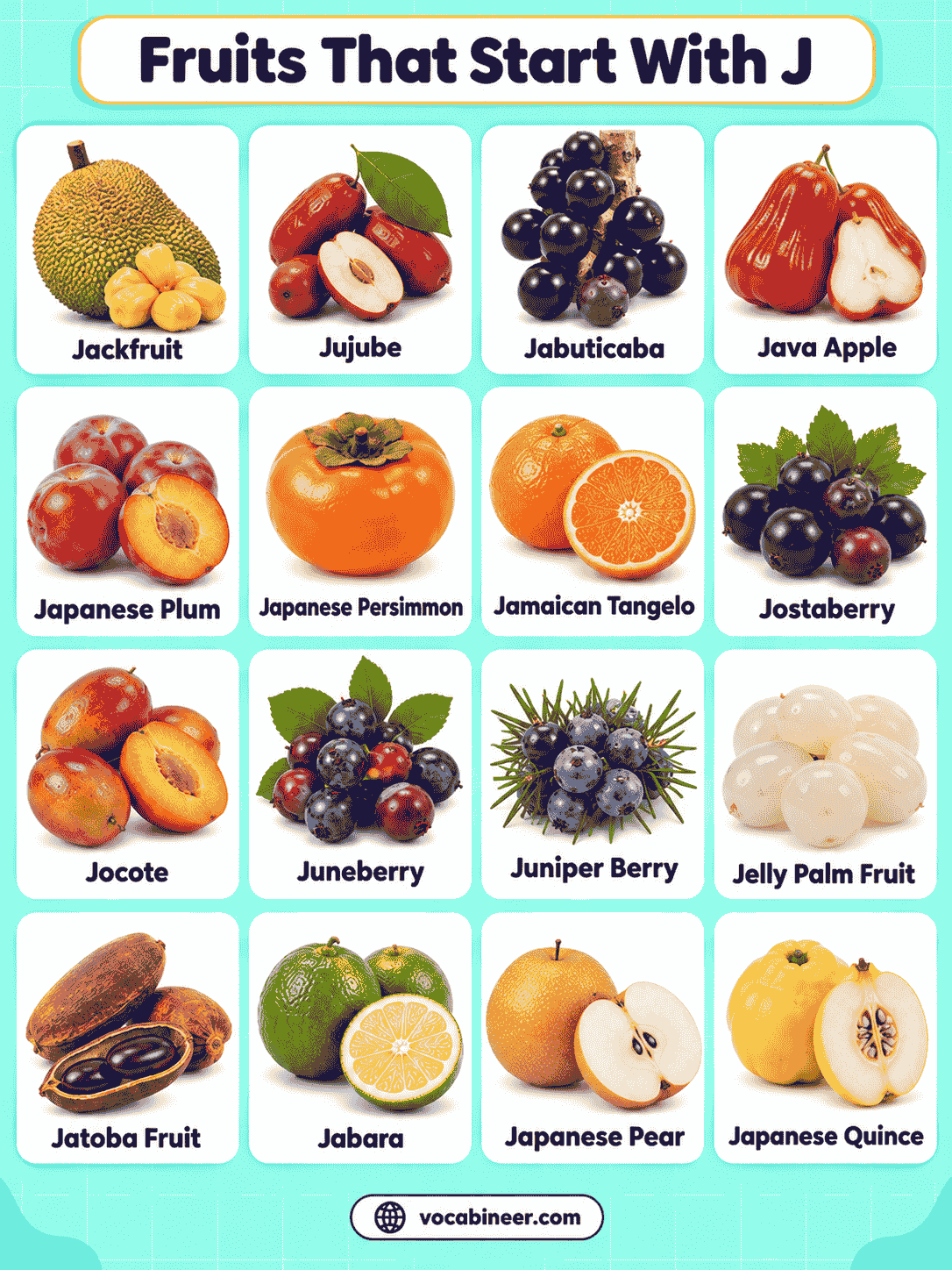
Jabara
Jabara is a Japanese citrus fruit with green to yellow skin and a strongly tart flavor with a mild bitter note. Growers particularly associate it with Kitayama Village in Wakayama Prefecture.
Jaboticaba
Jaboticaba produces round, dark-purple fruits directly along the trunk and older branches of the tree. Its pale, juicy pulp sits beneath a relatively thick skin.
Jackfruit
Jackfruit develops into a massive green or yellow-green fruit with a rough, bumpy surface. Inside, yellow edible bulbs surround large seeds and provide a sweet flavor when ripe.
Jagua
Jagua is the fruit of Genipa americana, a tropical American tree. The rounded fruit has thick skin and pale pulp, and people use both ripe and unripe fruit in different traditional preparations.
Jamaican Tangelo
Jamaican tangelo is a juicy citrus associated strongly with Jamaica. The fruit typically has loose, rough skin and combines sweet, tart, and mildly bitter citrus flavors.
Jamun
Jamun produces oval fruits that turn deep purple or almost black as they ripen. The juicy flesh often tastes sweet-tart with some astringency, while names such as Java plum, jambolan, and jambul commonly refer to the same fruit.
Japanese Persimmon
Japanese persimmon is a recognized common name for Diospyros kaki. Its orange fruits may stay firm or become very soft depending on the cultivar and stage of ripeness.
Japanese Quince
Japanese quince produces small yellow fruits with firm flesh and a strong fragrance. The fruit usually tastes too tart and hard for casual raw eating, so people often cook or preserve it.
Java Apple
Java apple has a smooth surface and a distinctive bell-shaped or pear-like form. Depending on the cultivar, its thin skin may appear pale green, pink, or red, while the flesh stays crisp and watery.
Jatoba
Jatoba develops a hard brown pod containing seeds surrounded by dry, powdery edible pulp. Its unusual structure makes it easy to distinguish from softer tropical fruits.
Jelly Palm Fruit
Jelly palms produce clusters of small yellow, orange, or reddish fruits with fragrant pulp. Their sweet-tart flavor works well in jellies, preserves, and drinks.
Jocote
Jocote is the fruit of Spondias purpurea. Its small oval fruits mature through shades of yellow, orange, or red, while the flesh changes from sharply tart to sweeter as the fruit ripens.
Jostaberry
Jostaberry is a cultivated hybrid from the currant-and-gooseberry group. It produces round, dark-purple fruits with a flavor that combines characteristics of its Ribes relatives.
Jujube
Jujube is a small oval fruit that starts green and gradually develops reddish-brown skin. Fresh jujubes have crisp flesh, while fully mature fruits become sweeter and denser.
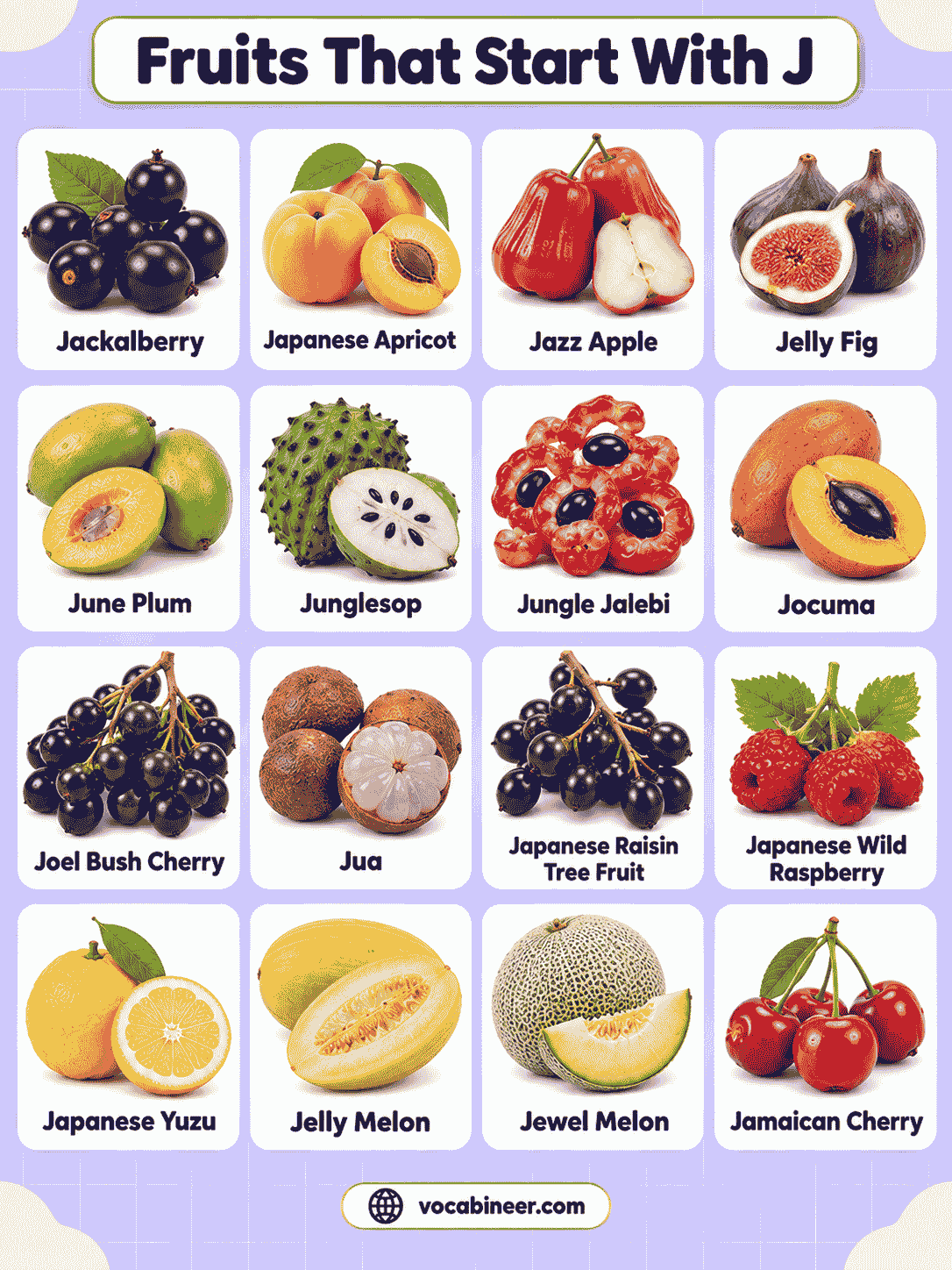
June Plum
June plum, commonly associated with Spondias dulcis, has an oval form and firm flesh surrounding a fibrous stone. The fruit tastes sharply tart when immature and becomes milder as it ripens.
Juneberry
Juneberry refers to the edible fruits of Amelanchier plants. These small round fruits change from red to purple or blue-black and often resemble blueberries.
Junglesop
Junglesop is a large tropical African fruit produced by Anonidium mannii. Its thick textured rind encloses soft yellow to orange flesh, and individual fruits can grow remarkably large.
Named Fruit Varieties Beginning With J
The next three entries are apple cultivars rather than separate fruit species. Keeping them in their own subsection makes the 20-name list accurate while still including legitimate fruit variety names that begin with J.
Jazz Apple
Jazz is the trade name used for the Scifresh apple cultivar, which originated from a Braeburn and Royal Gala cross. It has firm, crisp flesh and usually develops strong red-orange coloring.
Jonagold Apple
Jonagold combines Jonathan and Golden Delicious ancestry. The large apples usually develop red coloring over a yellow background and offer a juicy balance of sweetness and acidity.
Jonathan Apple
Jonathan is a classic red apple cultivar with juicy flesh and a noticeably tart-sweet flavor. Growers and cooks use it for both fresh eating and processing.
Easy-to-Recognize J Fruits
Several J fruits have unusual forms or growing habits that make visual identification especially useful. These quick clues focus on the features readers can spot most easily in pictures.
| Fruit | Quick Visual Clue |
|---|---|
| Jaboticaba | Dark fruits growing directly along the trunk |
| Jackfruit | Huge green fruit with a rough, bumpy surface |
| Jamun | Small oval fruit with deep purple-black skin |
| Java Apple | Smooth bell-shaped fruit |
| Jatoba | Hard brown pod |
| Jelly Palm Fruit | Small yellow-orange fruits in palm clusters |
| Jujube | Small oval fruit that turns reddish-brown |
| Junglesop | Very large fruit with a thick textured rind |
Jackfruit and jaboticaba provide one of the strongest visual contrasts. Jackfruit forms a huge compound fruit, while jaboticaba produces much smaller round fruits directly on woody trunks and branches.
J Fruit Names That Can Be Confusing
Several J fruit names share words such as Java or plum, while other fruits have multiple regional names. Understanding these relationships prevents duplicate entries and incorrect identification.
Jamun, Jambolan, Jambul, and Java Plum
These names commonly refer to Syzygium cumini. They represent alternate common names rather than four different fruits.
Java Apple
Java apple refers to Syzygium samarangense. Although Java apple and Java plum both belong to Syzygium, they produce visibly different fruits and represent separate species.
Jocote and June Plum
Jocote refers to Spondias purpurea, while June plum commonly refers to Spondias dulcis. Both belong to the same genus, but each name identifies a different fruit.
Japanese Quince
Japanese quince belongs to Chaenomeles, while common quince belongs to Cydonia. The shared word quince reflects similarities in the fruits rather than placement in the same genus.
Jostaberry
Jostaberry is a cultivated hybrid within the Ribes group. Its relationship with currants and gooseberries explains its berry-like appearance and flavor.
Java Apple vs. Java Plum
Java apple and Java plum share the geographic word Java, but they differ clearly in shape, color, texture, and species.
| Feature | Java Apple | Java Plum / Jamun |
|---|---|---|
| Scientific name | Syzygium samarangense | Syzygium cumini |
| Shape | Bell-shaped or pear-like | Oval to oblong |
| Typical colors | Pale green, pink, or red | Deep purple-red to nearly black |
| Flesh | Crisp and watery | Juicy and often mildly astringent |
| Other common names | Vary by region | Jamun, jambolan, jambul |
| Same fruit? | No | No |
The bell-shaped form of Java apple provides the quickest visual clue, while Java plum usually appears much smaller, darker, and more elongated.
Jocote vs. June Plum
Jocote and June plum belong to Spondias, so they share some general characteristics. However, they represent separate species and should not appear as alternate names for one fruit.
| Feature | Jocote | June Plum |
|---|---|---|
| Species | Spondias purpurea | Spondias dulcis |
| Typical size | Smaller | Usually larger |
| Shape | Oval to oblong | Oval |
| Ripening color | Yellow, orange, or red | Green to yellow |
| Texture | Juicy around a stone | Firm and crisp when less ripe |
| Flavor | Tart to sweet | Tart to mildly sweet |
Their shared genus explains some similarities, but pictures make their differences in size, color, and form easier to recognize.
Tropical J Fruits
Many of the most distinctive J fruits come from tropical or subtropical regions. Their appearances differ greatly, ranging from giant compound fruits to small berries and hard pods.
Jackfruit grows widely across tropical regions and ranks among the largest edible tree fruits.
Jagua comes from tropical parts of the Americas and produces thick-skinned fruits with pale pulp.
Java Apple thrives in warm, humid climates and produces crisp, watery fruits.
Jocote grows across tropical parts of the Americas and develops colorful oval fruits.
Jatoba produces hard pods with dry edible pulp rather than conventional juicy flesh.
Junglesop grows in tropical Africa and can produce exceptionally large fruits.
FAQs
Jackfruit, jujube, jaboticaba, Java apple, jamun, Juneberry, and Japanese persimmon are useful examples of fruits beginning with J.
Yes. These names commonly refer to Syzygium cumini, so a clean fruit list should count them as one fruit rather than separate entries.
Java apple has a bell-shaped form, crisp flesh, and belongs to Syzygium samarangense. Java plum, or jamun, produces smaller dark-purple fruits and belongs to Syzygium cumini.
No. Jocote is Spondias purpurea, while June plum commonly refers to Spondias dulcis. They belong to the same genus but remain different fruits.
Jackfruit, jagua, Java apple, jocote, jatoba, jelly palm fruit, jaboticaba, and junglesop are examples associated with tropical or subtropical climates.
Read More