

Fruits that start with F include familiar names such as fig, feijoa, finger lime, Fuji apple, Fuyu persimmon, and flat peach. The letter F also has an interesting mix of wild berries, unusual citrus fruits, tropical fruits, and regional names such as farkleberry, fox grape, fibrous satinash, and Fe’i banana.
Below, you will find 26 fruit names beginning with F with short descriptions of their appearance, flavor, origin, or texture. The article also explores wild berries, F-named citrus fruits, fig-related fruits, and a small group of clearly identified fruit varieties.
In This Page
Fruits Beginning With F You May Already Know
Fruits Beginning With F You May Already Know
Fruits that start with the letter F include familiar berries, tropical fruits, figs, and regional varieties from different parts of the world. Learning these F fruit names helps children and English learners expand food vocabulary and recognize both common and less familiar fruits more easily.
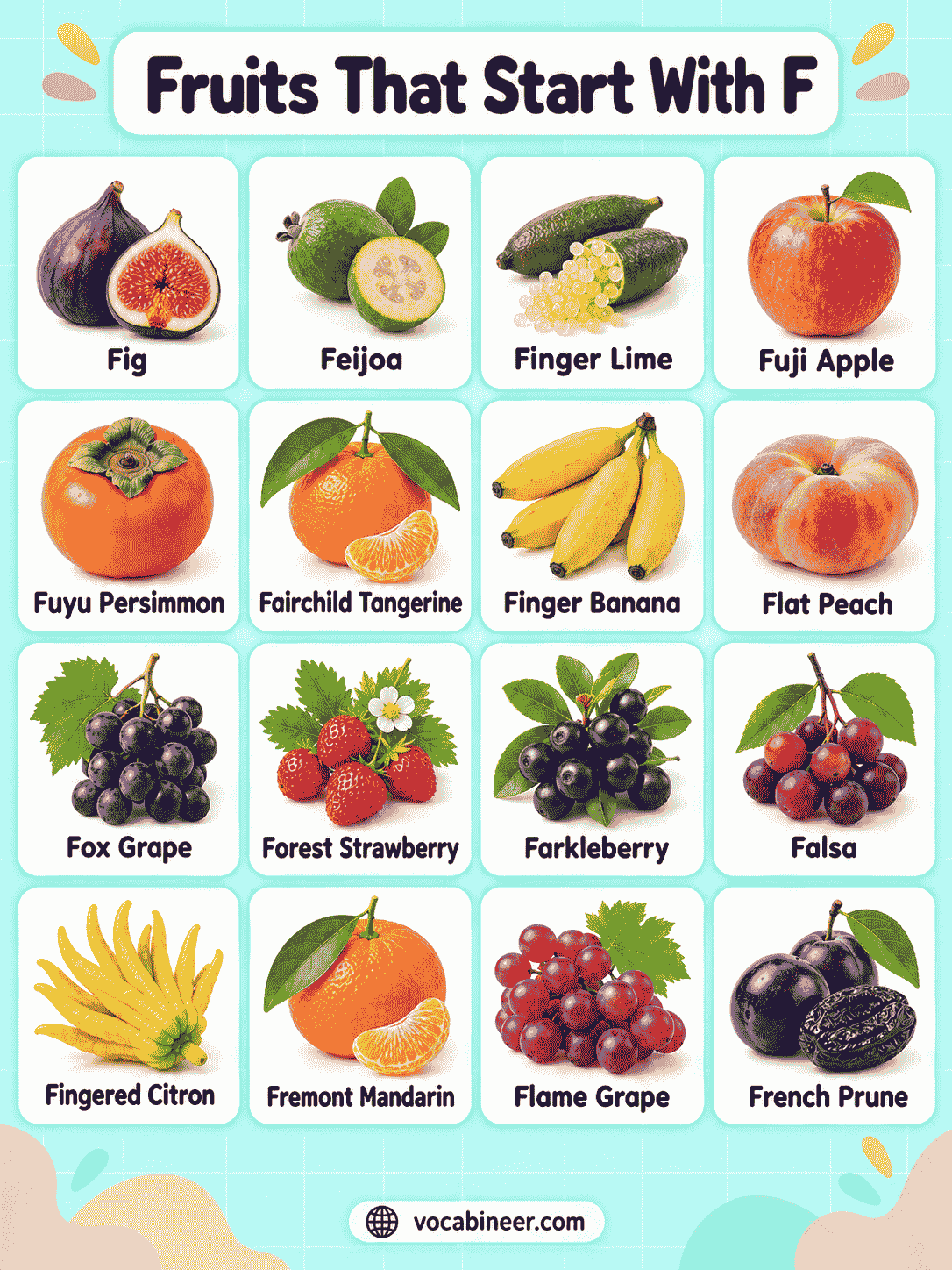
Fig
A fig is a soft fruit with thin skin, sweet flesh, and many tiny edible seeds. People eat figs fresh or dried and often use them in desserts, jams, and baked foods.
Feijoa
Feijoa is a green fruit with soft, aromatic flesh and a sweet-tart tropical flavor. People commonly eat it fresh or use it in jams, drinks, and desserts.
Finger Lime
Finger lime is a narrow Australian citrus fruit filled with tiny juice-filled pearls. Its sharp citrus flavor works well in sauces, seafood dishes, desserts, and garnishes.
Fuji Apple
Fuji is a crisp apple variety with red-pink skin and firm, juicy flesh. Its naturally sweet flavor makes it popular for fresh eating.
Fuyu Persimmon
Fuyu persimmon is a round orange fruit with firm, sweet flesh. Unlike some persimmons, people can eat it while it still feels crisp.
Fairchild Tangerine
Fairchild tangerine is a small citrus fruit with deep orange skin and juicy segments. Its flavor combines strong sweetness with mild acidity.
Farkleberry
Farkleberry is a small dark berry related to blueberries. It grows on shrubs or small trees and develops a mildly sweet flavor when ripe.
Fox Grape
Fox grapes are dark purple wild grapes native to North America. Their strong aroma and tart-sweet flavor work well in juices, jellies, and preserves.
Forest Strawberry
Forest strawberries are small red berries with a strong aroma and naturally sweet flavor. They often grow in woodland edges and other wild areas.
Florida Cherry
Florida cherry is a common name used for certain small red tropical or subtropical fruits. The ripe fruits usually have soft flesh and a sweet to mildly tart taste.
Flat Peach
A flat peach has a flattened round shape with fuzzy skin and juicy flesh. Its sweet flavor makes it popular for fresh eating.
French Prune
French prune is a plum variety with dark skin and sweet flesh. Growers often dry the fruit to produce prunes.
Fragola Grape
Fragola grapes are dark-colored grapes with a distinctive strawberry-like aroma. People eat them fresh or use them in juice and wine.
Fibrous Satinash
Fibrous satinash is an Australian rainforest fruit with colorful skin and edible flesh. It belongs to the same broad plant family as several other native bush fruits.
Five-Finger Fruit
Five-finger fruit is another name for star fruit because sliced pieces form a five-pointed star. Its yellow flesh has a crisp texture and sweet-tart flavor.
Florida Strangler Fig
Florida strangler fig produces small fig fruits that ripen to yellow, orange, or reddish shades. Wildlife commonly eats the fruits, and they also play an important ecological role.
Feral Plum
Feral plums are plum trees that grow outside cultivation and produce small fruits in different colors. Their taste can range from sweet to strongly tart.
Fazli Mango
Fazli is a large mango variety with green to yellow skin and soft, juicy flesh. Its sweet flavor makes it popular for fresh eating and processing.
Flemish Beauty Pear
Flemish Beauty is a pear variety with yellow-green skin that may develop a reddish blush. The soft flesh has a sweet, aromatic flavor.
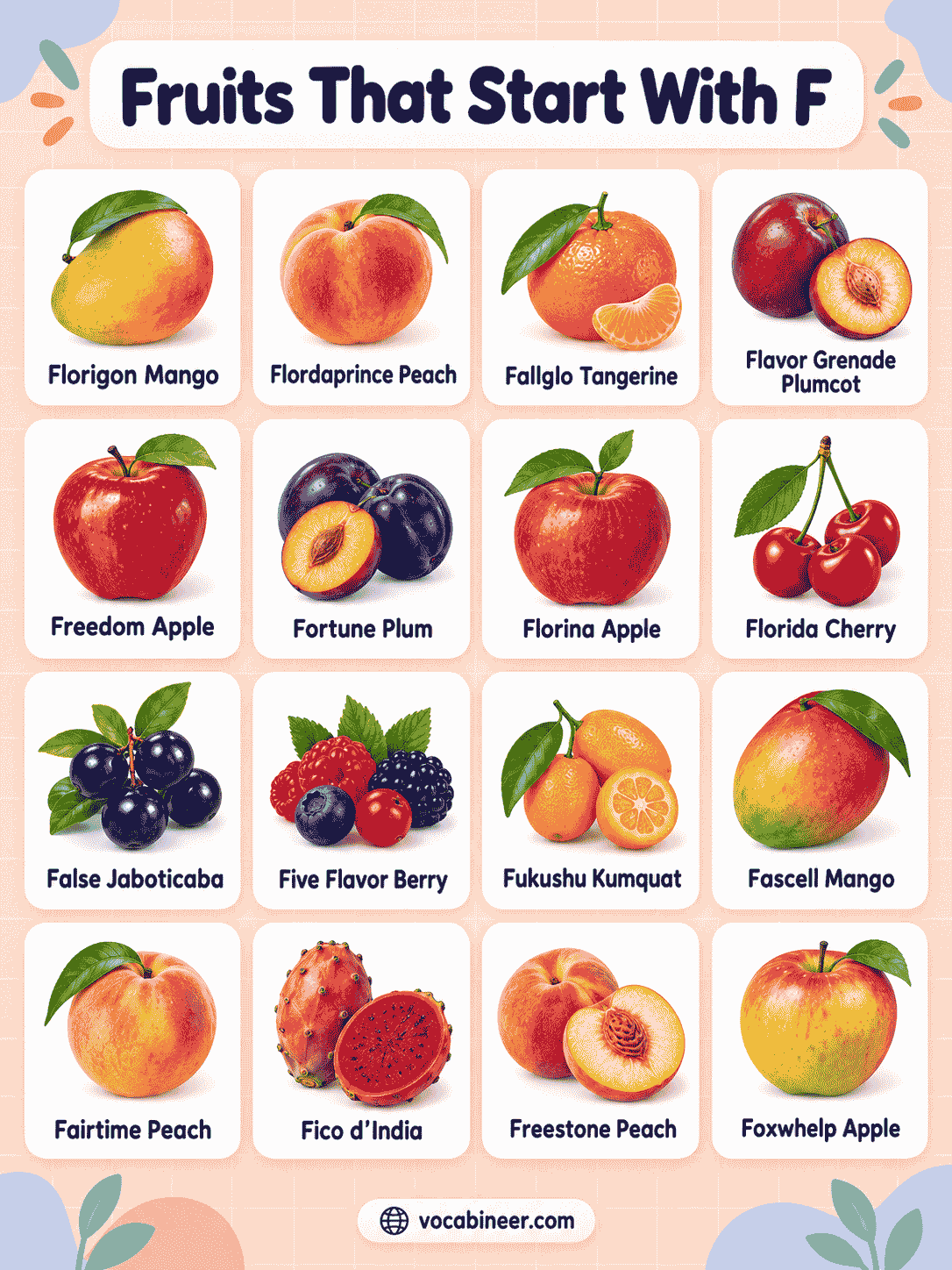
Fukushu Kumquat
Fukushu kumquat is a small citrus fruit with bright orange skin and juicy flesh. Its edible peel tastes sweet, while the interior adds mild tartness.
26 Fruits That Start With F: Complete List
The complete list below contains exactly 26 fruit names beginning with F. It includes familiar fruits, wild berries, tropical fruits, citrus fruits, and clearly labeled varieties.
Familiar and Tropical F Fruits
Fig
Figs develop soft flesh with a rich sweetness and many tiny edible seeds inside.
Feijoa
Firm green skin surrounds aromatic flesh with a refreshing sweet-tart flavor.
Finger Lime
Inside this slender citrus fruit are tiny juice-filled pearls with a sharp, tangy taste.
Farkleberry
Farkleberry is a small dark fruit related to blueberries and huckleberries.
Falkland Island Cranberry
This low-growing fruit produces small tart berries in cool southern regions.
Falmouth Gooseberry
Falmouth gooseberry is a regional gooseberry-type fruit with tart edible flesh.
Five Flavor Berry
Five Flavor Berry is known for a complex taste that combines sweet, sour, salty, bitter, and pungent notes.
Fox Grape
Fox grape is a dark North American grape with a strong aroma and distinctive flavor.
Florida Cherry
Florida cherry produces small red fruits with juicy sweet-tart flesh.
Forest Strawberry
Forest strawberry is a small wild strawberry with fragrant, naturally sweet fruit.
Flatwoods Plum
Flatwoods plum is a small regional plum with firm flesh and noticeable tartness.
Citrus and Regional F Fruits
False Mastic
False mastic is a tropical tree fruit from the Caribbean region with edible pulp.
Fibrous Satinash
Fibrous satinash is an Australian native fruit with edible flesh and a mildly tart flavor.
Fe’i Banana
Fe’i banana is a Pacific banana type that develops orange to reddish fruit.
Fingered Citron
Fingered citron forms unusual finger-like sections and is valued mainly for its fragrant rind.
Florentine Citron
Florentine citron is an aromatic citrus fruit with thick peel and relatively little juicy flesh.
Fig Tampoi
Fig Tampoi is a Southeast Asian fruit with soft edible pulp and a mild tropical flavor.
Florida Strangler Fig
Florida strangler fig produces small edible figs on trees found in subtropical regions.
Named Fruit Varieties Beginning With F
The remaining names are established varieties of familiar fruits rather than completely separate fruit species.
Fuji Apple
Fuji is a crisp apple variety with juicy flesh and pronounced sweetness.
Fuyu Persimmon
Fuyu is a non-astringent persimmon variety with firm, sweet orange flesh.
Flat Peach
Flat peach is a flattened peach variety with juicy flesh and a fragrant sweet flavor.
Fairchild Tangerine
Fairchild tangerine is a citrus variety with deep orange skin and juicy sweet-tart segments.
Fukushu Kumquat
Fukushu kumquat has an edible sweet peel surrounding tart citrus flesh.
Fazli Mango
Fazli is a large mango variety with soft flesh and a rich sweet flavor.
Fascell Mango
Fascell mango is a named mango variety with aromatic flesh and tropical sweetness.
Flavorfest Strawberry
Flavorfest is a strawberry variety known for juicy red fruit and a balanced sweet flavor.
Wild Berries and Small Fruits Beginning With F
F has a surprisingly strong group of wild berries and small fruits.
Farkleberry
Farkleberry produces small dark berries related to blueberries and huckleberries.
Falkland Island Cranberry
This low-growing plant bears small fruits with a naturally tart flavor.
Falmouth Gooseberry
Falmouth gooseberry adds another regional tart berry to the F group.
Five Flavor Berry
Its unusual name comes from the fruit’s complex mixture of several flavor sensations.
Forest Strawberry
Forest strawberry produces small fragrant berries with concentrated sweetness.
Fox Grape
Fox grape forms dark berries with a strong grape aroma and bold flavor.
This wild-fruit group gives F a stronger berry identity than its small overall fruit count might suggest.
F Citrus Fruits and How They Differ
Several fruits beginning with F belong to the citrus family, but their appearance and use vary considerably.
| Fruit | Main Feature | General Flavor |
|---|---|---|
| Finger Lime | pearl-like pulp | sharply tart |
| Fingered Citron | finger-shaped sections | aromatic, little juice |
| Florentine Citron | thick fragrant peel | mildly acidic |
| Fairchild Tangerine | juicy citrus segments | sweet-tart |
| Fukushu Kumquat | edible peel | sweet peel, tart flesh |
Finger lime stands out for its bead-like pulp, while fingered citron and Florentine citron are more notable for fragrant rind than for juice.
F Fruits Related to Figs
Several F fruit names are connected with figs, but they are not identical.
Fig
The familiar fig has soft flesh filled with many tiny seeds and a rich sweet flavor.
Fig Tampoi
Despite its name, Fig Tampoi is a Southeast Asian fruit with soft pulp and a different botanical background from common figs.
Florida Strangler Fig
Florida strangler fig is a true fig species that produces many small edible fruits.
Keeping these names separate avoids treating every fruit with “fig” in its name as the same type.
Fig vs Feijoa
Fig and feijoa are both familiar F fruits, but they differ greatly in shape, texture, and flavor.
| Fig | Feijoa |
|---|---|
| soft skin | firm green skin |
| many tiny seeds | jelly-like seeded center |
| rich sweetness | sweet-tart tropical flavor |
| soft flesh | firmer flesh |
| strongly associated with Mediterranean climates | associated with South America and subtropical regions |
Fig is richer and sweeter, while feijoa has a fresher, more aromatic flavor.
Finger Lime vs Fingered Citron
These two citrus fruits share similar names but look very different inside.
| Finger Lime | Fingered Citron |
|---|---|
| long narrow fruit | divided into finger-like sections |
| contains juicy pearls | contains mostly thick rind |
| sharply tart | highly aromatic |
| Australian citrus | citron type |
| used for pulp and juice | valued mainly for peel |
Their names sound similar, but finger lime is juice-rich while fingered citron is rind-heavy.
Unusual F Fruits from Around the World
Several F fruits are closely tied to specific regions.
False Mastic
False mastic is associated with the Caribbean and produces edible fruit.
Fibrous Satinash
This native Australian fruit adds a regional tropical name to the F list.
Fe’i Banana
Fe’i bananas are found in Pacific regions and are known for their orange to reddish fruit.
Fig Tampoi
Fig Tampoi comes from Southeast Asia and has soft edible pulp.
Florida Strangler Fig
This subtropical fig produces many small fruits on large spreading trees.
These fruits broaden F vocabulary without relying on Latin scientific names or weak botanical entries.
Easy Fruits That Start With F for Kids
Young learners can begin with the easiest and most recognizable F fruit names.
Fig
Fig is a soft sweet fruit with many tiny seeds.
Feijoa
Feijoa is a green fruit with fragrant sweet-tart flesh.
Finger Lime
Finger lime is a small citrus fruit with pearl-like juicy pulp.
Fuji Apple
Fuji apple is a crisp, sweet apple variety.
Fuyu Persimmon
Fuyu persimmon is an orange fruit with firm sweet flesh.
Flat Peach
Flat peach has a flat shape and juicy sweet flesh.
Pictures can help children connect these fruit names with their shapes, colors, and textures.
FAQs
What fruits start with the letter F?
Fruits beginning with F include fig, feijoa, finger lime, farkleberry, fox grape, Fuji apple, Fuyu persimmon, flat peach, Fe’i banana, and several other regional fruits and varieties.
What are the most familiar fruits that start with F?
Some of the easiest F fruit names to recognize are fig, feijoa, finger lime, Fuji apple, Fuyu persimmon, and flat peach.
What tropical fruits start with F?
Tropical and subtropical F fruits include feijoa, Fe’i banana, false mastic, fibrous satinash, Fig Tampoi, finger lime, and Florida strangler fig.
Is fig a fruit that starts with F?
Yes. Fig begins with F and is a soft, sweet fruit filled with many tiny edible seeds.
What are some rare fruits that start with F?
Rare or regional F fruits include farkleberry, Falkland Island cranberry, Falmouth gooseberry, false mastic, fibrous satinash, Fig Tampoi, Fe’i banana, and Florida strangler fig.
Read More