

Palm trees are beautiful tropical and subtropical plants known for their long trunks, large green fronds, and warm-weather look. Some palms grow useful fruits like coconuts and dates, while others decorate homes, gardens, parks, roadsides, beaches, and resorts.
In this guide, you will learn different types of palm trees in a simple way. You will also learn their leaf shapes, uses, sizes, growing styles, and easy identification features. This makes the article useful for students, kids, English learners, gardeners, and anyone who wants to recognize palm trees more easily.
In This Page
What Are Palm Trees?
Palm trees are flowering plants that usually grow in warm regions. Many palms have a tall trunk, a crown of large leaves, and a tropical appearance. However, not all palms look the same. Some grow tall and straight, while others stay short, bushy, or clustered.
Palm trees can grow in many places, such as:
- Tropical beaches.
- Home gardens.
- Indoor pots.
- Parks and roadsides.
- Coastal landscapes.
- Warm desert areas.
- Resort and hotel gardens.
Many palm trees also give useful products. For example, coconut palms give coconuts, date palms give dates, and oil palms produce palm oil. Therefore, palm trees are useful for food, shade, decoration, farming, and landscaping.
Common Palm Trees Names List
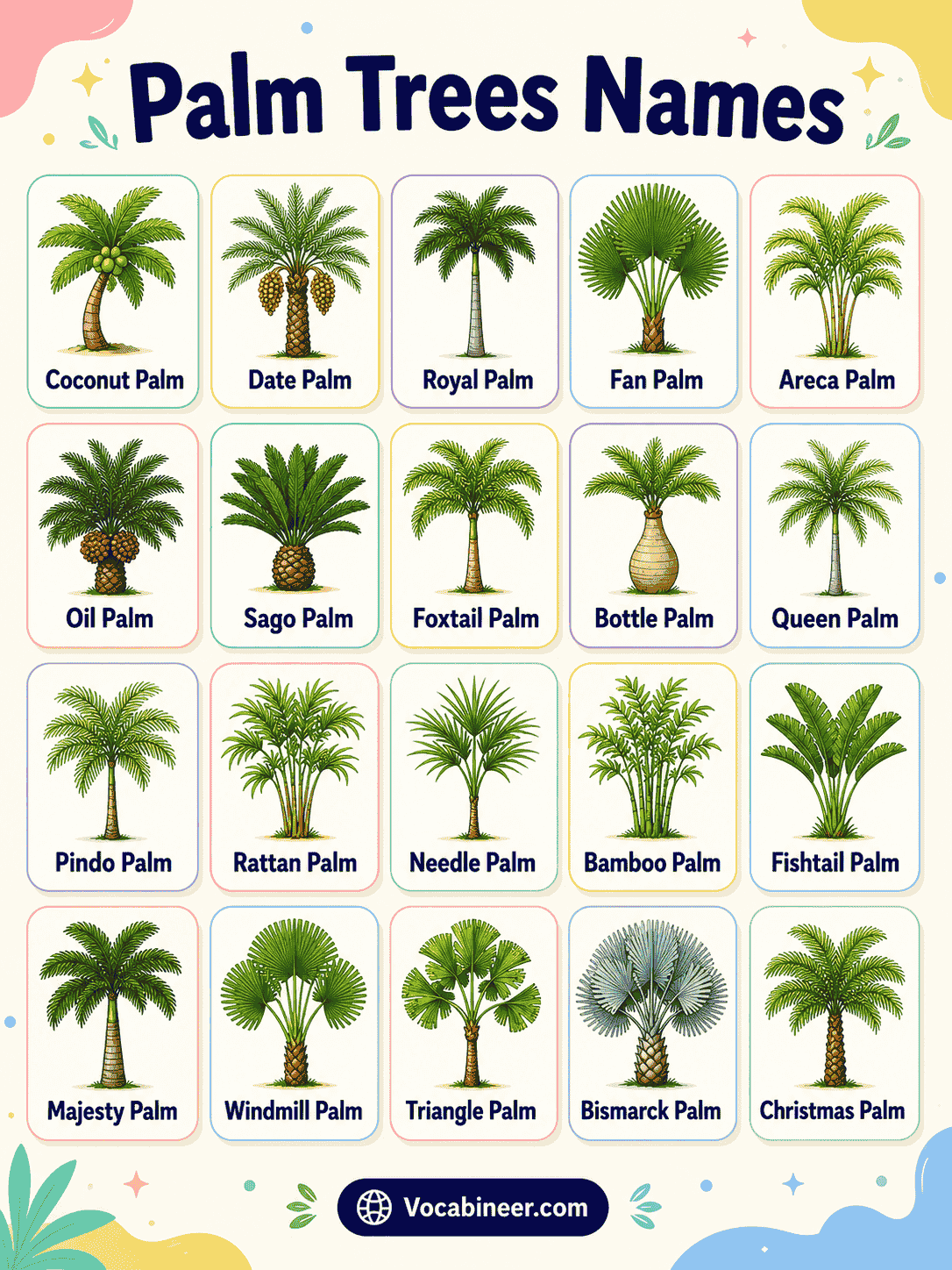
Here is a useful list of common palm tree names in English:
- Coconut Palm
- Date Palm
- Areca Palm
- Fan Palm
- Sago Palm
- Royal Palm
- Foxtail Palm
- Bismarck Palm
- Pygmy Date Palm
- Chinese Fan Palm
- Majesty Palm
- Kentia Palm
- Bottle Palm
- Windmill Palm
- Queen Palm
- Fishtail Palm
- Parlor Palm
- Triangle Palm
- Palmetto Palm
- Lady Palm
- European Fan Palm
- California Fan Palm
- Mexican Fan Palm
- Senegal Date Palm
- Travelers Palm
- Cabbage Palm
- Dwarf Palmetto
- Guadalupe Palm
- Needle Palm
- Peach Palm
- Sugar Palm
- Talipot Palm
- Thatch Palm
- Licuala Palm
- Lipstick Palm
- Ribbon Fan Palm
- Oil Palm
- Saw Palmetto
- Bangalow Palm
- Canary Island Date Palm
- Christmas Palm
- Blue Latan Palm
- Cuban Royal Palm
- Mazari Palm
- Silver Date Palm
- Acai Palm
- Bamboo Palm
- King Palm
- Pindo Palm
- Sentry Palm
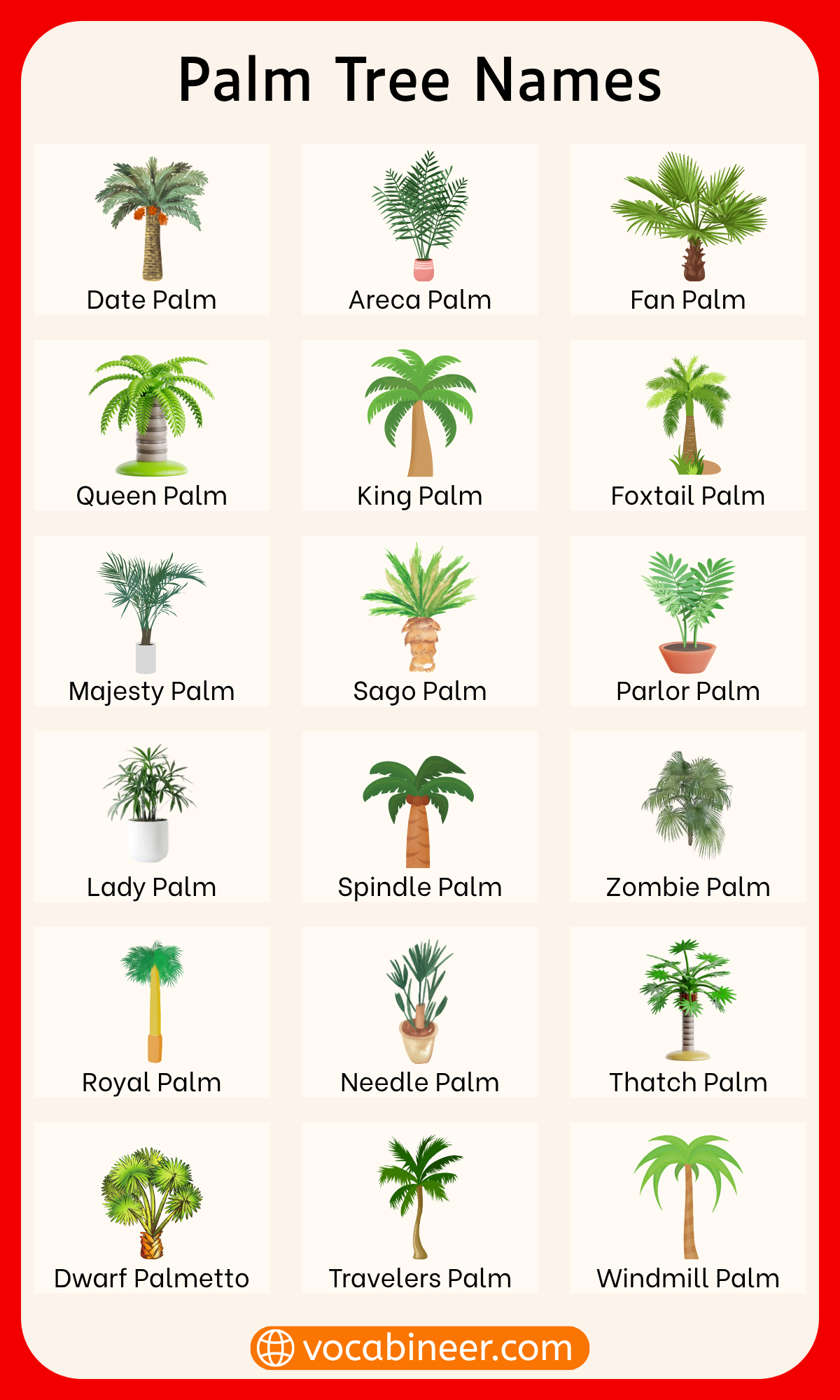
Popular Palm Trees with Pictures
Some palm trees are very common because people often see them in gardens, homes, beaches, parks, and travel photos. These names are useful for basic plant vocabulary.
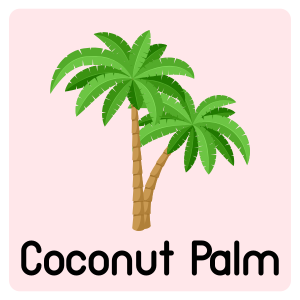
- Coconut Palm — A tall tropical palm that grows coconuts and often appears near beaches.
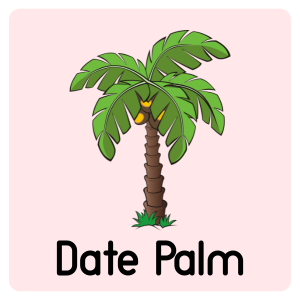
- Date Palm — A fruit-bearing palm known for sweet dates and warm-region farming.
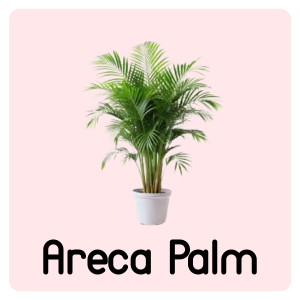
- Areca Palm — A soft green palm commonly used indoors, in offices, and in shaded spaces.
- Sago Palm — A palm-like plant with stiff green leaves, often used in gardens and pots.
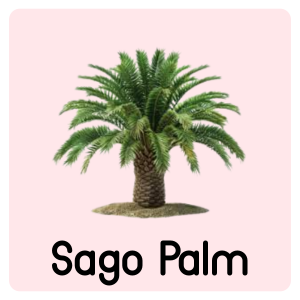
- Needle Palm — A short, cold-hardy palm with fan-shaped leaves and sharp needle-like parts.
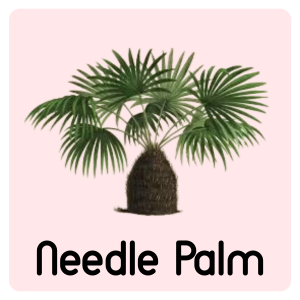
- Fan Palm — A palm with wide leaves that spread out like a hand fan.
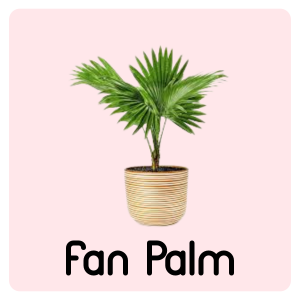
- Bismarck Palm — A large ornamental palm with bold silver-blue fan-shaped leaves.
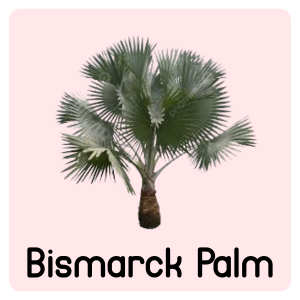
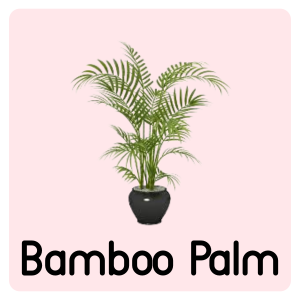
- Bamboo Palm — A clumping indoor palm with slim stems and soft green leaves.
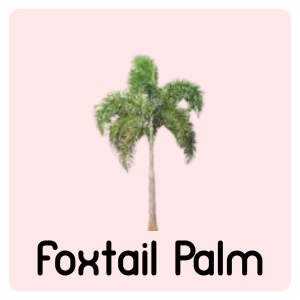
- Foxtail Palm — A tropical palm with bushy fronds that look like a fox tail.
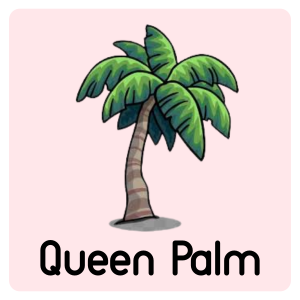
- Queen Palm — A fast-growing palm with long feather-like leaves and a graceful shape.
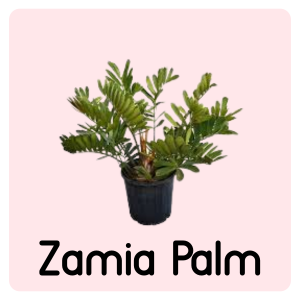
- Zamia Palm — A palm-like plant with thick leaves, often used as a decorative garden plant.
- Lady Palm — A compact palm with fan-shaped leaves, popular for indoor corners and shaded gardens.
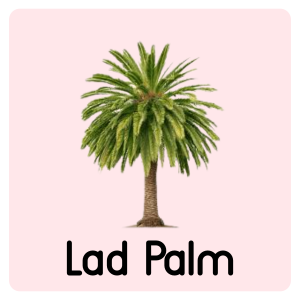
- Sentry Palm — A tall, elegant palm often used for indoor decoration and tropical landscaping.
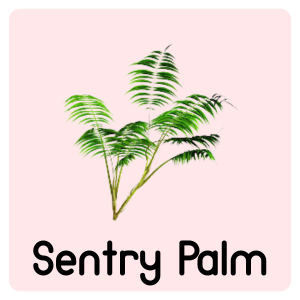
- Acai Palm — A fruit-bearing palm that grows small dark berries used in drinks and foods.
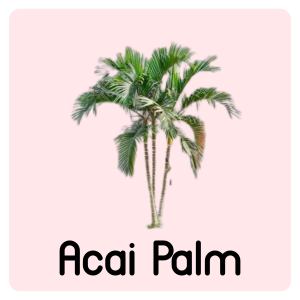
- Bottle Palm — A short ornamental palm with a thick trunk that looks like a bottle.
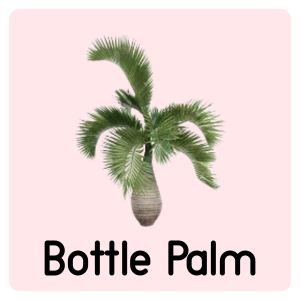
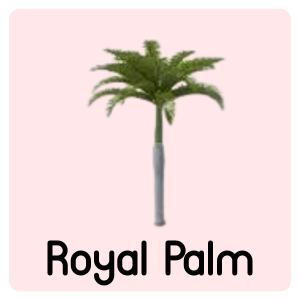
- Royal Palm — A tall, elegant palm with a smooth gray-white trunk and a grand look.
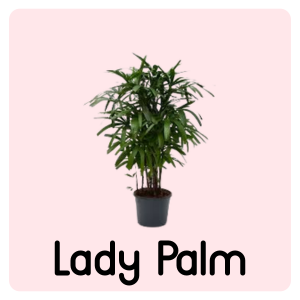
- Lady Palm — A small clumping palm with neat fan-shaped leaves and easy indoor care.
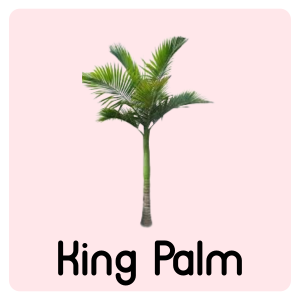
- King Palm — A tall ornamental palm with a smooth trunk and bright green crown.
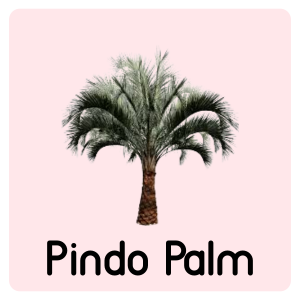
- Pindo Palm — A hardy feather-leaf palm that grows orange fruits and works well in gardens.
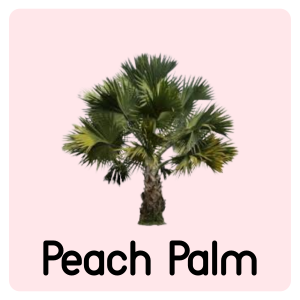
- Peach Palm — A tropical fruit-bearing palm that produces orange fruits in warm regions.
Palm Tree Identification Features
You can identify palm trees by looking at their trunks, leaves, height, fruits, and growing style. Some palms have smooth trunks, while others have rough, hairy, swollen, or clustered stems.
| Feature | What to Notice |
|---|---|
| Trunk | Look for smooth, rough, hairy, thick, thin, or swollen trunks. |
| Leaves | Check if the leaves look fan-shaped, feather-like, round, or fishtail-shaped. |
| Height | Notice if the palm is tall, medium, short, or dwarf. |
| Fruit | Look for coconuts, dates, berries, or fruit clusters. |
| Growth Style | Check if the palm grows as one trunk or in clumps. |
| Leaf Color | Some palms have green leaves, while others have silver-blue or gray-green leaves. |
Easy identification examples:
- A swollen trunk often points to a bottle-style palm.
- Large fan leaves often show a fan palm type.
- Feather-like leaves often appear on coconut, date, and queen-style palms.
- Small indoor palms usually have softer fronds and compact growth.
- Coastal palms often have tall trunks and tropical leaves.
Palm Tree Leaf Shapes
Palm tree leaves are one of the easiest ways to recognize different palm types. Most palms have either fan-shaped leaves or feather-shaped leaves.
| Leaf Type | Simple Meaning | Easy Identification Tip |
|---|---|---|
| Fan-shaped leaves | Leaves spread like a hand fan. | Look for wide, round, folded leaves. |
| Feather-shaped leaves | Leaves grow along a central stem. | Look for long fronds with many small leaflets. |
| Fishtail leaves | Leaflets look like fish tails. | Look for jagged or split leaf tips. |
| Round pleated leaves | Leaves look circular and folded. | Look for decorative, umbrella-like leaves. |
Palm trees with fan-shaped leaves include:
- Fan Palm
- Chinese Fan Palm
- European Fan Palm
- California Fan Palm
- Mexican Fan Palm
- Bismarck Palm
- Windmill Palm
- Ribbon Fan Palm
- Dwarf Palmetto
- Licuala Palm
Palm trees with feather-shaped leaves include:
- Coconut Palm
- Date Palm
- Queen Palm
- Foxtail Palm
- Areca Palm
- Kentia Palm
- Royal Palm
- Majesty Palm
- Christmas Palm
- Pygmy Date Palm
Fruit-Bearing Palm Trees
Some palm trees grow useful fruits, nuts, or berries. These palms are important for food, farming, oil, drinks, and traditional uses.
- Coconut Palm — Grows coconuts used for water, milk, oil, food, and fiber.
- Date Palm — Produces sweet dates used as fresh or dried fruit.
- Acai Palm — Grows small dark berries used in juices and health foods.
- Peach Palm — Produces orange fruits eaten in some tropical regions.
- Oil Palm — Produces palm fruits used to make palm oil.
- Betel Nut Palm — Produces areca nuts used traditionally in some cultures.
- Sugar Palm — Gives sap used for sugar, drinks, and food products.
- Saw Palmetto — Grows small berries used in herbal products.
- Canary Island Date Palm — Often grown as an ornamental palm and may produce dates.
- Senegal Date Palm — Produces small date-like fruits and also works as a landscape palm.
Indoor and Ornamental Palm Trees
Indoor and ornamental palms are popular because they add a fresh tropical look to rooms, offices, balconies, and shaded gardens. Many of them grow well in pots and need moderate care.
Good indoor and ornamental palm names include:
- Areca Palm
- Parlor Palm
- Kentia Palm
- Lady Palm
- Bamboo Palm
- Majesty Palm
- Sentry Palm
- Bottle Palm
- Bismarck Palm
- Christmas Palm
- Pygmy Date Palm
- Licuala Palm
Indoor palm tips:
- Place them near bright but indirect light.
- Avoid overwatering.
- Keep leaves clean and dust-free.
- Use pots with good drainage.
- Keep them away from strong cold drafts.
- Trim dry leaves when needed.
Tall Palm Trees
Tall palm trees create a strong tropical look in landscapes. People often plant them along roads, parks, resorts, large gardens, and beach areas.
Common tall palm tree names include:
- Royal Palm
- Coconut Palm
- Mexican Fan Palm
- Queen Palm
- Date Palm
- Cuban Royal Palm
- Washingtonia Palm
- Foxtail Palm
- Oil Palm
- Canary Island Date Palm
- California Fan Palm
- Talipot Palm
Tall palms are useful when you want:
- Shade.
- Height.
- A tropical look.
- A resort-style landscape.
- A strong focal point in large spaces.
Short and Dwarf Palm Trees
Short and dwarf palm trees work well in small gardens, patios, indoor pots, and compact spaces. They give a tropical look without taking too much room.
Common short and dwarf palm names include:
- Pygmy Date Palm
- Bottle Palm
- Dwarf Palmetto
- Needle Palm
- Parlor Palm
- Lady Palm
- Sago Palm
- European Fan Palm
- Saw Palmetto
- Licuala Palm
- Bamboo Palm
- Pindo Palm
These palms are useful for:
- Small gardens.
- Indoor corners.
- Patios.
- Pots and containers.
- Shaded garden beds.
- Decorative entrances.
Fan-Shaped Palm Trees
Fan-shaped palm trees have leaves that spread like a fan. Their bold leaves make them easy to recognize in pictures and gardens.
Common fan-shaped palm tree names include:
- Fan Palm
- Chinese Fan Palm
- European Fan Palm
- California Fan Palm
- Mexican Fan Palm
- Bismarck Palm
- Windmill Palm
- Ribbon Fan Palm
- Dwarf Palmetto
- Needle Palm
- Licuala Palm
- Palmetto Palm
Fan-shaped palms often look strong, wide, and decorative. Therefore, they work well in gardens, resorts, parks, and landscape designs.
Feather-Shaped Palm Trees
Feather-shaped palms have long fronds with many small leaflets along a central stem. These palms often look soft, graceful, and tropical.
Common feather-shaped palm tree names include:
- Coconut Palm
- Date Palm
- Queen Palm
- Foxtail Palm
- Areca Palm
- Kentia Palm
- Royal Palm
- Majesty Palm
- Christmas Palm
- Pygmy Date Palm
- Oil Palm
- Canary Island Date Palm
Feather-shaped palms are common in:
- Beaches.
- Resorts.
- Roadsides.
- Home gardens.
- Indoor spaces.
- Tropical landscapes.
Cold-Hardy Palm Trees
Cold-hardy palms can grow in cooler regions better than typical tropical palms. They still need care during harsh weather, but they handle lower temperatures better than many other palms.
Cold-hardy palm names include:
- Windmill Palm
- Needle Palm
- European Fan Palm
- Mazari Palm
- Dwarf Palmetto
- Saw Palmetto
- Pindo Palm
- Cabbage Palm
| Feature | Cold-Hardy Palm Benefit |
|---|---|
| Cooler weather tolerance | Better for mild winter regions. |
| Slow to moderate growth | Easier to manage in gardens. |
| Strong leaves | Handles wind and outdoor conditions better. |
| Compact options | Useful for small gardens and patios. |
Tropical and Coastal Palm Trees
Tropical and coastal palms grow well in warm, sunny, humid, or beach-like areas. They often appear in vacation photos, island landscapes, and seaside gardens.
Common tropical and coastal palm names include:
- Coconut Palm
- Seashore Palm
- Paurotis Palm
- Date Palm
- Foxtail Palm
- Queen Palm
- Royal Palm
- Christmas Palm
- Oil Palm
- Areca Palm
- Blue Latan Palm
- Thatch Palm
These palms are useful for:
- Beach landscapes.
- Resort gardens.
- Tropical parks.
- Coastal roads.
- Warm outdoor spaces.
- Island-style decoration.
Palm Trees for Gardens and Landscaping
Garden palms add height, shade, shape, and tropical beauty to outdoor spaces. Some palms work as large focal plants, while others grow well in groups, borders, or pots.
Good palm names for gardens and landscaping include:
- Royal Palm
- Queen Palm
- Foxtail Palm
- Bismarck Palm
- Bottle Palm
- Pygmy Date Palm
- Areca Palm
- Chinese Fan Palm
- Christmas Palm
- Lady Palm
- Windmill Palm
- Mexican Fan Palm
| Garden Need | Best Palm Style |
|---|---|
| Tall entrance look | Choose tall single-trunk palms. |
| Small patio design | Choose dwarf or compact palms. |
| Privacy screen | Choose clumping palms. |
| Bold focal point | Choose palms with large fan leaves. |
| Tropical feel | Choose feather-leaf palms. |
Fast-Growing Palm Trees
Fast-growing palms are useful when you want quick height, shade, or greenery. They can help a garden look fuller in less time.
Fast-growing palm names include:
- Queen Palm
- Mexican Fan Palm
- Foxtail Palm
- Areca Palm
- Royal Palm
- Christmas Palm
- King Palm
- Bangalow Palm
Fast-growing palms may need:
- Enough space.
- Regular watering.
- Good sunlight.
- Trimming when needed.
- Proper planting distance.
Slow-Growing Palm Trees
Slow-growing palms are easier to manage in small spaces. They often work well in pots, patios, and low-maintenance gardens.
Slow-growing palm names include:
- Sago Palm
- Bottle Palm
- Pygmy Date Palm
- Kentia Palm
- Parlor Palm
- European Fan Palm
- Lady Palm
- Needle Palm
- Licuala Palm
Slow-growing palms are useful because they:
- Need less frequent pruning.
- Fit better in small spaces.
- Stay neat for longer.
- Work well in containers.
- Add long-term decoration.
Palm-Like Plants That Are Not True Palms
Some plants look like palm trees but do not belong to the true palm family. People still call them palms because of their shape and common usage.
Palm-like plants include:
- Sago Palm
- Traveler’s Palm
- Zamia Palm
| Plant Type | Simple Explanation |
|---|---|
| True palms | Belong to the palm family and usually have palm-style fronds. |
| Palm-like plants | Look similar to palms but belong to different plant groups. |
| Common-name confusion | Some plants keep “palm” in their name even if they are not true palms. |
This section improves accuracy because readers can understand why some “palm” names are common but not botanically exact.
Parts of a Palm Tree
Learning palm tree parts helps students, gardeners, and English learners describe these plants more clearly.
| Palm Part | Meaning |
|---|---|
| Trunk | Main stem of the palm tree. |
| Fronds | Large palm leaves. |
| Crown | Top part where leaves grow. |
| Leaflets | Small leaf parts on feather-like fronds. |
| Fruit clusters | Groups of fruits near the crown. |
| Roots | Underground part that holds the plant. |
| Crownshaft | Smooth green section below leaves in some palms. |
| Seeds | Parts that can grow into new palms. |
Useful palm vocabulary:
- Trunk.
- Fronds.
- Crown.
- Leaflets.
- Roots.
- Fruit clusters.
- Seeds.
- Crownshaft.
Uses of Palm Trees
Palm trees have many practical, decorative, and cultural uses. They do more than make places look beautiful.
| Use | Simple Explanation |
|---|---|
| Food | Some palms give coconuts, dates, berries, or edible fruits. |
| Oil | Some palms produce oil for food and other products. |
| Shade | Tall palms provide shade in warm places. |
| Decoration | Many palms decorate homes, offices, gardens, and parks. |
| Landscaping | Palms add height, shape, and tropical style outdoors. |
| Fiber | Some palms provide fiber from husks or leaves. |
| Cultural value | Palm leaves appear in events, symbols, and traditions. |
Palm trees are commonly used for:
- Food.
- Oil.
- Shade.
- Indoor decoration.
- Garden beauty.
- Roadside landscaping.
- Beach scenery.
- Cultural decoration.
Fan Palm vs Feather Palm
Fan palms and feather palms are two easy groups to understand. Their leaf shape is the biggest difference.
| Feature | Fan Palm | Feather Palm |
|---|---|---|
| Leaf Shape | Wide and round like a fan | Long and divided like a feather |
| Common Look | Bold and circular | Soft and flowing |
| Best Use | Ornamental gardens | Tropical landscapes |
| Easy ID Tip | Leaves spread from one point | Leaflets grow along a stem |
Fan palm examples:
- Chinese Fan Palm
- Bismarck Palm
- European Fan Palm
- Mexican Fan Palm
- Windmill Palm
Feather palm examples:
- Coconut Palm
- Queen Palm
- Date Palm
- Foxtail Palm
- Areca Palm
Indoor Palm Trees vs Outdoor Palm Trees
Indoor palms usually stay smaller and tolerate pots. Outdoor palms often need more sunlight, space, and warm weather.
| Feature | Indoor Palm Trees | Outdoor Palm Trees |
|---|---|---|
| Size | Small to medium | Medium to very tall |
| Light | Indirect or filtered light | Bright sun or partial sun |
| Best Place | Rooms, offices, corners | Gardens, parks, roadsides |
| Care Level | Usually moderate | Depends on climate and size |
| Main Purpose | Decoration and freshness | Shade, height, and landscaping |
Indoor palm examples:
- Areca Palm
- Parlor Palm
- Kentia Palm
- Lady Palm
- Bamboo Palm
Outdoor palm examples:
- Royal Palm
- Coconut Palm
- Queen Palm
- Mexican Fan Palm
- Date Palm
Easy Palm Tree Names for Kids
Kids can learn palm tree names more easily when the names connect with simple pictures, fruits, or shapes.
Coconut Palm
This palm gives coconuts and often grows near beaches.
Date Palm
This palm gives sweet dates that people eat fresh or dried.
Fan Palm
This palm has leaves that look like a hand fan.
Bottle Palm
This palm has a thick trunk that looks like a bottle.
Parlor Palm
This small palm grows well inside homes.
Royal Palm
This tall palm looks beautiful along roads and gardens.
Queen Palm
This palm has long green leaves and grows quickly.
Areca Palm
This palm has soft green leaves and is common indoors.
Easy names for kids:
- Coconut Palm
- Date Palm
- Fan Palm
- Bottle Palm
- Parlor Palm
- Royal Palm
- Queen Palm
- Areca Palm
Palm Tree Names with Uses
Here is a simple list of palm tree names with their common uses.
- Coconut Palm — Fruit, oil, fiber, and tropical decoration.
- Date Palm — Sweet dates and farming.
- Areca Palm — Indoor decoration.
- Royal Palm — Roadsides and landscaping.
- Queen Palm — Fast garden growth.
- Sago Palm — Garden and pot decoration.
- Kentia Palm — Office and indoor decor.
- Acai Palm — Berries and health drinks.
- Bottle Palm — Visual appeal in gardens.
- Parlor Palm — House decoration.
- Lady Palm — Compact indoor corners.
- Bismarck Palm — Large ornamental landscapes.
- Windmill Palm — Cold-hardy gardens.
- Pygmy Date Palm — Small gardens and patios.
- Oil Palm — Palm oil production.
FAQs
The most common types of palm trees include Coconut Palm, Date Palm, Areca Palm, Royal Palm, Queen Palm, Fan Palm, Bottle Palm, Kentia Palm, and Pygmy Date Palm. People often see these palms in gardens, beaches, parks, roadsides, and indoor spaces.
The Coconut Palm gives coconuts. It grows mostly in warm coastal and tropical regions. People use coconuts for food, drinks, oil, fiber, and many everyday products.
The best indoor palm trees include Areca Palm, Parlor Palm, Kentia Palm, Lady Palm, and Bamboo Palm. These palms grow well in pots and add a fresh tropical look to homes and offices.
No, Sago Palm and Traveler’s Palm are not true palms. They look similar to palm trees, so people commonly call them palms. However, they belong to different plant groups.
Easy palm tree names for kids include Coconut Palm, Date Palm, Fan Palm, Bottle Palm, Royal Palm, Queen Palm, and Areca Palm. These names are simple and connect well with clear pictures.
Summary
Palm trees are useful, beautiful, and easy to recognize when you learn their names, shapes, and features. Some palms grow fruits, such as Coconut Palm, Date Palm, and Acai Palm. Others work well indoors, such as Areca Palm, Parlor Palm, and Kentia Palm.
You can also group palm trees by size, use, leaf shape, and growing place. For example, Royal Palm and Mexican Fan Palm are tall palms, while Pygmy Date Palm and Bottle Palm are short palms. Likewise, Chinese Fan Palm has fan-shaped leaves, while Coconut Palm has feather-shaped leaves. Learning palm tree names with pictures makes plant vocabulary easier, clearer, and more useful in daily life.
Read More
