

Nouns ending in f or fe are common in English and appear in many everyday words. Words like leaf, wolf, knife, and life are all nouns whose singular form ends with f or fe. These nouns are important because their plural forms do not always follow just one simple pattern.
For example, many nouns ending in f or fe change to ves in the plural, such as leaf → leaves and knife → knives. However, some nouns only add s, such as roof → roofs and chief → chiefs. A few nouns can even use two accepted plural forms, which is why this topic can feel confusing for learners.
In this article, you will learn what nouns ending in f or fe are, read a clear list of common examples, explore nouns ending in f and nouns ending in fe, understand the main plural rules, learn common exception patterns, and see simple sentences for easy learning. This will help you recognize these nouns more easily and use their singular and plural forms correctly in everyday English.
In This Page
What Are Nouns Ending in F or Fe?
Nouns ending in f or fe are nouns whose singular form ends with the letter f or the letters fe. These nouns can name people, animals, things, or ideas.
For example:
- leaf
- wolf
- knife
- life
- wife
Some of these nouns form their plural by changing f or fe to ves, while others simply add s. That is why this topic is important in English grammar.
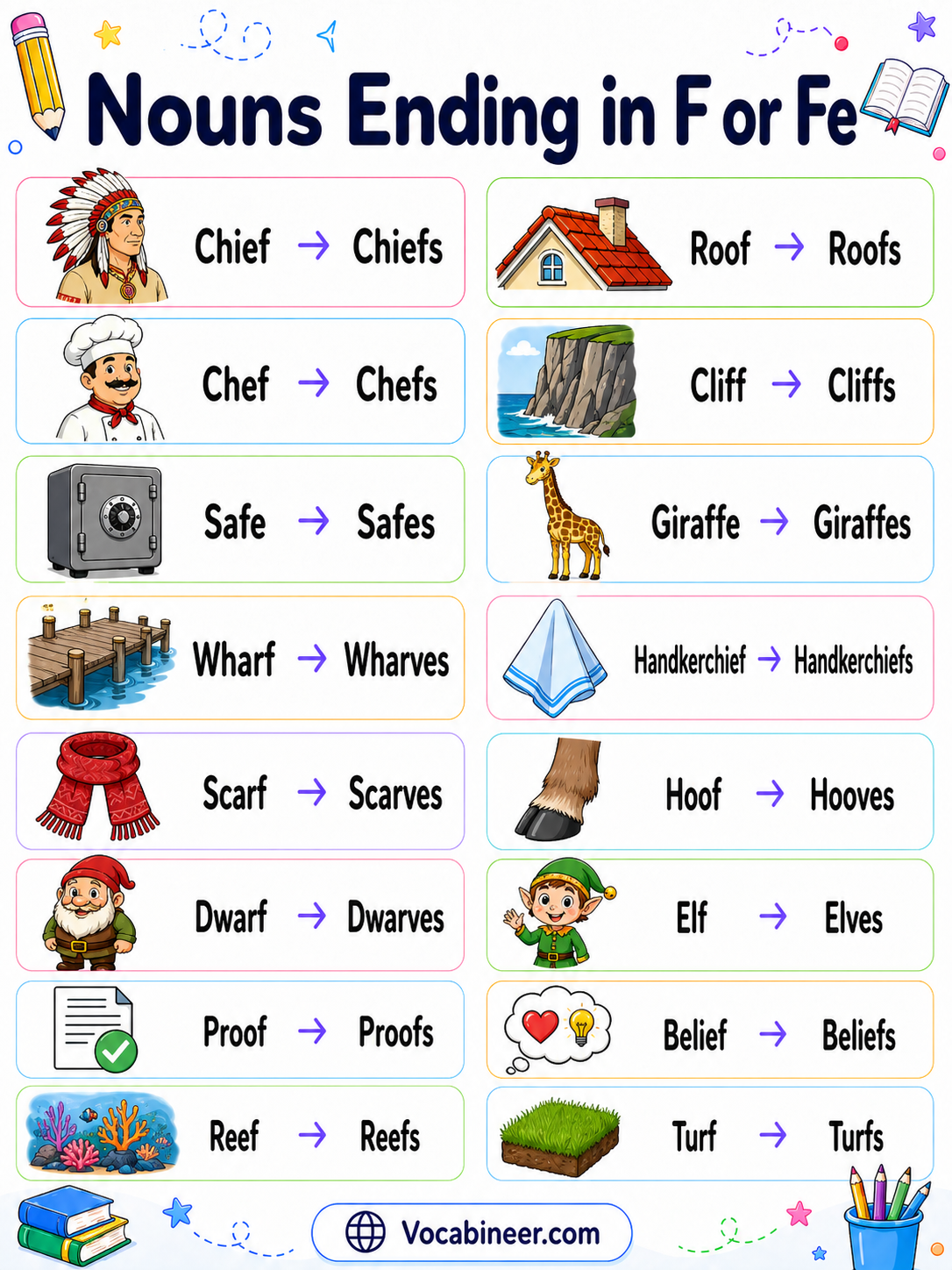
Nouns Ending in F or Fe List in English
Here is a list of common nouns ending in f or fe:
- Leaf
- Wolf
- Knife
- Life
- Wife
- Calf
- Half
- Loaf
- Shelf
- Thief
- Self
- Elf
- Scarf
- Hoof
- Wharf
- Dwarf
- Chief
- Belief
- Roof
- Cliff
- Handkerchief
- Proof
- Safe
- Cafe
- Giraffe
- Strife
- Reef
- Sheriff
- Tariff
- Plaintiff
- Kerchief
- Relief
- Brief
- Beef
- Chef
- Oaf
- Staff
- Turf
- Grief
- Waif
- Mischief
- Knife
- Wife
- Life
- Safe
- Cafe
- Giraffe
- Strife
- Hoof
- Scarf
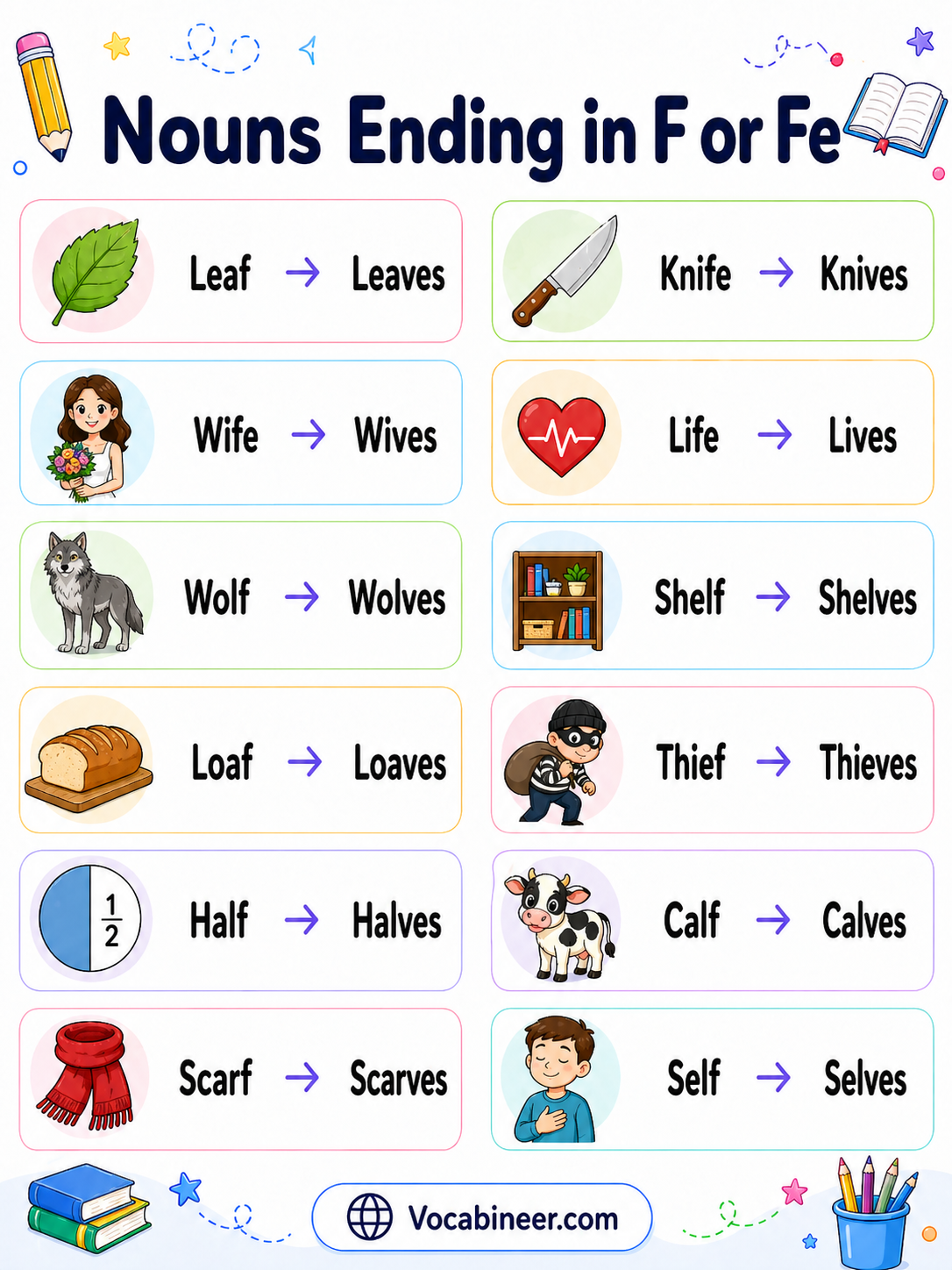
Nouns Ending in F and Nouns Ending in Fe
Grouping these nouns by spelling makes them easier to understand.
Nouns Ending in F
These nouns end with the letter f:
- leaf
- wolf
- calf
- half
- loaf
- shelf
- thief
- self
- chief
- roof
- cliff
- proof
- scarf
- hoof
- wharf
Nouns Ending in Fe
These nouns end with fe:
- knife
- life
- wife
- safe
- cafe
- giraffe
- strife
Plural Rules for Nouns Ending in F or Fe
There are three main patterns for nouns ending in f or fe.
1. Many nouns change f or fe to ves
Examples:
- leaf → leaves
- wolf → wolves
- knife → knives
- life → lives
- wife → wives
2. Some nouns simply add s
Examples:
- roof → roofs
- chief → chiefs
- belief → beliefs
- cliff → cliffs
- proof → proofs
3. A few nouns can have two accepted plural forms
Examples:
- scarf → scarfs / scarves
- hoof → hoofs / hooves
- wharf → wharfs / wharves
- dwarf → dwarfs / dwarves
A simple way to remember this is:
- many common nouns ending in f or fe change to ves
- some nouns only add s
- a few nouns allow both forms
Nouns Ending in F or Fe That Change to VES
These nouns usually form their plural by changing f or fe to ves:
| Singular | Plural |
|---|---|
| leaf | leaves |
| wolf | wolves |
| knife | knives |
| life | lives |
| wife | wives |
| calf | calves |
| half | halves |
| loaf | loaves |
| shelf | shelves |
| thief | thieves |
| self | selves |
| elf | elves |
| sheaf | sheaves |
Nouns Ending in F or Fe That Add S
These nouns usually form their plural by adding s:
| Singular | Plural |
|---|---|
| roof | roofs |
| chief | chiefs |
| belief | beliefs |
| cliff | cliffs |
| proof | proofs |
| safe | safes |
| cafe | cafes |
| giraffe | giraffes |
| sheriff | sheriffs |
| tariff | tariffs |
| plaintiff | plaintiffs |
| reef | reefs |
| brief | briefs |
Common Exceptions in Nouns Ending in F or Fe
Some nouns ending in f do not follow only one pattern. They may have two accepted plural forms.
| Singular | Accepted Plurals |
|---|---|
| scarf | scarfs / scarves |
| hoof | hoofs / hooves |
| wharf | wharfs / wharves |
| dwarf | dwarfs / dwarves |
This is why it is helpful to learn common nouns one by one instead of depending only on a single rule.
Nouns Ending in F or Fe in Sentences
These simple examples show how nouns ending in f or fe are used in real sentences:
- A green leaf fell from the tree.
- The yellow leaves covered the ground.
- The wolf ran into the forest.
- The wolves stayed far from the village.
- The knife is sharp.
- The knives are in the kitchen drawer.
- Her life changed after the move.
- Their lives became easier with time.
- The wife greeted the guests warmly.
- The wives sat together and talked.
- The roof needs repair.
- The roofs were wet after the rain.
- The village chief welcomed everyone.
- The local chiefs attended the meeting.
- I bought a warm scarf for winter.
- The shop was selling colorful scarves.
FAQs
Nouns ending in f or fe are nouns whose singular form ends with f or fe, such as leaf, wolf, knife, and life.
Many change f or fe to ves, while some simply add s. A few nouns can use both plural forms.
Words like leaf, wolf, knife, life, and wife change to leaves, wolves, knives, lives, and wives.
Words like roof, chief, belief, cliff, and proof form their plural by adding s.
Yes. Some nouns, such as scarf, hoof, wharf, and dwarf, can have two accepted plural forms.
Summary
Nouns ending in f or fe are common in English and follow important plural patterns. Many change to ves, some only add s, and a few allow both forms.
In this article, you learned the meaning of nouns ending in f or fe, saw a useful list of examples, explored nouns ending in f and nouns ending in fe, understood the plural rules, learned common exceptions, and read simple sentences. This makes the topic easier to understand and use correctly in English.
Read More
- List of Nouns in English
- Possessive Nouns in English
- Regular Plural Nouns in English
- Irregular Plural Nouns in English