

Baking ingredients include flours, sweeteners, fats, eggs, dairy products, leaveners, chocolate, spices, flavorings, nuts, dried fruit, and decorating materials. Each group serves a different purpose in a recipe. Depending on its role, an ingredient may build structure, add moisture, improve tenderness, deepen flavor, support browning, help dough or batter rise, or give a baked item its finished appearance.
This guide explains 100+ baking ingredient names in simple English and shows how to recognize them, where bakers commonly use them, and what each one does. It also compares easily confused ingredients such as baking powder and baking soda, active dry yeast and instant yeast, natural cocoa and Dutch-process cocoa, granulated sugar and powdered sugar, and butter and shortening.
In This Page
What Counts as a Baking Ingredient?
A baking ingredient is an edible substance added to dough, batter, filling, frosting, glaze, or decoration. Some ingredients build structure, while others add sweetness, moisture, richness, flavor, color, or lift.
Ready-made additions such as chocolate chips and dried fruit also count because bakers regularly mix them into recipes. However, tools, finished cakes, prepared dough, and complete desserts are not baking ingredients.
Essential Ingredients at a Glance
These common pantry staples appear in many beginner-friendly recipes.
| Ingredient | Main purpose | Common uses |
|---|---|---|
| All-Purpose Flour | Builds structure | Cakes, cookies, muffins |
| Granulated Sugar | Adds sweetness and browning | Cakes, cookies, pies |
| Brown Sugar | Adds moisture and caramel flavor | Cookies, bars, breads |
| Butter | Adds richness and tenderness | Cakes, cookies, pastries |
| Eggs | Bind and strengthen mixtures | Cakes, cookies, custards |
| Milk | Adds moisture | Cakes, muffins, breads |
| Baking Powder | Helps batter rise | Cakes, biscuits, muffins |
| Baking Soda | Creates lift when combined with acid | Cookies, quick breads |
| Yeast | Raises dough through fermentation | Bread, rolls, pizza dough |
| Salt | Balances and strengthens flavor | Most baked foods |
| Vanilla Extract | Adds aroma and flavor | Cakes, cookies, frostings |
| Cocoa Powder | Adds chocolate flavor and color | Brownies, cakes, cookies |
| Cornstarch | Thickens and tenderizes | Fillings, custards, cookies |
| Vegetable Oil | Adds moisture | Cakes, muffins, quick breads |
| Chocolate Chips | Add chocolate pieces | Cookies, bars, muffins |
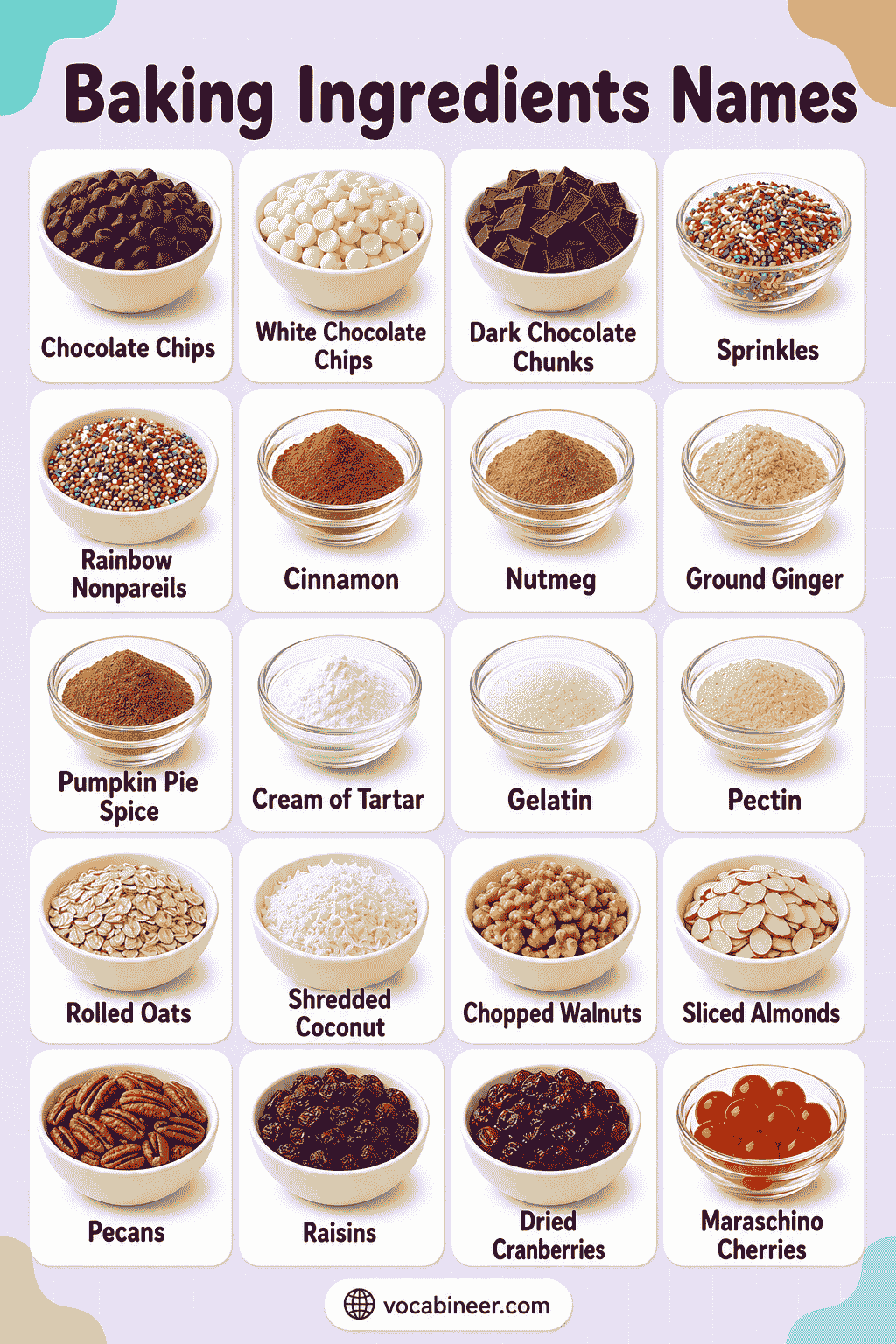
Flour and Grain Ingredients
Flour and grain products provide structure and influence whether a baked food becomes light, chewy, firm, tender, or crumbly.
All-Purpose Flour: A fine wheat flour with a moderate protein level. It works well in cakes, cookies, muffins, biscuits, pancakes, and many everyday breads.
Bread Flour: A higher-protein wheat flour that develops stronger gluten. As a result, it creates chewier breads, rolls, and pizza crusts.
Cake Flour: A very fine, low-protein flour used for soft and light cakes. Its delicate texture helps produce a fine crumb.
Pastry Flour: A low-protein flour that is slightly stronger than cake flour. Bakers commonly use it for pie crusts, pastries, biscuits, and tender cookies.
Whole-Wheat Flour: Flour made from the entire wheat kernel. It has a tan color, fuller flavor, and denser texture than refined white flour.
Self-Rising Flour: Flour already mixed with baking powder and salt. It appears in biscuits, quick breads, pancakes, and simple cakes.
Almond Flour: A fine powder made from ground blanched almonds. It adds richness, moisture, and mild nutty flavor to cakes and cookies.
Coconut Flour: A soft flour made from dried coconut flesh. Because it absorbs a great deal of liquid, recipes usually use it in small amounts.
Oat Flour: Flour made from finely ground oats. It adds tenderness and a mild flavor to cookies, pancakes, muffins, and quick breads.
Rice Flour: A fine flour made from ground rice. It appears frequently in gluten-free cakes, cookies, and crisp batters.
Cornmeal: A coarse or medium-textured ingredient made from dried corn. It gives cornbread and muffins a slightly grainy texture.
Cornstarch: A very fine white starch separated from corn. It thickens custards and fillings and can make cookies more tender.
Sugars and Sweeteners
Sweeteners affect more than taste. They may also add moisture, browning, chewiness, crispness, color, and caramel flavor.
Granulated Sugar: Standard white sugar with small visible crystals. It is widely used in cakes, cookies, pies, meringues, and desserts.
Brown Sugar: A moist sugar containing molasses. It gives cookies and bars a softer texture and deeper caramel flavor.
Light Brown Sugar: Brown sugar with a mild molasses flavor. It works well in cookies, cakes, glazes, and quick breads.
Dark Brown Sugar: Brown sugar containing more molasses. Therefore, it has a darker color and stronger flavor than light brown sugar.
Powdered Sugar: Finely ground sugar mixed with a small amount of starch. Bakers use it in frostings, glazes, dusting, and candy making.
Caster Sugar: A fine granulated sugar that dissolves quickly. It is useful in delicate cakes, meringues, and light batters.
Demerara Sugar: A coarse golden sugar with large dry crystals. Bakers often sprinkle it over muffins, cookies, and pastries for crunch.
Molasses: A thick, dark syrup produced during sugar refining. It gives gingerbread and dark cookies a rich flavor and deep color.
Honey: A thick natural sweetener made by bees. It adds moisture, browning, and floral sweetness to cakes and breads.
Maple Syrup: A liquid sweetener made from maple sap. It adds a recognizable woody and caramel-like flavor.
Corn Syrup: A smooth liquid sweetener made by processing cornstarch. It helps prevent sugar crystallization in fillings, glazes, and candies.
Jaggery: An unrefined sweetener made from sugarcane or palm sap. It has a deep brown color and rich caramel-like taste.
Butter, Oils, and Other Fats
Fats influence tenderness, flakiness, moisture, spread, richness, and flavor.
Butter: A solid dairy fat with a rich flavor. It adds tenderness to cakes and cookies and helps pastries develop flaky layers.
Unsalted Butter: Butter without added salt. Bakers often prefer it because it gives them better control over the total salt in a recipe.
Salted Butter: Butter containing added salt. It can work in many recipes, although the remaining salt may need adjustment.
Margarine: A butter-like fat made mainly from vegetable oils. Stick margarine usually performs more consistently in baking than soft tub spreads.
Shortening: A solid vegetable fat with a neutral flavor. It creates tender cookies, flaky crusts, and stable frostings.
Vegetable Oil: A mild liquid fat that keeps cakes, muffins, and quick breads moist after cooling.
Coconut Oil: A plant fat that may be solid or liquid depending on temperature. It adds richness and sometimes a mild coconut flavor.
Olive Oil: A liquid fat with a distinctive taste. Mild varieties work especially well in cakes, breads, and savory baked dishes.
Ingredients That Make Baking Rise
Leavening ingredients produce gas or support air retention, helping doughs and batters expand.
Baking Powder: A chemical leavener containing both an acid and a base. It begins reacting when moistened and often reacts again during baking.
Baking Soda: An alkaline powder also called sodium bicarbonate. It needs an acidic ingredient, such as buttermilk, yogurt, molasses, or lemon juice, to react.
Active Dry Yeast: Coarse dried yeast granules used in bread dough. Some recipes dissolve it in warm liquid first, while others mix it directly with dry ingredients.
Instant Yeast: Fine yeast granules that usually mix directly into flour. It often works faster than active dry yeast.
Fresh Yeast: A moist yeast sold in soft blocks or cakes. It raises dough effectively but has a shorter shelf life than dried yeast.
Sourdough Starter: A living mixture of flour and water containing wild yeast and bacteria. It raises dough gradually and adds a tangy flavor.
Cream of Tartar: A fine acidic powder used with baking soda or beaten egg whites. It supports leavening and helps stabilize meringue.
Eggs and Dairy Ingredients
Eggs and dairy products add protein, fat, moisture, color, richness, tenderness, and structure.
Whole Egg: An egg containing both the white and yolk. It binds ingredients, adds structure, and supports browning.
Egg White: The clear part of an egg that becomes white when cooked. It adds protein and can trap air when beaten.
Egg Yolk: The yellow center of an egg. It contributes fat, richness, color, and emulsifying power.
Milk: A liquid dairy ingredient that adds moisture and helps distribute sugar, salt, and other ingredients evenly.
Whole Milk: Milk with more fat than reduced-fat varieties. Consequently, it creates a richer and softer texture.
Buttermilk: A tangy cultured dairy liquid. Its acidity reacts with baking soda and helps tenderize cakes, muffins, and biscuits.
Heavy Cream: A rich dairy liquid with a high fat content. It appears in ganache, whipped toppings, scones, fillings, and rich doughs.
Sour Cream: A thick cultured dairy product with mild acidity. It adds moisture and tenderness to cakes, muffins, and cheesecakes.
Cream Cheese: A smooth, soft cheese with a mild tang. Bakers use it in cheesecakes, frostings, pastries, and fillings.
Sweetened Condensed Milk: Concentrated milk containing added sugar. It is thick and very sweet, making it useful in bars, pies, fudge, and fillings.
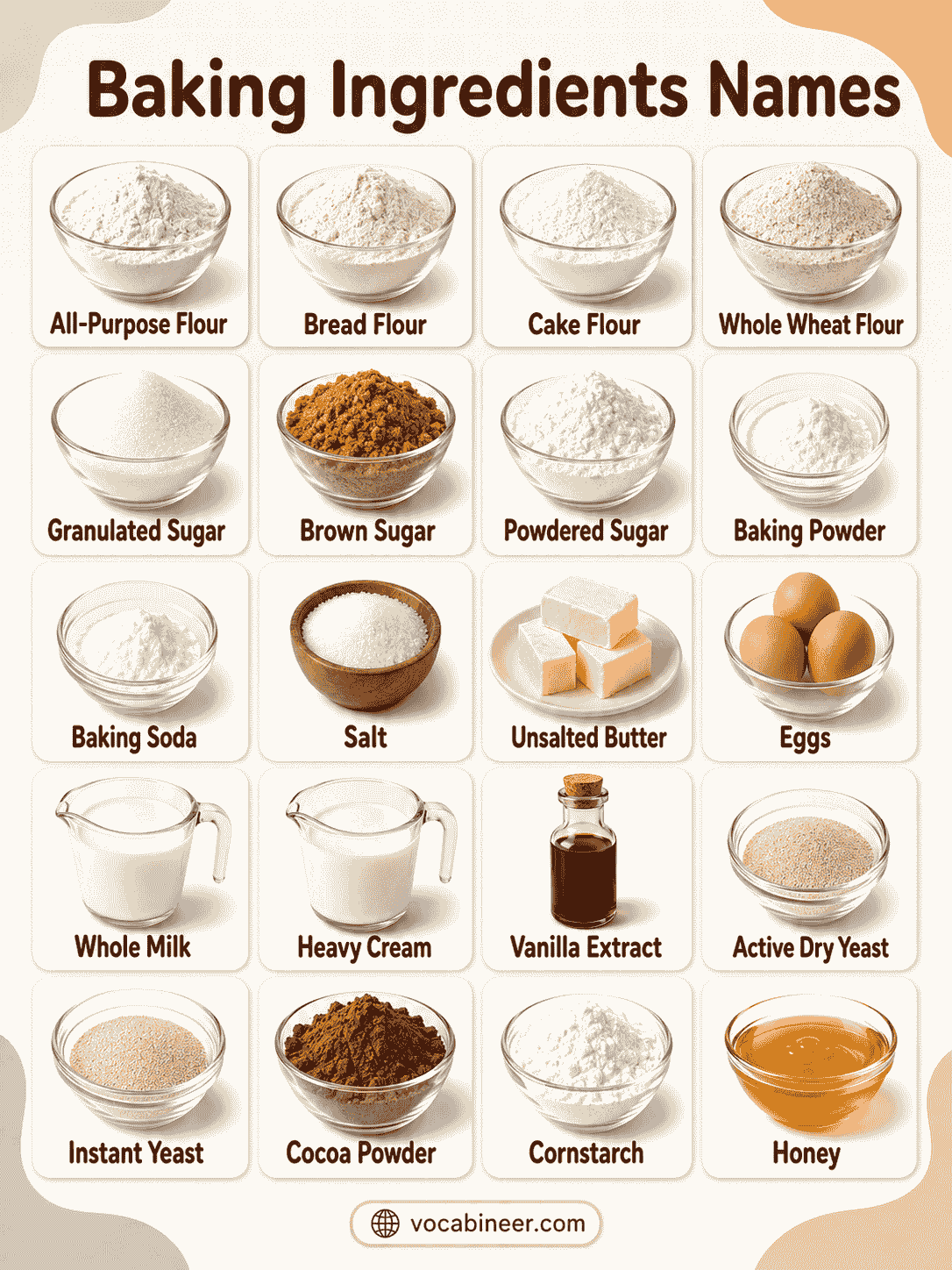
Chocolate and Cocoa
Chocolate ingredients differ in cocoa content, sweetness, form, and acidity.
Cocoa Powder: A dry brown powder made from cocoa solids. It gives cakes, brownies, frostings, and cookies a strong chocolate flavor.
Natural Cocoa Powder: An acidic cocoa powder with a lighter brown color and sharper taste. It often appears in recipes containing baking soda.
Dutch-Process Cocoa: Cocoa treated to reduce its acidity. It has a darker color and smoother flavor than natural cocoa.
Unsweetened Chocolate: Solid chocolate containing cocoa solids and cocoa butter without added sugar. Bakers combine it with sugar in brownies and cakes.
Dark Chocolate: Chocolate with a relatively high cocoa content. It provides an intense flavor and less sweetness than milk chocolate.
Milk Chocolate: Sweet chocolate containing milk solids. It has a lighter color and creamier taste.
White Chocolate: A pale chocolate product made with cocoa butter, sugar, and milk solids but no cocoa solids.
Chocolate Chips: Small, uniform chocolate pieces that hold some of their shape during baking. They are common in cookies, muffins, and bars.
Extracts, Zests, and Flavorings
Flavorings add aroma and identity without greatly changing the structure of a recipe.
Vanilla Extract: A dark liquid made by soaking vanilla beans in alcohol and water. It adds a warm aroma to cakes, cookies, custards, and frostings.
Vanilla Bean: A long dark pod containing tiny aromatic seeds. Bakers scrape the seeds into creams, cakes, custards, and fillings.
Vanilla Paste: A thick vanilla product that usually contains visible seeds. It provides strong flavor and a speckled appearance.
Almond Extract: A concentrated liquid with a sweet nut-like aroma. Only a small amount is normally needed.
Lemon Extract: A concentrated flavoring that adds lemon aroma without introducing much extra moisture.
Orange Extract: A strong citrus flavoring used in cakes, cookies, breads, and frostings.
Rose Water: A fragrant liquid made from roses. It adds a floral note to cakes, cookies, syrups, and pastries.
Lemon Zest: The thin yellow outer layer of lemon peel. Its natural oils add fresh citrus aroma and flavor.
Orange Zest: The colored outer peel of an orange. It gives doughs, batters, and frostings a bright citrus taste.
Baking Spices
Spices add warmth, sharpness, floral notes, and depth to sweet and savory baking.
Cinnamon: A warm brown spice made from dried tree bark. It appears in cinnamon rolls, apple pies, cakes, and cookies.
Nutmeg: A slightly sweet spice made from the seed of the nutmeg tree. Bakers use it in custards, pies, cakes, and spiced breads.
Ginger: A sharp, warming spice used fresh, dried, or ground. It gives gingerbread and spice cookies their recognizable flavor.
Cloves: Strong aromatic flower buds used in small amounts. They add depth to fruitcakes, gingerbread, and holiday desserts.
Cardamom: A fragrant spice with floral and citrus notes. It works well in sweet breads, cookies, and pastries.
Allspice: One spice with flavors that resemble cinnamon, cloves, and nutmeg. It commonly appears in spice cakes and fruit desserts.
Anise: A spice with a sweet licorice-like flavor. It is often used in traditional cookies, breads, and pastries.
Mace: A warm spice made from the outer covering of the nutmeg seed. Its flavor is similar to nutmeg but slightly more delicate.
Nuts, Seeds, Fruit, and Add-Ins
Add-ins create visible pieces, color, chewiness, crunch, and flavor contrasts.
Almonds: Mild nuts used whole, sliced, slivered, chopped, or ground. They add crunch to cakes, cookies, and pastries.
Walnuts: Ridged nuts with a rich, slightly bitter flavor. They are common in brownies, cookies, banana bread, and cakes.
Pecans: Buttery nuts with a delicate texture. They appear frequently in pies, bars, cookies, and toppings.
Pistachios: Green and purple nuts with a mild sweet flavor. They add color and crunch to cakes, cookies, and pastries.
Hazelnuts: Round nuts with a deep roasted flavor. They pair especially well with chocolate.
Sesame Seeds: Tiny flat seeds that may be white, brown, golden, or black. Bakers sprinkle them over breads, buns, and crackers.
Poppy Seeds: Very small dark seeds with a mild nutty taste. They commonly appear in lemon cakes, muffins, and rolls.
Flaxseed: Small brown or golden seeds with a mild nutty flavor. Ground flaxseed may also act as a binder when mixed with water.
Raisins: Dried grapes with concentrated sweetness and a chewy texture. They appear in breads, cookies, cakes, and muffins.
Dried Cranberries: Small red dried fruits with a sweet-tart flavor. They add color and chewiness to scones, cookies, and quick breads.
Shredded Coconut: Thin pieces of dried coconut flesh. It can be sweetened or unsweetened and is used in cakes, cookies, fillings, and toppings.
Marshmallows: Soft sweet pieces made mainly from sugar, syrup, and gelatin. They melt or remain visible in cookies, bars, and toppings.
Specialty and Decorating Ingredients
These ingredients help thicken, set, bind, color, cover, or decorate baked foods.
Gelatin: A protein-based setting ingredient that dissolves in warm liquid. It adds firmness to mousses, glazes, and chilled fillings.
Agar-Agar: A plant-based setting ingredient made from seaweed. It creates a firmer set than gelatin and suits vegetarian recipes.
Xanthan Gum: A fine powder used in small quantities to improve structure and elasticity in gluten-free baking.
Pectin: A natural substance found in fruit. It helps jams, jellies, and fruit fillings thicken and set.
Meringue Powder: A dry mixture containing powdered egg whites and stabilizers. It is used in royal icing, meringue, and some frostings.
Fondant: A smooth sugar-based icing that can be rolled and shaped. It covers cakes and creates decorative figures.
Marzipan: A soft paste made mainly from almonds and sugar. Bakers use it for fillings, cake coverings, candies, and molded decorations.
Food Coloring: A concentrated color available as liquid, gel, paste, or powder. It changes the appearance of batter, icing, dough, and decorations.
Sprinkles: Small decorative sugar pieces available in many colors and shapes. They commonly decorate cakes, cookies, cupcakes, and frosted desserts.
Sanding Sugar: A coarse decorating sugar with sparkling crystals. It adds color, sweetness, and crunch to cookies, muffins, and pastries.
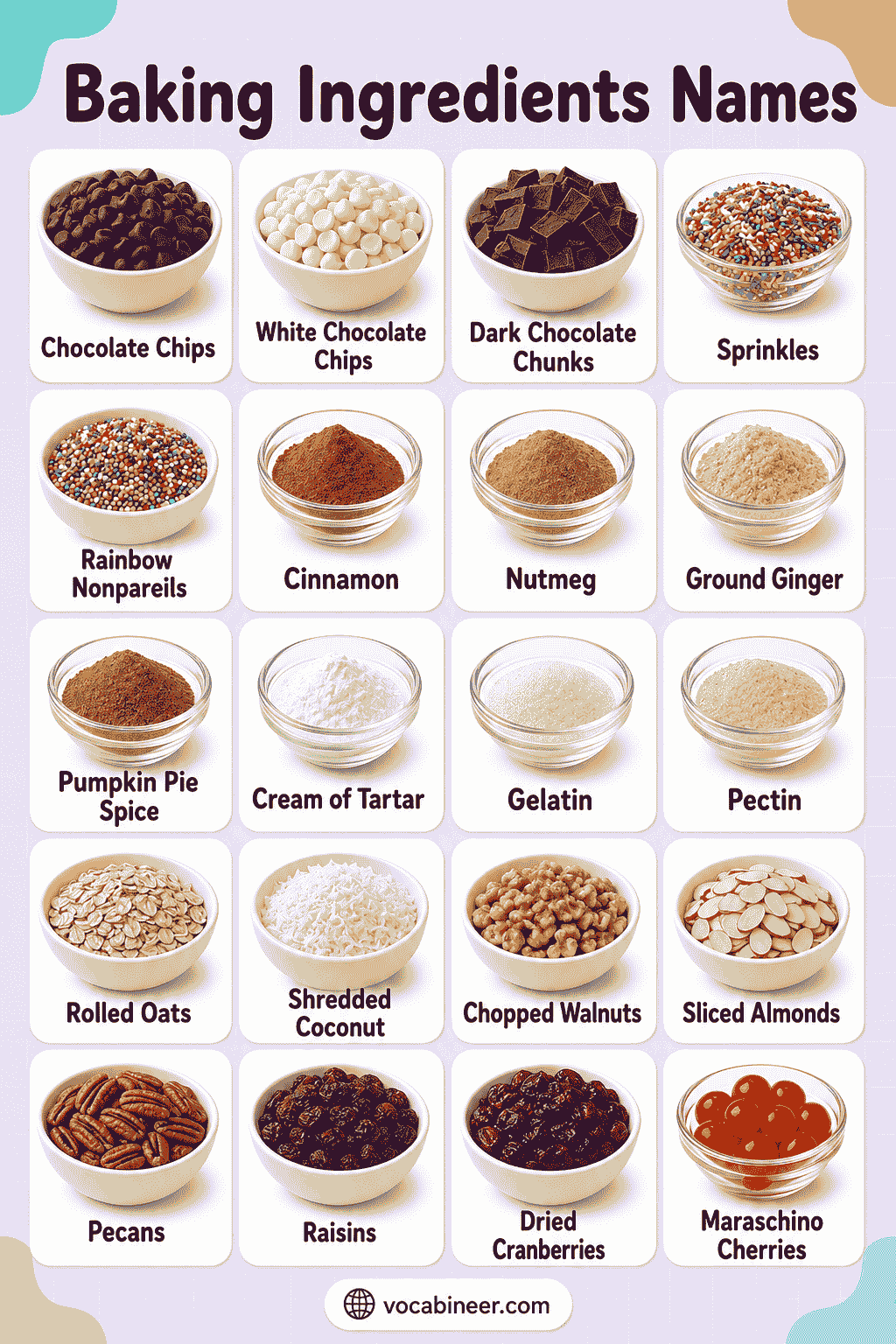
What Each Ingredient Does
Successful baking depends on balancing several ingredient functions.
| Function | Common ingredients |
|---|---|
| Build structure | Flour, eggs, cornstarch |
| Add sweetness | Sugar, honey, maple syrup, molasses |
| Create lift | Baking powder, baking soda, yeast |
| Add moisture | Milk, oil, sour cream |
| Add richness | Butter, cream, egg yolks |
| Bind ingredients | Eggs, flaxseed, starches |
| Create tenderness | Fat, sugar, cake flour |
| Add chewiness | Bread flour, brown sugar, eggs |
| Add flavor | Vanilla, cocoa, spices, zest |
| Add color | Cocoa, egg yolks, food coloring |
| Thicken fillings | Cornstarch, flour, pectin, gelatin |
| Decorate baked foods | Fondant, sprinkles, sanding sugar |
Baking Powder, Baking Soda, and Yeast Compared
These ingredients all create lift, but they work at different speeds and through different processes.
| Ingredient | How it works | Needs added acid? | Speed | Common uses |
|---|---|---|---|---|
| Baking Powder | Releases gas through a chemical reaction | Usually no | Fast | Cakes, muffins, biscuits |
| Baking Soda | Reacts with acidic ingredients | Yes | Fast | Cookies, quick breads |
| Active Dry Yeast | Ferments sugar and produces gas | No | Slow | Bread and rolls |
| Instant Yeast | Ferments like active dry yeast but often works faster | No | Slow | Bread, rolls, pizza dough |
| Sourdough Starter | Uses wild yeast and bacteria | No | Slow | Sourdough bread |
Baking powder and baking soda are not interchangeable in equal amounts. Replacing one with the other can change the flavor, color, spread, and rise of a recipe.
Common Ingredient Confusions
Several ingredients have similar appearances but different uses.
| Ingredients | Main difference |
|---|---|
| All-Purpose Flour and Bread Flour | Bread flour has more protein and usually creates a chewier texture |
| Cake Flour and Pastry Flour | Cake flour is finer and lower in protein |
| Cornmeal and Cornstarch | Cornmeal is coarse ground corn; cornstarch is a fine white thickener |
| Baking Powder and Baking Soda | Baking powder contains acid and base; baking soda needs an acidic ingredient |
| Active Dry Yeast and Instant Yeast | Active dry yeast has coarser granules; instant yeast is finer and often mixes directly into flour |
| Granulated Sugar and Powdered Sugar | Granulated sugar has visible crystals; powdered sugar is finely ground |
| Light Brown Sugar and Dark Brown Sugar | Dark brown sugar contains more molasses and has a stronger flavor |
| Natural Cocoa and Dutch-Process Cocoa | Natural cocoa is acidic; Dutch-process cocoa has been alkalized |
| Butter and Shortening | Butter contains water and milk solids; shortening is nearly all fat |
| Milk and Sweetened Condensed Milk | Regular milk is unsweetened and thin; condensed milk is concentrated, thick, and sweet |
| Gelatin and Agar-Agar | Gelatin comes from animal collagen; agar-agar comes from seaweed |
| Vanilla Extract and Vanilla Paste | Extract is liquid; paste is thicker and usually contains visible seeds |
FAQs
The main categories include flour, sweeteners, fats, leaveners, eggs, dairy products, chocolate, flavorings, spices, add-ins, and decorating ingredients.
Baking powder, baking soda, yeast, sourdough starter, beaten egg whites, and steam can help dough or batter expand.
Baking powder contains both acidic and alkaline components. Baking soda is alkaline and needs an acidic ingredient to react properly.
All-purpose flour is the most versatile choice for cakes, cookies, muffins, biscuits, quick breads, and some yeast breads.
Useful basics include all-purpose flour, sugar, butter, oil, eggs, milk, baking powder, baking soda, salt, vanilla extract, cocoa powder, and cornstarch.
Read More