

An appetizer may be a creamy dip, a crisp pastry, a chilled seafood dish, a small salad, or a platter shared across the table. Although these foods differ in shape, texture, ingredients, and serving style, they all serve the same basic purpose: they begin the meal before the main course arrives.
The 65 appetizer names below include dips, bread-based starters, filled bites, wrapped foods, seafood, soups, salads, and sharing platters. Each description focuses on the strongest visual and structural clues, helping learners recognize the correct English name on menus, in pictures, and during everyday food conversations.
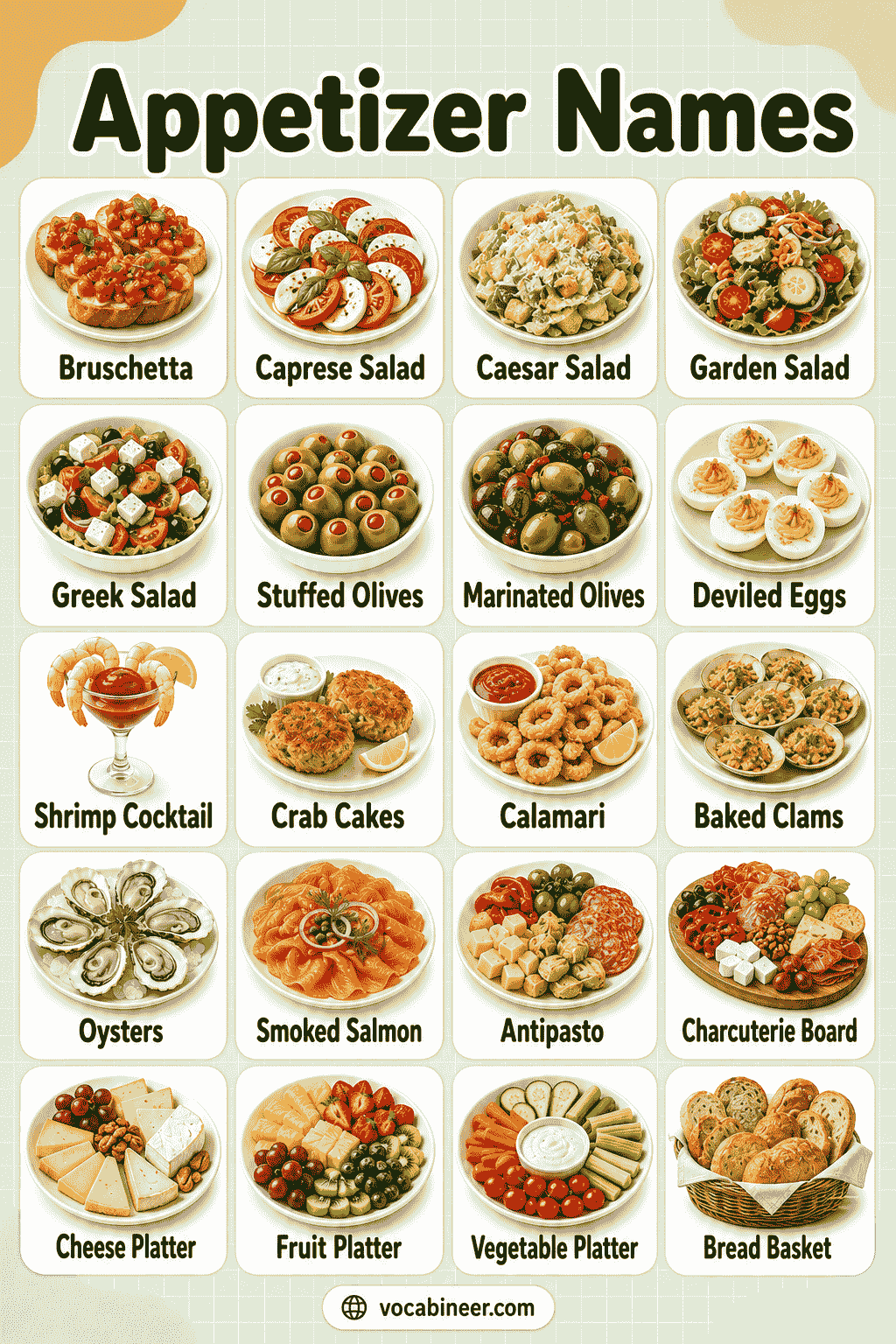
In This Page
What Makes a Food an Appetizer?
An appetizer is a small dish or first course served before the main part of a meal. In American English, appetizer is the usual restaurant term, although some menus also use starter.
Meal position is usually the strongest clue. However, portion size, presentation, and menu context also matter. For example, chicken wings may be an appetizer before dinner, a snack between meals, or part of a casual main course.
Appetizers may be:
- warm, chilled, or served at room temperature
- handheld or eaten with utensils
- offered individually or made for sharing
- one bite or several bites
- smooth, crisp, layered, filled, wrapped, or carefully plated
Therefore, soups and salads can function as appetizers when restaurants serve them in small first-course portions. Likewise, a shared dip, board, or platter becomes an appetizer when it appears before the main meal.
How Appetizers Differ from Similar Foods
Several food terms overlap, but each one describes a different part of the eating experience.
| Term | What it describes | Main clue | Example |
|---|---|---|---|
| Appetizer | Food served before the main course | Position in the meal | Stuffed mushroom |
| Starter | Another name for an appetizer | Begins the meal | Caesar salad |
| Hors d’oeuvre | Small savory food served before a meal or at a reception | Usually individually portioned | Canapé |
| Finger food | Food eaten by hand | Eating method | Chicken wing |
| Snack | A small eating occasion | Often eaten between meals | Crackers |
| Side dish | Food served beside a main course | Accompanies the meal | Coleslaw |
An hors d’oeuvre 🔊 /ɔr ˈdɝv/ is generally a small savory portion offered before a formal meal or during a reception. By comparison, an appetizer may be larger, shared, or eaten with a fork or spoon.
Dips Served Before the Meal
Appetizer dips usually arrive in a shared bowl with bread, crackers, chips, or vegetables. The dip and its accompaniments form the complete starter presentation.
Hummus: Chickpeas and tahini create the smooth body of hummus, while lemon juice and seasonings add brightness. Olive oil, garlic, pita bread, and vegetable sticks often accompany it.
Guacamole: Mashed avocado gives guacamole its soft green appearance. Meanwhile, lime, onion, tomato, cilantro, and chile may add freshness, texture, and heat.
Queso Dip: Melted cheese forms the main body of queso dip. Depending on the recipe, tomatoes, chiles, beans, spices, or meat may add flavor and color.
Spinach-Artichoke Dip: Pieces of spinach and artichoke sit inside a creamy cheese mixture. Restaurants commonly serve the warm dip with bread, crackers, or tortilla chips.
Baba Ganoush: Roasted eggplant gives baba ganoush 🔊 /ˌbɑːbə ɡəˈnuːʒ/ its pale color and smoky flavor. Tahini, lemon, garlic, and olive oil complete its smooth texture.
Seven-Layer Dip: Seven-layer dip displays several ingredients in visible layers. A typical version includes refried beans, guacamole, sour cream, salsa, cheese, olives, and tomatoes, although combinations vary.
Bread-Based Starters
Bread-based appetizers use toast, buns, crackers, or baked dough as their main structure. Their toppings, fillings, thickness, and shape make each name easier to identify.
Canapé: A canapé 🔊 /ˈkænəpeɪ/ begins with a small piece of bread, toast, or cracker. A neatly arranged savory topping gives it a decorative, individually portioned appearance.
Crostini: Crostini 🔊 /kroʊˈstiːni/ are small toasted bread slices topped with cheese, vegetables, seafood, meat, or spreads. Their crisp bases usually remain visible beneath the toppings.
Bruschetta: Bruschetta 🔊 /bruːˈsketə/ traditionally uses grilled bread rubbed with garlic and dressed with olive oil. Tomato and basil are familiar toppings, although many variations exist.
Slider: A slider is a small sandwich built on a compact bun. Beef, chicken, fish, pulled meat, cheese, or vegetables may provide the filling.
Tea Sandwich: Soft bread and precise cutting define a tea sandwich. These small sandwiches often appear as triangles, squares, rectangles, or narrow fingers with the crusts removed.
Mini Pizza: A mini pizza resembles a full pizza reduced to one individual portion. Sauce, cheese, toppings, and a visible crust make it immediately recognizable.
Garlic Knot: A garlic knot is a small piece of dough tied before baking. Butter, garlic, herbs, and sometimes cheese cover its browned, twisted surface.
Pretzel Bite: A pretzel bite is a small piece of soft pretzel dough with a dark exterior and chewy center. Mustard or cheese dip often appears beside it.
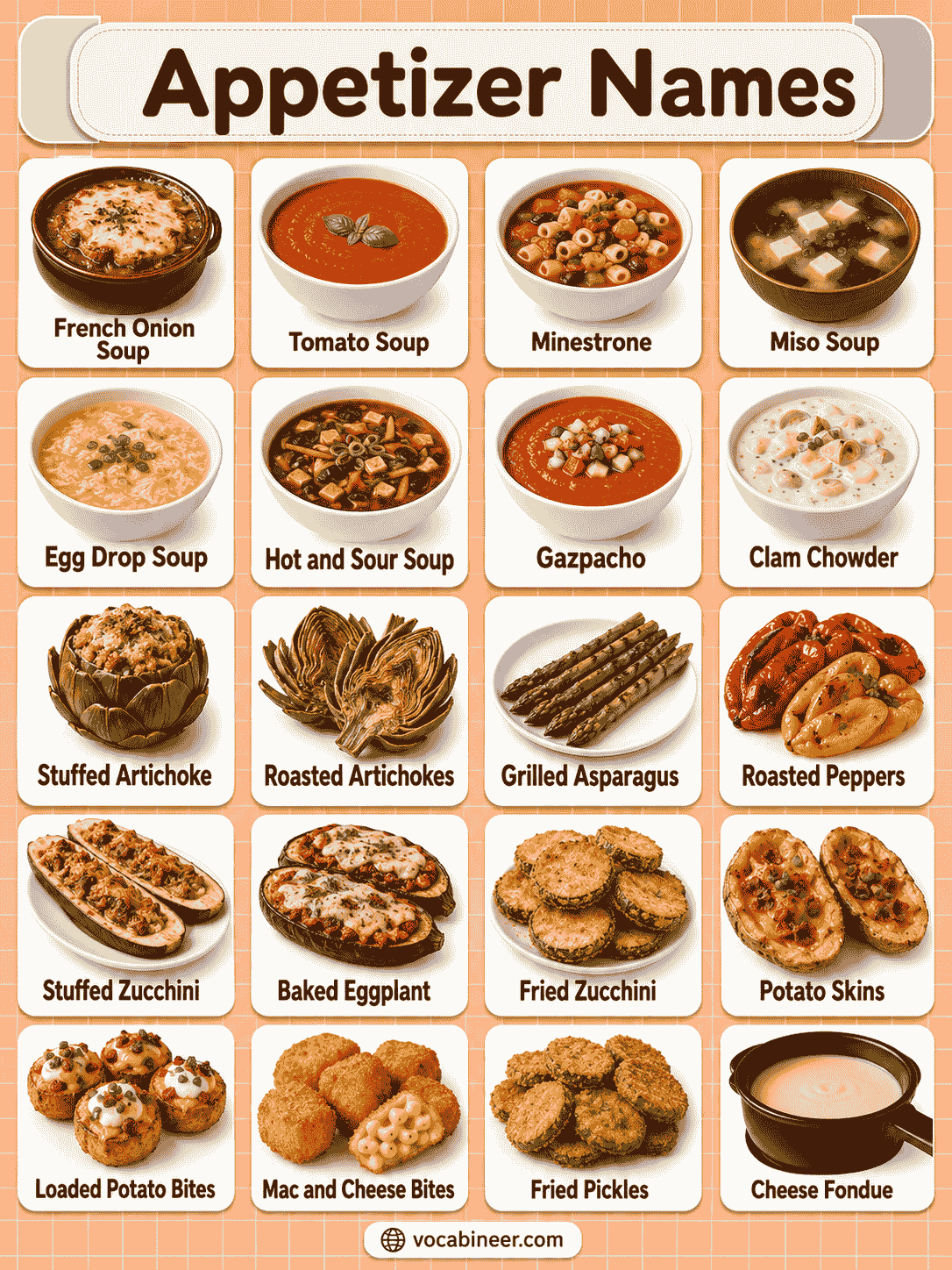
Filled Appetizer Bites
Filled appetizers use eggs, vegetables, or potato shells as edible containers. The outer ingredient remains visible around the filling and provides the strongest recognition clue.
Deviled Egg: A deviled egg is half of a cooked egg filled with a seasoned yolk mixture. The smooth yellow center rests inside the firm white.
Stuffed Mushroom: A mushroom cap acts as a small edible cup. Cheese, bread crumbs, herbs, vegetables, seafood, or meat may fill the center.
Stuffed Mini Pepper: Bright red, orange, or yellow pepper shells surround a savory filling. Cheese, grains, meat, or vegetables commonly appear inside.
Jalapeño Popper: A jalapeño popper uses a jalapeño pepper filled with cheese or another savory mixture. Depending on the style, cooks may bread, bake, fry, or wrap it in bacon.
Potato Skin: A hollowed potato shell holds cheese, meat, vegetables, or herbs. Unlike a potato wedge, its open center and visible skin define its structure.
Stuffed Olive: Garlic, cheese, pepper, anchovy, or another small ingredient fills the center of a stuffed olive. Its compact form works well on cocktail picks or small plates.
Breaded, Fried, and Crisp Starters
These appetizers often share golden or browned surfaces, so shape, filling, and interior texture become especially important. Rings, sticks, cakes, balls, and pasta pieces each create a different visual identity.
Mozzarella Stick: Bread crumbs surround a long piece of mozzarella. When the appetizer is hot, melted cheese may stretch through the broken coating.
Chicken Wing: The exposed bone provides a natural handle on a chicken wing. Fried, baked, grilled, glazed, and sauce-coated versions commonly appear as starters.
Onion Ring: An open circular center identifies an onion ring. Batter or bread crumbs surround a complete ring cut from an onion.
Calamari Ring: A calamari ring comes from a circular slice of squid. It is usually smaller than an onion ring and has a firmer seafood center.
Fried Shrimp: The curved shrimp outline remains visible beneath the crisp coating. Often, the tail stays attached and gives diners a convenient grip.
Crab Cake: Crab meat, bread crumbs, seasonings, and binding ingredients form a round patty. Its flaky seafood interior distinguishes it from vegetable fritters.
Arancini: Arancini are round breaded rice balls associated with Sicilian cooking. Cheese, peas, meat, or sauce may appear inside the rice center.
Falafel: Falafel uses ground chickpeas, fava beans, or both. Its herb-speckled interior and ball or patty shape distinguish it from rice-based arancini.
Fried Ravioli: Breading covers a filled pasta square or half-moon in fried ravioli. Tomato sauce commonly accompanies the crisp pasta pieces.
Wrapped Starters
Wrapped appetizers use pastry, tortillas, dough, or thin sheets to enclose fillings. Folds, seams, corners, pleats, and exposed ends provide the clearest recognition clues.
Spring Roll: A spring roll commonly has a narrow rolled form filled with vegetables, noodles, meat, or another mixture. Some versions are fried, while others use soft translucent wrappers.
Egg Roll: In common American usage, an egg roll is broader and usually has a thicker wrapper than a spring roll. Frying may also create bubbles across its surface.
Samosa: Three pointed corners form the familiar triangular outline of a samosa. Potatoes, peas, lentils, meat, and spices commonly fill the pastry pocket.
Empanada: An empanada usually has a curved half-moon edge. Dough folds around a sweet or savory filling before the seam is sealed.
Spanakopita: Thin flaky pastry surrounds spinach, cheese, herbs, or similar ingredients in spanakopita. Handheld portions commonly appear as small triangles.
Taquito: A taquito is a tightly rolled tortilla filled with meat, cheese, beans, or another savory mixture. Its narrow cylindrical shape stays closed during cooking.
Gyoza: Pleats along one curved edge help identify gyoza. These crescent-shaped dumplings may be pan-fried, steamed, or boiled; deep-fried versions also appear in some settings.
Sausage Roll: Pastry surrounds sausage meat to form a sausage roll. Bakers often cut one long roll into several compact appetizer portions.
Pig in a Blanket: A pig in a blanket places a small sausage inside dough or pastry. Usually, one or both ends of the sausage remain visible.
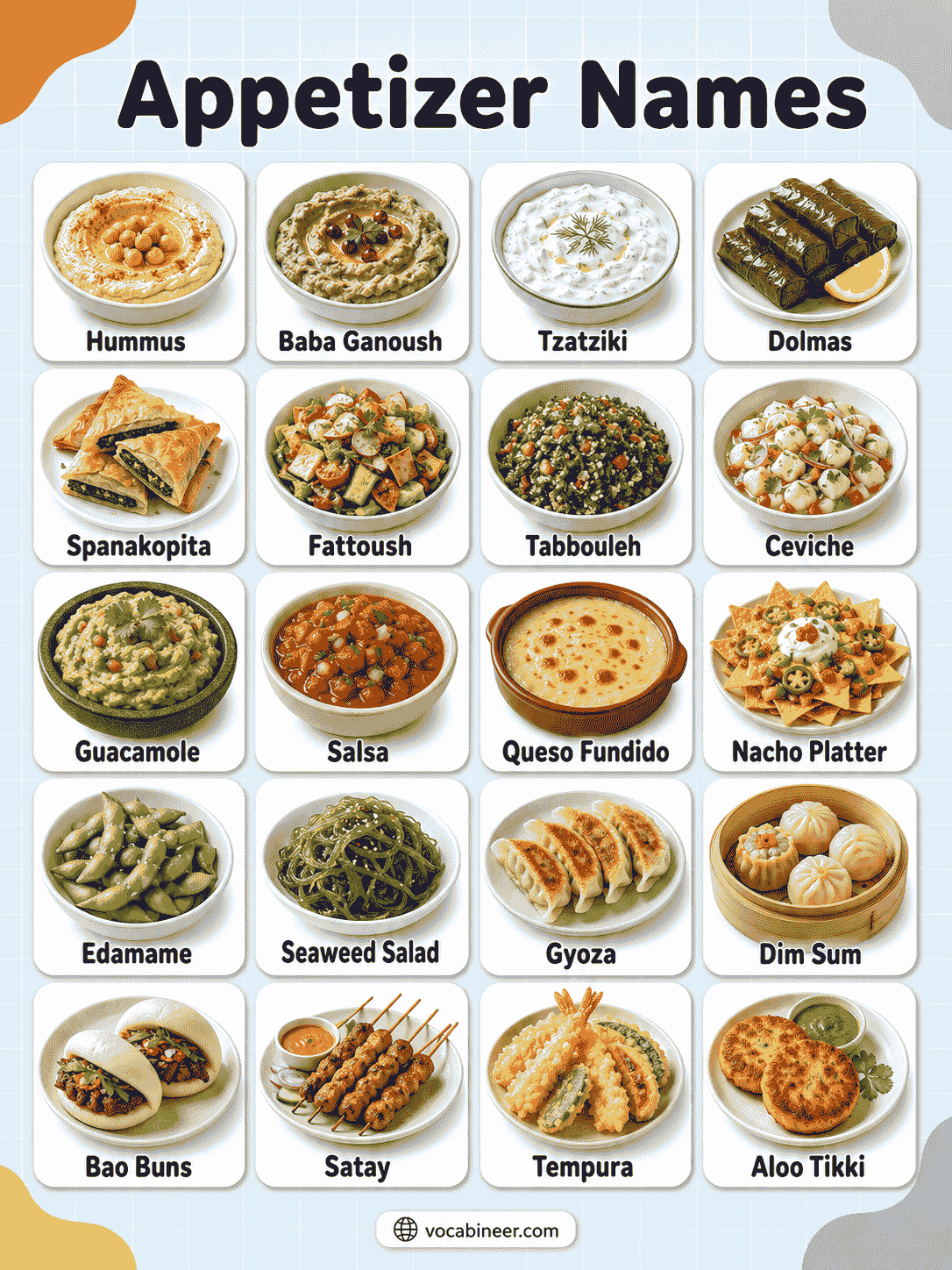
Appetizers on Picks and Skewers
Short skewers, toothpicks, and cocktail picks create convenient handles for individually portioned starters. Color patterns and ingredient arrangements help distinguish each name.
Caprese Skewer: Tomato, mozzarella, and basil form the red, white, and green pattern of a Caprese skewer. A short stick holds the ingredients in a neat row.
Antipasto Skewer: An antipasto skewer may combine cheese, olives, cured meat, artichokes, or roasted peppers. Its mixed arrangement reflects familiar Italian appetizer ingredients.
Chicken Satay: Chicken satay consists of seasoned chicken pieces cooked on thin skewers. Diners hold the exposed end while eating the grilled meat.
Melon and Prosciutto Skewer: Sweet melon and thin cured ham create a clear contrast in color, flavor, and texture. The skewer keeps the pairing easy to lift.
Cocktail Meatball: A cocktail meatball is a small meatball served with a toothpick or cocktail pick. A glaze or thick sauce commonly coats it while keeping it easy to lift.
Chilled Appetizers
Chilled starters share a serving temperature rather than one ingredient or shape. This category includes cooked shellfish, raw preparations, cured foods, and cold soup presentations.
Shrimp Cocktail: Cooked chilled shrimp and cocktail sauce form shrimp cocktail. Tail-on shrimp commonly rest around a bowl or glass, creating a recognizable presentation.
Ceviche: Ceviche 🔊 /səˈviːtʃeɪ/ combines seafood with citrus juice, onions, chiles, herbs, or vegetables. The pieces remain fresh-looking rather than fried or breaded.
Oysters on the Half Shell: Raw oysters sit inside one half of their natural shells. Lemon, mignonette, or hot sauce may accompany the chilled serving.
Beef Carpaccio: Carpaccio 🔊 /kɑrˈpɑːtʃioʊ/ consists of very thin raw beef slices arranged flat on a plate. Olive oil, cheese, capers, or greens may appear on top.
Tuna Tartare: Tartare 🔊 /tɑrˈtɑr/ uses finely cut raw tuna mixed with seasonings. It often appears as a compact mound rather than thin slices.
Gazpacho Shooter: A gazpacho shooter is a small serving of chilled gazpacho presented in a glass. The name describes an appetizer presentation rather than a separate soup variety.
Soups Served as Appetizers
A soup becomes an appetizer when a restaurant offers it in a small first-course bowl or cup. Color, thickness, toppings, and defining ingredients help identify each name.
French Onion Soup: Slow-cooked onions create the deep savory flavor of French onion soup. Toasted bread and melted cheese commonly cover the surface.
Tomato Bisque: Tomato bisque has a smooth red or orange appearance and a creamy texture. Herbs, cream, or roasted tomatoes may deepen its flavor.
Lobster Bisque: Lobster bisque has a smooth, rich texture, while seafood gives it a pale orange or pink color. Small lobster pieces may appear as a garnish.
Minestrone: Minestrone contains vegetables, beans, tomatoes, and often pasta or rice. Its chunky appearance contrasts sharply with smooth bisques.
Clam Chowder: Clam chowder contains clams and commonly includes potatoes and onions. New England versions use a creamy pale base, while other regional styles differ.
Salads Served Before the Main Course
Starter salads use lighter portions than main-course salads. Their recognizable ingredient combinations make each name useful for picture-based vocabulary learning.
Caesar Salad: Romaine lettuce, croutons, Parmesan, and Caesar dressing form the classic combination. The leaves usually remain large, crisp, and lightly coated.
Caprese Salad: Slices of tomato and mozzarella appear with fresh basil in a Caprese salad. The red, white, and green arrangement makes it easy to recognize.
Greek Salad: Tomatoes, cucumbers, olives, onions, and feta commonly appear in a Greek salad. Unlike leafy salads, the vegetables often remain in large visible pieces.
Wedge Salad: A wedge salad uses a thick triangular section of iceberg lettuce. Blue cheese dressing, tomatoes, bacon, or onions may cover the surface.
Arugula Salad: Peppery arugula leaves form the main base of an arugula salad. Cheese, fruit, nuts, or a light dressing may accompany them.
Appetizers Made for Sharing
Shared appetizers arrive on boards, platters, or large dishes designed for several diners. Their overall arrangement matters more than one fixed ingredient list.
Charcuterie Board: A charcuterie board 🔊 /ʃɑrˈkuːtəri/ centers on cured meats. Cheese, crackers, fruit, nuts, pickles, and spreads may fill the remaining spaces.
Cheese Board: Different cheeses form the main focus of a cheese board. When diners receive it before the main meal, it functions as a shared appetizer.
Antipasto Platter: An antipasto platter commonly combines Italian cured meats, cheeses, olives, peppers, and marinated vegetables. Its arrangement creates an Italian-style first course.
Mezze Platter: A mezze platter 🔊 /ˈmɛzeɪ/ offers several small foods associated with Mediterranean and Middle Eastern cuisines. Hummus, olives, bread, vegetables, and stuffed leaves may appear together.
Crudités Platter: A crudités platter 🔊 /kruːdɪˈteɪ/ displays raw vegetables cut into sticks, slices, or bite-sized pieces. One or more dips usually sit in the center.
Nachos: Tortilla chips form the shared base of nachos. Melted cheese, beans, meat, salsa, jalapeños, tomatoes, or sour cream may cover the chips.
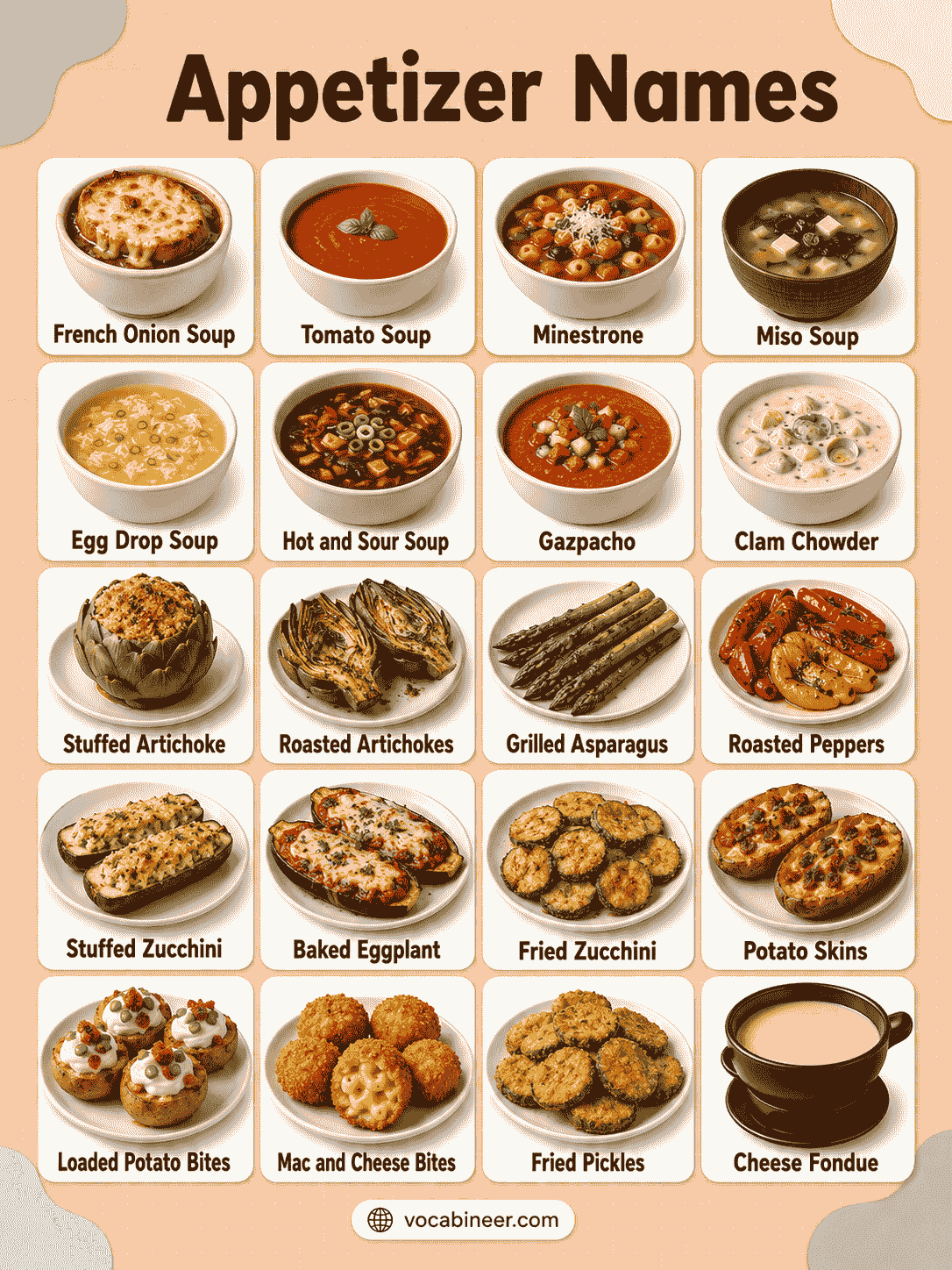
Common Appetizer Confusions
| Appetizers | Main difference |
|---|---|
| Canapé and Crostini | A canapé may use bread, toast, or crackers; crostini normally use small toasted bread slices |
| Crostini and Bruschetta | Crostini are small toasted slices; bruschetta traditionally uses grilled bread rubbed with garlic and olive oil |
| Spring Roll and Egg Roll | In common American usage, egg rolls usually have thicker wrappers |
| Samosa and Empanada | A samosa commonly has a triangular shape; an empanada usually has a curved half-moon edge |
| Ceviche and Tartare | Ceviche uses citrus-marinated seafood; tartare uses finely cut raw meat or fish with seasonings |
| Charcuterie Board and Antipasto Platter | A charcuterie board centers on cured meats; an antipasto platter combines Italian meats, cheeses, olives, and vegetables |
| Onion Ring and Calamari Ring | Onion rings contain sliced onion; calamari rings are cut from squid |
| Arancini and Falafel | Arancini contain rice; falafel is made from chickpeas, fava beans, or both |
FAQs
Common appetizers include hummus, bruschetta, deviled eggs, mozzarella sticks, spring rolls, chicken satay, shrimp cocktail, Caesar salad, and nachos.
Both terms describe food served before a main course. Appetizer is more typical in American English, while starter is also widely understood and common in other varieties of English.
No. Some appetizers, such as chicken wings and canapés, are eaten by hand, while soups, salads, tartare, and other plated starters require utensils.
Shrimp cocktail, ceviche, oysters on the half shell, beef carpaccio, tuna tartare, and gazpacho shooters are commonly served chilled.
Yes. A small bowl of soup or a light salad can function as an appetizer when it appears before the main course.
Read More
- Healthy Foods Name
- Bakery Items Names
- Different Types of Jam
- Different Types of Cream
- Condiments Names
- Types of Biscuits