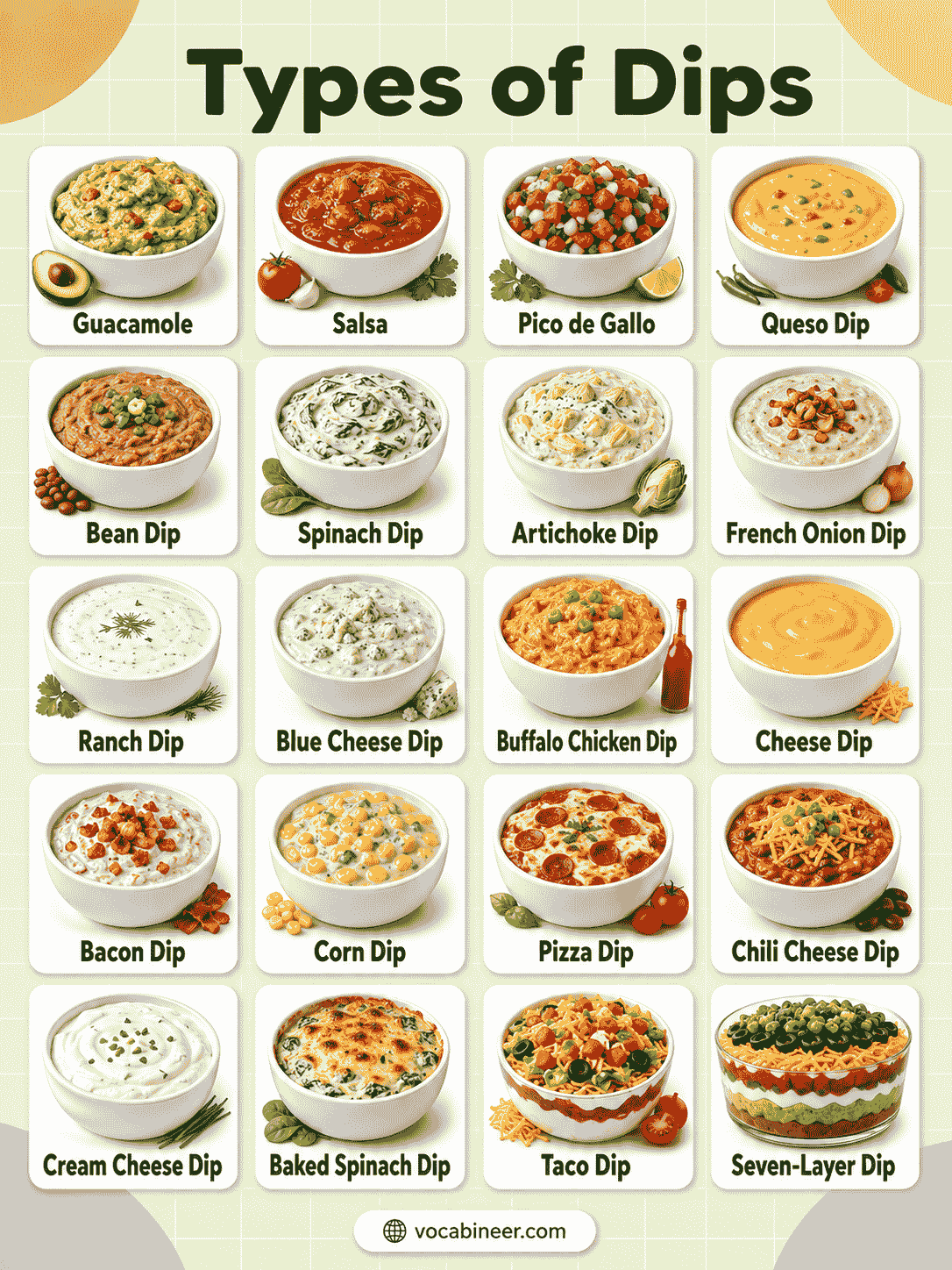
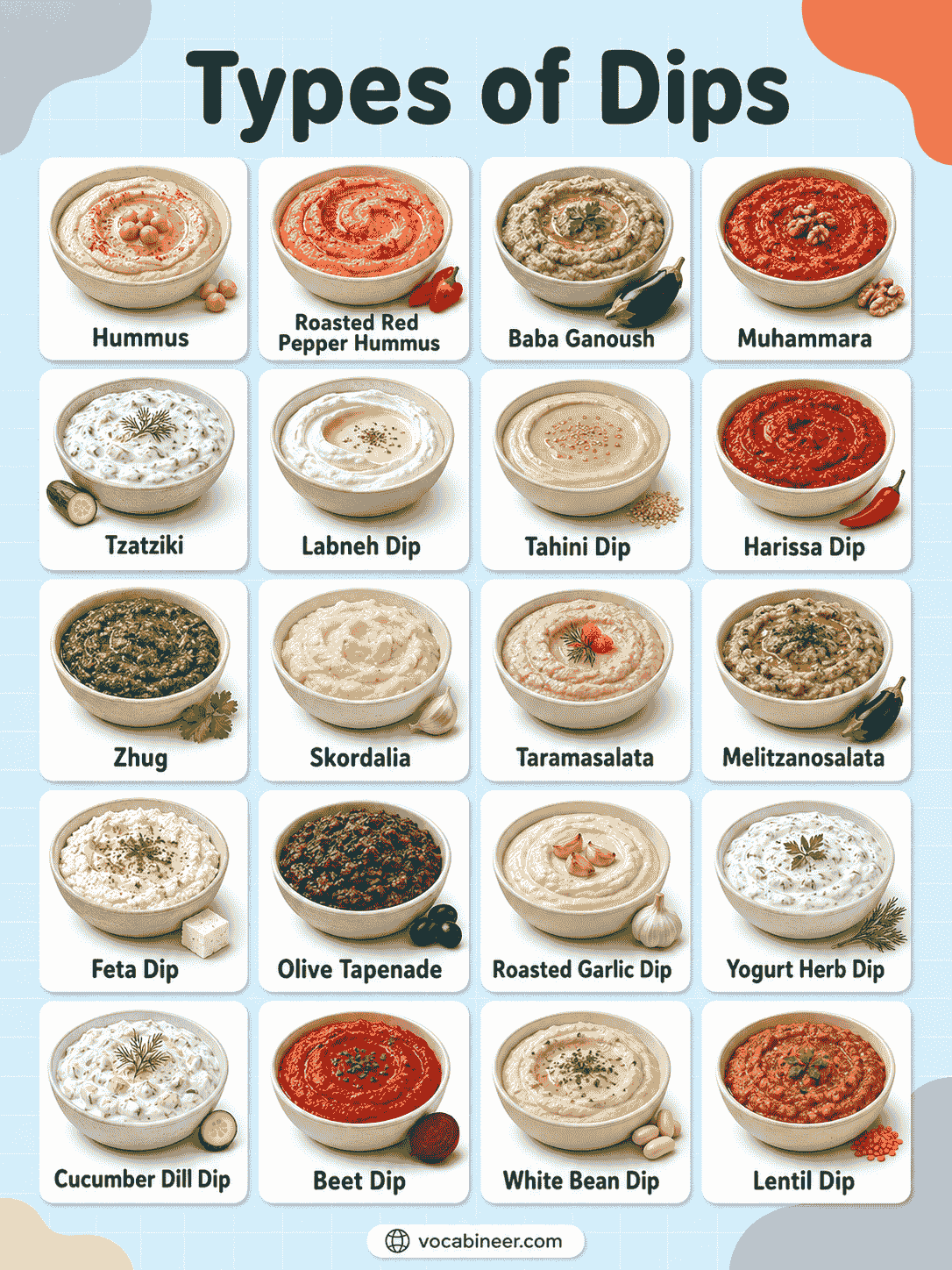
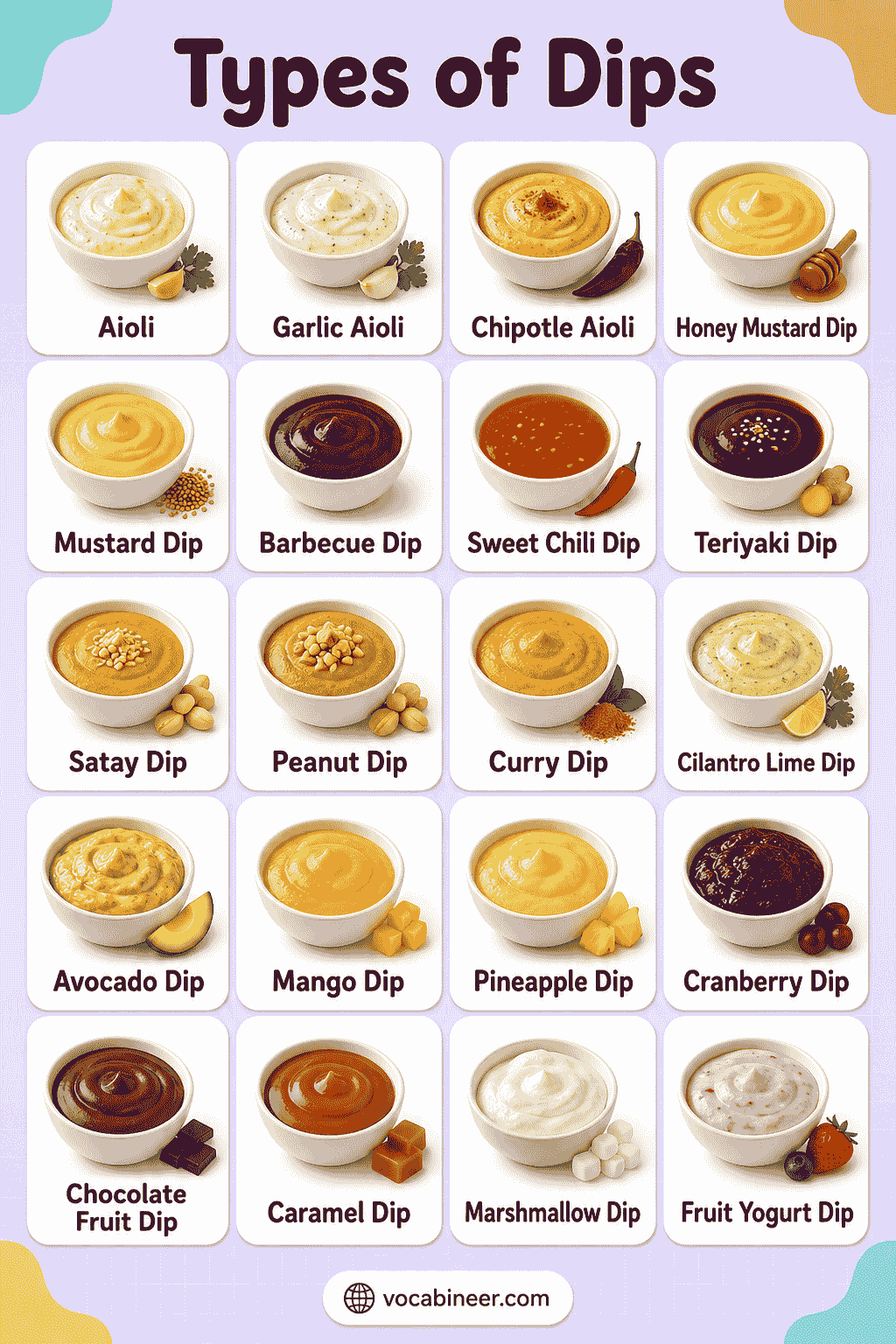
A dip table can be recognized by its colors and textures: pale creamy ranch, chunky red pico de gallo, warm golden queso, smoky eggplant dip, and glossy chocolate. Each appearance offers a useful clue for learning the correct name.
These types of dips include creamy, cheese-based, bean-based, vegetable, seafood, meat, and sweet varieties. Some are smooth and chilled, while others arrive warm, chunky, layered, or lightly browned.
In This Page
What Counts as a Dip?
A dip is a thick or semi-thick food prepared for dunking, scooping, or coating another food. Chips, crackers, bread, vegetables, fruit, pretzels, seafood, and small cooked foods commonly act as dippers.
Texture matters more than one particular ingredient. A dip may be smooth, whipped, melted, chunky, layered, or lightly textured, but it should remain thick enough for another food to carry a useful amount.
Dips may be:
- savory or sweet
- hot, chilled, or room temperature
- smooth or chunky
- mild, tangy, smoky, or spicy
- creamy, cheesy, or vegetable-based
Serving method can change how people classify a food. Hummus works as a dip beside pita chips, but it becomes a spread inside a sandwich. Similarly, whipped feta may be scooped with vegetables or spread across toasted bread.
How Dips Differ from Similar Foods
Dips, sauces, spreads, and dressings sometimes use similar ingredients. However, their texture and serving method usually reveal the difference.
| Food Type | Main Use | Typical Texture | Example |
|---|---|---|---|
| Dip | Another food is dunked or scooped into it | Thick or semi-thick | Hummus |
| Sauce | Poured, spooned, tossed with food, or used in cooking | Thin to thick | Tomato Sauce |
| Spread | Applied across bread, crackers, or another surface | Thick and spreadable | Peanut Butter |
| Dressing | Used to coat salads or prepared ingredients | Usually pourable | Ranch Dressing |
A thick ranch mixture can function as a vegetable dip, whereas a thinner version works as salad dressing. In the same way, melted chocolate acts as a dip when fruit is dunked into it and as a sauce when poured over cake.
Creamy Dips
Creamy dips usually rely on sour cream, yogurt, mayonnaise, or another smooth base. Herbs, onions, garlic, and vegetables then provide the defining flavor.
Ranch Dip
Ranch dip combines a creamy base with garlic, onion, herbs, and seasonings. It commonly accompanies vegetable sticks, chips, chicken wings, and fried foods.
French Onion Dip
Cooked or dried onions give French onion dip its sweet, savory flavor. Small brown onion pieces may remain visible throughout the pale base.
Dill Dip
Fresh or dried dill creates the recognizable herb flavor in dill dip. Carrots, cucumbers, crackers, potatoes, and bread pair especially well with it.
Green Goddess Dip
A mixture of fresh herbs gives Green Goddess dip its green color. Parsley, chives, basil, tarragon, lemon, and garlic often brighten the creamy mixture.
Cucumber Dip
Finely chopped or grated cucumber adds a cool taste and light texture. Depending on the recipe, yogurt, sour cream, or mayonnaise may provide the base.
Tzatziki
Tzatziki 🔊 /tsɑːtˈsiːki/ combines yogurt, cucumber, garlic, herbs, and olive oil. Unlike a general cucumber dip, it follows a recognizable Greek-style preparation.
Spinach Dip
Chopped spinach appears throughout a creamy mixture made with sour cream, mayonnaise, yogurt, or cheese. Some versions arrive chilled, whereas others are baked and served warm.
Cheese Dips
Cheese dips use melted, softened, blended, or whipped cheese as their main body. Their textures range from smooth and flowing to thick and scoopable.
Queso Dip
Queso dip is a smooth melted-cheese mixture commonly served with tortilla chips. Chiles, tomatoes, spices, or meat may add flavor and color.
Beer Cheese Dip
Beer and seasonings deepen the flavor of beer cheese dip. Some versions remain warm and melted, while others have a thicker spread-like consistency.
Pimento Cheese Dip
Cheese, mayonnaise, and chopped pimento peppers create this thick Southern-style mixture. Its orange color and small red pepper pieces make it easy to recognize.
Blue Cheese Dip
Blue cheese gives this creamy dip a sharp, salty flavor. Small blue-veined cheese pieces often remain visible in the pale base.
Whipped Feta
Blending feta with yogurt, cream cheese, or olive oil creates a smooth, tangy dip. Roasted vegetables, herbs, honey, or nuts may appear on top.
Whipped Goat Cheese Dip
Soft goat cheese forms the main base of this light, tangy dip. By comparison, whipping gives it a smoother and airier texture than ordinary crumbled goat cheese.
Cream Cheese Dip
Cream cheese creates a thick base that may be savory or sweet. Garlic, herbs, vegetables, meat, fruit, or spices can completely change its flavor.
Cheese Fondue
Cheese fondue is a warm melted-cheese dip traditionally presented in a shared pot. Diners use long forks to dip bread cubes, vegetables, or fruit.
Chili Cheese Dip
Melted cheese and chili-style ingredients form chili cheese dip. Depending on the version, it may contain peppers, tomatoes, beans, spices, or ground meat.
Bean-Based Dips
Beans, chickpeas, lentils, peas, and soybeans create naturally thick and filling dips. Blending produces a smooth texture, while light mashing leaves visible pieces.
Hummus
Hummus 🔊 /ˈhʊməs/ traditionally combines chickpeas, tahini, lemon juice, garlic, and olive oil. The sesame flavor separates it from a simpler mashed bean dip.
Refried Bean Dip
Mashed cooked beans form the thick base of refried bean dip. Cheese, chiles, salsa, sour cream, or spices may add richness.
Black Bean Dip
Black beans give this dip a dark brown or purple-black color. Lime, cumin, garlic, cilantro, and chiles commonly brighten its flavor.
White Bean Dip
In contrast, white beans create a pale dip with a mild flavor. Lemon, garlic, herbs, and olive oil often provide the seasoning.
Pinto Bean Dip
Pinto beans produce a beige or light-brown dip. Mexican-style versions may include cheese, cumin, chiles, tomatoes, or salsa.
Lentil Dip
Cooked lentils are mashed or blended into a thick savory mixture. The final color may be brown, green, yellow, orange, or red depending on the lentil variety.
Edamame Dip
Green soybeans give edamame dip its bright green appearance. Garlic, herbs, sesame, lemon, or avocado may add flavor and creaminess.
Seven-Layer Dip
Seven-layer dip combines several visible ingredients instead of relying on one base alone. Refried beans commonly sit beneath guacamole, sour cream, salsa, cheese, olives, and tomatoes.
Vegetable-Based Dips
Vegetable-based dips receive their strongest flavor, color, or texture from avocado, tomatoes, eggplant, peppers, corn, beets, or artichokes.
Guacamole
Mashed avocado creates the soft green base of guacamole. Lime, onion, tomato, cilantro, salt, and chiles may add brightness and texture.
Salsa
Salsa may use tomatoes, chiles, tomatillos, or fruit as its main ingredient. It can be smooth, blended, cooked, roasted, or chunky.
Pico de Gallo
Fresh chopped tomatoes, onions, chiles, cilantro, and lime make pico de gallo. Unlike many salsas, it remains uncooked and visibly chunky.
Baba Ganoush
Baba ganoush 🔊 /ˌbɑːbə ɡəˈnuːʒ/ uses roasted eggplant as its main ingredient. Tahini, lemon, garlic, and olive oil contribute richness and smoky flavor.
Muhammara
Muhammara 🔊 /muːˈhɑːmərə/ combines roasted red peppers and walnuts. Breadcrumbs, spices, olive oil, and pomegranate molasses may add body and mild sweetness.
Roasted Red Pepper Dip
Blended roasted peppers create the bright red or orange base of this dip. Cheese, yogurt, nuts, garlic, or herbs may make it smoother and creamier.
Corn Dip
Yellow corn kernels provide visible texture and natural sweetness. Cream cheese, sour cream, chiles, herbs, or shredded cheese commonly hold the mixture together.
Beet Dip
Roasted or cooked beets give beet dip a vivid pink, red, or purple color. Meanwhile, yogurt, cheese, nuts, lemon, or garlic may soften its earthy flavor.
Artichoke Dip
Chopped artichoke hearts provide the defining texture in artichoke dip. Cheese, mayonnaise, sour cream, spinach, or herbs often create the creamy base.
Seafood Dips
Seafood dips use fish, shellfish, or fish roe as their defining ingredient. Many rely on cream cheese or mayonnaise, although their textures range from smooth to chunky.
Crab Dip
Crab meat appears throughout a creamy or cheesy mixture. It may be served chilled, warmed gently, or baked until the surface turns lightly brown.
Shrimp Dip
Chopped or blended shrimp supplies the main seafood flavor. Cream cheese, mayonnaise, lemon, herbs, and spices commonly form the surrounding base.
Smoked Salmon Dip
Smoked salmon adds a pale pink color and a salty, smoky taste. Cream cheese, sour cream, lemon, dill, and capers often complete the mixture.
Tuna Dip
Tuna combines with mayonnaise, cream cheese, yogurt, herbs, or seasonings to create a thick savory dip. The texture may remain smooth or slightly chunky.
Clam Dip
Chopped clams and clam juice flavor this pale creamy dip. Lemon, garlic, herbs, Worcestershire sauce, or hot sauce may add depth.
Lobster Dip
Lobster meat gives this dip a rich seafood flavor. Cream cheese, mayonnaise, cheese, herbs, or spices may create the creamy body.
Smoked Whitefish Dip
Smoked whitefish creates a soft, flaky dip with a noticeable smoky flavor. Lemon, herbs, cream cheese, mayonnaise, and seasonings often support the fish.
Taramosalata
Taramosalata 🔊 /ˌtærəməsəˈlɑːtə/ is a pale pink or beige dip made with salted fish roe. Bread or potatoes, olive oil, and lemon help create its smooth body.
Meat-Based Dips
Meat-based dips use chicken, sausage, beef, or corned beef as a defining ingredient. They are usually hearty and thick enough for sturdy chips, crackers, or toasted bread.
Buffalo Chicken Dip
Shredded chicken, hot sauce, cream cheese, and cheese create Buffalo chicken dip. Its orange color and spicy flavor resemble Buffalo-style chicken wings.
Sausage Dip
Cooked sausage provides the main flavor in this rich dip. Cream cheese, melted cheese, tomatoes, or chiles often hold the mixture together.
Cheeseburger Dip
Ground beef and melted cheese form the body of cheeseburger dip. Pickles, onions, tomatoes, ketchup, or mustard may reinforce the familiar burger flavor.
Reuben Dip
Corned beef, Swiss cheese, sauerkraut, and creamy dressing create Reuben dip. It transforms the flavors of a Reuben sandwich into a scoopable mixture.
Chicken Enchilada Dip
Shredded chicken, enchilada sauce, cheese, and seasonings form this warm dip. Red or green enchilada sauce usually determines its final color.
Sweet Dips
Sweet dips have thick dessert-like textures designed for fruit, cookies, crackers, pretzels, marshmallows, or cake pieces.
Chocolate Dip
Melted or blended chocolate creates a rich, smooth dip. Strawberries, bananas, pretzels, cookies, marshmallows, and cake pieces work well with it.
Caramel Dip
Caramel dip has a thick golden-brown texture and buttery sweetness. Apple slices, pears, pretzels, and cookies are common partners.
Fruit Dip
Fruit dip is a sweet creamy mixture served alongside fresh fruit. Cream cheese, whipped topping, honey, or marshmallow cream may form its base.
Marshmallow Dip
Marshmallow cream gives this dip a light, fluffy texture. Chocolate, fruit flavoring, cream cheese, or whipped topping may add richness.
Cheesecake Dip
Cream cheese, sugar, and vanilla create a mixture that resembles cheesecake filling. Graham crackers, cookies, or fresh fruit often serve as dippers.
Peanut Butter Dip
Peanut butter provides a thick texture and nutty flavor. Yogurt, cream cheese, honey, cinnamon, or chocolate may make it lighter or sweeter.
Cannoli Dip
Ricotta, mascarpone, sugar, and chocolate chips create cannoli dip. Broken waffle cones, cookies, or pastry pieces replace the traditional cannoli shell.
Pumpkin Pie Dip
Pumpkin, cream cheese, sugar, and warm spices produce a dip inspired by pumpkin pie. Graham crackers, cookies, and apple slices complement it.
Yogurt Fruit Dip
Unlike richer fruit dips, this variety uses yogurt as its defining creamy base. Honey, vanilla, cinnamon, or blended fruit may add sweetness.
Serving Dips Warm
Heat melts cheese, softens ingredients, and creates bubbling or lightly browned surfaces. Queso, fondue, Buffalo chicken dip, crab dip, artichoke dip, sausage dip, and chicken enchilada dip commonly taste best when warm.
A hot dip is not always spicy. In serving language, hot may describe temperature, whereas spicy refers to heat from chiles, pepper, or seasoning.
Warm dips should remain hot enough to keep their intended texture. However, excessive heat may cause cheese mixtures to separate, thicken too much, or develop a dry surface.
What to Serve with Dips
The best dipper should complement the flavor and remain sturdy enough to carry the mixture without breaking.
Chips
Tortilla and corn chips pair with salsa, guacamole, queso, bean dip, and seven-layer dip.
Crackers
Crisp crackers work with creamy, cheese-based, seafood, and sweet dips. Delicate crackers suit lighter mixtures better than dense, chunky dips.
Bread and Toast
Bread cubes, crostini, pita, and toasted slices match fondue, hummus, artichoke dip, whipped feta, and warm meat dips.
Vegetable Sticks
Carrots, celery, cucumbers, and bell peppers pair naturally with ranch, dill dip, hummus, tzatziki, and bean-based dips.
Fruit Slices
Apples, pears, strawberries, bananas, and pineapple complement caramel, chocolate, yogurt, cheesecake, and peanut butter dips.
Pretzels
Their firm structure and salty flavor work with cheese, chocolate, caramel, and peanut butter dips.
Cookies and Cake Pieces
Cannoli dip, marshmallow dip, cheesecake dip, chocolate dip, and cookie dough-style desserts pair well with firm cookies or small cake cubes.
How Similar Dips Differ
| Dips | Main Difference |
|---|---|
| Salsa and Pico de Gallo | Salsa may be blended or cooked; pico de gallo remains fresh and chunky |
| Hummus and Bean Dip | Hummus traditionally uses chickpeas and tahini; bean dip may use many legumes |
| Tzatziki and Cucumber Dip | Tzatziki follows a yogurt, cucumber, garlic, and herb style; cucumber dip may use other creamy bases |
| Queso and Cheese Dip | Queso is one type of cheese dip; cheese dip includes many other preparations |
| Baba Ganoush and Hummus | Baba ganoush uses roasted eggplant; hummus uses chickpeas |
FAQs
Popular types include ranch dip, French onion dip, queso, hummus, guacamole, salsa, spinach dip, crab dip, Buffalo chicken dip, and chocolate dip.
A dip is usually thick enough for another food to scoop or carry. A sauce is more often poured, spooned, tossed with food, or used during cooking.
Queso, cheese fondue, Buffalo chicken dip, chili cheese dip, crab dip, artichoke dip, sausage dip, and chicken enchilada dip are commonly served warm.
Ranch, dill dip, hummus, tzatziki, cucumber dip, spinach dip, white bean dip, and Green Goddess dip pair well with vegetable sticks.
Yes. Chocolate, caramel, fruit, marshmallow, cheesecake, peanut butter, cannoli, pumpkin pie, and yogurt dips are common sweet varieties.
Read More
- Healthy Foods Name
- Bakery Items Names
- Different Types of Jam
- Different Types of Cream
- Condiments Names
- Types of Biscuits