

Cold butter can snap beneath a knife, soften into a creamy spread, or melt into a fragrant golden sauce. Although many packages look alike, the butter inside may differ in salt, cream treatment, butterfat, moisture, texture, milk source, and flavor.
Learning the main types of butter makes grocery labels and recipe instructions much easier to understand. Some names describe how producers prepare the cream, while others identify a regional style, production claim, cooked form, or flavored blend.
In This Page
What Is Butter?
Butter is a dairy food made by churning milk or cream until the fat gathers into a solid mass. The finished product contains milkfat, water, and small amounts of milk solids that help create its color, aroma, flavor, and browning.
Most butter sold in American grocery stores comes from cow’s cream. However, dairies can also churn cream from goats, sheep, buffalo, and other milk-producing animals. Products made mainly from vegetable oils belong to a different category, even when their packages use terms such as plant-based butter or buttery spread.
Pronunciation
- 🔊 Butter /ˈbʌt̬.ɚ/
- 🔊 Cultured /ˈkʌl.tʃɚd/
- 🔊 Clarified /ˈkler.ə.faɪd/
- 🔊 Ghee /ɡiː/
- 🔊 Compound /ˈkɑːm.paʊnd/
How Butter Names Are Classified
Butter names do not all describe the same type of difference. One label may refer to salt, while another explains the cream, texture, origin, milk source, or cooking method.
Common butter-label categories include:
- Salt content: salted, unsalted, lightly salted
- Cream treatment: sweet cream, cultured, ripened cream
- Fat and moisture: standard, high-fat, pastry, dry butter
- Regional style: American-style, European-style, Irish, French
- Processing: clarified, whipped, browned
- Production claim: organic, grass-fed, farmhouse
- Milk source: cow, goat, sheep, buffalo
- Added flavor: garlic, herb, honey, cinnamon
Salt Labels on Butter Packages
Salt creates the most familiar difference between everyday butter varieties. Besides changing flavor, it affects how much control a cook has over the seasoning in a dish.
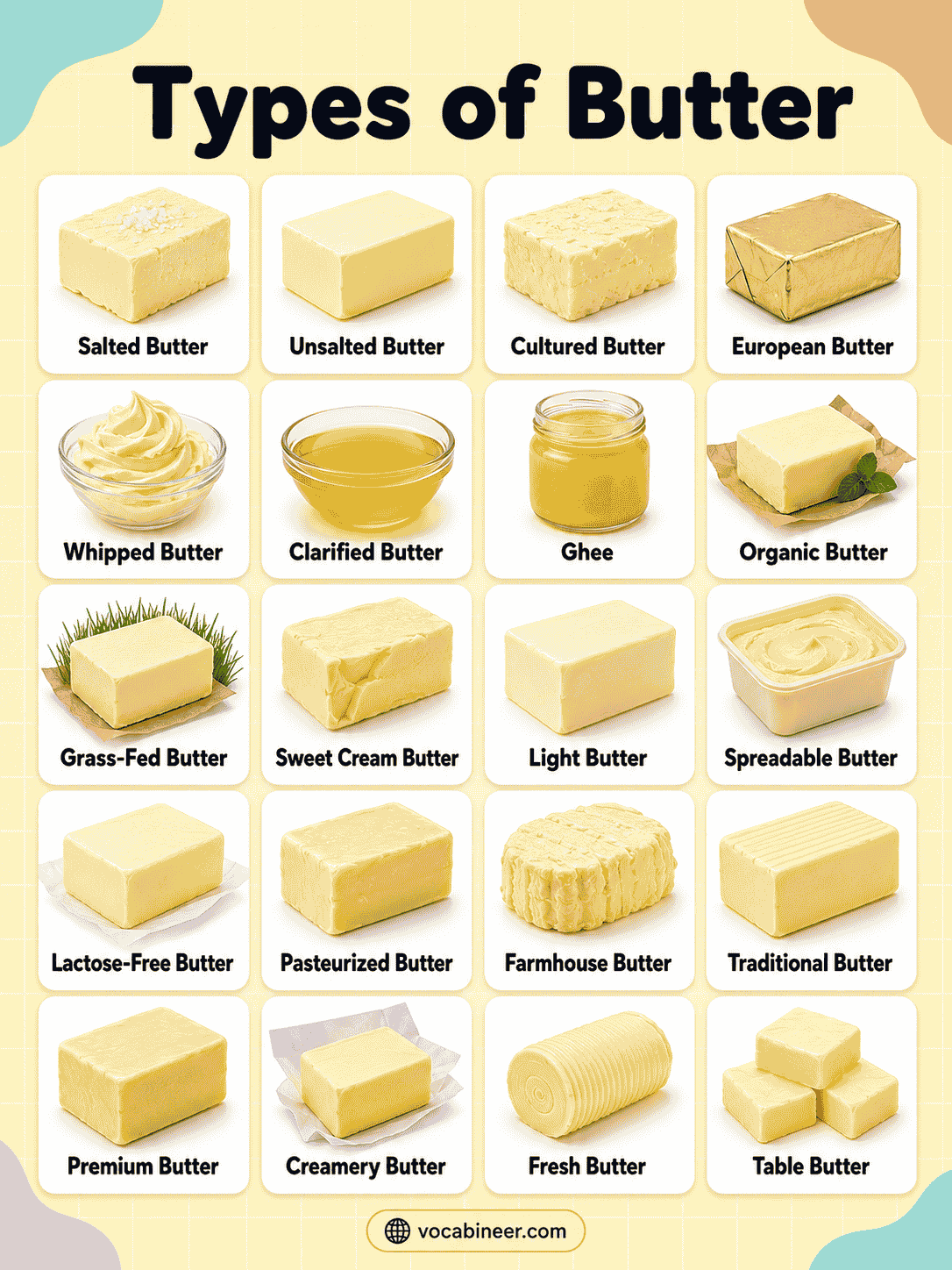
Salted butter contains added salt, giving it a savory taste that stands out on toast, rolls, pancakes, vegetables, baked potatoes, and corn. Salt may also help the butter keep its flavor slightly longer after opening.
Unsalted butter contains no added salt. Bakers often choose it because they can measure the recipe’s salt separately instead of depending on an amount that varies from one brand to another.
Lightly salted butter contains less salt than a producer’s regular salted variety. However, the phrase does not represent one fixed salt level, so the flavor can still differ noticeably between packages.
Sea-salted butter uses sea salt as its seasoning. The label identifies the salt source rather than the cream treatment, butterfat content, or churning method.
For most baking, unsalted butter offers the best seasoning control. By contrast, salted butter works especially well when the butter will be tasted directly on bread, vegetables, or breakfast foods.
Fresh Cream and Culturing
The condition of the cream before churning creates some of the most important butter names. Fresh cream produces a mild dairy taste, whereas fermentation develops acidity and a fuller aroma.
Sweet cream butter comes from fresh, uncultured cream. Despite the word sweet, it does not contain added sugar; the name simply separates fresh cream from fermented or soured cream.
A clean, mild flavor makes sweet cream butter the standard choice in many American kitchens. Both salted and unsalted grocery-store sticks commonly belong to this category.
Cultured butter begins with cream fermented by selected cultures before churning. As a result, it develops a tangier aroma and a deeper dairy flavor than ordinary sweet cream butter.
Bread, shortbread, mashed potatoes, sauces, and butter-forward pastries showcase cultured butter particularly well. Its noticeable character remains easy to recognize even when a recipe contains only a few ingredients.
Lactic butter is a cultured or acidified variety with a clear lactic tang. Specialty dairies and European producers use this name more often than mainstream American brands.
Ripened cream butter comes from cream that develops flavor through controlled ripening before churning. The method resembles culturing, although producers may use different techniques and label terms.
Butterfat, Moisture, and Pastry Texture
Butterfat and water influence how butter spreads, melts, browns, and behaves inside dough. Therefore, two unsalted butters can produce different textures even when a recipe uses the same quantity.
Standard butter provides the familiar balance of fat, water, and milk solids found in ordinary grocery-store sticks. It works reliably in cakes, cookies, frostings, sauces, vegetables, and general cooking.
High-fat butter contains more butterfat and less water than standard butter. Its richer taste and flexible texture can improve pie crusts, shortbread, and other baked foods in which butter plays a major role.
Pastry butter is the broad name for butter formulated to remain firm yet workable during professional dough preparation. Bakers need it to form smooth layers without cracking or melting too quickly.
Dry butter, also called tourage butter, is a specialized low-moisture pastry butter. Croissant, Danish, and puff-pastry bakers value its controlled flexibility during repeated rolling and folding.
Light butter contains less fat than regular butter, usually because producers add water, air, or other ingredients. Consequently, it may not create the same browning, tenderness, spread, or structure in cakes and cookies.
Regional Butter Styles
Regional names may describe a place of production, a traditional method, or a recognizable market style. Still, each producer may use a slightly different fat level, cream treatment, or salt content.
American-style butter usually has a mild sweet cream flavor and a firm refrigerated texture. Stores commonly sell it in sticks as either salted or unsalted butter.
European-style butter generally contains more butterfat and less water than basic American-style butter. Some producers also culture the cream, but European-style and cultured do not mean exactly the same thing.
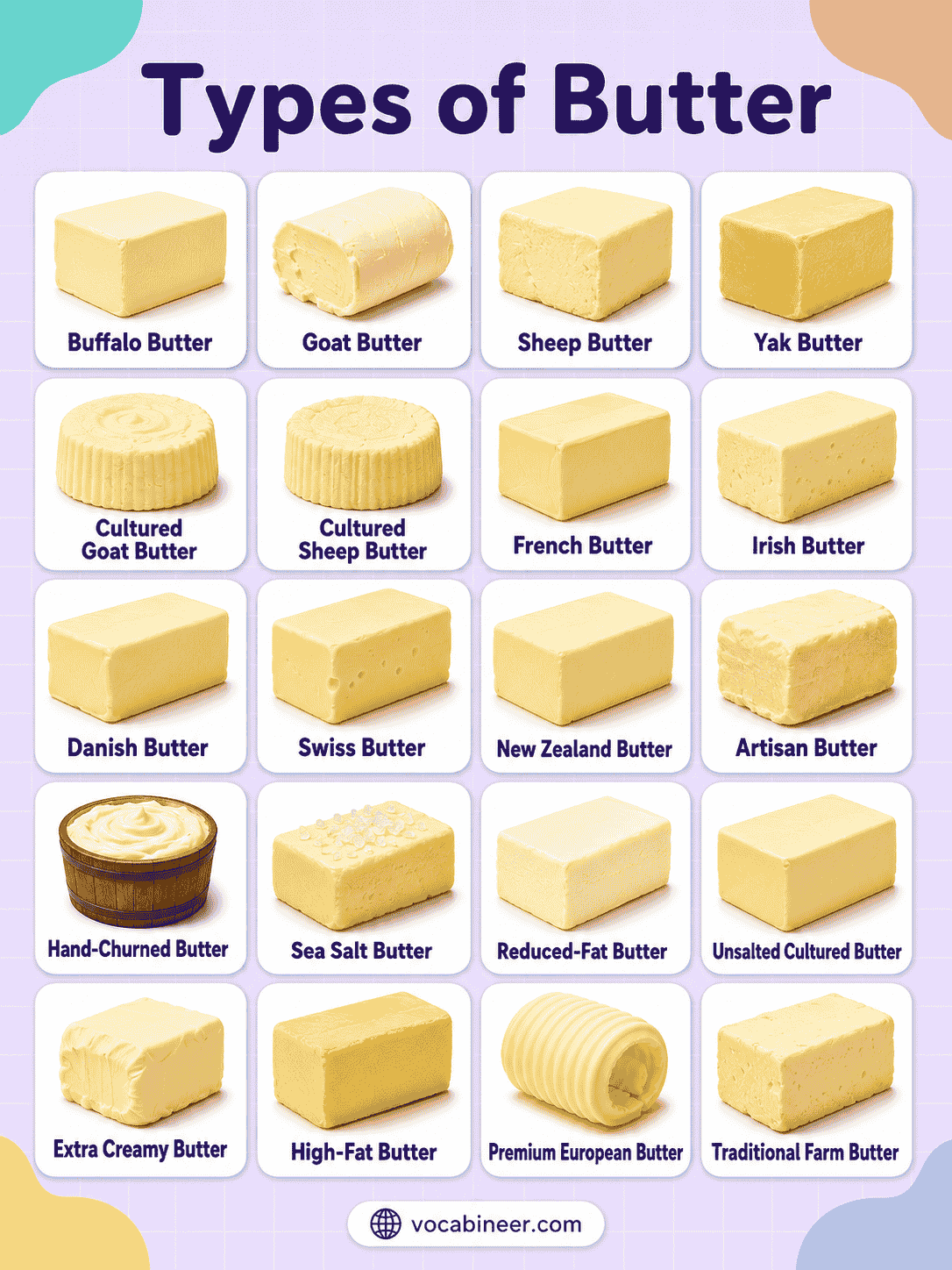
Irish butter comes from Ireland and often has a rich texture with a naturally golden appearance. Its strong dairy flavor suits bread, mashed potatoes, vegetables, sauces, and baking.
French butter commonly refers to cultured, traditionally churned, or higher-fat butter produced in France. Certain varieties also contain visible salt crystals that add both flavor and a delicate crunch.
Beurre de baratte is French churned butter. Traditional churning and, in many cases, cultured cream give it a pronounced aroma and smooth consistency.
Amish butter commonly appears in large rolls or logs instead of standard sticks. The name suggests a traditional American style, although salt, butterfat, and production methods vary by producer.
Farmhouse butter usually points to small-scale or farm-based production. A package may describe it more precisely as cultured, salted, grass-fed, or hand-churned.
Clarified Butter Forms
Clarification separates butterfat from most of the water and milk solids. Removing those components changes the butter’s appearance, flavor, and cooking performance.
Clarified butter begins as gently melted whole butter. Cooks skim away the foam and separate the clear golden fat from the watery layer and settled milk solids.
With few milk solids left to brown, clarified butter handles higher cooking temperatures more comfortably than whole butter. It suits sautéing, eggs, vegetables, seafood, sauces, and warm dipping butter.
Ghee belongs to the clarified-butter family, but longer heating allows the milk solids to brown before removal. Because of this extra step, ghee develops a deeper golden color and a toasted, nutty aroma.
South Asian cooks use ghee in curries, lentils, rice, flatbreads, sweets, and fried foods. Its concentrated flavor also makes a small amount noticeable in simple dishes.
Soft and Spreadable Forms
Some butter products stay soft because producers add air, alter the fat structure, or blend butter with another ingredient. Shoppers should therefore check whether a spreadable package contains pure butter or a butter mixture.
Whipped butter contains tiny pockets of incorporated air that create a light texture and greater volume. It spreads easily, but a spoonful weighs less than the same volume of regular butter.
Toast, muffins, pancakes, corn, and baked potatoes suit whipped butter well. However, cup-for-cup substitutions can cause unreliable baking results because the incorporated air reduces the amount of actual butter.
Spreadable butter stays softer than an ordinary refrigerated stick. Some products contain specially processed dairy butter, while others include vegetable oil to improve cold spreadability.
Butter blend combines dairy butter with another fat, such as canola or olive oil. Although the mixture spreads smoothly when chilled, its melting and baking behavior can differ from pure butter.
Light butter spread contains less fat or fewer calories per serving than regular butter. Added water, air, oil, and stabilizers usually make it better for spreading than for precise cakes, cookies, or pastry.
Production Labels on Butter Packages
Production claims explain how farmers raised, fed, or managed dairy animals. They do not reveal whether the butter is salted, cultured, high-fat, or suitable for a particular recipe.
Organic butter comes from dairy operations that follow certified organic farming standards. The label relates to feed, pasture, animal care, and production practices rather than salt or butterfat.
Grass-fed butter carries a claim about the cows’ diet. Because feeding periods and certification rules can differ, the full package provides more information than the phrase alone.
Farmhouse butter usually suggests small-scale or farm-based production. Many farmhouse products also highlight seasonal flavor, traditional churning, cultured cream, or local milk.
Artisanal butter points to careful, small-batch production or distinctive cultures and finishing methods. Since the term does not define one exact formula, ingredient lists and package descriptions remain useful.
Specialty Dairy Sources
Although cow’s cream produces most butter, several other dairy sources create distinctive colors, aromas, and textures. These names occur more often in regional markets and specialty food stores.
Goat butter has a pale appearance and a mild tang that reflects the character of goat milk. It works well on bread, vegetables, savory pastries, and sauces.
Sheep butter comes from naturally rich sheep milk. Its concentrated dairy flavor and creamy body suit bread, pastry, sauces, and traditional regional foods.
Buffalo butter feels rich because buffalo milk naturally contains abundant fat and milk solids. Many cuisines use it in breads, sweets, rice dishes, and everyday cooking.
Yak butter plays an important role in Himalayan and Central Asian food traditions. People use it in butter tea, cooking, preserved dairy foods, and ceremonial preparations.
Whey butter comes from cream recovered from whey during cheese production. It may have a stronger, slightly cheese-like dairy character than butter churned directly from fresh cream.
Cooked Butter Preparations
Heat transforms finished butter into preparations with new colors, aromas, and uses. These names describe cooking techniques rather than the original dairy-production method.
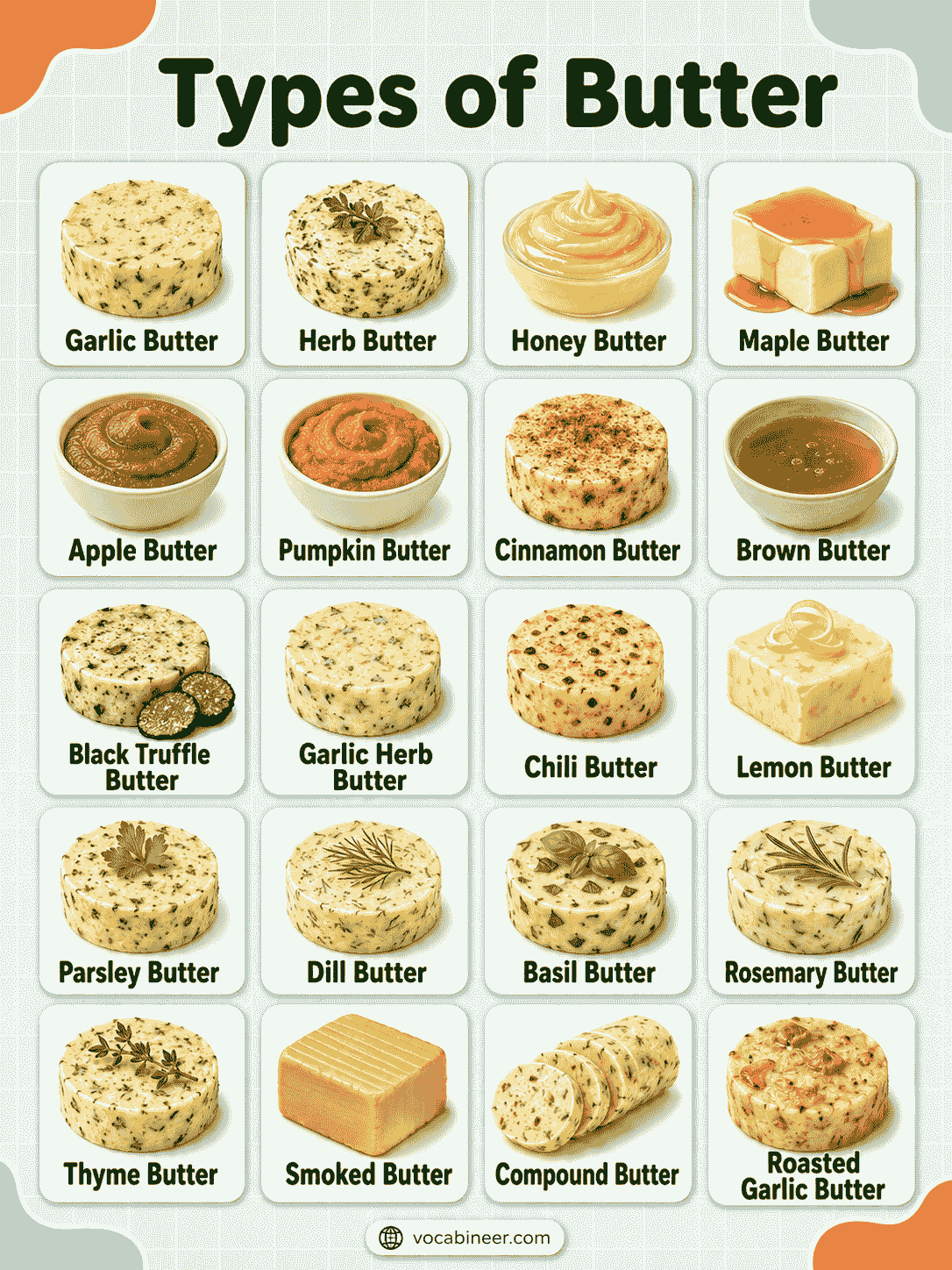
Brown butter develops when heat evaporates water and toasts the milk solids. Its golden-brown color and nutty fragrance enhance cookies, cakes, pasta, fish, vegetables, frostings, and sauces.
Beurre noisette is the French name for brown butter. The word noisette refers to the hazelnut-like color and aroma, not to an added nut ingredient.
Drawn butter may refer to plain melted butter or clarified melted butter, depending on the recipe and region. Restaurants often serve it warm with lobster, crab, shrimp, and other seafood.
Compound and Flavored Butter
Flavored butter combines ordinary butter with herbs, spices, aromatics, sweeteners, fruit, or other ingredients. Each blend adds seasoning and richness in one step.
Compound butter is the general name for butter mixed with savory or sweet flavorings. Cooks often shape it into a log, chill it, and slice off portions whenever a dish needs extra flavor.
Garlic butter blends butter with fresh, roasted, or powdered garlic. Bread, pasta, seafood, steak, vegetables, potatoes, and pizza crust all pair naturally with it.
Herb butter contains ingredients such as parsley, chives, dill, rosemary, basil, or thyme. Its fresh aroma complements fish, meat, corn, potatoes, and warm bread.
Maître d’hôtel butter is a classic French compound butter flavored with parsley, lemon juice, salt, and pepper. A chilled slice melts into a quick sauce when placed over hot steak or fish.
Truffle butter combines butter with truffle pieces, truffle paste, or truffle flavoring. Small amounts can season eggs, pasta, potatoes, risotto, sauces, and bread.
Anchovy butter mixes butter with mashed anchovies or anchovy paste. Its savory depth works particularly well with seafood, meat, vegetables, toast, and sauces.
Honey butter blends butter with honey to create a smooth, sweet spread. Biscuits, cornbread, waffles, pancakes, toast, and roasted vegetables benefit from its flavor.
Cinnamon butter combines butter with cinnamon and often sugar or honey. It suits breakfast breads, muffins, pancakes, sweet potatoes, and waffles.
Fruit butter blend combines dairy butter with preserves, citrus zest, berries, or dried fruit. It differs from apple butter and similar fruit spreads that contain no dairy butter.
Matching Butter to the Recipe
The best choice depends on salt, moisture, butterfat, firmness, and flavor. Selecting butter by purpose usually creates more reliable results than treating every variety as interchangeable.
For toast and table service: Salted, cultured, Irish, and whipped butter offer noticeable flavor. Spreadable butter works well when easy cold spreading matters most.
For cakes: Unsalted sweet cream butter provides dependable creaming and allows full control over seasoning.
For cookies: Standard unsalted butter works in most recipes, while brown butter adds toasted flavor. High-fat butter can change spreading and texture, so results may differ from recipes developed with standard butter.
For buttercream: Unsalted butter keeps the flavor clean and prevents the frosting from becoming unexpectedly salty.
For pie crust: Firm unsalted or high-fat butter helps create flaky layers. Very soft spreads and butter-oil blends may weaken the dough’s structure.
For croissants: Pastry butter or dry butter remains flexible during rolling and supports distinct layers during baking.
For shortbread: Cultured or high-fat butter performs especially well because butter provides most of the cookie’s flavor.
For pan sauces: Unsalted butter gives the cook complete control over seasoning, while cultured butter introduces a gentle tang.
For sautéing: Clarified butter and ghee tolerate heat better than whole butter because they contain very few milk solids.
For seafood: Drawn butter and clarified butter provide a clean, smooth texture for dipping.
For curries and rice: Ghee adds concentrated dairy richness and a toasted aroma.
For steak and vegetables: Garlic, herb, brown, or maître d’hôtel butter melts into an instant flavored sauce.
Butter Terms That Often Cause Confusion
Several butter names overlap without carrying exactly the same meaning. The distinctions below help learners recognize packages and avoid unsuitable substitutions.
| Terms | Important difference |
|---|---|
| Salted and unsalted butter | Salted butter contains added salt; unsalted butter gives the cook full seasoning control |
| Sweet cream and sweet butter | Sweet cream describes fresh, uncultured cream; “sweet butter” is used inconsistently |
| Sweet cream and cultured butter | Sweet cream uses fresh cream; cultured butter uses fermented cream |
| European-style and cultured butter | European-style describes a richer style; cultured specifically describes fermentation |
| American-style and European-style butter | American-style is usually milder; European-style commonly contains more fat and less water |
| Clarified butter and ghee | Both lose water and solids, but ghee develops a deeper toasted flavor |
| Regular and whipped butter | Regular butter has a denser volume; whipped butter contains air |
| Whipped and spreadable butter | Whipped butter contains air; spreadable butter may contain oil |
| Pastry and dry butter | Pastry butter is the broader category; dry butter is a specialized low-moisture form |
| Brown and clarified butter | Brown butter keeps toasted milk solids; clarified butter removes them |
| Organic and grass-fed butter | Organic follows certified production standards; grass-fed describes the cows’ diet |
| Butter and butter blend | Butter uses dairy fat; a blend combines butter with another fat |
| Drawn and clarified butter | Drawn butter may mean melted or clarified butter, depending on the recipe |
| Butter type and butter grade | Type describes style or processing; grade describes product quality |
Products Outside Dairy Butter
Several foods use the word butter because they spread, melt, or feel rich. Nevertheless, they do not belong to the dairy-butter family.
Margarine is a spread made mainly from vegetable oils and water. Its fat and moisture balance varies, so it may behave differently from butter in pastry, cookies, sauces, and frying.
Plant-based butter uses non-dairy fats such as coconut, canola, avocado, palm, or sunflower oil. Some products work well in baking, while others function mainly as table spreads.
Shortening is a nearly solid cooking fat usually made from vegetable oil. It can create tender pastry, but it lacks the milk solids and dairy flavor that help butter brown.
Nut and seed butters come from ground peanuts, almonds, cashews, sunflower seeds, sesame seeds, or similar ingredients. Their composition and culinary behavior differ completely from churned dairy butter.
Cocoa butter is the natural fat inside cocoa beans. Chocolate makers value its smooth melting properties, but it contains no dairy butter.
Apple butter is a concentrated fruit spread made by slowly cooking apples with spices and sweeteners. The word butter describes its smooth consistency rather than its ingredients.
FAQs
Common varieties include salted, unsalted, sweet cream, cultured, American-style, European-style, whipped, clarified, ghee, brown, compound, organic, and grass-fed butter.
Unsalted sweet cream butter works well in most cakes, cookies, frostings, and breads because it provides full control over salt. Pastry or dry butter suits laminated dough more effectively.
No. The word sweet means the producer used fresh, uncultured cream. It distinguishes the butter from cultured or fermented-cream varieties.
They belong to the same family, but ghee cooks longer. That extra heating browns the milk solids and creates a deeper, nuttier flavor before removal.
Not reliably by volume. Whipped butter contains air, so one cup may provide less actual butter than one cup of regular butter. Weight-based measurement gives a safer comparison.
Read More
- Healthy Foods Name
- Bakery Items Names
- Different Types of Jam
- Different Types of Cream
- Condiments Names
- Types of Biscuits