Crisp samosas, warm sliders, colorful fruit skewers, creamy dips, and decorated cupcakes can transform an ordinary table into a celebration. Each dish brings its own shape, texture, flavor, and serving style.
Party food includes appetizers, handheld snacks, shared platters, casual main dishes, cold salads, fresh bites, and individual desserts. Therefore, knowing the correct names can help you identify unfamiliar dishes, label a buffet, describe a menu, or choose suitable foods for a gathering.
In This Page
Most Popular Party Food Names
Some foods appear at birthdays, office events, holiday celebrations, and family gatherings more often than others. Although menus vary by region, the following names remain widely familiar.
- Chicken wings – small chicken pieces served with seasoning or sauce
- Sliders – compact sandwiches made with small buns
- Samosas – triangular pastries with savory fillings
- Spring rolls – thin wrappers rolled around vegetables, meat, or seafood
- Sausage rolls – pastry wrapped around seasoned sausage meat
- Pizza – baked flatbread with sauce, cheese, and other toppings
- Loaded nachos – tortilla chips covered with cheese and savory toppings
- Kebabs – pieces of meat or vegetables cooked on skewers
- Hummus – a smooth chickpea and tahini dip
- Charcuterie board – a shared arrangement centered on cured meats
- Cupcakes – individual cakes topped with frosting
- Brownies – rich chocolate squares or rectangles
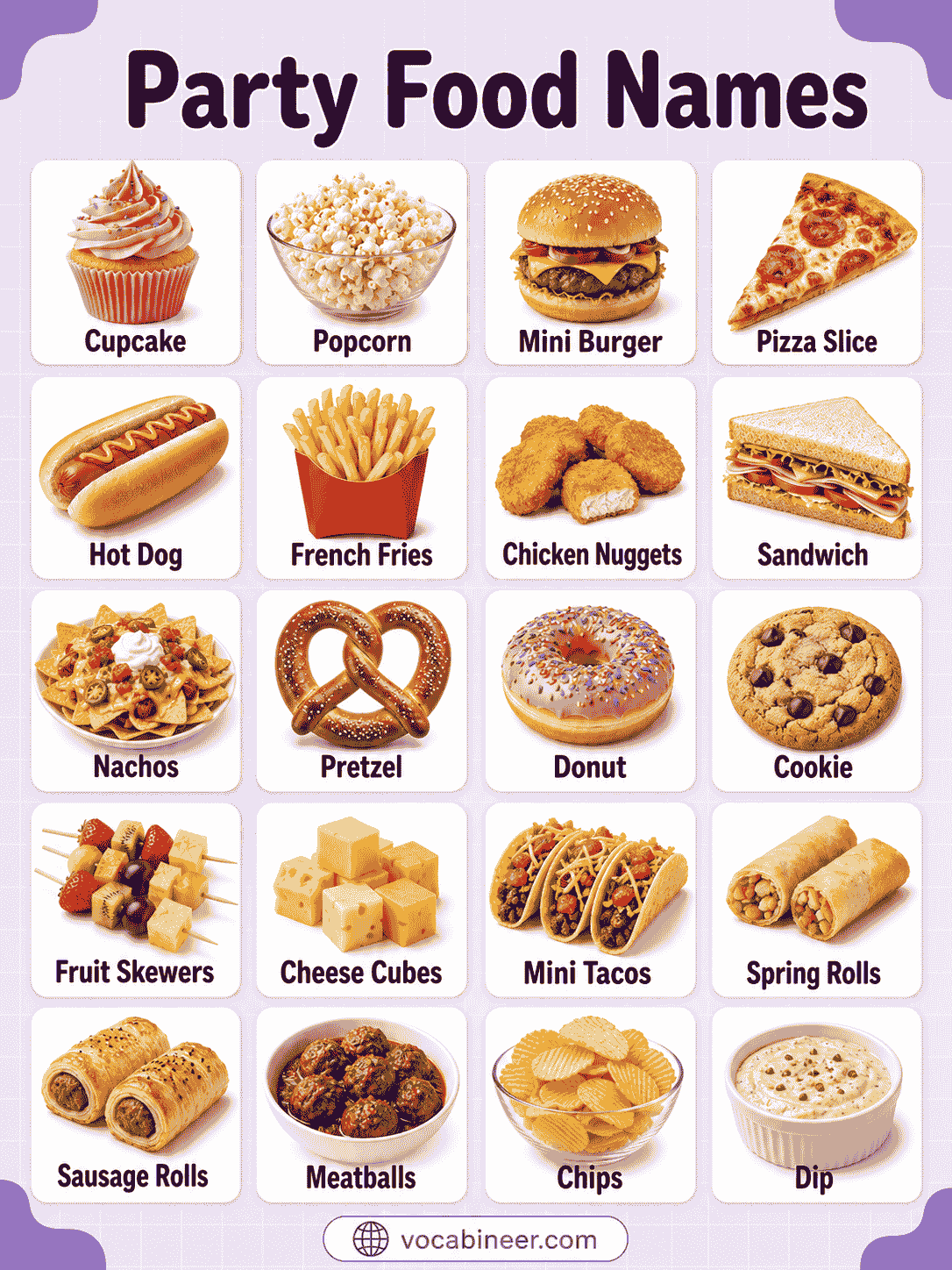
Small Appetizers and Canapés
Small appetizers give guests something light to enjoy before or alongside larger dishes. Meanwhile, canapés usually combine a compact base with a carefully arranged topping.
Canapés /ˈkænəpeɪz/ place cheese, vegetables, smoked fish, meat, or spreads on bread, crackers, pastry, cucumber, or another firm base. Because of their small size, guests can usually eat them in one or two bites.
Deviled eggs consist of boiled egg halves filled with seasoned yolks. Cooks often add mustard, herbs, mayonnaise, or spices before decorating the tops with paprika or chopped vegetables.
Bruschetta /bruːˈsketə/ uses grilled or toasted bread topped with tomatoes, garlic, herbs, cheese, or other savory ingredients. Its broad bread base makes it larger and more rustic than crostini.
Crostini /krɒˈstiːni/ use thin slices of toasted bread as a base for cheese, spreads, cured meats, seafood, or vegetables. By contrast, bruschetta usually uses wider and thicker pieces of bread.
Stuffed mushrooms turn mushroom caps into edible containers for cheese, herbs, breadcrumbs, spinach, meat, or seafood. Hosts may serve them warm or at room temperature.
Mini quiches combine small pastry shells with a seasoned egg filling. In addition, cheese, vegetables, herbs, or meat can give each version a different flavor.
Vol-au-vents /ˌvɒləˈvɒ̃z/ have hollow centers and tall, flaky puff-pastry sides. Their crisp cases commonly hold creamy chicken, mushrooms, seafood, or vegetables.
Cucumber bites use thick cucumber slices as fresh bases for cheese, hummus, seafood, or vegetable toppings. Since they stay crisp and cool, they suit cold appetizer trays particularly well.
Stuffed cherry tomatoes hold cheese, herbs, tuna, or another soft filling inside hollowed tomatoes. Their bright color also adds visual contrast to party platters.
Hot Savory Party Bites
Warm savory bites offer more substance than dry snacks while remaining easy to lift from a tray. As a result, guests can sample several items without needing a full place setting.
Chicken wings bring bold flavor in a compact form. Cooks may roast, grill, or fry them before adding Buffalo, barbecue, garlic, sweet chili, or another sauce.
Meatballs use minced meat, poultry, seafood, or plant-based ingredients shaped into small balls. For party service, hosts often add toothpicks and offer a glaze or dipping sauce.
Pigs in a blanket commonly pair small sausages with pastry in the United States. However, some British versions wrap sausages in bacon, and regional meanings may vary.
Cocktail sausages are small sausages served plain, glazed, or alongside mustard and other sauces. Toothpicks make them especially convenient for shared plates.
Stuffed potato skins fill baked potato shells with cheese, vegetables, bacon, sour cream, or similar toppings. Their crisp edges and soft centers make them more filling than ordinary chips.
Jalapeño poppers fill hollow chili peppers with cheese or another creamy mixture. Some versions use a breadcrumb coating, whereas others go straight into the oven without one.
Bacon-wrapped dates combine sweet dried fruit with salty bacon. In some versions, cheese or nuts add another layer of texture inside the date.
Mini corn dogs cover small sausages with cornmeal batter and cook them until golden. Because they come on short sticks, guests can eat them easily with mustard or ketchup.
Party Sandwiches and Wraps
Small sandwiches and wraps offer familiar flavors in portable portions. Moreover, their fillings can range from simple cheese and vegetables to meat, seafood, and salad mixtures.
Sliders are compact sandwiches served on small buns. Although mini burgers remain popular, sliders may also contain chicken, pulled meat, seafood, cheese, or vegetables.
Tea sandwiches use thin slices of bread with the crusts removed. Hosts often cut them into small squares, rectangles, or triangles and add fillings such as cucumber, egg, chicken, smoked salmon, or cream cheese.
Pinwheels start with tortillas or flatbreads rolled around a filling. After slicing the roll, the spiral pattern becomes clearly visible.
Mini burgers reduce a standard hamburger to a smaller patty and bun. Unlike sliders, the name specifically identifies a burger-style filling.
Wraps fold tortillas or thin flatbreads around meat, cheese, salad, or vegetables. For parties, hosts usually slice them into smaller pieces.
Club sandwich bites layer bread with ingredients such as chicken, turkey, lettuce, tomato, bacon, or cheese. Cocktail picks often hold the small triangles together.
Mini croissant sandwiches place cheese, cold meat, chicken salad, seafood, or vegetables inside flaky croissants. Therefore, they feel slightly richer than ordinary finger sandwiches.
Open-faced sandwiches use one slice of bread and leave the toppings visible. They are generally larger and less decorative than canapés.
Fried Party Snacks
Fried snacks bring crisp surfaces and compact shapes to baskets, trays, and shared platters. Although these foods come from different cuisines, their handheld format makes them natural party choices.
Samosas are triangular or cone-shaped pastries filled with spiced potatoes, peas, lentils, cheese, or meat. While baked versions exist, fried samosas remain especially common at gatherings.
Spring rolls wrap vegetables, meat, or seafood inside thin sheets of dough. Fried spring rolls develop a crisp shell, whereas fresh spring rolls stay soft and flexible.
Pakoras coat vegetables, cheese, fish, or meat in seasoned batter before frying. Their rough surfaces distinguish them from smoother croquettes.
Mozzarella sticks cover strips of mozzarella with breadcrumbs before frying. Consequently, each piece develops a crisp outside and a soft, stretchy center.
Chicken tenders use narrow pieces of chicken with a seasoned coating. They are usually larger than nuggets; however, guests can still eat them easily by hand.
Arancini /ˌærənˈtʃiːni/ are Italian rice balls with breadcrumb coatings. Cheese, peas, mushrooms, or meat sauce may fill the centers.
Onion rings coat circular onion slices with batter or breadcrumbs. Frying gives them a crisp shell while the onion inside becomes tender.
Croquettes shape potato, meat, fish, cheese, or vegetables into breaded rolls, balls, or patties. Since recipes differ widely, their fillings and shapes vary by region.
Fried wontons enclose meat, seafood, cheese, or vegetables inside small dough wrappers. During frying, the folded edges become especially crisp.
Falafel /fəˈlɑːfəl/ uses chickpeas or fava beans mixed with herbs and spices. Cooks shape the mixture into balls or patties, fry them, and often serve them with tahini or yogurt-based sauce.
Party Pastries and Savory Bakes
Savory baked foods use pastry, dough, or bread-like shells to hold flavorful fillings. Therefore, their flaky or golden surfaces make them easy to distinguish from ordinary sandwiches and fried snacks.
Sausage rolls wrap seasoned sausage meat in puff pastry. Bakers often cut them into small pieces before placing them on party trays.
Empanadas /ˌempəˈnɑːdəz/ are folded pastry pockets with meat, cheese, vegetable, or mixed fillings. However, their dough, shape, and ingredients vary across regions.
Spanakopita /ˌspænəkəˈpiːtə/ combines thin phyllo dough with a spinach-and-cheese filling. Party versions often come in small triangles.
Mini meat pies enclose savory meat filling inside compact pastry shells. Depending on the style, they may have round, oval, square, or rectangular shapes.
Cheese straws use cheese and pastry or seasoned dough to create thin baked strips. Unlike filled pastries, they have a crisp, dry texture throughout.
Mini tartlets place cheese, vegetables, eggs, seafood, or meat inside small pastry shells. As a result, they work well as neat individual portions.
Puff-pastry twists combine narrow pastry strips with cheese, pesto, herbs, or spices. Bakers twist the strips before cooking them until crisp and golden.
Mini calzones fold pizza dough around cheese, tomato sauce, meat, or vegetables. In other words, they resemble compact, sealed pizzas.
Cheese puffs, sometimes called gougères /ɡuːˈʒɛərz/, use cheese-enriched dough to create light, airy pastries. Their hollow centers and delicate texture set them apart from dense cheese biscuits.
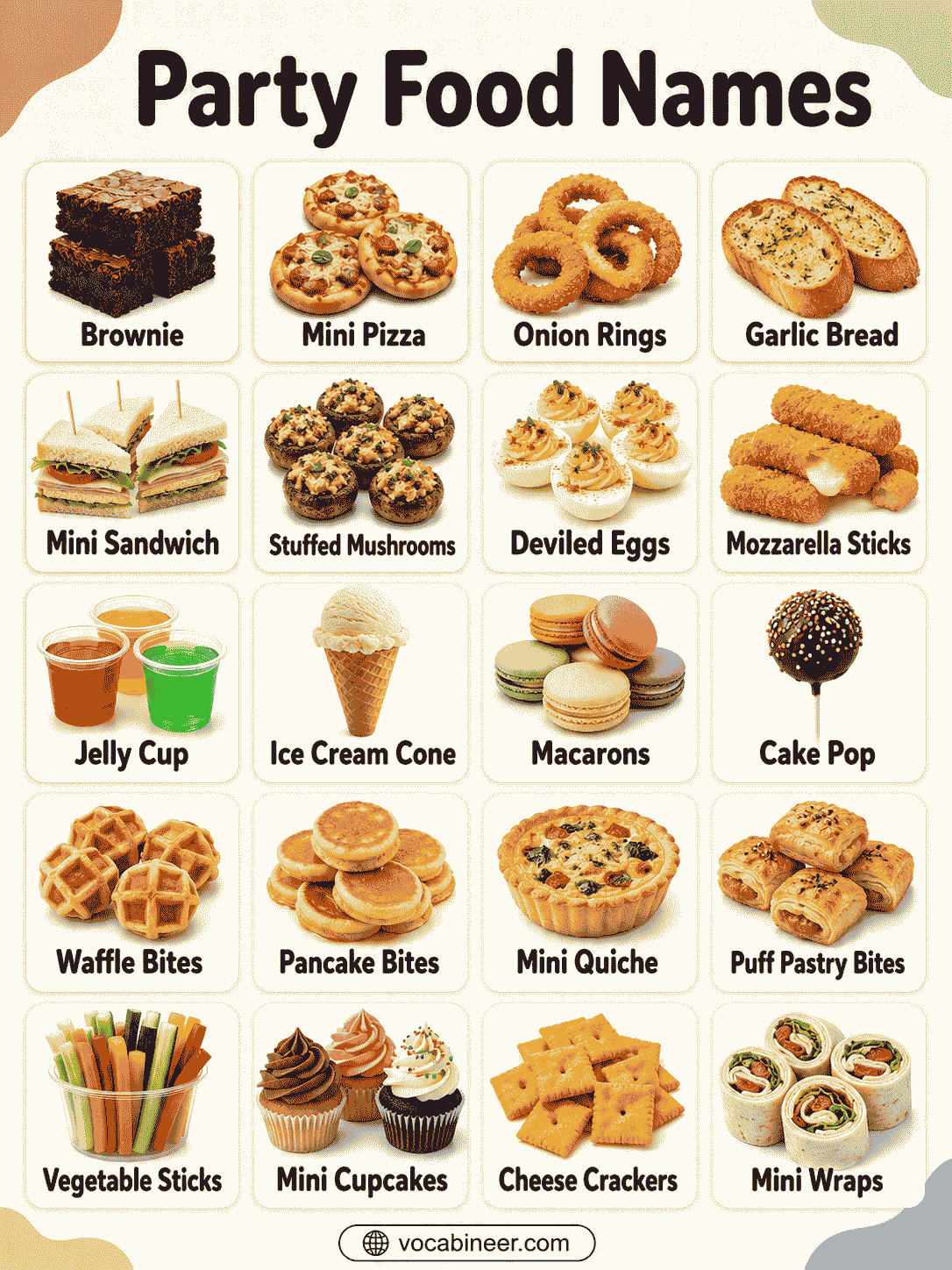
Party Skewers and Kebabs
Skewers keep small pieces of food together and make individual portions easy to lift. This section focuses mainly on savory combinations, while fruit skewers appear later with fresh party foods.
Chicken skewers alternate seasoned chicken with peppers, onions, mushrooms, or other vegetables. Grilling also gives the pieces lightly browned edges.
Kebabs place meat, seafood, vegetables, or mixed ingredients on skewers for grilling or roasting. The spelling kabob appears frequently in American English.
Satay /ˈsɑːteɪ/ uses thin strips or small pieces of seasoned meat grilled on sticks. It is commonly associated with Southeast Asian cuisines and often comes with peanut sauce.
Caprese skewers combine cherry tomatoes, mozzarella, and basil on short sticks. Therefore, they offer the central flavors of Caprese salad in a handheld form.
Antipasto skewers may include olives, cheese, cured meat, tomatoes, peppers, or artichokes. Instead of using one shared platter, these skewers give each guest an individual portion.
Shrimp skewers feature seasoned shrimp served grilled, baked, or chilled. Lemon wedges and dipping sauces often accompany them.
Vegetable kebabs alternate colorful pieces of peppers, mushrooms, onions, tomatoes, and zucchini. Meanwhile, grilling adds light charring and a softer texture.
Kofta kebabs use seasoned minced meat shaped around skewers or formed into small oblong pieces. Their soft texture differs from kebabs made with separate meat cubes.
Chips, Crackers, and Bowl Snacks
Dry snacks require little preparation and give guests something easy to nibble throughout an event. They usually appear in bowls or baskets; additionally, many pair well with dips.
Potato chips are thin potato slices cooked until crisp. British English usually calls them crisps.
Tortilla chips are triangular or round corn-based chips. They commonly accompany salsa, guacamole, queso, or layered dips.
Pita chips come from pieces of pita bread cooked until crunchy. Because of their firm texture, they work particularly well with hummus and other thick dips.
Crackers are thin, crisp baked snacks available in many shapes and flavors. They often accompany cheese, cured meats, seafood, and spreads.
Pretzels may be hard and crunchy or soft and bread-like. For shared snack bowls, hosts usually choose the smaller hard variety.
Popcorn comes from corn kernels that expand when heated. Salted, caramel, cheese, and spiced varieties all suit casual gatherings.
Mixed nuts may include almonds, cashews, peanuts, pistachios, or other nuts. Furthermore, seasonings can make them salty, spicy, smoky, or sweet.
Snack mix combines dry foods such as cereal pieces, pretzels, crackers, nuts, or chips. Since each mix can use different ingredients, the flavor and texture vary widely.
Breadsticks are long, thin pieces of baked bread. Crisp versions may accompany dips, cheese, cured meats, or soup shooters.
Party Dips and Spreads
Dips and spreads add flavor to chips, crackers, bread, and raw vegetables. Dips usually have a soft texture for scooping, whereas spreads tend to stay in place on bread or crackers.
Salsa combines chopped or blended tomatoes, chilies, onions, herbs, fruit, or other ingredients. Depending on the recipe, it may taste mild, hot, sweet, smoky, smooth, or chunky.
Guacamole mixes avocado with ingredients such as lime, onion, tomato, herbs, or chili. As a result, it develops a soft and creamy texture.
Hummus /ˈhʊməs/ blends chickpeas and tahini into a smooth spread. People commonly eat it with pita bread, crackers, or raw vegetables.
Queso is a warm cheese dip that commonly accompanies tortilla chips. Some versions also include chilies, tomatoes, meat, or spices.
Spinach dip combines spinach with cheese, yogurt, mayonnaise, or another creamy base. Although some versions arrive warm, others suit chilled platters.
Buffalo chicken dip mixes shredded chicken, cheese, and spicy Buffalo-style sauce. Consequently, it has a rich texture and a noticeable chili flavor.
Tzatziki /tsæˈtsiːki/ combines yogurt with cucumber, garlic, and herbs. Its cool flavor pairs well with vegetables, bread, kebabs, and grilled meat.
Baba ganoush /ˌbɑːbə ɡəˈnuːʃ/ uses cooked eggplant, tahini, lemon, and garlic. Unlike hummus, it has a smoky eggplant base rather than chickpeas.
Bean dip blends or mashes beans with cheese, herbs, chilies, or seasoning. People may serve it warm or cold.
Onion dip gets its flavor from dried, cooked, or caramelized onions mixed into a creamy base. Crackers, chips, and raw vegetables all pair well with it.
Party Boards and Platters
Boards and platters arrange several complementary foods in one shared presentation. However, each name describes a serving style rather than one fixed recipe, so ingredients may change from one event to another.
Charcuterie board /ʃɑːrˈkuːtəri/ traditionally centers on cured meats. Modern versions often add cheese, crackers, bread, fruit, olives, pickles, nuts, and spreads.
Cheese board places several cheeses at the center of the arrangement. In addition, fruit, crackers, bread, nuts, honey, and preserves may fill the surrounding spaces.
Antipasto platter presents Italian-style appetizers such as cured meats, cheese, olives, marinated vegetables, and bread.
Mezze platter /ˈmɛzeɪ/ brings together small dishes associated with Eastern Mediterranean and Middle Eastern cuisines. Hummus, olives, flatbread, vegetables, stuffed vine leaves, and dips commonly appear on it.
Vegetable tray arranges raw carrots, cucumbers, celery, peppers, tomatoes, or similar produce around a dip. Because the vegetables remain separate, guests can choose their preferred pieces.
Fruit platter displays sliced or whole fruit for sharing. Grapes, berries, melon, pineapple, and citrus fruit often add contrasting colors.
Sandwich platter brings together small sandwiches, pinwheels, or wraps with several fillings. Therefore, it gives guests more variety than a tray with one sandwich type.
Seafood platter may include shrimp, smoked fish, shellfish, seafood bites, sauces, and lemon wedges. Depending on the ingredients, hosts may serve it chilled or at room temperature.
Casual Party Mains
Casual main dishes offer more substance than snacks and appetizers, yet they remain easy to divide or serve from a buffet. Consequently, they often form the central part of the food table.
Pizza uses baked flatbread topped with sauce, cheese, vegetables, meat, seafood, or other ingredients. For parties, hosts commonly cut it into small slices or squares.
Tacos fill folded or open tortillas with meat, beans, vegetables, cheese, salsa, or other toppings. A taco bar can also let guests build their own combinations.
Burgers place cooked patties inside sliced buns with sauces and toppings. Smaller versions usually carry the names mini burgers or sliders.
Hot dogs place cooked sausages inside long split buns. Guests can then add mustard, ketchup, onions, relish, or other toppings.
Fried chicken uses seasoned chicken pieces with a crisp coating. Wings and drumsticks work particularly well because guests can eat them by hand.
Pulled-meat sandwiches fill soft buns with slow-cooked shredded meat. Pulled pork and pulled chicken remain the most familiar versions.
Quesadillas fold or layer tortillas around cheese and other ingredients. After cooking, hosts usually cut them into wedges.
Loaded nachos cover tortilla chips with cheese, beans, meat, salsa, jalapeños, sour cream, or other toppings. Unlike plain chips, they can function as a substantial shared dish.
Baked pasta includes lasagna, baked ziti, macaroni and cheese, and similar oven-cooked dishes. Large trays make these foods practical for buffet service.
Chili combines meat, beans, vegetables, tomatoes, chilies, or a selection of these ingredients in one thick dish. For easier party service, hosts can offer it in small bowls or cups.
Party Salads and Chilled Foods
Cold dishes add freshness and variety to a buffet. Moreover, many can be prepared ahead and served without warming equipment.
Pasta salad mixes cooked pasta with vegetables, cheese, herbs, meat, dressing, or other additions. It usually has a firm texture and a cool serving temperature.
Potato salad combines cooked potatoes with mayonnaise, mustard, herbs, vinegar, or another seasoned dressing.
Coleslaw uses shredded cabbage and often includes carrots. While creamy versions use mayonnaise, lighter versions may rely on vinegar.
Macaroni salad mixes small pasta shapes with vegetables, herbs, dressing, and sometimes eggs or meat.
Chicken salad combines cooked chicken with a creamy or seasoned dressing. Hosts may serve it in a bowl, on bread, or inside lettuce cups.
Greek salad commonly brings together tomatoes, cucumbers, olives, onions, feta cheese, and an oil-based dressing.
Cold noodle salad pairs chilled noodles with vegetables, herbs, sauce, meat, or seafood. Depending on the dressing, it may taste sweet, spicy, tangy, or savory.
Stuffed vine leaves wrap grape leaves around rice, herbs, and sometimes meat. People often serve them cold or at room temperature.
Sushi rolls combine seasoned rice with compact fillings, usually inside seaweed or another rolled covering. Since the fillings vary, party platters may offer several types.
Fruit and Vegetable Party Foods
Fresh fruit and vegetable foods add color, crisp textures, and simple presentation options to a party table. They can appear on trays, in cups, or as individual handheld portions.
Fruit skewers place pieces of fruit on short sticks. Grapes, melon, pineapple, strawberries, and kiwi create bright color combinations.
Fruit cups divide mixed fruit into individual portions. Therefore, guests can take one serving without sharing utensils.
Stuffed cucumbers use thick cucumber slices or hollow sections to hold cheese, hummus, tuna, or vegetables.
Vegetable cups hold sliced carrots, cucumbers, celery, or peppers in small containers. In addition, a spoonful of dip may sit at the bottom.
Caprese bites combine tomato, mozzarella, and basil in compact portions. They may sit on crackers, cucumber slices, or short picks.
Lettuce cups use crisp lettuce leaves to hold meat, seafood, rice, noodles, or vegetables. Because the leaf replaces bread or pastry, the filling remains clearly visible.
Celery boats fill celery sticks with cheese, hummus, nut butter, or another spread. Their curved centers naturally hold the filling.
Stuffed mini peppers contain cheese, herbs, meat, rice, or vegetables inside small sweet peppers. Depending on the filling, hosts may offer them hot or cold.
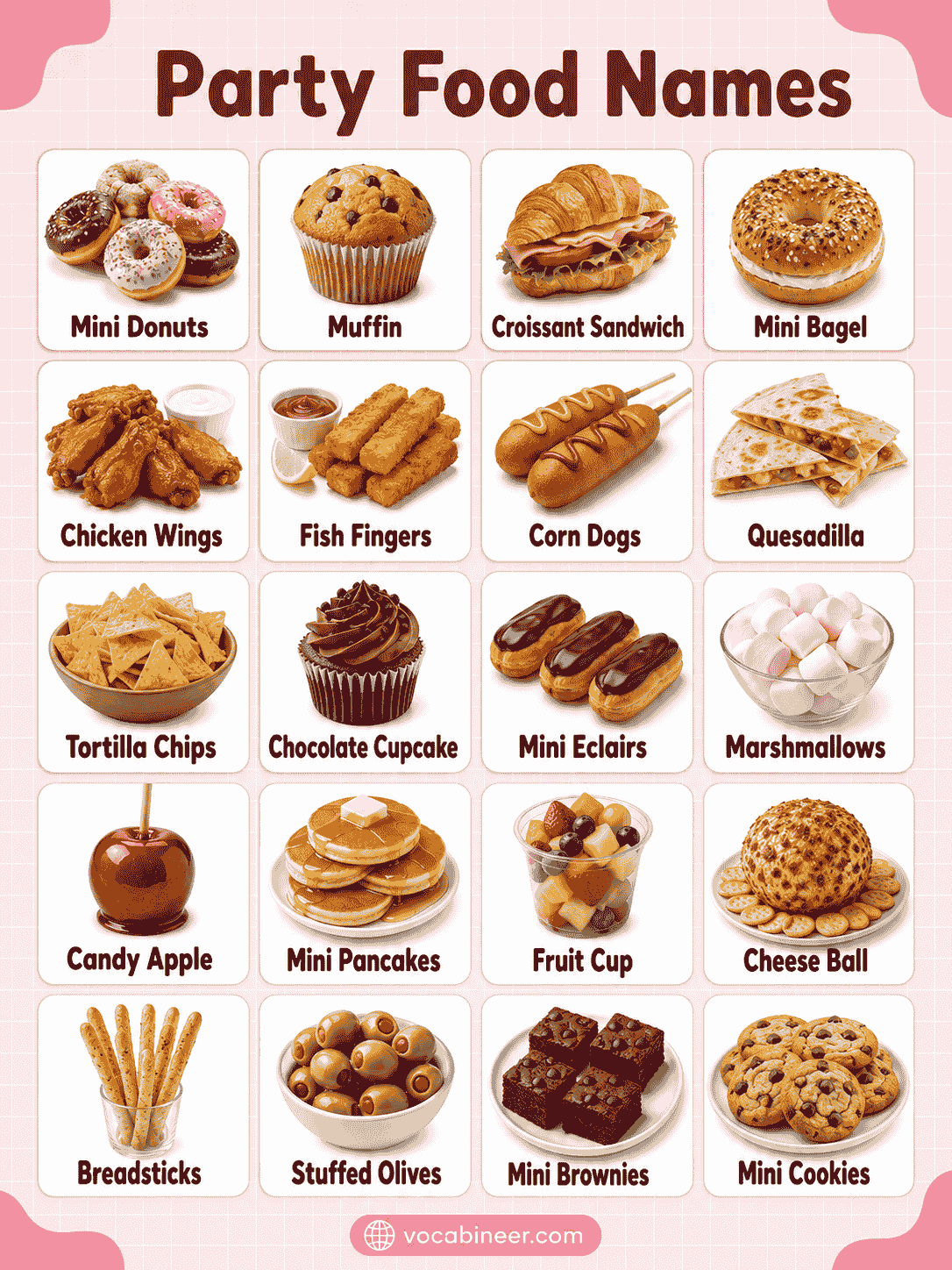
Party Desserts and Sweet Treats
Party desserts usually come in portions that fit neatly on trays or dessert tables. Furthermore, their frostings, coatings, shapes, and decorations can match the event’s theme.
Cupcakes are individual cakes baked in paper or foil cases. Frosting, sprinkles, fruit, chocolate, or themed decorations often cover the tops.
Brownies are rich chocolate squares or rectangles with a fudgy, chewy, or cake-like texture.
Cookies come in many shapes and flavors. Chocolate chip, sugar, sandwich, shortbread, and decorated cookies all work well at parties.
Cake pops place balls of cake on sticks and cover them with icing, chocolate, or candy decorations. As a result, they look more like lollipops than slices of cake.
Donuts may have ring shapes or filled centers. Sugar, glaze, chocolate, or icing commonly covers the surface.
Mini cheesecakes turn a familiar dessert into individual portions with biscuit or pastry bases. Fruit, caramel, or chocolate may decorate the tops.
Macarons /ˌmækəˈrɒnz/ are small sandwich cookies made with almond-based shells and soft fillings. However, they differ from coconut macaroons.
Chocolate truffles are rich chocolate confections shaped into small balls. Cocoa, nuts, coconut, or chocolate may coat the outside.
Dessert bars are baked sweets cut into squares or rectangles. For example, lemon bars, oat bars, caramel slices, and layered chocolate bars all fit this group.
Mini tarts place fruit, custard, chocolate, or another sweet filling inside small pastry shells.
Ice-cream sandwiches place ice cream between cookies, wafers, or cake-like layers. Since they soften quickly, they need to remain frozen until shortly before serving.
Commonly Confused Party Food Terms
Party food terms often overlap because one name may describe size, another may describe serving order, and another may refer to ingredients or presentation. Therefore, this compact comparison focuses on the distinctions readers most often need.
| Terms | Clear difference |
|---|---|
| Finger foods and appetizers | Finger foods are eaten by hand, whereas appetizers are small dishes served before or apart from a main meal. One food may belong to both groups. |
| Canapés and crostini | Canapés may use bread, crackers, pastry, or vegetables as a base. Crostini specifically use small slices of toasted bread. |
| Sliders and mini burgers | Mini burgers contain small burger patties, while sliders may contain burgers, chicken, pulled meat, seafood, or vegetables. |
| Dips and spreads | Dips usually have a scoopable texture, whereas spreads stay more easily on bread or crackers. Some foods can serve both purposes. |
| Charcuterie and cheese boards | Charcuterie boards traditionally focus on cured meats, while cheese boards place cheese at the center. |
| Chips and crisps | American English uses chips for thin potato snacks. British English usually calls them crisps and uses chips for fries. |
| Cookies and biscuits | American English commonly uses cookies for sweet baked treats, whereas British English often uses biscuits. The categories do not match perfectly. |
| Kebab and kabob | These spellings refer to the same broad family of grilled or skewered foods, although regional usage differs. |
FAQs
Sliders, tea sandwiches, samosas, spring rolls, chicken wings, kebabs, sausage rolls, pinwheels, chips, cookies, and fruit skewers can usually be eaten without cutlery.
Party snacks are casual foods eaten throughout an event, such as chips, crackers, nuts, and popcorn. Appetizers are small dishes normally served before or separately from a main meal.
They may be called cocktail bites, party picks, skewers, canapés, or hors d’oeuvres, depending on their ingredients, size, and presentation.
Tea sandwiches, pinwheels, deviled eggs, pasta salad, sushi rolls, vegetable cups, fruit skewers, cheese boards, and charcuterie boards are familiar cold choices.
No. Finger food describes how a dish is eaten, while appetizer describes its role in a meal. A slider may be a finger food but substantial enough to form part of the main menu.
Read More
- Healthy Foods Name
- Bakery Items Names
- Different Types of Jam
- Different Types of Cream
- Condiments Names
- Types of Biscuits