Concrete nouns are common and useful words in English. They name people, animals, places, or things that we can experience through one or more of the five senses. In other words, concrete nouns refer to things we can usually see, touch, hear, smell, or taste. Words like Teacher, Dog, Apple, School, and Chair are concrete nouns because they name real, physical things.
In this easy-to-follow guide, you will find 150 concrete nouns in English arranged in clear categories. It includes concrete nouns for people, animals, places, and things, along with simple sentence examples. Whether you are a student, teacher, writer, or English learner, this article will help you understand and identify concrete nouns in a simple and useful way.
In This Page
What Are Concrete Nouns?
A concrete noun is a noun that names something physical. It refers to a person, animal, place, or thing that can be experienced through the senses.
For example:
- Teacher is a concrete noun because you can see and hear a teacher
- Dog is a concrete noun because you can see and touch a dog
- Apple is a concrete noun because you can see, touch, and taste it
- School is a concrete noun because it is a real place
- Chair is a concrete noun because it is a physical object
Concrete nouns are used every day in speaking and writing because they name the real world around us.
Complete List of 150 Concrete Nouns in English
Below is a complete list of 150 concrete nouns in English in a simple and easy-to-scan format.
- Teacher
- Student
- Doctor
- Nurse
- Farmer
- Driver
- Artist
- Singer
- Dancer
- Player
- Mother
- Father
- Brother
- Sister
- Baby
- Friend
- Neighbor
- Guest
- Child
- Woman
- Dog
- Cat
- Horse
- Cow
- Goat
- Sheep
- Lion
- Tiger
- Bear
- Monkey
- Elephant
- Rabbit
- Bird
- Duck
- Hen
- Fish
- Dolphin
- Fox
- Frog
- Turtle
- School
- College
- House
- Home
- Room
- Kitchen
- Garden
- Park
- Road
- Street
- Bridge
- River
- Lake
- Mountain
- Beach
- Forest
- Island
- Shop
- Market
- Hospital
- Library
- Book
- Pen
- Pencil
- Bag
- Chair
- Table
- Desk
- Door
- Window
- Bed
- Cup
- Plate
- Spoon
- Fork
- Bottle
- Box
- Phone
- Clock
- Watch
- Lamp
- Fan
- Computer
- Laptop
- Screen
- Camera
- Key
- Ball
- Toy
- Flower
- Tree
- Leaf
- Apple
- Banana
- Mango
- Orange
- Cake
- Egg
- Knife
- Vase
- Pillow
- Blanket
- Basket
- Mirror
- Brush
- Comb
- Shirt
- Dress
- Coat
- Hat
- Ring
- Wallet
- Map
- Flag
- Candle
- Helmet
- Bicycle
- Car
- Bus
- Train
- Airplane
- Boat
- Ship
- Apple Juice
- Bread
- Milk
- Water
- Chocolate
- Orange Juice
- Soap
- Toothbrush
- Towel
- Shoes
- Socks
- Jacket
- Glass
- Radio
- Television
- Newspaper
- Magazine
- Notebook
- Blackboard
- Chalk
- Eraser
- Basket Ball
- Guitar
- Piano
- Drum
- Umbrella
- Wallet
- Ticket
- Packet
- Sandwich
- Cookie
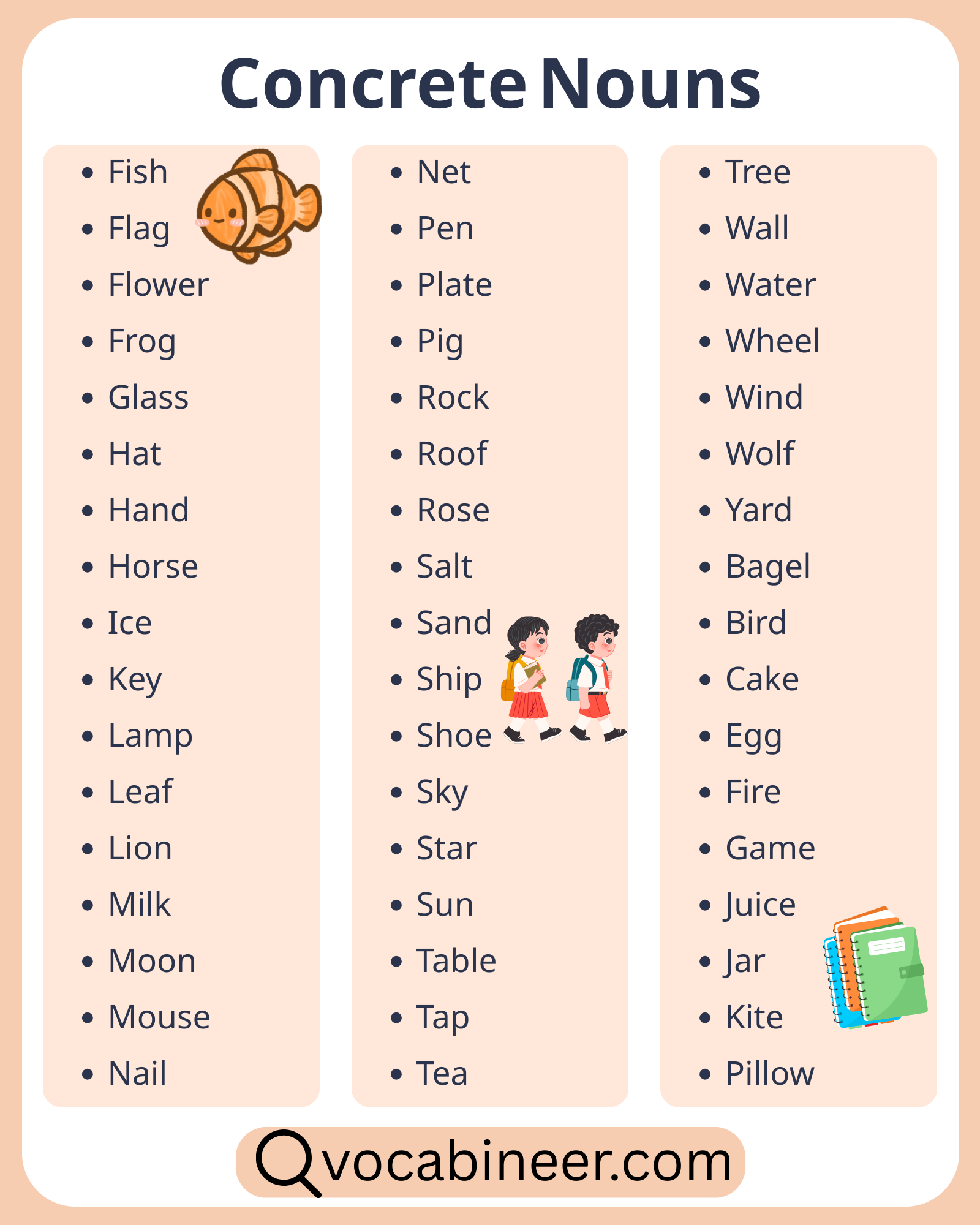
Concrete Nouns for People
These concrete nouns name real people.
- Teacher — a person who teaches
- Student — a person who studies
- Doctor — a person who treats sick people
- Nurse — a person who cares for patients
- Farmer — a person who grows crops or raises animals
- Driver — a person who drives a vehicle
- Artist — a person who creates art
- Singer — a person who sings
- Dancer — a person who dances
- Player — a person who plays a sport or game
- Mother — a female parent
- Father — a male parent
- Brother — a male sibling
- Sister — a female sibling
- Baby — a very young child
- Friend — a person you know and like
- Neighbor — a person living nearby
- Guest — a person invited somewhere
- Child — a young person
- Woman — an adult female person
Concrete Nouns for Animals
These concrete nouns name real animals.
- Dog — a common pet animal
- Cat — a common pet animal
- Horse — a large riding animal
- Cow — a farm animal
- Goat — a horned farm animal
- Sheep — an animal raised for wool
- Lion — a wild big cat
- Tiger — a large striped cat
- Bear — a large wild animal
- Monkey — an active tree-climbing animal
- Elephant — a very large animal with a trunk
- Rabbit — a small animal with long ears
- Bird — an animal with feathers and wings
- Duck — a water bird
- Hen — a female chicken
- Fish — an animal that lives in water
- Dolphin — a sea animal
- Fox — a wild animal with a bushy tail
- Frog — a small jumping animal
- Turtle — an animal with a hard shell
Concrete Nouns for Places
These concrete nouns name real places.
- School — a place for learning
- College — a place of higher education
- House — a building to live in
- Home — the place where someone lives
- Room — a part of a building
- Kitchen — a room used for cooking
- Garden — an outdoor planted area
- Park — a public outdoor space
- Road — a way for vehicles
- Street — a road in a town or city
- Bridge — a structure across water or land
- River — a natural flowing waterway
- Lake — a large area of water
- Mountain — a high landform
- Beach — a sandy shore
- Forest — a large area of trees
- Island — land surrounded by water
- Shop — a place where things are sold
- Market — a place for buying and selling
- Hospital — a place for medical care
- Library — a place with books
Concrete Nouns for Things
These concrete nouns name physical things and objects.
- Book — something you read
- Pen — a tool used for writing
- Pencil — a writing tool
- Bag — something used to carry items
- Chair — something used for sitting
- Table — a piece of furniture with a flat top
- Desk — a table used for work or study
- Door — something used to enter or leave a room
- Window — an opening in a wall with glass
- Bed — something used for sleeping
- Cup — a small container for drinks
- Plate — something used for food
- Spoon — a tool used for eating or serving
- Fork — a tool used for eating
- Bottle — a container for liquids
- Box — a container with sides
- Phone — a device used for calling
- Clock — something that shows time
- Watch — a small timepiece
- Lamp — a thing that gives light
- Fan — a device that moves air
- Computer — an electronic machine
- Laptop — a portable computer
- Screen — a surface that displays pictures or text
- Camera — a device used to take photos
- Key — a tool used to open a lock
- Ball — a round object used in games
- Toy — something children play with
- Flower — a colorful part of a plant
- Tree — a tall plant with a trunk
- Leaf — a flat green part of a plant
- Apple — a common fruit
- Banana — a long yellow fruit
- Mango — a sweet fruit
- Orange — a round citrus fruit
- Cake — a sweet baked food
- Egg — food laid by a bird
- Knife — a cutting tool
- Vase — a container for flowers
- Pillow — a soft support for the head
- Blanket — a covering used for warmth
- Basket — a container used to carry things
- Mirror — something that reflects an image
- Brush — a tool with bristles
- Comb — a tool used for hair
- Shirt — a piece of clothing
- Dress — a piece of clothing
- Coat — an outer piece of clothing
- Hat — something worn on the head
- Ring — a circular piece of jewelry
- Wallet — a small case for money
- Map — a drawing of an area
- Flag — a colored symbol of a place or group
- Candle — a stick of wax with a wick
Examples of Concrete Nouns in Sentences
Here are some simple sentence examples that show how concrete nouns are used in real English.
- The Teacher is in the classroom.
- A Dog is sleeping near the door.
- She put the Book on the table.
- The Flower looks beautiful in the garden.
- My Friend gave me a gift.
- The Doctor helped the child.
- A Car stopped near the bridge.
- The Apple is on the plate.
- We walked to the Park in the evening.
- The Bird is sitting on the tree.
- He carried a Bag to school.
- The Chair is next to the window.
- A Boat moved slowly across the lake.
- The Baby is playing with a toy.
- She cleaned the table with a Towel.
FAQs
Concrete nouns are nouns that name people, animals, places, or things that we can usually see, touch, hear, smell, or taste. They refer to real, physical things.
Some common examples are Teacher, Dog, Apple, School, Chair, Book, Flower, and River. These are all things we can experience through the senses.
Yes, people and animals are concrete nouns because they are real living beings that we can see and often hear or touch.
Yes, places are concrete nouns because they are real locations. Words like School, Park, Hospital, and Library are concrete nouns.
Concrete nouns are important because they help us talk about the real world around us. They are used constantly in everyday speaking, reading, and writing.
Summary
This article covered 150 concrete nouns in English with examples and included sections for people, animals, places, and things. It also showed how concrete nouns are used in simple sentences.
This kind of guide is useful for students, teachers, writers, and English learners because it makes concrete nouns easier to understand and remember. It also helps readers identify physical things more naturally in everyday English.
Read More
- List of Nouns in English
- Common Singular Nouns List
- Examples of Uncountable Nouns
- Abstract Nouns Examples in English
- Examples of Common Nouns in English