

Cupboards are storage spaces or furniture units used to keep household items organized and hidden. People use cupboards in kitchens, bedrooms, bathrooms, hallways, laundry rooms, garages, offices, and utility areas.
In this guide, you will learn different types of cupboards with names, simple meanings, best uses, kitchen cupboard types, household storage cupboards, built-in and freestanding cupboards, room-based cupboards, door styles, materials, comparison terms, and picture chart ideas.
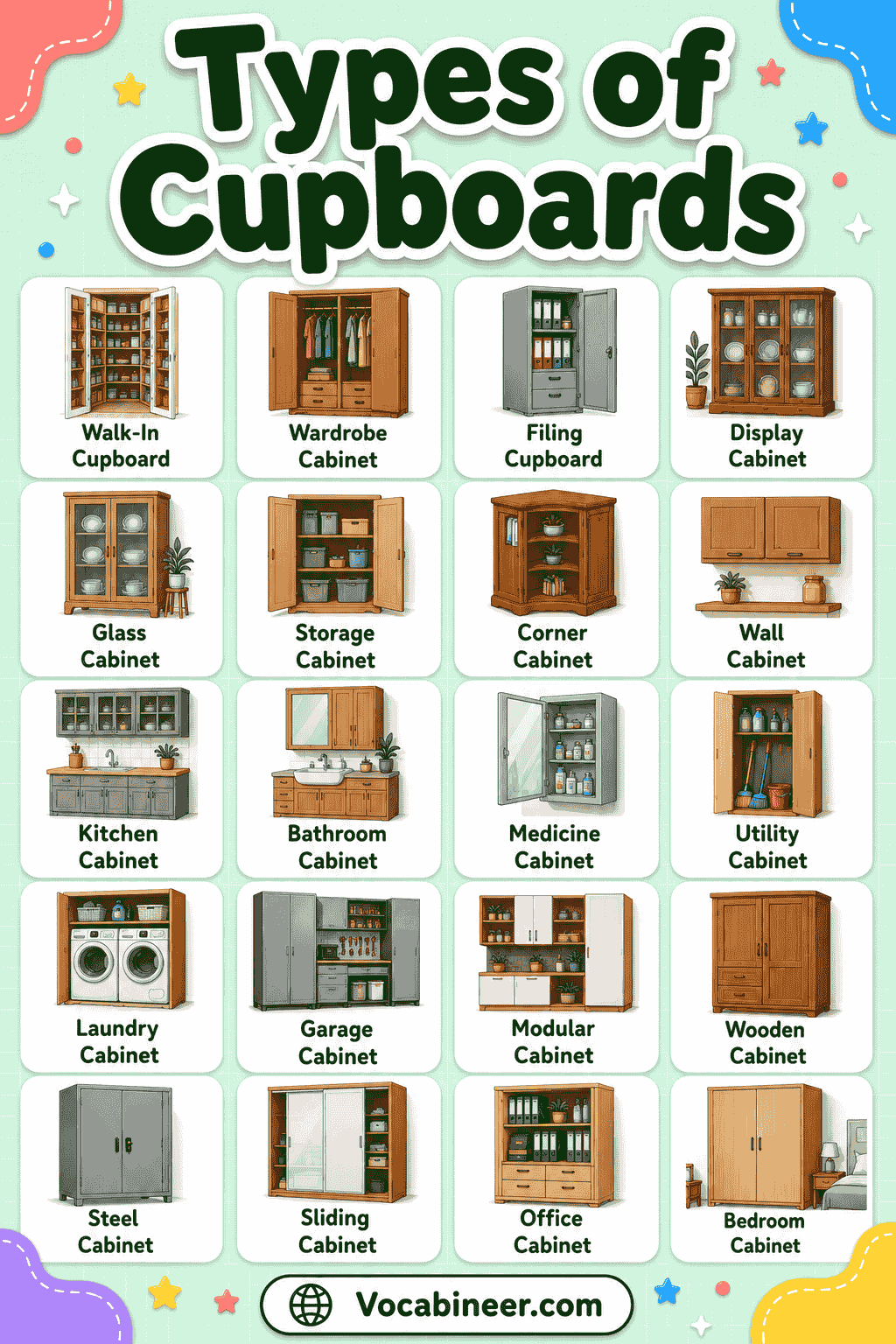
In This Page
Common Types of Cupboards
These are the cupboard types people commonly use for food, dishes, clothes, linens, cleaning items, tools, shoes, and general home storage.
- Kitchen Cupboard — a cupboard used for dishes, food, cookware, or kitchen supplies.
- Wall Cupboard — a cupboard fixed to a wall, usually above counters or work areas.
- Base Cupboard — a lower cupboard that stands on the floor or under a countertop.
- Tall Cupboard — a high cupboard used for vertical storage.
- Pantry Cupboard — a cupboard used for food, jars, cans, and dry goods.
- Linen Cupboard — a cupboard used for towels, sheets, and bedding.
- Airing Cupboard — a warm cupboard used for storing or drying linens.
- Storage Cupboard — a general cupboard used for household items.
- Broom Cupboard — a tall cupboard used for brooms, mops, and cleaning tools.
- Utility Cupboard — a cupboard used for laundry, cleaning, or utility supplies.
- Built-In Cupboard — a cupboard fixed into a wall, alcove, or room structure.
- Freestanding Cupboard — a movable cupboard that stands on the floor.
Cupboard Types and Their Simple Meanings
Simple meanings help readers understand cupboard names before comparing room use, storage purpose, materials, or door styles.
| Cupboard Type | Simple Meaning |
|---|---|
| Kitchen Cupboard | A cupboard used for storing kitchen items. |
| Wall Cupboard | A cupboard attached to a wall. |
| Base Cupboard | A lower cupboard placed on the floor or under a counter. |
| Tall Cupboard | A high cupboard used for vertical storage. |
| Pantry Cupboard | A cupboard used for storing food. |
| Linen Cupboard | A cupboard used for sheets, towels, and bedding. |
| Airing Cupboard | A warm cupboard used for airing or storing linens. |
| Storage Cupboard | A cupboard used for general household storage. |
| Broom Cupboard | A tall cupboard used for cleaning tools. |
| Utility Cupboard | A cupboard used for laundry or utility supplies. |
| Built-In Cupboard | A cupboard fixed into a room structure. |
| Freestanding Cupboard | A movable cupboard that stands on the floor. |
Cupboard Types and Best Uses
Different cupboard types work better for different storage needs, from kitchen food storage to hallway coats and laundry supplies.
| Cupboard Type | Best Use |
|---|---|
| Kitchen Cupboard | Storing dishes, cookware, food, and kitchen tools. |
| Pantry Cupboard | Organizing dry food, jars, cans, and snacks. |
| Linen Cupboard | Keeping towels, sheets, pillowcases, and bedding. |
| Airing Cupboard | Storing warm linens or drying small fabric items. |
| Broom Cupboard | Holding brooms, mops, dusters, and cleaning tools. |
| Utility Cupboard | Organizing detergents, laundry items, and home supplies. |
| Wardrobe Cupboard | Storing clothes, shoes, and accessories. |
| Medicine Cupboard | Keeping medicines, first-aid items, and health supplies. |
| Shoe Cupboard | Organizing shoes near bedrooms, closets, or entryways. |
| Toy Cupboard | Storing toys, games, books, and children’s items. |
| Office Cupboard | Holding files, stationery, documents, and office supplies. |
| Garage Cupboard | Storing tools, hardware, paint, and equipment. |
Kitchen and Pantry Cupboard Types
Kitchen and pantry cupboards are used for food, dishes, cookware, appliances, cleaning products, and everyday kitchen storage.
- Wall Cupboard — fixed above counters for dishes, cups, spices, or dry food.
- Base Cupboard — placed under a countertop for pots, pans, and heavy kitchen items.
- Tall Kitchen Cupboard — used for vertical storage in kitchens.
- Corner Cupboard — fits into a kitchen corner to use awkward space.
- Pantry Cupboard — stores food, snacks, jars, cans, and dry goods.
- Larder Cupboard — a larger food cupboard often used for pantry-style storage.
- Appliance Cupboard — hides or stores small kitchen appliances.
- Crockery Cupboard — used for plates, bowls, cups, and serving dishes.
- Dish Cupboard — stores daily dishes and tableware.
- Under-Sink Cupboard — located below a sink for cleaning items or bins.
- Pull-Out Cupboard — slides out for easy access to food or kitchen supplies.
- Spice Cupboard — keeps spices, herbs, oils, and small jars organized.
Household Storage Cupboard Types
Household cupboards help organize items that do not always belong in kitchens or bedrooms.
- Linen Cupboard — stores towels, bed sheets, pillowcases, and blankets.
- Airing Cupboard — keeps linens warm or helps dry small fabric items.
- Broom Cupboard — stores brooms, mops, dustpans, and tall cleaning tools.
- Cleaning Cupboard — holds cleaning sprays, cloths, gloves, and detergents.
- Coat Cupboard — stores coats, jackets, scarves, hats, and bags.
- Shoe Cupboard — keeps shoes organized near an entryway or bedroom.
- Toy Cupboard — stores toys, board games, craft items, and children’s books.
- Stationery Cupboard — holds paper, pens, files, notebooks, and office supplies.
- Medicine Cupboard — stores medicine, first-aid supplies, and health items.
- Boiler Cupboard — covers or surrounds a boiler and may allow limited storage.
- Tool Cupboard — keeps small tools, hardware, and repair items organized.
- Laundry Cupboard — stores detergents, baskets, fabric softeners, and cleaning supplies.
Built-In and Freestanding Cupboard Types
Cupboards can be fixed into a room or designed as movable furniture.
- Built-In Cupboard — fixed into a wall, alcove, or room layout.
- Freestanding Cupboard — stands on the floor and can move to another place.
- Fitted Cupboard — custom-made to fit a room, wall, or storage area.
- Recessed Cupboard — set into a wall niche or recessed space.
- Alcove Cupboard — built inside an alcove beside a fireplace, wall, or corner.
- Modular Cupboard — made from separate units that can be combined.
- Tall Cupboard — high cupboard used for vertical storage.
- Double-Door Cupboard — has two doors for wider access.
- Sliding-Door Cupboard — uses sliding doors instead of swing doors.
- Lockable Cupboard — includes a lock for private or secure storage.
- Corner Cupboard — designed to fit into a corner.
- Narrow Cupboard — slim cupboard for tight spaces.
Cupboards for Different Rooms
Room-based cupboard types make it easier to choose storage that fits the space and the items you need to organize.
- Kitchen Cupboard — stores food, cookware, dishes, and kitchen tools.
- Bathroom Cupboard — holds toiletries, towels, cleaning items, and skincare products.
- Bedroom Cupboard — stores clothes, bedding, accessories, or personal items.
- Laundry Cupboard — keeps detergents, baskets, towels, and cleaning supplies.
- Living Room Cupboard — stores games, books, decor, media items, or blankets.
- Hallway Cupboard — holds shoes, coats, bags, umbrellas, and keys.
- Utility Room Cupboard — stores tools, laundry items, cleaners, and household supplies.
- Under-Stairs Cupboard — uses the space below stairs for storage.
- Office Cupboard — organizes files, stationery, documents, and equipment.
- Garage Cupboard — stores tools, paint, hardware, sports items, and equipment.
- Closet Cupboard — helps organize clothes, shoes, bags, and accessories.
- Entryway Cupboard — keeps outdoor items, shoes, bags, and daily essentials near the door.
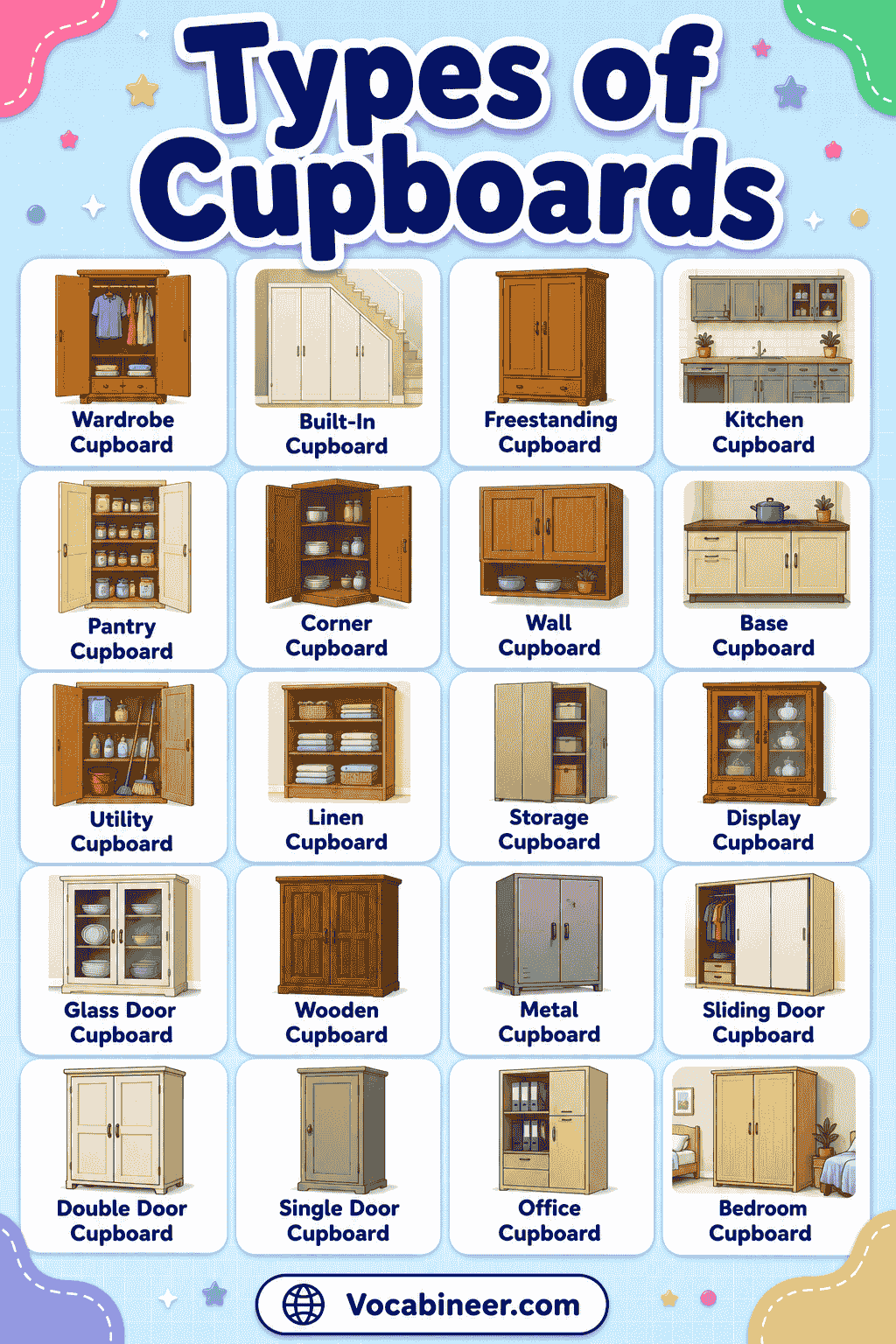
Cupboard Door and Opening Styles
Cupboard doors affect how the cupboard looks, opens, hides items, and fits into a room.
- Open Cupboard — has visible storage without doors.
- Closed Cupboard — has doors that hide the items inside.
- Single-Door Cupboard — has one door for compact storage.
- Double-Door Cupboard — has two doors for wider access.
- Sliding-Door Cupboard — uses doors that slide sideways.
- Folding-Door Cupboard — uses doors that fold as they open.
- Glass-Front Cupboard — has glass doors for display.
- Mirrored Cupboard — has a mirror on the door surface.
- Lockable Cupboard — has a lock for secure storage.
- Pull-Out Cupboard — slides outward for easy access.
- Shutter Cupboard — uses slatted or shutter-style doors.
- Handleless Cupboard — opens with a push system or hidden grip.
Cupboard Materials and Where They Work Best
Cupboard material affects strength, style, cleaning, moisture resistance, weight, and room suitability.
- Wooden Cupboard — strong, warm-looking, and suitable for bedrooms, living rooms, and kitchens.
- Solid Wood Cupboard — durable and long-lasting for heavy home storage.
- MDF Cupboard — affordable and common in modern home furniture.
- Laminate Cupboard — easy to clean and useful for kitchens, bedrooms, and offices.
- Metal Cupboard — strong and practical for garages, offices, utility rooms, and storage areas.
- Plastic Cupboard — lightweight and useful for bathrooms, kids’ rooms, and temporary storage.
- Glass-Front Cupboard — works well for display, crockery, collectibles, and living rooms.
- Stainless Steel Cupboard — easy to clean and useful in kitchens, laundry rooms, and utility spaces.
- Bamboo Cupboard — natural-looking and suitable for bathrooms, bedrooms, and eco-style rooms.
- Mirrored Cupboard — useful in bathrooms, dressing areas, and bedrooms.
- Plywood Cupboard — strong and practical for custom storage projects.
- Melamine Cupboard — smooth, affordable, and common in modular furniture.
Confusing Cupboard Terms Explained
Some storage words sound similar, but they do not always mean the same thing.
| Terms | Difference |
|---|---|
| Cupboard vs Cabinet | A cupboard is often household storage, while a cabinet is usually a fitted or furniture-style storage unit with shelves, doors, or drawers. |
| Cupboard vs Wardrobe | A cupboard can store many household items, while a wardrobe mainly stores clothes. |
| Cupboard vs Closet | A cupboard is usually a storage unit or enclosed storage space, while a closet is often a built-in storage area or small room. |
| Cupboard vs Pantry | A pantry stores food, while a cupboard can store food, dishes, linens, cleaning items, or general belongings. |
| Linen Cupboard vs Airing Cupboard | A linen cupboard stores sheets and towels, while an airing cupboard may help keep linens warm or dry. |
| Built-In Cupboard vs Freestanding Cupboard | A built-in cupboard is fixed into a room, while a freestanding cupboard can move. |
| Open Cupboard vs Closed Cupboard | An open cupboard shows items, while a closed cupboard hides them behind doors. |
Types of Cupboards Chart with Pictures
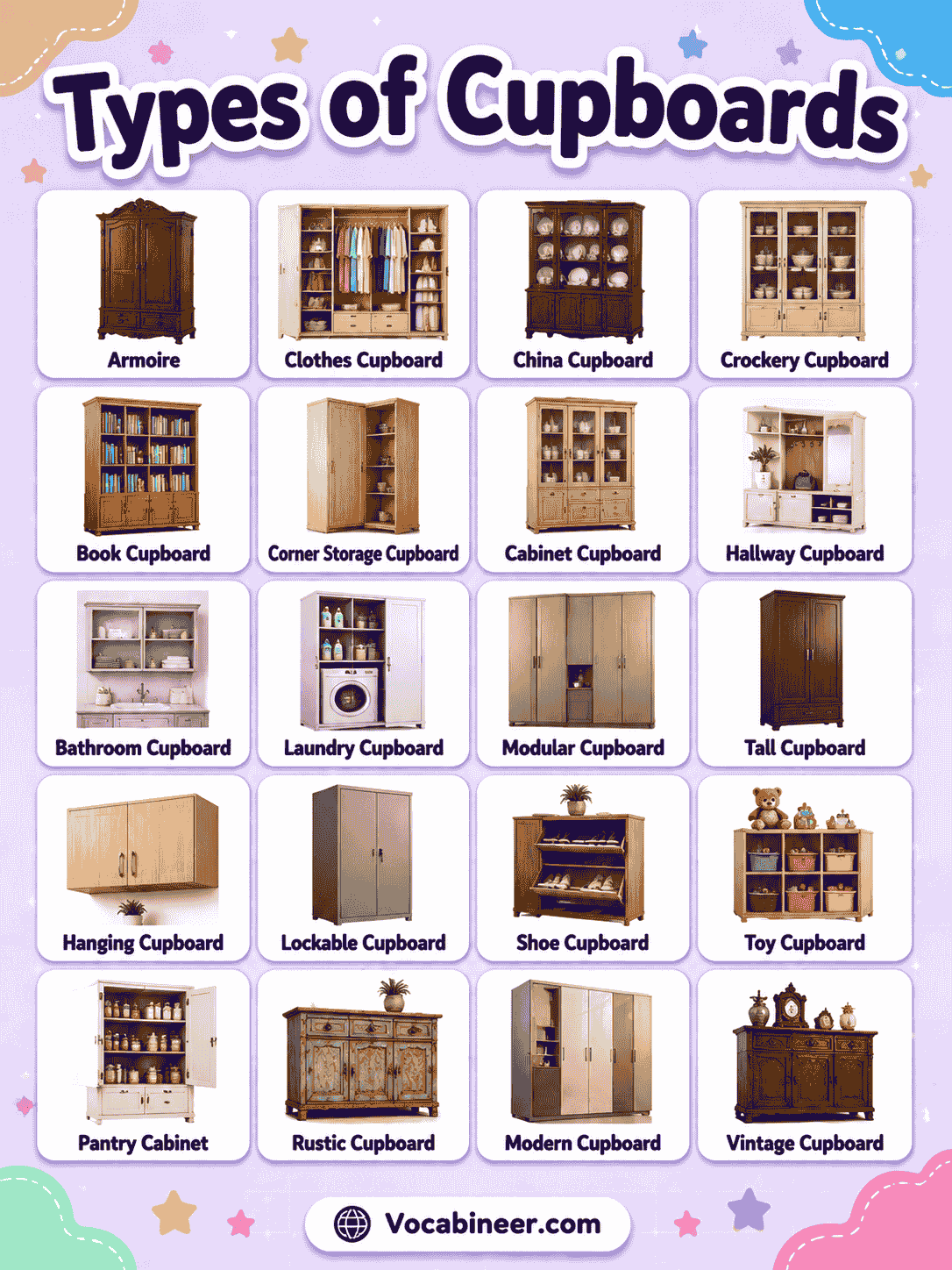
A cupboard chart helps readers compare cupboard groups quickly by purpose, room, and examples.
| Cupboard Group | Details |
|---|---|
| Kitchen Cupboards | Best for: dishes, food, cookware, and kitchen tools Examples: wall cupboard, base cupboard, pantry cupboard |
| Household Storage Cupboards | Best for: general home organization Examples: linen cupboard, broom cupboard, utility cupboard |
| Built-In Cupboards | Best for: permanent room storage Examples: fitted cupboard, recessed cupboard, alcove cupboard |
| Freestanding Cupboards | Best for: movable storage and flexible rooms Examples: storage cupboard, tall cupboard, shoe cupboard |
| Door Style Cupboards | Best for: different access and room layouts Examples: sliding-door cupboard, glass-front cupboard, lockable cupboard |
| Material-Based Cupboards | Best for: matching strength, style, and room needs Examples: wooden cupboard, metal cupboard, laminate cupboard |
| Room-Based Cupboards | Best for: organizing specific areas Examples: bathroom cupboard, bedroom cupboard, garage cupboard |
How to Choose the Right Type of Cupboard
Choosing the right cupboard depends on the room, storage purpose, size, material, door style, and available space. A kitchen cupboard should handle food, dishes, or cookware, while a linen cupboard should keep towels and sheets neat. For cleaning tools, a tall broom cupboard or utility cupboard works better than a small wall cupboard.
Space also matters. Built-in cupboards are useful for permanent storage, while freestanding cupboards are easier to move. Sliding-door cupboards work well in narrow spaces because the doors do not swing outward. For damp areas like bathrooms or laundry rooms, choose materials that are easy to clean and handle moisture, such as laminate, plastic, metal, stainless steel, bamboo, or suitable treated wood.
FAQs
The main types of cupboards include kitchen cupboards, wall cupboards, base cupboards, tall cupboards, pantry cupboards, linen cupboards, airing cupboards, storage cupboards, broom cupboards, utility cupboards, built-in cupboards, and freestanding cupboards.
A cupboard is often used for general household storage, while a cabinet is usually a fitted or furniture-style storage unit with shelves, doors, or drawers. In some places, kitchen cupboard and kitchen cabinet can mean almost the same thing.
Wall cupboards, base cupboards, pantry cupboards, corner cupboards, larder cupboards, pull-out cupboards, and under-sink cupboards are useful for kitchen storage because they hold food, dishes, cookware, and cleaning items.
A linen cupboard is used for storing towels, bed sheets, pillowcases, blankets, and other clean household fabrics.
Solid wood, plywood, laminate, MDF, metal, and stainless steel are common cupboard materials. The best choice depends on the room, budget, storage weight, moisture level, and style.
Read More
- Types of Flooring
- Bedroom Decor Items
- Popular Types of Tiles
- Different Types of Houses
- Types of Rooms in a House
- Parts of a House Names
- Different Types of Tables