

A crisp cracker during a work break, fresh fruit after school, or a warm bowl of popcorn during a movie can all work as snacks between larger meals. Snacks range from simple fresh foods to baked treats, savory bites, fried items, and ready-to-eat packaged products.
Different types of snacks often take their names from flavor, ingredients, preparation methods, or serving style. Understanding these groups makes snack names easier to recognize and helps readers compare sweet, savory, baked, fried, fresh, homemade, and packaged options.
In This Page
What Makes a Food a Snack?
A snack is usually a small portion of food or a nourishing drink consumed outside a main meal. People often have one during a morning break, in the afternoon, after school, at work, or while traveling.
However, ingredients alone do not determine whether something counts as a snack. Portion size, timing, and purpose also matter. A small sandwich may satisfy mild hunger between meals, while a larger sandwich served with vegetables and fruit may function as lunch.
Snacks may be:
- sweet, savory, salty, or spicy
- fresh, baked, fried, roasted, frozen, or chilled
- homemade or commercially packaged
- light enough for mild hunger or substantial enough for a longer break
- based on fruit, vegetables, grains, dairy, eggs, beans, nuts, seeds, or meat
Some drinks can also serve as snacks. For example, a smoothie made with fruit and yogurt provides more substance than water, tea, or coffee alone.
Sweet and Savory Snack Types
Flavor offers one of the simplest ways to classify snacks. Sweet varieties feature sugar, fruit, chocolate, or naturally sweet ingredients, whereas savory snacks rely on salt, cheese, herbs, spices, vegetables, or meat.
Sweet Snacks
Sweet snacks range from light fruit-based choices to rich baked treats. Although people often choose them for enjoyment, ingredients and serving sizes differ considerably.
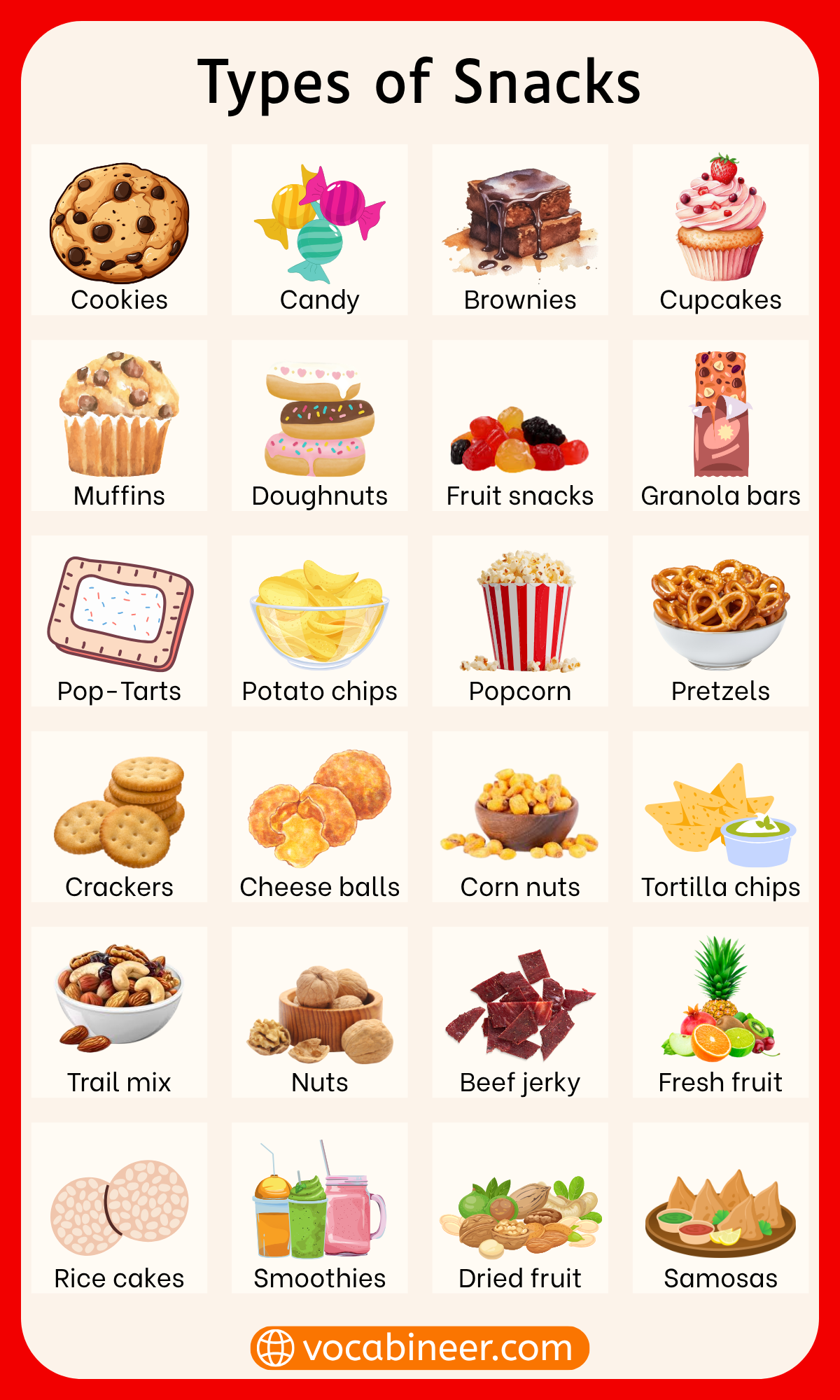
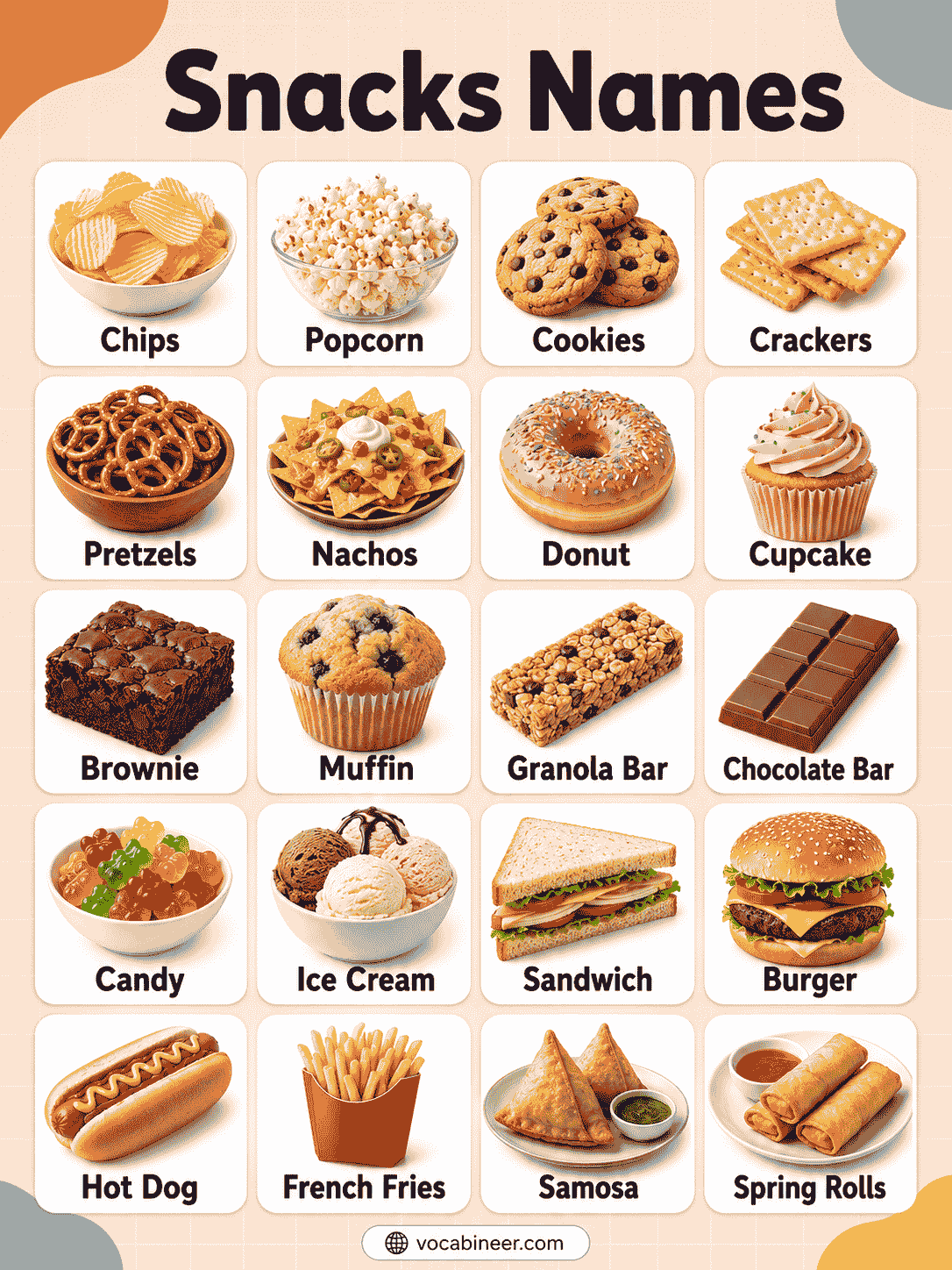
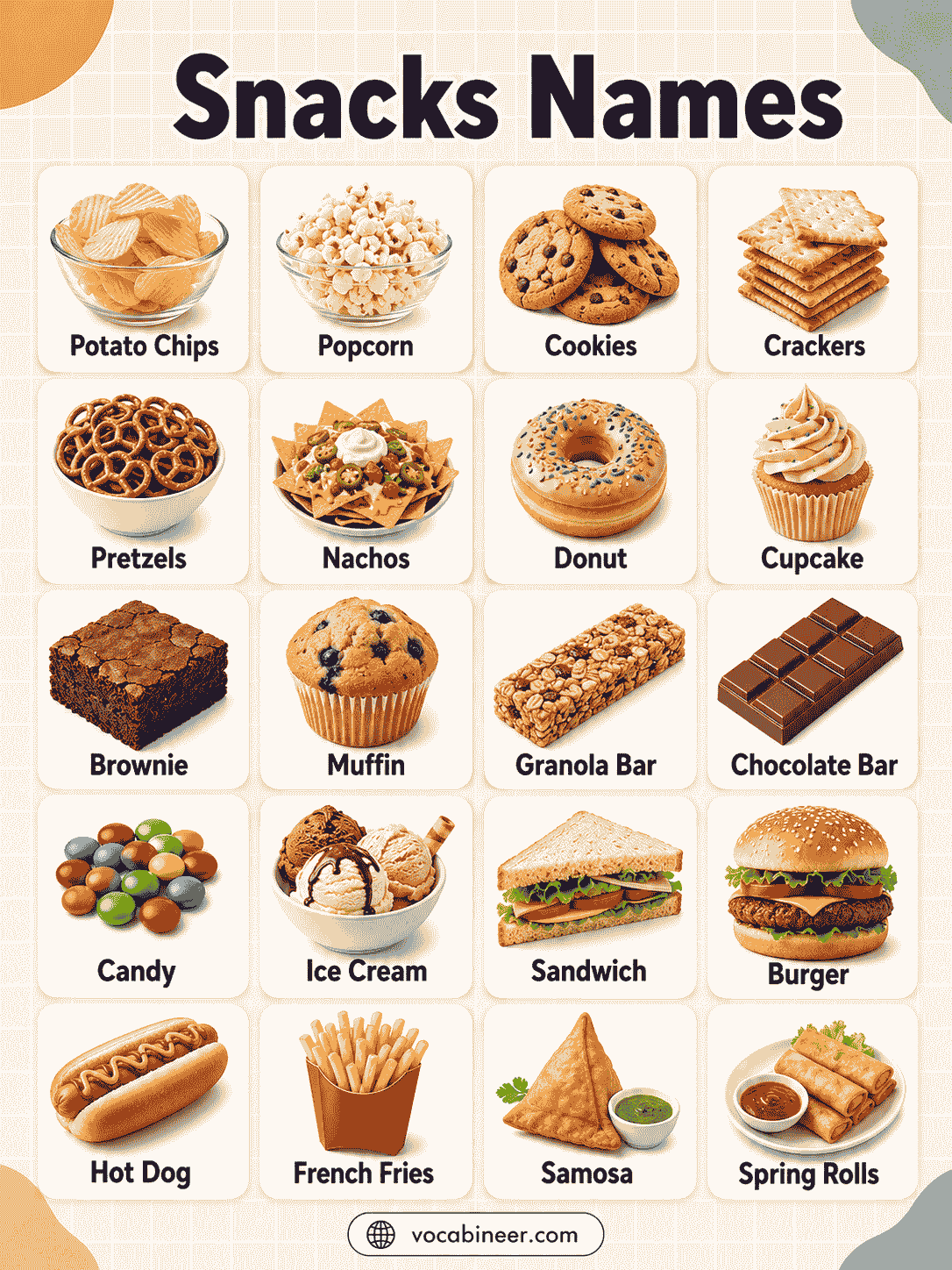
Cookies combine flour, fat, sugar, and optional ingredients such as chocolate chips, oats, nuts, or dried fruit. Some cookies stay soft and chewy, while others develop a thin, crisp texture.
Cake pieces are small servings of sponge, pound cake, layer cake, or another baked cake. Frosting, fruit, cream, or chocolate may add extra flavor.
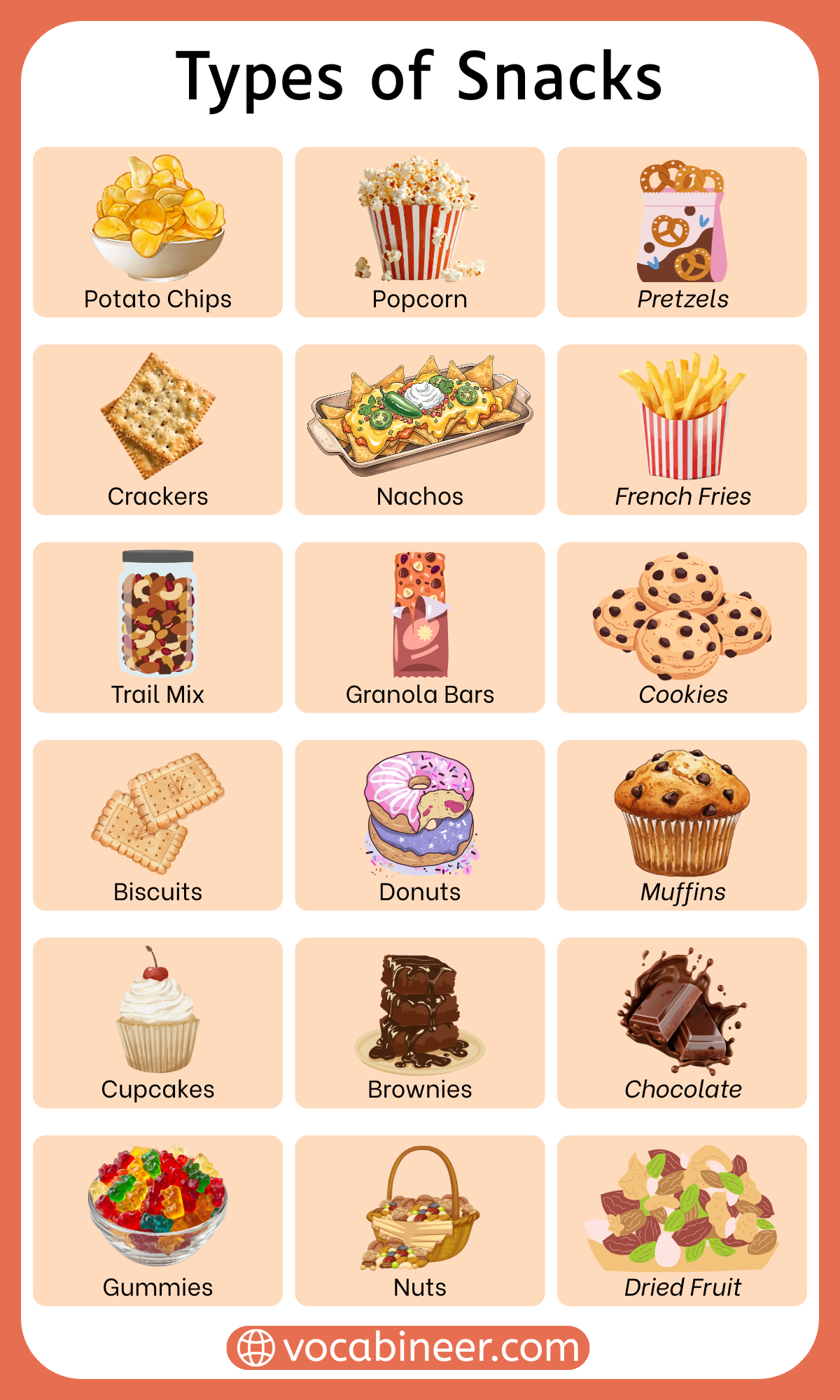
Chocolate bars contain cocoa ingredients with sugar and sometimes milk, nuts, caramel, wafers, or fruit. Dark, milk, and white chocolate offer noticeably different flavors and textures.
Pastries use rich dough that may become flaky, soft, crisp, or layered during baking. Common fillings include fruit, custard, cream, cheese, and chocolate.
Donuts consist of fried or baked sweet dough. Ring donuts have a center hole, while filled varieties usually come in round shapes without one.
Brownies are dense chocolate snacks cut into squares or bars. Depending on the recipe, they may taste fudgy, chewy, cakey, or filled with nuts and chocolate pieces.
Muffins are individual baked foods that may contain blueberries, bananas, apples, chocolate, cinnamon, or nuts. Unlike cupcakes, they usually have a denser crumb and less decorative topping.
Frozen fruit bars blend fruit, juice, yogurt, or a combination of these ingredients before freezing. They provide a cold, refreshing option during warm weather.
Savory Snacks
Savory snacks commonly feature salty, cheesy, spicy, smoky, or herb-based flavors. Many have crisp textures, although dips and cheese-based options may feel soft or creamy.
Pretzels are baked dough snacks with a distinctive brown surface and lightly salty flavor. They come in hard, crunchy forms as well as large, soft varieties.
Crackers are thin, crisp baked snacks made from flour, grains, seeds, cheese, or seasonings. People often pair them with cheese, hummus, soup, nut butter, or spreads.
Potato chips are thin potato slices cooked until crisp. Salt, barbecue seasoning, sour cream flavor, cheese powder, or spices may coat the finished chips.
Tortilla chips use corn tortillas cut into pieces and fried or baked. They work well alone or with salsa, guacamole, bean dip, and cheese.
Cheese puffs are airy corn-based snacks coated with cheese-flavored seasoning. Their light, crisp structure differs from fried cheese balls made with actual cheese and breading.
Snack mixes combine bite-sized foods such as pretzels, crackers, cereal pieces, nuts, or seeds. Depending on the seasoning, the mixture may taste salty, spicy, smoky, or sweet and savory.
Olives offer a salty, briny flavor and a soft or firm bite. Some varieties contain fillings such as peppers, garlic, almonds, or cheese.
Hummus with vegetables or pita chips combines a smooth chickpea dip with crisp accompaniments. Carrots, cucumbers, bell peppers, and baked pita pieces make familiar pairings.
Fried, Baked, Roasted, and No-Cook Snacks
Preparation methods strongly influence a snack’s texture, flavor, and appearance. Frying creates a crisp exterior, baking uses dry oven heat, roasting deepens flavor, and no-cook options preserve the natural qualities of fresh ingredients.
Fried Snack Types
Hot oil quickly browns the outside of fried snacks while cooking the center. Batter, breading, thickness, and oil temperature all affect the final texture.
French fries are potato strips cooked until the outside turns crisp and the center stays soft. Seasonings may include salt, pepper, herbs, cheese, or spicy blends.
Onion rings feature onion slices covered with batter or breadcrumbs. Frying creates a crunchy shell while the onion inside becomes tender and slightly sweet.
Mozzarella sticks contain strips of cheese coated with seasoned breadcrumbs. The crust becomes crisp while the cheese softens and stretches.
Spring rolls wrap vegetables, meat, noodles, or mixed fillings in a thin wrapper. Fried versions develop a crisp shell, while fresh spring rolls use soft rice paper without frying.
Fritters combine vegetables, fruit, corn, seafood, or other ingredients with batter or a binding mixture. Cooks shape or spoon the mixture into hot oil.
Croquettes contain mashed potatoes, cheese, meat, fish, or vegetables formed into small portions and coated with crumbs. Their crisp exterior surrounds a soft, flavorful center.
Baked Snack Types
Oven heat can make snacks flaky, crisp, soft, or chewy. However, baking does not automatically make a food low in sugar, fat, salt, or calories because recipes vary.
Breadsticks are narrow pieces of baked bread dough. Thin breadsticks become dry and crisp, while thicker ones remain soft and chewy.
Baked chips may use sliced potatoes, vegetables, tortillas, or shaped grain mixtures. They generally absorb less oil than deep-fried versions, although seasonings still influence the final product.
Rusks are dry, twice-baked bread slices with a firm texture. People often dip them into coffee, tea, or milk.
Mini pies contain fruit, vegetables, cheese, or meat inside a small pastry shell. Sweet versions work as treats, while savory fillings create a more substantial snack.
Puff-pastry bites use layered dough that rises into delicate, flaky sheets. Cheese, spinach, fruit, chocolate, or seasoned meat may fill the center.
Baked oatmeal cups combine oats with milk, fruit, eggs, seeds, or spices in individual portions. Their firm shape makes them easier to carry than a bowl of oatmeal.
Roasted Snack Types
Roasting uses dry heat to develop deeper flavors and crisp textures without submerging food in oil. A small amount of oil or seasoning may still help the surface brown.
Roasted chickpeas become firm and crunchy in the oven. Paprika, garlic, cumin, chili, cinnamon, or herbs can create savory or sweet versions.
Roasted nuts develop a richer flavor and crisper bite than raw nuts. Popular choices include almonds, peanuts, cashews, pecans, and mixed nuts.
Roasted seeds may include pumpkin, sunflower, or squash seeds. Salt, spices, honey, or cinnamon can change their flavor.
Roasted vegetables include bite-sized pieces of cauliflower, sweet potato, carrots, zucchini, or broccoli. Light seasoning helps the edges brown while the centers stay tender.
Roasted corn kernels have a dense, crunchy bite that differs from popcorn. Sellers often offer salty, smoky, spicy, or cheese-flavored varieties.
Fresh and No-Cook Snack Types
Fresh snacks require little preparation and often retain their original color, flavor, and texture. They work well when cooking equipment or preparation time is limited.
Fresh fruit slices may include apples, pears, peaches, strawberries, oranges, or melon. Their natural sweetness makes them easy to eat alone.
Vegetable sticks commonly come from carrots, cucumbers, celery, bell peppers, or snap peas. Hummus, yogurt dip, or another spread can add more flavor.
Cheese cubes are small pieces of cheddar, mozzarella, Swiss, Monterey Jack, or another firm cheese. Grapes, apples, or crackers often accompany them.
Trail mix combines nuts, seeds, dried fruit, cereal pieces, or chocolate. Because ingredients vary widely, some mixtures taste lightly sweet while others resemble dessert.
Apple or banana slices with nut butter pair fresh fruit with peanut, almond, or cashew butter. Sunflower-seed butter offers a nut-free alternative where needed.
Cottage cheese cups provide a soft, mild snack that pairs well with fruit, tomatoes, herbs, pepper, or crackers.
Fruit and Vegetable Snack Types
Fruit and vegetable snacks may be fresh, dried, frozen, steamed, roasted, baked, or blended. Preparation makes a meaningful difference because added syrup, sugar, salt, and oil can change the finished snack.
Fruit-Based Snacks
Fresh fruit bowls combine several fruits in one serving. Berries, melon, grapes, oranges, pineapple, and bananas create varied colors and textures.
Fruit salad contains chopped fruit and may include yogurt, citrus juice, mint, or a light dressing. Unlike a plain fruit bowl, it usually mixes the ingredients before serving.
Dried fruit includes raisins, dates, apricots, figs, cranberries, and mango slices. Removing water concentrates the sweetness and creates a chewy texture.
Fruit bars use dried or pureed fruit, sometimes with oats, nuts, seeds, or sweeteners. Ingredient lists help distinguish simple fruit bars from candy-like products.
Fruit smoothies blend fruit with yogurt, milk, water, or juice. Adding oats, seeds, or nut butter creates a thicker and more filling drink.
Frozen berries or fruit pieces provide a cold snack with minimal preparation. Bananas, blueberries, mango, and pineapple freeze particularly well.
Vegetable-Based Snacks
Raw vegetable sticks provide a crisp texture and mild flavor. Carrots, celery, cucumbers, bell peppers, and snap peas pair naturally with dips.
Vegetable chips may use potatoes, sweet potatoes, beets, kale, zucchini, or other vegetables. Frying, baking, oil content, and seasoning determine the final crunch and flavor.
Stuffed vegetables use small peppers, cucumber cups, tomatoes, or mushrooms filled with cheese, hummus, grains, or another mixture. Their compact size suits lunch boxes and party trays.
Steamed vegetables such as broccoli, green beans, edamame, or cauliflower can serve as warm or chilled snacks. A little seasoning adds flavor without covering the vegetable completely.
Vegetable patties combine chopped or mashed vegetables with grains, beans, eggs, or breadcrumbs. Cooks may bake, pan-fry, or air-fry them.
Corn cups contain warm or chilled corn kernels with butter, herbs, pepper, lime, or mild spices. Their spoonable format makes them easy to portion.
Grain, Dairy, and Protein Snack Types
The main ingredient often shapes a snack’s texture and how satisfying it feels. Grain-based snacks usually provide carbohydrates, dairy foods add protein and calcium, and protein-focused choices commonly use eggs, beans, nuts, seeds, meat, or soy.
Grain-Based Snacks
Granola bars combine oats with ingredients such as nuts, seeds, fruit, honey, or chocolate. Some bars stay soft and chewy, while others bake into a crisp texture.
Rice cakes are light, crunchy rounds made from puffed rice. Their mild flavor works well with cheese, avocado, fruit, nut butter, or savory spreads.
Dry cereal snacks use breakfast cereal alone or mixed with nuts, seeds, and dried fruit. Less-sweet cereals usually work better in savory or lightly sweetened mixtures.
Oat cookies combine oats with flour, fat, sugar, and optional fruit or nuts. Their texture may range from soft and chewy to thin and crisp.
Pita chips come from pita bread cut into pieces and baked or fried. Hummus, salsa, and yogurt-based dips pair well with them.
Popcorn forms when heat causes moisture inside a special corn kernel to expand rapidly. Salt, butter, herbs, cheese, caramel, or chocolate can change its final style.
Dairy-Based Snacks
Yogurt cups provide individual portions that work well when kept cold. Plain yogurt allows control over sweetness, while flavored varieties offer greater convenience.
Cheese sticks are narrow portions of mozzarella, cheddar, Colby Jack, or another cheese. Their size and packaging make them useful for lunch boxes and short trips.
Cottage cheese has soft curds and a mild, slightly tangy flavor. Fruit, tomatoes, herbs, or black pepper can create sweet or savory combinations.
Milk pudding combines milk with ingredients such as rice, cornstarch, eggs, sugar, or flavorings. Recipes range from light custards to thick rice puddings.
Yogurt drinks blend cultured milk with fruit, water, spices, or sweeteners. Some products stay thin and refreshing, whereas others resemble drinkable smoothies.
Cheese spread with crackers pairs a creamy dairy topping with a crisp grain snack. Keeping the spread separate prevents the crackers from becoming soft before serving.
Protein-Rich Snack Types
Protein-rich snacks may help manage hunger between meals, although fullness also depends on fiber, fat, portion size, and individual needs.
Boiled eggs provide a compact snack with little preparation after cooking. Salt, pepper, paprika, herbs, or another light seasoning can add flavor.
Nut and seed bars combine almonds, peanuts, sunflower seeds, pumpkin seeds, sesame, or similar ingredients. Dates, honey, or syrup often hold the mixture together.
Peanut-butter snacks pair peanut butter with fruit, toast, crackers, or celery. Other nut and seed butters can create similar combinations.
Bean dips include hummus, black bean dip, white bean spread, and lentil-based mixtures. Vegetables, pita pieces, or crackers provide convenient dippers.
Roasted edamame consists of soybeans cooked until crisp. Garlic, chili, salt, or smoky seasoning may coat the finished beans.
Chicken bites use small pieces of grilled, baked, or roasted chicken. Mild seasoning and simple portions make them practical for a more filling snack.
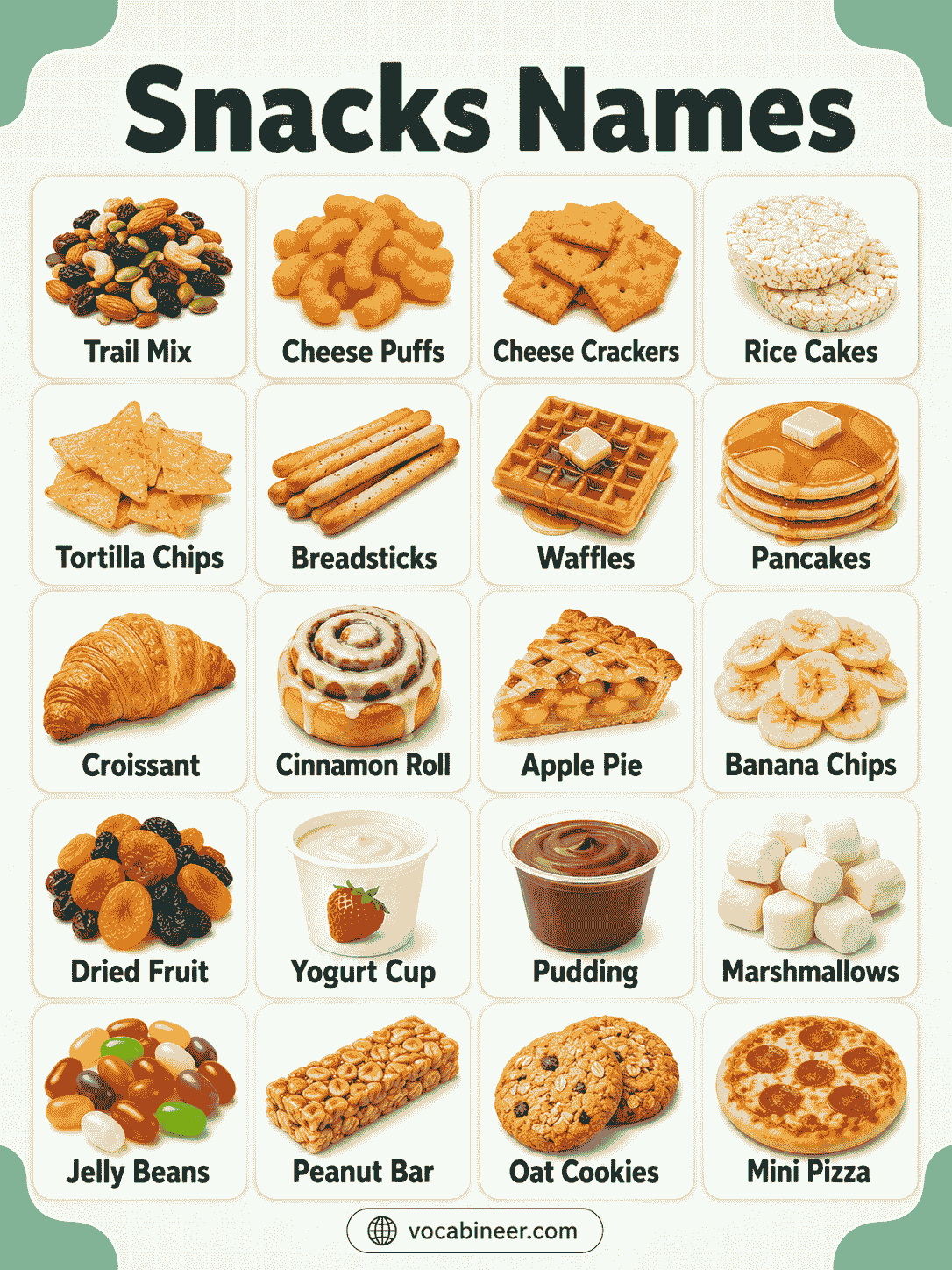
Homemade and Packaged Snack Types
Preparation and packaging affect convenience, freshness, storage, and ingredient control. Homemade snacks allow more customization, whereas packaged products save time and usually travel more easily.
Homemade Snacks
Mini sandwiches may contain cheese, eggs, vegetables, chicken, tuna, or spreads. Small portions keep them closer to a snack than a full meal.
Homemade popcorn lets the cook control the amount of oil, butter, salt, sugar, and seasoning. Air-popping and stovetop preparation create different textures.
Fruit-and-yogurt cups layer yogurt with fresh fruit, oats, seeds, or granola. Small reusable containers make them convenient for refrigerated storage.
Energy bites usually combine oats, nut or seed butter, dried fruit, cocoa, coconut, or seeds. Their dense ingredients make small portions practical.
Homemade muffins may include fruit, oats, vegetables, cheese, or nuts. A mini muffin pan creates portions that suit snack time.
Toast bites use small pieces of toasted bread with avocado, cheese, jam, nut butter, or another topping. Serving them immediately preserves the crisp texture.
Packaged and Ready-to-Eat Snacks
Packaged chips offer convenience and a long shelf life. Potato, corn, grain, and vegetable varieties differ in oil, seasoning, thickness, and texture.
Individually wrapped bars include granola, cereal, fruit, nut, and protein varieties. Checking the ingredients helps reveal whether a product resembles a simple snack or a sweet treat.
Packaged crackers come in plain, whole-grain, cheese-flavored, seeded, and filled forms. Single-serving packs reduce preparation and help with portioning.
Ready-made snack mixes combine foods such as pretzels, crackers, cereal, nuts, seeds, or dried fruit. Some mixtures focus on salty flavors, while others add chocolate or sweet coatings.
Fruit cups contain cut fruit packed in water, juice, or syrup. The packing liquid influences sweetness and overall flavor.
Single-serve yogurt provides a portable refrigerated option. Protein content, flavoring, toppings, and added sweeteners differ widely between products.
Easy Snacks for School, Work, and Travel
Portable snacks should be easy to pack, store, open, and eat without creating unnecessary mess. In addition, the best option depends on available refrigeration, travel time, allergy rules, and personal preferences.
Practical choices include:
- sturdy whole fruit such as apples, bananas, or oranges
- crackers, pretzels, or dry cereal in small containers
- lightly seasoned popcorn
- roasted chickpeas, nuts, or seeds
- packaged fruit or granola bars
- vegetable sticks with dip stored separately
- cheese sticks or yogurt kept cold
- mini sandwiches packed in secure containers
For longer trips, shelf-stable foods usually offer the greatest convenience. Meanwhile, yogurt, cheese, eggs, meat, and prepared sandwiches need reliable cooling until serving.
School policies may restrict peanuts or tree nuts, so caregivers should check local rules before packing nut-based foods. Younger children also need snack sizes and textures that match their eating skills.
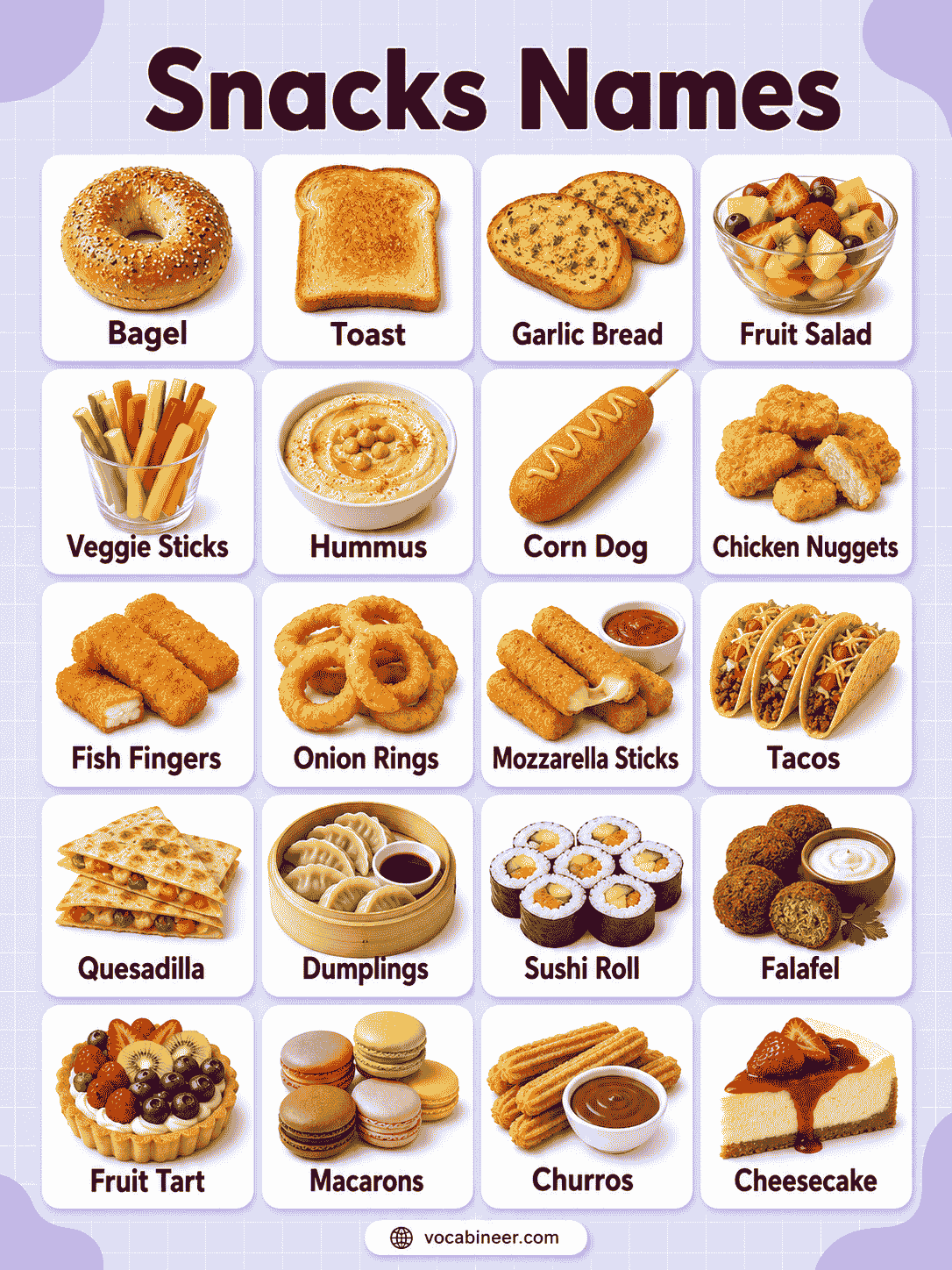
Snacks and Meals: What Is the Difference?
A snack and a meal can contain the same food. Therefore, the difference usually depends on portion size, timing, variety, and purpose rather than one fixed ingredient.
| Feature | Snack | Meal |
|---|---|---|
| Portion | Usually smaller | Usually larger |
| Timing | Often between meals | Usually eaten at planned mealtimes |
| Structure | May contain one or two foods | Often combines several foods |
| Purpose | Manages hunger or provides a quick break | Creates a more substantial eating occasion |
| Preparation | Often simple and portable | May require more cooking or assembly |
| Example | Apple slices with cheese | Sandwich, vegetables, and fruit |
Context can change the category. For instance, a small smoothie may serve as a snack, while a larger smoothie with yogurt, oats, fruit, and nut butter may replace a meal for some people.
Choosing Snacks for Hunger, Convenience, and Nutrition
A suitable snack depends on hunger level, the time until the next meal, and where someone plans to eat it. Mild hunger may call for fruit, popcorn, or vegetables, while a longer gap may suit a snack that combines two or more food groups.
Convenience also matters. Before choosing, consider preparation time, portability, refrigeration, allergies, portion size, added sugar, sodium, fiber, and protein.
Useful snack combinations include:
- fruit with yogurt
- crackers with cheese
- vegetables with hummus
- toast with nut or seed butter
- a boiled egg with whole-grain crackers
- cottage cheese with tomatoes or fruit
Combining different textures and ingredients can make a snack more satisfying. For example, crisp apple slices pair well with creamy nut butter, while crunchy vegetables balance a smooth bean dip.
Conclusion
Types of snacks include many foods eaten between main meals, from sweet and savory options to baked, fried, healthy, and packaged snacks. People prepare them with ingredients such as fruits, vegetables, grains, dairy products, nuts, seeds, and other protein-rich foods.
Learning the different types of snacks helps readers recognize common snack categories and understand how they vary by ingredients, preparation method, taste, season, age group, and everyday eating habits.
FAQs
The main types of snacks include sweet snacks, savory snacks, fried snacks, baked snacks, healthy snacks, fruit-based snacks, dairy-based snacks, protein-rich snacks, and packaged snacks. These categories are commonly used to group snacks based on taste, preparation method, and ingredients.
Snacks are smaller food portions eaten between meals, while meals are larger and more filling. Snacks are meant to reduce hunger and provide quick energy, whereas meals are planned to meet most daily food needs.
Common daily snacks include biscuits, chips, popcorn, nuts, fruits, yogurt, and snack bars. These snacks are easy to prepare, easy to carry, and commonly eaten at home, school, or work.
Snacks are usually eaten between breakfast and lunch, between lunch and dinner, or in the evening. Some people also eat light snacks late at night depending on their routine.
Yes, snacks can be healthy when they are made from fruits, vegetables, grains, dairy, or protein sources. Choosing fresh, homemade, or lightly prepared snacks helps keep them nutritious.
Read More
- Types of Food in English
- Different Types of Candy
- Sweets and their Names
- Different Types of Chips
- Types of Crackers
- Types of Chocolate
- Types of Cookies
